News


Audience Announces eS800 Voice & Audio Processors

Audience Announces eS800 Voice & Audio Processors

While voice calls have decreased in importance in the past few years, we’ve seen an increased need for voice processors that can properly isolate voice to enable features such as touchless controls of a phone or tablet, along with dictation and similar features. In order to better enable these features, Audience has introduced a new eS800 line of voice and audio processors. At a high level, there are a few key features that are enabled by this new audio processor, namely improved voice recognition at large distances, during media playback, and automatic focusing on the speaker.

There are also a few other features that this new line of ICs enables, namely improved always-on hotword detection as it can now train its detection to only activate to a specific person when using a user-trained keyword. On the previous eS700 series, this was only possible with an OEM-set keyword. There are also significant improvements to noise suppression overall, as the voice processor is better-equipped to deal with varying hand position and other challenging conditions. Audience noted that this level of noise suppression meant that their solution is one of the few to pass carrier testing for voice quality, as opposed to other popular solutions on the market. These features are enabled by the use of artificial neural network technology, which is definitely something I haven’t seen before.

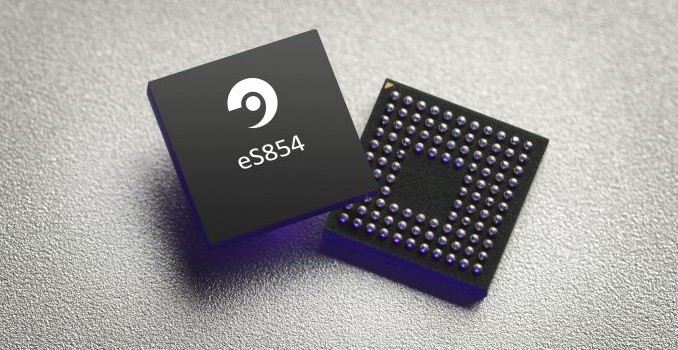
While both announced ICs of the eS800 have these voice capabilities, the eS804 is designed to be a voice processor, while the eS854 has an additional audio codec that supports universal headset detection and can enable more button signalling over the 3.5mm jack. There’s also an integrated stereo amp, which can drive speakers although it’s unclear how this compares with the popular NXP solutions on the market. The eS800 line of voice and audio processors should appear in smartphones and tablets in the coming months.
Samsung Launches the Gear Circle in the U.S.

Samsung Launches the Gear Circle in the U.S.

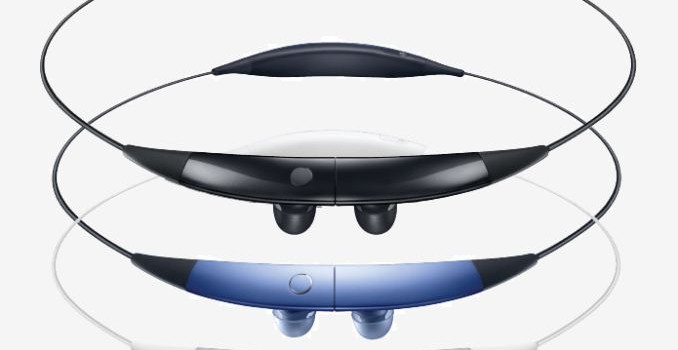
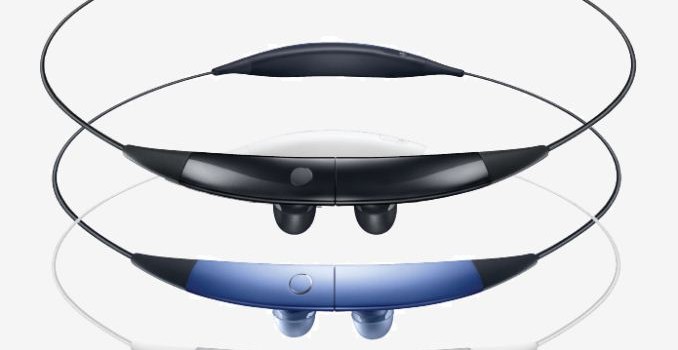
Samsung has announced the availability of their Gear Circle Bluetooth headphones in the United States. The Gear Circle is a pair of Bluetooth earbuds that are worn around the neck and can gently vibrate when a notification arrives. When not in use, they can be attached together and worn as a necklace of sorts. It also supports voice notifications and voice commands through Samsung’s S Voice software. Samsung promises up to nine hours of music playback and up to eleven hours of talk time. 

There are currently no details on pricing, but Samsung has stated that they are now available in black and blue at T-Mobile stores, and will be available at AT&T stores, Samsung.com, and Amazon.com later this month. A special white color will also be available through Best Buy.

Samsung Launches the Gear Circle in the U.S.

Samsung Launches the Gear Circle in the U.S.

Samsung has announced the availability of their Gear Circle Bluetooth headphones in the United States. The Gear Circle is a pair of Bluetooth earbuds that are worn around the neck and can gently vibrate when a notification arrives. When not in use, they can be attached together and worn as a necklace of sorts. It also supports voice notifications and voice commands through Samsung’s S Voice software. Samsung promises up to nine hours of music playback and up to eleven hours of talk time. 

There are currently no details on pricing, but Samsung has stated that they are now available in black and blue at T-Mobile stores, and will be available at AT&T stores, Samsung.com, and Amazon.com later this month. A special white color will also be available through Best Buy.

Netgear Preps Smart Home Push with Arlo IP Cameras

Netgear Preps Smart Home Push with Arlo IP Cameras

Home automation is emerging as one of the primary drivers in the rising popularity of the IoT (Internet of Things) concept. Popular home automation / smart home technologies include programmable thermostats (such as Nest and Honeywell Lyric) and remote controlled lights (such as the Philips Hue). IP cameras have been around as a security solution for quite some time, but they have not traditionally been included in the IoT discussions. As the smart home concept gains popularity, these three product categories are set to experience rapid growth.

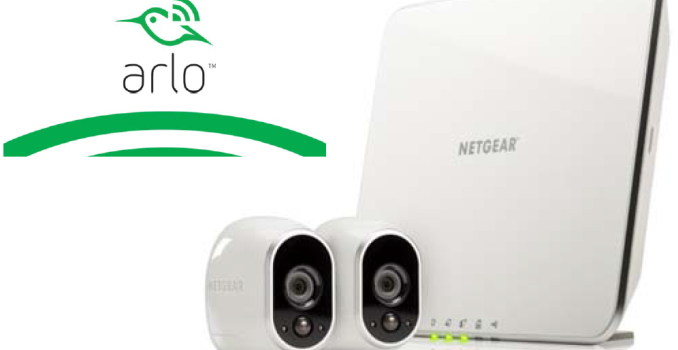
Netgear is building upon their VueZone purchase by introducing the next generation wire-free cameras under the Arlo brand name. Simplicity and ease of use are primary drivers for the adoption of the VueZone family of cameras. Important updates (compared to the previous generation VueZone cameras) include high definition (720p) video clips and better configurability (such as schedules for turning off the camera completely).

Unlike the traditional IP cameras which stream video continuously, we are now seeing a sub-category where video is recorded and sent out only when there is movement. The Arlo IP cameras belong to this category. Since the units are battery powered, it does make sense to ensure that they don’t run out of juice in a short time. The new design is also weather-proof, making it suitable for outdoor use. There are two models being introduced, one with IR LEDs for night vision, and the other suitable for day use or in illuminated locations.

As part of the smart home push, Netgear is introducing a hub to which up to four Arlo IP cameras can connect. Rules can be created for management of smart devices. Currently, the VueZone cameras (like Dropcam) allow for remote viewing, but recording to the cloud requires monthly plans. The new Arlo IP cameras will follow the same route. Fortunately, Netgear does realize that users would like to record to a local NAS. Since they also have the ReadyNAS product line, the Arlo team is definitely thinking about ensuring some sort of interoperability. However, cloud-free operation is not going to be a feature when the units ship to retail in January. Pricing for an Arlo-based security system (two IP cameras and a hub) is expected to be around $350. A standalone Arlo camera will retail for $170. However, it will not function without the hub.

In order to target the overall smart home ecosystem, Netgear is also announcing that they have joined the AllSeen Alliance and established a partnership with LIFX (a vendor of connected light bulbs).


Netgear Preps Smart Home Push with Arlo IP Cameras

Netgear Preps Smart Home Push with Arlo IP Cameras

Home automation is emerging as one of the primary drivers in the rising popularity of the IoT (Internet of Things) concept. Popular home automation / smart home technologies include programmable thermostats (such as Nest and Honeywell Lyric) and remote controlled lights (such as the Philips Hue). IP cameras have been around as a security solution for quite some time, but they have not traditionally been included in the IoT discussions. As the smart home concept gains popularity, these three product categories are set to experience rapid growth.

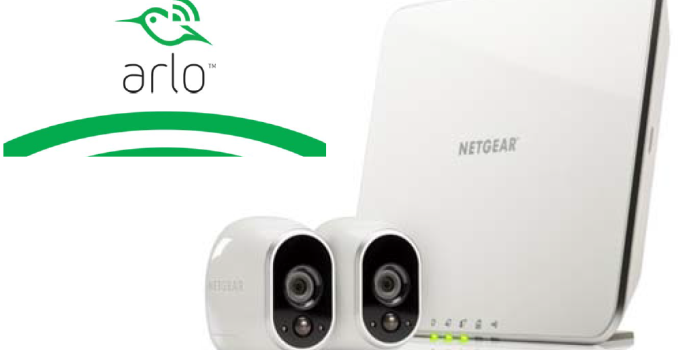
Netgear is building upon their VueZone purchase by introducing the next generation wire-free cameras under the Arlo brand name. Simplicity and ease of use are primary drivers for the adoption of the VueZone family of cameras. Important updates (compared to the previous generation VueZone cameras) include high definition (720p) video clips and better configurability (such as schedules for turning off the camera completely).

Unlike the traditional IP cameras which stream video continuously, we are now seeing a sub-category where video is recorded and sent out only when there is movement. The Arlo IP cameras belong to this category. Since the units are battery powered, it does make sense to ensure that they don’t run out of juice in a short time. The new design is also weather-proof, making it suitable for outdoor use. There are two models being introduced, one with IR LEDs for night vision, and the other suitable for day use or in illuminated locations.

As part of the smart home push, Netgear is introducing a hub to which up to four Arlo IP cameras can connect. Rules can be created for management of smart devices. Currently, the VueZone cameras (like Dropcam) allow for remote viewing, but recording to the cloud requires monthly plans. The new Arlo IP cameras will follow the same route. Fortunately, Netgear does realize that users would like to record to a local NAS. Since they also have the ReadyNAS product line, the Arlo team is definitely thinking about ensuring some sort of interoperability. However, cloud-free operation is not going to be a feature when the units ship to retail in January. Pricing for an Arlo-based security system (two IP cameras and a hub) is expected to be around $350. A standalone Arlo camera will retail for $170. However, it will not function without the hub.

In order to target the overall smart home ecosystem, Netgear is also announcing that they have joined the AllSeen Alliance and established a partnership with LIFX (a vendor of connected light bulbs).