News


802.11ac with Killer: MSI’s Teaming Technique coming to ACK Branded Motherboards

802.11ac with Killer: MSI’s Teaming Technique coming to ACK Branded Motherboards

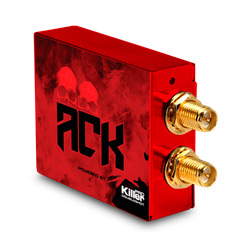
One of the many interesting ways in which motherboard companies diversify their product ranges is with networking opportunities. In most product stacks, manufacturers use Realtek and Intel network ports with reckless abandon, while a few also use wireless connectivity or Killer network solutions to add value to their product. MSI has now added another potential into their mix with their ‘ACK’ branding. The acronym can be described as 802.11ac + Killer, with both solutions coming from Qualcomm Atheros’ networking solutions. What makes this combination new, aside from using an Atheros WiFi solution, is that MSI is allowing ‘Killer Smart Teaming’ which allows the wired and wireless network to act together, offering a 1.867 Gbps maximum network throughput.

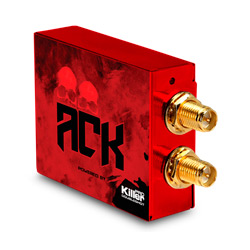
The ACK feature will come to their highest end motherboards first – the Z97 Gaming 9 ACK and the X99S Gaming 9 ACK should be available in the market shortly with the WiFi/software updates. Both of these boards also feature a stylistic upgrade on their rear IO panels, as shown above. Aside from this, both motherboards are the same as their non-ACK counterparts.

Unfortunately, MSI’s marketing is a little misleading. In order to take advantage of the teaming effort as proposed, with the wireless data taking video streaming and the wired taking the gaming, there is no thought made to the data actually travelling out of the home and down the cables. For example, my 16 Mbps connection will still only run at 16 Mbps outside of my home, even if I connect the machine with both wired and wireless to my router. It also relies on the router also prioritizing this data over other machines on the network, or being able to handle the data in an appropriate fashion.

One of the reasons I personally like the myriad of networking options on motherboards today is because it becomes more important for home networking, allowing greater speeds and greater ranges wherever the system is placed. This is especially important when a user (or multiple users) are streaming from a home NAS. Trying to use a form of hybrid teaming to deal with data travelling outside the home for gaming purposes might be a misplaced venture. While it means that data is separated and we’re not dealing with the windows stack/software to prioritize the data through one network connection, it is still limited by the router’s prioritization protocols and external data rate. The best use case for this might be someone with Google Fiber, although one network connection should still be able to deal with streaming and gaming at the same time.

802.11ac with Killer: MSI’s Teaming Technique coming to ACK Branded Motherboards

802.11ac with Killer: MSI’s Teaming Technique coming to ACK Branded Motherboards

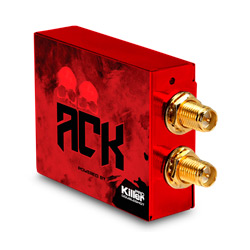
One of the many interesting ways in which motherboard companies diversify their product ranges is with networking opportunities. In most product stacks, manufacturers use Realtek and Intel network ports with reckless abandon, while a few also use wireless connectivity or Killer network solutions to add value to their product. MSI has now added another potential into their mix with their ‘ACK’ branding. The acronym can be described as 802.11ac + Killer, with both solutions coming from Qualcomm Atheros’ networking solutions. What makes this combination new, aside from using an Atheros WiFi solution, is that MSI is allowing ‘Killer Smart Teaming’ which allows the wired and wireless network to act together, offering a 1.867 Gbps maximum network throughput.

The ACK feature will come to their highest end motherboards first – the Z97 Gaming 9 ACK and the X99S Gaming 9 ACK should be available in the market shortly with the WiFi/software updates. Both of these boards also feature a stylistic upgrade on their rear IO panels, as shown above. Aside from this, both motherboards are the same as their non-ACK counterparts.

Unfortunately, MSI’s marketing is a little misleading. In order to take advantage of the teaming effort as proposed, with the wireless data taking video streaming and the wired taking the gaming, there is no thought made to the data actually travelling out of the home and down the cables. For example, my 16 Mbps connection will still only run at 16 Mbps outside of my home, even if I connect the machine with both wired and wireless to my router. It also relies on the router also prioritizing this data over other machines on the network, or being able to handle the data in an appropriate fashion.

One of the reasons I personally like the myriad of networking options on motherboards today is because it becomes more important for home networking, allowing greater speeds and greater ranges wherever the system is placed. This is especially important when a user (or multiple users) are streaming from a home NAS. Trying to use a form of hybrid teaming to deal with data travelling outside the home for gaming purposes might be a misplaced venture. While it means that data is separated and we’re not dealing with the windows stack/software to prioritize the data through one network connection, it is still limited by the router’s prioritization protocols and external data rate. The best use case for this might be someone with Google Fiber, although one network connection should still be able to deal with streaming and gaming at the same time.
Synology Launches 8-bay Rangeley-based DS1815+

Synology Launches 8-bay Rangeley-based DS1815+

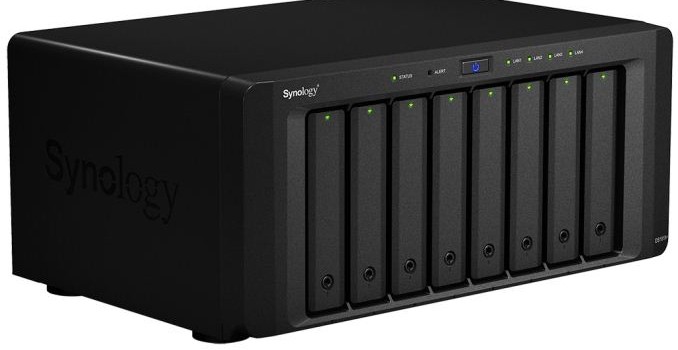
In the last week of September, Synology launched their Intel Rangeley-based DS415+. In our review, we found it resolved most of the issues encountered in the previous Atom-based SMB NAS units (such as performance with encryption enabled and latencies when subject to multi-client access). While 4-bay units tend to cover the needs of the lower end of the SMB spectrum, higher bay counts are necessary for the other segments. Towards this, Synology is launching the 8-bay DS1815+ today.

The main SoC in the unit is still the Intel Atom C2538 (same as the DS415+). The differences between the DS415+ and the DS1815+ (in addition to the obvious difference in the number of bays) include expandable memory (one free slot), two extra GbE ports, and support for an additional DX513 expansion chassis (total of two, compared to one in the DS415+). Unlike the 100W external adapter in the DS415+, we have an internal 250W PSU in the DS1815+.

The specifications of the DS1815+ are summarized in the table below.

Synology DS1815+ Specifications
Processor Intel Atom C2538 (4C/4T Silvermont x86 Cores @ 2.40 GHz)
RAM 2 GB DDR3 RAM (+ 4GB max. in 2nd slot)
Drive Bays 8x 3.5″/2.5″ SATA II / III HDD / SSD (Hot-Swappable)
Network Links 4x 1 GbE
External I/O Peripherals 4x USB 3.0, 2x eSATA
Expansion Slots None
VGA / Display Out None
Full Specifications Link Synology DS1815+ Specifications
Price £790.80 (Span UK)

Going by the models in the 13+ series, a 5-bay version to complement the 415+ and 1815+ should also be coming soon.

Synology Launches 8-bay Rangeley-based DS1815+

Synology Launches 8-bay Rangeley-based DS1815+

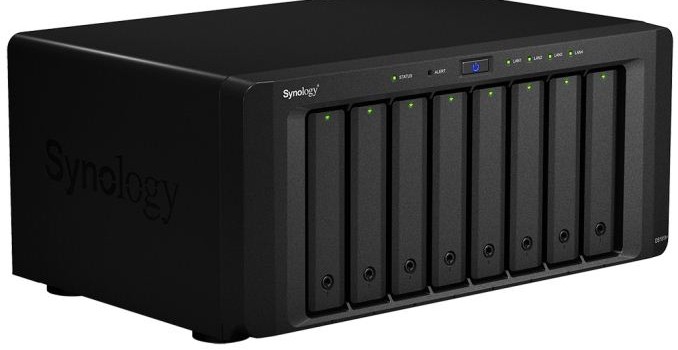
In the last week of September, Synology launched their Intel Rangeley-based DS415+. In our review, we found it resolved most of the issues encountered in the previous Atom-based SMB NAS units (such as performance with encryption enabled and latencies when subject to multi-client access). While 4-bay units tend to cover the needs of the lower end of the SMB spectrum, higher bay counts are necessary for the other segments. Towards this, Synology is launching the 8-bay DS1815+ today.

The main SoC in the unit is still the Intel Atom C2538 (same as the DS415+). The differences between the DS415+ and the DS1815+ (in addition to the obvious difference in the number of bays) include expandable memory (one free slot), two extra GbE ports, and support for an additional DX513 expansion chassis (total of two, compared to one in the DS415+). Unlike the 100W external adapter in the DS415+, we have an internal 250W PSU in the DS1815+.

The specifications of the DS1815+ are summarized in the table below.

Synology DS1815+ Specifications
Processor Intel Atom C2538 (4C/4T Silvermont x86 Cores @ 2.40 GHz)
RAM 2 GB DDR3 RAM (+ 4GB max. in 2nd slot)
Drive Bays 8x 3.5″/2.5″ SATA II / III HDD / SSD (Hot-Swappable)
Network Links 4x 1 GbE
External I/O Peripherals 4x USB 3.0, 2x eSATA
Expansion Slots None
VGA / Display Out None
Full Specifications Link Synology DS1815+ Specifications
Price £790.80 (Span UK)

Going by the models in the 13+ series, a 5-bay version to complement the 415+ and 1815+ should also be coming soon.