News


Logitech K480 Multi-Device Bluetooth Keyboard Capsule Review

Logitech K480 Multi-Device Bluetooth Keyboard Capsule Review

We have been doing round-ups of various input devices fit for HTPC purposes. Some of the vendors have started shipping with Bluetooth instead of using a proprietary communication mechanism over 2.4 GHz RF. The advantage of Bluetooth is its versatility and presence in almost all modern mobile devices (smartphones and tablets). These don’t support a full-size USB host port for plugging in the USB RF receiver dongles. Utilizing Bluetooth enables these input devices to communicate with the rising crop of mobile devices as well as interface with traditional PCs. Communication with PCs can be enabled by using either an inbuilt card – common in most notebooks which integrate Bluetooth and Wi-Fi capabilities in a single mPCIe card – or, an explicit Bluetooth dongle.

Logitech recently introduced an innovative Bluetooth keyboard, the K480. While traditional Bluetooth keyboards have aimed to differentiate with aesthetics, in-built rechargeable batteries and support for multiple devices at the $100+ price points, Logitech’s K480 aims to bring in a set of ‘sweet-spot’ features for $50.

The salient features of the K480 include:

  • Support for up to three different Bluetooth devices, with easy switching between device profiles with a rotary dial on the top left corner
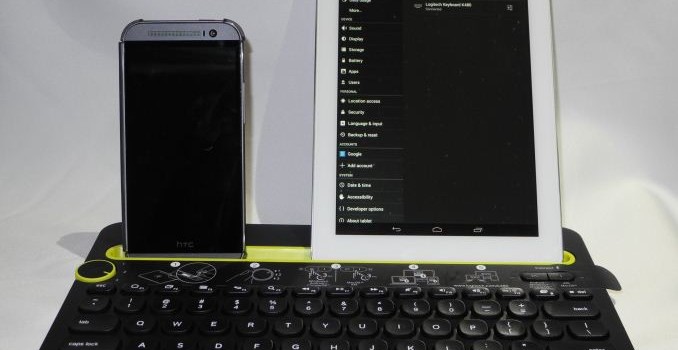
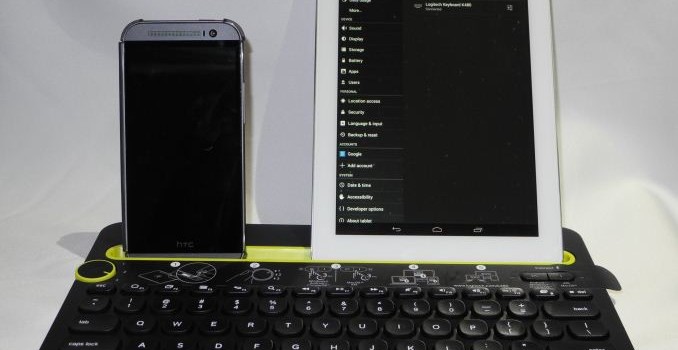
  • Recess to allow placement of smartphones / tablets in a position suitable for viewing while typing on the keyboard
  • Keyboard support for both Mac and Windows / Android ecosystems
  • Explicit power on/off switch for conserving battery life

After extensive use, we found that the keyboard fulfills most of its promises. It is cross-platform and does support pairing to multiple devices. The sequence of steps to get the device paired is outlined pictorially in the top half – This ensures that even the tablet-only non-tech savvy consumers can get up and running quickly with the unit. There is no need for a dongle, and as long as the target device has Bluetooth capabilities, the keyboard is good to go. Range is not an issue due to the use-case (mobile devices in close proximity). The unit feels quite solid, and is heavy (in order to ensure stability when heavy tablets are placed in the recess). The function keys are multiplexed with some multimedia / mobile specific buttons (such as single keypress to home). In addition, on Android devices, an app can be installed to provide additional keyboard layouts.

In terms of key feel and the typing experience, it has to be said that the keyboard is suitable for usage in bursts (again, the typical smartphone / tablet usage), and not prolonged typing. The shape of the keys, as well as the keypress feedback, seem to have been decided more with the looks and aesthetics in mind, rather than the typing experience. Fortunately, there is nothing to complain about the keyboard layout itself (from the viewpoint of Windows and Android systems, at least). Other than that, it would have been nice to have an adjustable tilt option for ergonomic considerations.

HTPC & Mobile Keyboards Bench
Aspect Logitech K480 Logitech K480Adesso WKB-4000UBLogitech K400IOGEAR GKM561RSIIG JK-WR0412-S1SIIG JK-WR0312-S1Adesso WKB-3000UAdesso WKB-4400UBAdesso WKB-4000BBAdesso WKB-1200
Device Type Keyboard Only Keyboard Only
Dimensions 11.77″ x 7.68″ x 0.79″ 11.77″ x 7.68″ x 0.79″
Weight 1.81 lbs / 820 g 1.81 lbs / 820 g
Power Source 2x AAA 2x AAA
Communication Bluetooth Bluetooth
Power Saver Explicit On/Off Switch Explicit On/Off Switch
Keys Count 79 (with multiplexed multimedia and mobile-specific keys) 79 (with multiplexed multimedia and mobile-specific keys)
Touchpad Dimensions (Diagonal) N/A N/A
USB Receiver Storage Compartment N/A N/A
Backlight No No
Keyboard Layout 8/10 8/10
Ergonomics 8/10 8/10
Build Quality 9/10 9/10
MSRP (USD) $49.99 $49.99
Warranty 1 year 1 year

In terms of future improvements at this price point, it would be nice to have a trackball (in case of an unchanged form factor) or a trackpad. This would enable standalone usage with a PC (similar to the Adesso Bluetooth Keyboard WKB-4000BB). The Bluetooth keyboard market for mobile devices is heavily commoditized. So, it is refreshing to see Logitech integrating some nifty and interesting features in the K480 to make it stand out in the crowd.

Logitech K480 Multi-Device Bluetooth Keyboard Capsule Review

Logitech K480 Multi-Device Bluetooth Keyboard Capsule Review

We have been doing round-ups of various input devices fit for HTPC purposes. Some of the vendors have started shipping with Bluetooth instead of using a proprietary communication mechanism over 2.4 GHz RF. The advantage of Bluetooth is its versatility and presence in almost all modern mobile devices (smartphones and tablets). These don’t support a full-size USB host port for plugging in the USB RF receiver dongles. Utilizing Bluetooth enables these input devices to communicate with the rising crop of mobile devices as well as interface with traditional PCs. Communication with PCs can be enabled by using either an inbuilt card – common in most notebooks which integrate Bluetooth and Wi-Fi capabilities in a single mPCIe card – or, an explicit Bluetooth dongle.

Logitech recently introduced an innovative Bluetooth keyboard, the K480. While traditional Bluetooth keyboards have aimed to differentiate with aesthetics, in-built rechargeable batteries and support for multiple devices at the $100+ price points, Logitech’s K480 aims to bring in a set of ‘sweet-spot’ features for $50.

The salient features of the K480 include:

  • Support for up to three different Bluetooth devices, with easy switching between device profiles with a rotary dial on the top left corner
  • Recess to allow placement of smartphones / tablets in a position suitable for viewing while typing on the keyboard
  • Keyboard support for both Mac and Windows / Android ecosystems
  • Explicit power on/off switch for conserving battery life

After extensive use, we found that the keyboard fulfills most of its promises. It is cross-platform and does support pairing to multiple devices. The sequence of steps to get the device paired is outlined pictorially in the top half – This ensures that even the tablet-only non-tech savvy consumers can get up and running quickly with the unit. There is no need for a dongle, and as long as the target device has Bluetooth capabilities, the keyboard is good to go. Range is not an issue due to the use-case (mobile devices in close proximity). The unit feels quite solid, and is heavy (in order to ensure stability when heavy tablets are placed in the recess). The function keys are multiplexed with some multimedia / mobile specific buttons (such as single keypress to home). In addition, on Android devices, an app can be installed to provide additional keyboard layouts.

In terms of key feel and the typing experience, it has to be said that the keyboard is suitable for usage in bursts (again, the typical smartphone / tablet usage), and not prolonged typing. The shape of the keys, as well as the keypress feedback, seem to have been decided more with the looks and aesthetics in mind, rather than the typing experience. Fortunately, there is nothing to complain about the keyboard layout itself (from the viewpoint of Windows and Android systems, at least). Other than that, it would have been nice to have an adjustable tilt option for ergonomic considerations.

HTPC & Mobile Keyboards Bench
Aspect Logitech K480 Logitech K480Adesso WKB-4000UBLogitech K400IOGEAR GKM561RSIIG JK-WR0412-S1SIIG JK-WR0312-S1Adesso WKB-3000UAdesso WKB-4400UBAdesso WKB-4000BBAdesso WKB-1200
Device Type Keyboard Only Keyboard Only
Dimensions 11.77″ x 7.68″ x 0.79″ 11.77″ x 7.68″ x 0.79″
Weight 1.81 lbs / 820 g 1.81 lbs / 820 g
Power Source 2x AAA 2x AAA
Communication Bluetooth Bluetooth
Power Saver Explicit On/Off Switch Explicit On/Off Switch
Keys Count 79 (with multiplexed multimedia and mobile-specific keys) 79 (with multiplexed multimedia and mobile-specific keys)
Touchpad Dimensions (Diagonal) N/A N/A
USB Receiver Storage Compartment N/A N/A
Backlight No No
Keyboard Layout 8/10 8/10
Ergonomics 8/10 8/10
Build Quality 9/10 9/10
MSRP (USD) $49.99 $49.99
Warranty 1 year 1 year

In terms of future improvements at this price point, it would be nice to have a trackball (in case of an unchanged form factor) or a trackpad. This would enable standalone usage with a PC (similar to the Adesso Bluetooth Keyboard WKB-4000BB). The Bluetooth keyboard market for mobile devices is heavily commoditized. So, it is refreshing to see Logitech integrating some nifty and interesting features in the K480 to make it stand out in the crowd.
Motorola and Verizon Announce the Droid Turbo

Motorola and Verizon Announce the Droid Turbo

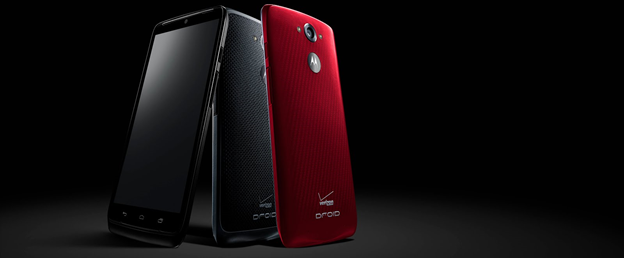
Verizon and Motorola have always had a close relationship. The smartphones in Motorola’s Droid line are typically exclusive to the carrier, and they helped make Verizon a heavy supporter of Android devices during a time where AT&T was the exclusive US carrier for the iPhone. Today’s announcement is no exception. The Droid Turbo is a Verizon exclusive smartphone made by Motorola, and seemingly their most powerful. Its biggest selling point is its battery life, but before getting into specifics I’ve given an overview by laying out all the specifications in the chart below. 

  Motorola Droid Turbo Motorola Moto X (2014)
SoC APQ8084 2.7GHz Snapdragon 805 with 4 x Krait 450 + Adreno 420 MSM8974 2.5 GHz Snapdragon 801 with 4 x Krait 400 + Adreno 330
RAM/NAND 3 GB LPDDR3, 32/64GB NAND 2GB LPDDR3, 16/32GB NAND
Display 5.2” 2560×1440 AMOLED at 565ppi 5.2” 1080p Super AMOLED
Network 2G / 3G / 4G LTE Listed as Category 4 2G / 3G / 4G LTE Listed as Category 4
Dimensions 143.5 x 73.3 x 11.2 mm, 176 grams (Black Nylon)
143.5 x 73.3 x 10.6mm, 169g (Metallic Red/Black)
140.8 x 72.4 x 3.8-9.9 mm, 144 grams
Camera 21MP (5248×3936) Rear Camera with F/2.0 aperture, 2MP Front Camera 13MP Rear Facing, 1/3.06″ CMOS size (Sony IMX135), 2.1MP FFC
Battery 3900 mAh 2300 mAh, 3.8V, 8.74 Whr
OS Android 4.4.4 KitKat Android 4.4.4 KitKat
Connectivity 802.11a/b/g/n/ac + BT 4.0, USB2.0, GPS/GNSS, DLNA, NFC 802.11a/b/g/n/ac + BT 4.0, USB2.0, GPS/GNSS, DLNA, NFC
SIM Size NanoSIM NanoSIM

It’s interesting that this is a Verizon exclusive device, as it has significantly better specifications than the Moto X which is Motorola’s current widely available flagship. Like many of the other recently released flagship phones, the Droid Turbo uses Qualcomm’s Snapdragon 805 with four Krait 450 cores at 2.7GHz and 3GB of LPDDR3 memory. The front of the device sports a 2560×1440 AMOLED display, which is also quickly becoming the norm for Android flagship smartphones. Above it is a 2MP front-facing camera capable of recording 1080p video, and below it lies three capacitive navigation buttons which is a departure from the on-screen buttons that Motorola has been using on their other devices for some time now.

The back of the device is home to the 21MP rear-facing camera which Motorola states is capable of recording 4K video at 24fps, with 1080p recording still topping out at 30fps. The design of the back is somewhat similar to the Moto X and Moto G, but it appears to be far less curvy. There’s a great deal of branding, with a logo for Verizon, the Droid brand, and Motorola’s. Even without those, it’s would still be clear to anyone familiar with Motorola’s style of hardware design that this is a Motorola device. The curved back, centered camera, and crosshatch pattern on the back are all reminiscent of past and current Motorola phones. However, there is no lip at the top for the 3.5mm headphone jack like on Motorola’s other current devices.

The big point of differentiation is the battery capacity. Motorola has not stated the voltage of the battery, but states that it has a 3900mAh capacity and claims it will last up to 48 hours of usage. While there is always some degree of variance from a manufacturer’s claims based on how a user uses their device, if the Droid Turbo approaches anywhere close to that claim in battery testing it will be very far ahead of competing smartphones with regards to battery life. 

One possible issue I noticed with Motorola’s listed specifications is in the network section which classifies the device as supporting category 4 LTE. This may be referring to Verizon’s network certification, but the Droid Turbo should be rated for category 6 LTE.

The Droid Turbo will come with two choices of materials. There is a metallic finish which comes in black or red, and is the lighter and thinner of the two variants. These will all have a 32GB capacity. The 64GB version will only be available in the Nylon Ballistic Black finish which is slightly thicker and heavier. It will be launching this Thursday for $199 and $249 for the 32GB and 64GB variants respectively on a two year term. 

Motorola and Verizon Announce the Droid Turbo

Motorola and Verizon Announce the Droid Turbo

Verizon and Motorola have always had a close relationship. The smartphones in Motorola’s Droid line are typically exclusive to the carrier, and they helped make Verizon a heavy supporter of Android devices during a time where AT&T was the exclusive US carrier for the iPhone. Today’s announcement is no exception. The Droid Turbo is a Verizon exclusive smartphone made by Motorola, and seemingly their most powerful. Its biggest selling point is its battery life, but before getting into specifics I’ve given an overview by laying out all the specifications in the chart below. 

  Motorola Droid Turbo Motorola Moto X (2014)
SoC APQ8084 2.7GHz Snapdragon 805 with 4 x Krait 450 + Adreno 420 MSM8974 2.5 GHz Snapdragon 801 with 4 x Krait 400 + Adreno 330
RAM/NAND 3 GB LPDDR3, 32/64GB NAND 2GB LPDDR3, 16/32GB NAND
Display 5.2” 2560×1440 AMOLED at 565ppi 5.2” 1080p Super AMOLED
Network 2G / 3G / 4G LTE Listed as Category 4 2G / 3G / 4G LTE Listed as Category 4
Dimensions 143.5 x 73.3 x 11.2 mm, 176 grams (Black Nylon)
143.5 x 73.3 x 10.6mm, 169g (Metallic Red/Black)
140.8 x 72.4 x 3.8-9.9 mm, 144 grams
Camera 21MP (5248×3936) Rear Camera with F/2.0 aperture, 2MP Front Camera 13MP Rear Facing, 1/3.06″ CMOS size (Sony IMX135), 2.1MP FFC
Battery 3900 mAh 2300 mAh, 3.8V, 8.74 Whr
OS Android 4.4.4 KitKat Android 4.4.4 KitKat
Connectivity 802.11a/b/g/n/ac + BT 4.0, USB2.0, GPS/GNSS, DLNA, NFC 802.11a/b/g/n/ac + BT 4.0, USB2.0, GPS/GNSS, DLNA, NFC
SIM Size NanoSIM NanoSIM

It’s interesting that this is a Verizon exclusive device, as it has significantly better specifications than the Moto X which is Motorola’s current widely available flagship. Like many of the other recently released flagship phones, the Droid Turbo uses Qualcomm’s Snapdragon 805 with four Krait 450 cores at 2.7GHz and 3GB of LPDDR3 memory. The front of the device sports a 2560×1440 AMOLED display, which is also quickly becoming the norm for Android flagship smartphones. Above it is a 2MP front-facing camera capable of recording 1080p video, and below it lies three capacitive navigation buttons which is a departure from the on-screen buttons that Motorola has been using on their other devices for some time now.

The back of the device is home to the 21MP rear-facing camera which Motorola states is capable of recording 4K video at 24fps, with 1080p recording still topping out at 30fps. The design of the back is somewhat similar to the Moto X and Moto G, but it appears to be far less curvy. There’s a great deal of branding, with a logo for Verizon, the Droid brand, and Motorola’s. Even without those, it’s would still be clear to anyone familiar with Motorola’s style of hardware design that this is a Motorola device. The curved back, centered camera, and crosshatch pattern on the back are all reminiscent of past and current Motorola phones. However, there is no lip at the top for the 3.5mm headphone jack like on Motorola’s other current devices.

The big point of differentiation is the battery capacity. Motorola has not stated the voltage of the battery, but states that it has a 3900mAh capacity and claims it will last up to 48 hours of usage. While there is always some degree of variance from a manufacturer’s claims based on how a user uses their device, if the Droid Turbo approaches anywhere close to that claim in battery testing it will be very far ahead of competing smartphones with regards to battery life. 

One possible issue I noticed with Motorola’s listed specifications is in the network section which classifies the device as supporting category 4 LTE. This may be referring to Verizon’s network certification, but the Droid Turbo should be rated for category 6 LTE.

The Droid Turbo will come with two choices of materials. There is a metallic finish which comes in black or red, and is the lighter and thinner of the two variants. These will all have a 32GB capacity. The 64GB version will only be available in the Nylon Ballistic Black finish which is slightly thicker and heavier. It will be launching this Thursday for $199 and $249 for the 32GB and 64GB variants respectively on a two year term. 

Razer Announces The Leviathan Sound Bar

Razer Announces The Leviathan Sound Bar

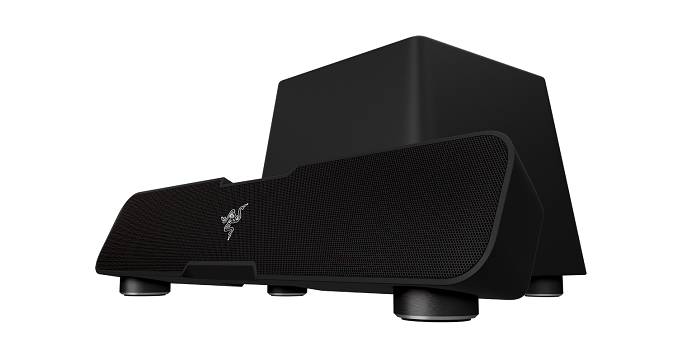
Razer has traditionally been a gaming peripheral company, which started with the Boomslang mouse in 1998. Over the years, they have expanded their portfolio to cover more of a gamer’s needs, adding keyboards, keypads, mouse mats, and headphones …