News


Lenovo Immerses into Windows Mixed Reality with Lenovo Explorer

Lenovo Immerses into Windows Mixed Reality with Lenovo Explorer

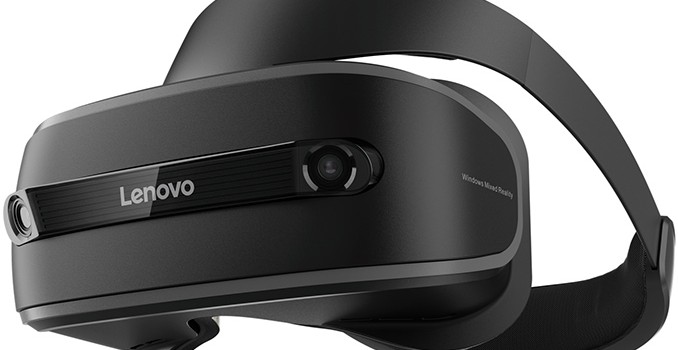
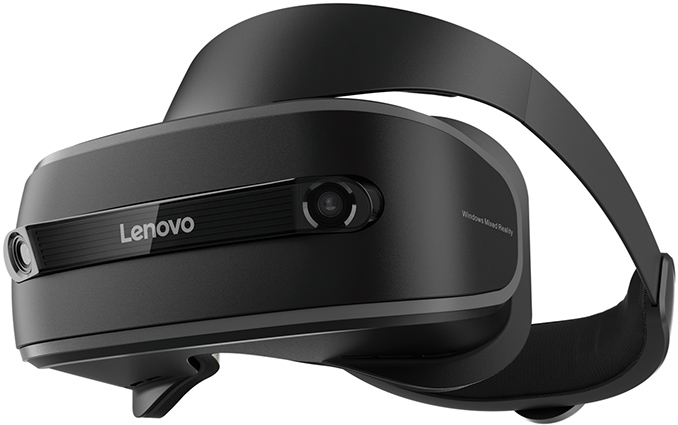
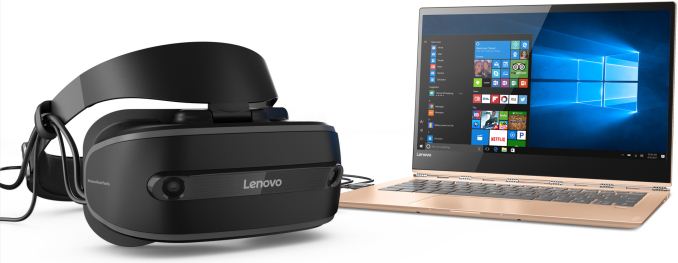
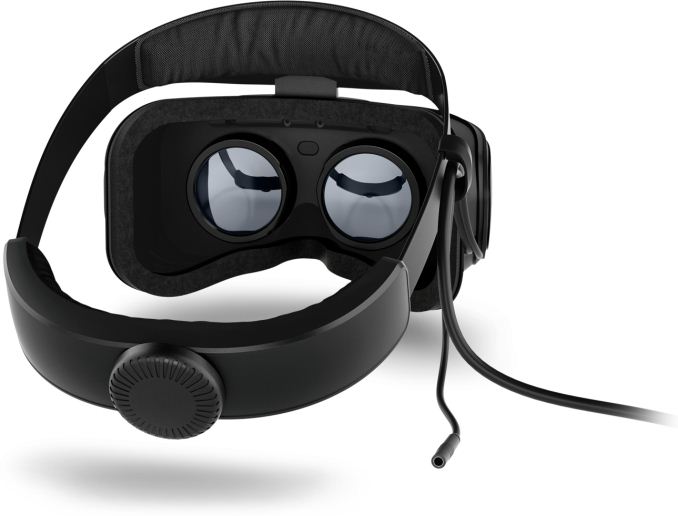
Lenovo has introduced its augmented/virtual reality head mounted display (HMD) compatible with the Windows Mixed Reality platform. The Lenovo Explorer device requires a PC to operate and runs applications developed for WMR or Microsoft HoloLens and other AR/VR devices.

From technical point of view, the Lenovo Explorer HMD does not differ from WMR devices by Acer, ASUS or Dell: it has two 1440×1440@90 Hz LCD panels (for a total resolution of 2880×1440) and two cameras to capture the outside world. The Lenovo Explorer headset connects to a modern Windows 10-based PC using USB and HDMI cables and blends virtual reality with the real world. The HMD has integrated sensors, so users can move around in an area of up to 3.5 by 3.5 meters and do not need any external tracking systems.

Lenovo claims that its headset was engineered to ensure maximum comfort for its users. In particular, the HMD is light and is easy to wear.

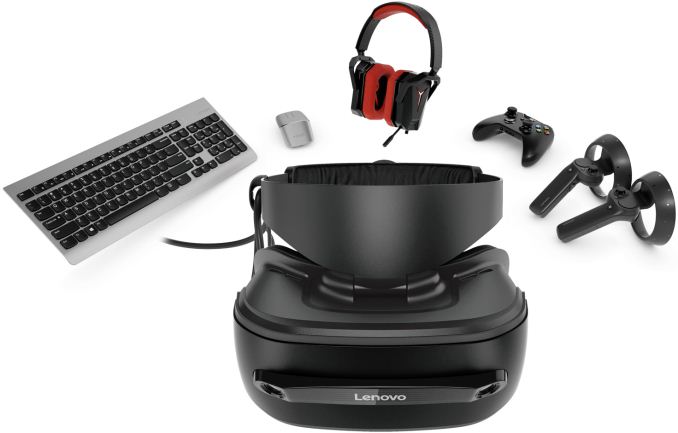
Just like other companies involved into the Windows Mixed Reality initiative, Lenovo positions its HMD for VR games and entertainment, 360° video, work, AR-supporting programs and other emerging workloads. For those, who plan to use apps designed for the WMR platform, Lenovo will offer Motion Controllers (similar to those supplied with other WMR HDMs), whereas for gamers the company will offer an Xbox One controller.

Lenovo will sell its Lenovo Explorer HMD starting from October for the price of $349. When bundled with motion controller, the headset will cost $449.


Gallery: Lenovo Explorer

Related Reading:

Longsys Acquires Lexar Brand from Micron

Longsys Acquires Lexar Brand from Micron

Longsys on Thursday announced that it has acquired the Lexar brand name from Micron. The China-based supplier of NAND flash memory-based products will use the trademark to sell Lexar’s traditional devices — removable storage like memory cards and USB flash drives. The company believes that going forward usage of removable storage will expand.

Micron announced plans to discontinue its Lexar business in late June, possibly because of its slow growth and Micron’s intentions to focus on businesses that are more profitable. The company indicated that it would sell all or a part of its Lexar business, but it clearly wanted to exit the market of inexpensive removable storage devices. The two companies did not disclose financial terms of the transaction, but it is likely that Micron will have to reveal the sum in its quarter results.

Longsys is a large China-based supplier of NAND flash-based storage solutions that include everything from memory cards to SSDs and embedded storage. The company was established in 1999 and currently sells hundreds of millions of NAND flash-based products every year, primarily in China, but also in many other countries. The acquisition of Lexar enables Longsys to enter the U.S. market with products carrying a well-known brand and therefore increase its sales. Unlike Micron, Longsys believes in long-term growth of removable storage products because new types of devices emerge (such as drones).

“Lexar has built a great brand name and our vision is to make it even greater,” said Huabo Cai, CEO of Longsys Electronics. “Existing customers can rest assured that the innovative solutions and excellent support that they have experienced from Lexar will continue. The mission to make Lexar the go-to brand for high-performance removable storage continues, and we will expand upon it to offer even more compelling solutions as the age of wireless and big-data impact the consumer storage markets.”

What remains to be seen is whether Longsys intends to use the Lexar brand to market SSDs in the U.S., or only hopes to make memory cards, flash drives and embedded storage under the trademark. If the company decides to expand usage of the brand to SSDs, then it will compete against Micron using the latter’s NAND in the U.S., which would be an interesting turn of events.

Windows 10 Fall Creators Update Coming October 17

Windows 10 Fall Creators Update Coming October 17

This morning at IFA in Berlin, Terry Myerson, EVP of the Windows and Devices Group at Microsoft, announced that the next Windows 10 update will be launched worldwide on October 17. Dubbed the Fall Creators Update, it’s the first such update sinc…

Huawei Shows Unannounced Kirin 970 at IFA 2017: Dedicated Neural Processing Unit

Huawei Shows Unannounced Kirin 970 at IFA 2017: Dedicated Neural Processing Unit

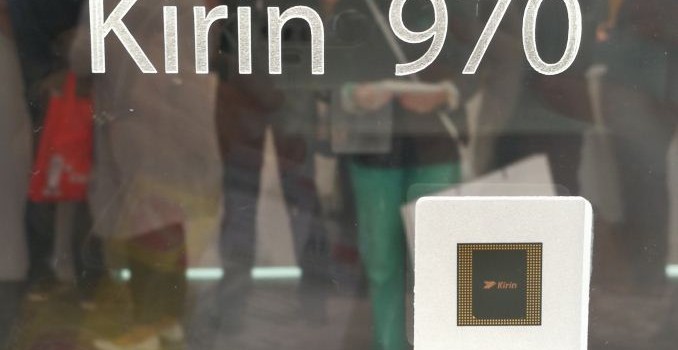
A surprise at this year’s IFA is the previously unannounced Kirin 970 SoC hitting the show floor. Normally Huawei announces a new SoC with plenty of press details, and we were expecting perhaps some musings towards what is next from Huawei (it’s usually around this time of year), but this time they pushed it through to the show floor without any pomp and show (or any notice). Cue my surprise when I saw it…
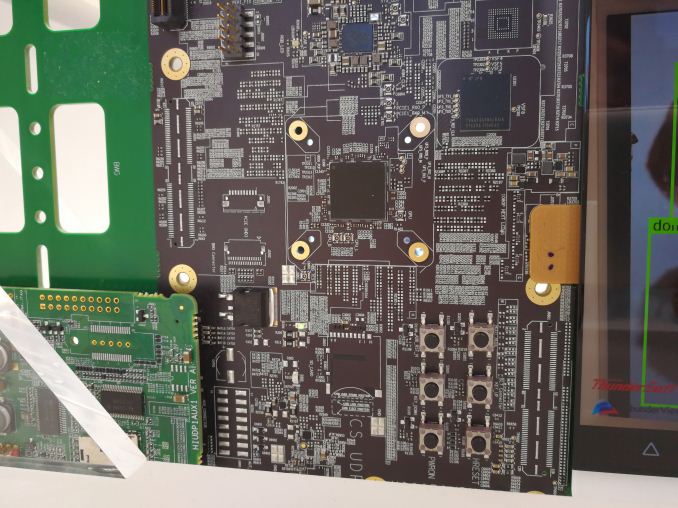
The headline that Huawei seems to want to promote is the addition of dedicated neural network silicon inside the Kirin 970, dubbed the Neural Processing Unit (NPU). The sticker performance of the NPU is rated at 1.92 TFLOPs of FP16, which for reference, is about 3x what the Kirin 960’s GPU alone can do on paper (~0.6 TFLOPs FP16). Or to put this in practical terms, Huawei says that the NPU is capable of discerning 2005 images per minute from internal testing, compared to 97 images per minute without the NPU – and presumably on the CPU – using the Kirin Thundersoft software (likely a future brand name). Obviously, depending on the implementation and power use, I would expect Huawei to try and leverage the NPU as much as possible in upcoming designs.

HiSilicon High-End Kirin SoC Lineup
SoC Kirin 970 Kirin 960 Kirin 950/955
CPU 4x A73 @ 2.40 GHz
4x A53 @ 1.80 GHz
4x A73 @ 2.36GHz
4x A53 @ 1.84GHz
4x A72 @ 2.30/2.52GHz
4x A53 @ 1.81GHz
GPU ARM Mali-G72MP12
? MHz
ARM Mali-G71MP8
1037MHz
ARM Mali-T880MP4
900MHz
LPDDR4
Memory
? 2x 32-bit
LPDDR4 @ 1866MHz
29.9GB/s
2x 32-bit
LPDDR4 @ 1333MHz 21.3GB/s
Interconnect ? ARM CCI-550 ARM CCI-400
Storage ? UFS 2.1 eMMC 5.0
ISP/Camera Dual ISP Dual 14-bit ISP
(Improved)
Dual 14-bit ISP
940MP/s
Encode/Decode 2160p60 Decode
2160p30 Encode
2160p30 HEVC & H.264
Decode & Encode

2160p60 HEVC
Decode

1080p H.264
Decode & Encode

2160p30 HEVC
Decode

Integrated Modem Kirin 970 Integrated LTE
(Category 18)
DL = 1200 Mbps
4x20MHz CA, 128-QAM
Kirin 960 Integrated LTE
(Category 12/13)
DL = 600Mbps
4x20MHz CA, 64-QAM
UL = 150Mbps
2x20MHz CA, 64-QAM
Balong Integrated LTE
(Category 6)
DL = 300Mbps
2x20MHz CA, 64-QAM
UL = 50Mbps
1x20MHz CA, 16-QAM
Sensor Hub ? i6 i5
NPU Yes No No
Mfc. Process TSMC 10nm TSMC 16nm FFC TSMC 16nm FF+

Other details for the Kirin 970 show improvements over the Kirin 960. First is the movement to TSMC’s 10nm process, from 16FF+. The Kirin 960 launched a few months before the 10nm ramp up for other high-end smartphone SoCs hit the shelves, so Huawei is matching their competitors here. The core configuration is the same as the 960, with four ARM Cortex A73 cores and four ARM Cortex A53 cores, this time clocked at 2.4 GHz and 1.8 GHz respectively. The integrated graphics is the newest Mali G72, announced alongside the A75/A55 processors earlier this year, which will be in an MP12 configuration. Frequency was not listed.
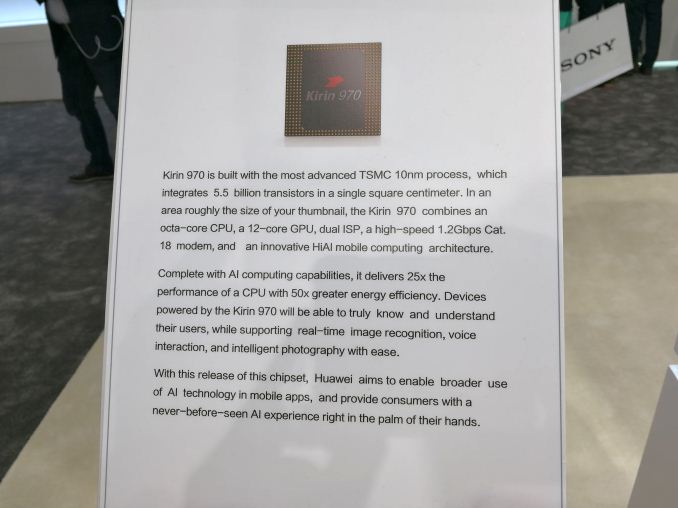
Other sticker features include dual ISP for motion detection and low light enhancement, support for HDR10 with 4K60 decoding, 4K30 encoding, and an LTE Category 18 modem, which Huawei states is good for 1.2 Gbps download. I’d be under the assumption that this is 4x carrier aggregation with 128-QAM. The Kirin 970 will also ship with an embedded Security Engine, supporting TEE and inSE.

Huawei’s final declarations on the NPU state that it is 25x the performance of a CPU with 50x the energy efficiency, and using a new HiAI (Hi-Silicon AI) nomenclature.

Huawei’s CEO, Richard Yu, has a keynote later this week and we also have some meetings with Huawei. I’m going to probe for details. The only smartphones with Kirin 970 on the show floor were generic models hooked up to development boards. Any devices coming to market (such as a Mate 9) will be a few weeks away, given launches from previous years.