News


Razer Reveals Basilisk Mouse: Made for First Person Shooters
Razer Reveals Basilisk Mouse: Made for First Person Shooters

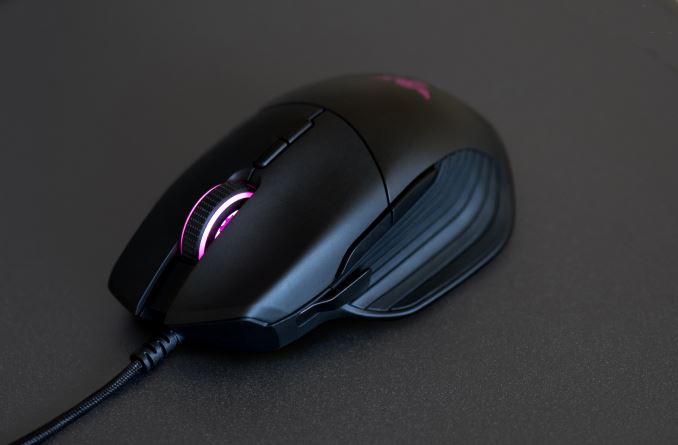
At IFA this week, Razer announced a new addition to its growing stable of mice and peripherals with the Razer Basilisk. Razer is pitching the Basilisk mouse as purpose-built for first-person shooters, while lauding the customizability of the Basilisk, saying, “This is a mouse designed for tweaking that last ounce of performance out of each gamer’s specific FPS playstyle”. That will all come out in testing and user preference, but we are able to sift through the boasting and give some information. 

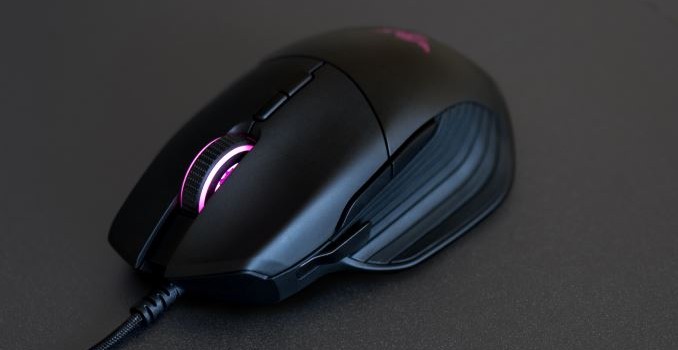
The Basilisk uses the same 16,000 DPI optical sensor found in the Lancehead Tournament Edition as well as the Death Adder Elite mice. It includes eight customizable buttons using Razer’s mechanical mouse switches, which have a 50M click lifespan, and a scroll wheel with variable resistance. The mouse is also part of their Chroma family of lighting-equipped products, using RGB LEDs on the scroll wheel as well as the Razer symbol on the palm rest area. Razer seems to be going against the trend of more is better, which I personally applaud. All programmable buttons and LEDs are controlled by Razer’s Synapse 3 Software. From the application, personalized settings can be stored on the mouse itself, or on Razer’s servers. 

One unique feature on the Basilisk is the clutch. The clutch is a small removable paddle/button on the left-hand side for easy access to additional mouse functionality. The default action is for on the fly DPI settings though it can be programmed for other uses. This can be useful in FPS games where one can quickly go from sniping where you don’t want twitch movements using low DPI, to a close battle where speed is of the essence requiring a faster response and high DPI. Razer includes two paddle sizes, a short and longer one, for accommodating different hand sizes. Alternatively, for users who don’t want the clutch, the included rubber thumb cap can be placed over it to prevent accidental use. The clutch is also customizable in the Synapse software.


The Basilisk will be available from Razerstore.com sometime in September with worldwide availability in Q4 2017. Pricing is $69.99 in the US and €69.99 in the EU.

Related Items:
Netgear Launches Orbi Pro Wi-Fi System Kit for SMBs

Netgear Launches Orbi Pro Wi-Fi System Kit for SMBs

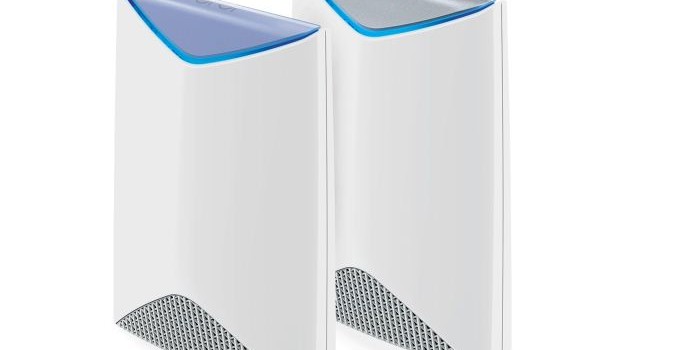
Netgear’s Orbi Wi-Fi system has emerged as one of the leading mesh / Wi-Fi systems in the market in terms of performance. The platform, with its FastLane 3 marketing moniker, was recently introduced into the range extender market also (with the Nighthawk X6S EX8000). Today, Netgear is bringing tri-band Wi-Fi to the SMB market in the form of the Orbi Pro.

The Orbi Pro (SRK60) is essentially the same as the high-end Orbi (RBK50) for the consumer market – That implies an AC3000-class router, with a 4×4 dedicated backhaul link, and one 2×2 5 GHz and one 2×2 2.4 GHz radios at each node. The target market is small businesses that don’t have dedicated IT staff. The setup process, like that for the consumer version, has been made simple enough for DIY installs (unlike most other business-targeted solutions). Managementis through an app, though, a web server is also available as part of the traditional router management model.

In order to better serve the target market, the Orbi Pro makes the following changes compared to the high-end Orbi for consumers:

  • Altered industrial design to blend in with business surroundings, with the ability to mount on the wall or ceiling (no PoE support, though).
  • Removal of the USB port from the system, as it doesn’t make much sense for business use-cases
  • Tweaked firmware with specific features for business use-cases.

The primary difference in the firmware compared to the RBK50 is the presentation of three different SSIDs out of the box – one for administration, one for employees, and another for guests. The LAN ports (3 on the router, and 4 on the satellite) are part of the administration network. The networks are isolated from each other, with the guest network carrying typical options such as restricted time allotment for clients, a captive portal for allowing access etc.

Netgear intends the system to be used for scenarios with up to 40 simultaneous devices. The SRK60 will become available next month and have a MSRP of $500.

Acer Announces Switch 7 Black Edition 2-in-1: Core i7, GeForce MX150, TB3, Fanless

Acer Announces Switch 7 Black Edition 2-in-1: Core i7, GeForce MX150, TB3, Fanless

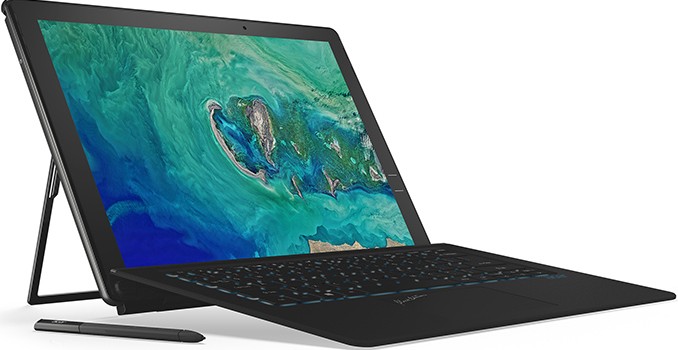
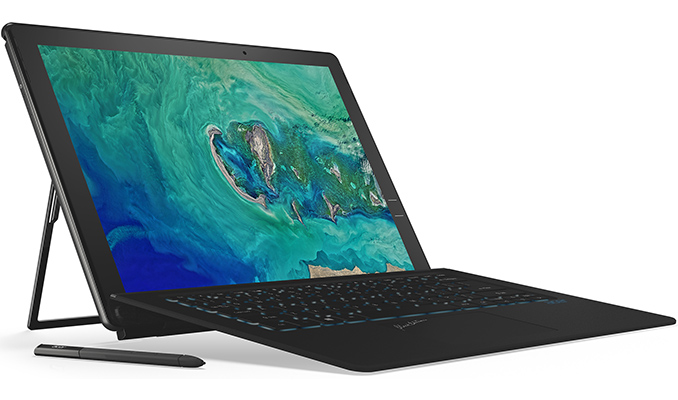
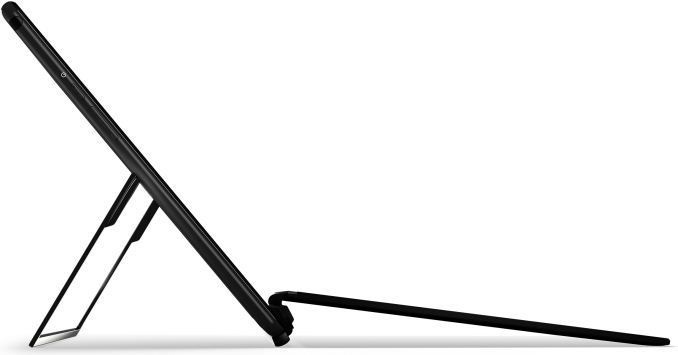
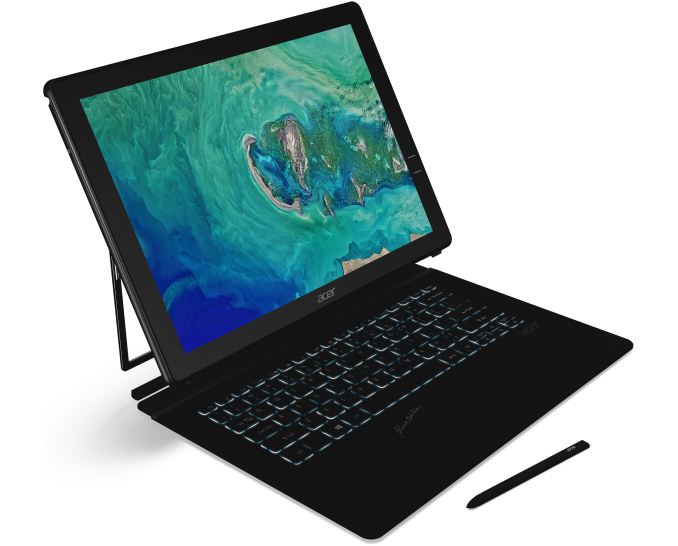
This week at IFA Acer has introduced their first 2-in-1 convertible laptop with a discrete GPU. Based on Intel’s 8th generation Core i-series CPU, the Switch 7 Black Edition system has a 13.5” display and uses a special passive cooling system that cools down the system’s CPU and GPU without using any fans. The notebook will not be very affordable, but it will also be rather unique.

In a bid to satisfy demands of users seeking for higher performance graphics, notebook makers this year decided to adopt discrete GPUs for low-power and relatively affordable laptops. To some degree, this happened because the performance of Intel’s iGPUs hasn’t shifted much as of late and, PC makers need to demonstrate performance improvements compared to previous-generation computers. A good news for the end-user is that there will be many more laptops powered by Intel’s 8th generation Core processors with entry-level discrete GPUs than there were last year from different manufacturers. Acer’s new convertible will be one of them.

The Acer Switch 7 Black Edition will be based on Intel’s Core i7 8000-series CPU (presumably featuring four cores) accompanied by NVIDIA’s GeForce MX150 discrete graphics chip (GP108, 384 stream processors, 24 texture units, 8 ROPs) with 2 GB of GDDR5 memory. The CPU and the GPU will be cooled using Acer’s dual LiquidLoop fanless cooling system that does not use any fans and is therefore utterly quiet. The machine will use solid-state storage and it is logical to expect the Switch 7 Black Edition to feature all modern I/O capabilities, including 802.11ac Wi-Fi, Bluetooth, Thunderbolt 3, USB, a MicroSD card reader and so on.

The Switch 7 Black Edition will come with a 13.5” IPS touch-enabled display with a 2256×1504 resolution and equipped with a stylus powered by Wacom’s EMR technology. The tablet itself will weight 1.15 kilograms (2.5 lbs) and given dimensions of the tablet, it is logical to assume that the system is to be equipped with a decent battery. Interestingly, the Switch 7 Black Edition will also have an optical under-glass fingerprint sensor design with POA (power on authentication). As for the materials, the 2-in-1 will be made of aluminum.

Acer plans to start selling the Switch 7 Black Edition in the North America and Europe this December. In the U.S., the machine will start at $1699, whereas in EMEA its MSRP will start at €1999. As usually, configurations will vary by region and country.

Related Reading:

ASUS Details HC102 Mixed Reality Headset for Windows

ASUS Details HC102 Mixed Reality Headset for Windows

ASUS has revealed new details about its upcoming Windows Mixed Reality headset, including specifications and price–essentially everything except for timing.

Microsoft is gearing up for the Windows 10 Fall Creators Update, which will introduce the company’s virtual reality platform: Windows Mixed Reality. Leading up to IFA in Berlin, Microsoft invited journalists to test out the Windows MR motion controllers, which may have kick-started a chain reaction of announcements from Windows MR hardware partners. On Monday, Dell revealed its aptly named Visor HMD. Tuesday, Acer spoke briefly of its Windows Mixed Reality HMD, though it didn’t reveal anything we didn’t already know about the bright blue headset. And now today, ASUS played its mixed reality hand.

ASUS HC102 Windows Mixed Reality Headset Specifications
Display 2x LCD
Resolution 2880×1200 (combined)
1440×1440 (per eye)
Refresh Rate 90 Hz
FOV 95°
Sensors Gyroscope: 6 degrees of freedom tracking
Accelerometer
Magnetometer
Proximity
Position Tracking Inside-Out Camera (x2)
Audio 3.5mm Audio Jack
Controls Microsoft Motion Controllers
Launch Price €449 (w/ Motion Controllers)

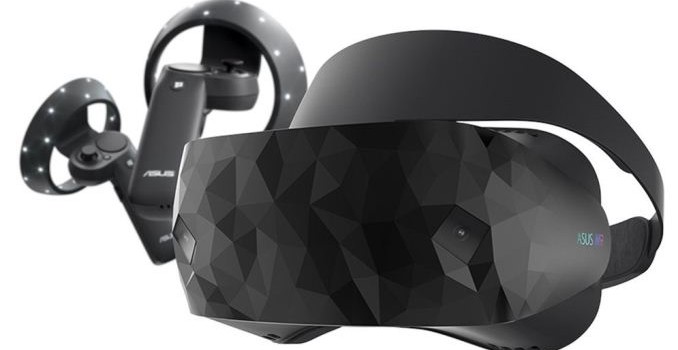
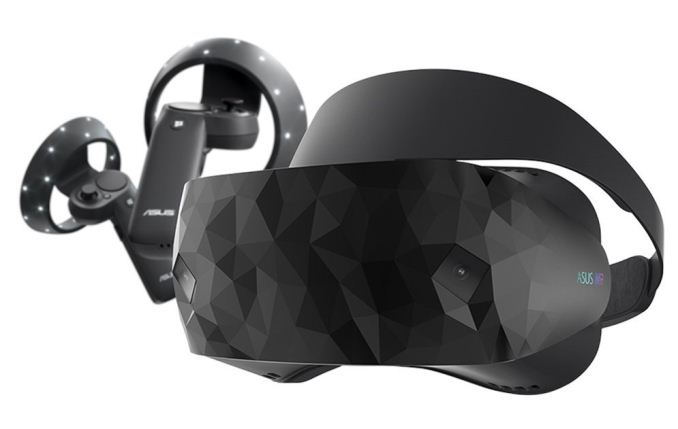
Unlike Dell, ASUS didn’t give its HMD a fancy name. It’s simply the ASUS Windows Mixed Reality Headset. It offers dual 1440 x 1440 pixel displays (for a total of 2880 x 1440) that operate at up to 90Hz. The HMD also includes the typical sensors you would expect, such as a gyroscope, accelerometer, and magnetometer. Microsoft’s Windows MR platform offers inside-out tracking (6DoF) systems that don’t require external cameras, and each Windows MR HMD features two front-facing cameras that provide spatial tracking for the unit. The ASUS headset also includes a proximity sensor. We’re not yet sure if that’s standard equipment for Windows MR headsets or a unique feature of the ASUS HMD.

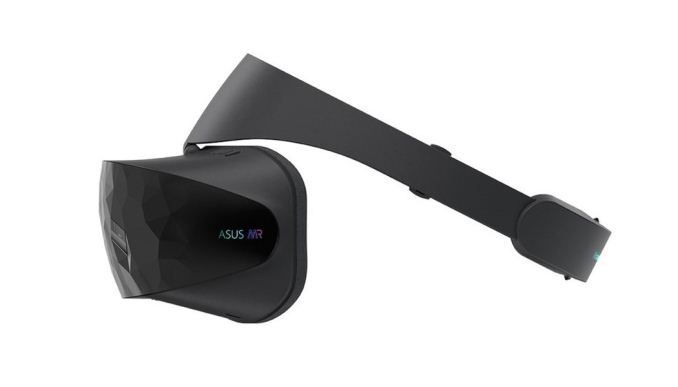
ASUS said it focused on designing a headset that would offer good hygiene. Room-scale VR games get you up and moving, and it’s not uncommon to break a sweat while playing an active game. ASUS said that the face cushion on its Windows MR headset is made of a fast-drying material with an anti-bacterial coating on the surface.

The Windows MR platform is billed as a productivity platform as much as it is an entertainment platform. Microsoft sees a future where you’ll do your work within VR and then play games in VR with the same hardware. ASUS made sure that its headset is comfortable to wear for long periods of time. It features a “balanced crown” design, which takes the pressure off of your cheeks and nose and distributes the weight between your forehead and the back of your head. Also, the headset weighs less than 400g, so it should put minimal stress on your neck.

ASUS didn’t say when it would release the ASUS Windows Mixed Reality Headset, though it said the hardware would sell with Microsoft’s motion controllers for €449. The company didn’t reveal the US price. Dell’s Visor headset is scheduled for an October release, and we imagine that ASUS would shoot for a similar launch window.

Kevin Carbotte contributed to this report