News


BenQ Announces ZOWIE XL2546 ‘eSports’ Display: 24'', FHD, 240 Hz, DyAc ULMB Tech

BenQ Announces ZOWIE XL2546 ‘eSports’ Display: 24”, FHD, 240 Hz, DyAc ULMB Tech

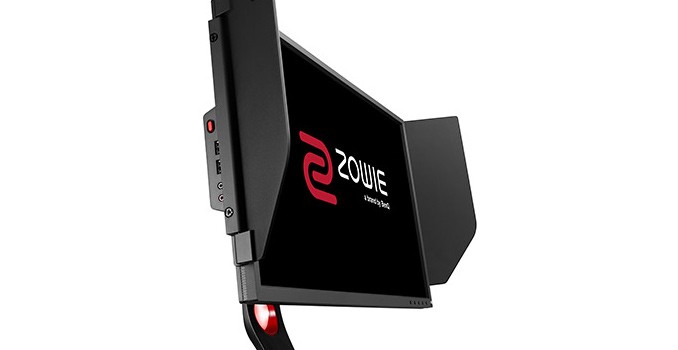
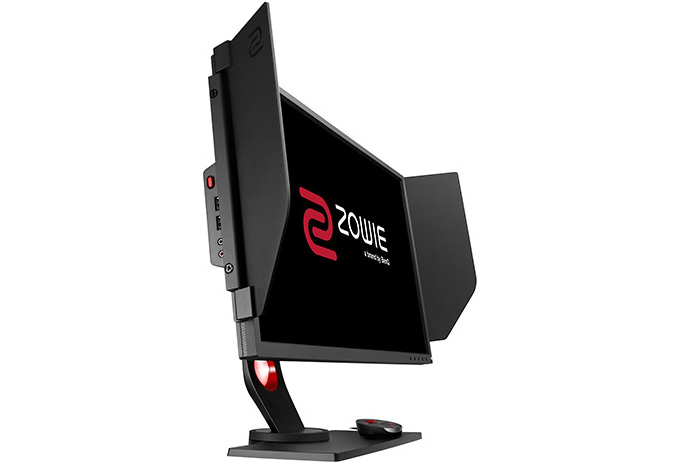
BenQ this week introduced a new version of its ZOWIE XL2540 ultra-fast gaming display it launched last year. The improved device carrying the XL2546 model number has the same specifications as its predecessor, including a 1920×1080 resolution and a refresh rate as high as 240 Hz, but also adds BenQ’s proprietary DyAc (Dynamic Accuracy) technology designed to make fast-motion scenes a bit more clear.

The BenQ ZOWIE XL2540 monitor is one of the fastest gaming displays on the market today. The unit was launched in late 2016 and now BenQ launches its improved version, the ZOWIE XL2546 with DyAc. According to a preorder page at B&H, the new model mimics nearly the specs of the predecessor, then the new display features the same 24.5” TN panel from AU Optronics with a 1920×1080 resolution (it is the only 24″ FHD panel with a 240 Hz refresh rate), supports for 16.7 million (6-bit + FRC) colors, has a typical contrast ratio for mainstream screens (1000:1), as well as offers a 320 cd/m2 brightness, which is lower compared to what the XL2540 offers (400 cd/m2). For some reason, with the ZOWIE XL2546, BenQ continues to ignore AMD’s FreeSync and NVIDIA’s G-Sync dynamic refresh rate technologies.

Two main features of the ZOWIE XL2546 display are its native 240 Hz refresh rate as well as the company’s DyAc (Dynamic Accuracy) technology that enhances the display’s motion clarity. The manufacturer does not explain anything about this tech, but from various media reports (e.g., this one) it appears that the DyAc is BenQ’s implementation of Ultra Low Motion Blur backlight strobing. ULMB reduces motion blur by inserting a black image between each frame of video and thus reducing time each frame is displayed. Given the hardware similarities between the monitors, I’m left to ponder of BenQ could have enabled this in current monitors via a firmware update, but for some reason BenQ decided not to add it to the ZOWIE XL2540, but to launch a new display instead.

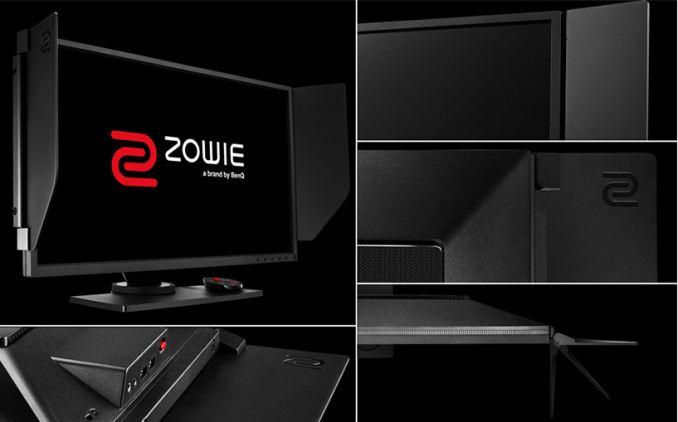
Other interesting capabilities of the ZOWIE XL2540/XL2546 are the Black eQualizer that increases the brightness of dark areas without oversaturating the bright areas, an option to quickly increase color vibrancies, a special external controller to activate different settings and profiles rapidly, as well as a light-shielding hood (which BenQ calls a way to help gamers to focus on their games).

Just like the XL2540, the XL2546 uses DisplayPort 1.2, HDMI, and DVI-DL to connect to host PCs (though it should be noted that DVI does not support a 240 Hz refresh rate). In addition, the monitor has an integrated three-port USB hub and a PSU.

BenQ plans to showcase the ZOWIE XL2546 display at DreamHack Atlanta 2017 this weekend. The company does not disclose anything regarding the price or the ETA of the new unit officially, but B&H is charging $549 for the new unit, which is $50 higher compared to its predecessor.

Related Reading:

Dell’s UltraSharp U3818DW Now Available: Curved 37.5”, 3840×1600, USB-C, $1499

Dell’s UltraSharp U3818DW Now Available: Curved 37.5”, 3840×1600, USB-C, $1499

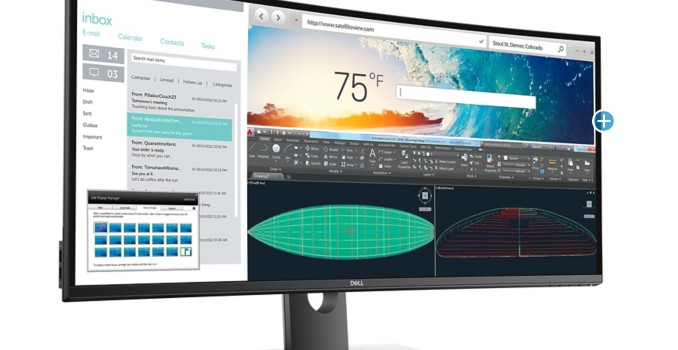
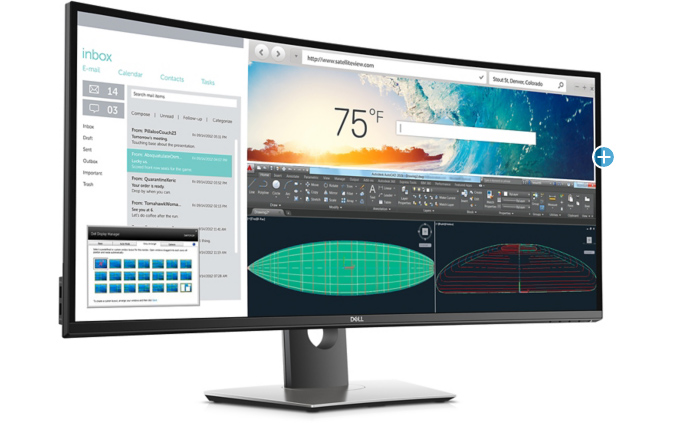
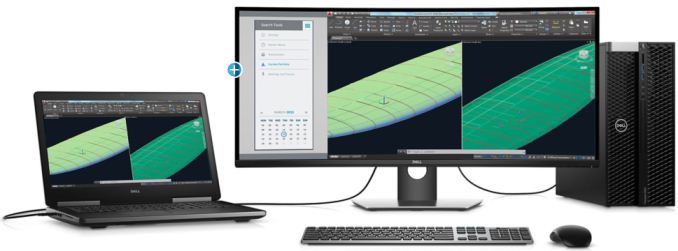
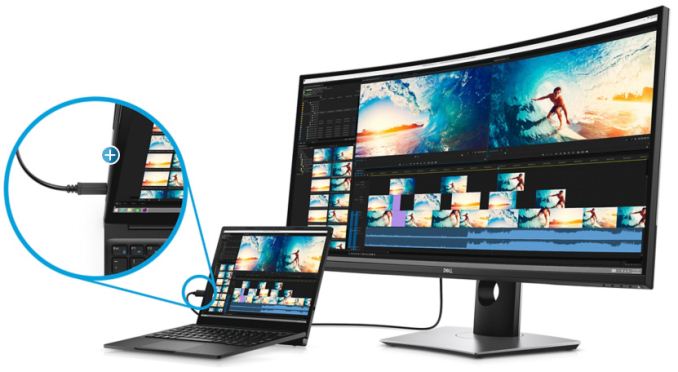
Dell this week began shipments of its curved ultra-wide 3840×1600 UltraSharp U3818DW display. The monitor is the fourth screen of this size and with this resolution on the market, and one of a few displays with a USB Type-C input (via DP 1.2 alternate mode). Dell is positioning its U3818DW as a business-class monitor, so it gets market-typical features such as an antiglare coating, but notably it does not get support for AMD’s FreeSync (which is available on competing monitors).

The Dell UltraSharp U3818DW is based on a 37.5” 8-bit + FRC IPS panel featuring a 3840×1600 resolution, a 24:10 aspect ratio, 2300R curvature, and 1.07 billion colors. This panel has rather unique specifications and comes from LG Display. So far, three displays have used the panel for monitors aimed at consumers. For example, LG’s own 38UC99 and Acer’s XR382CQK come with FreeSync support and up to 75 Hz refresh rate (LG’s one only supports 75 Hz when FreeSync is used). Moreover, ASUS’s Designo Curve MX38VQ has integrated wireless Qi charging, whereas the LG 38UC99 has Bluetooth speakers (to playback music from smartphones or notebooks without using wires), two consumer-oriented features. By contrast, Dell seems to position its UltraSharp U3818DW in a similar way that it positions a number of its other curved displays: as a solution for business users looking to do a lot of multi-tasking.

Dell UltraSharp U3818DW
Panel 37.5″ IPS
Resolution 3840 × 1600
Refresh Rate 60 Hz
Response Time 5 ms gray-to-gray
 
Brightness 350 cd/m²
Contrast 1000:1 (?)
Viewing Angles 178°/178° horizontal/vertical
Color Saturation 99% sRGB
78.1% DCI-P3
Pixel Pitch ~0.23 mm
Pixel Density 110 ppi
Anti-Glare Coating Yes
Inputs 1 × DisplayPort 1.2
2 × HDMI 2.0
1 × USB 3.0 Type-C
USB Hub 4 port USB 3.0 hub: four USB-A
Audio 9 W × 2
Launch Price $1499.99

In a bid to better appeal to the target audience, Dell has managed to increase maximum brightness of its U3818DW to 350 nits (from 300 nits on competing monitors), added an antiglare coating, and also added support for Dell’s Command remote management capability. Each screen is sRGB-calibrated to Delta E < 2 accuracy, which is important for those who work with color-managed content. Meanwhile, the monitor also technically supports the DCI-P3 color gamut, but only covers 78.1% of it.

Dell’s formal positioning of the U3818DW does not really curtail its advantages for home users. Its resolution and the aspect ratio are well suited for displaying HD and UHD content filmed in an aspect ratio of 2.35:1 or 2.40:1 (a lot of movies are shot in such aspect ratios) as well as for games. Meanwhile, the monitor is equipped with HDCP 2.2, so it can display protected UHD content transfered to it using one DP 1.2 or two HDMI 2.0 inputs.

37.5” Curved Displays with 3840×1600 Resolution
Model Acer
XR382CQK
ASUS
MX38VQ
Dell
U3818DW
LG
38UC99
Inputs 1×DisplayPort 1.2
1×mDP 1.2
1×HDMI 2.0
1 × MHL 1.2
1 × USB-C (alt mode DP1.2)
1×DisplayPort 1.2
2×HDMI 2.0
1×DisplayPort 1.2
2×HDMI 2.0
1×USB-C (alt mode DP1.2)
 
1×DisplayPort 1.2
2×HDMI 2.0
Max. Refresh Rate 75 Hz unknown 60 Hz 60 Hz – 75 Hz with FS
Dynamic Refresh Rate FreeSync unknown no FreeSync
Audio 2×7W 2×8W Harman 2×9W 2×10W Bluetooth
USB Hub 4-port USB-A 3.0   4-port USB-A 3.0
(2 upstream ports)
3-port USB 3.0:
2×USB-A
1×USB-C
Special Features Qi charging (5W/1A) Antiglare coating
sRGB at Delta E
Approximate Price $1300 $1100 $1500 $1700

Dell’s UltraSharp U3118DW is now available directly from Dell for $1500, which is a bit lower than the price of LG’s 38UC99, but higher compared to similar displays from Acer (available now) and ASUS (set to be available in Q3).

Related Reading:

MAINGEAR Launches R2 Razer Edition: Mini-ITX System with AMD Ryzen or Intel Core i7

MAINGEAR Launches R2 Razer Edition: Mini-ITX System with AMD Ryzen or Intel Core i7

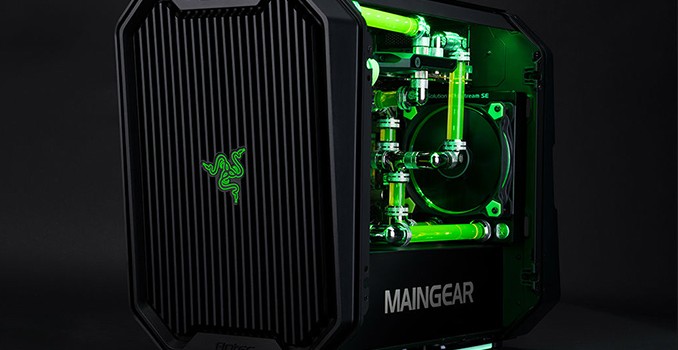
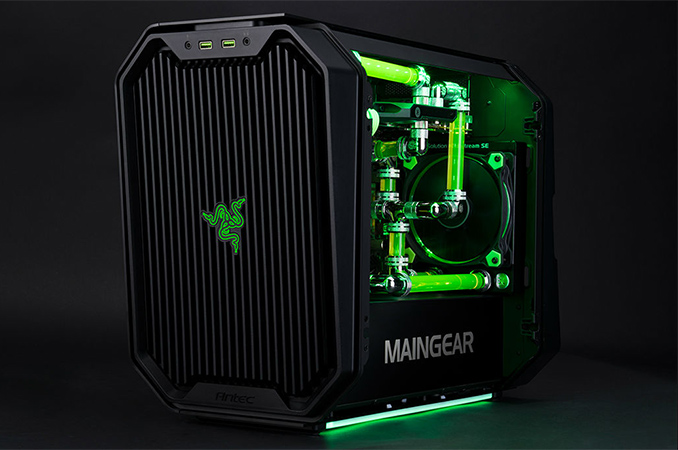
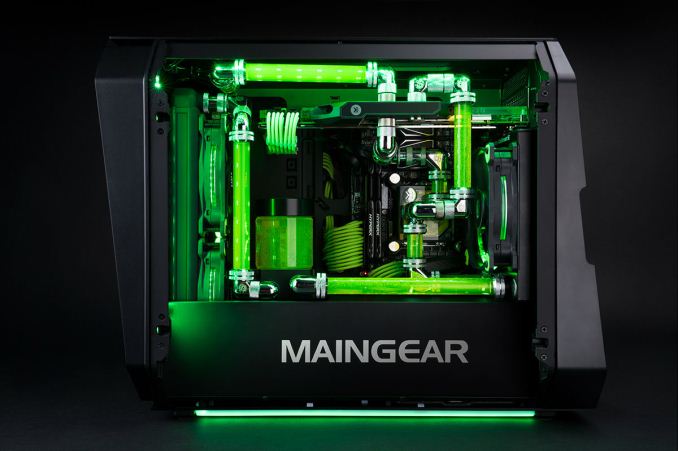
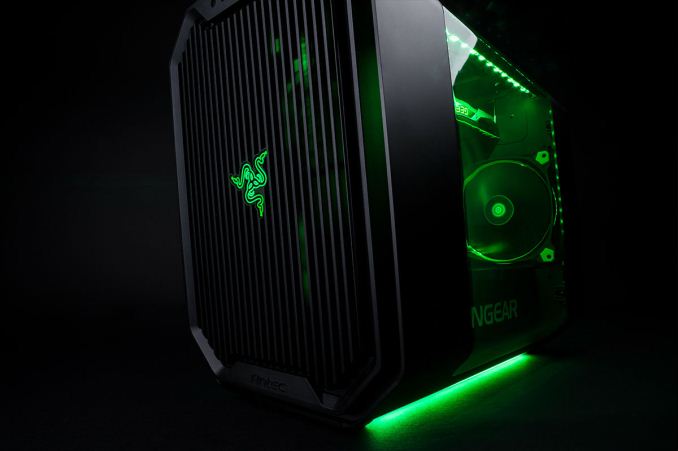
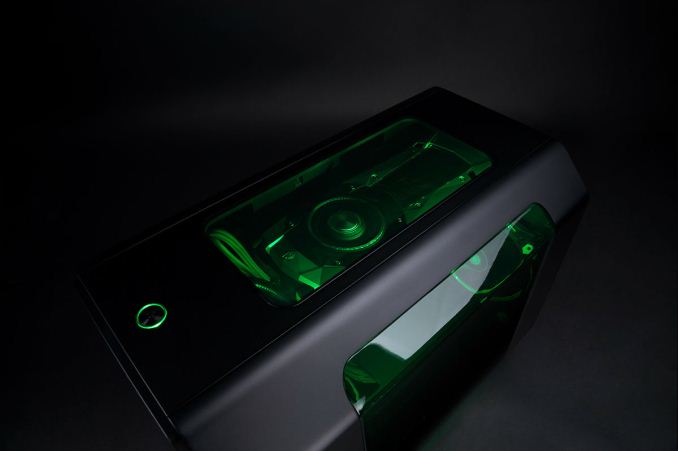
MAINGEAR this week introduced the first small form-factor Razer Edition desktop aimed at loyal clients of Razer. The new MAINGEAR R2 Razer Edition uses AMD’s and Intel’s latest platforms and comes with a lot of green lights, green coolant, and other green features to reflect the company’s main color.

Razer has made quite a name for itself over the years in the gaming laptop market, but instead of entering the desktop business, the company decided to collaborate with renowned system builders to produce “Razer Edition” PCs. This enables Razer to offer Razer-branded desktops customers without entering a highly competitive market, whereas its partners gain access to Razer’s customer base. So far, Razer has collaborated with Lenovo and MAINGEAR for tower gaming desktops aiming mainstream and no-compromise gamers. With the MAINGEAR R2 Razer Edition, the two companies offer something for those who are looking for a miniature system featuring extreme components with further overclocking potential and liquid cooling.

The MAINGEAR R2 Razer Edition is a Mini-ITX desktop that can fit in a motherboard based on AMD’s B350 or Intel’s Z270 chipset as well as an AMD Ryzen R5/R7 or Intel Core i5/i7 CPU respectively. Keeping the form-factor in mind, the R2 Razer desktop can fit in one graphics card (up to NVIDIA’s Titan Xp), one 3.5” or two 2.5” storage devices, as well as one M.2 PCIe 3.0 x4 NVMe SSD. Unlike many contemporary gaming desktops, the MAINGEAR R2 can accommodate a 5.25” ODD, and when equipped with an appropriate drive, can playback Blu-ray disks.

When it comes to the motherboard choice, MAINGEAR offers ASRock AB350 Gaming-ITX/ac for use with AMD’s Ryzen processors or ASUS ROG Strix Z270I Gaming or MSI Z270I Gaming Pro Carbon AC for Intel’s Core i7 CPUs. All of the motherboards feature GbE, 802.11ac Wi-Fi, Bluetooth 4.2, 7.1-channel audio, as well as USB 3.1 connectivity. MAINGEAR’s product brochure for the R2 also mentions ASRock’s X99 Mini-ITX motherboard, but at this point, it is impossible to order such a system, which is not surprising as this is an outgoing platform.

Cooling is crucially important for high performance gaming PCs and MAINGEAR offers many options for the R2 Razer Edition. For entry-level builds, MAINGEAR can install AMD’s or Intel’s retail CPU coolers and keep stock cooling systems on the GPU. For something more advanced, the company offers the closed loop EPIC 240 LCS for the CPU. For high-end configurations MAINGEAR can also build a custom open loop LCS for both the CPU and GPU featuring soft tubing and a 360 mm radiator, whereas for ultra-high-end builds the PC maker can design a custom LCS with crystal or metal hardline tubing, chrome fittings, and other stylish components.

MAINGEAR’s R2 Razer Edition desktops are now available from the company’s web site. Entry-level machines featuring AMD’s Ryzen R5 or Intel’s Core i5 start at $1099 and $1199, respectively. Meanwhile, SuperStock configurations featuring a customized LCS with hardline tubing and top-of-the-range CPUs and GPUs start at $4299 or $4399 depending on the platform.

Related Reading:

ADATA Launches ISSS314 and IM2P3388 Industrial SSDs: 3D NAND, Extreme Temps

ADATA Launches ISSS314 and IM2P3388 Industrial SSDs: 3D NAND, Extreme Temps

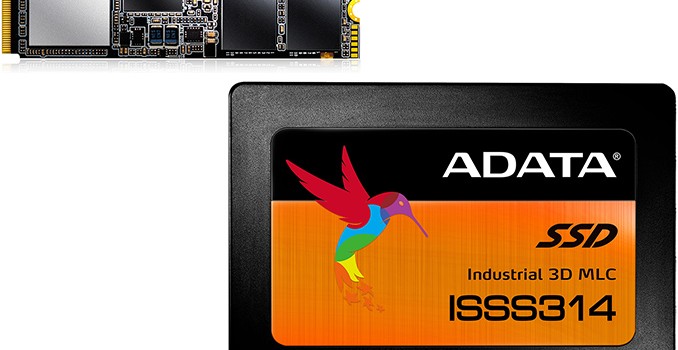
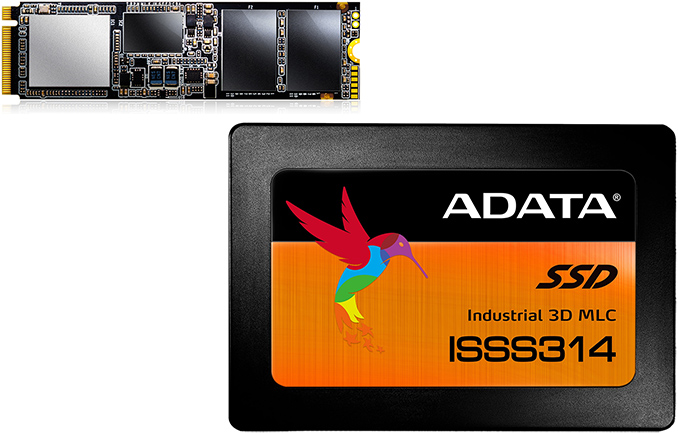
ADATA has introduced two new families of 3D NAND-based SSDs aimed at industrial applications. Dubbed the ISSS314 and the IM2P3388, these drives are designed to handle extreme temperatures as well as humidity levels, allowing them to work reliably in very tough environmental conditions. The more powerful IM2P3388 drives use a PCIe interface and offer high performance levels along with a powerful ECC engine and encryption, whereas the less speedy ISSS314 uses a SATA interface and offers very low power consumption that barely tops 2.5 W.

The IM2P3388: M.2, High Performance, Extreme Temps, Encryption, TCG Opal

The ADATA IM2P3388 is an M.2 drive that uses a NVMe PCIe 3.0 x4 interface and is based on 3D MLC NAND. This specific drive is designed to withstand ESD and EMI, up to 20 G vibration and 1500G/0.5ms shock, extreme temperatures from –40°C to +90°C, as well as high humidity (5%-95% RH, non-condensing). To put it into perspective: the IM2P3388 drives can operate in Antarctica or in the Lut Desert in Iran. In the real world, ADATA’s new SSDs will serve inside space-constrained industrial or commercial PCs, servers, military-grade systems, and embedded computers.
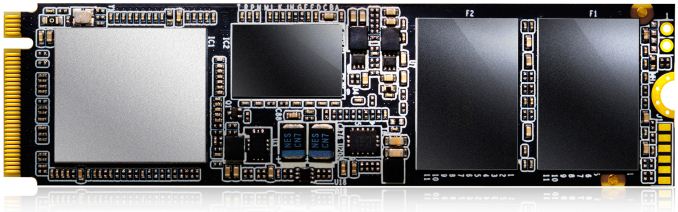
The IM2P3388 drives are based on a Silicon Motion controller that ADATA does not name, we suspect is the SM2260 with some additional customization. As for the NAND, the IM2P3388 SSDs use carefully selected 3D MLC that can handle high temperatures for prolonged amounts of time. The IM2P3388 takes advantage of all the capabilities of the controller and therefore supports AES-256 encryption, TCG Opal 2.0 spec, end-to-end data protection, and so on. In addition, the drive has multiple sensors that monitor its condition.

ADATA IM2P3388 SSD Specifications
Capacity 128 GB 256 GB 512 GB 1 TB
Model Number Commercial IM2P3388-128GB IM2P3388-256GB IM2P3388-512GB IM2P3388-001TB
Industrial IM2P3388-128GC IM2P3388-256GC IM2P3388-512GC IM2P3388-001TC
Controller Silicon Motion SM2260 (?)
NAND Flash 3D MLC NAND
Form-Factor, Interface M.2-2280, PCIe 3.0 x4, NVMe 1.2
Operating Temperature Commercial -10°C to 80°C
Industrial -40°C to C to 90°C
Vibration Resistance 20G (10 – 2000 Hz)
Shock Resistance 1500G/0.5 ms half sine wave
Operating Humidity 5% – 95% RH non-condensing
Sequential Read ~1000 MB/s (?) ~2000 MB/s (?) 2500 MB/s
Sequential Write ~300 MB/s (?) ~600 MB/s (?) 1100 MB/s
Random Read IOPS unknown
Random Write IOPS unknown
Pseudo-SLC Caching Supported
DRAM Buffer Yes, capacity unknown
TCG Opal Encryption Yes
Power Consumption Up to 4.8W
Power Management DevSleep, Slumber
Warranty unknown
MTBF >2,000,000 hours

As for performance, ADATA specifies the drive to offer up to 2.5 GB/s sequential read speeds and up to 1.1 GB/s sequential write speeds (when pSLC caching is used), but does not specify random performance. ADATA’s IM2P3388 will be available in 128 GB, 256 GB, 512 GB, and 1 TB configurations. Keeping in mind the high density of modern flash chips, expect the entry-level models to be slower than their higher-capacity counterparts. In general, expect performance  of the IM2P3388 to be comparable to the XPG SX8000 drives featuring the SM2260 and 3D MLC.

The ISSS314: 2.5”, Extreme Temps, Low Power, Starting at 32 GB

The ADATA ISSS314 SSDs come in a traditional 2.5”/7 mm drive form-factor and use a SATA 6 Gbps interface. In order to satisfy the diverse needs of customers, ADATA will offer the ISSS314 in 32 GB, 64 GB, 128 GB, 256 GB, and 512 GB configurations. The higher-end models will provide up to 560 MB/s sequential read and up to 520 MB/s sequential write speeds, whereas the entry-level drives will be considerably slower. As for power consumption, the new SSDs are rated to only use up to 2.5 W, which puts them into the energy efficient category.
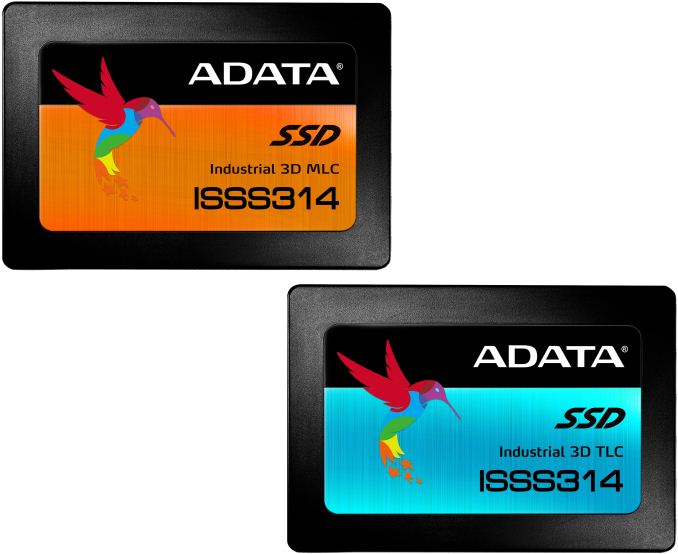
The ISSS314 SSDs are based on an unknown controller as well as 3D MLC and 3D TLC NAND memory sorted using ADATA’s proprietary A+ testing methodology to find the higher quality chips. The industrial ISSS314 drives based on 3D MLC memory are rated to withstand shock, EMI, and extreme temperatures from –40°C to +85°C, and thus are aimed at industrial applications. By contrast, commercial 3D MLC ISSS314 SSDs are rated for –10°C to +80°C operation. Meanwhile, the 3D TLC-powered ISSS314 is guaranteed to work in a temperature range from 0°C to +70°C, but can also withstand shocks, ESD, EMI, and so on. As for features, all the ISS314 SSDs have S.M.A.R.T, a temperature sensor, hardware power detection, and flash protection.

ADATA ISSS314 Specifications
Capacity 32 GB 64 GB 128 GB 256 GB 512 GB
Model Number MLC Commercial ISSS314-032GB ISSS314-064GB ISSS314-128GB ISSS314-256GB ISSS314-512GB
Industrial ISSS314-032GC ISSS314-064GC ISSS314-128GC ISSS314-256GC ISSS314-512GC
TLC Commercial ISSS314-128GD ISSS314-256GD ISSS314-512GD
Controller Silicon Motion SM2258 (?)
Form-Factor/Interface 2.5″/7 mm/SATA
NAND MLC Commercial 3D MLC
Industrial 3D MLC
TLC Commercial 3D TLC
Operating Temp. MLC Commercial -10°C to 80°C
Industrial -40°C to C to 85°C
TLC Commercial 0°C to 70°C
Vibration Resistance 20G (10 – 2000 Hz)
Shock Resistance 1500G/0.5 ms half sine wave
Operating Humidity 5% – 95% RH non-condensing
Sequential Read unknown 560 MB/s
Sequential Write unknown 520 MB/s
Random Read IOPS Up to 90K IOPS (taken from SM2258, actual will be lower)
Random Write IOPS Up to 80K IOPS (taken from SM2258, actual will be lower)
Pseudo-SLC Caching Supported
DRAM Buffer Yes, capacity unknown
TCG Opal Encryption No
Power Consumption Up to 2.5W
Power Management DevSleep
Warranty unknown
MTBF 2,000,000 hours

ADATA does not publish recommended prices for its industrial and commercial SSDs. Since such products rarely show up in mainstream retail, their actual prices for customers typically fluctuate depending on the order size and other factors.

Related Reading: