News


Qualcomm Announces First OEMs for Windows 10 on Snapdragon 835
Qualcomm Announces First OEMs for Windows 10 on Snapdragon 835

Today, as part of Computex 2017, Qualcomm and Microsoft are joint announcing the next steps for their Windows on Snapdragon strategy. As previously reported, Qualcomm and Microsoft have collaborated to emulate x86 on the Snapdragon 835 SoCs such that Windows 10/ARM can now run x86 Windows applications, and this emulation has reached a point where it’s ready for devices to come to market.

ASUS, HP and Lenovo will be the first OEMs to adopt the platform, which means we will see devices (laptops, clamshells, 2-in-1s) with the desktop version of Windows 10 but running on ARM. Qualcomm notes that the ubiquitous connectivity akin to smartphones is becoming an important aspect to how users use their computers as well as consume content – introducing the Snapdragon 835 on a productivity platform combined with the integrated Gigabit LTE baseband (Qualcomm’s X16) is a step in that direction along with mobile SoC levels of power draw.

When we first heard about Windows on Snapdragon, we instantly thought that Qualcomm and Microsoft would be going after the Chromebook market, but the announcement today is clear that both companies are going for something a bit more substantial along with all-day battery life. The official press release states that ‘Sleek, thin and fanless PCs running a Windows 10 experience’, with the 10nm SoC, sounds something more than a basic Chromebook.

One might suggest that the Snapdragon 835 is a premium SoC, and Qualcomm certainly wants to promote their hardware in high-end premium devices. With Snapdragon 835 in high-end smartphones, one of the elements Qualcomm is promoting is the fact that their SoC solution has a smaller PCB footprint: OEMs can use the extra space and weight for extra battery. This is part of the story which Qualcomm states allowing a ‘truly always on’ device such that updates can run in the background when the system is in sleep modes.

As part of the demonstrations on the Computex show floor, Qualcomm was showing Windows 10 being used with UWP applications but also some non-UWP apps being used, such as 7-zip. The OS element is something we’re likely to hear during Microsoft’s announcements during the week, which I feel might be a tipping point for these sorts of platforms. I’ve been using the MateBook X this week during Computex, and the battery life is actually fairly decent for an 1800 Euro ultraportable with a 15W CPU: but there’s still a small amount of battery anxiety for sure, especially during network use. Qualcomm’s value-add is their baseband experience, which they say is a big plus on this new platform.

Having a proper productivity device is a plus, but big questions still surround performance, especially when emulating x86. It’s a problem that has been tackled several times before without much success. The Qualcomm issue here is somewhat smaller than previous attempts, because as far as we understand it only has to target Windows 10, and they’ve worked directly with Microsoft in order to support it. Qualcomm and Microsoft say that this combination is now a solved problem with minimal overhead.

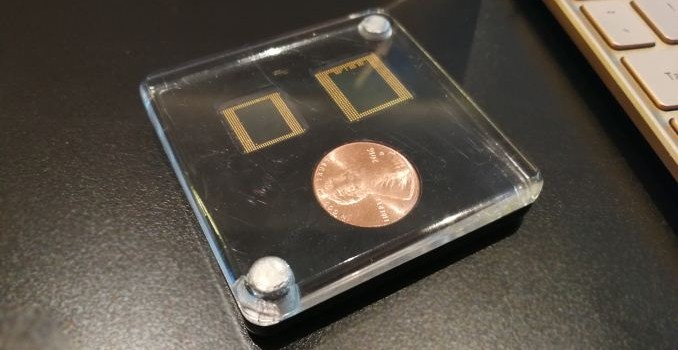
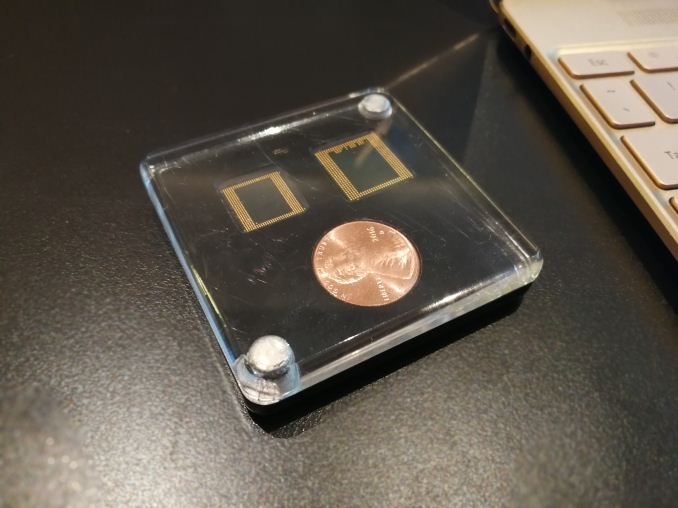
The carousel image at the top shows the S835 compared to a 14nm equivalent, showing the ‘board space’ savings of up to 30%. Qualcomm is keen to point out that a competitor’s platform will need things like M.2 in order to add storage, which they say also take up board space compared to a Qualcomm solution.

Footprints

As part of our briefing, Qualcomm showed off an example reference PCB design that might go into the devices that they are targeting. 

On the left is an Intel solution, and on the right is Qualcomm’s S835 solution: 96.1cm2 compared to 50.4cm2 respectively. Here’s a closer image of the Qualcomm solution (click through for high resolution):

The SoC is on the top right, with storage and memory to the left. It’s worth noting on the far right is a USB Type-C connection, which would be the power input as well as how to connect other devices. There is no SIM card, because Qualcomm has integrated a multi-region eSIM which is activated at the time of purchase.

Qualcomm Announces First OEMs for Windows 10 on Snapdragon 835

Qualcomm Announces First OEMs for Windows 10 on Snapdragon 835

Today, as part of Computex 2017, Qualcomm and Microsoft are joint announcing the next steps for their Windows on Snapdragon strategy. As previously reported, Qualcomm and Microsoft have collaborated to emulate x86 on the Snapdragon 835 SoCs such that Windows 10/ARM can now run x86 Windows applications, and this emulation has reached a point where it’s ready for devices to come to market.

ASUS, HP and Lenovo will be the first OEMs to adopt the platform, which means we will see devices (laptops, clamshells, 2-in-1s) with the desktop version of Windows 10 but running on ARM. Qualcomm notes that the ubiquitous connectivity akin to smartphones is becoming an important aspect to how users use their computers as well as consume content – introducing the Snapdragon 835 on a productivity platform combined with the integrated Gigabit LTE baseband (Qualcomm’s X16) is a step in that direction along with mobile SoC levels of power draw.

When we first heard about Windows on Snapdragon, we instantly thought that Qualcomm and Microsoft would be going after the Chromebook market, but the announcement today is clear that both companies are going for something a bit more substantial along with all-day battery life. The official press release states that ‘Sleek, thin and fanless PCs running a Windows 10 experience’, with the 10nm SoC, sounds something more than a basic Chromebook.

One might suggest that the Snapdragon 835 is a premium SoC, and Qualcomm certainly wants to promote their hardware in high-end premium devices. With Snapdragon 835 in high-end smartphones, one of the elements Qualcomm is promoting is the fact that their SoC solution has a smaller PCB footprint: OEMs can use the extra space and weight for extra battery. This is part of the story which Qualcomm states allowing a ‘truly always on’ device such that updates can run in the background when the system is in sleep modes.

As part of the demonstrations on the Computex show floor, Qualcomm was showing Windows 10 being used with UWP applications but also some non-UWP apps being used, such as 7-zip. The OS element is something we’re likely to hear during Microsoft’s announcements during the week, which I feel might be a tipping point for these sorts of platforms. I’ve been using the MateBook X this week during Computex, and the battery life is actually fairly decent for an 1800 Euro ultraportable with a 15W CPU: but there’s still a small amount of battery anxiety for sure, especially during network use. Qualcomm’s value-add is their baseband experience, which they say is a big plus on this new platform.

Having a proper productivity device is a plus, but big questions still surround performance, especially when emulating x86. It’s a problem that has been tackled several times before without much success. The Qualcomm issue here is somewhat smaller than previous attempts, because as far as we understand it only has to target Windows 10, and they’ve worked directly with Microsoft in order to support it. Qualcomm and Microsoft say that this combination is now a solved problem with minimal overhead.

The carousel image at the top shows the S835 compared to a 14nm equivalent, showing the ‘board space’ savings of up to 30%. Qualcomm is keen to point out that a competitor’s platform will need things like M.2 in order to add storage, which they say also take up board space compared to a Qualcomm solution.

Footprints

As part of our briefing, Qualcomm showed off an example reference PCB design that might go into the devices that they are targeting. 

On the left is an Intel solution, and on the right is Qualcomm’s S835 solution: 96.1cm2 compared to 50.4cm2 respectively. Here’s a closer image of the Qualcomm solution (click through for high resolution):

The SoC is on the top right, with storage and memory to the left. It’s worth noting on the far right is a USB Type-C connection, which would be the power input as well as how to connect other devices. There is no SIM card, because Qualcomm has integrated a multi-region eSIM which is activated at the time of purchase.
AMD Vega Updates: Vega Frontier Edition Available June 27th, Vega RX to be launched at SIGGRAPH at end of July

AMD Vega Updates: Vega Frontier Edition Available June 27th, Vega RX to be launched at SIGGRAPH at end of July

With Computex in full swing this week, AMD’s press conference just wrapped up for the morning. While the bulk of the news in the conference was on AMD’s CPU and APU plans – where the company continues to roll out new Ryzen products – the company’s CEO, Dr. Lisa Su did have a bit to say on the GPU side of matters.

First off, the previously announced Vega Frontier Edition card will be available on June 27th, just making AMD’s previous H1’17 commitment for Vega. The Frontier Edition is AMD’s first batch of Vega-based cards, and is being marketed specifically towards early adopters in the professional segment. A price has not been announced, but expect it to be high.

Second up, Lisa promised more information on the Vega-based Radeon Instinct MI25 on June 20th. This is when the company will be launching their Epyc processor for servers, so they are aligning server/datacenter announcements across product lines. Instinct won’t be launching here, but we should get at least a few more details on configurations and positioning.

Finally, in the piece of news that pretty much everyone has been on the edge of their seats for, AMD has finally announced a date where they’ll announce the consumer-oriented Radeon RX Vega. The mythical card’s launch will be taking place at SIGGRAPH this year, the Association for Computing Machinery’s annual graphics conference. SIGGRAPH is an interesting choice for a venue, as it’s not a consumer event (as opposed to say E3 or IFA), but AMD is no stranger to the show, having launched their Radeon WX professional products there last year. SIGGRAPH runs from July 30th to August 3rd, so it’s almost exactly 2 months out.

For anyone looking for any further details on RX Vega however, you’re out of luck. To AMD’s credit, they are clearly well aware of pent-up consumer interest in the card and they did show a demo of CrossFired RX Vegas playing Prey at 4K, but they are not revealing any additional information on the card or its specifications at this time. This information is presumably all going to come at the same time at SIGGRAPH. The million dollar question now being whether the SIGGRAPH event is a hard launch, or whether AMD will unveil the products and then have them ship a few weeks later, which would be similar to how the Polaris launch went down.