News


Qualcomm Announces Mesh Networking Wi-Fi Router Reference Design with IoT Functionality
Qualcomm Announces Mesh Networking Wi-Fi Router Reference Design with IoT Functionality

The last couple of years has seen rapid proliferation of mesh networking kits / whole-home Wi-Fi systems in the market. Recent market research suggests that the mesh network segment is almost up to a quarter of the whole Wi-Fi router market. Almost all of the Wi-Fi system kits currently in the market (such as the Netgear Orbi, TP-Link Deco, D-Link Covr, Luma, eero etc.) are based on Qualcomm silicon. Notable exceptions are the Securifi Almond 3, Amped Wireless Ally, and the Ubiquiti Networks AmplifiHD (the AmplifiHD is also based on Qualcomm silicon).

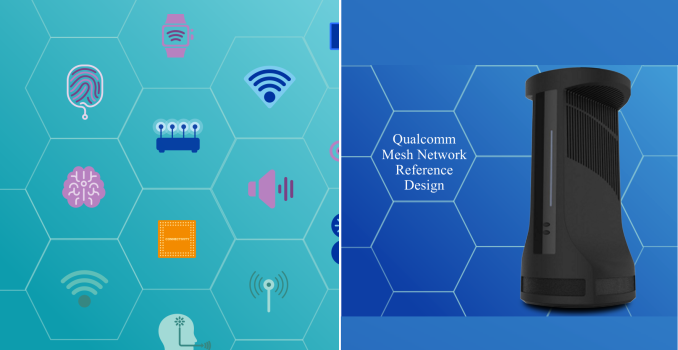
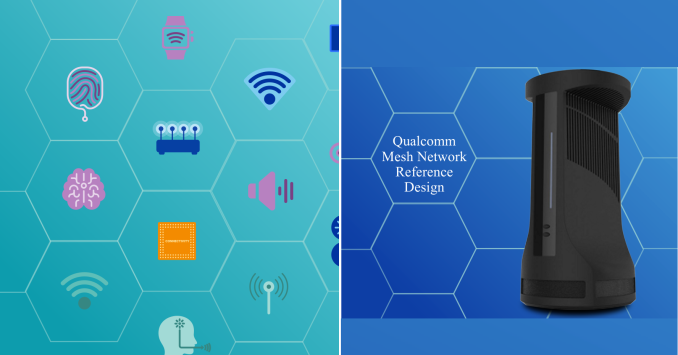
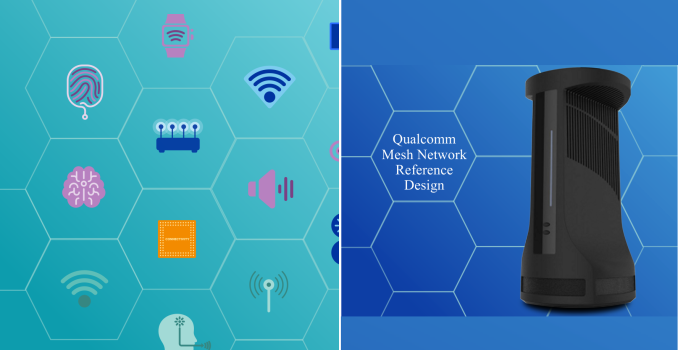
As part of the 2017 Computex announcements, Qualcomm is taking the lead in formalizing the roadmap for mesh routers. Most of the mesh networking features are based on Qualcomm’s Wi-Fi SON (self-organizing networks) set of firmware features. Qualcomm is terming the current set of features as ‘Mesh Networking 1.0’. Today’s announcement is a reference design (the Qualcomm Mesh Networking Platform) which includes / improves these existing features, and also adds some IoT functionality.

The reference design is based on the IPQ40x8/9 platform with Wi-Fi SON functionality integrated. The IPQ40x8/9 is Qualcomm’s dual-radio networking SoC, which has the option to add a third radio via its PCIe lanes. As part of a reference design for the next-generation mesh networking systems, the following features are added as part of the firmware and accompanying hardware to the SoC:

  • IoT connectivity feature suite – A 802.15.4 (ZigBee) radio, as well as Bluetooth (with the CSRmesh functionality), has been added to enable the new systems to interact directly with smart home devices (without the need for an IP bridge in the middle). Since ZigBee and Bluetooth also operate in the 2.4 GHz band, Qualcomm has added interference mitigation to the board design so that the ZigBee and Bluetooth connectivity don’t impact the performance of the Wi-Fi sub-system.
  • Voice assistant capabilities – The popularity of voice assistants such as Amazon Alexa, Google Home, etc. has resulted in multiple Wi-Fi devices in the home whose sole functionality is to listen and respond to voice commands. These devices end up impacting the overall Wi-Fi performance in the home for very limited functionality. This use-case is perfect for integration into the units of a mesh Wi-Fi system. Qualcomm is integrating support for APIs to various popular cloud-based assistant applications into their reference design.
  • Carrier-grade features – New firmware features enable easy cloud-based management capabilities. In addition, Qualcomm is also exposing certain APIs to customers that will enable porting of SON features into routers / extenders based on silicon from other vendors.
  • Additional backhaul capabilities – Current generation mesh networking kits include a wide variety of backhaul options including Wi-Fi, wired Ethernet, and PLC (powerline communication). Qualcomm is also advertising 802.11ad, as well as 802.11ax support for backhaul purposes.

Qualcomm expects the market for mesh networking systems / whole-home Wi-Fi systems to expand significantly in the future. Machine learning (in terms of better smart home functionality) with a judicious mix of edge and cloud-based intelligence is expected to be a major component when the third-generation mesh platform rolls out.

A major chunk of the new functionality (IoT functionality and voice assistant capabilities) already exist today in the Securifi Almond 3. Securifi is one of the pioneers in integrating smart home / IoT functionality into a Wi-Fi router. The Almond 3 is based on a Mediatek platform, and the company has put in extended effort to ensure that the IoT functionality is integrated well with the router functionality from the user-experience perspective. Qualcomm’s integration of these features into a reference design will enable more vendors to bring such systems into the market without expending a lot of effort.
Qualcomm Announces Mesh Networking Wi-Fi Router Reference Design with IoT Functionality

Qualcomm Announces Mesh Networking Wi-Fi Router Reference Design with IoT Functionality

The last couple of years has seen rapid proliferation of mesh networking kits / whole-home Wi-Fi systems in the market. Recent market research suggests that the mesh network segment is almost up to a quarter of the whole Wi-Fi router market. Almost all of the Wi-Fi system kits currently in the market (such as the Netgear Orbi, TP-Link Deco, D-Link Covr, Luma, eero etc.) are based on Qualcomm silicon. Notable exceptions are the Securifi Almond 3, Amped Wireless Ally, and the Ubiquiti Networks AmplifiHD (the AmplifiHD is also based on Qualcomm silicon).

As part of the 2017 Computex announcements, Qualcomm is taking the lead in formalizing the roadmap for mesh routers. Most of the mesh networking features are based on Qualcomm’s Wi-Fi SON (self-organizing networks) set of firmware features. Qualcomm is terming the current set of features as ‘Mesh Networking 1.0’. Today’s announcement is a reference design (the Qualcomm Mesh Networking Platform) which includes / improves these existing features, and also adds some IoT functionality.

The reference design is based on the IPQ40x8/9 platform with Wi-Fi SON functionality integrated. The IPQ40x8/9 is Qualcomm’s dual-radio networking SoC, which has the option to add a third radio via its PCIe lanes. As part of a reference design for the next-generation mesh networking systems, the following features are added as part of the firmware and accompanying hardware to the SoC:

  • IoT connectivity feature suite – A 802.15.4 (ZigBee) radio, as well as Bluetooth (with the CSRmesh functionality), has been added to enable the new systems to interact directly with smart home devices (without the need for an IP bridge in the middle). Since ZigBee and Bluetooth also operate in the 2.4 GHz band, Qualcomm has added interference mitigation to the board design so that the ZigBee and Bluetooth connectivity don’t impact the performance of the Wi-Fi sub-system.
  • Voice assistant capabilities – The popularity of voice assistants such as Amazon Alexa, Google Home, etc. has resulted in multiple Wi-Fi devices in the home whose sole functionality is to listen and respond to voice commands. These devices end up impacting the overall Wi-Fi performance in the home for very limited functionality. This use-case is perfect for integration into the units of a mesh Wi-Fi system. Qualcomm is integrating support for APIs to various popular cloud-based assistant applications into their reference design.
  • Carrier-grade features – New firmware features enable easy cloud-based management capabilities. In addition, Qualcomm is also exposing certain APIs to customers that will enable porting of SON features into routers / extenders based on silicon from other vendors.
  • Additional backhaul capabilities – Current generation mesh networking kits include a wide variety of backhaul options including Wi-Fi, wired Ethernet, and PLC (powerline communication). Qualcomm is also advertising 802.11ad, as well as 802.11ax support for backhaul purposes.

Qualcomm expects the market for mesh networking systems / whole-home Wi-Fi systems to expand significantly in the future. Machine learning (in terms of better smart home functionality) with a judicious mix of edge and cloud-based intelligence is expected to be a major component when the third-generation mesh platform rolls out.

A major chunk of the new functionality (IoT functionality and voice assistant capabilities) already exist today in the Securifi Almond 3. Securifi is one of the pioneers in integrating smart home / IoT functionality into a Wi-Fi router. The Almond 3 is based on a Mediatek platform, and the company has put in extended effort to ensure that the IoT functionality is integrated well with the router functionality from the user-experience perspective. Qualcomm’s integration of these features into a reference design will enable more vendors to bring such systems into the market without expending a lot of effort.

Asus Unveils Zen AiO ZN242: Quad Kaby Lake, GeForce GTX 1050, 1080p Display

Asus Unveils Zen AiO ZN242: Quad Kaby Lake, GeForce GTX 1050, 1080p Display

Asus unveiled the Zen AiO ZN242 at Computex in Taipei this week. This is essentially a refresh of current 24-inch designs, with the addition of an Intel Core i7-7700HQ quad-core CPU, 32GB of RAM, and NVIDIA’s GeForce GTX 1050 GPU, making this all-in-one a candidate for some decent mainstream gaming at 1080p.

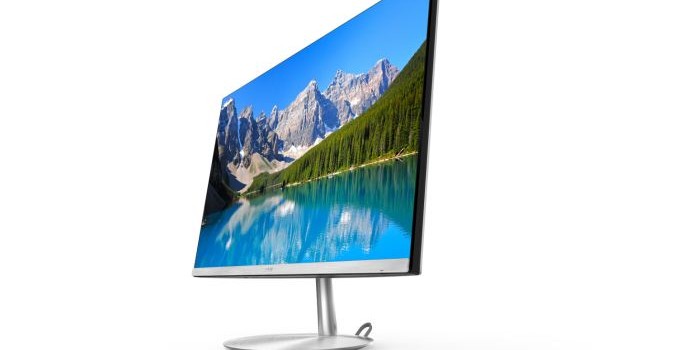
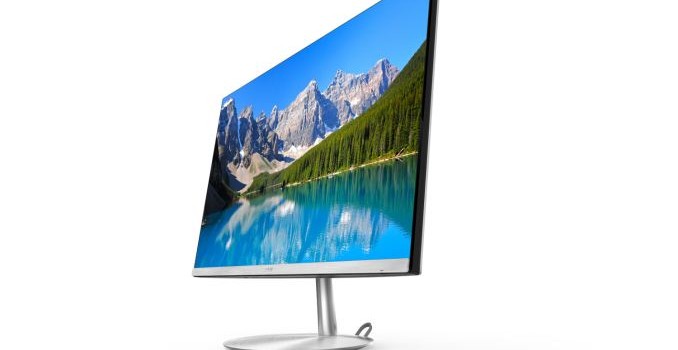
Indeed, the 23.8-inch IPS panel is FHD (1920×1080). It also features what Asus calls NanoEdge, which means it sports a 2mm bezel that gives the display a 90% screen-to-body ratio, according to Asus. The ZN242 includes a re-worked stand that boasts a much different design than previous versions and a pop-up infrared camera that, in conjunction with Windows Hello, provides facial recognition from up to 4m away.

Asus Zen AIO ZN242 (High-End Configuration)
Processor Intel Core i7-7700HQ (4C/8T, 2.8-3.8GHz, 6MB L3, 14nm, 45w)
Memory 32 GB
Graphics NVIDIA GeForce GTX 1050
(640 CUDA Cores)
Displays 23.8″ Asus NanoEdge: 1080p, IPS
Storage SSD (PCIe): 512 GB
HDD: Unspecified Sizes w/Intel Optane Cache
Rear Ports 4x USB 3.0 Type-A
1x USB 2.0 Type-A
RJ45 Ethernet
Headset Jack
Microphone Jack

Under the hood, the system comes with either a 512GB PCIe SSD or an HDD coupled with Intel Optane memory. (We’re probably going to be seeing lots of new systems with those kinds of options this week.). Unfortunately Asus hasn’t detailed anything besides the maximum configuration, so it’s not clear what the other options are with regards to CPUs and GPUs.

Meanwhile we’re always curious about ventilation, especially when you’re talking about this kind of processing power and discrete graphics. Although we didn’t get a look inside, there are vents in the underside of the chassis, along with a vented Asus logo on the back — a clever touch that would be more effective if the company had a much longer name.

An Asus representative said that the Zen AiO ZN242 will be available in September, but the company has not announced pricing. Other details, such as color gamut support, were also not being discussed.

Fritz Nelson Contributed to this Report

Asus Unveils Zen AiO ZN242: Quad Kaby Lake, GeForce GTX 1050, 1080p Display

Asus Unveils Zen AiO ZN242: Quad Kaby Lake, GeForce GTX 1050, 1080p Display

Asus unveiled the Zen AiO ZN242 at Computex in Taipei this week. This is essentially a refresh of current 24-inch designs, with the addition of an Intel Core i7-7700HQ quad-core CPU, 32GB of RAM, and NVIDIA’s GeForce GTX 1050 GPU, making this all-in-one a candidate for some decent mainstream gaming at 1080p.

Indeed, the 23.8-inch IPS panel is FHD (1920×1080). It also features what Asus calls NanoEdge, which means it sports a 2mm bezel that gives the display a 90% screen-to-body ratio, according to Asus. The ZN242 includes a re-worked stand that boasts a much different design than previous versions and a pop-up infrared camera that, in conjunction with Windows Hello, provides facial recognition from up to 4m away.

Asus Zen AIO ZN242 (High-End Configuration)
Processor Intel Core i7-7700HQ (4C/8T, 2.8-3.8GHz, 6MB L3, 14nm, 45w)
Memory 32 GB
Graphics NVIDIA GeForce GTX 1050
(640 CUDA Cores)
Displays 23.8″ Asus NanoEdge: 1080p, IPS
Storage SSD (PCIe): 512 GB
HDD: Unspecified Sizes w/Intel Optane Cache
Rear Ports 4x USB 3.0 Type-A
1x USB 2.0 Type-A
RJ45 Ethernet
Headset Jack
Microphone Jack

Under the hood, the system comes with either a 512GB PCIe SSD or an HDD coupled with Intel Optane memory. (We’re probably going to be seeing lots of new systems with those kinds of options this week.). Unfortunately Asus hasn’t detailed anything besides the maximum configuration, so it’s not clear what the other options are with regards to CPUs and GPUs.

Meanwhile we’re always curious about ventilation, especially when you’re talking about this kind of processing power and discrete graphics. Although we didn’t get a look inside, there are vents in the underside of the chassis, along with a vented Asus logo on the back — a clever touch that would be more effective if the company had a much longer name.

An Asus representative said that the Zen AiO ZN242 will be available in September, but the company has not announced pricing. Other details, such as color gamut support, were also not being discussed.

Fritz Nelson Contributed to this Report

Asus Announces VivoBook Pro 15 N580: Intel Kaby Lake CPU, up to 4K Display & GeForce GTX 1050

Asus Announces VivoBook Pro 15 N580: Intel Kaby Lake CPU, up to 4K Display & GeForce GTX 1050

With Computex now in full swing, earlier today Asus took the wraps off of their latest VivoBook laptop, the VivoBook Pro 15 N580. Starting at $799, the 15-inch brushed aluminum laptop comes with an Intel quad-core processor, and NVIDIA GTX 1050 graphics, with an optional 4K display.

Of the information Asus has released so far, the company has released the base price, but not the prices of the higher-end configurations. At the $799 base model will include an Intel Core-i5 7300HQ CPU, 500 GB HDD, and a 1080p display. Meanwhile the high-end model will have a Core-i7 7700HQ, 4K full sRGB screen, NVIDIA GTX 1050 graphics, 16GB of RAM, and both a 512GB PCIe SSD and a 2TB hard drive. Asus will also be including Intel’s Optane Memory for faster storage performance (though it’s not clear if this is just for HDD models or all models).

Asus VivoBook 15 N580
Processor Intel Core i5-7300HQ (4C/4T, 2.5-3.5GHz, 6MB L3, 14nm, 45w)

Intel Core i7-7700HQ (4C/8T, 2.8-3.8GHz, 6MB L3, 14nm, 45w)

Memory Up To 16 GB (2x SO-DIMM)
Graphics Intel Core
Intel HD Graphics 630 (24 EUs)
(Optional) NVIDIA GeForce GTX 1050
(640 CUDA Cores)
Displays 15.6″ 1080p
(Optional) 15.6″ 1080p, 178° Viewing Angle
(Optional) 15.6″ 1080p, 100% sRGB, 178° Viewing Angle
(Optional) 15.6″ 4K, 100% sRGB, 178° Viewing Angle
Storage HDD: 500 GB, 1 TB, 2TB
SSD (SATA): 128 GB, 256 GB, 512 GB
Networking 802.11ac, 2×2:2, 866Mpbs Max, 2.4 and 5GHz
Bluetooth 4.2
Audio Stereo Speakers (Harman Kardon Certified)
Battery 47 Whr
Right Side 2x USB 2.0 Type-A
Headset Jack
SD Card Reader
Kensington Lock
Left Side USB 3.0 Type-A
USB 3.0 Type-C (w/DP Support)
RJ45 Slim Port
HDM
Dimensions 380 x 256 x 19.2 mm
Weight Non-Touch: 1.99kg
Touch: 2.29kg
Pricing $799 USD and up

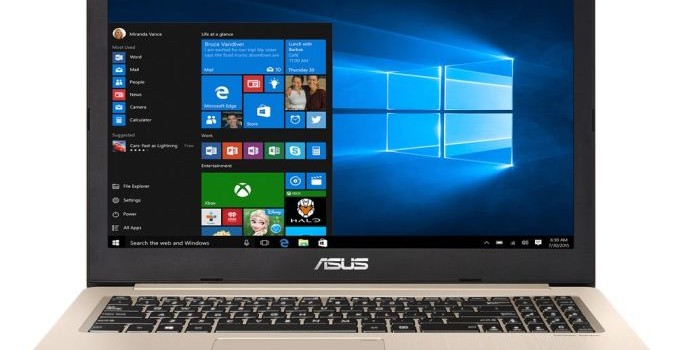
Considering its plethora of high-end components, the VivoBook Pro’s 4.85-pound weight and 0.75-inch thickness are quite reasonable. The VivoBook Pro uses a dual-fan system to keep its powerful components from getting too hot. During a brief hands-on, the laptop felt solid and sturdy in my hands and its metal deck was pleasantly cool to the touch.

The VivoBook’s backlight keyboard felt sturdy snappy under my fingers and didn’t even have a hint of flex. Its buttonless touchpad had just the right amount of friction and resistance for each click.

Asus claims that the optional 4K screen on the VivoBook covers an impressive 100 percent of the sRGB color gamut. In my brief time with the laptop, it was difficult to tell how vibrant the colors were as the background and icons the company displayed were rather bland.

The VivoBook Pro doesn’t skimp on ports. Its left side contains an Ethernet port, a USB 3.0 connector, HDMI out and a USB Type-C port. The right side houses two more USB 3.0 ports, an SD card reader and a 3.5mm audio jack. It’s a shame that Asus didn’t put a Thunderbolt 3 port on this laptop, but that would have likely added to the cost.

Asus hasn’t announced a release date for the VivoBook Pro. However, depending on just what the base configuration is like and how much the higher-end models cost, this laptop could be a great buy for design students or anyone that needs to do creative work, without breaking the bank.

Avram Piltch Contributed to this Report