News


AT20 Giveaway Day 18: NVIDIA SHIELDs You from the GeForces

AT20 Giveaway Day 18: NVIDIA SHIELDs You from the GeForces

Happy Friday everyone. We’re now on day 18 of our 20 day giveaway celebration of AnandTech’s 20th anniversary, making this our last Friday giveaway.

Taking us into the weekend is the 800lb gorilla of the GPU world, NVIDIA. The currently uncontested holder of the GPU performance crown, for our giveaway the company has sent over a collection of their fastest Founders Edition cards. This includes two GeForce GTX 1060s, a GeForce GTX 1070, and the king of GeForces, the GTX 1080 Ti. Meanwhile not to be overshadowed, NVIDIA’s mobile division has sent over a prize of their own: the 2017 SHIELD TV Pro.

  • NVIDIA GeForce GTX 1060 6GB Founders Edition (#1)
  • NVIDIA GeForce GTX 1060 6GB Founders Edition (#2)
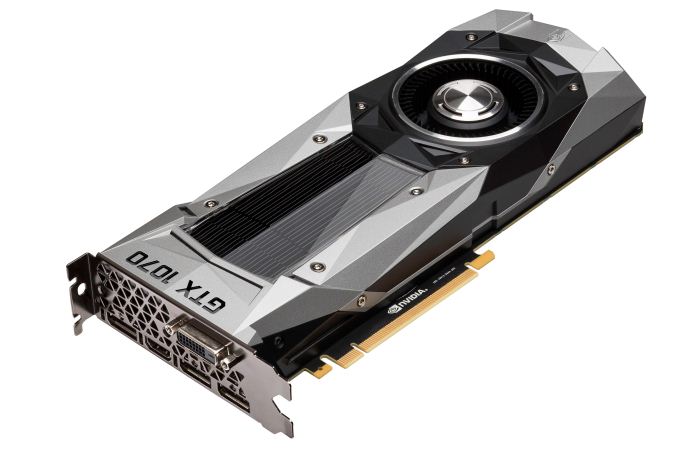
  • NVIDIA GeForce GTX 1070 Founders Edition
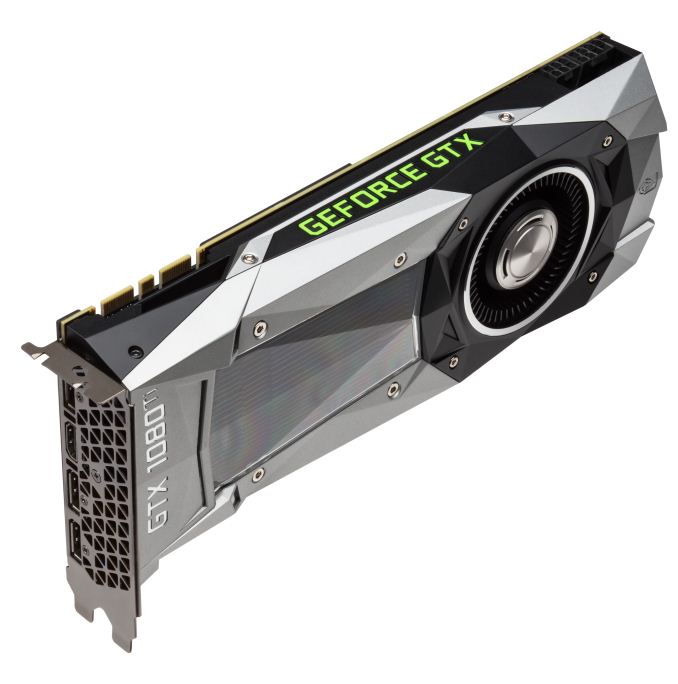
  • NVIDIA GeForce GTX 1080 Ti Founders Edition
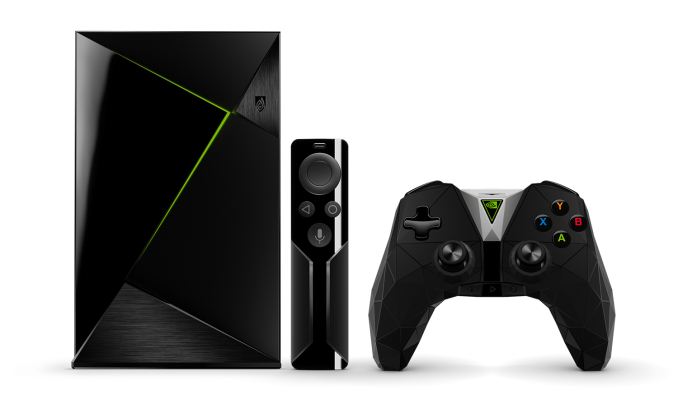
  • NVIDIA SHIELD TV Pro (2017)

The AnandTech 20th Anniversary Celebration – NVIDIA Giveaway

NVIDIA Viddeo Card Specification Comparison
  GTX 1080 Ti FE GTX 1070 FE GTX 1060 6GB FE
CUDA Cores 3584 1920 1280
Texture Units 224 120 80
ROPs 88 64 48
Core Clock 1481MHz 1506MHz 1506MHz
Boost Clock 1582MHz 1683MHz 1709MHz
TFLOPs (FMA) 11.3 TFLOPs 6.5 TFLOPs 4.4 TFLOPs
Memory Clock 11Gbps GDDR5X 8Gbps GDDR5 8Gbps GDDR5
Memory Bus Width 352-bit 256-bit 192-bit
VRAM 11GB 8GB 6GB
TDP 250W 150W 120W
GPU GP102 GP104 GP106
Length 10.5″ 10.5″ 9.75″
Width 2 Slot 2 Slot 2 Slot
Cooler Type Blower Blower Blower

GeForce GTX 1060 6GB Founders Edition

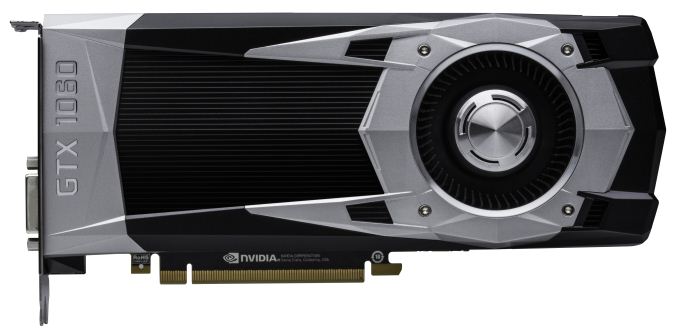
Starting things off, we have not one but two of NVIDIA’s GeForce GTX 1060 6GB Founders Edition cards. The GTX 1060 is NVIDIA’s 1080p gaming workhorse, based on their current-generation GP106 Pascal GPU and offering enough performance to run games at 1080p with few (if any) compromises. Balancing that out is a low 120W TDP, allowing the card to easily work in lower-power systems and keep its own fan noise and heat dissipation down. The 6GB of VRAM is less than is found on some of NVIDIA’s fastest cards, but is plenty fine for the intended 1080p market. Otherwise at 9.75 inches long and in a blower configuration, the card should work in pretty much any system with even a halfway decent amount of room for a video card.

GeForce GTX 1070 Founders Edition

The next step up in NVIDIA’s lineup is the GeForce GTX 1070. Based on a cut-down GP104 GPU and paired with 8GB of GDDR5, this is one of NVIDIA’s most popular cards due to its position as their most affordable high-end card. The GTX 1070 is best suited for a mix of 1440p and 1080p gameplay; by and large it’s fast enough for 1440p, but especially challenging games may require compromising on graphics quality or resolution. Like the other Founders Edition cards, this is a blower-type design for maximum compatibility, with the metal-shrouded card running 10.5” long.

GeForce GTX 1080 Ti Founders Edition

Our final GeForce card for the day – and judging from previous giveaways, likely to be a popular drawing – is NVIDIA’s reigning champion of the GeForce family, the GeForce GTX 1080 Ti. Based on NVIDIA’s GP102 GPU, this is the company’s no-compromises 4K gaming card. Between the blazing fast GPU and 11GB of equally fast GDDR5X, in our review earlier this year we found that it was able to hit 60fps at 4K in many of our games, and come quite close on the rest. The 250W card does need a fairly powerful PSU to feed it, and you’ll want a good CPU as well to keep it fed with data, while the metal-shrouded blower design means that it shouldn’t struggle too much in keeping itself cool.

SHIELD TV Pro (2017)

Shifting away from video cards for our final NVIDIA prize, we have the company’s SHIELD TV Pro (2017). Leveraging the company’s Tegra X1 SoC, the SHIELD TV Pro is designed to be the ultimate 4K set top box for media streaming thanks to its wide support for everything from HEVC to HDR – and with very strong gaming credentials on the side. NVIDIA originally launched the SHIELD TV Pro back in 2015, and then refreshed the hardware earlier this year to incorporate new controllers and updated software. The Pro version of the console uses the original shell in order to accommodate a 500GB 2.5” HDD, giving the Pro console plenty of local storage for OTA TV recording and for media serving as well as playback.

Finally, as with our other giveaways, toda’s giveaway is only open for 48 hours, so be sure to enter soon. However please note that for legal reasons, we’re only able to open these giveaways to residents of the United States.

Good luck to everyone! And be sure to check in on Monday for our next giveaway.

AT20 Giveaway Day 18: NVIDIA SHIELDs You from the GeForces

AT20 Giveaway Day 18: NVIDIA SHIELDs You from the GeForces

Happy Friday everyone. We’re now on day 18 of our 20 day giveaway celebration of AnandTech’s 20th anniversary, making this our last Friday giveaway.

Taking us into the weekend is the 800lb gorilla of the GPU world, NVIDIA. The currently uncontested holder of the GPU performance crown, for our giveaway the company has sent over a collection of their fastest Founders Edition cards. This includes two GeForce GTX 1060s, a GeForce GTX 1070, and the king of GeForces, the GTX 1080 Ti. Meanwhile not to be overshadowed, NVIDIA’s mobile division has sent over a prize of their own: the 2017 SHIELD TV Pro.

  • NVIDIA GeForce GTX 1060 6GB Founders Edition (#1)
  • NVIDIA GeForce GTX 1060 6GB Founders Edition (#2)
  • NVIDIA GeForce GTX 1070 Founders Edition
  • NVIDIA GeForce GTX 1080 Ti Founders Edition
  • NVIDIA SHIELD TV Pro (2017)

The AnandTech 20th Anniversary Celebration – NVIDIA Giveaway

NVIDIA Viddeo Card Specification Comparison
  GTX 1080 Ti FE GTX 1070 FE GTX 1060 6GB FE
CUDA Cores 3584 1920 1280
Texture Units 224 120 80
ROPs 88 64 48
Core Clock 1481MHz 1506MHz 1506MHz
Boost Clock 1582MHz 1683MHz 1709MHz
TFLOPs (FMA) 11.3 TFLOPs 6.5 TFLOPs 4.4 TFLOPs
Memory Clock 11Gbps GDDR5X 8Gbps GDDR5 8Gbps GDDR5
Memory Bus Width 352-bit 256-bit 192-bit
VRAM 11GB 8GB 6GB
TDP 250W 150W 120W
GPU GP102 GP104 GP106
Length 10.5″ 10.5″ 9.75″
Width 2 Slot 2 Slot 2 Slot
Cooler Type Blower Blower Blower

GeForce GTX 1060 6GB Founders Edition

Starting things off, we have not one but two of NVIDIA’s GeForce GTX 1060 6GB Founders Edition cards. The GTX 1060 is NVIDIA’s 1080p gaming workhorse, based on their current-generation GP106 Pascal GPU and offering enough performance to run games at 1080p with few (if any) compromises. Balancing that out is a low 120W TDP, allowing the card to easily work in lower-power systems and keep its own fan noise and heat dissipation down. The 6GB of VRAM is less than is found on some of NVIDIA’s fastest cards, but is plenty fine for the intended 1080p market. Otherwise at 9.75 inches long and in a blower configuration, the card should work in pretty much any system with even a halfway decent amount of room for a video card.

GeForce GTX 1070 Founders Edition

The next step up in NVIDIA’s lineup is the GeForce GTX 1070. Based on a cut-down GP104 GPU and paired with 8GB of GDDR5, this is one of NVIDIA’s most popular cards due to its position as their most affordable high-end card. The GTX 1070 is best suited for a mix of 1440p and 1080p gameplay; by and large it’s fast enough for 1440p, but especially challenging games may require compromising on graphics quality or resolution. Like the other Founders Edition cards, this is a blower-type design for maximum compatibility, with the metal-shrouded card running 10.5” long.

GeForce GTX 1080 Ti Founders Edition

Our final GeForce card for the day – and judging from previous giveaways, likely to be a popular drawing – is NVIDIA’s reigning champion of the GeForce family, the GeForce GTX 1080 Ti. Based on NVIDIA’s GP102 GPU, this is the company’s no-compromises 4K gaming card. Between the blazing fast GPU and 11GB of equally fast GDDR5X, in our review earlier this year we found that it was able to hit 60fps at 4K in many of our games, and come quite close on the rest. The 250W card does need a fairly powerful PSU to feed it, and you’ll want a good CPU as well to keep it fed with data, while the metal-shrouded blower design means that it shouldn’t struggle too much in keeping itself cool.

SHIELD TV Pro (2017)

Shifting away from video cards for our final NVIDIA prize, we have the company’s SHIELD TV Pro (2017). Leveraging the company’s Tegra X1 SoC, the SHIELD TV Pro is designed to be the ultimate 4K set top box for media streaming thanks to its wide support for everything from HEVC to HDR – and with very strong gaming credentials on the side. NVIDIA originally launched the SHIELD TV Pro back in 2015, and then refreshed the hardware earlier this year to incorporate new controllers and updated software. The Pro version of the console uses the original shell in order to accommodate a 500GB 2.5” HDD, giving the Pro console plenty of local storage for OTA TV recording and for media serving as well as playback.

Finally, as with our other giveaways, toda’s giveaway is only open for 48 hours, so be sure to enter soon. However please note that for legal reasons, we’re only able to open these giveaways to residents of the United States.

Good luck to everyone! And be sure to check in on Monday for our next giveaway.

AT20 Giveaway Day 18: NVIDIA SHIELDs You from the GeForces

AT20 Giveaway Day 18: NVIDIA SHIELDs You from the GeForces

Happy Friday everyone. We’re now on day 18 of our 20 day giveaway celebration of AnandTech’s 20th anniversary, making this our last Friday giveaway.

Taking us into the weekend is the 800lb gorilla of the GPU world, NVIDIA. The currently uncontested holder of the GPU performance crown, for our giveaway the company has sent over a collection of their fastest Founders Edition cards. This includes two GeForce GTX 1060s, a GeForce GTX 1070, and the king of GeForces, the GTX 1080 Ti. Meanwhile not to be overshadowed, NVIDIA’s mobile division has sent over a prize of their own: the 2017 SHIELD TV Pro.

  • NVIDIA GeForce GTX 1060 6GB Founders Edition (#1)
  • NVIDIA GeForce GTX 1060 6GB Founders Edition (#2)
  • NVIDIA GeForce GTX 1070 Founders Edition
  • NVIDIA GeForce GTX 1080 Ti Founders Edition
  • NVIDIA SHIELD TV Pro (2017)

The AnandTech 20th Anniversary Celebration – NVIDIA Giveaway

NVIDIA Viddeo Card Specification Comparison
  GTX 1080 Ti FE GTX 1070 FE GTX 1060 6GB FE
CUDA Cores 3584 1920 1280
Texture Units 224 120 80
ROPs 88 64 48
Core Clock 1481MHz 1506MHz 1506MHz
Boost Clock 1582MHz 1683MHz 1709MHz
TFLOPs (FMA) 11.3 TFLOPs 6.5 TFLOPs 4.4 TFLOPs
Memory Clock 11Gbps GDDR5X 8Gbps GDDR5 8Gbps GDDR5
Memory Bus Width 352-bit 256-bit 192-bit
VRAM 11GB 8GB 6GB
TDP 250W 150W 120W
GPU GP102 GP104 GP106
Length 10.5″ 10.5″ 9.75″
Width 2 Slot 2 Slot 2 Slot
Cooler Type Blower Blower Blower

GeForce GTX 1060 6GB Founders Edition

Starting things off, we have not one but two of NVIDIA’s GeForce GTX 1060 6GB Founders Edition cards. The GTX 1060 is NVIDIA’s 1080p gaming workhorse, based on their current-generation GP106 Pascal GPU and offering enough performance to run games at 1080p with few (if any) compromises. Balancing that out is a low 120W TDP, allowing the card to easily work in lower-power systems and keep its own fan noise and heat dissipation down. The 6GB of VRAM is less than is found on some of NVIDIA’s fastest cards, but is plenty fine for the intended 1080p market. Otherwise at 9.75 inches long and in a blower configuration, the card should work in pretty much any system with even a halfway decent amount of room for a video card.

GeForce GTX 1070 Founders Edition

The next step up in NVIDIA’s lineup is the GeForce GTX 1070. Based on a cut-down GP104 GPU and paired with 8GB of GDDR5, this is one of NVIDIA’s most popular cards due to its position as their most affordable high-end card. The GTX 1070 is best suited for a mix of 1440p and 1080p gameplay; by and large it’s fast enough for 1440p, but especially challenging games may require compromising on graphics quality or resolution. Like the other Founders Edition cards, this is a blower-type design for maximum compatibility, with the metal-shrouded card running 10.5” long.

GeForce GTX 1080 Ti Founders Edition

Our final GeForce card for the day – and judging from previous giveaways, likely to be a popular drawing – is NVIDIA’s reigning champion of the GeForce family, the GeForce GTX 1080 Ti. Based on NVIDIA’s GP102 GPU, this is the company’s no-compromises 4K gaming card. Between the blazing fast GPU and 11GB of equally fast GDDR5X, in our review earlier this year we found that it was able to hit 60fps at 4K in many of our games, and come quite close on the rest. The 250W card does need a fairly powerful PSU to feed it, and you’ll want a good CPU as well to keep it fed with data, while the metal-shrouded blower design means that it shouldn’t struggle too much in keeping itself cool.

SHIELD TV Pro (2017)

Shifting away from video cards for our final NVIDIA prize, we have the company’s SHIELD TV Pro (2017). Leveraging the company’s Tegra X1 SoC, the SHIELD TV Pro is designed to be the ultimate 4K set top box for media streaming thanks to its wide support for everything from HEVC to HDR – and with very strong gaming credentials on the side. NVIDIA originally launched the SHIELD TV Pro back in 2015, and then refreshed the hardware earlier this year to incorporate new controllers and updated software. The Pro version of the console uses the original shell in order to accommodate a 500GB 2.5” HDD, giving the Pro console plenty of local storage for OTA TV recording and for media serving as well as playback.

Finally, as with our other giveaways, toda’s giveaway is only open for 48 hours, so be sure to enter soon. However please note that for legal reasons, we’re only able to open these giveaways to residents of the United States.

Good luck to everyone! And be sure to check in on Monday for our next giveaway.

HP Launches Elite x2 1012 G2 2-in-1: 12.3-Inch Display, Kaby Lake, 1 TB SSD, 16 GB LPDDR3, TB3

HP Launches Elite x2 1012 G2 2-in-1: 12.3-Inch Display, Kaby Lake, 1 TB SSD, 16 GB LPDDR3, TB3

HP has announced the second generation of its Elite x2 1012 2-in-1 detachable PC designed for commercial applications. The next-gen system not only gets more powerful Kaby Lake SoCs, but has also seen improvements across the board compared to its predecessor: it now has a larger display with a higher resolution and brightness, two times more DRAM, up to a 1 TB SSD, Thunderbolt 3, a higher-capacity battery, enhanced security features, and other advancements. Despite all the upgrades, HP has managed to maintain thin profile and low weight of the Elite x2 1012 G1.

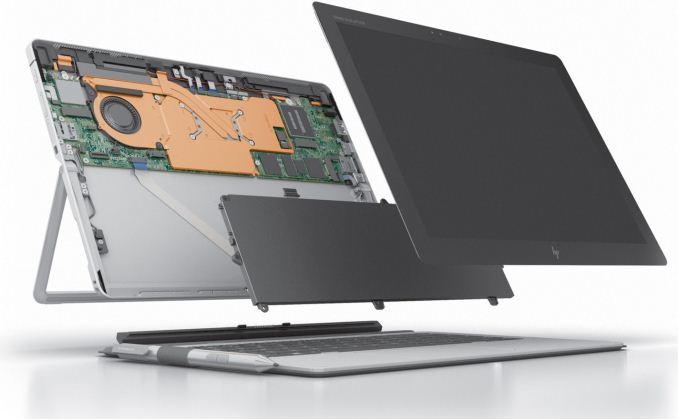
When it comes to Elite x2 systems, HP shares the “power of a notebook, flexibility of a tablet” philosophy and acts accordingly — equipping them with powerful hardware, but minding portability and keeping the weight of the tablet itself at around 800 grams. The company is positioning the Elite x2 1012 G2 as a fully-fledged replacement for executive laptops, so the new units feature notebook-class Core i5/i7 7000U-series CPUs and can be equipped with virtually every modern technology found in mobile PCs, including 4G LTE, WiGig, a fingerprint reader, Thunderbolt 3, an audio sub-system co-developed with Harman Kardon, and so on to make them suitable for various use cases. Moreover, the Elite x2 1012 G2 can be serviced quite easily — a benefit for experienced users and IT departments.

At the same time, the Elite x2 is not designed for every possible application that is out there. For example, the systems lack smart card readers, which are required by some government agencies; they are also not equipped with NFC modules that various retailers may use. For those specific users, there’s HP’s existing Pro x2, which was launched earlier this year. Furthermore, being equipped with Intel Core i5/i7-Y (KBL-Y) SoCs, the Pro x2 has no fans, whereas the Elite x2 G2 runs notebook SoCs with higher frequencies and improved iGPUs, which is why it’s not a sealed system

Internally, the HP Elite x2 G2 is based on Intel’s Core i5/i7 7000U-series SoCs, which feature the Kaby Lake microarchitecture along with the HD Graphics 620 (16 EUs, Gen 9) iGPU. This is a clear improvement over the Elite x2 G1 that run SoCs with lower frequencies and with an iGPU with fewer EUs (12 EUs). The Elite x2 system comes with 16 GB of dual-channel LPDDR3 memory (not upgradeable) and an M.2 SSD with a SATA or PCIe interface and capacities ranging from 128 GB to 1 GB. When it comes to communication capabilities, the Elite x2 can be equipped with a selection of wireless controllers, from a “basic” 802.11ac 2×2 Wi-Fi + BT 4.2 controller to something more powerful with WiGig and/or 4G LTE. Among external ports, the Elite x2 G2 offers one Thunderbolt 3 (USB Type-C) header for data, charging, external displays, etc.; one USB 3.0 Type-A; a microSD slot as well as a TRRS connector for headsets.

Specifications of the Second Generation HP Elite x2
  HP Elite x2
1012 G2
LCD Diagonal 12.3″
Resolution 2736×1824
Brightness 450 cd/m²
CPU Core i7-7600U (2C/4T, 4 MB,  2.8/3.9 GHz)
Core i5-7300U (2C/4T, 3 MB, 2.6/3.5 GHz)
Core i5-7200U (2C/4T, 3 MB, 2.5/3.1 GHz)
Core i3-7100U (2C/4T, 3 MB, 2.4 GHz)
Graphics HD Graphics 620 (24 EUs)
RAM 16 GB LPDDR3
Storage 128 GB M.2 SATA SSD
256 GB up to 1 TB M.2 PCIe NVMe TLC SED SSD
256 GB up to 512 GB M.2 SATA TLC SSD
360 GB M.2 PCle 3.0 x4 TLC SSD
256 GB up to 512 GB M.2 PCIe SSD
Wireless: Wi-Fi, Bluetooth, LTE, GPS and WiGig options Intel Dual Band Wireless-AC 8265 802.11ac Wi-Fi + BT 4.2
HP hs3210 WW HSPA+ Mobile Broadband
HP lt4132 LTE/HSPA+ 4G Mobile Broadband
Intel Tri Band Wireless-AC 18265 802.11a/b/g/n/ac (2×2) and Bluetooth 4.2 WiGig Combo
HP lt4120 LTE/EV-DO/HSPA+ Mobile Broadband
HP lt4226 LTE/HSPA+ Qualcomm Gobi 4G Module
HP lt4225 LTE/EV-DO Qualcomm Gobi 4G Module
u-blox EVA-M8M M.2 GPS module 8,9,10,11
USB 3.1 1 × TB 3
3.0 1 × Type-A
2.0
Thunderbolt 1 × TB 3 (for charging, data, DP 1.2 displays)
Card Reader MicroSD
Cameras Front 5 MP front-facing camera + IR camera for face authentication
Back 8 MP rear-facing camera with flash LED
Fingerprint Sensor Yes
Other I/O Microphone, stereo speakers, audio jack
Other Sensors Tablet Tablet: Accelerometer, magnetometer, gyro, ambient light sensor, proximity (SAR for WWAN)
Travel and Advanced Keyboard Hall effect, dual
Accelerometers
Battery 47 Wh
Thickness 91 mm (tablet)
146 mm (with keyboard)
Weight 800 grams (tablet)
1.15 kg (with travel keyboard)
1.33 kg (with advanced keyboard)
Price Starting at $1099

Meanwhile as the Elite x2 G2 doubles as a tablet, system is equipped with a host of sensors (accelerometer, gyroscope, magnetometer, etc.) and is compatible with styluses. It also has rather powerful imaging capabilities: on the front it has a 5 MP RGB camera coupled with an IR sensor, on the backside it features an 8 MP sensor with a LED flash. Also found on the backside is the system’s fingerprint reader.
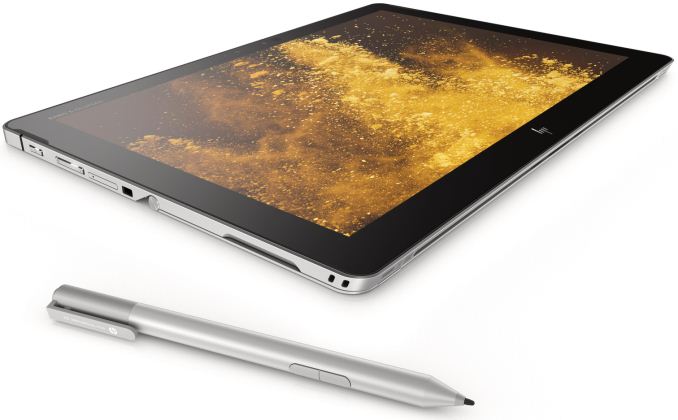
As for the chassis, the HP Elite x2 1012 G2 uses a similar — but not exactly identical — body as its predecessor. The new 2-in-1 laptop is made of aluminum; HP does not reveal the exact alloy, but it should be something durable, like the Aluminum 6061 alloy used for the Pro x2. Due to major changes of the internal architecture, the thickness of the new tablet has increased to 9.1 mm/0.36” (from 7.6 mm/0.3”), but the weight of the tablet has remained at around 800 grams/1.77 lb. Meanwhile, the display of the new Elite x2 G2 has improved significantly: the diagonal size has increased to 12.3” due to thinner bezels, its resolution has improved to 2736×1824 pixels, and the brightness is now rated for 450 nits. Corning’s Gorilla Glass 4, which is used for numerous other HP products as well, protects the screen of the Elite x2 G2.

Speaking of the weight and dimensions, and given the positioning of the HP Elite x2 G2, it makes sense to compare it to ultra-thin laptops. As it appears, once the Elite x2 G2 is equipped with a keyboard, its final thickness is 14.6 mm (0.57”), which is thicker than many contemporary notebooks, especially those based on lower-power CPUs. Clearly, the HP Elite x2 G2 has multiple advantages when compared to such mobile PCs (e.g., display resolution, connectivity, higher-capacity battery, form-factor, performance, security, etc.), but the ultimate portability will not be one of them.

Comparison of Ultra-Thin Notebooks
  HP Elite x2
1012 G2
Samsung
Notebook 9
Samsung
Notebook 9
Dell XPS 13 HP Spectre Apple MacBook (2016)
LCD Diagonal 12.3″ 13″ 15″ 13″ 13.3″ 12″
Resolution 2736×1824 1920×1080 1920×1080 3200×1800 1920×1080 2304×1440
Brightness 450 cd/m² 400 ~ 500 cd/m² unknown 300 cd/m² unknown
CPU Core i7-7600U
Core i5-7300U
Core i5-7200U
Core i3-7100U
Core i5-7200U
Core i7-7500U
Core i7-7500U Core i3-7100U
Core i5-7200U
Core i7-7500U
Core i5-7200U
Core i7-7500U
Core m3-6Y30
Core m5-6Y54
Core m7-6Y75
Graphics HD Graphics 620 (24 EUs) Intel HD Graphics 515 (24 EUs)
RAM 16 GB 8-16 GB 8 GB 4-16 GB 8 GB 8 GB
LPDDR3 DDR4 LPDDR3
Storage (SSD only) 128 GB SATA

256 GB – 1 TB PCIe

256 GB SATA 256 GB NVMe 128 GB SATA

256 GB – 1 TB NVMe

256 GB
512 GB
1 TB

NVMe

256 GB
512 GB

PCIe 3.0 x2

Wi-Fi 2×2 802.11ac Wi-Fi
Bluetooth 4.2 4.1 4
4G LTE optional
WiGig optiona
USB 3.1   × Type-C (unknown speed) 1 × Type-C 3 × Type-C
3.0 1 × Type-A 2 × Type-A 2 × Type-A × Type-C
2.0 × Type-A
Thunderbolt 1 × TB 3 1 × TB 3 2 × TB 3
HDMI 1
Card Reader MicroSD SD
Fingerprint Sensor Yes No
Other I/O Microphone, stereo speakers, audio jack
Battery 47 Wh 30 Wh 60 Wh 38 Wh 41.4 Wh
Thickness 91 mm (tablet)
146 mm (with KB)
13.9 mm 14.9 mm up to 15 mm 10.4 mm up to 13.2 mm
Weight 800 grams (tablet)
1.15 kg (with travel keyboard)
1.33 kg (with advanced keyboard)
816 grams
1.8 lbs
984 grams 2.17 lbs 1.2 – 1.29 kg
2.7 – 2.9 lbs
1.10 kilograms
2.45 lbs
920 grams
2.03 lbs
Price $1099 ~$1000 ~$1200 $799+ $1100 / 256 GB
$1500 / 512 GB
$1800 / 1 TB
$1300 m3
$1600 m5
$1750 m7

The HP Elite x2 1012 G2 will be available sometimes in July. The MSRP of the entry-level model is expected to be $1099, but to take full advantage of the platform, one will need a more advanced SKU, which will come at a higher price.
Related Reading: