News


VAIO Launches Phone A: Snapdragon 617, 3 GB RAM, 5.5” FHD, Android
VAIO Launches Phone A: Snapdragon 617, 3 GB RAM, 5.5” FHD, Android

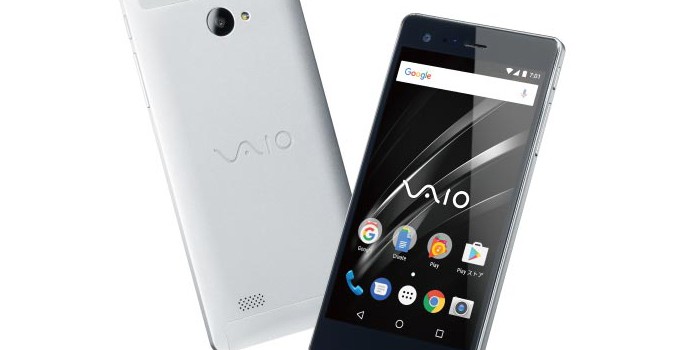
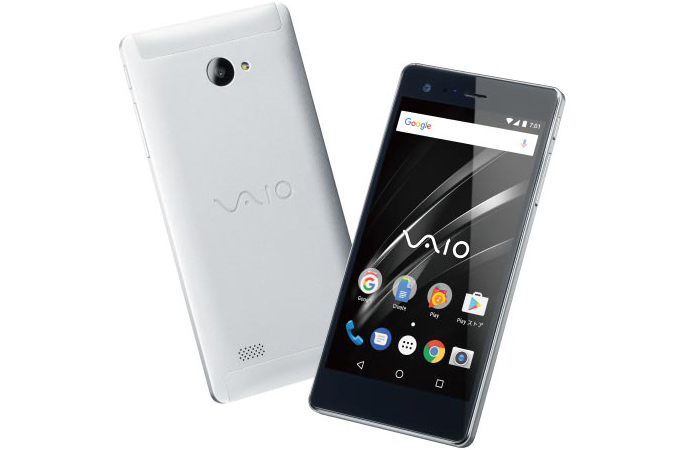
VAIO has launched its new Google Android-based smartphone in Japan. The VAIO Phone A handset uses the same hardware platform as the company’s VAIO Phone Biz launched last year, but uses Google’s more popular operating system. VAIO is selling the Cortex-A53 based mid-range phone for less than $250, which is very low for a phone made of machined aluminum.

VAIO, the former PC division of Sony and now an independent PC vendor from Japan, entered the smartphone market with its VAIO Phone Biz handset about a year ago targeting primarily business users. Since VAIO’s PCs run Windows 10, it was logical for the company to launch a Windows 10 Mobile-based handset supporting the Continuum technology and all the features that Microsoft’s platform has to offer. Apart from the OS, the key selling point of the VAIO Phone Biz was its aluminum unibody, which promised to be very durable. VAIO has never commented on just how well the Phone Biz has sold over its lifetime, but a year after the release of the product VAIO is re-launching it with Google Android.

Just like VAIO’s first smartphone, the Phone A (VPA 0511 S) is powered by the Qualcomm Snapdragon 617 system-on-chip (eight ARM Cortex-A53 cores clocked at 1.50 GHz, Adreno 405 graphics core) and features a 5.5” FHD display. The handset comes equipped with 3 GB of LPDDR3 memory, 16 GB of NAND flash storage (and a microSD card slot for expansion), 13 MP rear and 5 MP front cameras, 802.11a/b/g/n/ac Wi-Fi, Bluetooth 4.0, a micro USB 2.0 connector, various sensors, a 2800 mAh battery, and so on. Just like its Windows 10-based brother, the new unit also supports two SIM cards (a nano SIM and a micro SIM) and is compatible with 3G/LTE bands 1, 3, 6, 8, 11, 19 and 21 with carrier aggregation (so, not suitable for the U.S.). Finally, the weight and thickness of the product remained the same as before: 8.3 mm and 167 grams.

Despite the fact that the Snapdragon 617 is supported by Android 7, VAIO ships its Phone A with vanilla Android 6.0. It is unknown whether the company plans to update the OS eventually, but right now, the handset looks a bit outdated in terms of both hardware and software.

Computers and phones supplied by VAIO are developed by the company’s engineers and are made by various contract manufacturers. Meanwhile, the final quality checks and assembly of the hardware is performed at the Nagano Technology Site (Azumino City, Nagano Prefecture), the former hub of Sony’s PC operations. Due to that and materials used, VAIO has a reason to claim that its products feature a higher quality than competing offerings from its rivals, which is especially true when it comes to inexpensive Android handsets.

The VAIO Phone A is now available from the company’s online store exclusively in Japan; though like the Phone Biz, this phone is likely to show make its way to foreign third-party retailers as well. The company charges ¥26,784 ($237) per unit, which is uncommonly cheap for a smartphone featuring a durable, machined aluminum unibody, even taking the hardware and software into consideration. On the other hand, given the cutthroat competition on the Android market, a low price point is a way to drive sales.

Sources: VAIO, K-Tai Watch.

Related Reading:
VAIO Launches Phone A: Snapdragon 617, 3 GB RAM, 5.5” FHD, Android

VAIO Launches Phone A: Snapdragon 617, 3 GB RAM, 5.5” FHD, Android

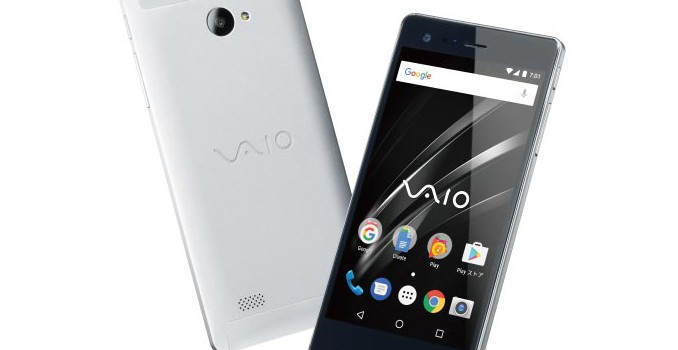
VAIO has launched its new Google Android-based smartphone in Japan. The VAIO Phone A handset uses the same hardware platform as the company’s VAIO Phone Biz launched last year, but uses Google’s more popular operating system. VAIO is selling the Cortex-A53 based mid-range phone for less than $250, which is very low for a phone made of machined aluminum.

VAIO, the former PC division of Sony and now an independent PC vendor from Japan, entered the smartphone market with its VAIO Phone Biz handset about a year ago targeting primarily business users. Since VAIO’s PCs run Windows 10, it was logical for the company to launch a Windows 10 Mobile-based handset supporting the Continuum technology and all the features that Microsoft’s platform has to offer. Apart from the OS, the key selling point of the VAIO Phone Biz was its aluminum unibody, which promised to be very durable. VAIO has never commented on just how well the Phone Biz has sold over its lifetime, but a year after the release of the product VAIO is re-launching it with Google Android.

Just like VAIO’s first smartphone, the Phone A (VPA 0511 S) is powered by the Qualcomm Snapdragon 617 system-on-chip (eight ARM Cortex-A53 cores clocked at 1.50 GHz, Adreno 405 graphics core) and features a 5.5” FHD display. The handset comes equipped with 3 GB of LPDDR3 memory, 16 GB of NAND flash storage (and a microSD card slot for expansion), 13 MP rear and 5 MP front cameras, 802.11a/b/g/n/ac Wi-Fi, Bluetooth 4.0, a micro USB 2.0 connector, various sensors, a 2800 mAh battery, and so on. Just like its Windows 10-based brother, the new unit also supports two SIM cards (a nano SIM and a micro SIM) and is compatible with 3G/LTE bands 1, 3, 6, 8, 11, 19 and 21 with carrier aggregation (so, not suitable for the U.S.). Finally, the weight and thickness of the product remained the same as before: 8.3 mm and 167 grams.

Despite the fact that the Snapdragon 617 is supported by Android 7, VAIO ships its Phone A with vanilla Android 6.0. It is unknown whether the company plans to update the OS eventually, but right now, the handset looks a bit outdated in terms of both hardware and software.

Computers and phones supplied by VAIO are developed by the company’s engineers and are made by various contract manufacturers. Meanwhile, the final quality checks and assembly of the hardware is performed at the Nagano Technology Site (Azumino City, Nagano Prefecture), the former hub of Sony’s PC operations. Due to that and materials used, VAIO has a reason to claim that its products feature a higher quality than competing offerings from its rivals, which is especially true when it comes to inexpensive Android handsets.

The VAIO Phone A is now available from the company’s online store exclusively in Japan; though like the Phone Biz, this phone is likely to show make its way to foreign third-party retailers as well. The company charges ¥26,784 ($237) per unit, which is uncommonly cheap for a smartphone featuring a durable, machined aluminum unibody, even taking the hardware and software into consideration. On the other hand, given the cutthroat competition on the Android market, a low price point is a way to drive sales.

Sources: VAIO, K-Tai Watch.

Related Reading:
Corsair Launches Glaive RGB Mouse: 16,000 DPI, Interchangeable Grips, LEDs

Corsair Launches Glaive RGB Mouse: 16,000 DPI, Interchangeable Grips, LEDs

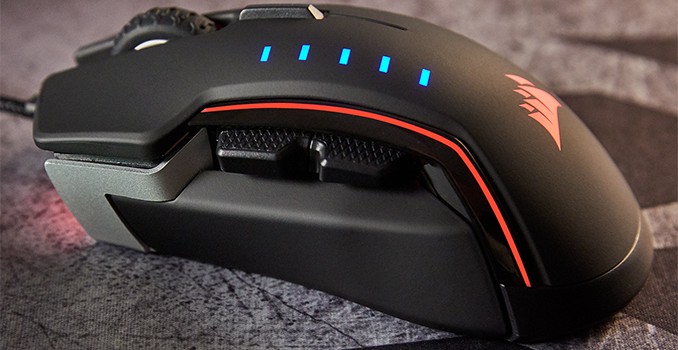
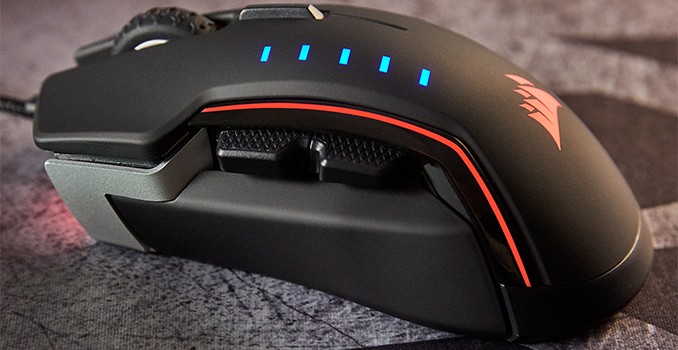
Corsair this week released its latest flagship gaming mouse, the new Glaive RGB. The company’s latest right-handed mouse incorporates a new sensor, interchangeable grips, programmable RGB lighting as well as on-board storage for profiles. And, as you’d expect for such a mouse, Corsair is aiming solidly at the high-end market, going after gamers looking for a high-end wired mouse.

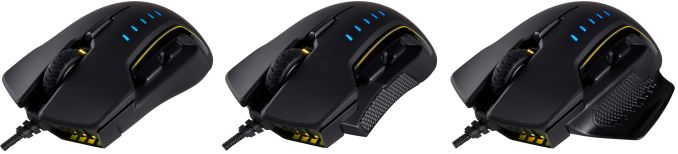
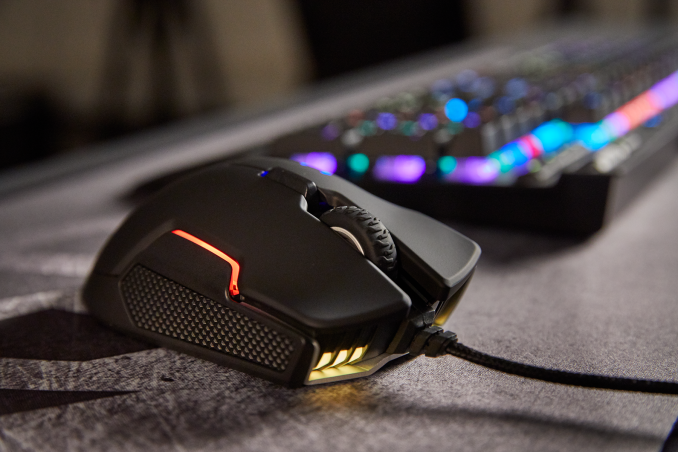
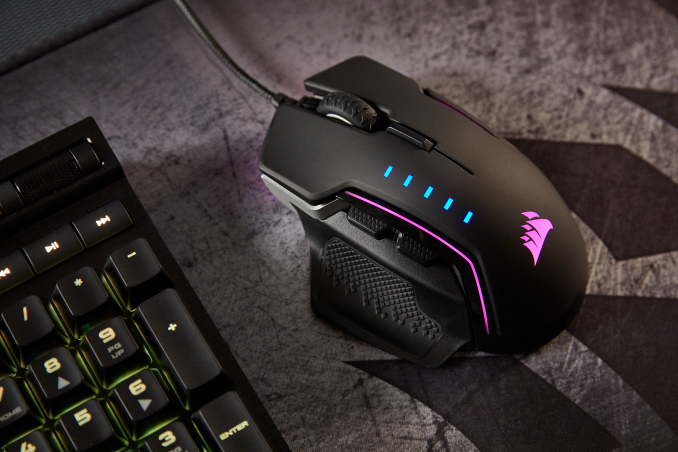
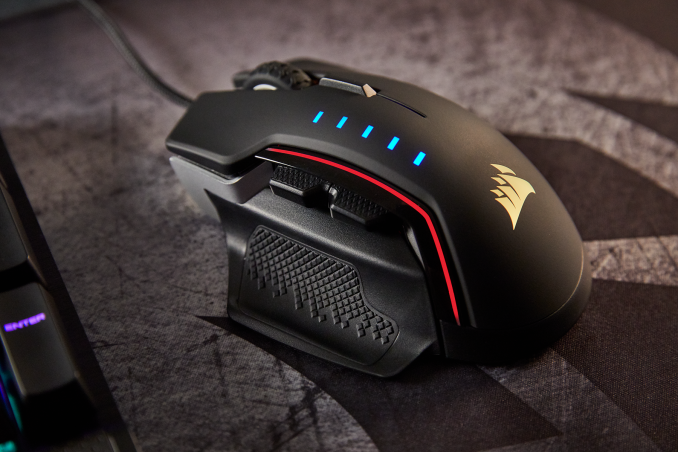
With the rise of PC gaming in the recent years, multiple companies have entered the market of gaming peripherals with mice, keyboards, headsets and other gear. As a result, the choice of gaming hardware in general and mice in particular became a complicated task as various devices feature different ergonomics and performance. With its new flagship Glaive RGB mouse, Corsair decided to somewhat simplify the choice: the Glaive RGB uses a rather advanced and sensitive IR sensor, and pairs that up with three interchangeable magnetic grips. The smooth, the rubberized and the wide thumb rest grips were designed to allow the mouse to be used with different types of hands and usage models, enabling the Glaive RGB to compete against various rivals with diverse shapes. To customize the look of the mouse further, Corsair equipped it with three RGB LEDs that can be programmed using the company’s proprietary software.

The Corsair Glaive RGB is based on a custom version of Pixart’s PMW3367 gaming sensor with adjustable sensitivity and up to a 16,000 DPI resolution (acceleration supported at that DPI is unknown). The microcontroller of the sensor supports USB report rate of up to 1000 Hz (programmable and requires support from the OS) and the mouse comes with a braided fiber cable. Just like any other high-end mouse for gamers, the Glaive RGB has programmable buttons that can be completely remapped using Corsair’s CUE software, and then used on different computers as button configuration is stored inside the mouse. Besides, the onboard storage is used to store DPI, macros and RGB LED settings.

As for the build, the Glaive RGB mouse features metallic skeleton and is made of rubberized plastic. Depending on the version of the mouse, parts of the metallic skeleton that go outside the body are either painted or not.

Corsair’s Glaive RGB mouse is now available directly from the company as well as its resellers worldwide. In the U.S., the Glave RGB costs $69.99, whereas in Europe gamers will have to pay €79.99.

Related Reading:

Corsair Launches Glaive RGB Mouse: 16,000 DPI, Interchangeable Grips, LEDs

Corsair Launches Glaive RGB Mouse: 16,000 DPI, Interchangeable Grips, LEDs

Corsair this week released its latest flagship gaming mouse, the new Glaive RGB. The company’s latest right-handed mouse incorporates a new sensor, interchangeable grips, programmable RGB lighting as well as on-board storage for profiles. And, as you’d expect for such a mouse, Corsair is aiming solidly at the high-end market, going after gamers looking for a high-end wired mouse.

With the rise of PC gaming in the recent years, multiple companies have entered the market of gaming peripherals with mice, keyboards, headsets and other gear. As a result, the choice of gaming hardware in general and mice in particular became a complicated task as various devices feature different ergonomics and performance. With its new flagship Glaive RGB mouse, Corsair decided to somewhat simplify the choice: the Glaive RGB uses a rather advanced and sensitive IR sensor, and pairs that up with three interchangeable magnetic grips. The smooth, the rubberized and the wide thumb rest grips were designed to allow the mouse to be used with different types of hands and usage models, enabling the Glaive RGB to compete against various rivals with diverse shapes. To customize the look of the mouse further, Corsair equipped it with three RGB LEDs that can be programmed using the company’s proprietary software.

The Corsair Glaive RGB is based on a custom version of Pixart’s PMW3367 gaming sensor with adjustable sensitivity and up to a 16,000 DPI resolution (acceleration supported at that DPI is unknown). The microcontroller of the sensor supports USB report rate of up to 1000 Hz (programmable and requires support from the OS) and the mouse comes with a braided fiber cable. Just like any other high-end mouse for gamers, the Glaive RGB has programmable buttons that can be completely remapped using Corsair’s CUE software, and then used on different computers as button configuration is stored inside the mouse. Besides, the onboard storage is used to store DPI, macros and RGB LED settings.

As for the build, the Glaive RGB mouse features metallic skeleton and is made of rubberized plastic. Depending on the version of the mouse, parts of the metallic skeleton that go outside the body are either painted or not.

Corsair’s Glaive RGB mouse is now available directly from the company as well as its resellers worldwide. In the U.S., the Glave RGB costs $69.99, whereas in Europe gamers will have to pay €79.99.

Related Reading:

ECS Quietly Adds PB01CF Ultra Compact PC to Lineup: a 5 Oz Apollo Lake Desktop

ECS Quietly Adds PB01CF Ultra Compact PC to Lineup: a 5 Oz Apollo Lake Desktop

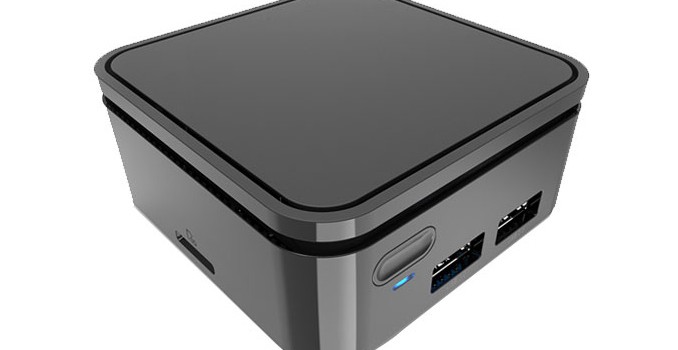
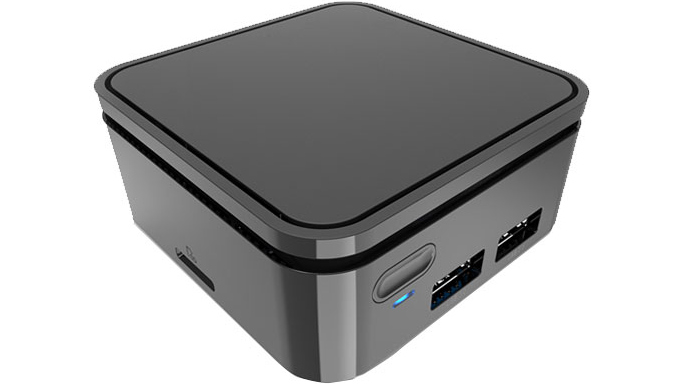
ECS has quietly added a new small x86 desktop computer into its lineup. The ECS PB01CF ultra-compact PC is powered by Intel’s Apollo Lake platform and uses an enclosure the size smaller than most wallets. The computer is clearly not a powerhouse, but it supports all the multimedia capabilities that Intel’s latest low-power chips have to offer.

The ECS PB01CF is based on Intel’s Celeron N3350 processor, a mobile SoC with two Goldmont cores clocked at 1.1-2.4 GHz, 2 MB cache and Intel’s HD Graphics 500 (Gen9) iGPU with 12 EUs. The SoC supports Intel’s new multimedia playback engine that supports hardware-accelerated playback of 4K video from HEVC and VP9-based sources. The system comes equipped with 2 GB of LPDDR4 memory, 32 GB eMMC storage (not a lot, if you want to store UHD videos locally without using an external hard drive, but enough for streaming) and runs Windows 10 Home. As for connectivity, everything looks fairly standard here: a 802.11ac Wi-Fi module, a GbE controller, a microSD card reader, two USB Type-A headers, and one 4Kp30-capable HDMI output to connect to displays or TVs (note that the system does not have any analog connectors for monitors or audio). The PB01CF measures 7×7×3.1 cm and is powered by an external 24 W adapter.

Brief Specifications of ECS 5-Ounce PC
  PB01CF
CPU Celeron N3350
2C/2T at 1.1 – 2.4 GHz frequency, 2 MB cache, iGPU
PCH integrated
Graphics Intel HD Graphics 500 (12 EUs) Gen9
Memory 2 GB LPDDR4
Storage 32 GB eMMC
Wi-Fi Intel 802.11ac
Ethernet Gigabit Ethernet with RJ45 connector
Display Outputs 1 × HDMI (up to 4Kp30)
Audio via HDMI
USB 1 × USB 3.0 Type-A (5 Gbps)
1 × USB 2.0 Type-A (480 Mbps)
Dimensions 70 mm × 70 mm × 31 mm (0.15 liters, 5 ounces)
PSU External 24 W
VESA Mounts 75 mm/100 mm
OS Microsoft Windows 10 Home 64-bit

From a performance and connectivity point of view, the ECS PB01CF is somewhat behind the company’s LIVA Z computers, which are positioned as universal systems for office and media-centric applications. By contrast, the PB01CF is considerably smaller while offering 4K hardware-accelerate video playback, which makes it a viable solution for content streaming or digital signage. In fact, the latter is one the primary applications that ECS positions the PB01CF for, apart from being a cheap office PC attached to the backside of the display, of course. Meanwhile, when compared to Compute Stick systems, the PB01CF has more USB ports, a card reader, GbE and active cooling.

ECS has not publicly announced pricing of the PB01CF and large retailers as well as price search engines do not list the product in their databases. Moreover, at press time ECS’ web site did not host any manuals or BIOS updates for the PB01CF, which may indicate that the manufacturer has not launched the device yet. Given the fact that the PB01CF does not seem to be designed for general public, it is possible that the PC is only going to be available via special channels with ECS as an OEM – a common avenue for ECS’ business. 

Related Reading: