News


Toshiba Announces Portégé X30: 13.3” FHD, Core i7, 16 GB DDR4, Thunderbolt 3

Toshiba Announces Portégé X30: 13.3” FHD, Core i7, 16 GB DDR4, Thunderbolt 3

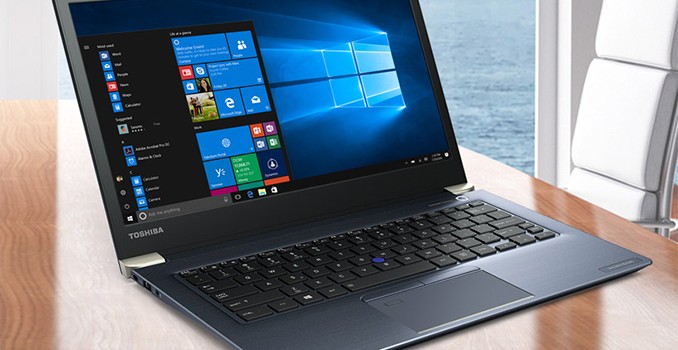
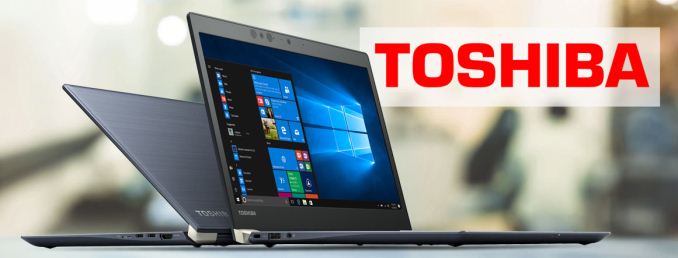
Toshiba this week introduced its new Portégé X30 lineup of notebooks designed for business and enterprise users. Three models will be on offer, powered by Intel’s Kaby Lake-U SoCs and they come equipped with up to 16 GB of memory, up to 512 GB of SSD storage, Thunderbolt 3, WiGig connectivity (optional), harman/kardon speakers, and security features such as an IR camera, a fingerprint reader, and a TPM 2.0 module. The weight of the clamshell is just around 2.3 pounds (or about 1.05 kilograms), among the lowest in the industry.

Now focused primarily on business notebooks rather than laptops for consumers, Toshiba does not make many PC-related announcements these days. Nonetheless, the company continues to develop ultra-portable laptops to compete against rivals. In this space, models such as Lenovo’s ThinkPad X1 or Dell’s XPS 13 reign supreme. So this week, Toshiba launched its new Portégé X30 13.3” notebook that combines high performance, connectivity, and security with a low weight that is among the lowest in the class. To reduce the weight of the notebook to around a kilogram, Toshiba used a magnesium alloy for the chassis. This increased the thickness of the laptop to 15.9 mm, but it looks like Toshiba decided that weight reduction and durability is more important than ultimate portability at any cost.
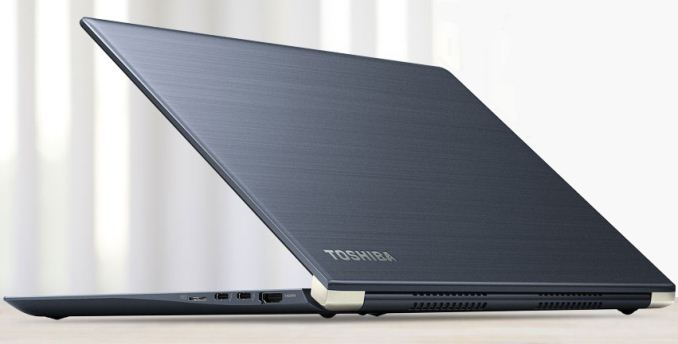
The Toshiba Portégé X30 is based on Intel’s Core i5/i7 processor with built-in HD Graphics 620 and Microsoft’s Windows 10 Pro operating system. Depending on the version of the PC, the Portégé X30 can be equipped with 8 or 16 GB of DDR4-2133 memory, and a 256 GB or a 512 GB PCIe SSD. When it comes to connectivity, the new notebook is equipped with an 802.11ac Wi-Fi + BT 4.1 wireless module, optional WiGig (select built-to-order models only), one HDMI output, a microSD card reader, two Thunderbolt 3 ports that can work in DisplayPort 1.2 and USB 3.1 Gen 2 modes, and one USB Type-A header.

Toshiba Portege X30
  Portege X30-D1352 Portege X30-D1354 Portege X30-D1356
Display 13.3″ 1920×1080 with 10-point multitouch
CPU Core i5-7300U
2C/4T
3MB L3 Cache
2.6-3.5 GHz
Core i7-7600U
2C/4T
4MB L3 Cache
2.8-3.9 GHz
Graphics HD Graphics 620 (24 EUs)
RAM 8 GB DDR4-2133 16 GB DDR4-2133
Storage 256 GB M.2 PCIe SSD 512 GB M.2 PCIe SSD
Wi-Fi Intel Dual Band Wireless-AC 8265 2×2 802.11ac Wi-Fi
Bluetooth Bluetooth 4.2
USB 3.0 × Type-A
TB3 2 × Type-C TB3/USB 3.1 ports (also used for charging, external display, etc.)
Card Reader MicroSD
Fingerprint Sensor Yes
Other I/O Webcam with RGB + IR sensors, microphone, stereo speakers, audio jack
Battery 48 Wh
Thickness 15.9 mm (0.62 inches)
Weight Starting at 1.05 kg (2.31 lbs)
Price $1450 $1600 $1900

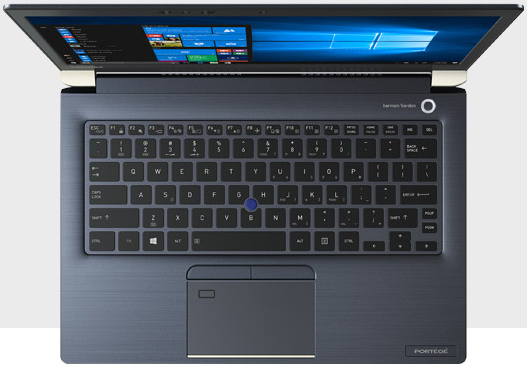
For security features, the Portégé X30 is equipped with SecurePad with Synaptics Natural ID fingerprint sensor, a webcam with IR sensors (for facial recognition) as well as a Trusted Platform Module (TPM 2.0). For added comfort, the notebook comes with a backlit, spill-resistant keyboard with a trackpoint nub. As for multimedia capabilities, the system has a stereo sub-system featuring speakers co-designed with Harman Kardon that also carry a DTS label.
Toshiba’s Portégé X30 laptops are available directly from the company in the U.S. for $1450, $1600 or $1900, depending on configurations. Toshiba sells its Portégé notebooks in other regions as well, albeit in different configs (e.g., machines with a 1366×768 resolution and lower-end CPUs) and at different price points.
Related Reading:

Toshiba Announces Portégé X30: 13.3” FHD, Core i7, 16 GB DDR4, Thunderbolt 3

Toshiba Announces Portégé X30: 13.3” FHD, Core i7, 16 GB DDR4, Thunderbolt 3

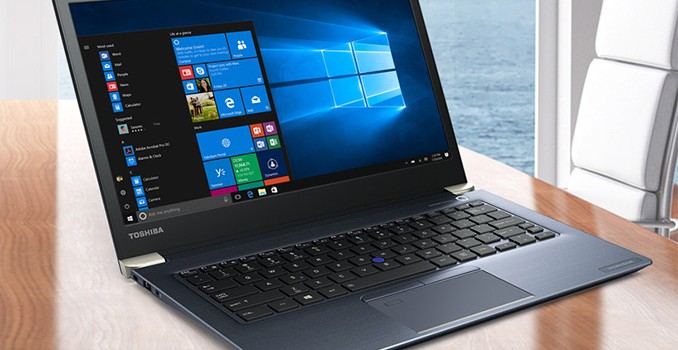
Toshiba this week introduced its new Portégé X30 lineup of notebooks designed for business and enterprise users. Three models will be on offer, powered by Intel’s Kaby Lake-U SoCs and they come equipped with up to 16 GB of memory, up to 512 GB of SSD storage, Thunderbolt 3, WiGig connectivity (optional), harman/kardon speakers, and security features such as an IR camera, a fingerprint reader, and a TPM 2.0 module. The weight of the clamshell is just around 2.3 pounds (or about 1.05 kilograms), among the lowest in the industry.

Now focused primarily on business notebooks rather than laptops for consumers, Toshiba does not make many PC-related announcements these days. Nonetheless, the company continues to develop ultra-portable laptops to compete against rivals. In this space, models such as Lenovo’s ThinkPad X1 or Dell’s XPS 13 reign supreme. So this week, Toshiba launched its new Portégé X30 13.3” notebook that combines high performance, connectivity, and security with a low weight that is among the lowest in the class. To reduce the weight of the notebook to around a kilogram, Toshiba used a magnesium alloy for the chassis. This increased the thickness of the laptop to 15.9 mm, but it looks like Toshiba decided that weight reduction and durability is more important than ultimate portability at any cost.

The Toshiba Portégé X30 is based on Intel’s Core i5/i7 processor with built-in HD Graphics 620 and Microsoft’s Windows 10 Pro operating system. Depending on the version of the PC, the Portégé X30 can be equipped with 8 or 16 GB of DDR4-2133 memory, and a 256 GB or a 512 GB PCIe SSD. When it comes to connectivity, the new notebook is equipped with an 802.11ac Wi-Fi + BT 4.1 wireless module, optional WiGig (select built-to-order models only), one HDMI output, a microSD card reader, two Thunderbolt 3 ports that can work in DisplayPort 1.2 and USB 3.1 Gen 2 modes, and one USB Type-A header.

Toshiba Portege X30
  Portege X30-D1352 Portege X30-D1354 Portege X30-D1356
Display 13.3″ 1920×1080 with 10-point multitouch
CPU Core i5-7300U
2C/4T
3MB L3 Cache
2.6-3.5 GHz
Core i7-7600U
2C/4T
4MB L3 Cache
2.8-3.9 GHz
Graphics HD Graphics 620 (24 EUs)
RAM 8 GB DDR4-2133 16 GB DDR4-2133
Storage 256 GB M.2 PCIe SSD 512 GB M.2 PCIe SSD
Wi-Fi Intel Dual Band Wireless-AC 8265 2×2 802.11ac Wi-Fi
Bluetooth Bluetooth 4.2
USB 3.0 × Type-A
TB3 2 × Type-C TB3/USB 3.1 ports (also used for charging, external display, etc.)
Card Reader MicroSD
Fingerprint Sensor Yes
Other I/O Webcam with RGB + IR sensors, microphone, stereo speakers, audio jack
Battery 48 Wh
Thickness 15.9 mm (0.62 inches)
Weight Starting at 1.05 kg (2.31 lbs)
Price $1450 $1600 $1900

For security features, the Portégé X30 is equipped with SecurePad with Synaptics Natural ID fingerprint sensor, a webcam with IR sensors (for facial recognition) as well as a Trusted Platform Module (TPM 2.0). For added comfort, the notebook comes with a backlit, spill-resistant keyboard with a trackpoint nub. As for multimedia capabilities, the system has a stereo sub-system featuring speakers co-designed with Harman Kardon that also carry a DTS label.

Toshiba’s Portégé X30 laptops are available directly from the company in the U.S. for $1450, $1600 or $1900, depending on configurations. Toshiba sells its Portégé notebooks in other regions as well, albeit in different configs (e.g., machines with a 1366×768 resolution and lower-end CPUs) and at different price points.

Related Reading:

NVIDIA Releases 382.05 WHQL Game Ready Driver

NVIDIA Releases 382.05 WHQL Game Ready Driver

We’ve reached a new month, which brings new games that NVIDIA is always happy to prepare for. This week they have released another iteration for release 381 of their GeForce driver. While less feature-packed than some of the recent driver update…

NVIDIA Releases 382.05 WHQL Game Ready Driver

NVIDIA Releases 382.05 WHQL Game Ready Driver

We’ve reached a new month, which brings new games that NVIDIA is always happy to prepare for. This week they have released another iteration for release 381 of their GeForce driver. While less feature-packed than some of the recent driver update…

AMD Releases Radeon Software ReLive Crimson Edition 17.5.1: Prey Release Driver

AMD Releases Radeon Software ReLive Crimson Edition 17.5.1: Prey Release Driver

Only a week out from the release of Radeon Software Crimson ReLive Edition 17.4.4 and AMD is in for another brief round. This release is arguably on the more conservative side, if we can benchmark the release by numbers of bullet points (ed: we shall call it TextMark!). AMD’s Radeon Technology Group was certainly busy, because along with a new beta driver they also have bumped last week’s 17.4.4 to a full relase.

For this week’s 17.5.1 release, we get Display Driver Version 17.10.2711 (Windows Driver Store Version 22.19.165.3) and a moderate list of fixes starting with an issue that was causing the error message “1603” during install. Radeon Settings should have less trouble updating as well with a fix for the Radeon Software auto update feature. Forza Horizon 3 players should no longer experience minor graphics corruption and Sid Meier’s Civilization VI will no longer crash for players with systems using Hybrid Graphics. Pulling up the end of the list, Radeon WattMan will no longer fail to apply settings on Radeon R9 390 series products and switchable graphics support for Unengine Superposition has been added for XConnect and Hybrid Graphics systems.

The games list is short this time around, with AMD publishing this latest driver large part to offer launch-day driver support for the newly released Prey. Along with the claimed 4.7% increase in performance vs last week’s 17.4.4 driver AMD is also providing a Multi GPU profile for today’s launch.

As always, those interested in reading more or installing the updated hotfix drivers for AMD’s desktop, mobile, and integrated GPUs can find them either under the driver update section in Radeon Settings or on AMDs Radeon Software Crimson ReLive Edition download page.