News


ASUS Maximus IX Extreme Z270 Motherboard Now Available: $629 with Water Block
ASUS Maximus IX Extreme Z270 Motherboard Now Available: $629 with Water Block

First unveiled at CES 2017, and launched by ASUS back in early March, the availability of the flagship Republic of Gamers (ROG) Z270 motherboard has thus far been limited to Newegg in North America. That changes today with the announcement that the Maximus IX Extreme is now widely available at leading resellers in both Canada and the United States.

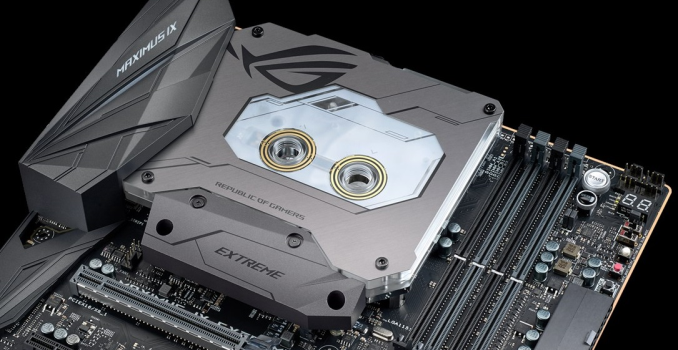
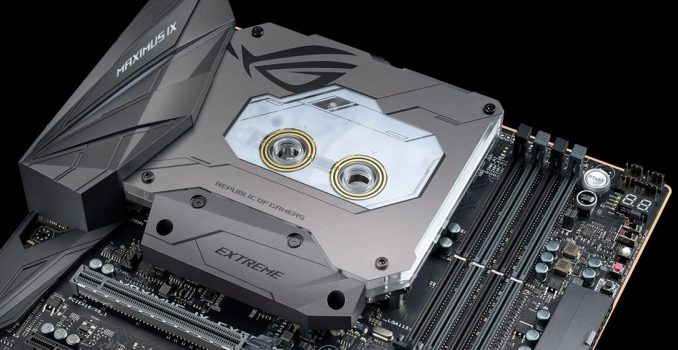
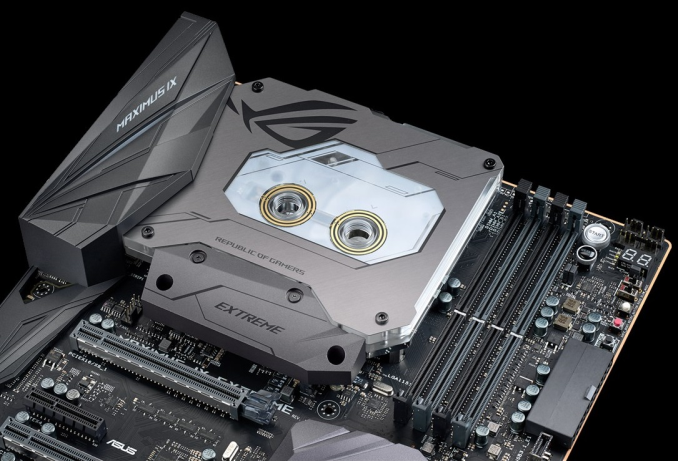
Built for gaming and liquid cooling enthusiasts, the Maximus IX Extreme represents the pinnacle of ASUS’ engineering expertise. ASUS has also collaborated with Bitspower in order to develop the factory-installed monoblock water cooling solution that is clearly the model’s most distinguishing feature over other motherboards. The monoblock is so large that it is likely the main factor behind this model’s price.

Designed to cool the CPU and the associated power delivery components, this monoblock incorporates flow rate, water leak, and inlet/outlet temperature sensors, all of which can be monitored and controlled from within the UEFI or the Fan Xpert IV utility. There is also ubiquitous RGB LED lighting built-in, which can be controlled by the AURA utility along with the LEDs integrated into the I/O cover, PCH heatsink, and any light strip attached to the 5050 RGB header. Speaking of headers, this motherboard has a lot of them. There are 12 fan headers, which includes 8 radiator fan headers and 2 water pump headers, and a number of additional flow rate and temperature sensor headers. Overall, this should not only negate the need for any additional fan controllers, but also reduce wiring complexity. All of these headers can be fully configured from within the UEFI or Fan Xpert IV utility.

There is also a separate heatsink included to cool the topmost M.2 drive. While it is not part of the monoblock, it does make contact with it and thus should receive some level of passive cooling. Not to be ignored, the secondary M.2 drive can be cooled with the M.2 cover that is integrated into the PCH heatsink. Both of these M.2 connectors support SATA and PCI-E 3.0 x4 NVMe SSDs, as well as Intel Optane Memory, but only the secondary connector supports longer 22110-type drives. The remaining drive storage needs are handled by eight SATA 6Gb/s ports.

In addition, the mainboard supports eight USB 3.0 ports (six rear, one header), four USB 2.0 ports (via two headers), one USB 3.1 type-A port, one USB 3.1 type-C port that supports Thunderbolt 3, and a rare USB 3.1 front-panel connector. Rounding out the connectivity is one gigabit LAN port powered by an Intel I219-V controller, onboard 2×2 802.11ac Wi-Fi with MU-MIMO that is based on Qualcomm Atheros QCA6174A chip, as well as HDMI 1.4 and DisplayPort 1.2 video outputs.

Since this is a high-end gamer-oriented motherboard, it is no surprise to see ROG SupremeFX onboard audio. This 8-channel audio solution is designed around the Realtek ALC1220A codec, but also features a Texas Instruments RC4580 op-amp, ESS ES9023P digital-to-analog converter (DAC) for the front-panel output, shielded audio circuits, impedance sensing for the front and rear headphone outputs, and color-coded and LED-illuminated 3.5mm audio connectors.

Given the pedigree of the Extreme model name, overclockers have not been overlooked either. There is a plethora of ASUS-specific features that are designed with overclocking in mind, such as the ProbeIT voltage read points, Q_Code LED, an LN2 Mode jumper, a Slow Mode Switch, an RSVD switch, a ReTry button, a Safe Boot button, a MemOK! button, a DRAM channel jumper, and the ROG Extension connector. There are also diagnostic LEDs throughout the motherboard.

Last but not least, the board features a standard complement of four DDR4 slots (which support overclocked memory speeds up to DDR4-4133), two strengthened PCIe x16 slots for graphics purposes (PCIe 3.0 x16 or x8/x8), one PCIe 3.0 x4 slot from the chipset, and one full length PCIe slot that operates at PCIe 3.0 x4. These last two slots get their bandwidth from the PCH, and there are SATA limitations that you need to research if you plan to use the mechanical PCIe x4 slot.

As mentioned in the introduction, the ASUS Maximus IX Extreme is now widely available in North America and carries a suggested MSRP of $629 USD. As a result of that price point, it supplants its predecessor, the Maximus VIII Extreme, as the most expensive LGA1151 motherboard on the market.

Related Reading

ASUS Maximus IX Extreme Z270 Motherboard Now Available: $629 with Water Block

ASUS Maximus IX Extreme Z270 Motherboard Now Available: $629 with Water Block

First unveiled at CES 2017, and launched by ASUS back in early March, the availability of the flagship Republic of Gamers (ROG) Z270 motherboard has thus far been limited to Newegg in North America. That changes today with the announcement that the Maximus IX Extreme is now widely available at leading resellers in both Canada and the United States.

Built for gaming and liquid cooling enthusiasts, the Maximus IX Extreme represents the pinnacle of ASUS’ engineering expertise. ASUS has also collaborated with Bitspower in order to develop the factory-installed monoblock water cooling solution that is clearly the model’s most distinguishing feature over other motherboards. The monoblock is so large that it is likely the main factor behind this model’s price.

Designed to cool the CPU and the associated power delivery components, this monoblock incorporates flow rate, water leak, and inlet/outlet temperature sensors, all of which can be monitored and controlled from within the UEFI or the Fan Xpert IV utility. There is also ubiquitous RGB LED lighting built-in, which can be controlled by the AURA utility along with the LEDs integrated into the I/O cover, PCH heatsink, and any light strip attached to the 5050 RGB header. Speaking of headers, this motherboard has a lot of them. There are 12 fan headers, which includes 8 radiator fan headers and 2 water pump headers, and a number of additional flow rate and temperature sensor headers. Overall, this should not only negate the need for any additional fan controllers, but also reduce wiring complexity. All of these headers can be fully configured from within the UEFI or Fan Xpert IV utility.

There is also a separate heatsink included to cool the topmost M.2 drive. While it is not part of the monoblock, it does make contact with it and thus should receive some level of passive cooling. Not to be ignored, the secondary M.2 drive can be cooled with the M.2 cover that is integrated into the PCH heatsink. Both of these M.2 connectors support SATA and PCI-E 3.0 x4 NVMe SSDs, as well as Intel Optane Memory, but only the secondary connector supports longer 22110-type drives. The remaining drive storage needs are handled by eight SATA 6Gb/s ports.

In addition, the mainboard supports eight USB 3.0 ports (six rear, one header), four USB 2.0 ports (via two headers), one USB 3.1 type-A port, one USB 3.1 type-C port that supports Thunderbolt 3, and a rare USB 3.1 front-panel connector. Rounding out the connectivity is one gigabit LAN port powered by an Intel I219-V controller, onboard 2×2 802.11ac Wi-Fi with MU-MIMO that is based on Qualcomm Atheros QCA6174A chip, as well as HDMI 1.4 and DisplayPort 1.2 video outputs.

Since this is a high-end gamer-oriented motherboard, it is no surprise to see ROG SupremeFX onboard audio. This 8-channel audio solution is designed around the Realtek ALC1220A codec, but also features a Texas Instruments RC4580 op-amp, ESS ES9023P digital-to-analog converter (DAC) for the front-panel output, shielded audio circuits, impedance sensing for the front and rear headphone outputs, and color-coded and LED-illuminated 3.5mm audio connectors.

Given the pedigree of the Extreme model name, overclockers have not been overlooked either. There is a plethora of ASUS-specific features that are designed with overclocking in mind, such as the ProbeIT voltage read points, Q_Code LED, an LN2 Mode jumper, a Slow Mode Switch, an RSVD switch, a ReTry button, a Safe Boot button, a MemOK! button, a DRAM channel jumper, and the ROG Extension connector. There are also diagnostic LEDs throughout the motherboard.

Last but not least, the board features a standard complement of four DDR4 slots (which support overclocked memory speeds up to DDR4-4133), two strengthened PCIe x16 slots for graphics purposes (PCIe 3.0 x16 or x8/x8), one PCIe 3.0 x4 slot from the chipset, and one full length PCIe slot that operates at PCIe 3.0 x4. These last two slots get their bandwidth from the PCH, and there are SATA limitations that you need to research if you plan to use the mechanical PCIe x4 slot.

As mentioned in the introduction, the ASUS Maximus IX Extreme is now widely available in North America and carries a suggested MSRP of $629 USD. As a result of that price point, it supplants its predecessor, the Maximus VIII Extreme, as the most expensive LGA1151 motherboard on the market.

Related Reading

Palit GeForce GTX 1080 Ti HOF Limited Edition Announced: 1.75 GHz and Onboard LCD

Palit GeForce GTX 1080 Ti HOF Limited Edition Announced: 1.75 GHz and Onboard LCD

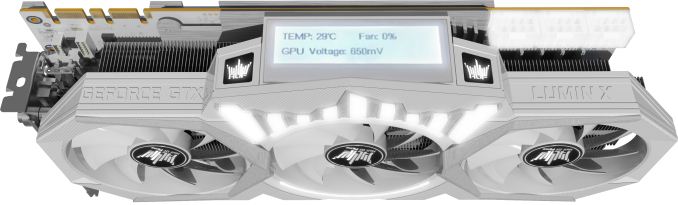
Palit Microsystems plans to release a new factory-overclocked limited edition graphics adapter based on NVIDIA’s GeForce GTX 1080 Ti GPU under its GALAX and KFA2 brands. The card was developed from scratch and will be among the highest-performing video cards in the industry due to a rather extreme GPU frequency. It also comes with exclusive features that will further push it up on price.

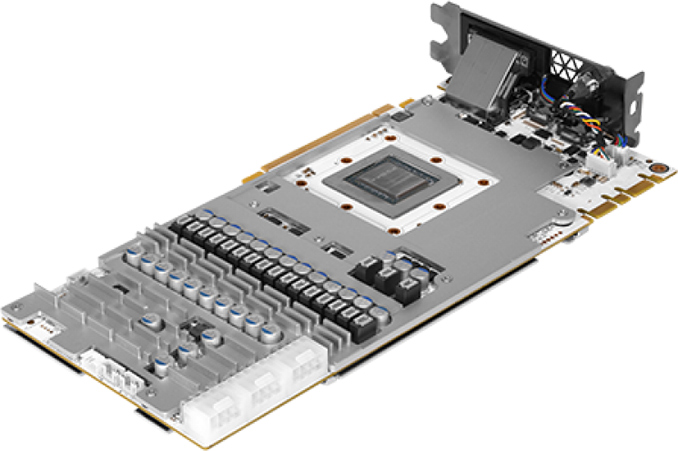
The GeForce GTX 1080 Ti HOF Limited Edition graphics adapter from GALAX and KFA2 are based on NVIDIA’s GP102 GPU, clocked at 1645/1759 MHz (base/boost) and suses a custom 12-layer PCB developed by Palit. The add-in-board (AIB) features a 12+3-phase VRM and three 8-pin PCIe power connectors in a bid to guarantee stable operation of the GPU at significantly increased clock rates (165/177 MHz higher than NVIDIA’s recommendations) and enable further headroom for overclocking.

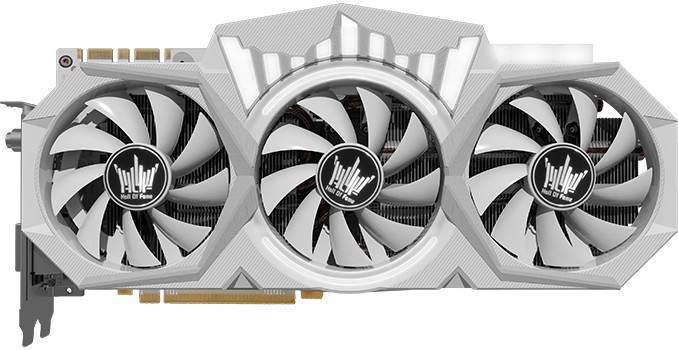
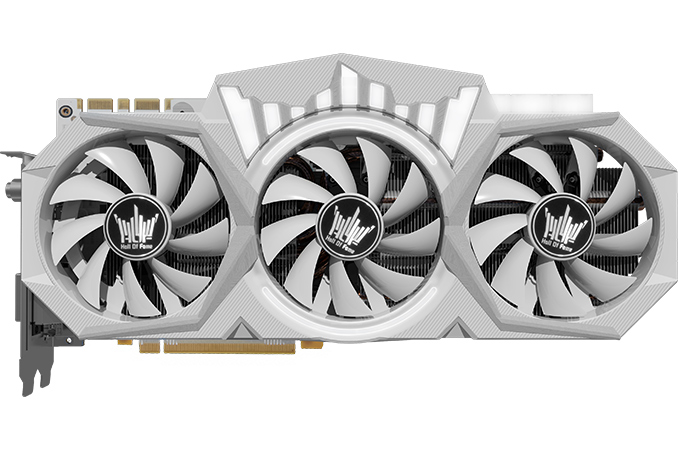
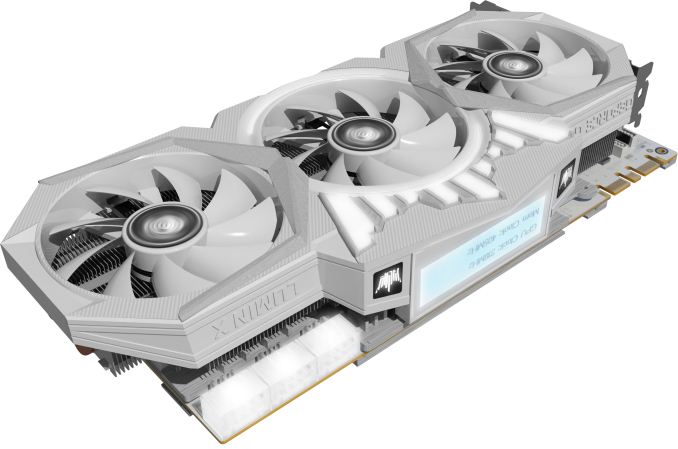
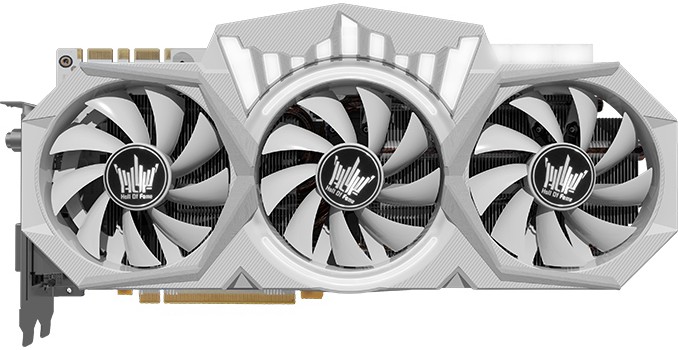
To cool down the GPU and memory, Palit uses a special cooling system that relies on a huge heatsink with five thick heatpipes as well as three fans. As an added bonus, the cooling system is equipped with an LCD screen that displays current GPU and memory frequencies, the GPU temperature, the GPU voltage and other important information. Since the cooler is very large, it takes three slots, meaning multi-GPU system builds with this card more complicated. Traditionally, large cooling solutions are equipped with a backplate and the cooler on the GeForce GTX 1080 Ti HOF Limited Edition is not an exception. As for outputs, the graphics adapter comes with three DisplayPort 1.4 headers, one HDMI 2.0b and one DVI-D.

With its factory overclocked GPU, the GeForce GTX 1080 Ti HOF Limited Edition from GALAX and KFA2 is going to be one of the highest-performing gaming graphics cards around. In fact, single precision compute performance of the AIB will be between 11.79 and 12.6 TFLOPS (depending on exact frequency), which is higher than that of NVIDIA’s Titan X and Titan Xp. The latter still have advantages when it comes to ROP count and memory bandwidth, but in at least certain cases the GTX 1080 Ti HOF Limited Edition is going to be faster.

NVIDIA GPU Specification Comparison
  NVIDIA Titan Xp GALAX/KFA2
GeForce GTX 1080 Ti HOF Limited Edition
NVIDIA
GeForce
GTX 1080 Ti
NVIDIA Titan X
(Pascal)
NVIDIA GeForce GTX Titan X
(Maxwell)
CUDA Cores 3840 3584 3584 3072
Texture Units 240 224 224 192
ROPs 96 88 96 96
Core Clock 1481 MHz? 1645 MHz 1481 MHz 1417 MHz 1000 MHz
Boost Clock 1582 MHz 1759 MHz 1582 MHz 1531 MHz 1075 MHz
TFLOPs (FMA) 12.1 TFLOPs 12.6 TFLOPs 11.3 TFLOPs 11 TFLOPs 6.1 TFLOPs
Memory Clock 11.4 GT/s  GDDR5X 11 GT/s
GDDR5X
10 GT/s GDDR5X 7 GT/s GDDR5
Memory Bus Width 384-bit 352-bit 384-bit 384-bit
RAM 12 GB 11 GB 12 GB 12 GB
RAM Bandwidth 547.2 GB/s 484 GB/s 480 GB/s 336 GB/s
FP64 1/32
FP16 (Native) 1/64 N/A
INT8 4:1 N/A
TDP 250W 250W++ 250W 250W 250W
GPU GP102 GM200
Transistor Count 12B 8B
Die Size 471mm2 601mm2
Manufacturing Process TSMC 16nm TSMC 28nm
Launch Date 04/06/2017 ~05/2017 03/10/2017 08/02/2016 03/17/2015
Launch Price $1200 ~$1200 $699 $1200 $999

Meanwhile, pricing of the GALAX/KFA2 GeForce GTX 1080 Ti HOF Limited Edition will match pricing of the two aforementioned cards that are sold exclusively by NVIDIA for $1200. Overclockers UK offers to pre-order the card from KFA2 for £949.99 (with ETA in late May), which equals to $1227. It is noteworthy that in the UK the card will be called the KFA2 GeForce GTX 1080 Ti HOF 8 Pack Edition, after professional overclocker 8 Pack who works for Overclockers.

Related Reading:

Sources: GALAX, KFA2

Palit GeForce GTX 1080 Ti HOF Limited Edition Announced: 1.75 GHz and Onboard LCD

Palit GeForce GTX 1080 Ti HOF Limited Edition Announced: 1.75 GHz and Onboard LCD

Palit Microsystems plans to release a new factory-overclocked limited edition graphics adapter based on NVIDIA’s GeForce GTX 1080 Ti GPU under its GALAX and KFA2 brands. The card was developed from scratch and will be among the highest-performing video cards in the industry due to a rather extreme GPU frequency. It also comes with exclusive features that will further push it up on price.

The GeForce GTX 1080 Ti HOF Limited Edition graphics adapter from GALAX and KFA2 are based on NVIDIA’s GP102 GPU, clocked at 1645/1759 MHz (base/boost) and suses a custom 12-layer PCB developed by Palit. The add-in-board (AIB) features a 12+3-phase VRM and three 8-pin PCIe power connectors in a bid to guarantee stable operation of the GPU at significantly increased clock rates (165/177 MHz higher than NVIDIA’s recommendations) and enable further headroom for overclocking.

To cool down the GPU and memory, Palit uses a special cooling system that relies on a huge heatsink with five thick heatpipes as well as three fans. As an added bonus, the cooling system is equipped with an LCD screen that displays current GPU and memory frequencies, the GPU temperature, the GPU voltage and other important information. Since the cooler is very large, it takes three slots, meaning multi-GPU system builds with this card more complicated. Traditionally, large cooling solutions are equipped with a backplate and the cooler on the GeForce GTX 1080 Ti HOF Limited Edition is not an exception. As for outputs, the graphics adapter comes with three DisplayPort 1.4 headers, one HDMI 2.0b and one DVI-D.

With its factory overclocked GPU, the GeForce GTX 1080 Ti HOF Limited Edition from GALAX and KFA2 is going to be one of the highest-performing gaming graphics cards around. In fact, single precision compute performance of the AIB will be between 11.79 and 12.6 TFLOPS (depending on exact frequency), which is higher than that of NVIDIA’s Titan X and Titan Xp. The latter still have advantages when it comes to ROP count and memory bandwidth, but in at least certain cases the GTX 1080 Ti HOF Limited Edition is going to be faster.

NVIDIA GPU Specification Comparison
  NVIDIA Titan Xp GALAX/KFA2
GeForce GTX 1080 Ti HOF Limited Edition
NVIDIA
GeForce
GTX 1080 Ti
NVIDIA Titan X
(Pascal)
NVIDIA GeForce GTX Titan X
(Maxwell)
CUDA Cores 3840 3584 3584 3072
Texture Units 240 224 224 192
ROPs 96 88 96 96
Core Clock 1481 MHz? 1645 MHz 1481 MHz 1417 MHz 1000 MHz
Boost Clock 1582 MHz 1759 MHz 1582 MHz 1531 MHz 1075 MHz
TFLOPs (FMA) 12.1 TFLOPs 12.6 TFLOPs 11.3 TFLOPs 11 TFLOPs 6.1 TFLOPs
Memory Clock 11.4 GT/s  GDDR5X 11 GT/s
GDDR5X
10 GT/s GDDR5X 7 GT/s GDDR5
Memory Bus Width 384-bit 352-bit 384-bit 384-bit
RAM 12 GB 11 GB 12 GB 12 GB
RAM Bandwidth 547.2 GB/s 484 GB/s 480 GB/s 336 GB/s
FP64 1/32
FP16 (Native) 1/64 N/A
INT8 4:1 N/A
TDP 250W 250W++ 250W 250W 250W
GPU GP102 GM200
Transistor Count 12B 8B
Die Size 471mm2 601mm2
Manufacturing Process TSMC 16nm TSMC 28nm
Launch Date 04/06/2017 ~05/2017 03/10/2017 08/02/2016 03/17/2015
Launch Price $1200 ~$1200 $699 $1200 $999

Meanwhile, pricing of the GALAX/KFA2 GeForce GTX 1080 Ti HOF Limited Edition will match pricing of the two aforementioned cards that are sold exclusively by NVIDIA for $1200. Overclockers UK offers to pre-order the card from KFA2 for £949.99 (with ETA in late May), which equals to $1227. It is noteworthy that in the UK the card will be called the KFA2 GeForce GTX 1080 Ti HOF 8 Pack Edition, after professional overclocker 8 Pack who works for Overclockers.

Related Reading:

Sources: GALAX, KFA2