News


Intel Launches Kaby-Lake based Xeons: The E3-1200 v6 Family
Intel Launches Kaby-Lake based Xeons: The E3-1200 v6 Family

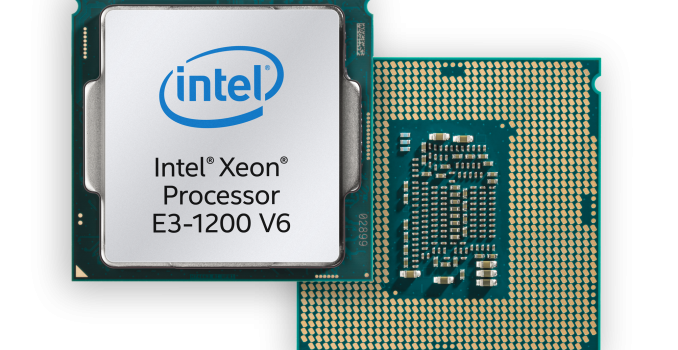
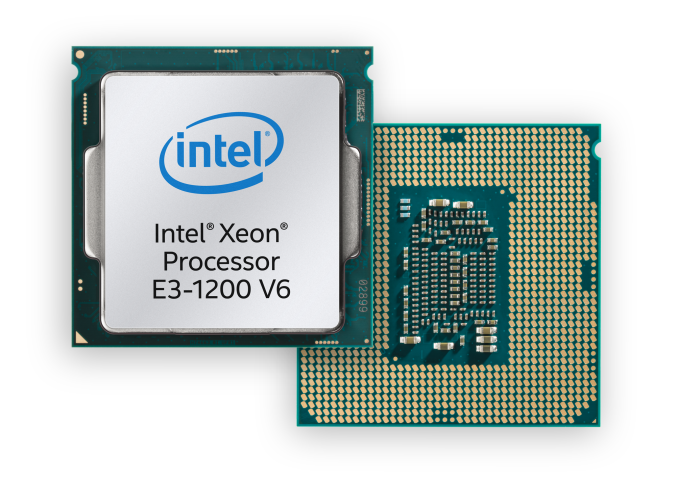
For the several generations previous, it has become customary for the Xeon equivalents of consumer processors to hit the market several months later. We saw the launch of Kaby Lake on the consumer desktop in January, with quad-core parts up to 4.0 GHz coming to retail. The Xeon E3 launch will be in the similar vein to previous years, designed for entry-level workstations, small business servers and storage servers, and Intel’s main comparisons for these Xeons will be to replace similar builds that are more than three years old.
A total of eight processors will be launched today under the E3 v6 name, with some models receiving a corresponding low-power version later down the line. All desktop replaceable CPUs will be using the LGA1151 socket, the same as the previous generation E3 v5 Xeons.

Intel E3-1200 v6 CPUs (Kaby Lake)
  C/T Base Freq Turbo L3 Cache IGP IGP Freq TDP $
E3-1280 v6 4/8 3.9 GHz 4.2 GHz 8 MB 72 W $612
E3-1275 v6 4/8 3.8 GHz 4.2 GHz 8 MB P630 1150 MHz 73 W $339
E3-1270 v6 4/8 3.8 GHz 4.2 GHz 8 MB 72 W $328
E3-1245 v6 4/8 3.7 GHz 4.1 GHz 8 MB P630 1150 MHz 73 W $284
E3-1240 v6 4/8 3.7 GHz 4.1 GHz 8 MB 72 W $272
E3-1230 v6 4/8 3.5 GHz 3.9 GHz 8 MB 72 W $250
E3-1225 v6 4/4 3.3 GHz 3.7 GHz 8 MB P630 1150 MHz 73 W $213
E3-1220 v6 4/4 3.0 GHz 3.5 GHz 8 MB 72 W $193

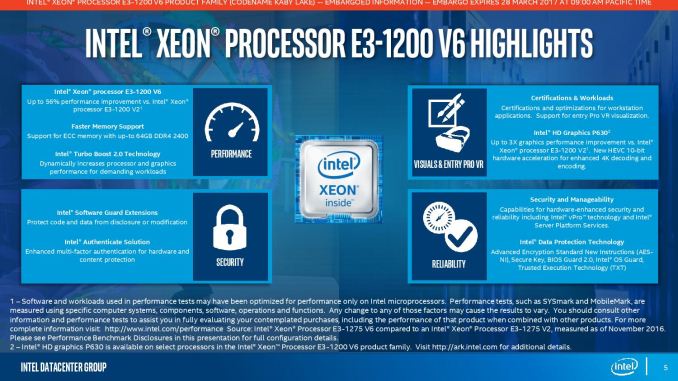
On the integrated graphics models, i.e. those ending in ‘5’, are all running Intel HD P630 graphics and run up to 1150 MHz. This is the ‘professional’ version of the HD630 we see on the consumer parts, using Intel’s latest Gen9 graphics architecture and supporting H.265 encode/decode. Our Kaby Lake review piece goes into more detail.

The high-end E3 v6 parts will have a maximum base frequency of 3.9 GHz base and a 4.2 GHz turbo. All the parts listed have a full 8MB of L3 cache, and either be 72W for non-IGP models or 73W for IGP parts. As with other previous Xeons, these come with ECC memory support, vPro and other technologies Intel files under the professional level. In Intel’s presentations, Intel SGX (Software Guard Extensions) are included, however TSX (Transactional Extensions) were not listed.

Intel E3-1200 v6 and v5 CPUs
IGP v6 Model v5 IGP
3.9/4.2, 72W E3-1280 3.7/4.0, 80W
+ 3.8/4.2, 73W E3-1275 3.6/4.0, 80W +
3.8/4.2, 72W E3-1270 3.6/4.0, 80W
E3-1260L 2.9/3.9, 45W
+ 3.7/4.1, 73W E3-1245 3.5/3.9, 80W +
3.7/4.1, 72W E3-1240 3.5/3.9, 80W
E3-1240L 2.1/3.2, 25W
E3-1235L 2.0/3.0, 25W +
3.5/3.9, 72W E3-1230 3.4/3.8, 80W
+ 3.3/3.7, 73W E3-1225 3.3/3.7, 80W +
3.0/3.3, 72W E3-1220 3.0/3.5, 80W

It is worth noting that for LGA1151 based E3 v5 Xeons, Intel adjusted the requirements such that Xeon processors require a server grade chipset on the motherboard. For Skylake E3 v5 parts, this was either a C232 or C236 chipset – we reviewed a few motherboards with these on (ASRock E3V5 Gaming, GIGABYTE Z170X-Extreme ECC). With a BIOS update, these C232/C236 motherboards should support the new v6 processors.

For the E3 v6 line, Intel is not releasing new chipsets, deciding to stick with the C232 and C236 models. This means that users wishing to upgrade their E3 v5 system will have to wait for a BIOS update in order for the new CPUs to work. We have yet to receive word if the standard motherboard manufacturers are launching a new series of motherboards for this generation, however we suspect that several will do so.

With the no new motherboard chipsets being launched, it is, therefore, odd that Intel is announcing Optane Memory support with the E3-1200 v6 Xeons. This essentially means that Optane Memory support is already baked into the chipset, and it is merely a firmware approval of a CPU and chipset combination in order for it to be enabled. Intel states that only select E3-1500M v6 (mobile) and E3-1200 v6 (desktop) configurations will be available for use with Optane, and may only be provided on an OEM basis.

Intel Xeon E-Series Families (February 2017)
  E3-1200 v5 E3-1500 v5
E3-1500M v6
E5-1600 v4
E5-2600 v4
E5-4600 v4
E7-4800 v4 E7-8800 v4
Core Family Skylake Skylake Broadwell Broadwell Broadwell
Core Count 2 to 4 2 to 4 4 to 22 8 to 16 4 to 24
Integrated Graphics Few, HD 520 Yes, Iris Pro No No No
DRAM Channels 2 2 4 4 4
Max DRAM Support (per CPU) 64 GB 64 GB 1536 GB 3072 GB 3072GB
DMI/QPI DMI 3.0 DMI 3.0 2600: 1xQPI
4600: 1xQPI
3 QPI 3 QPI
Multi-Socket Support No No 2600: 1S/2S
4600: 1S/2S
1S, 2S or 4S Up to 8S
PCIe Lanes 16 16 40 32 32
Cost $213 to
$612
$396 to
$1207
$294 to
$7007
$1223 to
$3003
$4061 to
$8898
Suited For Entry Workstations QuickSync,
Memory Compute
High-End Workstation Many-Core Server World Domination

Along with Intel’s announcement, we are seeing systems being launched with E3 v6 processors installed. Prices of the new parts are equivalent to the last generation.

To call out a big elephant in the room: Intel has more competition in this space than in previous years. Intel gives value to Xeon processors above consumer products, but Ryzen could potentially be an alternative to Intel. Aside from AMD, some of the positioning that Intel puts forward with the E3 could be taken up by Intel’s Atom offerings, Xeon-D, or even musings from ARM partners on new silicon designs. All being said, Intel is still expected to have the peak single thread performance for general purpose compute, and has the larger install base of customers and ready-to-go platforms. Performance per watt will be a key metric to monitor as well.

We have the E3 v5 processors in for testing on our new CPU test suite, and we hope that the E3 v6 units will arrive in due course. Stay tuned for those. 

Related Reading:

NVIDIA Adds GeForce GTX 1060 To “Prepare for Battle” Bundle

NVIDIA Adds GeForce GTX 1060 To “Prepare for Battle” Bundle

In a brief announcement this morning, NVIDIA is expanding their “Prepare for Battle” bundle to include the GeForce GTX 1060.

NVIDIA’s latest bundle launched nearly two months ago, at the end of January. At the time it launched, the bundle offered anyone who purchased a GeForce GTX 1080, GTX 1070, or a PC or laptop equipped with these cards the option to download either Ubisoft’s For Honor or Tom Clancy’s Ghost Recon Wildlands for free. NVIDIA then expanded the bundle to cover the GTX 1080 Ti upon its launch earlier this month.

Now that a good number of miles have been run on this offer, NVIDIA has included the GeForce GTX 1060 in on the action as well. This means that short of the entry-level GTX 1050 series, everything above in NVIDIA’s GeForce lineup includes a game bundle. It’s a notable distinction, in part because the GTX 1060 is the fastest card in a competitive market for NVIDIA – that is, where AMD offers a card with comparable performance. Consequently, NVIDIA’s bundle has taken on something of a new meaning, as it’s no longer about just throwing in a value add item to higher margin cards, but now about influencing mainstream video card buyers.

NVIDIA Current Game Bundles
Video Card Bundle
GeForce GTX 1080/1070 Prepare for Battle
GeForce GTX 1060 Prepare for Battle
GeForce GTX 1050Ti/1050 None
GeForce GTX 1080/1070 Desktops Prepare for Battle
GeForce GTX 1080/1070 Notebooks Prepare for Battle

Looking at the updated lineup, one thing worth noting here is that while GTX 1080 and GTX 1070 systems were included in the bundle, there is no word on if GTX 1060-equipped desktops or laptops are part of this offer as well.

We haven’t yet received news to how long this offer will run, though we will update here when we catch news of the end date. Meanwhile it is worth remembering to verify the participation of any vendors purchased from as NVIDIA likely will not give codes for purchases made from sellers that are not participating. NVIDIA also makes clear that it is up to the buyer to confirm their vendor of choice is participating in this bundle as NVIDIA cannot provide download codes and coupons for purchases made at non-participating retailers and e-tailers.

NVIDIA Adds GeForce GTX 1060 To “Prepare for Battle” Bundle

NVIDIA Adds GeForce GTX 1060 To “Prepare for Battle” Bundle

In a brief announcement this morning, NVIDIA is expanding their “Prepare for Battle” bundle to include the GeForce GTX 1060.

NVIDIA’s latest bundle launched nearly two months ago, at the end of January. At the time it launched, the bundle offered anyone who purchased a GeForce GTX 1080, GTX 1070, or a PC or laptop equipped with these cards the option to download either Ubisoft’s For Honor or Tom Clancy’s Ghost Recon Wildlands for free. NVIDIA then expanded the bundle to cover the GTX 1080 Ti upon its launch earlier this month.

Now that a good number of miles have been run on this offer, NVIDIA has included the GeForce GTX 1060 in on the action as well. This means that short of the entry-level GTX 1050 series, everything above in NVIDIA’s GeForce lineup includes a game bundle. It’s a notable distinction, in part because the GTX 1060 is the fastest card in a competitive market for NVIDIA – that is, where AMD offers a card with comparable performance. Consequently, NVIDIA’s bundle has taken on something of a new meaning, as it’s no longer about just throwing in a value add item to higher margin cards, but now about influencing mainstream video card buyers.

NVIDIA Current Game Bundles
Video Card Bundle
GeForce GTX 1080/1070 Prepare for Battle
GeForce GTX 1060 Prepare for Battle
GeForce GTX 1050Ti/1050 None
GeForce GTX 1080/1070 Desktops Prepare for Battle
GeForce GTX 1080/1070 Notebooks Prepare for Battle

Looking at the updated lineup, one thing worth noting here is that while GTX 1080 and GTX 1070 systems were included in the bundle, there is no word on if GTX 1060-equipped desktops or laptops are part of this offer as well.

We haven’t yet received news to how long this offer will run, though we will update here when we catch news of the end date. Meanwhile it is worth remembering to verify the participation of any vendors purchased from as NVIDIA likely will not give codes for purchases made from sellers that are not participating. NVIDIA also makes clear that it is up to the buyer to confirm their vendor of choice is participating in this bundle as NVIDIA cannot provide download codes and coupons for purchases made at non-participating retailers and e-tailers.

NVIDIA Adds GeForce GTX 1060 To “Prepare for Battle” Bundle

NVIDIA Adds GeForce GTX 1060 To “Prepare for Battle” Bundle

In a brief announcement this morning, NVIDIA is expanding their “Prepare for Battle” bundle to include the GeForce GTX 1060.

NVIDIA’s latest bundle launched nearly two months ago, at the end of January. At the time it launched, the bundle offered anyone who purchased a GeForce GTX 1080, GTX 1070, or a PC or laptop equipped with these cards the option to download either Ubisoft’s For Honor or Tom Clancy’s Ghost Recon Wildlands for free. NVIDIA then expanded the bundle to cover the GTX 1080 Ti upon its launch earlier this month.

Now that a good number of miles have been run on this offer, NVIDIA has included the GeForce GTX 1060 in on the action as well. This means that short of the entry-level GTX 1050 series, everything above in NVIDIA’s GeForce lineup includes a game bundle. It’s a notable distinction, in part because the GTX 1060 is the fastest card in a competitive market for NVIDIA – that is, where AMD offers a card with comparable performance. Consequently, NVIDIA’s bundle has taken on something of a new meaning, as it’s no longer about just throwing in a value add item to higher margin cards, but now about influencing mainstream video card buyers.

NVIDIA Current Game Bundles
Video Card Bundle
GeForce GTX 1080/1070 Prepare for Battle
GeForce GTX 1060 Prepare for Battle
GeForce GTX 1050Ti/1050 None
GeForce GTX 1080/1070 Desktops Prepare for Battle
GeForce GTX 1080/1070 Notebooks Prepare for Battle

Looking at the updated lineup, one thing worth noting here is that while GTX 1080 and GTX 1070 systems were included in the bundle, there is no word on if GTX 1060-equipped desktops or laptops are part of this offer as well.

We haven’t yet received news to how long this offer will run, though we will update here when we catch news of the end date. Meanwhile it is worth remembering to verify the participation of any vendors purchased from as NVIDIA likely will not give codes for purchases made from sellers that are not participating. NVIDIA also makes clear that it is up to the buyer to confirm their vendor of choice is participating in this bundle as NVIDIA cannot provide download codes and coupons for purchases made at non-participating retailers and e-tailers.

Razer Updates The Razer Blade Pro With THX Certification

Razer Updates The Razer Blade Pro With THX Certification

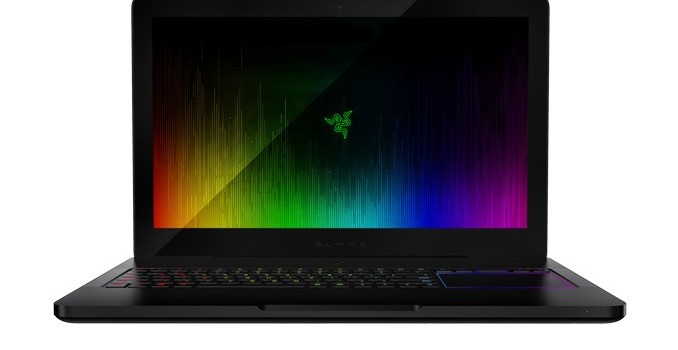
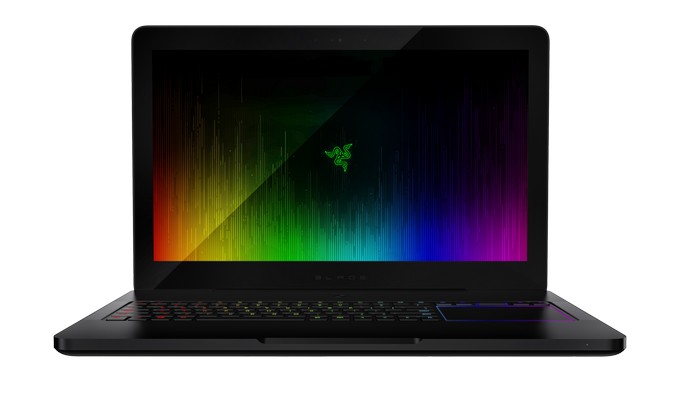
Late last year, Razer acquired the majority of THX, and while it may have seemed like something outside their normal realm, today Razer is announcing an updated Razer Blade Pro, with THX Certification. For those unfamiliar, THX has been certifying audio and video equipment for decades, with an initial focus on the cinema, and then branching out in to consumer electronics. With their new parent company, it makes a lot of sense to branch into computer certification.

First, let’s go over what’s new on the Razer Blade Pro. Just this month, Brandon finished his review on the Razer Blade Pro which launched late last year. The updated model launching today has some decent upgrades over the original model. First off, the CPU has been upgraded to Kaby Lake, but rather than doing a straight swap from the Core i7-6700HQ to the Core i7-7700HQ, Razer has gone with the Core i7-7820HK processor, which is 2.9-3.9 GHz, but it is also an unlocked processor, and Razer is supporting CPU overclocking in the Synapse software. One of the issues Brandon pointed out in the review was that Razer was billing the Razer Blade Pro as the ultimate laptop, but they went with the same quad-core processor as far less expensive laptops, so this is a great change. There’s only one quad-core mobile part over this, and it’s not unlocked, and being unlocked is going to improve the appeal to this market. In addition, Razer has bumped the RAM frequency to DDR4 2667 MHz, up from 2133 MHz DDR4 previously. It’s a small change, but a welcome one.

The other specifications have not changed. It still features a NVIDIA GTX 1080 8 GB graphics card, driving a 17.3-inch UHD 3840×2160 IGZO G-SYNC display, with 100% Adobe RGB color gamut, and 512 GB to 2 TB SSD support in RAID 0 with two SSDs. We’ve said this before, but honestly one good SSD would be better for most users, but it seems like the gaming market is migrating towards RAID 0 again. The form factor, light weight for a laptop of this performance, and other items remain.

Razer Blade Pro
Model 2017 2016
CPU Intel Core i7-7820HK
4C/8T
2.9-3.9 GHz
8MB Cache
45W TDP
Intel Core i7-6700HQ
4C/8T
2.6-3.5 GHz
6MB Cache
45W TDP
GPU NVIDIA GTX 1080 8GB
2560 CUDA Cores
1556 – 1733 (Boost) MHz
Memory 32 GB 2667MHz DDR4 32 GB 2133MHz DDR4
Display 17.3″ 3840×2160 60 Hz w/G-SYNC
Storage 512GB (2 x 256GB) M.2 PCIe SSD
1TB (2 x 512GB) M.2 PCIe SSD
2TB (2 x 1TB) M.2 PCIe SSD
I/O 3 x USB 3.0 Ports
1 x Thunderbolt 3
1 x HDMI 2.0
SD Card Slot
1 x Headset Jack
1 x Killer E2400 Ethernet (10/100/1000Mbps)
Dimensions 22.5mm x 424mm x 281mm (HxWxD)
0.88″ x 16.7″ x 11″ (HxWxD)
Weight 3.54 kg / 7.8 lbs
Battery 99 Wh, 250W AC Adapter
Wireless Killer Wireless-AC 1535
2×2:2 with Bluetooth 4.1
Price $3999.99 and up $3699.99 512GB
$3999.99 1TB (Model tested)
$4499.99 2TB

The big new feature is THX Certification, and the Razer Blade Pro is the first laptop to be qualified for THX Mobile Certification. I spoke with Razer and THX about what this entails, and it appears to be good news for end users. THX tests several models from the pre-production phase onwards, with feedback from the first test looping back into the hardware configuration until the later generation units meet the testing guidelines. What those guidelines are, are unfortunately still a mystery, since THX and Razer have not gotten back to us yet on their targets, but if they do we will let you know. THX did say that they test panel performance on brightness and contrast, and are including a color profile to give a white point of D65, Rec. 709 color gamut, and low error levels, although low wasn’t defined at our meeting. The color gamut support here is important, since previous to this, the Razer Blade Pro only displayed in the Adobe RGB color space, which is much wider than sRGB. This leads to blown out colors, unless the app itself is color managed, which is a rare thing in Windows. This new color profile from THX should alleviate one of the biggest issues with the Razer Blade Pro in day to day use.

The second part of THX Mobile Certification is for audio, and while you may be expecting this to apply to the speakers, it’s actually certification for the headphone jack. This might seem a bit odd, but with the noise level of a thin and powerful system, certifying the headphone jack is arguably the better call, and honestly there’s little chance for small laptop speakers to meet much of a certification anyway. On the headphone jack, THX certification means that there has to be a flat frequency response, even with different impedance loads from different headphones, along with low distortion and high power, and a low noise floor to ensure there is no background hiss. Assuming the Razer Blade Pro didn’t already meet these targets, this should mean an improved experience from the headphone jack, although as with the display certification, we were not provided exact certification standards.

There are certainly going to be people who feel this kind of certification isn’t necessary, but there definitely is some extra confidence when you purchase something as expensive as a Razer Blade Pro, and you are ensured that the display and audio meet a certain threshold of performance. The addition of a Rec. 709 color gamut profile from THX for the Razer Blade Pro is a big win for end users as well, since there was no way before to cap the color gamut for apps with no color management.

With the new overclockable CPU, faster memory, and THX Certification, Razer has also bumped the starting price to $3999.99, and availability will start in April on Razerzone.com.

Source: Razer