News


ASUS Launches 'Expedition' Line: GeForce GPUs and Motherboards 'Built for Non-Stop Gaming'

ASUS Launches ‘Expedition’ Line: GeForce GPUs and Motherboards ‘Built for Non-Stop Gaming’
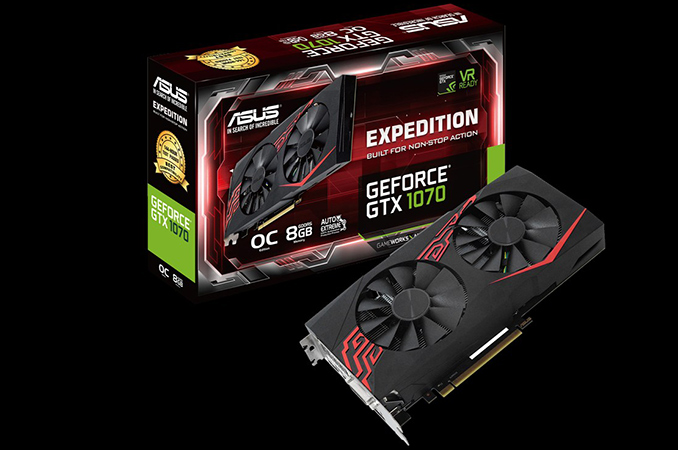
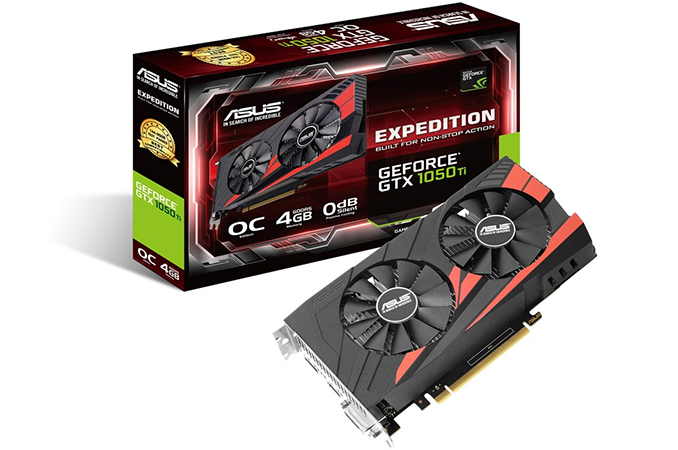
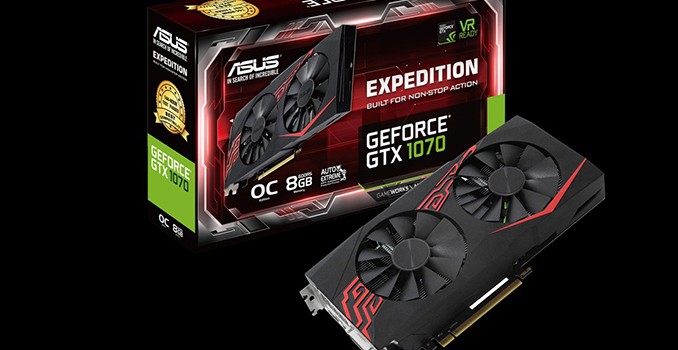
ASUS has launched five new GPUs and a B150 motherboard that belong to its Expedition family of products. The Expedition video cards promise to wed durability for sustained long-time use with reasonable prices: the boards are made using ASUS’ latest automated production process and feature components with enhanced lifetime ratings over the standard components (albeit with standard cooling and near-reference frequencies). The increased suitability for non-stop use claim comes through the components and additional testing for the range: a combined 144hr compatibility test and burn-in sequence. ASUS plans to market these parts to business such as gaming cafes which remain popular in Asia.

Initially the ASUS Expedition lineup will consist of five graphics adapters based on NVIDIA’s GP104 and GP107 GPUs. The video cards are made using the ASUS Auto-Extreme automated production process that is also used to produce ASUS ROG Strix and some other high-end products. To build the boards, the manufacturer uses dual-ball bearing fans as well as ‘higher-quality’ chokes and other components that are said to be rated for extended durability. ASUS also states that the Expedition graphics cards are stress tested for 144 hours in various demanding environments to ensure their quality. The hardware maker does not elaborate whether all the cards are subject to rigorous testing, or just a number of cards per batch pass those tests, but it emphasizes that the adapters are ready for prolonged gaming sessions. Additionally, similar to its higher-end graphics boards, the Expedition video cards will feature ASUS’ zero-db fans that do not spin until the GPU reaches a certain temperature.
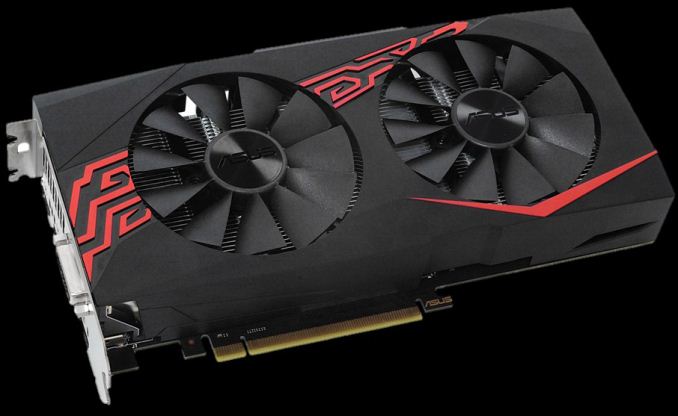
The higher performing card in the lineup is the ASUS Expedition GeForce GTX 1070 OC Edition 8 GB GDDR5 (EX-GTX1070-O8G) that uses the company’s own PCB design (24 cm/9.45” in length) and slightly taller cooling system (13.1 cm/5.16”) with two heat pipes and two fans. It is noteworthy that in default mode its GPU base frequency is 1582 MHz, lower than 1607 MHz recommended by NVIDIA, but the boost clock rate is 1771 MHz, which is higher compared to 1733 MHz on NVDIA’s reference designs. The card also has an OC mode with 1607/1797 MHz base/boost frequencies. As for display outputs, the card has one DVI, two HDMI ports, and two DisplayPort ports.

The other two video cards in the Expedition family are the ASUS Expedition GeForce GTX 1050 OC Edition 2 GB (EX-GTX1050-O2G) and the ASUS Expedition GeForce GTX 1050 Ti OC Edition 4 GB (EX-GTX1050TI-O4G), also featuring a custom PCB design and dual-fan cooling systems (in this case, without heat-pipes). Both cards have slightly (~ 50 MHz) higher GPU frequencies than recommended by NVIDIA and thus offer a little bit of improved performance over reference designs. When it comes to the display outputs, these two adapters feature one DVI, one DisplayPort and one HDMI connector. These two cards are paired with non-OC versions (EX-GTX1050-2G and EX-GTX1050TI-4G ) to bring the total up to five.

On the motherboard side, ASUS has listed the EX-B150M-V5 D3 as an addition to the Expedition line. In a somewhat different take on the TUF line (which is aimed at high-end durability), this B150 board is along the similar lines of the GPUs: base hardware with a focus on durability when in a gaming cafe environment.


This board caters for most gaming cafe needs: two memory slots, space for a stock cooler, a single GPU slot, 2.1 audio, SATA ports, USB 3.0 ports, and if needed, an integrated graphics based DVI-D port. The Realtek ALC887 (the top 2.1 codec) gets some Crystal Sound 2 treatment via PCB separation and filter caps, and ASUS states that the USB ports are individually surge protected (in case one fails, the others will keep working). As part of the focus on gaming cafes, ASUS states that this board goes through extensive testing to ensure base compatibility with games and 100+ peripherals.

ASUS has not disclosed MSRPs of its Expedition graphics cards or their availability dates, but since the boards are already listed on the company’s website, we expect them to hit the market shortly. However, if they are truly focused on gaming cafes, they might only be launched in Asia. No word yet if these components come with increased warranties, either.

Related Reading:

ASUS Launches 'Expedition' Line: GeForce GPUs and Motherboards 'Built for Non-Stop Gaming'

ASUS Launches ‘Expedition’ Line: GeForce GPUs and Motherboards ‘Built for Non-Stop Gaming’

ASUS has launched five new GPUs and a B150 motherboard that belong to its Expedition family of products. The Expedition video cards promise to wed durability for sustained long-time use with reasonable prices: the boards are made using ASUS’ latest automated production process and feature components with enhanced lifetime ratings over the standard components (albeit with standard cooling and near-reference frequencies). The increased suitability for non-stop use claim comes through the components and additional testing for the range: a combined 144hr compatibility test and burn-in sequence. ASUS plans to market these parts to business such as gaming cafes which remain popular in Asia.

Initially the ASUS Expedition lineup will consist of five graphics adapters based on NVIDIA’s GP104 and GP107 GPUs. The video cards are made using the ASUS Auto-Extreme automated production process that is also used to produce ASUS ROG Strix and some other high-end products. To build the boards, the manufacturer uses dual-ball bearing fans as well as ‘higher-quality’ chokes and other components that are said to be rated for extended durability. ASUS also states that the Expedition graphics cards are stress tested for 144 hours in various demanding environments to ensure their quality. The hardware maker does not elaborate whether all the cards are subject to rigorous testing, or just a number of cards per batch pass those tests, but it emphasizes that the adapters are ready for prolonged gaming sessions. Additionally, similar to its higher-end graphics boards, the Expedition video cards will feature ASUS’ zero-db fans that do not spin until the GPU reaches a certain temperature.

The higher performing card in the lineup is the ASUS Expedition GeForce GTX 1070 OC Edition 8 GB GDDR5 (EX-GTX1070-O8G) that uses the company’s own PCB design (24 cm/9.45” in length) and slightly taller cooling system (13.1 cm/5.16”) with two heat pipes and two fans. It is noteworthy that in default mode its GPU base frequency is 1582 MHz, lower than 1607 MHz recommended by NVIDIA, but the boost clock rate is 1771 MHz, which is higher compared to 1733 MHz on NVDIA’s reference designs. The card also has an OC mode with 1607/1797 MHz base/boost frequencies. As for display outputs, the card has one DVI, two HDMI ports, and two DisplayPort ports.

The other two video cards in the Expedition family are the ASUS Expedition GeForce GTX 1050 OC Edition 2 GB (EX-GTX1050-O2G) and the ASUS Expedition GeForce GTX 1050 Ti OC Edition 4 GB (EX-GTX1050TI-O4G), also featuring a custom PCB design and dual-fan cooling systems (in this case, without heat-pipes). Both cards have slightly (~ 50 MHz) higher GPU frequencies than recommended by NVIDIA and thus offer a little bit of improved performance over reference designs. When it comes to the display outputs, these two adapters feature one DVI, one DisplayPort and one HDMI connector. These two cards are paired with non-OC versions (EX-GTX1050-2G and EX-GTX1050TI-4G ) to bring the total up to five.

On the motherboard side, ASUS has listed the EX-B150M-V5 D3 as an addition to the Expedition line. In a somewhat different take on the TUF line (which is aimed at high-end durability), this B150 board is along the similar lines of the GPUs: base hardware with a focus on durability when in a gaming cafe environment.
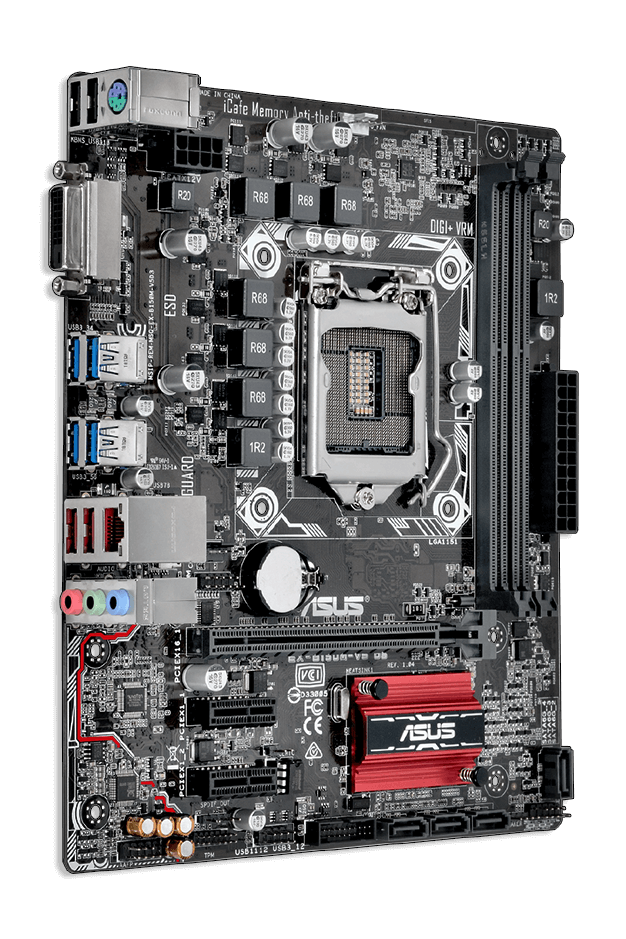
 

This board caters for most gaming cafe needs: two memory slots, space for a stock cooler, a single GPU slot, 2.1 audio, SATA ports, USB 3.0 ports, and if needed, an integrated graphics based DVI-D port. The Realtek ALC887 (the top 2.1 codec) gets some Crystal Sound 2 treatment via PCB separation and filter caps, and ASUS states that the USB ports are individually surge protected (in case one fails, the others will keep working). As part of the focus on gaming cafes, ASUS states that this board goes through extensive testing to ensure base compatibility with games and 100+ peripherals.

ASUS has not disclosed MSRPs of its Expedition graphics cards or their availability dates, but since the boards are already listed on the company’s website, we expect them to hit the market shortly. However, if they are truly focused on gaming cafes, they might only be launched in Asia. No word yet if these components come with increased warranties, either.

Related Reading:
AMD Announces Q4 2016 Earnings

AMD Announces Q4 2016 Earnings

This afternoon, AMD announced their fourth quarter earnings for the 2016 fiscal year. 2016 was a challenging year for AMD, as they continue to expand their business away from only focusing on the PC market, and although they still have a long way to go, 2016 was an improvement on 2015. For Q4 AMD had revenues of $1.11 billion, which is up 15% from Q4 2015. Gross margin for the quarter was $351 million, up from $283 million a year ago. As a percentage, AMD’s gross margin was 32%, compared to 30% in Q4 2015. AMD had an operating loss of $3 million for the quarter, compared to a loss of $49 million a year ago, while net loss improved as well, from $102 million in Q4 2015 to $51 million this quarter. This resulted in a loss per share of $0.06, compared to a loss of $0.13 last year. AMD makes note that Q4 2016 was a 14-week quarter, compared to a 13-week quarter for Q3 2016 and Q4 2015.

AMD Q4 2016 Financial Results (GAAP)
  Q4’2016 Q3’2016 Q4’2015
Revenue $1106M $1307M $958M
Gross Margin 32% 5% 30%
Operating Income -$3M -$293M -$49M
Net Income -$51M -$406M -$102M
Earnings Per Share -$0.06 -$0.50 -$0.13

For the full fiscal year, AMD had revenues of $4.27 billion, which is up 7%, but a sixth amendment to their wafer supply agreement hit their margins very hard in 2016. For the full year, AMD had margins of just 23%, which is a drop of 4% compared to 2015. Operating loss was $372 million for the year, compared to $481 million in 2015, and net loss was $497 million, compared to $660 million a year ago. For the full year, AMD had a net per share loss of $0.60, which is an improvement from the $0.84 loss in 2015.

AMD also reports Non-GAAP results, which exclude stock-based compensation, restructuring charges, node transition costs, and wafer agreement charges, to give a look at their core business. On a Non-GAAP basis, AMD had revenues of $1.11 billion, just like their GAAP numbers, but they posted operating income of $26 million for the quarter, compared to an operating loss of $39 million a year ago. Net loss was $8 million, compared to $79 million in Q4 2015, and loss per share was $0.01 compared to $0.10 a year ago.

AMD Q4 2016 Financial Results (Non-GAAP)
  Q4’2016 Q3’2016 Q4’2015
Revenue $1106M $1307M $958M
Gross Margin 32% 31% 30%
Operating Income $26M $70M -$39M
Net Income -$8M $27M -$79M
Earnings Per Share -$0.01 $0.03 -$0.10

AMD attributes their increase in revenue primarily due to increased GPU sales. AMD’s Computing and Graphics segment had revenues for the quarter of $600 million, which is up 28% year-over-year. Polaris seems to be doing quite well, which is great to see. The segment still had an operating loss of $21 million, but that is a big improvement from the operating loss of $99 million a year ago. CPU average selling price fell year-over-year, but GPU average selling price increased year-over-year, thanks to higher desktop and professional graphics pricing. We eagerly await the launch of Ryzen, which AMD showed off last quarter, and expect to hear more about it this quarter.

AMD Q4 2016 Computing and Graphics
  Q4’2016 Q3’2016 Q4’2015
Revenue $600M $472M $470M
Operating Income -$21M -$66M -$99M

AMD branched into Enterprise, Embedded, and Semi-Custom designs and it has proven to be a strong source of revenue for them. With wins in both the Xbox One and PlayStation 4, AMD continues to be the beneficiary of both of those consoles outselling their predecessors. For Q4, this segment had revenue of $506 million, which is up 4% year-over-year, thanks to higher embedded and semi-custom SoC revenue. This segment does have it’s ups and downs annually with consoles peaking and ebbing, but annually it has been a strong market for AMD to branch into. This segment had an operating income of $47 million for the quarter, which is down from $59 million a year ago, which AMD attributes to higher R&D investments this quarter.

AMD Q4 2016 Enterprise, Embedded, and Semi-Custom
  Q4’2016 Q3’2016 Q4’2015
Revenue $506M $835M $488M
Operating Income $47M $136M $59M

Finally, All Other had an operating loss of $29 million, compared to $9 million a year ago. The increased loss is attributed to higher stock-based compensation charges for Q4 2016.

AMD had strong margins for this quarter, and if they are going to have a strong 2017, that needs to be their focus. Ryzen may help as well, depending on how it compares, but Dr. Lisa Su, AMD’s president and CEO, has been slowly but surely bringing AMD back to a point of profitability. Looking ahead, AMD expects revenues to decrease 11% for next quarter, plus or minus 3%, which would put them at an 18% increase in revenue for Q1 2017 compared to Q1 2016, if you pick the mid-point in their target.

Source: AMD Investor Relations

AMD Announces Q4 2016 Earnings

AMD Announces Q4 2016 Earnings

This afternoon, AMD announced their fourth quarter earnings for the 2016 fiscal year. 2016 was a challenging year for AMD, as they continue to expand their business away from only focusing on the PC market, and although they still have a long way to go, 2016 was an improvement on 2015. For Q4 AMD had revenues of $1.11 billion, which is up 15% from Q4 2015. Gross margin for the quarter was $351 million, up from $283 million a year ago. As a percentage, AMD’s gross margin was 32%, compared to 30% in Q4 2015. AMD had an operating loss of $3 million for the quarter, compared to a loss of $49 million a year ago, while net loss improved as well, from $102 million in Q4 2015 to $51 million this quarter. This resulted in a loss per share of $0.06, compared to a loss of $0.13 last year. AMD makes note that Q4 2016 was a 14-week quarter, compared to a 13-week quarter for Q3 2016 and Q4 2015.

AMD Q4 2016 Financial Results (GAAP)
  Q4’2016 Q3’2016 Q4’2015
Revenue $1106M $1307M $958M
Gross Margin 32% 5% 30%
Operating Income -$3M -$293M -$49M
Net Income -$51M -$406M -$102M
Earnings Per Share -$0.06 -$0.50 -$0.13

For the full fiscal year, AMD had revenues of $4.27 billion, which is up 7%, but a sixth amendment to their wafer supply agreement hit their margins very hard in 2016. For the full year, AMD had margins of just 23%, which is a drop of 4% compared to 2015. Operating loss was $372 million for the year, compared to $481 million in 2015, and net loss was $497 million, compared to $660 million a year ago. For the full year, AMD had a net per share loss of $0.60, which is an improvement from the $0.84 loss in 2015.

AMD also reports Non-GAAP results, which exclude stock-based compensation, restructuring charges, node transition costs, and wafer agreement charges, to give a look at their core business. On a Non-GAAP basis, AMD had revenues of $1.11 billion, just like their GAAP numbers, but they posted operating income of $26 million for the quarter, compared to an operating loss of $39 million a year ago. Net loss was $8 million, compared to $79 million in Q4 2015, and loss per share was $0.01 compared to $0.10 a year ago.

AMD Q4 2016 Financial Results (Non-GAAP)
  Q4’2016 Q3’2016 Q4’2015
Revenue $1106M $1307M $958M
Gross Margin 32% 31% 30%
Operating Income $26M $70M -$39M
Net Income -$8M $27M -$79M
Earnings Per Share -$0.01 $0.03 -$0.10

AMD attributes their increase in revenue primarily due to increased GPU sales. AMD’s Computing and Graphics segment had revenues for the quarter of $600 million, which is up 28% year-over-year. Polaris seems to be doing quite well, which is great to see. The segment still had an operating loss of $21 million, but that is a big improvement from the operating loss of $99 million a year ago. CPU average selling price fell year-over-year, but GPU average selling price increased year-over-year, thanks to higher desktop and professional graphics pricing. We eagerly await the launch of Ryzen, which AMD showed off last quarter, and expect to hear more about it this quarter.

AMD Q4 2016 Computing and Graphics
  Q4’2016 Q3’2016 Q4’2015
Revenue $600M $472M $470M
Operating Income -$21M -$66M -$99M

AMD branched into Enterprise, Embedded, and Semi-Custom designs and it has proven to be a strong source of revenue for them. With wins in both the Xbox One and PlayStation 4, AMD continues to be the beneficiary of both of those consoles outselling their predecessors. For Q4, this segment had revenue of $506 million, which is up 4% year-over-year, thanks to higher embedded and semi-custom SoC revenue. This segment does have it’s ups and downs annually with consoles peaking and ebbing, but annually it has been a strong market for AMD to branch into. This segment had an operating income of $47 million for the quarter, which is down from $59 million a year ago, which AMD attributes to higher R&D investments this quarter.

AMD Q4 2016 Enterprise, Embedded, and Semi-Custom
  Q4’2016 Q3’2016 Q4’2015
Revenue $506M $835M $488M
Operating Income $47M $136M $59M

Finally, All Other had an operating loss of $29 million, compared to $9 million a year ago. The increased loss is attributed to higher stock-based compensation charges for Q4 2016.

AMD had strong margins for this quarter, and if they are going to have a strong 2017, that needs to be their focus. Ryzen may help as well, depending on how it compares, but Dr. Lisa Su, AMD’s president and CEO, has been slowly but surely bringing AMD back to a point of profitability. Looking ahead, AMD expects revenues to decrease 11% for next quarter, plus or minus 3%, which would put them at an 18% increase in revenue for Q1 2017 compared to Q1 2016, if you pick the mid-point in their target.

Source: AMD Investor Relations

Apple Announces Record Q1 2017 Results

Apple Announces Record Q1 2017 Results

Today Apple announced their earnings for the first quarter of their 2017 fiscal year. As is normally the case now that the iPhone has moved to a fall launch, Q1 tends to be their big quarter, and this one was the biggest yet for revenue, with Apple announcing $78.351 billion in revenue for the quarter. This is up 9% from a year ago. Gross margin was not as strong though, down $247 million despite the almost $2.5 billion more in revenue, but as a percentage it is still a strong 38.5%. Operating income was also down for the quarter, at $23.359 billion, compared to $24.171 billion a year ago. Net income was down 2.56% to $17.891 billion, but thanks to the share buyback program, Apple has less outstanding shares, meaning Apple set a record for earnings per diluted share of $3.36, despite the drop in net income. Apple has announced a dividend of $0.57 per share as well.

Apple Q1 2017 Financial Results (GAAP)
  Q1’2017 Q4’2016 Q1’2016
Revenue (in Billions USD) $78.351 $46.852 $75.872
Gross Margin (in Billions USD) $30.176 $17.813 $30.423
Operating Income (in Billions USD) $23.359 $11.761 $24.171
Net Income (in Billions USD) $17.891 $9.014 $18.361
Margins 38.5% 38.0% 40.1%
Earnings per Share (in USD) $3.36 $1.67 $3.28

With the launch of the latest iPhone 7, there was certainly controversy over the loss of the headphone jack, but that did not stop people from buying it. Apple sold 78.29 million iPhones this quarter, up 5% from a year ago. This is a new record for iPhone sales in the quarter, up about 3.5 million units, which is a good sign for Apple after had several quarters in a row of slowed iPhone sales. We’ll see if they can keep it up for fiscal year 2017. As far as revenue, iPhone is still the juggernaut of Apple’s financials with $54.378 billion in revenue for the quarter. That is 69.4% of all of the revenue for Apple.

iPad continues to struggle, at least compared to the rest of Apple, with sales dropping another 19% this quarter to 13.081 million, and despite the higher priced iPads in the lineup, revenue dropped even further to $5.533 billion, which is down 22%. That puts an average selling price of just $422 on the iPad, down from $439 a year ago, despite the addition of the 9.7-inch iPad Pro last year with it’s $100 higher asking price of $599. New iPad models haven’t really saved this segment from continuing to contract, but with the addition of the larger iPhone I suppose this makes some sense.

Mac sales for the quarter were up 1% only, despite the launch of the refreshed MacBook Pro models in October, but they were not shipping in volume until later in the quarter, so there may be some impact from that. Despite the sales only being up 1%, revenue was up 7% to a new record high of $7.244 billion this quarter, and the Mac has slowly worked itself back up to being the second largest source of revenue for Apple. But I don’t think that’s going to last for much longer.

Apple Q1 2017 Device Sales (thousands)
  Q1’2017 Q4’2016 Q1’2016 Seq Change Year/Year Change
iPhone 78,290 45,513 74,779 +72% +5%
iPad 13,081 9,267 16,122 +41% -19%
Mac 5,374 4,886 5,312 +1% +7%

Apple’s Services segment, which includes digital content from iTunes, app revenue, AppleCare, Apple Pay, and other services, is now the fastest growing segment of Apple, with revenues for the quarter of $7.172 billion, which is up 13% from last quarter and up 18% from last year. At this rate, it will overtake the Mac revenue next quarter, depending on how Mac sales go. This has been a very strong market for Apple over the last while, and I would think the addition of Apple Music must be helping as well.

Other Products include Apple TV, Apple Watch, Beats, and accessories, and although the segment overall is down 8% to $4.024 billion, Apple did announce they sold a record for Apple Watch revenue, although they’ve never announced numbers for that.

Apple is projecting revenue for next quarter of $51.5 to $53.5 billion, and margins between 38 and 39 percent.

Source: Apple Investor Relations