
News


Intel Compute Card: A Universal Compute Form-Factor for Different Kinds of Devices
Intel Compute Card: A Universal Compute Form-Factor for Different Kinds of Devices

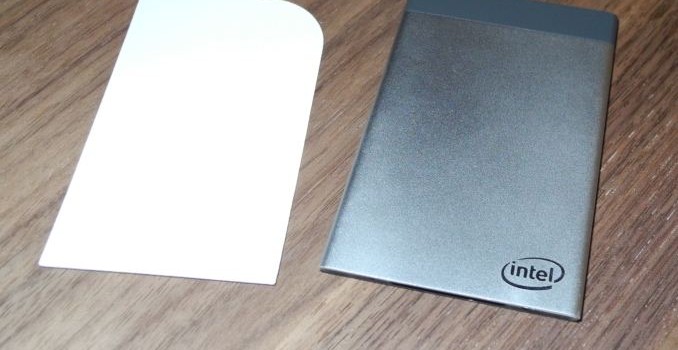
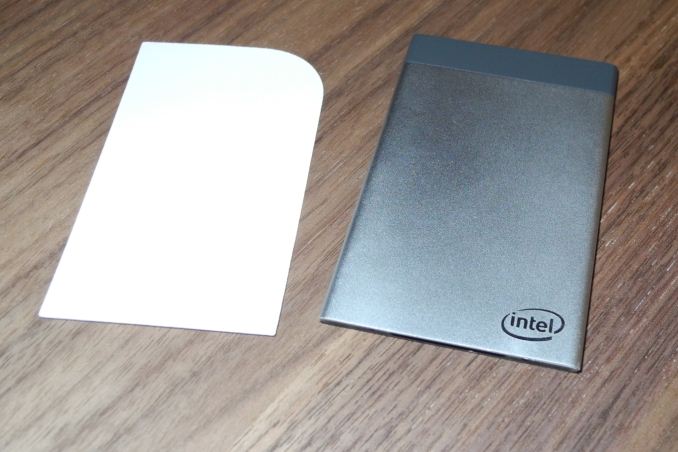
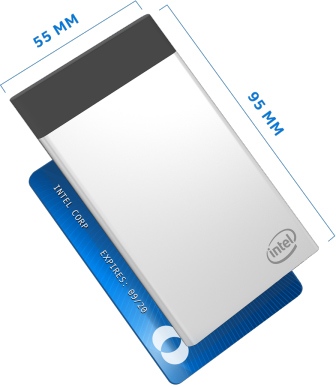
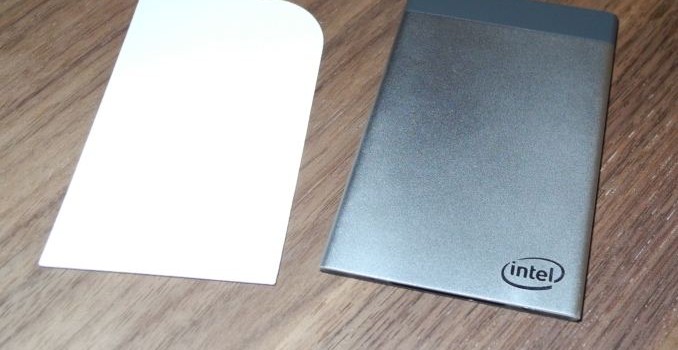
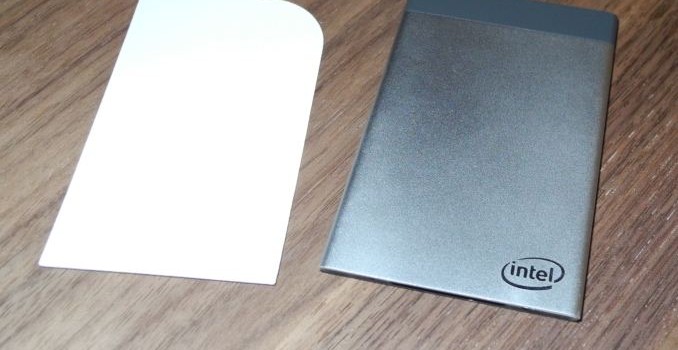
At CES 2017, Intel introduced a new form-factor for computing platforms in order to enable easy development, configuration, maintenance, repair and upgrade of various devices. Intel’s Compute Card is as small as a credit card, but, packs everything needed for computing, including the CPU, DRAM, storage, communications and I/O. The first cards are set to be introduced in mid-2017.

Computing has become so ubiquitous nowadays that almost every more or less sophisticated piece of hardware has a microprocessor inside. Many such devices are designed to operate for years, but, since computer chips inside them get outdated, it is almost impossible to upgrade their functionality (e.g., add new security capabilities, speed up processing, etc.) without replacing the whole unit, or a significant part of it. Alternatively, if a CPU or a memory IC fails, repair of such a device may cost a lot in terms of money and effort. This translates to downtime and lost revenue. Such things happen because of various reasons, but the main two are proprietary platforms with tight integration and no upgrade path, or complex architectures that do not allow for a quick replacement of faulty components. The list of such devices includes everything from business PCs to point-of-sale kiosks and from smart TVs to commercial equipment.

The Intel Compute Card has been designed to be a universal computing platform for different kinds of devices, including those that do not exist yet. The ultimate goal is to simplify the way companies develop equipment, use, maintain, repair, and upgrade it. Creators of actual devices have to design a standard Intel Compute Card slot into their product and then choose an Intel Compute Card that meets their requirements in terms of feature-set and price. For example, PC makers could create systems in all-in-one or clamshell form-factors and then use Compute Cards instead of motherboards. For corporate customers that need to provide a lot of flexibility (and, perhaps, solve some security concerns too) – every employee has a card and can switch between PCs. In other markets such as automated retail kiosks, vendors can easily provide upgrades to deliver better functionality as Intel releases new Compute Cards in the future.

Intel Compute Card at Glance
CPU Various Intel SoCs / SiPs, including Intel Core with vPro (up to 6W TDP)
DRAM, NAND Integrated
Cooling Fanless, but, I/O docks may have their own thermal design
Dimensions 94.5 mm × 55 mm × 5 mm
I/O Physical USB-C + Extension
Logical USB, PCIe, HDMI, DP and additional signals
Wireless Wi-Fi, Bluetooth
Docking Integrated locking mechanism
Launch Partners Dell, HP, Lenovo, Sharp and local companies
Initial Availability Mid-2017

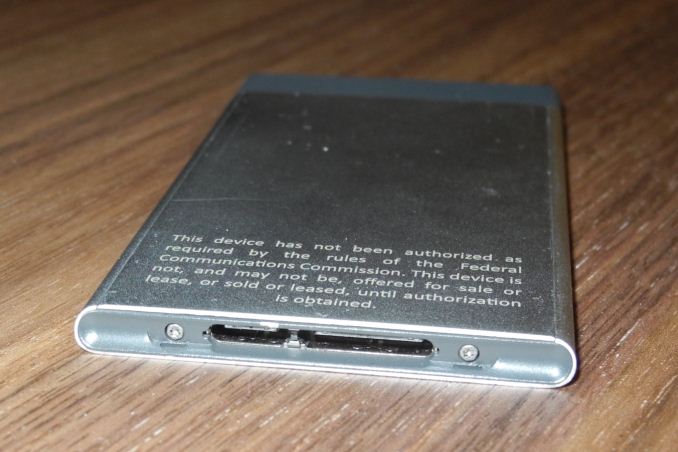
From a technology standpoint, Intel’s Compute Card resembles the company’s Compute Stick PC. However, its purpose is much wider: it is a small device that packs an Intel SoC or SiP (including Kaby Lake-based Core processors with vPro and other technologies), DRAM, NAND flash storage, a wireless module and so on into a small enclosure. Nonetheless, there are a number of important differences between the Compute Card and the Compute Stick. The Compute Card is a sealed system with “flexible I/O” in the form of a USB Type-C and an extension connector. The “flexible I/O” is not Thunderbolt (obviously, due to power consumption concerns), but it handles USB, PCIe, HDMI, DisplayPort connectivity and has some extra pins for future/proprietary use.
Intel is currently working with a number of partners to enable the Compute Cards ecosystem. The list of global players includes Dell, HP, Lenovo and Sharp. There are also regional partners interested in the new form-factor, including Seneca Data, InFocus, DTx, TabletKiosk and Pasuntech.

At the moment, Intel and its partners are not discussing their Compute Card-based projects, which is understandable. Moreover, do not expect all these companies to release their Compute Card hardware simultaneously because different equipment has different design and validation cycles.
Speaking of the form-factor itself, this is by far not the first form-factor the size of a credit card or something close (e.g., Mobile-ITX, Pico-ITX were announced, but never took off). However, this one seems easy to integrate and it is backed by Intel, which gives it credibility. There are a number of applications (and usage scenarios) that could take advantage of the Compute Card right away (e.g., corporate PCs, smart TVs, digital point-of-sales, emerging devices, etc.). However, there are also many embedded applications that just require uninterrupted operation without any need to upgrade. For those, traditional industrial PCs and boards will continue to be the mainstay, and the credit card form-factor will not bring any clear advantages.

The other interesting aspect here is the future of the Compute Stick form factor. Given that the ARM-based HDMI sticks are not a popular form factor any more, it is not surprising that Intel has also not decided to update the Compute Stick lineup with Kaby Lake. Intel indicated that they would be evaluating the future of the Compute Stick in 2018, and decide if it warrants an update with the latest processors at that time. Our opinion is that the Compute Stick form factor has reached the end of its life, and it is for the Compute Card to carry on the miniaturization revolution. The Compute Card has much more flexibility in terms of the differentiation from the vendors’ side, and it is not encumbered by an active cooling mechanism. Obviously, the ability to just plug the device into a HDMI port is not there, but, the Compute Card, by itself, is light enough to just hang directly off a display’s HDMI port. Therefore, it is possible that some vendors can deliver a Compute Stick-like platform with the Compute Card also (albeit, with a slightly different form factor).

We expect to hear more about Compute Card related projects in Q3, either during Computex or Intel’s Developer Forum.
Intel Compute Card: A Universal Compute Form-Factor for Different Kinds of Devices

Intel Compute Card: A Universal Compute Form-Factor for Different Kinds of Devices

At CES 2017, Intel introduced a new form-factor for computing platforms in order to enable easy development, configuration, maintenance, repair and upgrade of various devices. Intel’s Compute Card is as small as a credit card, but, packs everything needed for computing, including the CPU, DRAM, storage, communications and I/O. The first cards are set to be introduced in mid-2017.

Computing has become so ubiquitous nowadays that almost every more or less sophisticated piece of hardware has a microprocessor inside. Many such devices are designed to operate for years, but, since computer chips inside them get outdated, it is almost impossible to upgrade their functionality (e.g., add new security capabilities, speed up processing, etc.) without replacing the whole unit, or a significant part of it. Alternatively, if a CPU or a memory IC fails, repair of such a device may cost a lot in terms of money and effort. This translates to downtime and lost revenue. Such things happen because of various reasons, but the main two are proprietary platforms with tight integration and no upgrade path, or complex architectures that do not allow for a quick replacement of faulty components. The list of such devices includes everything from business PCs to point-of-sale kiosks and from smart TVs to commercial equipment.

The Intel Compute Card has been designed to be a universal computing platform for different kinds of devices, including those that do not exist yet. The ultimate goal is to simplify the way companies develop equipment, use, maintain, repair, and upgrade it. Creators of actual devices have to design a standard Intel Compute Card slot into their product and then choose an Intel Compute Card that meets their requirements in terms of feature-set and price. For example, PC makers could create systems in all-in-one or clamshell form-factors and then use Compute Cards instead of motherboards. For corporate customers that need to provide a lot of flexibility (and, perhaps, solve some security concerns too) – every employee has a card and can switch between PCs. In other markets such as automated retail kiosks, vendors can easily provide upgrades to deliver better functionality as Intel releases new Compute Cards in the future.

Intel Compute Card at Glance
CPU Various Intel SoCs / SiPs, including Intel Core with vPro (up to 6W TDP)
DRAM, NAND Integrated
Cooling Fanless, but, I/O docks may have their own thermal design
Dimensions 94.5 mm × 55 mm × 5 mm
I/O Physical USB-C + Extension
Logical USB, PCIe, HDMI, DP and additional signals
Wireless Wi-Fi, Bluetooth
Docking Integrated locking mechanism
Launch Partners Dell, HP, Lenovo, Sharp and local companies
Initial Availability Mid-2017

From a technology standpoint, Intel’s Compute Card resembles the company’s Compute Stick PC. However, its purpose is much wider: it is a small device that packs an Intel SoC or SiP (including Kaby Lake-based Core processors with vPro and other technologies), DRAM, NAND flash storage, a wireless module and so on into a small enclosure. Nonetheless, there are a number of important differences between the Compute Card and the Compute Stick. The Compute Card is a sealed system with “flexible I/O” in the form of a USB Type-C and an extension connector. The “flexible I/O” is not Thunderbolt (obviously, due to power consumption concerns), but it handles USB, PCIe, HDMI, DisplayPort connectivity and has some extra pins for future/proprietary use.

Intel is currently working with a number of partners to enable the Compute Cards ecosystem. The list of global players includes Dell, HP, Lenovo and Sharp. There are also regional partners interested in the new form-factor, including Seneca Data, InFocus, DTx, TabletKiosk and Pasuntech.

At the moment, Intel and its partners are not discussing their Compute Card-based projects, which is understandable. Moreover, do not expect all these companies to release their Compute Card hardware simultaneously because different equipment has different design and validation cycles.

Speaking of the form-factor itself, this is by far not the first form-factor the size of a credit card or something close (e.g., Mobile-ITX, Pico-ITX were announced, but never took off). However, this one seems easy to integrate and it is backed by Intel, which gives it credibility. There are a number of applications (and usage scenarios) that could take advantage of the Compute Card right away (e.g., corporate PCs, smart TVs, digital point-of-sales, emerging devices, etc.). However, there are also many embedded applications that just require uninterrupted operation without any need to upgrade. For those, traditional industrial PCs and boards will continue to be the mainstay, and the credit card form-factor will not bring any clear advantages.

The other interesting aspect here is the future of the Compute Stick form factor. Given that the ARM-based HDMI sticks are not a popular form factor any more, it is not surprising that Intel has also not decided to update the Compute Stick lineup with Kaby Lake. Intel indicated that they would be evaluating the future of the Compute Stick in 2018, and decide if it warrants an update with the latest processors at that time. Our opinion is that the Compute Stick form factor has reached the end of its life, and it is for the Compute Card to carry on the miniaturization revolution. The Compute Card has much more flexibility in terms of the differentiation from the vendors’ side, and it is not encumbered by an active cooling mechanism. Obviously, the ability to just plug the device into a HDMI port is not there, but, the Compute Card, by itself, is light enough to just hang directly off a display’s HDMI port. Therefore, it is possible that some vendors can deliver a Compute Stick-like platform with the Compute Card also (albeit, with a slightly different form factor).

We expect to hear more about Compute Card related projects in Q3, either during Computex or Intel’s Developer Forum.
Intel Compute Card: A Universal Compute Form-Factor for Different Kinds of Devices

Intel Compute Card: A Universal Compute Form-Factor for Different Kinds of Devices

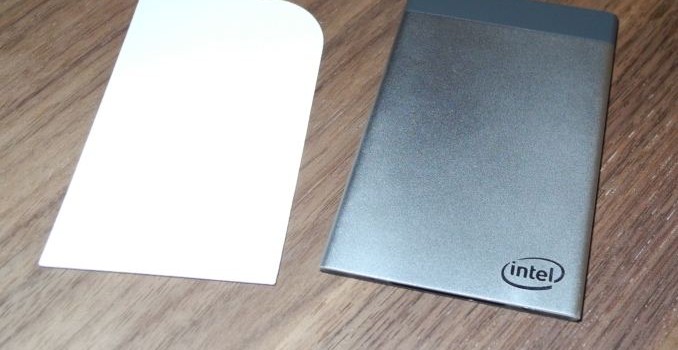
At CES 2017, Intel introduced a new form-factor for computing platforms in order to enable easy development, configuration, maintenance, repair and upgrade of various devices. Intel’s Compute Card is as small as a credit card, but, packs everything needed for computing, including the CPU, DRAM, storage, communications and I/O. The first cards are set to be introduced in mid-2017.

Computing has become so ubiquitous nowadays that almost every more or less sophisticated piece of hardware has a microprocessor inside. Many such devices are designed to operate for years, but, since computer chips inside them get outdated, it is almost impossible to upgrade their functionality (e.g., add new security capabilities, speed up processing, etc.) without replacing the whole unit, or a significant part of it. Alternatively, if a CPU or a memory IC fails, repair of such a device may cost a lot in terms of money and effort. This translates to downtime and lost revenue. Such things happen because of various reasons, but the main two are proprietary platforms with tight integration and no upgrade path, or complex architectures that do not allow for a quick replacement of faulty components. The list of such devices includes everything from business PCs to point-of-sale kiosks and from smart TVs to commercial equipment.

The Intel Compute Card has been designed to be a universal computing platform for different kinds of devices, including those that do not exist yet. The ultimate goal is to simplify the way companies develop equipment, use, maintain, repair, and upgrade it. Creators of actual devices have to design a standard Intel Compute Card slot into their product and then choose an Intel Compute Card that meets their requirements in terms of feature-set and price. For example, PC makers could create systems in all-in-one or clamshell form-factors and then use Compute Cards instead of motherboards. For corporate customers that need to provide a lot of flexibility (and, perhaps, solve some security concerns too) – every employee has a card and can switch between PCs. In other markets such as automated retail kiosks, vendors can easily provide upgrades to deliver better functionality as Intel releases new Compute Cards in the future.

Intel Compute Card at Glance
CPU Various Intel SoCs / SiPs, including Intel Core with vPro (up to 6W TDP)
DRAM, NAND Integrated
Cooling Fanless, but, I/O docks may have their own thermal design
Dimensions 94.5 mm × 55 mm × 5 mm
I/O Physical USB-C + Extension
Logical USB, PCIe, HDMI, DP and additional signals
Wireless Wi-Fi, Bluetooth
Docking Integrated locking mechanism
Launch Partners Dell, HP, Lenovo, Sharp and local companies
Initial Availability Mid-2017

From a technology standpoint, Intel’s Compute Card resembles the company’s Compute Stick PC. However, its purpose is much wider: it is a small device that packs an Intel SoC or SiP (including Kaby Lake-based Core processors with vPro and other technologies), DRAM, NAND flash storage, a wireless module and so on into a small enclosure. Nonetheless, there are a number of important differences between the Compute Card and the Compute Stick. The Compute Card is a sealed system with “flexible I/O” in the form of a USB Type-C and an extension connector. The “flexible I/O” is not Thunderbolt (obviously, due to power consumption concerns), but it handles USB, PCIe, HDMI, DisplayPort connectivity and has some extra pins for future/proprietary use.

Intel is currently working with a number of partners to enable the Compute Cards ecosystem. The list of global players includes Dell, HP, Lenovo and Sharp. There are also regional partners interested in the new form-factor, including Seneca Data, InFocus, DTx, TabletKiosk and Pasuntech.

At the moment, Intel and its partners are not discussing their Compute Card-based projects, which is understandable. Moreover, do not expect all these companies to release their Compute Card hardware simultaneously because different equipment has different design and validation cycles.

Speaking of the form-factor itself, this is by far not the first form-factor the size of a credit card or something close (e.g., Mobile-ITX, Pico-ITX were announced, but never took off). However, this one seems easy to integrate and it is backed by Intel, which gives it credibility. There are a number of applications (and usage scenarios) that could take advantage of the Compute Card right away (e.g., corporate PCs, smart TVs, digital point-of-sales, emerging devices, etc.). However, there are also many embedded applications that just require uninterrupted operation without any need to upgrade. For those, traditional industrial PCs and boards will continue to be the mainstay, and the credit card form-factor will not bring any clear advantages.

The other interesting aspect here is the future of the Compute Stick form factor. Given that the ARM-based HDMI sticks are not a popular form factor any more, it is not surprising that Intel has also not decided to update the Compute Stick lineup with Kaby Lake. Intel indicated that they would be evaluating the future of the Compute Stick in 2018, and decide if it warrants an update with the latest processors at that time. Our opinion is that the Compute Stick form factor has reached the end of its life, and it is for the Compute Card to carry on the miniaturization revolution. The Compute Card has much more flexibility in terms of the differentiation from the vendors’ side, and it is not encumbered by an active cooling mechanism. Obviously, the ability to just plug the device into a HDMI port is not there, but, the Compute Card, by itself, is light enough to just hang directly off a display’s HDMI port. Therefore, it is possible that some vendors can deliver a Compute Stick-like platform with the Compute Card also (albeit, with a slightly different form factor).

We expect to hear more about Compute Card related projects in Q3, either during Computex or Intel’s Developer Forum.
Intel Compute Card: A Universal Compute Form-Factor for Different Kinds of Devices

Intel Compute Card: A Universal Compute Form-Factor for Different Kinds of Devices

At CES 2017, Intel introduced a new form-factor for computing platforms in order to enable easy development, configuration, maintenance, repair and upgrade of various devices. Intel’s Compute Card is as small as a credit card, but, packs everything needed for computing, including the CPU, DRAM, storage, communications and I/O. The first cards are set to be introduced in mid-2017.

Computing has become so ubiquitous nowadays that almost every more or less sophisticated piece of hardware has a microprocessor inside. Many such devices are designed to operate for years, but, since computer chips inside them get outdated, it is almost impossible to upgrade their functionality (e.g., add new security capabilities, speed up processing, etc.) without replacing the whole unit, or a significant part of it. Alternatively, if a CPU or a memory IC fails, repair of such a device may cost a lot in terms of money and effort. This translates to downtime and lost revenue. Such things happen because of various reasons, but the main two are proprietary platforms with tight integration and no upgrade path, or complex architectures that do not allow for a quick replacement of faulty components. The list of such devices includes everything from business PCs to point-of-sale kiosks and from smart TVs to commercial equipment.

The Intel Compute Card has been designed to be a universal computing platform for different kinds of devices, including those that do not exist yet. The ultimate goal is to simplify the way companies develop equipment, use, maintain, repair, and upgrade it. Creators of actual devices have to design a standard Intel Compute Card slot into their product and then choose an Intel Compute Card that meets their requirements in terms of feature-set and price. For example, PC makers could create systems in all-in-one or clamshell form-factors and then use Compute Cards instead of motherboards. For corporate customers that need to provide a lot of flexibility (and, perhaps, solve some security concerns too) – every employee has a card and can switch between PCs. In other markets such as automated retail kiosks, vendors can easily provide upgrades to deliver better functionality as Intel releases new Compute Cards in the future.

Intel Compute Card at Glance
CPU Various Intel SoCs / SiPs, including Intel Core with vPro (up to 6W TDP)
DRAM, NAND Integrated
Cooling Fanless, but, I/O docks may have their own thermal design
Dimensions 94.5 mm × 55 mm × 5 mm
I/O Physical USB-C + Extension
Logical USB, PCIe, HDMI, DP and additional signals
Wireless Wi-Fi, Bluetooth
Docking Integrated locking mechanism
Launch Partners Dell, HP, Lenovo, Sharp and local companies
Initial Availability Mid-2017

From a technology standpoint, Intel’s Compute Card resembles the company’s Compute Stick PC. However, its purpose is much wider: it is a small device that packs an Intel SoC or SiP (including Kaby Lake-based Core processors with vPro and other technologies), DRAM, NAND flash storage, a wireless module and so on into a small enclosure. Nonetheless, there are a number of important differences between the Compute Card and the Compute Stick. The Compute Card is a sealed system with “flexible I/O” in the form of a USB Type-C and an extension connector. The “flexible I/O” is not Thunderbolt (obviously, due to power consumption concerns), but it handles USB, PCIe, HDMI, DisplayPort connectivity and has some extra pins for future/proprietary use.

Intel is currently working with a number of partners to enable the Compute Cards ecosystem. The list of global players includes Dell, HP, Lenovo and Sharp. There are also regional partners interested in the new form-factor, including Seneca Data, InFocus, DTx, TabletKiosk and Pasuntech.

At the moment, Intel and its partners are not discussing their Compute Card-based projects, which is understandable. Moreover, do not expect all these companies to release their Compute Card hardware simultaneously because different equipment has different design and validation cycles.

Speaking of the form-factor itself, this is by far not the first form-factor the size of a credit card or something close (e.g., Mobile-ITX, Pico-ITX were announced, but never took off). However, this one seems easy to integrate and it is backed by Intel, which gives it credibility. There are a number of applications (and usage scenarios) that could take advantage of the Compute Card right away (e.g., corporate PCs, smart TVs, digital point-of-sales, emerging devices, etc.). However, there are also many embedded applications that just require uninterrupted operation without any need to upgrade. For those, traditional industrial PCs and boards will continue to be the mainstay, and the credit card form-factor will not bring any clear advantages.

The other interesting aspect here is the future of the Compute Stick form factor. Given that the ARM-based HDMI sticks are not a popular form factor any more, it is not surprising that Intel has also not decided to update the Compute Stick lineup with Kaby Lake. Intel indicated that they would be evaluating the future of the Compute Stick in 2018, and decide if it warrants an update with the latest processors at that time. Our opinion is that the Compute Stick form factor has reached the end of its life, and it is for the Compute Card to carry on the miniaturization revolution. The Compute Card has much more flexibility in terms of the differentiation from the vendors’ side, and it is not encumbered by an active cooling mechanism. Obviously, the ability to just plug the device into a HDMI port is not there, but, the Compute Card, by itself, is light enough to just hang directly off a display’s HDMI port. Therefore, it is possible that some vendors can deliver a Compute Stick-like platform with the Compute Card also (albeit, with a slightly different form factor).

We expect to hear more about Compute Card related projects in Q3, either during Computex or Intel’s Developer Forum.
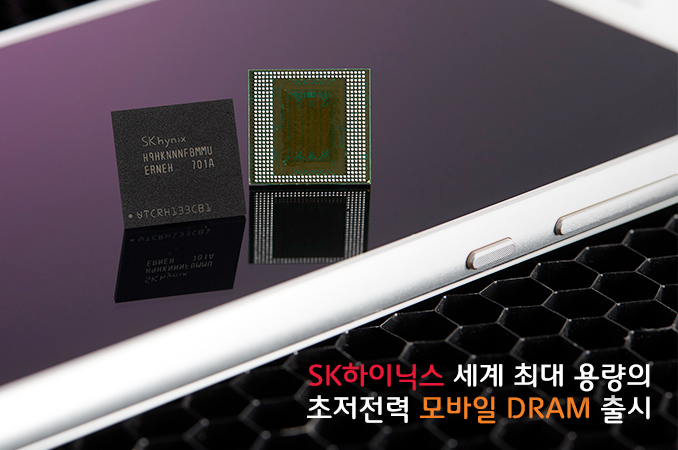
SK Hynix Announces 8 GB LPDDR4X-4266 DRAM Packages

SK Hynix Announces 8 GB LPDDR4X-4266 DRAM Packages

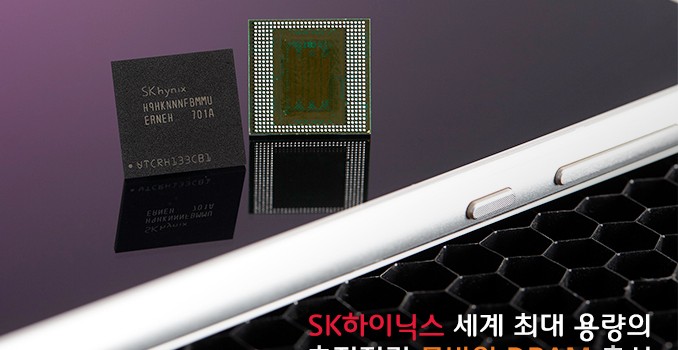
SK Hynix on Monday officially announced the industry’s first 8 GB LPDDR4X (LP4X) packages for next-generation mobile devices. The new memory chips not only increase DRAM performance but also reduce its power consumption due to lower I/O voltages (and come in a smaller form-factor). Interested parties have already obtained samples of SK Hynix’s LPDDR4X ICs and the first devices featuring the new type of memory are expected to hit the market in the coming months.

The LPDDR4X is a new mobile DRAM standard that is an extension of the original LPDDR4, and is expected to reduce power consumption of the DRAM sub-system by 18~20% according to developers (everything else remains the same: a 200~266 MHz internal memory array frequency, 16n prefetch, etc.). To do that, LPDDR4X cuts output driver power (I/O VDDQ voltage) by 45%, from 1.1 V to 0.6 V. LPDDR4X is supported by a number of mobile SoC developers. The first application processor to support the new type of memory is MediaTek’s Helio P20 that was announced nearly a year ago and the initial devices powered by the chip are likely to hit the market in 1H 2017. Another notable SoC to support LPDDR4X is Qualcomm’s new flagship Snapdragon 835, which was announced in November and detailed earlier this month. Smartphones featuring this chip will not show up for a while, but MWC just around the corner which lends nicely to various handset announcements.

The 8 GB (64 Gb) LPDDR4X package stacks four 16 Gb DRAM parts that feature a 4266 MT/s data transfer rate and provide up to 34.1 GB/s of bandwidth when connected to an application processor using a 64-bit memory bus. For its 8 GB LPDDR4X solution SK Hynix uses a new 12 mm × 12.7 mm BGA package, which is 30% smaller compared to standard LPDDR4 stacks that come in 15 mm × 15 mm form-factor. SK Hynix’s 8 GB LPDDR4X solution has a thickness of less than 1 mm to enable PoP stacking with a mobile application processor or a UFS NAND storage device.

SK Hynix 8 GB LPDDR4X DRAM Packages
  H9HKNNNFBUMU
ERNEH
H9HKNNNFBMMUDR H9HKNNNEBMMUER H9HKNNNEBMAUDR
DRAM IC Capacity 16 Gb 12 Gb
Number of DRAM ICs 4
Package Capacity 64 Gb (8 GB) 48 Gb (6 GB)
Data Rate 4266 MT/s 3733 MT/s
Bus Width x64
Bandwidth 34.1 GB/s 29.8 GB/s 29.8 GB/s
Package FBGA FBGA-376 FBGA-366 FBGA-376
Dimensions 12 mm × 12.7 mm
Voltages 1.8V / 1.1V / 0.6V
Process Technology 21 nm
Availability 2017

SK Hynix did not announce exact power consumption figures for its LP4X parts, but confirmed that the reduction of I/O voltage by 45% reduces power consumption of the whole memory sub-system by around 20% versus a hypothetical LPDDR4 memory sub-system running at the frequency in the same conditions. This is not exactly a good description because SK Hynix’s LPDDR4 offerings top at 3733 MT/s. Assuming that the manufacturer did not optimize the design of its LPDDR4X DRAM arrays to reduce power consumption, but only reduced VDDQ to 0.6 V, a memory sub-system based on the new 8 GB LP4X-4266 part should consume less than a similar sub-system running the company’s 8 GB LP4-3733 stack, but the exact figure is unknown.

To make its 16 Gb LPDDR4X memory ICs, SK Hynix uses its 21 nm fabrication process, which is also used to manufacture 16 Gb LPDDR4 ICs. So, from manufacturing technology standpoint, SK Hynix’s LP4X chips are similar to its LP4 chips.

Initially, SK Hynix will offer only 8 GB LPDDR4X packages with 4266 MT/s data transfer rate based on its 16 Gb DRAM ICs. Eventually, the company intends to expand the lineup with 6 GB/8 GB LPDDR4X-3733 (these are already listed in the company’s Q1 databook) and LPDDR4X-3200 solutions as well as parts based on 8 Gb LPDDR4X ICs (these are not listed in the official documents, but are mentioned in the company’s official blog post). The latter make a lot of sense as far not all mobile are going to use 8 GB of DRAM this year. SK Hynix quotes researchers from IHS Markit, who believe that an average high-end smartphone this year is going to integrate 3.5 GB of memory on average (a mix of 3GB, 4GB, 6GB and 8GB solutions on Android). Meanwhile, keep in mind that DRAM requirements for Apple’s iOS and Google’s Android are different, which is why smartphones running the latter need more memory and handsets featuring 4 GB of Mobile DRAM are going to become mainstream in 2017. By contrast, Apple’s iPhone 7 and iPhone 7 Plus have 2 GB and 3 GB of DRAM, respectively.

SK Hynix said that its 8 GB LPDDR4X-4266 packages are already in mass production. Mobile devices based on the new memory are expected to arrive in the coming months and it is highly likely that select manufacturers may demonstrate their MediaTek Helio P20- and LPDDR4X-based products at MWC next month.

Related Reading: