News


NVIDIA Launches SHIELD TV: Smart Home Functionality, More 4K HDR Streaming Services

NVIDIA Launches SHIELD TV: Smart Home Functionality, More 4K HDR Streaming Services

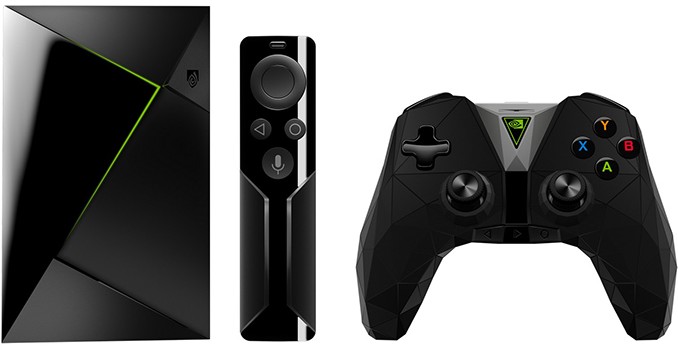
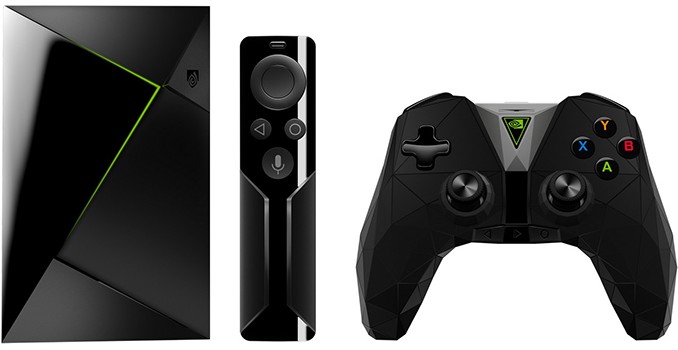
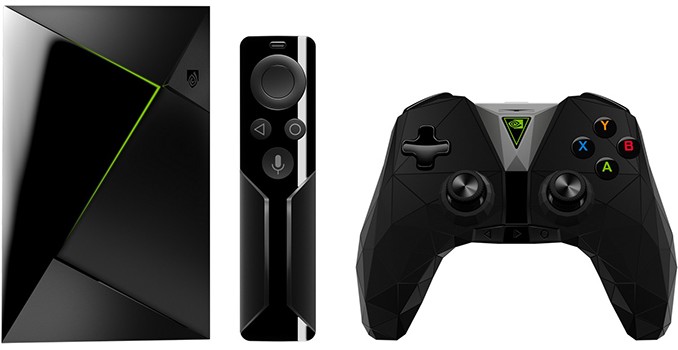
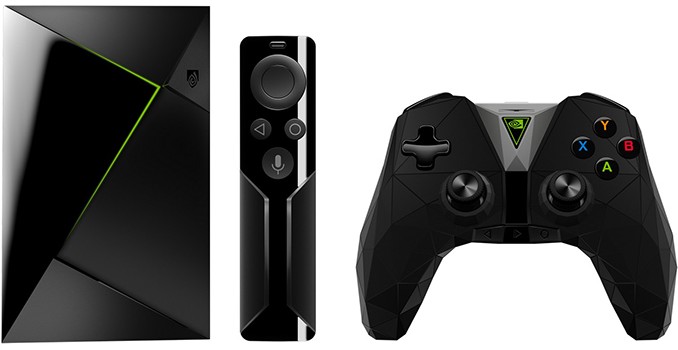
NVIDIA at CES launched its updated SHIELD set-top-box (STB), with an expanded feature-set as well as smaller and lighter form-factor. The upcoming NVIDIA SHIELD TV is based on the same Tegra X1 SoC as the previous-generation model launched in 2015, and like the mid-generation refreshes of gaming consoles that NVIDIA is clearly aiming to mimic, the launch of this slimmer console with updated software is meant to offer the hardware in a new form factor while calling attention to the major software updates being delivered to the platform this year. Among new features for the platform set to premiere in the near future is support for Google Assistant, compatibility with the SmartThings infrastructure and NVIDIA’s upcoming Spot wireless microphone.

NVIDIA launched the SHIELD Android TV back in the spring of 2015 as a quirky combination of lightweight Android gaming console and Android TV set-top-box, and the device quickly earned recognition as the most powerful and capable Android TV device on the market. Thanks to the versatility of the Tegra X1 SoC in general and its Maxwell display controller in particular, NVIDIA launched with a box capable of displaying 4Kp60 content, and managed to further improve feature-set of its STB over the last two years. In particular, NVIDIA added HDR display and streaming support, and was among the first devices to be certified for 4Kp60 streaming from Netflix and other over-the-top streaming services. While the original SHIELD Android TV still has a lot of potential, some of the things are being introduced with a new model, which is what SHIELD TV is all about.

From a hardware specifications point of view, the new SHIELD TV is essentially a cut-down version of the original 2015 model. The new device contains the same Tegra X1 SoC, similar RAM/storage configuration, and much the same I/O, etc. What NVIDIA has done away with is the 2.5″ HDD bay (used in the Pro model), along with the microSD card slot, a micro-USB 2.0 port and an IR receiver. Instead the device’s expandability and connectivity is delivered through the use of two USB 3.0 ports, along with Gigabit Ethernet and 2×2 802.11ac WiFi. As a result, the new SHIELD TV is considerably smaller and lighter than the original SHIELD Android TV thanks to the space savings (especially removing the HDD bay).

Update 1/11: The new SHIELD TV does not have an IR receiver.

NVIDIA SHIELD STB Family
  SHIELD TV
(2017)
SHIELD TV Pro
(2017)
SHIELD Android TV
(2015)
SoC Tegra X1 (4 × Cortex A57 + 4 × Cortex A53, Maxwell 2 SMM GPU)
RAM 3 GB LPDDR4-3200
Storage 16 GB NAND
USB
16 GB NAND
500 GB HDD
microSD
USB
16 GB NAND
500 GB HDD (Pro only)
microSD
USB
Display Connectivity HDMI 2.0b with HDCP 2.2 (4Kp60, HDR)
Dimensions Height 98 mm
3.858 inch
130 mm
5.1 inch
Width 159 mm
6.26 inch
210 mm
8.3 inch
Depth 26 mm
1.02 inch
25 mm
1 inch
Weight 250 grams 654 grams
Power Adapter 40 W
I/O Wireless 2×2 802.11a/b/g/n/ac
Bluetooth 4.1/BLE
USB 2 × USB 3.0 2 × USB 3.0
1 × micro-USB 2.0
IR IR Receiver
Ethernet Gigabit Ethernet
Launch Product Bundle Shield Controller
Shield Remote
Shield Controller
Launch Price $199.99 $299.99 Basic: $199.99
Pro: $299.99

Another notable difference between the 2017 SHIELD TV and the 2015 SHIELD Android TV packages is the new gamepad controller, which loses some weight, ditches touchpad, but gains a microphone for the Google Assistant. The latter allows finding content, control playback and locating other information using voice commands. Technically, the original SHIELD Android TV also has a microphone on the remote, but it needs to manual activation, whereas the one on the new controller is “always on.” In fact, the new SHIELD controller can be bought separately to add hands-free commands to NVIDIA’s SHIELD Android TV.

Up next is smart home functionality. Though this isn’t making the initial Android 7.0 software release for the device, the SHIELD TV family will be receiving Google Assistant functionality later this year. This expands on the STB’s original voice control functionality, particularly with always-on functionality. The old and new SHIELD TV STBs will also be able to act like the SmartThings Hub ($99 when sold separately), and when combined with an appropriate radio dongle, can communicate with compatible devices (such as Nest) using Zigbee and Z-Wave communication protocols.

Meanwhile, later this year NVIDIA plans to release its Spot device. The $50 Spot is a wireless microphone and a speaker that can be plugged in any power outlet within a home, relaying voice commands to SHIELD TV. The Spot is meant to further improve the usefulness of the SHIELD TV as a smart home hub by expanding the range over which it can hear commands for Google Assistant and compatible SmartThings devices.

Finally, NVIDIA announced that the SHIELD TV software update launching alongside the new hardware will also add support for 4K HDR content from both Amazon Video and Google Play Movies (will be available in the next few months), further expanding the selection of 4Kp60 and 4K HDR content on the platform. Speaking of HDR, NVIDIA’s GameStream HDR functionality, first introduced in beta form last May, will also finally be moved to release status in the software update.

The new SHIELD TV STBs will come with NVIDIA’s remote and the new gamepad by default. NVIDIA will ship the new SHIELD TV STB on January 16 and the systems are already available for pre-order at $199.99. The SHIELD TV Pro model with 500 GB HDD is priced at $299.99 and will ship on January 30.

Related Reading:

NVIDIA Launches SHIELD TV: Smart Home Functionality, More 4K HDR Streaming Services

NVIDIA Launches SHIELD TV: Smart Home Functionality, More 4K HDR Streaming Services

NVIDIA at CES launched its updated SHIELD set-top-box (STB), with an expanded feature-set as well as smaller and lighter form-factor. The upcoming NVIDIA SHIELD TV is based on the same Tegra X1 SoC as the previous-generation model launched in 2015, and like the mid-generation refreshes of gaming consoles that NVIDIA is clearly aiming to mimic, the launch of this slimmer console with updated software is meant to offer the hardware in a new form factor while calling attention to the major software updates being delivered to the platform this year. Among new features for the platform set to premiere in the near future is support for Google Assistant, compatibility with the SmartThings infrastructure and NVIDIA’s upcoming Spot wireless microphone.

NVIDIA launched the SHIELD Android TV back in the spring of 2015 as a quirky combination of lightweight Android gaming console and Android TV set-top-box, and the device quickly earned recognition as the most powerful and capable Android TV device on the market. Thanks to the versatility of the Tegra X1 SoC in general and its Maxwell display controller in particular, NVIDIA launched with a box capable of displaying 4Kp60 content, and managed to further improve feature-set of its STB over the last two years. In particular, NVIDIA added HDR display and streaming support, and was among the first devices to be certified for 4Kp60 streaming from Netflix and other over-the-top streaming services. While the original SHIELD Android TV still has a lot of potential, some of the things are being introduced with a new model, which is what SHIELD TV is all about.

From a hardware specifications point of view, the new SHIELD TV is essentially a cut-down version of the original 2015 model. The new device contains the same Tegra X1 SoC, similar RAM/storage configuration, and much the same I/O, etc. What NVIDIA has done away with is the 2.5″ HDD bay (used in the Pro model), along with the microSD card slot, a micro-USB 2.0 port and an IR receiver. Instead the device’s expandability and connectivity is delivered through the use of two USB 3.0 ports, along with Gigabit Ethernet and 2×2 802.11ac WiFi. As a result, the new SHIELD TV is considerably smaller and lighter than the original SHIELD Android TV thanks to the space savings (especially removing the HDD bay).

Update 1/11: The new SHIELD TV does not have an IR receiver.

NVIDIA SHIELD STB Family
  SHIELD TV
(2017)
SHIELD TV Pro
(2017)
SHIELD Android TV
(2015)
SoC Tegra X1 (4 × Cortex A57 + 4 × Cortex A53, Maxwell 2 SMM GPU)
RAM 3 GB LPDDR4-3200
Storage 16 GB NAND
USB
16 GB NAND
500 GB HDD
microSD
USB
16 GB NAND
500 GB HDD (Pro only)
microSD
USB
Display Connectivity HDMI 2.0b with HDCP 2.2 (4Kp60, HDR)
Dimensions Height 98 mm
3.858 inch
130 mm
5.1 inch
Width 159 mm
6.26 inch
210 mm
8.3 inch
Depth 26 mm
1.02 inch
25 mm
1 inch
Weight 250 grams 654 grams
Power Adapter 40 W
I/O Wireless 2×2 802.11a/b/g/n/ac
Bluetooth 4.1/BLE
USB 2 × USB 3.0 2 × USB 3.0
1 × micro-USB 2.0
IR IR Receiver
Ethernet Gigabit Ethernet
Launch Product Bundle Shield Controller
Shield Remote
Shield Controller
Launch Price $199.99 $299.99 Basic: $199.99
Pro: $299.99

Another notable difference between the 2017 SHIELD TV and the 2015 SHIELD Android TV packages is the new gamepad controller, which loses some weight, ditches touchpad, but gains a microphone for the Google Assistant. The latter allows finding content, control playback and locating other information using voice commands. Technically, the original SHIELD Android TV also has a microphone on the remote, but it needs to manual activation, whereas the one on the new controller is “always on.” In fact, the new SHIELD controller can be bought separately to add hands-free commands to NVIDIA’s SHIELD Android TV.

Up next is smart home functionality. Though this isn’t making the initial Android 7.0 software release for the device, the SHIELD TV family will be receiving Google Assistant functionality later this year. This expands on the STB’s original voice control functionality, particularly with always-on functionality. The old and new SHIELD TV STBs will also be able to act like the SmartThings Hub ($99 when sold separately), and when combined with an appropriate radio dongle, can communicate with compatible devices (such as Nest) using Zigbee and Z-Wave communication protocols.

Meanwhile, later this year NVIDIA plans to release its Spot device. The $50 Spot is a wireless microphone and a speaker that can be plugged in any power outlet within a home, relaying voice commands to SHIELD TV. The Spot is meant to further improve the usefulness of the SHIELD TV as a smart home hub by expanding the range over which it can hear commands for Google Assistant and compatible SmartThings devices.

Finally, NVIDIA announced that the SHIELD TV software update launching alongside the new hardware will also add support for 4K HDR content from both Amazon Video and Google Play Movies (will be available in the next few months), further expanding the selection of 4Kp60 and 4K HDR content on the platform. Speaking of HDR, NVIDIA’s GameStream HDR functionality, first introduced in beta form last May, will also finally be moved to release status in the software update.

The new SHIELD TV STBs will come with NVIDIA’s remote and the new gamepad by default. NVIDIA will ship the new SHIELD TV STB on January 16 and the systems are already available for pre-order at $199.99. The SHIELD TV Pro model with 500 GB HDD is priced at $299.99 and will ship on January 30.

Related Reading:

NVIDIA Launches SHIELD TV: Smart Home Functionality, More 4K HDR Streaming Services

NVIDIA Launches SHIELD TV: Smart Home Functionality, More 4K HDR Streaming Services

NVIDIA at CES launched its updated SHIELD set-top-box (STB), with an expanded feature-set as well as smaller and lighter form-factor. The upcoming NVIDIA SHIELD TV is based on the same Tegra X1 SoC as the previous-generation model launched in 2015, and like the mid-generation refreshes of gaming consoles that NVIDIA is clearly aiming to mimic, the launch of this slimmer console with updated software is meant to offer the hardware in a new form factor while calling attention to the major software updates being delivered to the platform this year. Among new features for the platform set to premiere in the near future is support for Google Assistant, compatibility with the SmartThings infrastructure and NVIDIA’s upcoming Spot wireless microphone.

NVIDIA launched the SHIELD Android TV back in the spring of 2015 as a quirky combination of lightweight Android gaming console and Android TV set-top-box, and the device quickly earned recognition as the most powerful and capable Android TV device on the market. Thanks to the versatility of the Tegra X1 SoC in general and its Maxwell display controller in particular, NVIDIA launched with a box capable of displaying 4Kp60 content, and managed to further improve feature-set of its STB over the last two years. In particular, NVIDIA added HDR display and streaming support, and was among the first devices to be certified for 4Kp60 streaming from Netflix and other over-the-top streaming services. While the original SHIELD Android TV still has a lot of potential, some of the things are being introduced with a new model, which is what SHIELD TV is all about.

From a hardware specifications point of view, the new SHIELD TV is essentially a cut-down version of the original 2015 model. The new device contains the same Tegra X1 SoC, similar RAM/storage configuration, and much the same I/O, etc. What NVIDIA has done away with is the 2.5″ HDD bay (used in the Pro model), along with the microSD card slot, a micro-USB 2.0 port and an IR receiver. Instead the device’s expandability and connectivity is delivered through the use of two USB 3.0 ports, along with Gigabit Ethernet and 2×2 802.11ac WiFi. As a result, the new SHIELD TV is considerably smaller and lighter than the original SHIELD Android TV thanks to the space savings (especially removing the HDD bay).

Update 1/11: The new SHIELD TV does not have an IR receiver.

NVIDIA SHIELD STB Family
  SHIELD TV
(2017)
SHIELD TV Pro
(2017)
SHIELD Android TV
(2015)
SoC Tegra X1 (4 × Cortex A57 + 4 × Cortex A53, Maxwell 2 SMM GPU)
RAM 3 GB LPDDR4-3200
Storage 16 GB NAND
USB
16 GB NAND
500 GB HDD
microSD
USB
16 GB NAND
500 GB HDD (Pro only)
microSD
USB
Display Connectivity HDMI 2.0b with HDCP 2.2 (4Kp60, HDR)
Dimensions Height 98 mm
3.858 inch
130 mm
5.1 inch
Width 159 mm
6.26 inch
210 mm
8.3 inch
Depth 26 mm
1.02 inch
25 mm
1 inch
Weight 250 grams 654 grams
Power Adapter 40 W
I/O Wireless 2×2 802.11a/b/g/n/ac
Bluetooth 4.1/BLE
USB 2 × USB 3.0 2 × USB 3.0
1 × micro-USB 2.0
IR IR Receiver
Ethernet Gigabit Ethernet
Launch Product Bundle Shield Controller
Shield Remote
Shield Controller
Launch Price $199.99 $299.99 Basic: $199.99
Pro: $299.99

Another notable difference between the 2017 SHIELD TV and the 2015 SHIELD Android TV packages is the new gamepad controller, which loses some weight, ditches touchpad, but gains a microphone for the Google Assistant. The latter allows finding content, control playback and locating other information using voice commands. Technically, the original SHIELD Android TV also has a microphone on the remote, but it needs to manual activation, whereas the one on the new controller is “always on.” In fact, the new SHIELD controller can be bought separately to add hands-free commands to NVIDIA’s SHIELD Android TV.

Up next is smart home functionality. Though this isn’t making the initial Android 7.0 software release for the device, the SHIELD TV family will be receiving Google Assistant functionality later this year. This expands on the STB’s original voice control functionality, particularly with always-on functionality. The old and new SHIELD TV STBs will also be able to act like the SmartThings Hub ($99 when sold separately), and when combined with an appropriate radio dongle, can communicate with compatible devices (such as Nest) using Zigbee and Z-Wave communication protocols.

Meanwhile, later this year NVIDIA plans to release its Spot device. The $50 Spot is a wireless microphone and a speaker that can be plugged in any power outlet within a home, relaying voice commands to SHIELD TV. The Spot is meant to further improve the usefulness of the SHIELD TV as a smart home hub by expanding the range over which it can hear commands for Google Assistant and compatible SmartThings devices.

Finally, NVIDIA announced that the SHIELD TV software update launching alongside the new hardware will also add support for 4K HDR content from both Amazon Video and Google Play Movies (will be available in the next few months), further expanding the selection of 4Kp60 and 4K HDR content on the platform. Speaking of HDR, NVIDIA’s GameStream HDR functionality, first introduced in beta form last May, will also finally be moved to release status in the software update.

The new SHIELD TV STBs will come with NVIDIA’s remote and the new gamepad by default. NVIDIA will ship the new SHIELD TV STB on January 16 and the systems are already available for pre-order at $199.99. The SHIELD TV Pro model with 500 GB HDD is priced at $299.99 and will ship on January 30.

Related Reading:

NVIDIA Launches SHIELD TV: Smart Home Functionality, More 4K HDR Streaming Services

NVIDIA Launches SHIELD TV: Smart Home Functionality, More 4K HDR Streaming Services

NVIDIA at CES launched its updated SHIELD set-top-box (STB), with an expanded feature-set as well as smaller and lighter form-factor. The upcoming NVIDIA SHIELD TV is based on the same Tegra X1 SoC as the previous-generation model launched in 2015, and like the mid-generation refreshes of gaming consoles that NVIDIA is clearly aiming to mimic, the launch of this slimmer console with updated software is meant to offer the hardware in a new form factor while calling attention to the major software updates being delivered to the platform this year. Among new features for the platform set to premiere in the near future is support for Google Assistant, compatibility with the SmartThings infrastructure and NVIDIA’s upcoming Spot wireless microphone.

NVIDIA launched the SHIELD Android TV back in the spring of 2015 as a quirky combination of lightweight Android gaming console and Android TV set-top-box, and the device quickly earned recognition as the most powerful and capable Android TV device on the market. Thanks to the versatility of the Tegra X1 SoC in general and its Maxwell display controller in particular, NVIDIA launched with a box capable of displaying 4Kp60 content, and managed to further improve feature-set of its STB over the last two years. In particular, NVIDIA added HDR display and streaming support, and was among the first devices to be certified for 4Kp60 streaming from Netflix and other over-the-top streaming services. While the original SHIELD Android TV still has a lot of potential, some of the things are being introduced with a new model, which is what SHIELD TV is all about.

From a hardware specifications point of view, the new SHIELD TV is essentially a cut-down version of the original 2015 model. The new device contains the same Tegra X1 SoC, similar RAM/storage configuration, and much the same I/O, etc. What NVIDIA has done away with is the 2.5″ HDD bay (used in the Pro model), along with the microSD card slot, a micro-USB 2.0 port and an IR receiver. Instead the device’s expandability and connectivity is delivered through the use of two USB 3.0 ports, along with Gigabit Ethernet and 2×2 802.11ac WiFi. As a result, the new SHIELD TV is considerably smaller and lighter than the original SHIELD Android TV thanks to the space savings (especially removing the HDD bay).

Update 1/11: The new SHIELD TV does not have an IR receiver.

NVIDIA SHIELD STB Family
  SHIELD TV
(2017)
SHIELD TV Pro
(2017)
SHIELD Android TV
(2015)
SoC Tegra X1 (4 × Cortex A57 + 4 × Cortex A53, Maxwell 2 SMM GPU)
RAM 3 GB LPDDR4-3200
Storage 16 GB NAND
USB
16 GB NAND
500 GB HDD
microSD
USB
16 GB NAND
500 GB HDD (Pro only)
microSD
USB
Display Connectivity HDMI 2.0b with HDCP 2.2 (4Kp60, HDR)
Dimensions Height 98 mm
3.858 inch
130 mm
5.1 inch
Width 159 mm
6.26 inch
210 mm
8.3 inch
Depth 26 mm
1.02 inch
25 mm
1 inch
Weight 250 grams 654 grams
Power Adapter 40 W
I/O Wireless 2×2 802.11a/b/g/n/ac
Bluetooth 4.1/BLE
USB 2 × USB 3.0 2 × USB 3.0
1 × micro-USB 2.0
IR IR Receiver
Ethernet Gigabit Ethernet
Launch Product Bundle Shield Controller
Shield Remote
Shield Controller
Launch Price $199.99 $299.99 Basic: $199.99
Pro: $299.99

Another notable difference between the 2017 SHIELD TV and the 2015 SHIELD Android TV packages is the new gamepad controller, which loses some weight, ditches touchpad, but gains a microphone for the Google Assistant. The latter allows finding content, control playback and locating other information using voice commands. Technically, the original SHIELD Android TV also has a microphone on the remote, but it needs to manual activation, whereas the one on the new controller is “always on.” In fact, the new SHIELD controller can be bought separately to add hands-free commands to NVIDIA’s SHIELD Android TV.

Up next is smart home functionality. Though this isn’t making the initial Android 7.0 software release for the device, the SHIELD TV family will be receiving Google Assistant functionality later this year. This expands on the STB’s original voice control functionality, particularly with always-on functionality. The old and new SHIELD TV STBs will also be able to act like the SmartThings Hub ($99 when sold separately), and when combined with an appropriate radio dongle, can communicate with compatible devices (such as Nest) using Zigbee and Z-Wave communication protocols.

Meanwhile, later this year NVIDIA plans to release its Spot device. The $50 Spot is a wireless microphone and a speaker that can be plugged in any power outlet within a home, relaying voice commands to SHIELD TV. The Spot is meant to further improve the usefulness of the SHIELD TV as a smart home hub by expanding the range over which it can hear commands for Google Assistant and compatible SmartThings devices.

Finally, NVIDIA announced that the SHIELD TV software update launching alongside the new hardware will also add support for 4K HDR content from both Amazon Video and Google Play Movies (will be available in the next few months), further expanding the selection of 4Kp60 and 4K HDR content on the platform. Speaking of HDR, NVIDIA’s GameStream HDR functionality, first introduced in beta form last May, will also finally be moved to release status in the software update.

The new SHIELD TV STBs will come with NVIDIA’s remote and the new gamepad by default. NVIDIA will ship the new SHIELD TV STB on January 16 and the systems are already available for pre-order at $199.99. The SHIELD TV Pro model with 500 GB HDD is priced at $299.99 and will ship on January 30.

Related Reading:

Dell Announces UP3218K: Its First 8K Display, Due in March

Dell Announces UP3218K: Its First 8K Display, Due in March

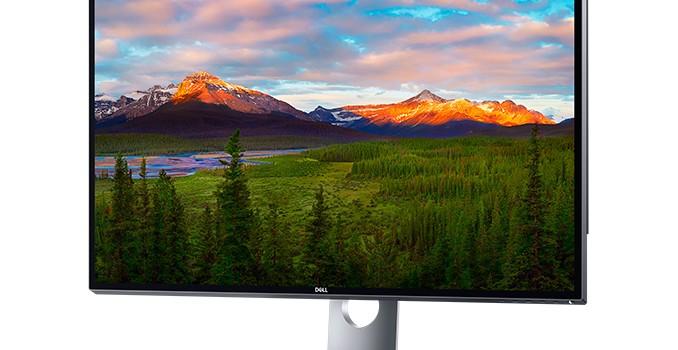
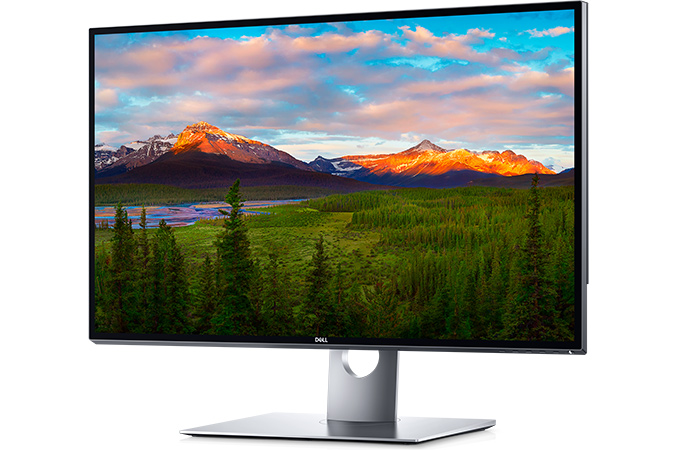
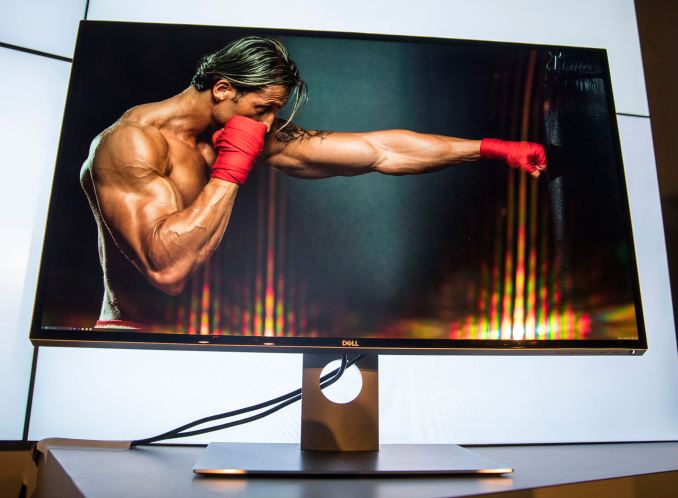
Dell introduced the industry’s first mass-market 8K display aimed at professional designers, engineers, photographers and software developers. The UP3218K will be available this March, but its rough $5,000 price tag will be rather high even for professionals dealing with content creation. That being said, $5K or so was the price that the original 4K MST monitors launched at in 2013, which perhaps makes this display price more palatable. On the other hand, right now an 8K professional display is such a niche product that the vast majority of users will have to wait a few years to see the price come down.

Up to now, 8K reference displays were available only from Canon, in very low quantities and at very high prices. The displays were primarily aimed at video professionals from TV broadcasting companies like NHK, who are working on 8K (they call it Super Hi-Vision) content to be available over-the-air in select regions of Japan next year. A number of TV makers have also announced their ultra large 8K UHDTVs, but these are hardly found in retail. Overall, Dell is the first company to offer an 8K display that can be bought online by any individual with the money and be focused on the monitor market rather than TVs.

At present, Dell is not publishing the full specifications of its UltraSharp 32 Ultra HD 8K monitor (UP3218K), but reveals key specs like resolution (7680×4320), contrast ratio (1300:1), brightness (400 nits), pixel density (280 ppi) as well as supported color spaces: 100% Adobe RGB and 100% sRGB. 

Preliminary Specifications
Dell UltraSharp 32 Ultra HD 8K (UP3218K)
Panel 32″ (IPS?)
Resolution 7680 × 4320
Brightness 400 cd/m²
Contrast Ratio 1300:1
Refresh Rate 60 Hz
Viewing Angles 178°/178° horizontal/vertical
Color Saturation 100% Adobe RGB
100% sRGB
Display Colors 1.07 billion
Inputs 2 × DisplayPort 1.3

For interconnection with host PCs, as a single DisplayPort 1.3/1.4 cable does not provide enough bandwidth for the 7680×4320@60 Hz configuration Dell is targeting, the UltraSharp UP3218K uses two DisplayPort 1.3 inputs to provide the necessary bandwidth, stitching the two display streams together internally using tiling. This is similar to early 5K displays, which used a pair of DisplayPort cables to get around the bandwidth limitations of DisplayPort 1.2. Using two cables not a big problem given the target market, but it’s interesting to note that because 7680×4320@60Hz alone consumes all of the bandwidth supplied by the two cables, there isn’t any leftover bandwidth to support HDR or the Rec. 2020 color space.

On a side note, while the company could have used DisplayPort 1.4’s Display Stream Compression 1.2 (DSC) feature to reduce the bandwidth requirements of the monitor, they opted not to. DSC is promoted as visually lossless, but given how demanding many professionals are and problems that potential artifacts introduced by DSC could bring, Dell decided to stick to two DisplayPort cables as a result.

While a high display resolution is good for photos and images, it also makes everything smaller; and while modern operating systems support scaling, it does not work perfectly for all programs. It’s likely that professional applications like AutoCAD or Photoshop will support 8K the day the UltraSharp UP3218K hits the market, but general use applications, already struggling with 4K and HiDPI in general, will be another matter. Practically speaking, if the price tag alone isn’t convincing enough that this is a monitor for specific editing tasks and not for general desktop usage, then the lack of good HiDPI support elsewhere will. And while I’m sure someone will try to use the UP3218K as a gaming display, at four times the resolution of a 4K monitor, we’re at least a few years off from GPUs being able to render high-fidelity games at a 33Mpix resolution.

Dell promised to start sales of the Dell UltraSharp 32 Ultra HD 8K monitor (UP3218K) on March 23 on its web-site. Initially, the monitor is stated to cost $4999. Time to put in some hardware requisition forms.

Related Reading: