News


NVIDIA Teases Xavier, a High-Performance ARM SoC for Drive PX & AI

NVIDIA Teases Xavier, a High-Performance ARM SoC for Drive PX & AI

Ever since NVIDIA bowed out of the highly competitive (and high pressure) market for mobile ARM SoCs, there has been quite a bit of speculation over what would happen with NVIDIA’s SoC business. With the company enjoying a good degree of success with projects like the Drive system and Jetson, signs have pointed towards NVIDIA continuing their SoC efforts. But in what direction they would go remained a mystery, as the public roadmap ended with the current-generation Parker SoC. However we finally have an answer to that, and the answer is Xavier.

At NVIDIA’s GTC Europe 2016 conference this morning, the company has teased just a bit of information on the next generation Tegra SoC, which the company is calling Xavier (ed: in keeping with comic book codenames, this is Professor Xavier of the X-Men). Details on the chip are light – the chip won’t even sample until over a year from now – but NVIDIA has laid out just enough information to make it clear that the Tegra group has left mobile behind for good, and now the company is focused on high performance SoCs for cars and other devices further up the power/performance spectrum.

NVIDIA ARM SoCs
  Xavier Parker Erista (Tegra X1)
CPU 8x NVIDIA Custom ARM 2x NVIDIA Denver +
4x ARM Cortex-A57
4x ARM Cortex-A57 +
4x ARM Cortex-A53
GPU Volta, 512 CUDA Cores Pascal, 256 CUDA Cores Maxwell, 256 CUDA Cores
Memory ? LPDDR4, 128-bit Bus LPDDR3, 64-bit Bus
Video Processing 7680×4320 Encode & Decode 3840x2160p60 Decode
3840x2160p60 Encode
3840x2160p60 Decode
3840x2160p30 Encode
Transistors 7B ? ?
Manufacturing Process TSMC 16nm FinFET+ TSMC 16nm FinFET+ TSMC 20nm Planar

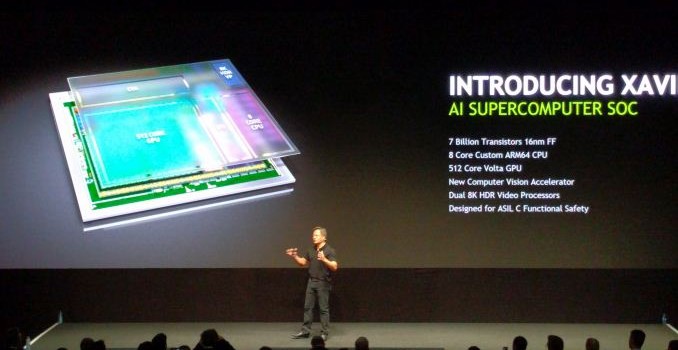
So what’s Xavier? In a nutshell, it’s the next generation of Tegra, done bigger and badder. NVIDIA is essentially aiming to capture much of the complete Drive PX 2 system’s computational power (2x SoC + 2x dGPU) on a single SoC. This SoC will have 7 billion transistors – about as many as a GP104 GPU – and will be built on TSMC’s 16nm FinFET+ process. (To put this in perspective, at GP104-like transistor density, we’d be looking at an SoC nearly 300mm2 big)

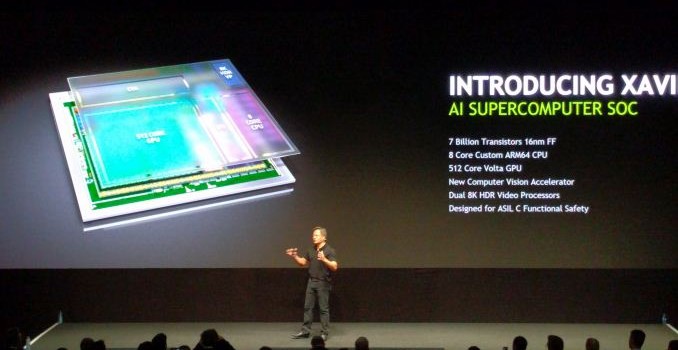
Under the hood NVIDIA has revealed just a bit of information of what to expect. The CPU will be composed of 8 custom ARM cores. The name “Denver” wasn’t used in this presentation, so at this point it’s anyone’s guess whether this is Denver 3 or another new design altogether. Meanwhile on the GPU side, we’ll be looking at a Volta-generation design with 512 CUDA Cores. Unfortunately we don’t know anything substantial about Volta at this time; the architecture was bumped further down NVIDIA’s previous roadmaps for Pascal, and as Pascal just launched in the last few months, NVIDIA hasn’t said anything further about it.
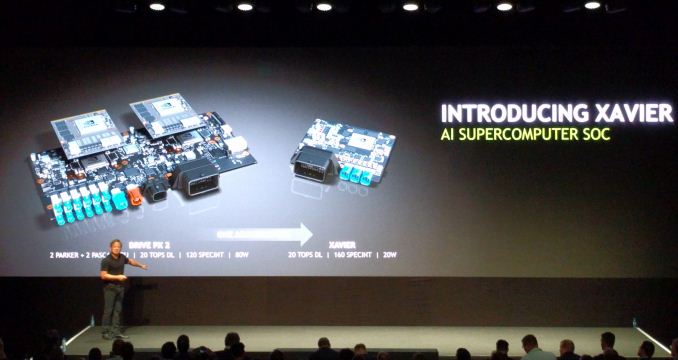
Meanwhile NVIDIA’s performance expectations for Xavier are significant. As mentioned before, the company wants to condense much of Drive PX 2 into a single chip.  With Xavier, NVIDIA wants to get to 20 Deep Learning Tera-Ops (DL TOPS), which is a metric for measuring 8-bit Integer operations. 20 DL TOPS happens to be what Drive PX 2 can hit, and about 43% of what NVIDIA’s flagship Tesla P40 can offer in a 250W card. And perhaps more surprising still, NVIDIA wants to do this all at 20W, or 1 DL TOPS-per-watt, which is one-quarter of the power consumption of Drive PX 2, a lofty goal given that this is based on the same 16nm process as Pascal and all of the Drive PX 2’s various processors.

NVIDIA’s envisioned application for Xavier, as you might expect, is focused on further ramping up their automotive business. They are pitching Xavier as an “AI Supercomputer” in relation to its planned high INT8 performance, which in turn is a key component of fast neural network inferencing. What NVIDIA is essentially proposing then is a beast of an inference processor, one that unlike their Tesla discrete GPUs can function on a stand-alone basis. Coupled with this will be some new computer vision hardware to feed Xavier, including a pair of 8K video processors and what NVIDIA is calling a “new computer vision accelerator.”

Wrapping things up, as we mentioned before, Xavier is a far future product for NVIDIA. While the company is teasing it today, the SoC won’t begin sampling until Q4 of 2017, and that in turn implies that volume shipments won’t even be until 2018. But with that said, with their new focus on the automotive market, NVIDIA has shifted from an industry of agile competitors and cut-throat competition, to one where their customers would like as much of a heads up as possible. So these kinds of early announcements are likely going to become par for the course for NVIDIA.
NVIDIA Teases Xavier, a High-Performance ARM SoC for Drive PX & AI

NVIDIA Teases Xavier, a High-Performance ARM SoC for Drive PX & AI

Ever since NVIDIA bowed out of the highly competitive (and high pressure) market for mobile ARM SoCs, there has been quite a bit of speculation over what would happen with NVIDIA’s SoC business. With the company enjoying a good degree of success with projects like the Drive system and Jetson, signs have pointed towards NVIDIA continuing their SoC efforts. But in what direction they would go remained a mystery, as the public roadmap ended with the current-generation Parker SoC. However we finally have an answer to that, and the answer is Xavier.

At NVIDIA’s GTC Europe 2016 conference this morning, the company has teased just a bit of information on the next generation Tegra SoC, which the company is calling Xavier (ed: in keeping with comic book codenames, this is Professor Xavier of the X-Men). Details on the chip are light – the chip won’t even sample until over a year from now – but NVIDIA has laid out just enough information to make it clear that the Tegra group has left mobile behind for good, and now the company is focused on high performance SoCs for cars and other devices further up the power/performance spectrum.

NVIDIA ARM SoCs
  Xavier Parker Erista (Tegra X1)
CPU 8x NVIDIA Custom ARM 2x NVIDIA Denver +
4x ARM Cortex-A57
4x ARM Cortex-A57 +
4x ARM Cortex-A53
GPU Volta, 512 CUDA Cores Pascal, 256 CUDA Cores Maxwell, 256 CUDA Cores
Memory ? LPDDR4, 128-bit Bus LPDDR3, 64-bit Bus
Video Processing 7680×4320 Encode & Decode 3840x2160p60 Decode
3840x2160p60 Encode
3840x2160p60 Decode
3840x2160p30 Encode
Transistors 7B ? ?
Manufacturing Process TSMC 16nm FinFET+ TSMC 16nm FinFET+ TSMC 20nm Planar

So what’s Xavier? In a nutshell, it’s the next generation of Tegra, done bigger and badder. NVIDIA is essentially aiming to capture much of the complete Drive PX 2 system’s computational power (2x SoC + 2x dGPU) on a single SoC. This SoC will have 7 billion transistors – about as many as a GP104 GPU – and will be built on TSMC’s 16nm FinFET+ process. (To put this in perspective, at GP104-like transistor density, we’d be looking at an SoC nearly 300mm2 big)

Under the hood NVIDIA has revealed just a bit of information of what to expect. The CPU will be composed of 8 custom ARM cores. The name “Denver” wasn’t used in this presentation, so at this point it’s anyone’s guess whether this is Denver 3 or another new design altogether. Meanwhile on the GPU side, we’ll be looking at a Volta-generation design with 512 CUDA Cores. Unfortunately we don’t know anything substantial about Volta at this time; the architecture was bumped further down NVIDIA’s previous roadmaps for Pascal, and as Pascal just launched in the last few months, NVIDIA hasn’t said anything further about it.

Meanwhile NVIDIA’s performance expectations for Xavier are significant. As mentioned before, the company wants to condense much of Drive PX 2 into a single chip.  With Xavier, NVIDIA wants to get to 20 Deep Learning Tera-Ops (DL TOPS), which is a metric for measuring 8-bit Integer operations. 20 DL TOPS happens to be what Drive PX 2 can hit, and about 43% of what NVIDIA’s flagship Tesla P40 can offer in a 250W card. And perhaps more surprising still, NVIDIA wants to do this all at 20W, or 1 DL TOPS-per-watt, which is one-quarter of the power consumption of Drive PX 2, a lofty goal given that this is based on the same 16nm process as Pascal and all of the Drive PX 2’s various processors.

NVIDIA’s envisioned application for Xavier, as you might expect, is focused on further ramping up their automotive business. They are pitching Xavier as an “AI Supercomputer” in relation to its planned high INT8 performance, which in turn is a key component of fast neural network inferencing. What NVIDIA is essentially proposing then is a beast of an inference processor, one that unlike their Tesla discrete GPUs can function on a stand-alone basis. Coupled with this will be some new computer vision hardware to feed Xavier, including a pair of 8K video processors and what NVIDIA is calling a “new computer vision accelerator.”

Wrapping things up, as we mentioned before, Xavier is a far future product for NVIDIA. While the company is teasing it today, the SoC won’t begin sampling until Q4 of 2017, and that in turn implies that volume shipments won’t even be until 2018. But with that said, with their new focus on the automotive market, NVIDIA has shifted from an industry of agile competitors and cut-throat competition, to one where their customers would like as much of a heads up as possible. So these kinds of early announcements are likely going to become par for the course for NVIDIA.
Xiaomi Mi 5s and Mi 5s Plus Announced

Xiaomi Mi 5s and Mi 5s Plus Announced

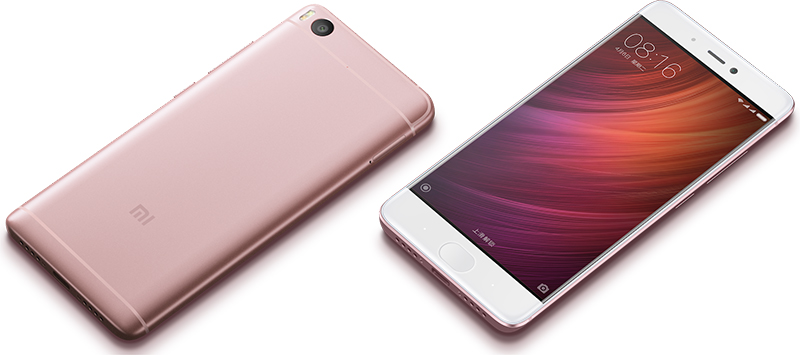
Xiaomi announced two new flagship smartphones today. The Mi 5s and Mi 5s Plus are updates to the Mi 5 / Mi 5 Pro and Mi 5 Plus phones that were announced at MWC 2016 in February, and pack some new hardware inside a new brushed-aluminum chassis.

Both the Mi 5s and Mi 5s Plus use Qualcomm’s Snapdragon 821 SoC, which itself is an updated version of the popular Snapdragon 820 that’s inside the Mi 5 phones and many of the other flagship phones we’ve seen this year. With Snapdragon 821, max frequencies increase to 2.34GHz for the two Kryo CPU cores in the performance cluster and 2.19GHz for the two Kryo cores in the power cluster. The Mi 5s uses the lower-binned version of the 821 that limits peak CPU frequencies to 2.15GHz and 2.00GHz, respectively. Complementing the quad-core CPU is Qualcomm’s Adreno 530 GPU that also sees a small 5% increase in peak frequency to 653MHz in the Mi 5s Plus. While it’s unclear if the 821 includes any changes to its micro-architecture, Qualcomm has likely done some layout optimization as it’s quoting a 5% increase in power efficiency. The Mi 5s and Mi 5s Plus still pair the SoC with LPDDR4 RAM and UFS 2.0 NAND like their predecessors.

Xiaomi Mi 5 Series
  Xiaomi Mi 5 (Mi 5 Pro) Xiaomi Mi 5s Xiaomi Mi 5s Plus
SoC Snapdragon 820
(MSM8996)

2x Kryo @ 1.80 / 2.15GHz
2x Kryo @ 1.36 / 1.59GHz
Adreno 530 @ 624MHz

Snapdragon 821
(MSM8996 Pro)

2x Kryo @ 2.15GHz
2x Kryo @ 2.00GHz
Adreno 530 @ 624MHz

Snapdragon 821
(MSM8996 Pro)

2x Kryo @ 2.34GHz
2x Kryo @ 2.19GHz
Adreno 530 @ 653MHz

RAM 3GB / (4GB) LPDDR4 3GB / 4GB LPDDR4 4GB / 6GB LPDDR4
NAND 32GB / 64GB / (128GB) (UFS 2.0) 64GB / 128GB
(UFS 2.0)
Display 5.15-inch 1920×1080 IPS LCD 5.15-inch 1920×1080 IPS LCD 5.7-inch 1920×1080 IPS LCD
Dimensions 144.55 x 69.23 x 7.25 mm
129 / (139) grams
145.6 x 70.3 x 8.25 mm
145 grams
154.6 x 77.7 x 7.95 mm
168 grams
Modem Qualcomm X12 LTE (Integrated)
2G / 3G / 4G LTE (Category 12/13)

FDD-LTE / TD-LTE /
TD-SCDMA / WCDMA / CDMA / GSM

Qualcomm X12 LTE (Integrated)
2G / 3G / 4G LTE (Category 12/13)

FDD-LTE / TD-LTE / TD-SCDMA /
WCDMA / CDMA / GSM

Front Camera 4MP, 2.0μm, f/2.0 4MP, 2.0μm, f/2.0
Rear Camera 16MP, 1/2.8″ Sony IMX298 Exmor RS, 1.12µm pixels, f/2.0, PDAF, 4-axis OIS, Auto HDR, dual-tone LED flash 12MP, 1/2.3” Sony IMX378 Exmor RS, 1.55µm pixels, f/2.0, PDAF, Auto HDR, dual-tone LED flash 2x 13MP (color + monochrome), PDAF, dual-tone LED flash
Battery 3000 mAh (11.55 Wh)
non-replaceable
3200 mAh
non-replaceable
3800 mAh
non-replaceable
Connectivity 802.11a/b/g/n/ac, BT 4.2, NFC, GPS/GNSS, USB 2.0 Type-C 802.11a/b/g/n/ac 2×2 MU-MIMO, BT 4.2, NFC, GPS/GNSS/Beidou, USB 2.0 Type-C
Launch OS Android 6.0 with MIUI 7 Android 6.0 with MIUI 8
Launch Price
(No Contract)
3GB / 32GB / 1.80GHz ¥1999
3GB / 64GB / 2.15GHz ¥2299
(4GB / 128GB / 2.15GHz) ¥2699
3GB / 64GB  ¥1999

4GB / 128GB  ¥2299

4GB / 64GB  ¥2299

6GB / 128GB  ¥2599

The Mi 5s still comes with a 5.15-inch 1080p IPS LCD. This is an extended color gamut panel that will display exceptionally vivid, but inaccurate, colors. Xiaomi claims the display will reach a peak brightness of 600 nits, which it achieves by increasing the number of LEDs in the backlight assembly from the typical 12 to 14 in most edge-lit IPS displays to 16, a feature also shared with the Mi 5. This improves power efficiency by 17%, according to Xiaomi, presumably from using more LEDs at lower individual output levels. The Mi 5s Plus has a larger 5.7-inch 1080p IPS display with a pixel density of 386ppi, which is still decent for an LCD, and a claimed brightness of 550 nits. It’s also an extended color gamut panel, but Xiaomi includes an sRGB display mode and the ability to adjust the white point for both the Mi 5s and Mi 5s Plus.


Xiaomi Mi 5s

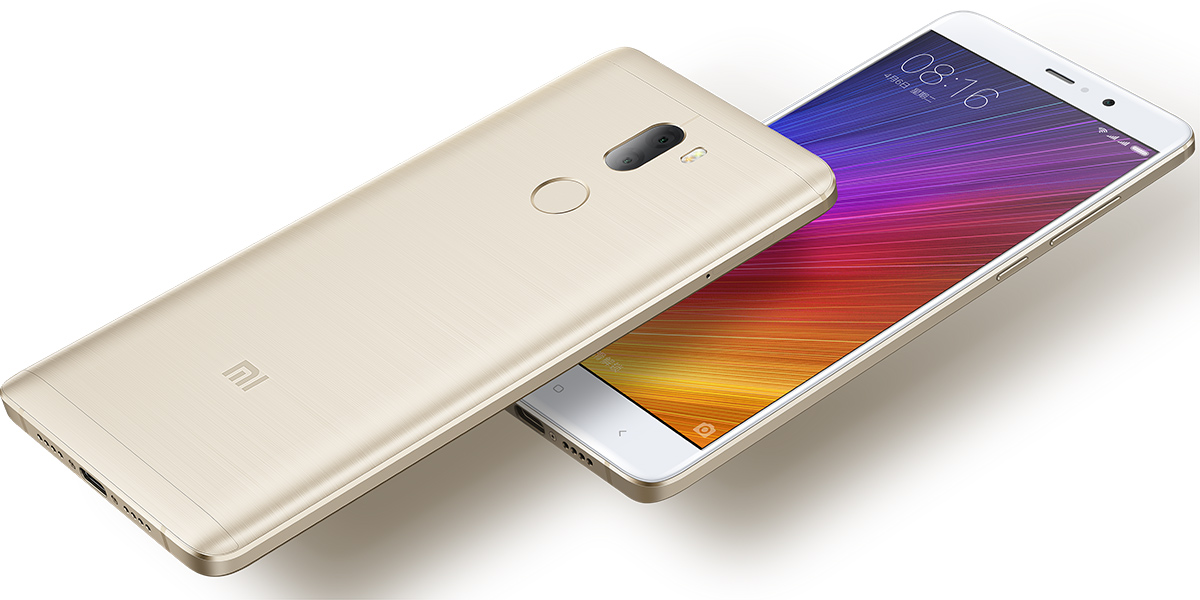
While the front camera still uses a 4MP sensor with large 2.0μm pixels, both new phones receive new rear cameras. The Mi 5s looks to improve low-light performance by using a larger format Sony IMX378 Exmor RS sensor that features 1.55µm pixels; however, image resolution drops to 12MP, the same as Samsung’s Galaxy S7 and Apple’s iPhone 7. The Mi 5s Plus has the more interesting camera setup, employing dual 13MP sensors. Similar to Huawei’s P9 and Honor 8, the Mi 5s Plus uses one sensor for capturing color images and the other sensor for capturing black and white images. The black and white camera lacks an RGB Bayer filter, allowing it to capture more light than a color camera. By combining the output of both sensors, the Mi 5s Plus can theoretically capture brighter images with higher contrast and less noise. The P9 and Honor 8 also use the second camera for measuring depth, aiding camera focusing and allowing the user to adjust bokeh effects after the image is captured, but it’s not clear if the Mi 5s Plus also has these capabilities.


Xiaomi Mi 5s Plus

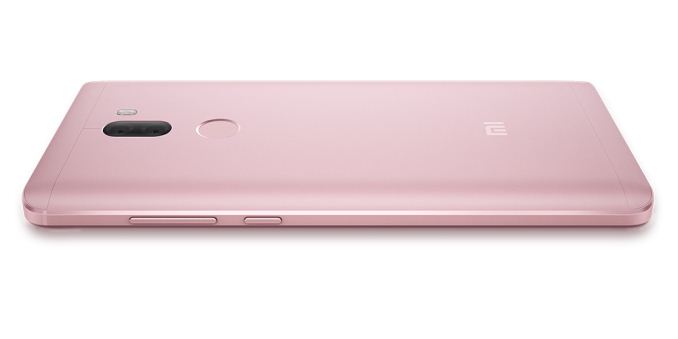
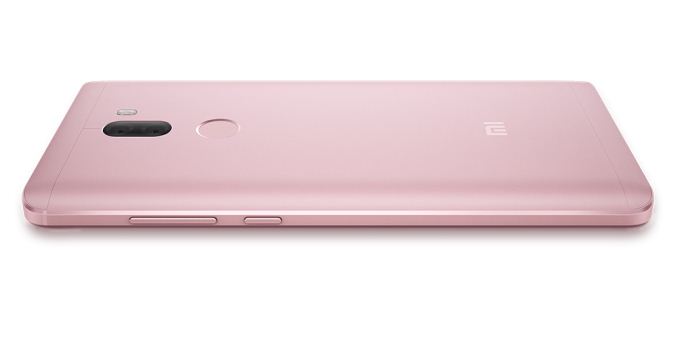
The other big change is a completely new chassis made entirely from brushed aluminum. The back edges are still curved, but there’s no longer any glass or ceramic on the back like the Mi 5 and Mi 5 Pro, respectively. The change to aluminum means the Mi 5s now includes plastic antenna lines on the top and bottom of the back panel. The Mi 5s Plus goes a different route by using plastic inserts at the top and bottom that try to blend in by mimicking the color and texture of the surrounding aluminum.

The Mi 5s Plus includes a circular, capacitive fingerprint sensor on the back that’s slightly recessed, making it easier to locate. The Mi 5s goes the less conventional route with an ultrasonic fingerprint sensor that sits below the edge-to-edge cover glass on the front. Both phones use capacitive buttons rather than onscreen navigation controls and 2.5D cover glass that blends into a chamfered edge on the aluminum frame.

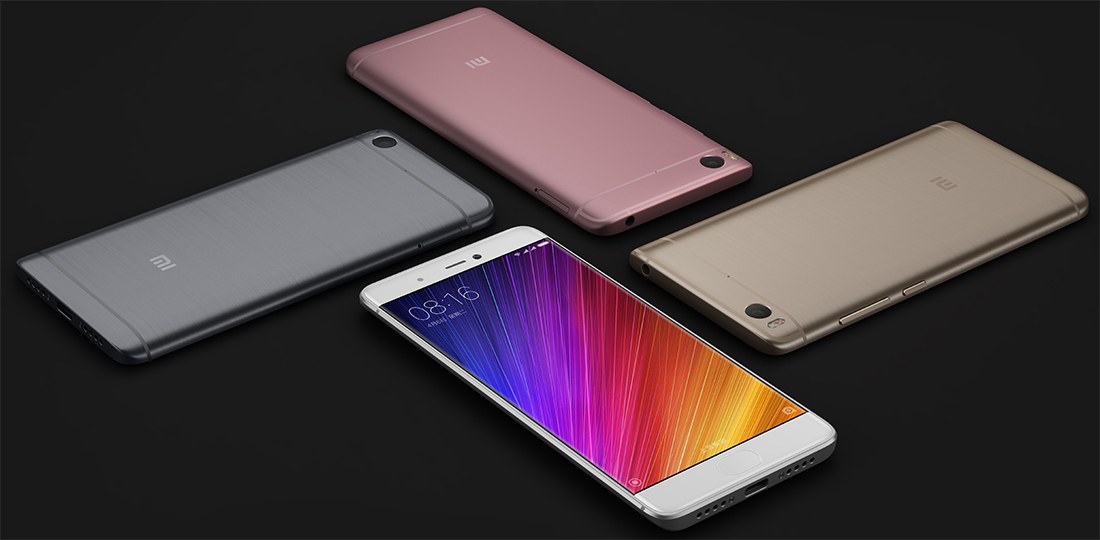
Both phones come in four different colors—silver, gray, gold, and pink—and will be available for sale in China starting September 29.