News


Netgear Brings Broadwell-DE to COTS NAS Units with New 10G ReadyNAS Lineup
Netgear Brings Broadwell-DE to COTS NAS Units with New 10G ReadyNAS Lineup

Netgear’s ReadyNAS lineup was updated towards the end of last year with some units based on the Annapurna Labs ARM-based SoCs. This year, Netgear is targeting SMBs, creative professionals and SMEs with a new set of desktop and rackmount units based on high-end Intel SoCs and CPUs. All of the new units run ReadyNAS OS 6 – the first COTS (commercial off-the-shelf) NAS operating system to come with support for the btrfs file system.

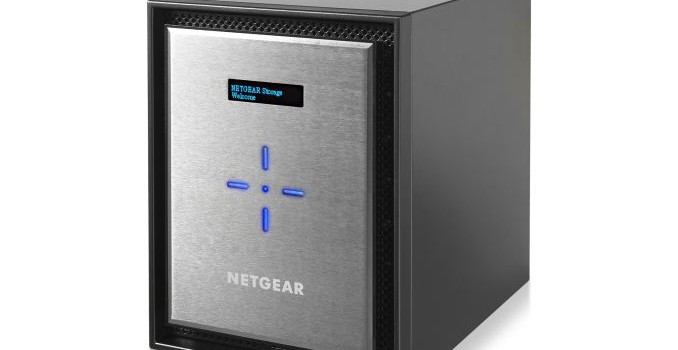
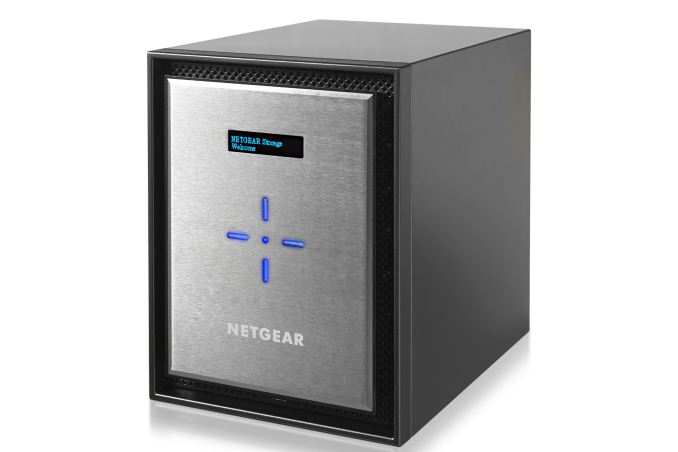
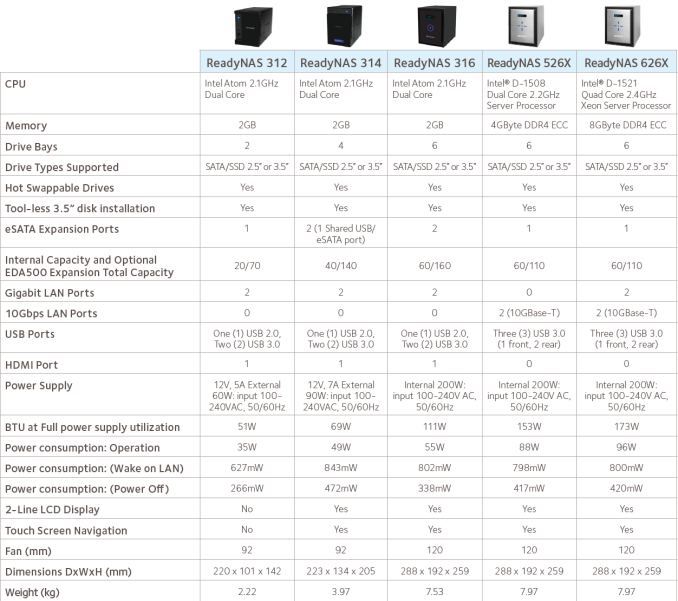
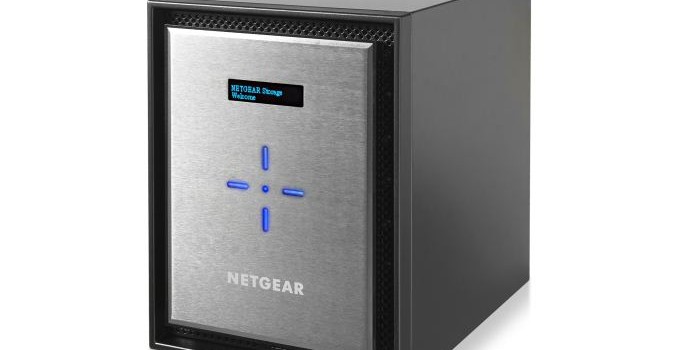
At IFA 2016, Netgear is launching two new desktop models and two new rackmounts. All of the models, except for one of the rackmounts, come with native 10G capabilities. This goes well with the host of affordable 10G switches that Netgear has launched over the last couple of years. The desktop models are the most interesting from a platform viewpoint – the ReadyNAS 526X uses the Intel Pentium D-1508 2C/4T processor that comes under the Xeon-D 1500 lineup, and the ReadyNAS 626X uses the Intel Xeon D-1521 4C/8T processor. To our knowledge, these are the first COTS NAS units to use these Broadwell-DE (Xeon-D 1500) SoCs. The two units join the ReadyNAS 300 series units as part of Netgear’s x86 ReadyNAS lineup. The important specifications of the two new units and how they compare with the other x86 units are provided below.
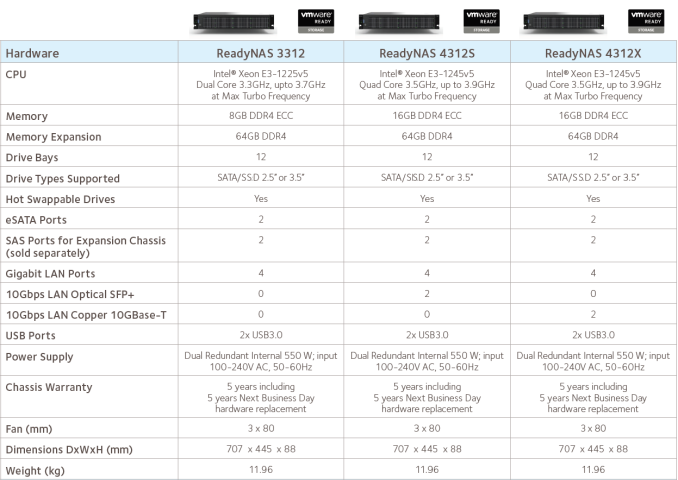
On the rackmount side, Netgear has opted for the Skylake Xeons. The new units have 12 bays and come with quad 1G LAN ports. All of them have two mini-SAS ports for storage expansion. The ReadyNAS 3312 doesn’t have any 10G ports, while the ReadyNAS 4312 has two. The 4312S has two optical SFP+ 10G interfaces, while the 4312X has two 10GBase-T ports.
The only disappointing aspect is that the rackmount units don’t come with support for SAS drives.

In terms of software features, the btrfs implementation allows Netgear to enable seamless snapshotting capabilities and also offer bitrot protection. There are some value additions in the form of ReadyDR (disaster recovery) that allows block-level backup to / restore from another ReadyNAS unit in the LAN. Netgear also has the ReadyCLOUD service for seamless VPN access and private cloud capabilities.

All the NAS models are available today. The diskless desktop versions come in at $1400 and $1800 for the RN526X and RN626X respectively. The diskless rackmounts are priced at $3000 (RN3312), $4200 (RN4312S) and $4400 (RN4312X).

Netgear’s decision to go with the Xeon-D SoC lineup has enabled them to create more efficient units (in terms of hardware) compared to the competition. The ReadyNAS OS 6 features are also in the process of getting tuned with customer feedback. Most important business requirements are already implemented, but competitors have a huge advantage, thanks to third-party apps. Features such as native virtualization (host OS capabilities) and containers (Docker) support enable the competitors’ units to fully utilize all the available CPU cycles (once the core requirements related to file serving are met). The same can’t be said of Netgear’s current version of the ReadyNAS OS. However, for SMBs / SMEs with well-defined requirements / workloads, the new 10G-enabled ReadyNAS units definitely merit consideration, thanks to a combination of attractive pricing and possible reseller-dependent deals involving bundled 10G switches.
Netgear Brings Broadwell-DE to COTS NAS Units with New 10G ReadyNAS Lineup

Netgear Brings Broadwell-DE to COTS NAS Units with New 10G ReadyNAS Lineup

Netgear’s ReadyNAS lineup was updated towards the end of last year with some units based on the Annapurna Labs ARM-based SoCs. This year, Netgear is targeting SMBs, creative professionals and SMEs with a new set of desktop and rackmount units based on high-end Intel SoCs and CPUs. All of the new units run ReadyNAS OS 6 – the first COTS (commercial off-the-shelf) NAS operating system to come with support for the btrfs file system.

At IFA 2016, Netgear is launching two new desktop models and two new rackmounts. All of the models, except for one of the rackmounts, come with native 10G capabilities. This goes well with the host of affordable 10G switches that Netgear has launched over the last couple of years. The desktop models are the most interesting from a platform viewpoint – the ReadyNAS 526X uses the Intel Pentium D-1508 2C/4T processor that comes under the Xeon-D 1500 lineup, and the ReadyNAS 626X uses the Intel Xeon D-1521 4C/8T processor. To our knowledge, these are the first COTS NAS units to use these Broadwell-DE (Xeon-D 1500) SoCs. The two units join the ReadyNAS 300 series units as part of Netgear’s x86 ReadyNAS lineup. The important specifications of the two new units and how they compare with the other x86 units are provided below.

On the rackmount side, Netgear has opted for the Skylake Xeons. The new units have 12 bays and come with quad 1G LAN ports. All of them have two mini-SAS ports for storage expansion. The ReadyNAS 3312 doesn’t have any 10G ports, while the ReadyNAS 4312 has two. The 4312S has two optical SFP+ 10G interfaces, while the 4312X has two 10GBase-T ports.

The only disappointing aspect is that the rackmount units don’t come with support for SAS drives.

In terms of software features, the btrfs implementation allows Netgear to enable seamless snapshotting capabilities and also offer bitrot protection. There are some value additions in the form of ReadyDR (disaster recovery) that allows block-level backup to / restore from another ReadyNAS unit in the LAN. Netgear also has the ReadyCLOUD service for seamless VPN access and private cloud capabilities.

All the NAS models are available today. The diskless desktop versions come in at $1400 and $1800 for the RN526X and RN626X respectively. The diskless rackmounts are priced at $3000 (RN3312), $4200 (RN4312S) and $4400 (RN4312X).

Netgear’s decision to go with the Xeon-D SoC lineup has enabled them to create more efficient units (in terms of hardware) compared to the competition. The ReadyNAS OS 6 features are also in the process of getting tuned with customer feedback. Most important business requirements are already implemented, but competitors have a huge advantage, thanks to third-party apps. Features such as native virtualization (host OS capabilities) and containers (Docker) support enable the competitors’ units to fully utilize all the available CPU cycles (once the core requirements related to file serving are met). The same can’t be said of Netgear’s current version of the ReadyNAS OS. However, for SMBs / SMEs with well-defined requirements / workloads, the new 10G-enabled ReadyNAS units definitely merit consideration, thanks to a combination of attractive pricing and possible reseller-dependent deals involving bundled 10G switches.
Evaluating Futuremark’s Servermark VDI on the Supermicro SYS-5028D-TN4T

Standardized benchmarks with industry-wide acceptance are a must for evaluating computing systems. These benchmarks may evaluate the system as a whole, or target specific aspects. Vendors such as Futuremark and BAPCo have various offerings for both consumer and business-use PCs. However, the market for such programs in the server space is largely untapped. Futuremark has been working on Servermark for more than two years now, and they finally felt it was stable enough to let us test drive one of their recent beta versions. Servermark will have a number of sub-categories, but, our focus was on VDI (virtual desktop infrastructure) – a way to determine how many virtual machines a server can support while providing an acceptable level of performance for all users. Servermark VDI also allowed us to evaluate the Supermicro SYS-5028D-TN4T (based on an Intel Xeon-D 1540 SoC) – a very popular home lab machine for virtualization enthusiasts. Today’s piece provides our thoughts on Servermark VDI based on our benchmarking of the Supermicro SYS-5028D-TN4T.

Evaluating Futuremark’s Servermark VDI on the Supermicro SYS-5028D-TN4T

Standardized benchmarks with industry-wide acceptance are a must for evaluating computing systems. These benchmarks may evaluate the system as a whole, or target specific aspects. Vendors such as Futuremark and BAPCo have various offerings for both consumer and business-use PCs. However, the market for such programs in the server space is largely untapped. Futuremark has been working on Servermark for more than two years now, and they finally felt it was stable enough to let us test drive one of their recent beta versions. Servermark will have a number of sub-categories, but, our focus was on VDI (virtual desktop infrastructure) – a way to determine how many virtual machines a server can support while providing an acceptable level of performance for all users. Servermark VDI also allowed us to evaluate the Supermicro SYS-5028D-TN4T (based on an Intel Xeon-D 1540 SoC) – a very popular home lab machine for virtualization enthusiasts. Today’s piece provides our thoughts on Servermark VDI based on our benchmarking of the Supermicro SYS-5028D-TN4T.

Huawei Launches the NOVA Brand: Two Midrange Snapdragon 625 Smartphones

Huawei Launches the NOVA Brand: Two Midrange Snapdragon 625 Smartphones

This week at IFA 2016, Huawei has announced another brand/line of smartphones. The NOVA brand, to counter the Mate line of devices and go up against its own H5onor brand, is aimed squarely at mid-range pricing and millennials. The Nova and Nova Plus will be the first two products in this line, differentiated by size, battery life and price, and using Qualcomm’s Snapdragon S625 SoC, a mid-range 14nm part with a pair of quad-core Cortex-A53 clusters, the faster of the two running at 2 GHz. This is joined by an integrated X9 modem, capable of Category 7 LTE and carrier aggregation but also has the right licencing for CDMA in the US.

Huawei Nova Series
  Nova Plus Nova
SoC Qualcomm Snapdragon 625

4x Cortex-A53 @ 2.0GHz
Adreno 506

Qualcomm Snapdragon 625

4x Cortex-A53 @ 2.0GHz
Adreno 506

RAM 3GB LPDDR3 3GB LPDDR3
NAND 32GB eMMC
+ microSD
32GB eMMC
+ microSD
Display 5.5” 1080p IPS LCD 5.0″ 1080p IPS LCD
Dimensions 151.8 x 75.7 x 7.3 mm
160 grams
141.2 x 69.1 x 7.1 mm
146 grams
Modem Qualcomm X9 (Integrated)
2G / 3G / 4G LTE
Qualcomm X9 (Integrated)
2G / 3G / 4G LTE
SIM Size Dual NanoSIM Dual NanoSIM
Front Camera 8 MP Sony, f/2.0 8 MP Sony, f/2.0
Rear Camera 16 MP, PDAF, OIS 12 MP Sony, f/2.2, 1.25µm pixels, PDAF
Battery 3340 mAh 3020 mAh
Connectivity 802.11a/b/g/n, BT 4.1, GPS/GLONASS, USB Type-C, Fingerprint 802.11a/b/g/n, BT 4.1, GPS/GLONASS, USB Type-C, Fingerprint
Launch OS Android 6 w/ EMUI 4.1 Android 6 w/ EMUI 4.1
Launch Price 429€ 399€

Gallery: Nova

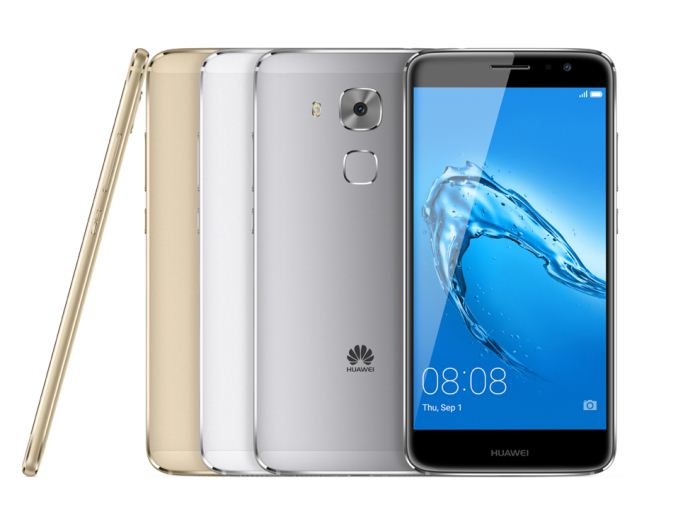
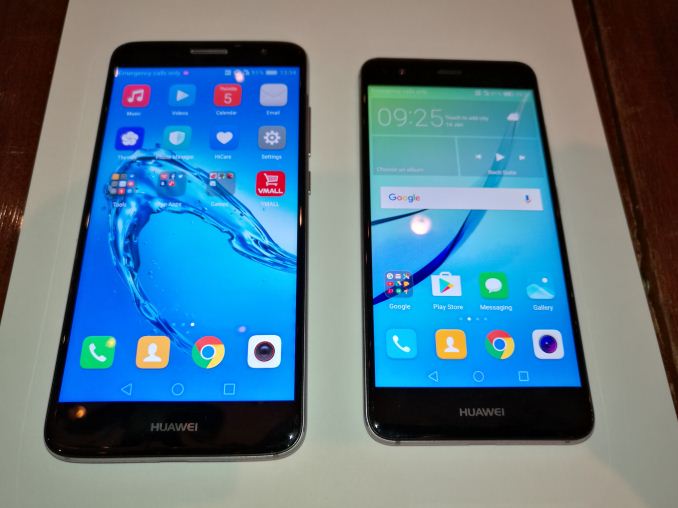
The Nova will launch as the main device, with a 5-inch Full HD (1920×1080) display. The devices will use USB Type-C, with Huawei’s characteristic brushed metal finishes. For several years Huawei has been pushing a high screen-to device ratio, typically comparing it against smartphones with physical buttons, and while it was mentioned in the launch they surprisingly left out exact numbers. The display is rated at a supposed 1500:1 contrast ratio, with 85% ‘high color gamut’, which is likely DCI-P3. Battery for the Nova is at 3020 mAh, or rated for 5-hours of Pokémon Go, and will have EMUI 4.1 (based on Android 6) out of the box.

Cameras are a Sony 12MP F/2.2 with 1.25-micron pixels on the rear, with a Sony 8MP F/2.0 on the front. Pro shooting modes are supported, as well as Huawei’s usual features of light painting, document readjustment and so on. PDAF focusing is rated at 0.3 seconds. One of the new features Huawei is promoting is the per-user beautify feature. This is the ability for the phone to recognize specific faces and use a separate pre-defined beautify profile for them. The concept being that in a group photo, with presets it can make you look better than your friends.

One of the newer features is the blue light reduction option. Similar to other devices with this feature, the software enables a separate look-up-table to reduce the effectiveness of the blue. We asked whether this was a per device/batch LUT to enable a better consistency with panel variability, or if the LUT was a fixed constant adjustment vs a gradient, but we weren’t able to get an answer.

The Nova and Nova Plus will have three main colors: Mystic Silver, Titanium Grey and Prestige Gold. Rose Gold will be available in select regions only. Pricing is at 399 Euro (that’s including tax) for a 3GB DRAM and 32GB storage model. Both phones will support dual nano-sim, with one slot capable of a microSD card. Both devices also have a ‘level 4’ fingerprint sensor.

Gallery: Nova Plus

The Nova Plus is the larger device, coming it at 5.5-inch with a Full HD display, but offers a few upgrades over the Nova. The battery is another 10% larger (3340 mAh), and the camera supports OIS. There is an upgraded audio codec in there, with a collaboration with harmon/kardon and DTS Headphone:X certification. Pricing is at 429 Euro (again, including tax in that price) for a 3/32 configuration.

I’ll be disappointed if Huawei’s next model isn’t called the Supernova, or if the 4-inch model isn’t called a White Dwarf or something similar. There are lots of names to choose from…