News


Acer Announces A 200Hz Ultrawide Display
Acer Announces A 200Hz Ultrawide Display

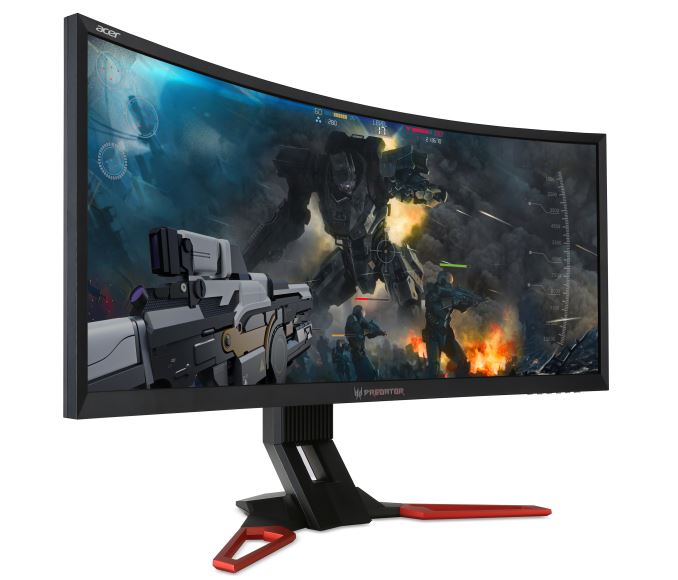
Today at IFA Acer has announced a number of new products relating to gaming. Among the product launches was a new display aimed firmly at gamers. It’s a very large curved 35″ panel with a native refresh rate of 144Hz. BenQ has actually already released a gaming monitor with these specs. What makes the Acer Predator Z35 stand out is Acer’s claim that it can be overclocked to 200Hz. You can check out all of the Predator Z35’s known specs in the chart below.

Acer Predator Z35
Resolution 2560×1080
Refresh Rate 144Hz native, 200Hz overclock
Panel Size 35″
Panel Type AMVA
Response Time 12ms, 4ms (G2G)
Viewing Angle (H/V) 178° / 178°
Color Depth 16.7 million colors (8bit)

As 35″ with a resolution of 2560×1080, the Predator Z35 isn’t as sharp as the 34″ 3440×1440 curved displays on the market. Its refresh rate makes it clear that it’s first and foremost a monitor for gaming. Like I noted above, the native refresh rate of the panel is 144Hz, with Acer claiming it can be overclocked up to 200Hz. It’s not clear whether Acer expects a large number of panels to reach this figure, or if the overclocking procedure voids your warranty, but like most other overclocking I would assume that it does. As a gaming display, the Predator Z35 comes with support for NVIDIA’s G-SYNC adaptive refresh rate as well as NVIDIA’s Ultra low Motion Blur backlight strobing feature.

Something else worth noting is that this is an AMVA panel from AU Optronics. While the viewing angle for AMVA panels is still advertised as 178 x 178 degrees like an IPS panel, they’re still known to have a greater shift in contrast than modern IPS displays. For gamers this isn’t likely to pose an issue, but it would for any sort of color critical work. On that note, Acer advertises the Predator Z35 as covering 100% of the sRGB gamut. While this is probably true, it’s worth noting that covering sRGB doesn’t guarantee any level of accuracy when rendering the colors inside the gamut. All that being said, the AMVA panel is still going to be miles ahead of the TN panels that used to be inside essentially every single display with a native refresh rate above 60Hz.

The Acer Predator Z35 gaming monitor will be coming to North America in December with a price of 1199.99 USD. It will be launching in the EMEA region at the same time with a price starting at €1,099.

Acer Announces A 200Hz Ultrawide Display

Acer Announces A 200Hz Ultrawide Display

Today at IFA Acer has announced a number of new products relating to gaming. Among the product launches was a new display aimed firmly at gamers. It’s a very large curved 35″ panel with a native refresh rate of 144Hz. BenQ has actually already released a gaming monitor with these specs. What makes the Acer Predator Z35 stand out is Acer’s claim that it can be overclocked to 200Hz. You can check out all of the Predator Z35’s known specs in the chart below.

Acer Predator Z35
Resolution 2560×1080
Refresh Rate 144Hz native, 200Hz overclock
Panel Size 35″
Panel Type AMVA
Response Time 12ms, 4ms (G2G)
Viewing Angle (H/V) 178° / 178°
Color Depth 16.7 million colors (8bit)

As 35″ with a resolution of 2560×1080, the Predator Z35 isn’t as sharp as the 34″ 3440×1440 curved displays on the market. Its refresh rate makes it clear that it’s first and foremost a monitor for gaming. Like I noted above, the native refresh rate of the panel is 144Hz, with Acer claiming it can be overclocked up to 200Hz. It’s not clear whether Acer expects a large number of panels to reach this figure, or if the overclocking procedure voids your warranty, but like most other overclocking I would assume that it does. As a gaming display, the Predator Z35 comes with support for NVIDIA’s G-SYNC adaptive refresh rate as well as NVIDIA’s Ultra low Motion Blur backlight strobing feature.

Something else worth noting is that this is an AMVA panel from AU Optronics. While the viewing angle for AMVA panels is still advertised as 178 x 178 degrees like an IPS panel, they’re still known to have a greater shift in contrast than modern IPS displays. For gamers this isn’t likely to pose an issue, but it would for any sort of color critical work. On that note, Acer advertises the Predator Z35 as covering 100% of the sRGB gamut. While this is probably true, it’s worth noting that covering sRGB doesn’t guarantee any level of accuracy when rendering the colors inside the gamut. All that being said, the AMVA panel is still going to be miles ahead of the TN panels that used to be inside essentially every single display with a native refresh rate above 60Hz.

The Acer Predator Z35 gaming monitor will be coming to North America in December with a price of 1199.99 USD. It will be launching in the EMEA region at the same time with a price starting at €1,099.
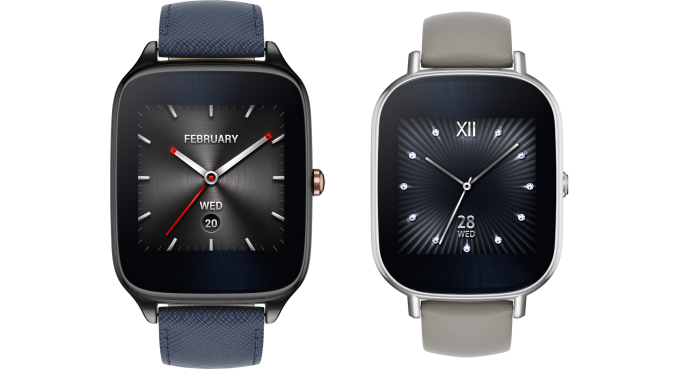
ASUS Details The ZenWatch 2: Coming In October

ASUS Details The ZenWatch 2: Coming In October

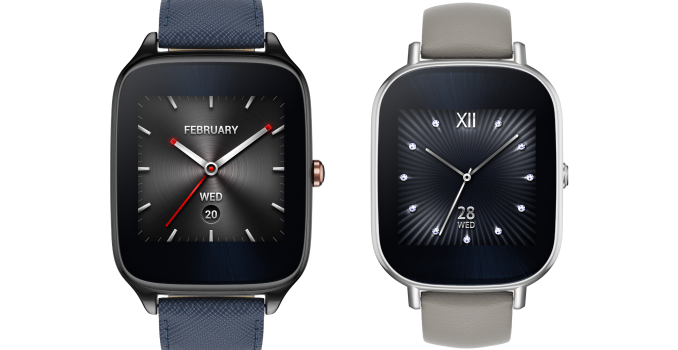
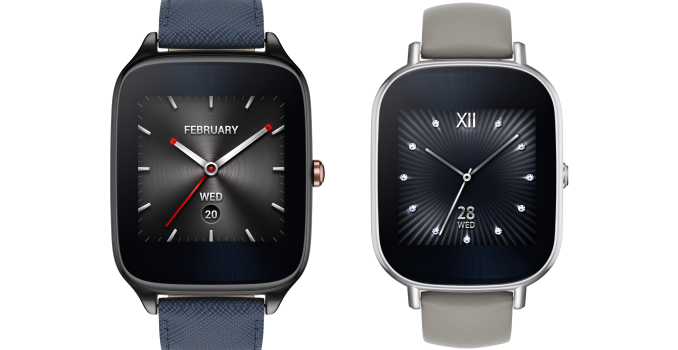
At this year’s Computex Taipei ASUS released some teaser information about the upcoming ZenWatch 2. At the time we knew what the ZenWatch 2 would look like, but there weren’t any details about the display size, case size, battery, display, or any other aspects of the hardware. Three months later, we’re much closer to ASUS’s planned launch of the ZenWatch 2, and they’ve decided to release essentially all the information one would need to know about the watch.

For starters, the ZenWatch 2 comes in two sizes. the first has a 1.45″ AMOLED display with a resolution of 280×280, while the second has 1.63″ AMOLED display with a resolution of 320×320. The case dimensions of the smaller and larger model are 45.2 x 37.2mm and 49.6 x 40.7mm respectively. While I appreciate that ASUS has put in the effort to try and accommodate users with smaller wrists, I think it’s still going to leave out a very large segment of the market in the same way that all previous Android Wear devices have done. Let me explain why.

Consider that the smaller ZenWatch W1502Q has a square display with a 1.45″ diagonal, which equates to a screen area of roughly 1.05 square inches. As a point of comparison, the 42mm Apple Watch, which is the larger of the two models, has a 5:4 display with a 1.5″ diagonal. This means that it has a slightly larger area of 1.1 square inches. Despite the 42mm Apple Watch having a larger display, the dimensions of the watch case are significantly smaller in both the vertical and horizontal dimensions. If a user finds the 42mm Apple Watch to be too big, they’ll certainly feel that more strongly about even the smaller model of the ZenWatch 2. I happen to fall into that group of users with smaller wrists, and when I originally heard that the ZenWatch 2 would come in two sizes I was hoping for something even smaller than this as I haven’t been able to find an Android Wear watch that I can wear comfortably yet.

If you are a user that finds one of the ZenWatch 2 models to be a comfortable fit then your watch will come with 4GB of internal NAND, 512MB of LPDDR2 memory, and Qualcomm’s APQ 8026 SoC which has four Cortex A7 cores with a max frequency of 1.2GHz, although no Android Wear devices ramp up the SoC like they would do so in a smartphone. The ZenWatch 2 also includes a 6-axis gyroscope, an accelerometer, and a sensor for tracking the user’s heart rate.

As for the battery life, the smaller W1502Q has a 300mAh battery, while the larger W1501Q increases that to 400mAh. ASUS rates the larger model for over 2.5 days of use in ambient mode, and the smaller one for more than 2 days of use in ambient mode. Battery life will obviously vary greatly depending on a user’s workload.

The ASUS ZenWatch 2 will be available sometime in October. The larger model will be priced at 149 euros, while the smaller will surprisingly cost more at 169 euros. It will launch with three different straps, with one being a fabric strap, one being leather, and one being metal. Each strap will have a choice of three different colors, and it’s a safe bet that the metal band will come with a price premium.

ASUS Details The ZenWatch 2: Coming In October

ASUS Details The ZenWatch 2: Coming In October

At this year’s Computex Taipei ASUS released some teaser information about the upcoming ZenWatch 2. At the time we knew what the ZenWatch 2 would look like, but there weren’t any details about the display size, case size, battery, display, or any other aspects of the hardware. Three months later, we’re much closer to ASUS’s planned launch of the ZenWatch 2, and they’ve decided to release essentially all the information one would need to know about the watch.

For starters, the ZenWatch 2 comes in two sizes. the first has a 1.45″ AMOLED display with a resolution of 280×280, while the second has 1.63″ AMOLED display with a resolution of 320×320. The case dimensions of the smaller and larger model are 45.2 x 37.2mm and 49.6 x 40.7mm respectively. While I appreciate that ASUS has put in the effort to try and accommodate users with smaller wrists, I think it’s still going to leave out a very large segment of the market in the same way that all previous Android Wear devices have done. Let me explain why.

Consider that the smaller ZenWatch W1502Q has a square display with a 1.45″ diagonal, which equates to a screen area of roughly 1.05 square inches. As a point of comparison, the 42mm Apple Watch, which is the larger of the two models, has a 5:4 display with a 1.5″ diagonal. This means that it has a slightly larger area of 1.1 square inches. Despite the 42mm Apple Watch having a larger display, the dimensions of the watch case are significantly smaller in both the vertical and horizontal dimensions. If a user finds the 42mm Apple Watch to be too big, they’ll certainly feel that more strongly about even the smaller model of the ZenWatch 2. I happen to fall into that group of users with smaller wrists, and when I originally heard that the ZenWatch 2 would come in two sizes I was hoping for something even smaller than this as I haven’t been able to find an Android Wear watch that I can wear comfortably yet.

If you are a user that finds one of the ZenWatch 2 models to be a comfortable fit then your watch will come with 4GB of internal NAND, 512MB of LPDDR2 memory, and Qualcomm’s APQ 8026 SoC which has four Cortex A7 cores with a max frequency of 1.2GHz, although no Android Wear devices ramp up the SoC like they would do so in a smartphone. The ZenWatch 2 also includes a 6-axis gyroscope, an accelerometer, and a sensor for tracking the user’s heart rate.

As for the battery life, the smaller W1502Q has a 300mAh battery, while the larger W1501Q increases that to 400mAh. ASUS rates the larger model for over 2.5 days of use in ambient mode, and the smaller one for more than 2 days of use in ambient mode. Battery life will obviously vary greatly depending on a user’s workload.

The ASUS ZenWatch 2 will be available sometime in October. The larger model will be priced at 149 euros, while the smaller will surprisingly cost more at 169 euros. It will launch with three different straps, with one being a fabric strap, one being leather, and one being metal. Each strap will have a choice of three different colors, and it’s a safe bet that the metal band will come with a price premium.

ASUS Refreshes ROG Laptops With G752 and Liquid Cooled GX700 Series

ASUS Refreshes ROG Laptops With G752 and Liquid Cooled GX700 Series

Today at IFA ASUS is announcing some of its fall laptop lineup. As with the other vendors, they have been waiting on Windows 10 which launched at the end of July, and Intel’s Skylake processors which launched just a few hours ago. The combination of new operating system and new processor is likely going to mean there are a lot of new products coming out in the next while.

Specifically in this announcement is the refresh of the Republic of Gamers laptops. The G752 is an upgrade to the G751 that we reviewed. New of course is Windows 10 installed by default, as well as Intel’s Skylake quad-core processor. There will be two options depending on the model purchased, with the Core i7-6700HQ processor as the base. This is a quad-core, eight-thread Core i7 with a 2.6 GHz base frequency and up to 3.5 GHz Turbo on a single core. On the top tier G752 you can get the Core i7-6820HK model, which is 2.7 GHz to 3.6 GHz and bumps the L3 cache from 6 MB to 8 MB. Being a K part, it means that it is overclockable as well which may let adventurous owners squeeze some extra performance out assuming they can keep the laptop cool. The G751 that we tested actually had a great cooling system so I don’t see that being a big issue. As is usual for a mobile quad-core, these are 45W CPUs.

The G752 also keeps what is great about the G751, with the NVIDIA GTX 980M GPU available to handle the graphics duties. One of the great features from the G751 was the introduction of NVIDIA’s G-Sync technology and I am pleased to say this has continued with the G752. The big difference though is that the G752 will be offered with a 1920×1080 panel as the base model, but the top version will be available with a 3840×2160 panel for the 17.3-inch laptop.

The G752 is not just a spec upgrade either. ASUS is rolling out a new chassis with a new design. It is not a huge departure from the outgoing G751 but it does clean up the lines and make the laptop a lot sleeker in my opinion. It will also be available in three colors, with plasma copper, armor titanium, and lava red options. The keyboard is a gaming keyboard with anti-ghosting 30-key rollover and 2.5 mm of travel in the keys. Thunderbolt 3 will also be available, and clearly Intel is pushing this quite heavily now that it can be piggybacked on a USB-C port.

ASUS ROG G752
  G752VL G752VT G752VY
Processor Intel Core i7-6700HQ
Quad-Core + HT 2.6 GHz-3.5 GHz
6 MB L3 45 watt TDP
Intel Core i7-6700HQ
Quad-Core + HT 2.6 GHz-3.5 GHz
6 MB L3 45 watt TDP
Optional
Intel Core i7-6820HK
Quad-Core + HT 2.7 GHz – 3.6 GHz
8 MB L3 45 watt TDP
Memory Up to 64 GB DDR4-2133
GPU NVIDIA GeForce GTX 965M 2GB NVIDIA GeForce GTX 970M 3/6GB NVIDIA GeForce GTX 980M 4/8 GB
Display 17.3″ 1920×1080 IPS with G-SYNC 17.3″ 1920×1080 IPS with G-SYNC 17.3″ 1920×1080 IPS with G-SYNC
17.3″ 3840×2160 IPS with G-SYNC
Storage NVME 128/256 GB SSD
Up to 2TB SATA HDD
NVME 128/256/512 GB SSD
Up to 2TB SATA HDD
NVME 128/256/512 GB SSD
Up to 2TB SATA HDD
Optical Drive DVD Combo Blu-ray writer
Dimensions 428 x 334 x 23-43 (mm)
16.85 x 13.15 x 0.91-1.69 (inches)
428 x 334 x 23-53 (mm)
16.85 x 13.15 x 0.91-2.09 (inches)
Weight 4.06 kg / 8.95 lbs 4.36 kg / 9.61 lbs
Price Starting at $1499

I quite liked the G751 but I found the chassis to be a bit dated, so these updates make it a pretty compelling gaming laptop. It will be available in Q4 starting at $1499.

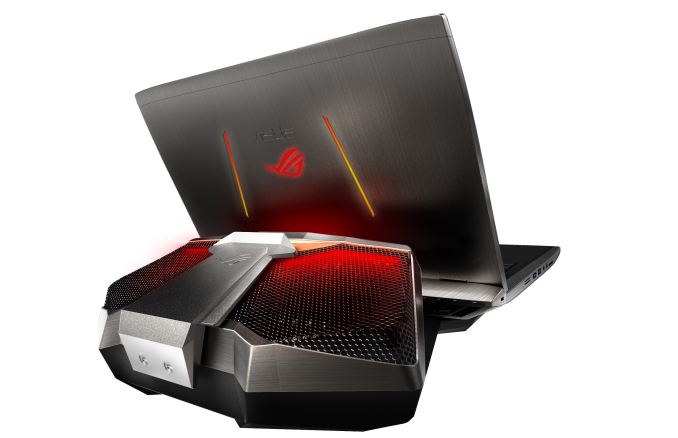
The big announcement from ASUS though is a completely new gaming laptop called the GX700 series. This is a new flagship gaming laptop from the company and they have tried to pack in quite a few unique features to differentiate from the competition. Someone can correct me if I am mistaken here, but I believe this is the first modern gaming laptop to be offered with a closed loop liquid cooling system. We have seen what a dramatic difference this can make under load on the recently launched AMD Fury X GPU, and ASUS is just teasing us for the moment and will release more details about this later. It will feature a 3840×2160 17.3-inch display, and a yet to be determined GeForce GTX graphics system. The GX700 will feature the mobile K-series Skylake processors much like the G752 and will therefore support overclocking. With the water cooling system, this could make for a pretty powerful laptop. The GX700 will be released in Q4 as well but the price is not final yet.

Source: ASUS