News


Windows 10 Launches Worldwide

Windows 10 Launches Worldwide

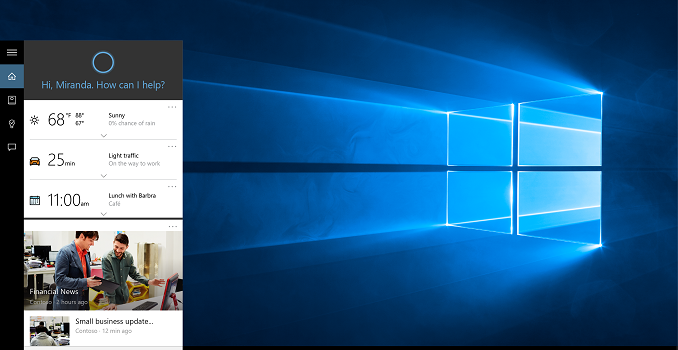
It has been a busy time in Redmond. Three hundred and two days ago, on September 30, 2014, Windows 10 was announced by Microsoft. The name, at the time, was a bit of a surprise, and Windows 10 was born out of the ashes of Windows 8.1. Over the la…

Motorola Announces the Moto X Play

Motorola Announces the Moto X Play

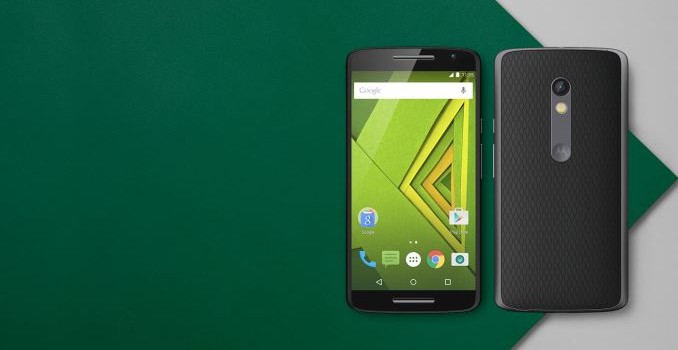
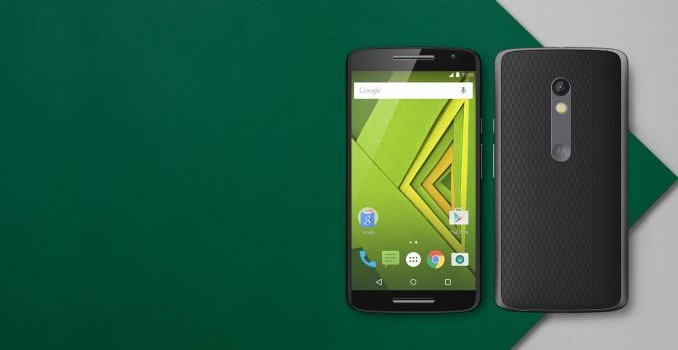
In a somewhat interesting twist, Motorola has announced a new version of the Moto X designed to slot in between the Moto X’s traditional flagship position and the Moto G’s mid-range position. As a result, this is probably the closest thing to a competitor to the OnePlus Two and similar phones in the 300-400 USD price range. To figure out what you gain or lose in the move from the high-end Moto X Style to the Moto X Play, I’ve placed the specs below to provide some perspective.

  Moto X Play Moto X Style
SoC Snapdragon 615 1.7 GHz A53 Snapdragon 808
1.8/1.44 GHz
Cortex A57/A53
RAM 2GB 3GB LPDDR3
NAND 16GB NAND + microSD 16/32/64GB NAND + microSD
Display 5.5” 1080p
LCD
5.7” 1440p
LCD
Network 2G / 3G / 4G LTE (Category 4 LTE) 2G / 3G / 4G LTE (Category 6 LTE)
Dimensions 148 x 75 x 8.9-10.9mm, 169g 153.9 x 76.2 x 6.1-11.06mm, 179g
Camera 21MP Rear Facing Camera
f/2.0
21MP Rear Facing w/ PDAF
f/2.0, 1.1 micron 1/2.4″ sensor
5MP Front Facing 5MP Front Facing w/ LED Flash
Battery 3630 mAh (13.79 Whr) 3000 mAh (11.4 Whr)
OS Android 5.1 (At Launch) Android 5.1 (At Launch)
Connectivity 2.4/5 GHz 802.11a/b/g/n +
BT 4.0,
USB2.0, GPS/GNSS, NFC
2×2 802.11a/b/g/n/ac +
BT 4.1,
USB2.0, GPS/GNSS, NFC
SIM NanoSIM NanoSIM

As one can see, the Moto X Play seems to fit somewhat squarely between the Moto G and Moto X Style. Rather than a Snapdragon 808 SoC or Snapdragon 410 SoC, the Moto X Play has a Snapdragon 615 SoC. However, due to the octa-core Cortex A53 CPU and Adreno 405 GPU the Snapdragon 615 SoC is arguably closer to an upgraded Snapdragon 410 rather than a detuned Snapdragon 808. There’s also less RAM at 2GB, but this shouldn’t have an enormous effect on the experience. The display is also smaller and lower in resolution at 5.5” and 1080p, respectively. However, the Moto X Play retains the 21MP camera with dual color temperature flash, but this seems to have a different module as there’s no mention of PDAF although the aperture is the same f/2.0. It is nice to see that the NLP and sensor hubs are shared across the two versions, although it isn’t clear whether there are using the same SoC. One major advantage of the Moto X Play over the Moto X Style is likely to be battery life, as the 3630 mAh battery is 21% larger. There’s also no dual stereo speaker system like the Moto X Style, which makes it a bit more like the Moto X (2nd gen) with its single front-ported speaker.

Overall, the Moto X Play seems to a reasonably cut down version of the Moto X Style, but the cuts are relatively even all around rather than any critical loss in a single area. Of course, it will take a review to see just exactly what was lost. The Moto X Play will go on sale in August, but it doesn’t seem like there are plans to bring this device to the US. Given the fierce competition in this segment with companies like OnePlus, it remains to be seen if this device will be a success.

Motorola Announces the Moto X Play

Motorola Announces the Moto X Play

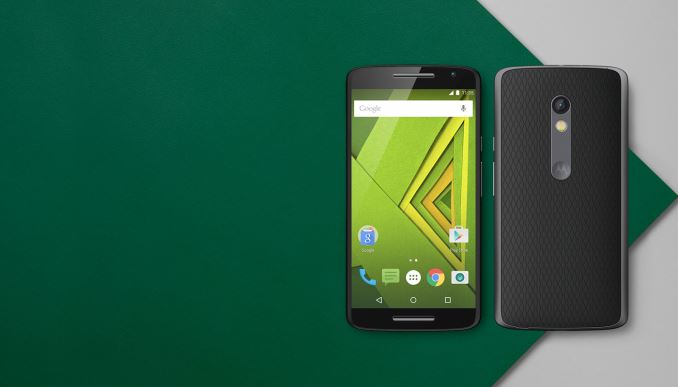
In a somewhat interesting twist, Motorola has announced a new version of the Moto X designed to slot in between the Moto X’s traditional flagship position and the Moto G’s mid-range position. As a result, this is probably the closest thing to a competitor to the OnePlus Two and similar phones in the 300-400 USD price range. To figure out what you gain or lose in the move from the high-end Moto X Style to the Moto X Play, I’ve placed the specs below to provide some perspective.

  Moto X Play Moto X Style
SoC Snapdragon 615 1.7 GHz A53 Snapdragon 808
1.8/1.44 GHz
Cortex A57/A53
RAM 2GB 3GB LPDDR3
NAND 16GB NAND + microSD 16/32/64GB NAND + microSD
Display 5.5” 1080p
LCD
5.7” 1440p
LCD
Network 2G / 3G / 4G LTE (Category 4 LTE) 2G / 3G / 4G LTE (Category 6 LTE)
Dimensions 148 x 75 x 8.9-10.9mm, 169g 153.9 x 76.2 x 6.1-11.06mm, 179g
Camera 21MP Rear Facing Camera
f/2.0
21MP Rear Facing w/ PDAF
f/2.0, 1.1 micron 1/2.4″ sensor
5MP Front Facing 5MP Front Facing w/ LED Flash
Battery 3630 mAh (13.79 Whr) 3000 mAh (11.4 Whr)
OS Android 5.1 (At Launch) Android 5.1 (At Launch)
Connectivity 2.4/5 GHz 802.11a/b/g/n +
BT 4.0,
USB2.0, GPS/GNSS, NFC
2×2 802.11a/b/g/n/ac +
BT 4.1,
USB2.0, GPS/GNSS, NFC
SIM NanoSIM NanoSIM

As one can see, the Moto X Play seems to fit somewhat squarely between the Moto G and Moto X Style. Rather than a Snapdragon 808 SoC or Snapdragon 410 SoC, the Moto X Play has a Snapdragon 615 SoC. However, due to the octa-core Cortex A53 CPU and Adreno 405 GPU the Snapdragon 615 SoC is arguably closer to an upgraded Snapdragon 410 rather than a detuned Snapdragon 808. There’s also less RAM at 2GB, but this shouldn’t have an enormous effect on the experience. The display is also smaller and lower in resolution at 5.5” and 1080p, respectively. However, the Moto X Play retains the 21MP camera with dual color temperature flash, but this seems to have a different module as there’s no mention of PDAF although the aperture is the same f/2.0. It is nice to see that the NLP and sensor hubs are shared across the two versions, although it isn’t clear whether there are using the same SoC. One major advantage of the Moto X Play over the Moto X Style is likely to be battery life, as the 3630 mAh battery is 21% larger. There’s also no dual stereo speaker system like the Moto X Style, which makes it a bit more like the Moto X (2nd gen) with its single front-ported speaker.

Overall, the Moto X Play seems to a reasonably cut down version of the Moto X Style, but the cuts are relatively even all around rather than any critical loss in a single area. Of course, it will take a review to see just exactly what was lost. The Moto X Play will go on sale in August, but it doesn’t seem like there are plans to bring this device to the US. Given the fierce competition in this segment with companies like OnePlus, it remains to be seen if this device will be a success.

Motorola Announces the Moto X Style

Motorola Announces the Moto X Style

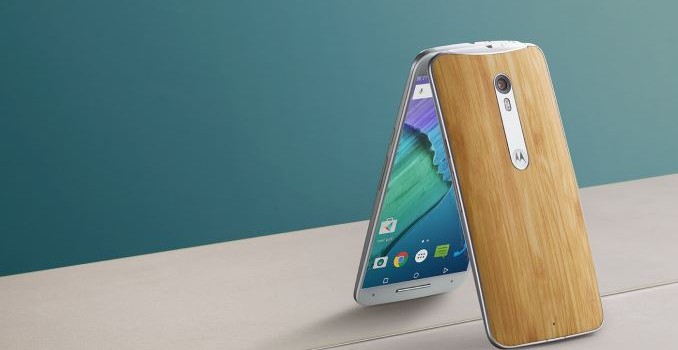
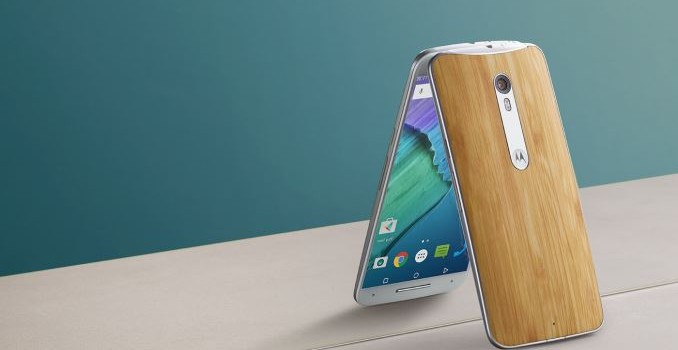
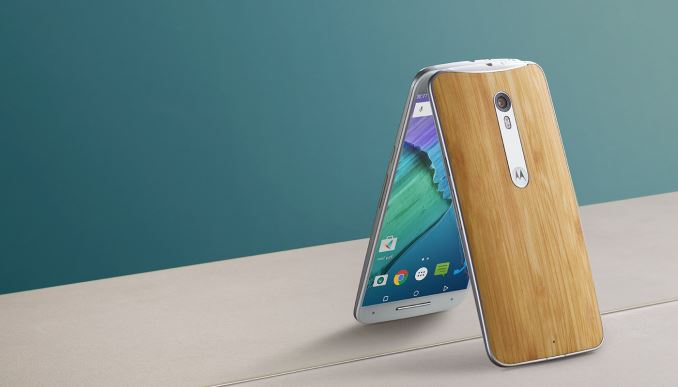
Today, Motorola also announced their new flagship phone, the Moto X Style. Following the trend of larger screen sizes, it seems Motorola has taken this trend to its logical conclusion by cramming a 5.7” display into the phone, which really places this squarely in the phablet space rather than smartphone space despite the 76% screen to body ratio. The design has also been refreshed for this year to distinguish this device from the previous Moto X if size wasn’t enough of a differentiator. As always, the spec table is below to provide perspective on the changes between each device.

  Moto X (2014) Moto X Style
SoC Snapdragon 801 2.5 GHz Snapdragon 808
1.8/1.44 GHz
Cortex A57/A53
RAM 2GB LPDDR3 3GB LPDDR3
NAND 16/32/64GB NAND 16/32/64GB NAND + microSD
Display 5.2” 1080p
SAMOLED
5.7” 1440p
IPS
Network 2G / 3G / 4G LTE (Category 4 LTE) 2G / 3G / 4G LTE (Category 6 LTE)
Dimensions 140.8 x 72.4 x 3.8-9.9mm, 144g 153.9 x 76.2 x 6.1-11.06mm, 179g
Camera 13MP Rear Facing (Sony IMX135)   f/2.33, 1.1 micron 1/3.06″ sensor 21MP Rear Facing w/ PDAF
f/2.0, 1.1 micron 1/2.4″ sensor
2.1MP Front Facing 5MP Front Facing w/ LED Flash
Battery 2300 mAh (8.74 Whr) 3000 mAh (11.4 Whr)
OS Android 4.4 (At Launch) Android 5.1 (At Launch)
Connectivity 1×1 802.11a/b/g/n/ac +
BT 4.0,
USB2.0, GPS/GNSS, NFC
2×2 802.11a/b/g/n/ac +
BT 4.1,
USB2.0, GPS/GNSS, NFC
SIM NanoSIM NanoSIM

Other than the display and the dimensions, one of the most obvious changes is really the camera. Motorola is really focusing on camera this year as a key point of differentiation, going as far as to proclaim that their camera is superior to the iPhone 6 and 6 Plus during their launch event. It seems that their first step to doing this is to equip the Moto X Style with a 21MP camera. Although not stated in the launch event, it isn’t a far leap to guess that this is either OmniVision’s OV21840 or Sony’s IMX230 as both are of similar spec.

At a high level, there are also significant changes to the SoC as we see a bump to Qualcomm’s Snapdragon 808 and a bump in RAM to 3GB to improve multitasking and memory management. It seems that Motorola’s NLP and sensor hub remain, although it isn’t disclosed whether this is still a TI solution for NLP and an STM sensor hub.

The display is also a major shift in Motorola’s component choices, as the 5.7” 1440p display is actually an LCD panel rather than AMOLED, which is what Motorola usually favors with their high-end smartphones. There are also dual front-facing stereo speakers mounted above and below the display, with the extra bezel for display drivers mounted directly below the top speaker to accommodate the on-screen buttons comfortably.

Overall, the Moto X Style is a significant departure from the Moto X (2014), which in turn was a major departure from the Moto X (2013). It remains to be seen whether Motorola’s bet on a phablet-sized phone will pay off, but it certainly could be a major competitor with phablets launching in the near future.

The Moto X Style will be available in September, and will be offered on Motomaker. A Pure Edition that works on all 4 US carriers will be offered for sale unlocked in the US as well. The standard colors will be white and black, with options for customization via Motomaker for leather, wood, and silicone finishes. The price will start 399.99 USD for the Pure Edition.

Motorola Announces the Moto X Style

Motorola Announces the Moto X Style

Today, Motorola also announced their new flagship phone, the Moto X Style. Following the trend of larger screen sizes, it seems Motorola has taken this trend to its logical conclusion by cramming a 5.7” display into the phone, which really places this squarely in the phablet space rather than smartphone space despite the 76% screen to body ratio. The design has also been refreshed for this year to distinguish this device from the previous Moto X if size wasn’t enough of a differentiator. As always, the spec table is below to provide perspective on the changes between each device.

  Moto X (2014) Moto X Style
SoC Snapdragon 801 2.5 GHz Snapdragon 808
1.8/1.44 GHz
Cortex A57/A53
RAM 2GB LPDDR3 3GB LPDDR3
NAND 16/32/64GB NAND 16/32/64GB NAND + microSD
Display 5.2” 1080p
SAMOLED
5.7” 1440p
IPS
Network 2G / 3G / 4G LTE (Category 4 LTE) 2G / 3G / 4G LTE (Category 6 LTE)
Dimensions 140.8 x 72.4 x 3.8-9.9mm, 144g 153.9 x 76.2 x 6.1-11.06mm, 179g
Camera 13MP Rear Facing (Sony IMX135)   f/2.33, 1.1 micron 1/3.06″ sensor 21MP Rear Facing w/ PDAF
f/2.0, 1.1 micron 1/2.4″ sensor
2.1MP Front Facing 5MP Front Facing w/ LED Flash
Battery 2300 mAh (8.74 Whr) 3000 mAh (11.4 Whr)
OS Android 4.4 (At Launch) Android 5.1 (At Launch)
Connectivity 1×1 802.11a/b/g/n/ac +
BT 4.0,
USB2.0, GPS/GNSS, NFC
2×2 802.11a/b/g/n/ac +
BT 4.1,
USB2.0, GPS/GNSS, NFC
SIM NanoSIM NanoSIM

Other than the display and the dimensions, one of the most obvious changes is really the camera. Motorola is really focusing on camera this year as a key point of differentiation, going as far as to proclaim that their camera is superior to the iPhone 6 and 6 Plus during their launch event. It seems that their first step to doing this is to equip the Moto X Style with a 21MP camera. Although not stated in the launch event, it isn’t a far leap to guess that this is either OmniVision’s OV21840 or Sony’s IMX230 as both are of similar spec.

At a high level, there are also significant changes to the SoC as we see a bump to Qualcomm’s Snapdragon 808 and a bump in RAM to 3GB to improve multitasking and memory management. It seems that Motorola’s NLP and sensor hub remain, although it isn’t disclosed whether this is still a TI solution for NLP and an STM sensor hub.

The display is also a major shift in Motorola’s component choices, as the 5.7” 1440p display is actually an LCD panel rather than AMOLED, which is what Motorola usually favors with their high-end smartphones. There are also dual front-facing stereo speakers mounted above and below the display, with the extra bezel for display drivers mounted directly below the top speaker to accommodate the on-screen buttons comfortably.

Overall, the Moto X Style is a significant departure from the Moto X (2014), which in turn was a major departure from the Moto X (2013). It remains to be seen whether Motorola’s bet on a phablet-sized phone will pay off, but it certainly could be a major competitor with phablets launching in the near future.

The Moto X Style will be available in September, and will be offered on Motomaker. A Pure Edition that works on all 4 US carriers will be offered for sale unlocked in the US as well. The standard colors will be white and black, with options for customization via Motomaker for leather, wood, and silicone finishes. The price will start 399.99 USD for the Pure Edition.