News


Microsoft Releases FY 2015 Q3 Financial Results
Microsoft Releases FY 2015 Q3 Financial Results

Yesterday (apologies for the delay I was in travel status when the results came out) Microsoft announced their Q3 results for fiscal year 2015, and revenue was up 6% year-over-year, coming in at $21.7 billion for this quarter. Gross margin for the quarter was $14.6 billion, or 67%. Operating income for the quarter was $6.6 billion, down 5% year-over-year, and earnings per share (EPS) was $0.61, down from $0.66 in Q3 2014.

Microsoft Q3 2015 Financial Results (GAAP)
  Q3’2015 Q2’2015 Q3’2014
Revenue (in Billions USD) $21.729 $26.470 $20.403
Operating Income (in Billions USD) $6.594 $7.776 $6.974
Gross Margin (in Billions USD) $14.568 $16.334 $14.425
Margins 67% 61.7% 70.7%
Basic Earnings per Share (in USD) $0.61 $0.71 $0.68

Normally Microsoft does not release Non-GAAP measures, but due to the strengthening of the US Dollar over the last year, Microsoft’s earnings were actually weaker than as compared to last year’s exchange rate, so they have provided a comparison to take that into effect. None of the numbers can be used as actual results, but are somewhat interesting to see just how much a global company based in the USA can be impacted negatively by a gain in their home currency. On revenue, the constant currency impact was $534 million, so the year-over-year gain would go from 6% to 9%. Gross margin had a $396 million impact, meaning the comparison to Q3 2014 would show a 4% gain rather than the 1% reported. Operating income was less impacted (my guess is that most of their expenses like salary are in the USA) but there was still an $87 million hit, and EPS took a $0.02 hit based on currency alone.

Some of the loss in operating income was due to the “restructuring” charges of $190 million in relation to the workforce cuts announced last year. This caused a $0.01 hit on earnings per share this quarter. There was also $7.5 billion returned to shareholders this quarter, up 83% over Q3 2014, and consisted of $5 billion in share repurchases and $2.5 billion in dividends. The next dividend payment will be $0.31 per share, payable to shareholders of record as of May 21st and to be paid out on June 11th.

Looking at the individual segments, Microsoft breaks their major divisions down to “Devices and Consumer” and “Commercial” and each segment is further broken down into different segments. These have evolved a bit over time as new products are added to the mix. Devices and Consumer is broken down into Licensing, Computing and Gaming Hardware, Phone Hardware, and Other. Commercial is Licensing and Other. Other includes the cloud computing revenue, so despite the odd name, it is fairly important to Microsoft’s future directions.

On the Devices and Consumer side, Licensing declined 24% year-over-year, with total revenue of $3.48 billion, and gross margin of $3.21 billion. Windows OEM revenue declined 22%, with Pro declining 19% and the Pro licensing returning to pre-Windows XP retirement levels. For those that do not follow this closely, Microsoft (and as a result most PC OEMs) had a surge in sales over the last year due to the end-of-life of XP. Businesses were upgrading at a strong rate which helped sales. Office Consumer revenue declined 41%. This is actually fairly normal, since the company is trying to drive people to Office 365, and the transition to Office 365 contributed to 27 points of the decline, with the remainder being attributed to a weakness in the Japanese PC market where Office has traditionally had a high attach rate. Windows Phone licensing revenue declined 16% due to a higher mix of low royalty devices. I am not sure what Windows Phone licensing entails anymore though since the OS itself was made free to use last year.

Computing and Gaming Hardware had a 4% drop in revenue, coming in at $1.8 billion. Gross margin was $410 million for this segment, which is up 60% (or 92% based on constant currency) and was driven primarily by Surface sales. For the quarter, Surface amounted to $713 million in revenue, which is up 44%, and the Surface 3 was announced which will not be on sale until Q4 (next month) and it opens up Surface with x86 up to different price points. Xbox revenue dropped 24%, and Microsoft has not been able to keep up the post launch numbers from last year. Surface Pro 3 drove the margin improvements.

On the Phone Hardware front, Microsoft sold 8.6 million Lumia smartphones this quarter, which is 18% more than Q3 2014. The Nokia acquisition included the feature phones as well, and Microsoft sold 24.7 million feature phones last quarter which is a market that continues to contract. Revenue for this segment was $1.4 billion, but gross margin was a $61 million loss which is attributed to the currency exchange rates.

Other, which includes online advertising, first party games, and Office 365 Consumer, had a 25% increase in revenue compared to Q3 2014, coming in at $2.2 billion. Gross margin was up 45% to $570 million. Online advertising revenue was up 21% due to higher search volume and revenue per search, and Bing market share in the USA is 20.1%, up 150 basis points. Office 365 Consumer continues its strong gains, with a sequential growth of 35%. Office 365 Consumer now has 12.4 million subscribers. First-Party Games revenue is up 49% driven by Minecraft, which Microsoft acquired last year.

Microsoft Q3 2015 Segment Overview (in Billions USD)
  Q3’2015 Q2’2015 Q3’2014
D&C Licensing Revenue $3.48 $4.17 $4.60
D&C Licensing Gross Margin $3.21 $3.88 $4.02
D&C Computing and Gaming Hardware Revenue $1.80 $4.00 $1.87
D&C Computing and Gaming Hardware Gross Margin $0.41 $0.46 $0.26
Phone Hardware Revenue $1.40 $2.28 N/A
Phone Hardware Gross Margin -$0.061 $0.33 N/A
D&C Other Revenue $2.28 $2.44 $1.82
D&C Other Gross Margin $0.57 $0.55 $0.39
Commercial Revenue $12.80 $13.27 $12.24
Commercial Gross Margin $10.42 $10.83 $9.91

On the Commercial segment, revenue was up 5% to $12.8 billion, and gross margin was up 5% to $10.42 billion. The Licensing segment had a revenue decrease of 3%, driven by Office Commercial revenue declining 16%. Windows volume licensing revenue declined 2%, and Server products had a revenue gain of 10%. The Other segment had a revenue gain of 45%, and Commercial Cloud saw another big gain, with revenue growing 106% and Cloud now has an annualized revenue of $6.3 billion. Customer use of Azure more than doubled in the last year. Microsoft has done a good job moving their services to the cloud, and many of their customers are choosing this route. Two out of three new Dynamics CRM customers have went with cloud deployment of the service.

Windows, the once dominant factor in Microsoft’s earnings, continues its decline, but Office has done well to transition to the cloud. Windows Phone is at yet another crossroads, and while sales did increase for the Lumia handsets, they still lag other smartphones by a wide margin. The commercial segments have continued to bring in very high margins, and help offset consumer.

Source: Microsoft Investor Relations
Microsoft Releases FY 2015 Q3 Financial Results

Microsoft Releases FY 2015 Q3 Financial Results

Yesterday (apologies for the delay I was in travel status when the results came out) Microsoft announced their Q3 results for fiscal year 2015, and revenue was up 6% year-over-year, coming in at $21.7 billion for this quarter. Gross margin for the quarter was $14.6 billion, or 67%. Operating income for the quarter was $6.6 billion, down 5% year-over-year, and earnings per share (EPS) was $0.61, down from $0.66 in Q3 2014.

Microsoft Q3 2015 Financial Results (GAAP)
  Q3’2015 Q2’2015 Q3’2014
Revenue (in Billions USD) $21.729 $26.470 $20.403
Operating Income (in Billions USD) $6.594 $7.776 $6.974
Gross Margin (in Billions USD) $14.568 $16.334 $14.425
Margins 67% 61.7% 70.7%
Basic Earnings per Share (in USD) $0.61 $0.71 $0.68

Normally Microsoft does not release Non-GAAP measures, but due to the strengthening of the US Dollar over the last year, Microsoft’s earnings were actually weaker than as compared to last year’s exchange rate, so they have provided a comparison to take that into effect. None of the numbers can be used as actual results, but are somewhat interesting to see just how much a global company based in the USA can be impacted negatively by a gain in their home currency. On revenue, the constant currency impact was $534 million, so the year-over-year gain would go from 6% to 9%. Gross margin had a $396 million impact, meaning the comparison to Q3 2014 would show a 4% gain rather than the 1% reported. Operating income was less impacted (my guess is that most of their expenses like salary are in the USA) but there was still an $87 million hit, and EPS took a $0.02 hit based on currency alone.

Some of the loss in operating income was due to the “restructuring” charges of $190 million in relation to the workforce cuts announced last year. This caused a $0.01 hit on earnings per share this quarter. There was also $7.5 billion returned to shareholders this quarter, up 83% over Q3 2014, and consisted of $5 billion in share repurchases and $2.5 billion in dividends. The next dividend payment will be $0.31 per share, payable to shareholders of record as of May 21st and to be paid out on June 11th.

Looking at the individual segments, Microsoft breaks their major divisions down to “Devices and Consumer” and “Commercial” and each segment is further broken down into different segments. These have evolved a bit over time as new products are added to the mix. Devices and Consumer is broken down into Licensing, Computing and Gaming Hardware, Phone Hardware, and Other. Commercial is Licensing and Other. Other includes the cloud computing revenue, so despite the odd name, it is fairly important to Microsoft’s future directions.

On the Devices and Consumer side, Licensing declined 24% year-over-year, with total revenue of $3.48 billion, and gross margin of $3.21 billion. Windows OEM revenue declined 22%, with Pro declining 19% and the Pro licensing returning to pre-Windows XP retirement levels. For those that do not follow this closely, Microsoft (and as a result most PC OEMs) had a surge in sales over the last year due to the end-of-life of XP. Businesses were upgrading at a strong rate which helped sales. Office Consumer revenue declined 41%. This is actually fairly normal, since the company is trying to drive people to Office 365, and the transition to Office 365 contributed to 27 points of the decline, with the remainder being attributed to a weakness in the Japanese PC market where Office has traditionally had a high attach rate. Windows Phone licensing revenue declined 16% due to a higher mix of low royalty devices. I am not sure what Windows Phone licensing entails anymore though since the OS itself was made free to use last year.

Computing and Gaming Hardware had a 4% drop in revenue, coming in at $1.8 billion. Gross margin was $410 million for this segment, which is up 60% (or 92% based on constant currency) and was driven primarily by Surface sales. For the quarter, Surface amounted to $713 million in revenue, which is up 44%, and the Surface 3 was announced which will not be on sale until Q4 (next month) and it opens up Surface with x86 up to different price points. Xbox revenue dropped 24%, and Microsoft has not been able to keep up the post launch numbers from last year. Surface Pro 3 drove the margin improvements.

On the Phone Hardware front, Microsoft sold 8.6 million Lumia smartphones this quarter, which is 18% more than Q3 2014. The Nokia acquisition included the feature phones as well, and Microsoft sold 24.7 million feature phones last quarter which is a market that continues to contract. Revenue for this segment was $1.4 billion, but gross margin was a $61 million loss which is attributed to the currency exchange rates.

Other, which includes online advertising, first party games, and Office 365 Consumer, had a 25% increase in revenue compared to Q3 2014, coming in at $2.2 billion. Gross margin was up 45% to $570 million. Online advertising revenue was up 21% due to higher search volume and revenue per search, and Bing market share in the USA is 20.1%, up 150 basis points. Office 365 Consumer continues its strong gains, with a sequential growth of 35%. Office 365 Consumer now has 12.4 million subscribers. First-Party Games revenue is up 49% driven by Minecraft, which Microsoft acquired last year.

Microsoft Q3 2015 Segment Overview (in Billions USD)
  Q3’2015 Q2’2015 Q3’2014
D&C Licensing Revenue $3.48 $4.17 $4.60
D&C Licensing Gross Margin $3.21 $3.88 $4.02
D&C Computing and Gaming Hardware Revenue $1.80 $4.00 $1.87
D&C Computing and Gaming Hardware Gross Margin $0.41 $0.46 $0.26
Phone Hardware Revenue $1.40 $2.28 N/A
Phone Hardware Gross Margin -$0.061 $0.33 N/A
D&C Other Revenue $2.28 $2.44 $1.82
D&C Other Gross Margin $0.57 $0.55 $0.39
Commercial Revenue $12.80 $13.27 $12.24
Commercial Gross Margin $10.42 $10.83 $9.91

On the Commercial segment, revenue was up 5% to $12.8 billion, and gross margin was up 5% to $10.42 billion. The Licensing segment had a revenue decrease of 3%, driven by Office Commercial revenue declining 16%. Windows volume licensing revenue declined 2%, and Server products had a revenue gain of 10%. The Other segment had a revenue gain of 45%, and Commercial Cloud saw another big gain, with revenue growing 106% and Cloud now has an annualized revenue of $6.3 billion. Customer use of Azure more than doubled in the last year. Microsoft has done a good job moving their services to the cloud, and many of their customers are choosing this route. Two out of three new Dynamics CRM customers have went with cloud deployment of the service.

Windows, the once dominant factor in Microsoft’s earnings, continues its decline, but Office has done well to transition to the cloud. Windows Phone is at yet another crossroads, and while sales did increase for the Lumia handsets, they still lag other smartphones by a wide margin. The commercial segments have continued to bring in very high margins, and help offset consumer.

Source: Microsoft Investor Relations
The Andyson Platinum R 1200W PSU Review

Back in the mid 2000s, a PSU company called Hiper used Andyson as its OEM. It has been a long while, mainly because Hiper shut down, that we have seen a high performance unit from Andyson hit the market. However now the PSU OEM is back with their own retail series and it seems like that they mean business with today’s 1200W Platinum unit.

Microsoft Health and Band Updates Bring New Cycling App Integrations, Insights and Features

Microsoft Health and Band Updates Bring New Cycling App Integrations, Insights and Features

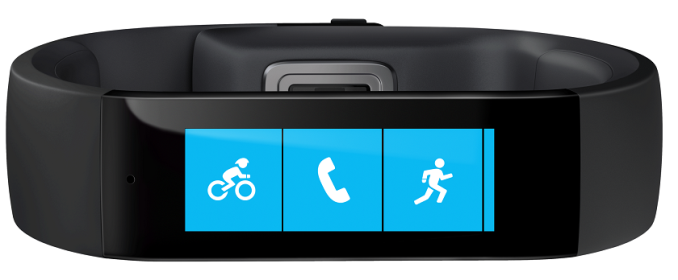
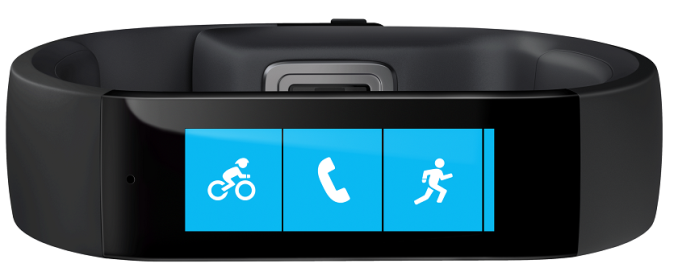
Today Microsoft launched a new update to their fitness wearable, Microsoft Band, and also to their health platform and smartphone app, Microsoft Health. These updates broaden the capabilities of features of each by integrating with third party apps and services, implementing new health insights (analysis), and enhancing the Microsoft Health app to now work stand-alone without a paired Microsoft Band.

The new update enhances the bike activity tile added in Feburary to now integrate with activity tracking apps Strava and MapMyRide. After this update is installed, the Strava and MapMyRide apps can harvest activity data from the Microsoft Band. Microsoft does not state if this data harvesting is continuous or a one time download after an activity is complete. Personally, I believe Strava integration is a huge boon to the Microsoft Band. In my experience, many members of the cycling community use Strava and cylcing computers to track their rides. My brother, an avid cyclist, has mentioned interest in the Microsoft Band, but without Strava integration he continued to rely on a cycling computer and a chest mounted heart rate monitor.

Microsoft’s cloud analytics platform, Microsoft Health, has also been updated to provide new “Insights” into the body and health of an individual. These new insights are available via the web dashboard starting April 27th and are listed below:

  • Comparative Insights: Measures data such as daily steps, sleep, workout frequency and calorie burn and compares it to similar Microsoft Health customers based on body type (height and weight). Customers looking for motivation can use comparative insights as a benchmark to understand their health relative to similar people.
  • Sleep Recovery: Good sleep is the foundation of health, and something everybody does and needs. Microsoft Band tracks the length and quality of sleep. Use the Microsoft Health web dashboard to analyze sleep restoration, sleep efficiency, and wake-ups, to find out how well the body restores its resources during sleep.
  • Fitness Benefit: Track fitness progress using historical data to measure improvement over time.
  • VO2 Max: VO2 max refers to the maximum volume of oxygen used during exercise, and is the primary indicator of cardiovascular fitness. Traditionally, measuring VO2 Max is cumbersome. Not anymore. Microsoft Band estimates VO2 max based on heart rate information. Now customers can track how their VO2 max increases as they improve fitness level and achieve their wellness goals, simply.
  • Run/Exercise Observations: Get more out of run and workout data with in-depth observations and insights. With a week of data, customers can determine which day of the week and at what time of day they perform best. Using historical data from as far back as five weeks, customers can track whether they’re maintaining, progressing, or need to re-dedicate themselves. Analyze detailed stats to find specific aspects of runs and workouts that can be improved.

Particularly interesting is the VO2 Max calculation. This analysis is traditionally performed by specialized equipment, typically as a paid service at a gym. Microsoft has always stated their cloud platform will provide innovative analysis, and if this Insight is close to the traditional VO2 Max measurement, then Microsoft has delivered. Additionally, I personally appreciate the historical and comparative analysis as it provides a great motivational tool.

Finally, Microsoft will update the Microsoft Health smartphone app on all platforms in the coming weeks to provide activity measurements directly, without use of a Microsoft Band. On the surface this is a surprising development, as it is in Microsoft’s best interest to sell hardware. However, upon further thought this makes sense. Microsoft can provide a limited set of analysis using the smartphone sensors, engage the user into Microsoft Health services and offer the Microsoft Band as an up sell for more complete activity tracking. Device support is limited to smartphones with a dedicated microcontroller co-processor for sensor data, which is most modern devices.

  • iOS: iPhone 5s and later
  • Android: Android 4.4+ with support for Step Counter API
  • Windows Phone: Lumia devices with Sensor Core V1+ and Cyan Firmware

Some of these updates are available today, such as the biking app integration, while others will roll out over the next few weeks.

NVIDIA’s SHIELD Console Becomes SHIELD Android TV

NVIDIA’s SHIELD Console Becomes SHIELD Android TV

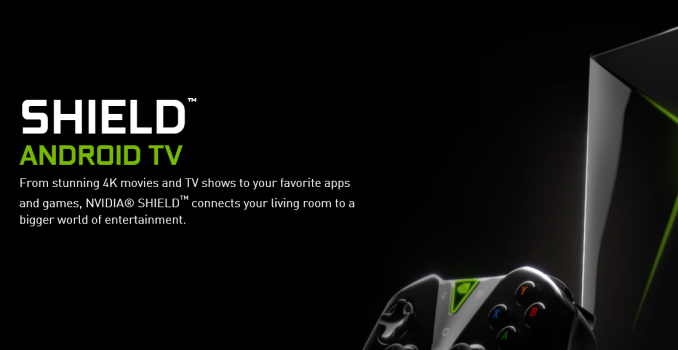
NVIDIA updated their SHIELD website today with a bit more information on the SHIELD Console. And while an earlier $299 device listing ended up being erroneous – NVIDIA accidentally listed the developer edition console for a time – there is…