News


Google Releases Android 5.1

Google Releases Android 5.1

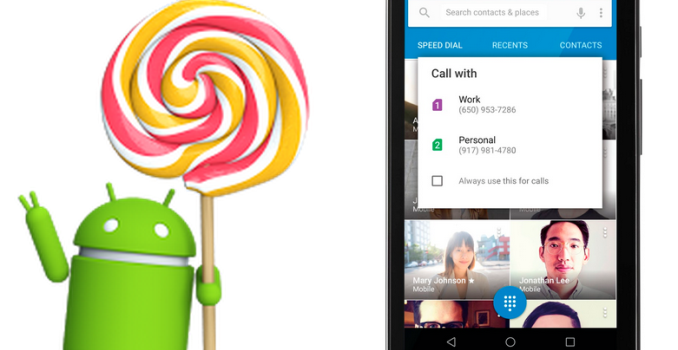
Today Google has announced the release of Android 5.1 Lollipop. The update is said to improve both performance and stability, as well as including a few new features.

The first feature is official support for multiple SIM cards. This feature is likely to appeal to Android users in emerging markets, and will definitely help Google’s Android One initiative. Another new feature is support for HD voice calls on compatible networks and devices, with both T-Mobile and Verizon supporting the feature on the Nexus 6. Google has also added the ability to join WiFi networks and pair Bluetooth devices right from the quick settings menu.

In addition to the above improvements, Android 5.1 has one more notable feature, it’s called Device Protection. Similar to Apple’s Activation Lock, Device Protection means that a device will remain locked until the owner signs in with their Google account. This lock persists even after a factory reset, which should hopefully make stealing Android smartphones a pointless endeavor for thieves. Police departments in some US cities reported significant reductions in iPhone theft after the release of Activation Lock, and it would be great to see the same thing happen with Android devices.

Android 5.1 Lollipop will be rolling out to Nexus and Google Play edition devices in the near future.

Apple Reveals Apple Watch Details And Availability

Apple Reveals Apple Watch Details And Availability

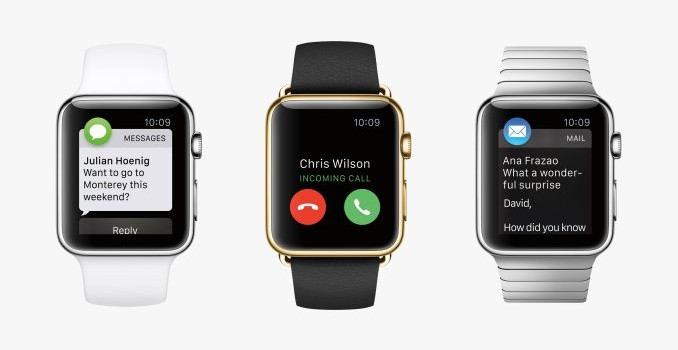
Apple’s Spring Forward event saw the launch of a new MacBook that greatly departs from the typical image of a notebook, the launch of iOS 8.2, and most importantly, the announcement of several details about the upcoming Apple Watch. Apple revealed the Apple Watch at their October event last year, but several things about it have remained a mystery until today. 

While Apple showed off some of the Apple Watch’s abilities at their earlier event, their demos from today went more in depth. Apple made note of the fact that the watch is accurate to within 50ms of UTC, which is probably a higher level of accuracy than most people will ever need, but it may increase appeal to those who value the accuracy of their watch. Apple also demonstrated its communication abilities, and showed how users can communicate using pictures drawn on the watch, voice dictated messages, audio recordings, and their heartbeat. 

The role of third party developers in expanding the abilities of Apple Watch was also highly emphasized. Apple demoed an app from CNN that reports headlines to users, and also made note of the availability of an Uber application.

There have also been several questions unrelated to the Apple Watch’s software and abilities. The biggest area of concern up until this point has been battery life. The battery capacity for wearable devices is almost always constrained due to the limited space available. There has been a great deal of speculation about whether or not the Apple Watch will last through an entire day, and whether it will need to be charged every night like a smartphone is. At the event, Apple revealed that the expected battery life for the Apple Watch will be somewhere in the realm of 18 hours. This means that it should last a user through the day, but that charging every night will be a necessity unless the watch has hardly been used.

Apple Watch Pricing
Pricing Apple Watch Sport Apple Watch Apple Watch Edition
38mm Low $349 $549 $10,000
38mm High $349 $1040 $17,000
42mm Low $399 $599 $12,000
42mm High $399 $1099 $15,000

The second big question was about pricing. Apple Watch is by far Apple’s most customizable product to date, and the number of combinations of bands and models and sizes is enormous. Because of this, Apple only provided price ranges for each model. At the October event the starting price for the Sport model was revealed to be $349, and this has not changed. That price is for the 38mm size, while the 42mm size bumps the price up to $399. The steel and sapphire Apple Watch will start at $549, and go all the way to $1099 for the most expensive model which is the 42mm body and the link bracelet. Finally, the Apple Watch Edition starts at $10,000, and goes up to $17,000 for the models with the red leather band and gold buckle. All of the bands are also available for purchase separately, and so users can outfit the Apple Watch Sport with a nicer band than the fluoroelastomer one it comes with. The pricing for the bands ranges from $50 to $500, and you can take a look at all of them on Apple’s website.

The final question is obviously about availability. The Apple Watch will be available for pre-order on April 10 in Australia, Canada, China, France, Germany, Hong Kong, Japan, the UK and the US.  Users can also make appointments at select Apple Stores to preview and try on the watch.

Apple Reveals Apple Watch Details And Availability

Apple Reveals Apple Watch Details And Availability

Apple’s Spring Forward event saw the launch of a new MacBook that greatly departs from the typical image of a notebook, the launch of iOS 8.2, and most importantly, the announcement of several details about the upcoming Apple Watch. Apple revealed the Apple Watch at their October event last year, but several things about it have remained a mystery until today. 

While Apple showed off some of the Apple Watch’s abilities at their earlier event, their demos from today went more in depth. Apple made note of the fact that the watch is accurate to within 50ms of UTC, which is probably a higher level of accuracy than most people will ever need, but it may increase appeal to those who value the accuracy of their watch. Apple also demonstrated its communication abilities, and showed how users can communicate using pictures drawn on the watch, voice dictated messages, audio recordings, and their heartbeat. 

The role of third party developers in expanding the abilities of Apple Watch was also highly emphasized. Apple demoed an app from CNN that reports headlines to users, and also made note of the availability of an Uber application.

There have also been several questions unrelated to the Apple Watch’s software and abilities. The biggest area of concern up until this point has been battery life. The battery capacity for wearable devices is almost always constrained due to the limited space available. There has been a great deal of speculation about whether or not the Apple Watch will last through an entire day, and whether it will need to be charged every night like a smartphone is. At the event, Apple revealed that the expected battery life for the Apple Watch will be somewhere in the realm of 18 hours. This means that it should last a user through the day, but that charging every night will be a necessity unless the watch has hardly been used.

Apple Watch Pricing
Pricing Apple Watch Sport Apple Watch Apple Watch Edition
38mm Low $349 $549 $10,000
38mm High $349 $1040 $17,000
42mm Low $399 $599 $12,000
42mm High $399 $1099 $15,000

The second big question was about pricing. Apple Watch is by far Apple’s most customizable product to date, and the number of combinations of bands and models and sizes is enormous. Because of this, Apple only provided price ranges for each model. At the October event the starting price for the Sport model was revealed to be $349, and this has not changed. That price is for the 38mm size, while the 42mm size bumps the price up to $399. The steel and sapphire Apple Watch will start at $549, and go all the way to $1099 for the most expensive model which is the 42mm body and the link bracelet. Finally, the Apple Watch Edition starts at $10,000, and goes up to $17,000 for the models with the red leather band and gold buckle. All of the bands are also available for purchase separately, and so users can outfit the Apple Watch Sport with a nicer band than the fluoroelastomer one it comes with. The pricing for the bands ranges from $50 to $500, and you can take a look at all of them on Apple’s website.

The final question is obviously about availability. The Apple Watch will be available for pre-order on April 10 in Australia, Canada, China, France, Germany, Hong Kong, Japan, the UK and the US.  Users can also make appointments at select Apple Stores to preview and try on the watch.

Apple Announces The New MacBook (2015)

Apple Announces The New MacBook (2015)

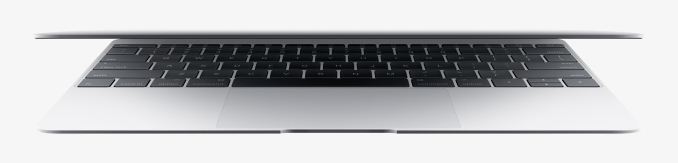
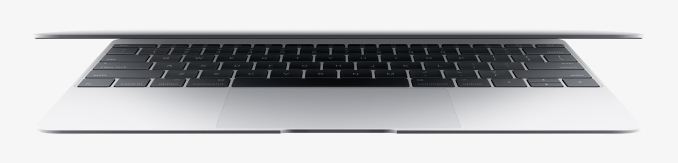
Today Apple announced a brand new MacBook laptop. This new laptop doesn’t fall under Apple’s existing MacBook Pro and MacBook Air categories, but is instead simply called the MacBook. In truth, this is actually more like the return of an old name that hasn’t been seen in some time, rather than the creation of a new product line. When the MacBook Air was introduced, consumers overwhelmingly chose it over the original MacBook line. It eventually absorbed that category of Apple’s laptops, while the Pro line remained for users who needed something with more processing power. 

  The New MacBook
Dimensions  28.05 x 19.65 x 0.35–1.31cm
Weight 920g
CPU Intel Core M-5Y70 or M-5Y71
L3 Cache 4MB
Base CPU Clock 1.1GHz or 1.2GHz
Max CPU Turbo 2.9GHz
GPU Intel HD Graphics 5300
System Memory 8GB 1600MHz LPDDR3
Storage 256GB or 512GB PCI-E SSD
Display 12″ 2304×1440 IPS LCD
Battery 39.7Wh
Ports 1 x USB Type-C, 3.5mm combo jack
Connectivity 2×2 802.11a/b/g/n/ac + BT 4.0
Price $1299 or $1599

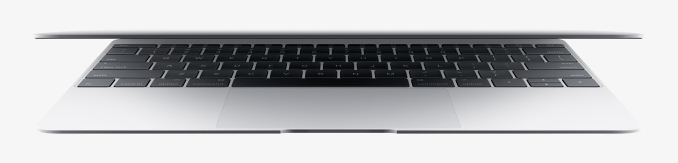
This new MacBook was recently rumored, and there have been many different reactions from Apple fans and tech press alike. It’s certainly a departure from even the existing MacBook Air, and in many ways it seems more fitting of the Air name than the current Air does. Apple’s goal was clearly to make something thin, light, and almost appliance like. They’ve certainly succeeded, but in order to get there the MacBook makes some big changes to what is currently thought of as a notebook.
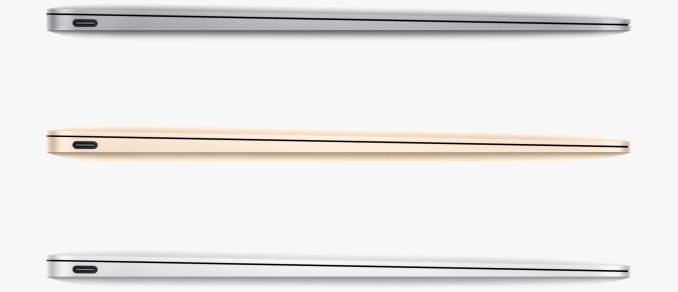
The biggest change is to physical connectivity. Macs currently come with a couple of USB ports, a couple of Thunderbolt 2 ports, a 3.5mm jack for audio, and some connector for power. The new MacBook goes in a completely different direction, ditching every single legacy port with the exception of the 3.5mm jack. Instead, the MacBook has a single USB Type-C port on the left side, and this port is the only method of connecting with other devices, as well as charging. It’s a huge departure from the current MacBooks and laptops in general, and only time will tell how well consumers respond to this change.

Apple’s pursuit of thinness also necessitated changes to the input devices when compared to other MacBooks. With a slimmer chassis comes less space for the key switches underneath the key caps. In order to make the keyboard on the new MacBook, Apple designed a new type of key switch which they are calling a Butterfly Switch. This new switch is 40% thinner than the scissor switches used on older MacBooks, and it eliminates the wobble that occurs when pressing on the edges of scissor switches. The trackpad has also been redesigned to use Apple’s Force Touch technology from the Apple Watch. which allows the user to press anywhere on the trackpad to click, and gives a haptic response to presses. It can also determine the force of a press to perform gestures or other actions. Both of these changes are interesting, but they do make large changes to the feel of the keyboard and trackpad. Key travel distance has certainly been reduced, and the new trackpad won’t have the clickiness of the old ones. It will be interesting to see how consumers react to these changes.

Apple’s other goal seems to have been making the new MacBook fanless. In order to do so, the new MacBook utilizes Intel’s new Core M processors. The starting configuration at $1299 uses Core M-5Y70 which has a base frequency of 1.1GHz and a turbo frequency of 2.9GHz. The 1.2GHz Core M-5Y71 is available in the $1599 model, and a 1.3GHz version is available as a build to order option on Apple’s online store. All models come with 8GB of LPDDR3 memory standard.
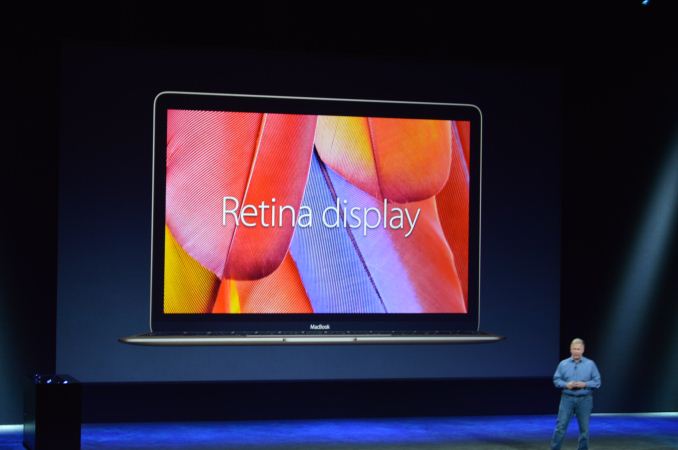
Like all of Apple’s recent products, the new MacBook comes with a Retina display. This is a 12″ 2304×1440 IPS display, which equates to 226 pixels per inch. While this new MacBook is not a MacBook Air, it’s good to see the thin and light laptop in Apple’s line finally moving both to a high resolution display as well as to an IPS panel. Assuming that Apple does the same 2x scaling that they’ve used in all of their other products, users will be given a desktop with the same area as a 1152×720 display which is actually slightly lower than the 11″ MacBook Air. Apple specifies that the scaled resolutions available are 1440×900, 1280×800, and 1024×600, although it remains to be seen how well Intel’s HD 5300 will keep up when rendering at 2880×1800 offscreen for the 1440×900 scaled mode.

This new MacBook reminds me a lot of the iPad. It has a port for charging and for interfacing with other devices via adapters, and a port for your headphones. Everything else is meant to be done wirelessly, and there’s certainly no room for user upgrades or repairs. It’s very much an appliance-like computer, and it’s something very different from any laptop Apple has ever done before. I naturally want to feel skeptical about it, but the MacBook Air was an equally dramatic shift from the norm when it was first introduced, and it eventually replaced the original MacBook line entirely. Whether or not the changes in the new MacBook become common among future laptops is up to consumers. If you want to be one of the first people to enter uncharted territory with this new MacBook, it’ll be available in just over a month, on April 10.

Apple Announces The New MacBook (2015)

Apple Announces The New MacBook (2015)

Today Apple announced a brand new MacBook laptop. This new laptop doesn’t fall under Apple’s existing MacBook Pro and MacBook Air categories, but is instead simply called the MacBook. In truth, this is actually more like the return of an old name that hasn’t been seen in some time, rather than the creation of a new product line. When the MacBook Air was introduced, consumers overwhelmingly chose it over the original MacBook line. It eventually absorbed that category of Apple’s laptops, while the Pro line remained for users who needed something with more processing power. 

  The New MacBook
Dimensions  28.05 x 19.65 x 0.35–1.31cm
Mass 920g
CPU Intel Core M-5Y70 or M-5Y71
L3 Cache 4MB
Base CPU Clock 1.1GHz or 1.2GHz
Max CPU Turbo 2.9GHz
GPU Intel HD Graphics 5300
System Memory 8GB 1600MHz LPDDR3
Storage 256GB or 512GB PCI-E SSD
Display 12″ 2304×1440 IPS LCD
Battery 39.7Wh
Ports 1 x USB Type-C, 3.5mm combo jack
Connectivity 2×2 802.11a/b/g/n/ac + BT 4.0
Price $1299 or $1599

This new MacBook was recently rumored, and there have been many different reactions from Apple fans and tech press alike. It’s certainly a departure from even the existing MacBook Air, and in many ways it seems more fitting of the Air name than the current Air does. Apple’s goal was clearly to make something thin, light, and almost appliance like. They’ve certainly succeeded, but in order to get there the MacBook makes some big changes to what is currently thought of as a notebook.

The biggest change is to physical connectivity. Macs currently come with a couple of USB ports, a couple of Thunderbolt 2 ports, a 3.5mm jack for audio, and some connector for power. The new MacBook goes in a completely different direction, ditching every single legacy port with the exception of the 3.5mm jack. Instead, the MacBook has a single USB Type-C port on the left side, and this port is the only method of connecting with other devices, as well as charging. It’s a huge departure from the current MacBooks and laptops in general, and only time will tell how well consumers respond to this change.

Apple’s pursuit of thinness also necessitated changes to the input devices when compared to other MacBooks. With a slimmer chassis comes less space for the key switches underneath the key caps. In order to make the keyboard on the new MacBook, Apple designed a new type of key switch which they are calling a Butterfly Switch. This new switch is 40% thinner than the scissor switches used on older MacBooks, and it eliminates the wobble that occurs when pressing on the edges of scissor switches. The trackpad has also been redesigned to use Apple’s Force Touch technology from the Apple Watch. which allows the user to press anywhere on the trackpad to click, and gives a haptic response to presses. It can also determine the force of a press to perform gestures or other actions. Both of these changes are interesting, but they do make large changes to the feel of the keyboard and trackpad. Key travel distance has certainly been reduced, and the new trackpad won’t have the clickiness of the old ones. It will be interesting to see how consumers react to these changes.

Apple’s other goal seems to have been making the new MacBook fanless. In order to do so, the new MacBook utilizes Intel’s new Core M processors. The starting configuration at $1299 uses Core M-5Y70 which has a base frequency of 1.1GHz and a turbo frequency of 2.9GHz. The 1.2GHz Core M-5Y71 is available in the $1599 model, and a 1.3GHz version is available as a build to order option on Apple’s online store. All models come with 8GB of LPDDR3 memory standard.

Like all of Apple’s recent products, the new MacBook comes with a Retina display. This is a 12″ 2304×1440 IPS display, which equates to 226 pixels per inch. While this new MacBook is not a MacBook Air, it’s good to see the thin and light laptop in Apple’s line finally moving both to a high resolution display as well as to an IPS panel. Assuming that Apple does the same 2x scaling that they’ve used in all of their other products, users will be given a desktop with the same area as a 1152×720 display which is actually slightly lower than the 11″ MacBook Air. Apple specifies that the scaled resolutions available are 1440×900, 1280×800, and 1024×600, although it remains to be seen how well Intel’s HD 5300 will keep up when rendering at 2880×1800 offscreen for the 1440×900 scaled mode.

This new MacBook reminds me a lot of the iPad. It has a port for charging and for interfacing with other devices via adapters, and a port for your headphones. Everything else is meant to be done wirelessly, and there’s certainly no room for user upgrades or repairs. It’s very much an appliance-like computer, and it’s something very different from any laptop Apple has ever done before. I naturally want to feel skeptical about it, but the MacBook Air was an equally dramatic shift from the norm when it was first introduced, and it eventually replaced the original MacBook line entirely. Whether or not the changes in the new MacBook become common among future laptops is up to consumers. If you want to be one of the first people to enter uncharted territory with this new MacBook, it’ll be available in just over a month, on April 10.