News


Western Digital Adds Helium-Filled WD Gold 10 TB HDD to Lineup
Western Digital Adds Helium-Filled WD Gold 10 TB HDD to Lineup

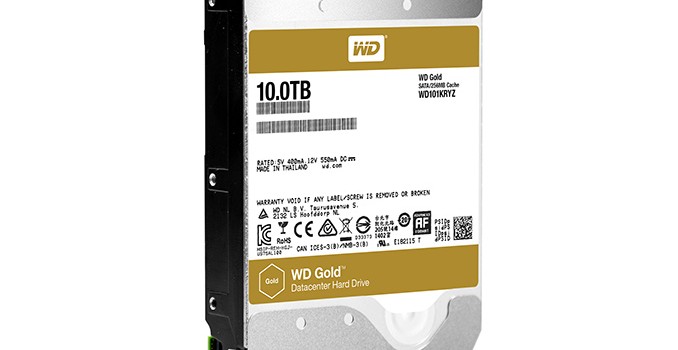
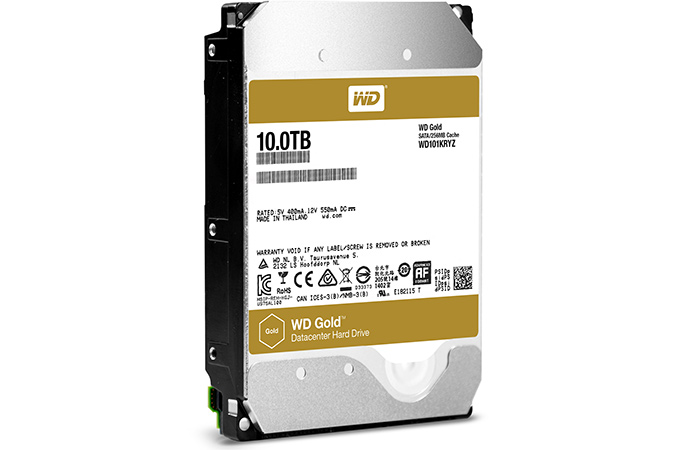
Western Digital has this week introduced its new 10TB datacenter-class helium-filled WD Gold hard drive. This drive, according to WD, boasts higher performance compared to its predecessor combined with lower power consumption. The new WD Gold 10 TB will be Western Digital’s flagship HDD for data-centers and will compete against hard drives of similar capacity from Seagate and HGST.

The WD Gold 10 TB drive (WD101KRYZ) shares the hermetically-sealed 3.5” platform with the WD Gold 8 TB, which was introduced earlier this year. The new drive is based on multiple PMR (perpendicular magnetic recording) platters, features a 7200 RPM spindle speed, a double-size 256 MB DRAM cache and is based on the SATA 6 Gbps interface (right now, WD does not offer Gold HDDs with SAS interface). Just like the other WD Gold HDDs, the new 10 TB model was designed for a variety of server applications, including small to medium-scale machines, as well as rack-mount data center servers and storage enclosures. The drive is promoted as being optimized for RAID environments and supports enhanced RAFF technology that protects against vibration (by monitoring linear and rotational vibration in real time) as well as head positioning system with two actuators, which increases positional accuracy. In addition, the WD Gold 10 TB also supports time-limited error recovery technology (TLER), which prevents drive fallout caused by extended HDD error recovery processes.

Comparison of Western Digital’s WD Gold HDDs
  WD101KRYZ WD8002FRYZ WD6002FRYZ WD4002FRYZ
Capacity 10 TB 8 TB 6 TB 4 TB
RPM 7200 RPM
Interface SATA 6 Gbps
DRAM Cache 256 MB 128 MB
NAND Cache Unknown No Yes Unknown
Helium-Filling Yes No
Data Transfer Rate (host to/from drive) 249 MB/s 205 MB/s 226 MB/s 201 MB/s
MTBF 2.5 million
Rated Workload (Drive Writes Per Day) 0.151 0.189 0.251 0.377
Equivalent of 550 TB of Writes per Year
Acoustics (Seek) 36 dBA
Power Consumption Sequential read 7.1 W 7.2 W 9.3 W 9 W
Sequential write 6.7 W 7 W 8.9 W 8.7 W
Random read/write 6.8 W 7.4 W 9.1 W 8.8 W
Idle 5 W 5.1 W 7.1 W 7 W
Warranty 5 Years
Price $847.99 $595.99 $406.99 $270.99
$0.084 per GB $0.074 per GB $0.067 per GB $0.067 per GB
11.79 GB per $ 13.42 GB per $ 14.74GB per $ 14.76 GB per $

The WD Gold 8 TB model released earlier this year already featured a number of performance and energy efficiency optimizations and the WD Gold 10 TB hard drive is designed to improve even further. The 10 TB drive offers a 249 MB/s sustained sequential transfer rate (up from 205 MB/s in the case of the 8 TB model). Moreover, maximum power consumption of the WD Gold 10 TB is 7.1 W (down from 7.4 W for the 8 TB model, and significantly less than 8.6 W consumed by HGST’s Ultrastar He10 around the same ballpark as the 6.8W operating power number for the HGST’s Ultrastar He10 SATA model). Western Digital does not reveal many details about how it managed to improve performance and energy efficiency, but it is logical to assume that increased areal density, an enlarged cache, and further tweaks of electronics are responsible. As for reliability, just like other WD Gold series HDDs, the new one is rated for 2.5 million hours MTBF and comes with a 550TB of writes per year rated workload, which at the rated write speed gives 100 minutes of full sequential writes per day.

Western Digital’s Gold 10 TB hard drives are currently available at select U.S. distributors, resellers and will shortly be sold in the company’s online store. The HDD costs $847.99 when bought from CDW.

Seagate Re-Enters Enterprise SATA SSD Market with Nytro XF1230

Seagate Re-Enters Enterprise SATA SSD Market with Nytro XF1230

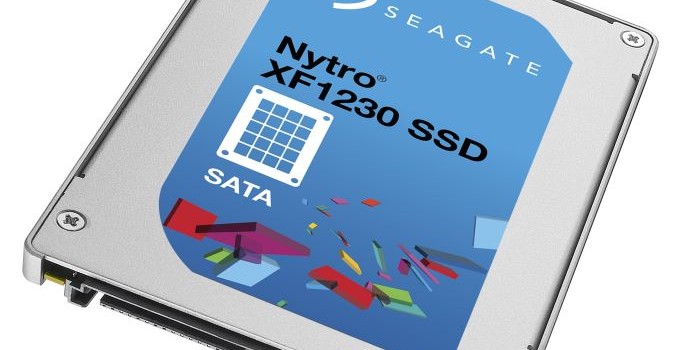
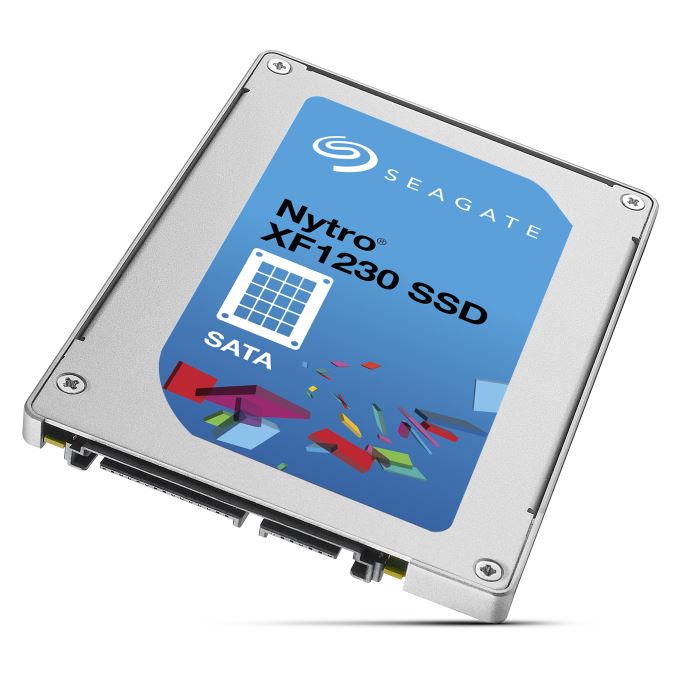
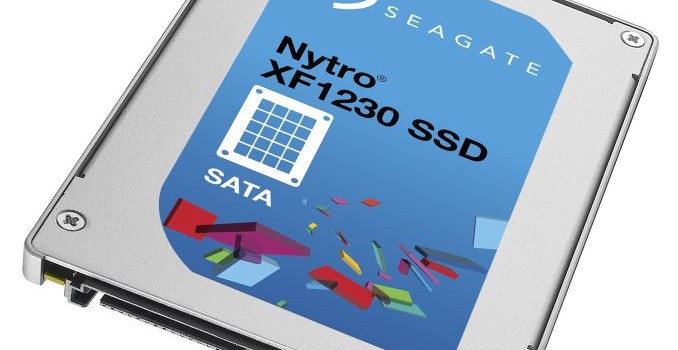
It’s hard for any new SATA SSD to be big news. Aside from instances where new NAND flash enables higher capacities or a big price drop, almost everything we see is an incremental improvement where performance in particular doesn’t increase much from one generation to the next. The new Seagate Nytro XF1230 enterprise SATA SSD is notable not for its technical specifications, but for who’s selling it. Seagate has been absent from the SATA SSD market for quite a while since the 600 and 600 Pro SSDs were discontinued, but now they’re getting back in the game.

The Seagate Nytro XF1230 is intended for use with read-intensive workloads but its use of eMLC NAND flash also gives it decent write performance and endurance. Seagate isn’t disclosing who their partners are for the NAND or the SSD controller, but the combination of Micron NAND and Marvell controllers has been working well for Seagate lately in the PCIe space.

Seagate Nytro XF1230 Series Specifications
Capacity 240GB 480GB 960GB 1920GB
Form Factors 2.5″ 7mm
Controller unspecified
NAND unspecified eMLC
Seq Read 560 MB/s
Seq Write 290 MB/s 500 MB/s 460 MB/s 430 MB/s
4K Rand Read (QD32) 98K IOPS
4K Rand Write (QD32) 8K IOPS 15K IOPS 16K IOPS 17K IOPS
Max Power 2.9W 3.9W 4.7W 4.8W
Endurance 0.5 DWPD 0.6 DWPD 0.67 DWPD 0.67 DWPD
Warranty Five Years

The drive writes per day ratings are about twice the usual for read-oriented SSDs, which broadens its scope of appeal slightly. The steady-state random write performance is not record-breaking but is reasonable for this kind of product. As with virtually all enterprise SSDs, the XF1230 includes full power loss protection, but encryption support is not advertised.

The Seagate Nytro XF1230 is in mass production now and is sampling to Seagate partners.

Seagate Re-Enters Enterprise SATA SSD Market with Nytro XF1230

Seagate Re-Enters Enterprise SATA SSD Market with Nytro XF1230

It’s hard for any new SATA SSD to be big news. Aside from instances where new NAND flash enables higher capacities or a big price drop, almost everything we see is an incremental improvement where performance in particular doesn’t increase much from one generation to the next. The new Seagate Nytro XF1230 enterprise SATA SSD is notable not for its technical specifications, but for who’s selling it. Seagate has been absent from the SATA SSD market for quite a while since the 600 and 600 Pro SSDs were discontinued, but now they’re getting back in the game.

The Seagate Nytro XF1230 is intended for use with read-intensive workloads but its use of eMLC NAND flash also gives it decent write performance and endurance. Seagate isn’t disclosing who their partners are for the NAND or the SSD controller, but the combination of Micron NAND and Marvell controllers has been working well for Seagate lately in the PCIe space.

Seagate Nytro XF1230 Series Specifications
Capacity 240GB 480GB 960GB 1920GB
Form Factors 2.5″ 7mm
Controller unspecified
NAND unspecified eMLC
Seq Read 560 MB/s
Seq Write 290 MB/s 500 MB/s 460 MB/s 430 MB/s
4K Rand Read (QD32) 98K IOPS
4K Rand Write (QD32) 8K IOPS 15K IOPS 16K IOPS 17K IOPS
Max Power 2.9W 3.9W 4.7W 4.8W
Endurance 0.5 DWPD 0.6 DWPD 0.67 DWPD 0.67 DWPD
Warranty Five Years

The drive writes per day ratings are about twice the usual for read-oriented SSDs, which broadens its scope of appeal slightly. The steady-state random write performance is not record-breaking but is reasonable for this kind of product. As with virtually all enterprise SSDs, the XF1230 includes full power loss protection, but encryption support is not advertised.

The Seagate Nytro XF1230 is in mass production now and is sampling to Seagate partners.

Toshiba Announces New BGA SSDs Using 3D TLC NAND

Toshiba Announces New BGA SSDs Using 3D TLC NAND

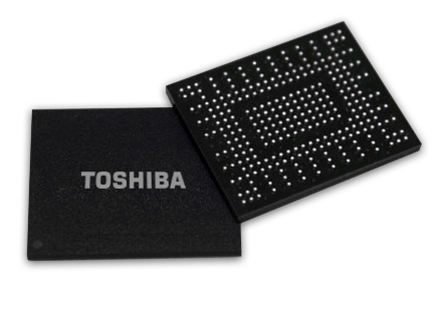
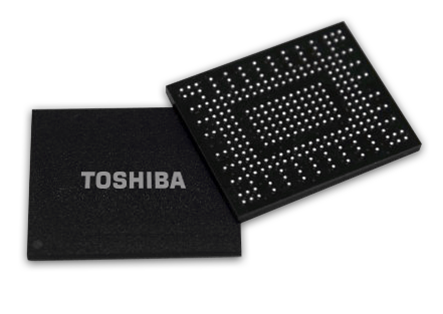
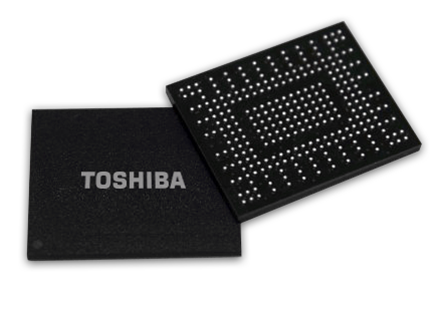
Toshiba has announced a new generation of BG series single-chip SSDs, with a newer controller and expanded capacity options thanks to the adoption of 3D NAND. The BG series is Toshiba’s SSD solution for tablets and ultrabooks that need a smaller form factor than a M.2 2280 module but higher performance and capacity than eMMC solutions.

Toshiba’s BG1 series was first previewed at CES 2015. That first generation uses a PCIe 2 x2 link and implements the NVMe 1.1a protocol. The BG1 is available in capacities of 128GB and 256GB either as a 16mm by 20mm BGA package integrating both the SSD controller and NAND flash, or as M.2 2230 removable modules.

The new BG series switches from planar MLC NAND to Toshiba’s BiCS 3D TLC NAND. The higher per-die capacity allows for the addition of a 512GB model and makes the package slightly thinner. The new SSD controller has been upgraded to operate at PCIe 3 speeds though still with only two lanes. It also now supports NVMe 1.2 including the optional Host Memory Buffer (HMB) feature. We’ve previously seen HMB implemented by a Marvell controller that also targets low-end NVMe applications.

Toshiba has shared some details about how they plan to make use of HMB and what its impact on performance will be. The BG series uses a DRAM-less SSD controller architecture, but HMB allows the controller to make use of some of the host system’s DRAM. The BG series will use host memory to implement a read cache of the drive’s NAND mapping tables. This is expected to primarily benefit random access speeds, where a DRAM-less controller would otherwise have to constantly fetch data from flash in order to determine where to direct pending read and write operations. Looking up some of the NAND mapping information from the buffer in the host’s DRAM—even with the added latency of fetching it over PCIe—is quicker than performing an extra read from the flash.

Toshiba hasn’t provided full performance specs for the new BG series SSDs, but they did supply some benchmark data illustrating the benefit of using HMB. Using only 37MB of host DRAM and testing access speed to a 16GB portion of the SSD, Toshiba measured improvement ranging from 30% for QD1 random reads up to 115% improvement for QD32 random writes.

Performance improvement from enabling HMB
  QD1 QD32
Random Read 30% 65%
Random Write 70% 115%

While it looks like HMB can do a lot to alleviate the worst performance problems of DRAM-less SSD controllers, the caveat is that it requires support from the operating system’s NVMe driver. HMB is still an obscure optional feature of NVMe and is not yet supported out of the box by any major operating system, and Toshiba isn’t currently planning to provide their own NVMe drivers for OEMs to bundle with systems using BG series SSDs. Thus, it is likely that the first generation of systems that adopt the new BG series SSDs will not be able to take full advantage of their capabilities.

Carried over from the previous BG1 series are support for TCG Pyrite and the option of full TCG Opal encryption support. The 16mm by 20mm BGA package is still only 1 gram for the highest capacity, and the maximum thickness is reduced from 1.65mm to 1.60mm. Power consumption may have increased slightly, with the new BG series SSDs drawing up to 2.8W when active compared to a specification of 2.2W typical for the BG1.

The new BG series SSDs are currently sampling to select OEMs, and will be in full mass production by the end of the year.

Toshiba Announces New BGA SSDs Using 3D TLC NAND

Toshiba Announces New BGA SSDs Using 3D TLC NAND

Toshiba has announced a new generation of BG series single-chip SSDs, with a newer controller and expanded capacity options thanks to the adoption of 3D NAND. The BG series is Toshiba’s SSD solution for tablets and ultrabooks that need a smaller form factor than a M.2 2280 module but higher performance and capacity than eMMC solutions.

Toshiba’s BG1 series was first previewed at CES 2015. That first generation uses a PCIe 2 x2 link and implements the NVMe 1.1a protocol. The BG1 is available in capacities of 128GB and 256GB either as a 16mm by 20mm BGA package integrating both the SSD controller and NAND flash, or as M.2 2230 removable modules.

The new BG series switches from planar MLC NAND to Toshiba’s BiCS 3D TLC NAND. The higher per-die capacity allows for the addition of a 512GB model and makes the package slightly thinner. The new SSD controller has been upgraded to operate at PCIe 3 speeds though still with only two lanes. It also now supports NVMe 1.2 including the optional Host Memory Buffer (HMB) feature. We’ve previously seen HMB implemented by a Marvell controller that also targets low-end NVMe applications.

Toshiba has shared some details about how they plan to make use of HMB and what its impact on performance will be. The BG series uses a DRAM-less SSD controller architecture, but HMB allows the controller to make use of some of the host system’s DRAM. The BG series will use host memory to implement a read cache of the drive’s NAND mapping tables. This is expected to primarily benefit random access speeds, where a DRAM-less controller would otherwise have to constantly fetch data from flash in order to determine where to direct pending read and write operations. Looking up some of the NAND mapping information from the buffer in the host’s DRAM—even with the added latency of fetching it over PCIe—is quicker than performing an extra read from the flash.

Toshiba hasn’t provided full performance specs for the new BG series SSDs, but they did supply some benchmark data illustrating the benefit of using HMB. Using only 37MB of host DRAM and testing access speed to a 16GB portion of the SSD, Toshiba measured improvement ranging from 30% for QD1 random reads up to 115% improvement for QD32 random writes.

Performance improvement from enabling HMB
  QD1 QD32
Random Read 30% 65%
Random Write 70% 115%

While it looks like HMB can do a lot to alleviate the worst performance problems of DRAM-less SSD controllers, the caveat is that it requires support from the operating system’s NVMe driver. HMB is still an obscure optional feature of NVMe and is not yet supported out of the box by any major operating system, and Toshiba isn’t currently planning to provide their own NVMe drivers for OEMs to bundle with systems using BG series SSDs. Thus, it is likely that the first generation of systems that adopt the new BG series SSDs will not be able to take full advantage of their capabilities.

Carried over from the previous BG1 series are support for TCG Pyrite and the option of full TCG Opal encryption support. The 16mm by 20mm BGA package is still only 1 gram for the highest capacity, and the maximum thickness is reduced from 1.65mm to 1.60mm. Power consumption may have increased slightly, with the new BG series SSDs drawing up to 2.8W when active compared to a specification of 2.2W typical for the BG1.

The new BG series SSDs are currently sampling to select OEMs, and will be in full mass production by the end of the year.