
News


Patriot Adds Two Dual-Channel DDR4-3733 Memory Kits into Lineup
Patriot Adds Two Dual-Channel DDR4-3733 Memory Kits into Lineup

Patriot this week unveiled two new DDR4 kits rated to run at DDR4-3733. The dual-channel kits are designed for Intel’s latest platforms and belong to Patriot’s Viper Elite and Viper 4 families. The new DDR4-3733 memory modules will be the fastest in Patriot’s lineup.

Patriot’s new Viper Elite and Viper 4 dual-channel memory kits are rated to run at 3733 MT/s with CL17 19-19-39 timings at 1.35 V. The sets consist of two 8 GB modules, which use modern 8 Gb memory ICs (integrated circuits) from an undisclosed manufacturer. The new modules are designed for Intel’s 100-series platforms and come with XMP 2.0 profiles to make it easier for end-users to run them at their rated specifications with the right timings and voltage.

Specifications of Patriot’s DDR4-3733 Kits
  Module Capacity Kit
Capacity
Latencies Voltage Height Part Number
Viper Elite 8 GB 16 GB 17-19-19-39 1.35 V 43.0 mm PVE416G373C7KRD
Viper 4 42.6 mm PV416G373C7K

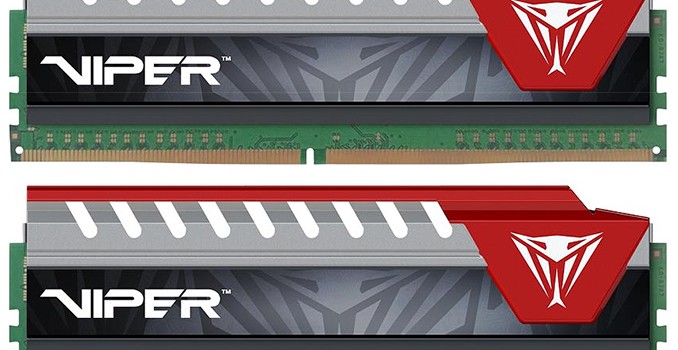
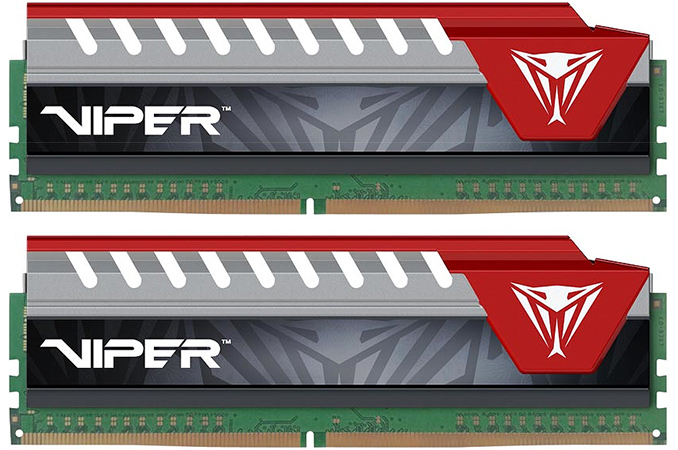
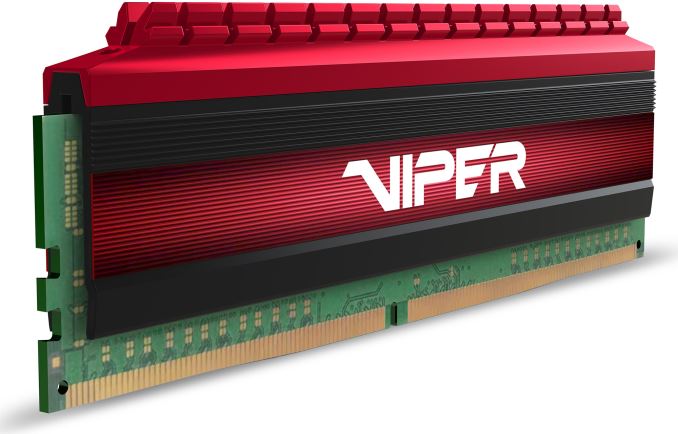
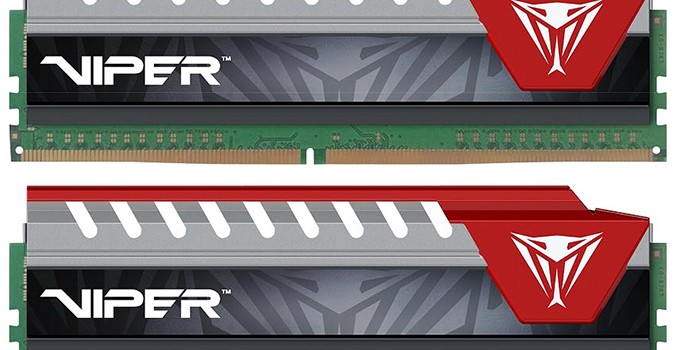
The difference between the Viper Elite and the Viper 4 modules in all in the look. Typically, Patriot positions its Viper Elite products below the Viper 4, and aims them at modders. These modules come with heatsinks of three different colors (red, blue and grey). The Viper 4 family typically focuses on the faster segments and features red extruded aluminum heatsinks. Nonetheless, in this particular case both the Viper Elite DDR4-3733 devices also come only with silver and red heatsinks. Therefore, the difference between two types of DDR4-3733 solutions from Patriot lies only in aesthetics and dimensions.

Patriot’s Viper 4 and Viper Elite 16 GB (2 x 8GB) DDR4-3733 dual-channel memory kits will be available for purchase online and in stores starting from August 3 for the recommended price of $159.99.
Only a few memory module makers offer DDR4 sticks rated to run above 3400 MT/s speeds because it requires sufficient binning, as well as an appropriate volume of sales to make it worthwhile. It gets rather tricky to cherry pick a sufficient amount of such ICs to build appropriate products. The fact that Patriot rolled out two DDR4-3733 kits indicates that the company is willing to compete for very high-end systems featuring fast memory as well as showing the ability of mass-produced DDR4 chips to run at higher frequencies.
Patriot Adds Two Dual-Channel DDR4-3733 Memory Kits into Lineup

Patriot Adds Two Dual-Channel DDR4-3733 Memory Kits into Lineup

Patriot this week unveiled two new DDR4 kits rated to run at DDR4-3733. The dual-channel kits are designed for Intel’s latest platforms and belong to Patriot’s Viper Elite and Viper 4 families. The new DDR4-3733 memory modules will be the fastest in Patriot’s lineup.

Patriot’s new Viper Elite and Viper 4 dual-channel memory kits are rated to run at 3733 MT/s with CL17 19-19-39 timings at 1.35 V. The sets consist of two 8 GB modules, which use modern 8 Gb memory ICs (integrated circuits) from an undisclosed manufacturer. The new modules are designed for Intel’s 100-series platforms and come with XMP 2.0 profiles to make it easier for end-users to run them at their rated specifications with the right timings and voltage.

Specifications of Patriot’s DDR4-3733 Kits
  Module Capacity Kit
Capacity
Latencies Voltage Height Part Number
Viper Elite 8 GB 16 GB 17-19-19-39 1.35 V 43.0 mm PVE416G373C7KRD
Viper 4 42.6 mm PV416G373C7K

The difference between the Viper Elite and the Viper 4 modules in all in the look. Typically, Patriot positions its Viper Elite products below the Viper 4, and aims them at modders. These modules come with heatsinks of three different colors (red, blue and grey). The Viper 4 family typically focuses on the faster segments and features red extruded aluminum heatsinks. Nonetheless, in this particular case both the Viper Elite DDR4-3733 devices also come only with silver and red heatsinks. Therefore, the difference between two types of DDR4-3733 solutions from Patriot lies only in aesthetics and dimensions.

Patriot’s Viper 4 and Viper Elite 16 GB (2 x 8GB) DDR4-3733 dual-channel memory kits will be available for purchase online and in stores starting from August 3 for the recommended price of $159.99.

Only a few memory module makers offer DDR4 sticks rated to run above 3400 MT/s speeds because it requires sufficient binning, as well as an appropriate volume of sales to make it worthwhile. It gets rather tricky to cherry pick a sufficient amount of such ICs to build appropriate products. The fact that Patriot rolled out two DDR4-3733 kits indicates that the company is willing to compete for very high-end systems featuring fast memory as well as showing the ability of mass-produced DDR4 chips to run at higher frequencies.

AMD Releases Radeon Software Crimson Edition 16.7.3

AMD Releases Radeon Software Crimson Edition 16.7.3

AMD’s Radeon Technologies Group has released another driver update with a healthy list of fixes. On the list today are fixes for CrossFire, flickering in both rendering and the display, and some general stability and bugs. Along with fixes we also see a hefty performance bump in Tomb Raider on AMD’s latest Radeon RX 480.

​Radeon Software Crimson Edition 16.7.3 brings us up to driver version 16.30.2311, which indicates that this is likely a new driver branch for AMD. Accordingly, despite the deceptive Radeon Software version number, this release contains a relatively large number of performance improvements and bug fixes.

First up, AMD has provided more fixes for Crossfire users. These include a fix for Overwatch crashing in some RX 480 configurations while using Crossfire, and some flickering in both Rise of the Tomb Raider and Need for Speed. A number of flicker fixes have also been made, including a fix for DiRT Rally for terrain flickering when advanced blending is enabled, and some general flickering issues when launching/exiting games on an RX 480 + Freesync display setup.

The rendering fixes are not over yet though. A graphical corruption issue with Hitman in DX12 mode has been fixed, as has texture corruption with Total War: Warhammer on a Radeon R9 380. An occasional shadow rendering issue when using DOTA 2 with the Vulkan API has been fixed as well, as has a texture issue with Doom in OpenGL mode on an Eyefinity display setup..

To wind up the list of fixes this time around, AMD has also fixed some bugs in their control panel. This includes an issue where Vulkan information in Radeon Settings could display an incorrect version number, and a bug where Radeon Wattman could retain settings of an overclock even after it had failed.

For performance improvements we get to see a 10% improvement in performance for Rise of the Tomb Raider on the Radeon RX 480. According to AMD’s notes, this test was done on a system running an Intel i7-5960X at 1080p, resulting in the score climbing from 78.73 to 86.53. Of course, a grain of salt should be served with benchmarks from a vendor. On the other hand, 10% is far enough beyond margin of error that many configurations, at least those running an RX 480, should see at least some noticeable benefit.

As always, those interested in reading more or installing the updated hotfix drivers for AMD’s desktop, mobile, and integrated GPUs can find them either under the driver update section in Radeon Settings or on AMDs Radeon Software Crimson Edition download page.

AMD Releases Radeon Software Crimson Edition 16.7.3

AMD Releases Radeon Software Crimson Edition 16.7.3

AMD’s Radeon Technologies Group has released another driver update with a healthy list of fixes. On the list today are fixes for CrossFire, flickering in both rendering and the display, and some general stability and bugs. Along with fixes we also see a hefty performance bump in Tomb Raider on AMD’s latest Radeon RX 480.

​Radeon Software Crimson Edition 16.7.3 brings us up to driver version 16.30.2311, which indicates that this is likely a new driver branch for AMD. Accordingly, despite the deceptive Radeon Software version number, this release contains a relatively large number of performance improvements and bug fixes.

First up, AMD has provided more fixes for Crossfire users. These include a fix for Overwatch crashing in some RX 480 configurations while using Crossfire, and some flickering in both Rise of the Tomb Raider and Need for Speed. A number of flicker fixes have also been made, including a fix for DiRT Rally for terrain flickering when advanced blending is enabled, and some general flickering issues when launching/exiting games on an RX 480 + Freesync display setup.

The rendering fixes are not over yet though. A graphical corruption issue with Hitman in DX12 mode has been fixed, as has texture corruption with Total War: Warhammer on a Radeon R9 380. An occasional shadow rendering issue when using DOTA 2 with the Vulkan API has been fixed as well, as has a texture issue with Doom in OpenGL mode on an Eyefinity display setup..

To wind up the list of fixes this time around, AMD has also fixed some bugs in their control panel. This includes an issue where Vulkan information in Radeon Settings could display an incorrect version number, and a bug where Radeon Wattman could retain settings of an overclock even after it had failed.

For performance improvements we get to see a 10% improvement in performance for Rise of the Tomb Raider on the Radeon RX 480. According to AMD’s notes, this test was done on a system running an Intel i7-5960X at 1080p, resulting in the score climbing from 78.73 to 86.53. Of course, a grain of salt should be served with benchmarks from a vendor. On the other hand, 10% is far enough beyond margin of error that many configurations, at least those running an RX 480, should see at least some noticeable benefit.

As always, those interested in reading more or installing the updated hotfix drivers for AMD’s desktop, mobile, and integrated GPUs can find them either under the driver update section in Radeon Settings or on AMDs Radeon Software Crimson Edition download page.