
News


Samsung Begins Mass Production of PM971: Tiny BGA SSDs with 1500 MB/s Read Speed
Samsung Begins Mass Production of PM971: Tiny BGA SSDs with 1500 MB/s Read Speed

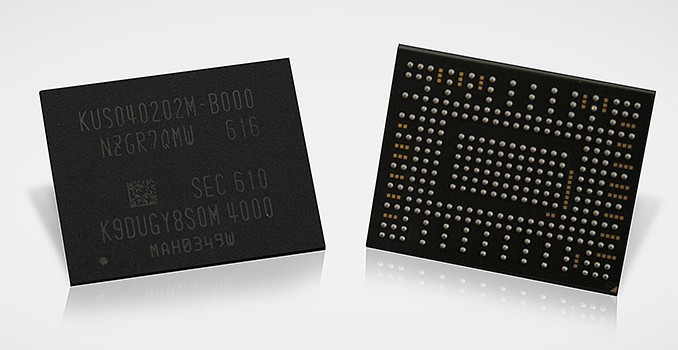
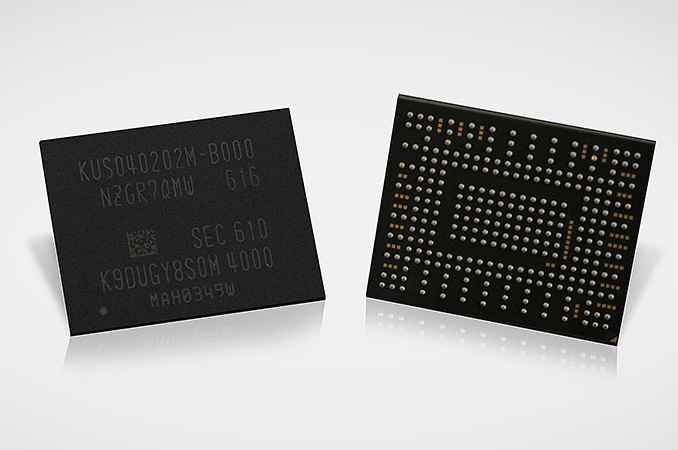
Samsung this week said that it had begun mass production of its first SSDs in BGA form-factor. The PM971-NVMe tiny drive weighs about one gram, can store up to 512 GB of data and offers up to 1500 MB/s read speed. The SSDs will be used inside 2-in-1 hybrid computers, high-end tablets as well as ultra-thin notebooks later this year.

Samsung demonstrated its first BGA SSD earlier in 2016 and most of its specifications are generally known. The PM971 is based on up to 16 Samsung’s second-generation 48-layer MLC V-NAND. The SSD relies on Samsung’s proprietary controller called Photon, which can extract high performance from a limited number of NAND channels and ICs thanks to architecture as well as the company’s proprietary TurboWrite technology. The PM971-NVMe SSD is equipped with a 512 MB LPDDR4 buffer, uses a PCIe 3.0 x2 interface and supports NVMe.

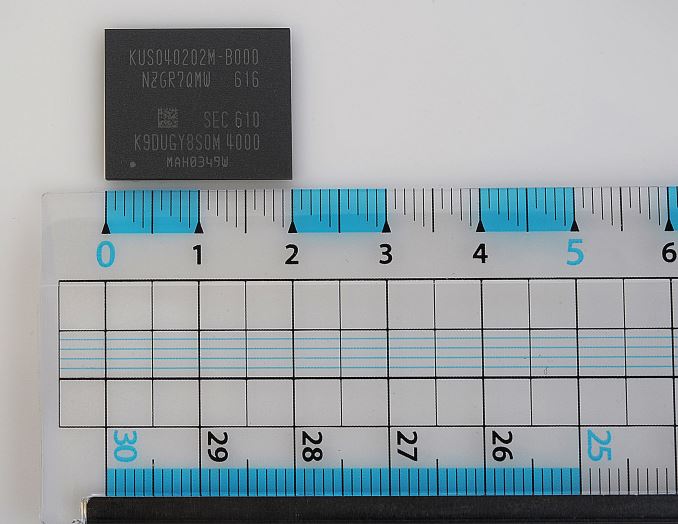
Samsung will ship three versions of its PM971-NVMe BGA SSDs with 128 GB, 256 GB, and 512 GB capacities, which will be enough for modern convertibles, tablets and ultra-thin laptops. Dimensions of the PM971-NVMe are 20 mm × 16 mm × 1.5 mm and the weight is just about a gram. Judging by the physical sizes of the package, it seems that the new PM971-NVMe BGA SSDs from Samsung comply with mechanical specifications for BGA SSDs proposed by multiple companies to JEDEC last year. In any case, the key message here is that Samsung’s BGA SSDs are significantly smaller than the smallest M.2 modules and can thus save space inside SFF PCs to make them either thinner, or prolong their battery life.

Brief Specifications of Samsung BGA SSDs
  PM971-NVMe
Capacity 128 GB
256 GB
512 GB
Form Factor BGA
20 mm × 16 mm × 1.5 mm
Controller Samsung Photon
Interface PCIe 3.0 x2
Protocol NVMe
DRAM 512 MB
NAND Samsung’s 48-layer MLC V-NAND
Sequential Read 1500 MB/s
Sequential Write 900 MB/s with TurboWrite
4KB Random Read (QD32) 190K IOPS
4KB Random Write (QD32) 150K IOPS

The PM971-NVMe SSD supports sequential read speed of up to 1500 MB/s as well as sequential write speed of up to 900 MB/s when the TurboWrite technology is enabled (earlier this year the company mentioned 600 MB/s write speed, but did not mention the TurboWrite). Samsung’s TurboWrite technology uses a portion of SSD’s NAND memory in pseudo-SLC mode, which significantly improves writing performance of the drive. Typically, Samsung uses its TurboWrite for its TLC NAND-based drives, which makes the PM971-NVMe the company’s first MLC-based SSD with a pseudo-SLC buffer. At this point we are not sure how exactly Samsung’s TurboWrite works in the PM971-NVMe and whether it speeds up or optimizes anything else apart from writing performance (since it is actually easier to read from SLC cells, the pSLC buffer can also help to improve read performance and even reduce power consumption). As for random performance, the PM971-NVMe SSD can perform 190K random read IOPS as well as up to 150K random write IOPS, according to Samsung.
Since the PM971-NVMe BGA SSDs are not designed for end-users, but for large PC suppliers as well as their OEMs/ODMs, Samsung does not disclose their prices. Right now, the company says that the it would start providing the new SSDs to its customers “this month”, which is not really relevant because the announcement was made on May 31. However, keep in mind that memory companies usually do not announce mass production until they have quantities of finished products ready to deliver to customers. Therefore, the PM971-NVMe drives may show up in actual devices sooner than one might think.

Samsung Begins Mass Production of PM971: Tiny BGA SSDs with 1500 MB/s Read Speed

Samsung Begins Mass Production of PM971: Tiny BGA SSDs with 1500 MB/s Read Speed

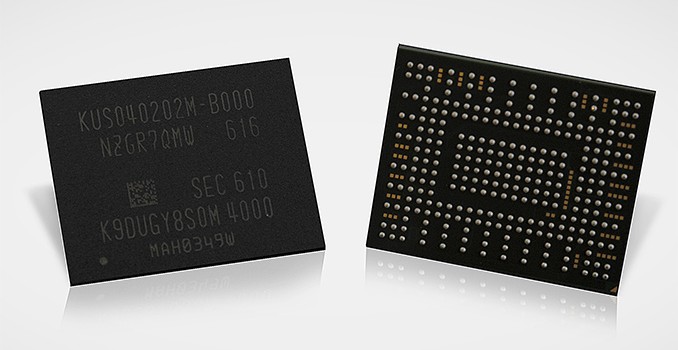
Samsung this week said that it had begun mass production of its first SSDs in BGA form-factor. The PM971-NVMe tiny drive weighs about one gram, can store up to 512 GB of data and offers up to 1500 MB/s read speed. The SSDs will be used inside 2-in-1 hybrid computers, high-end tablets as well as ultra-thin notebooks later this year.

Samsung demonstrated its first BGA SSD earlier in 2016 and most of its specifications are generally known. The PM971 is based on up to 16 Samsung’s second-generation 48-layer MLC V-NAND. The SSD relies on Samsung’s proprietary controller called Photon, which can extract high performance from a limited number of NAND channels and ICs thanks to architecture as well as the company’s proprietary TurboWrite technology. The PM971-NVMe SSD is equipped with a 512 MB LPDDR4 buffer, uses a PCIe 3.0 x2 interface and supports NVMe.

Samsung will ship three versions of its PM971-NVMe BGA SSDs with 128 GB, 256 GB, and 512 GB capacities, which will be enough for modern convertibles, tablets and ultra-thin laptops. Dimensions of the PM971-NVMe are 20 mm × 16 mm × 1.5 mm and the weight is just about a gram. Judging by the physical sizes of the package, it seems that the new PM971-NVMe BGA SSDs from Samsung comply with mechanical specifications for BGA SSDs proposed by multiple companies to JEDEC last year. In any case, the key message here is that Samsung’s BGA SSDs are significantly smaller than the smallest M.2 modules and can thus save space inside SFF PCs to make them either thinner, or prolong their battery life.

Brief Specifications of Samsung BGA SSDs
  PM971-NVMe
Capacity 128 GB
256 GB
512 GB
Form Factor BGA
20 mm × 16 mm × 1.5 mm
Controller Samsung Photon
Interface PCIe 3.0 x2
Protocol NVMe
DRAM 512 MB
NAND Samsung’s 48-layer MLC V-NAND
Sequential Read 1500 MB/s
Sequential Write 900 MB/s with TurboWrite
4KB Random Read (QD32) 190K IOPS
4KB Random Write (QD32) 150K IOPS

The PM971-NVMe SSD supports sequential read speed of up to 1500 MB/s as well as sequential write speed of up to 900 MB/s when the TurboWrite technology is enabled (earlier this year the company mentioned 600 MB/s write speed, but did not mention the TurboWrite). Samsung’s TurboWrite technology uses a portion of SSD’s NAND memory in pseudo-SLC mode, which significantly improves writing performance of the drive. Typically, Samsung uses its TurboWrite for its TLC NAND-based drives, which makes the PM971-NVMe the company’s first MLC-based SSD with a pseudo-SLC buffer. At this point we are not sure how exactly Samsung’s TurboWrite works in the PM971-NVMe and whether it speeds up or optimizes anything else apart from writing performance (since it is actually easier to read from SLC cells, the pSLC buffer can also help to improve read performance and even reduce power consumption). As for random performance, the PM971-NVMe SSD can perform 190K random read IOPS as well as up to 150K random write IOPS, according to Samsung.

Since the PM971-NVMe BGA SSDs are not designed for end-users, but for large PC suppliers as well as their OEMs/ODMs, Samsung does not disclose their prices. Right now, the company says that the it would start providing the new SSDs to its customers “this month”, which is not really relevant because the announcement was made on May 31. However, keep in mind that memory companies usually do not announce mass production until they have quantities of finished products ready to deliver to customers. Therefore, the PM971-NVMe drives may show up in actual devices sooner than one might think.
The 9.7″ iPad Pro Review

In late 2015 Apple launched a tablet that they called the iPad Pro. It had been rumored for quite some time, and it had a number of features that differentiated it from other iPads. The most notable was its 12.9″ display, which has a width equal to the height of Apple’s 9.7″ iPads, allowing it to use two essentially full sized iPad applications at the same time in a split screen view. In addition to its massive display, the iPad Pro came with two accessories that had not existed for any prior iPad. It seemed that in Apple’s eyes the Apple Pencil and the Smart Keyboard really defined what made the iPad Pro worthy of the “Pro” name. Now Apple has launched a second iPad Pro to fill in the ten inch tablet market. Read on for the full review of the 9.7″ iPad Pro.

The 9.7″ iPad Pro Review

In late 2015 Apple launched a tablet that they called the iPad Pro. It had been rumored for quite some time, and it had a number of features that differentiated it from other iPads. The most notable was its 12.9″ display, which has a width equal to the height of Apple’s 9.7″ iPads, allowing it to use two essentially full sized iPad applications at the same time in a split screen view. In addition to its massive display, the iPad Pro came with two accessories that had not existed for any prior iPad. It seemed that in Apple’s eyes the Apple Pencil and the Smart Keyboard really defined what made the iPad Pro worthy of the “Pro” name. Now Apple has launched a second iPad Pro to fill in the ten inch tablet market. Read on for the full review of the 9.7″ iPad Pro.

Qualcomm Announces Snapdragon Wear 1100 SoC For Wearables

Qualcomm Announces Snapdragon Wear 1100 SoC For Wearables

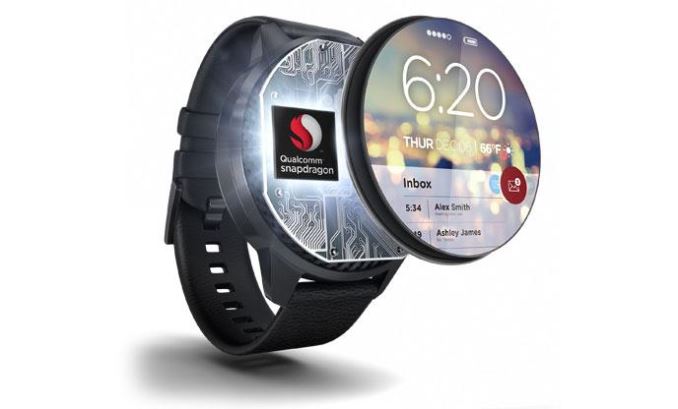
Qualcomm introduced the Snapdragon Wear 1100 SoC today at Computex 2016. Intended for wearable devices, such as fitness trackers, smart headsets, and connected watches for children, it features a single ARM Cortex-A7 CPU running at up to 1.2GHz and a fixed-function GPU for rendering simple 2D user interfaces. It’s interesting that Qualcomm chose to stick with the A7 rather than use its replacement: the Cortex-A35. According to ARM, the A35 uses 10% less power while boosting performance between 6-40% at the same frequency and on the same process. This could simply be a matter of timing or just Qualcomm’s familiarity with the A7.

The Snapdragon Wear 1100 is a compliment to the Snapdragon Wear 2100 SoC that Qualcomm announced back in February 2016, and is meant to run lean, Linux-based operating systems instead of Android or Android Wear, which require the performance of the 2100 to deliver richer, more graphical experiences like those in typical smartwatches.

The Snapdragon Wear 1100 integrates a Category 1 LTE modem that supports LTE FDD, LTE TDD, TD-SCDMA, and GSM networks with global frequency band support for keeping devices connected independent of a companion device such as a smartphone. Customers can also choose to incorporate Wi-Fi and Bluetooth connectivity options. Another feature crucial for safety monitoring applications that use geo-fencing is the inclusion of Qualcomm’s iZat Gen 8C location engine that supports the GPS, GLONASS, Galileo, and BeiDou positioning satellite networks. Location accuracy and speed are improved by augmenting GNSS with Wi-Fi and cellular networks.

Qualcomm Snapdragon Wear SoCs
  Snapdragon Wear 1100 Snapdragon Wear 2100
SoC Cortex-A7 @ 1.2GHz (256KB L2)
fixed-function GPU
4x Cortex-A7 @ 1.2GHz
Adreno 304 (OpenGL ES 3.0)
Process Node 28nm LP 28nm LP
RAM LPDDR2 LPDDR3-800 MT/s
Display Simple 2D UI Up to 640×480 @ 60fps
Modem Qualcomm (Integrated)
2G / 3G / 4G LTE (Category 1 10/5 Mbps)
Qualcomm X5 (Integrated)
2G / 3G / 4G LTE (Category 4 150/50 Mbps)
Connected version only
Connectivity 802.11b/g/n/ac, BT 4.1 LE, GPS/GLONASS/Galileo/BeiDou
(Wi-Fi and BT optional)
802.11b/g/n (2.4GHz), BT 4.1 LE, NFC, GPS/GLONASS/Galileo/BeiDou, USB 2.0
Connected and Tethered versions

The Snapdragon Wear 1100’s package size is 79mm², including the modem, RF transceiver, and PMIC, and is manufactured on a 28nm LP process. Also included in the package is a low-power sensor hub and a hardware cryptographic engine, features that further reduce power consumption. When paired with a 350mAh battery, Qualcomm claims the Snapdragon Wear 1100 allows for up to 7-days of LTE standby.

Wearables featuring the higher-performing Snapdragon Wear 2100 SoC should be available in the second half of 2016, while the Snapdragon Wear 1100 is available to ODMs starting today.