
News


LeEco Announces New Le 2, Le 2 Pro, and LeMax 2

LeEco Announces New Le 2, Le 2 Pro, and LeMax 2

Today in Beijing we had the opportunity to attend LeEco’s presentation event announcing their new flagship smartphone devices. LeEco has been a company we haven’t had the chance to cover to date, yet the company is making a lot of noise and positioning itself against its competition in the smartphone space and beyond. Today’s event was a 3 hour pandemonium where among other things we saw the launch of a new smart-TV as well as Le’s first public demonstration of their electric car.

But getting to the topic at hand, LeEco has been making a concerted push into the smartphone space. And today they are updating their smartphone lineup with a trio of devices all appropriately suffixed as 2. These are the Le 2, the Le 2 Pro, and the LeMax 2.

LeEco Le 2, Le 2 Pro & LeMax 2
  Le 2 Le 2 Pro Le Max 2
SoC Helio X20
2x A72 @ 2.3GHz
4x A53 @ 2.0GHz
4x A53 @ 1.4GHz

Mali T880MP4 @ 780MHz

Helio X25
2x A72 @ 2.5GHz
4x A53 @ 2.0GHz
4x A53 @ 1.4GHz

Mali T880MP4 @ 850MHz

Snapdragon 820
2x Kryo @ 1.59GHz
2x Kryo @ 2.15GHz

Adreno 530 @
625MHz

RAM 3GB LPDDR3-1866 4GB LPDDR3-1866 4/6GB LPDDR4-3733
NAND 32GB eMMC 5.1 NAND 32/64GB UFS 2.0
Display 5.5″ 1080p LCD 5.7” 1440p LCD
Modem 2G/3G/4G LTE Cat 6
(Integrated MediaTek SoC Modem)
2G/3G/4G LTE Cat 12
(Integrated Snapdragon X12 Modem)
Dimensions 151.1 (h) x 74.2 (w) x 7.5 (d) mm
153g
156.8 (h) x 77.6 (w) x 7.99 (d) mm
185g
Camera Rear Camera
16MP 
w/ PDAF
Rear Camera
21MP IMX230 
w/ PDAF
Rear Camera
21MP IMX230 
w/ PDAF & OIS
Front Facing Camera
8MP 1.4µm pixels
Battery 3000mAh 3100mAh
Launch OS Android 6.0 w/ EUI 5.8
Connectivity 802.11a/b/g/n/ac 2.4 & 5GHz
BT 4.2, GPS/GNSS
USB-C
no 3.5mm headphone jack
SIM Size NanoSIM + NanoSIM
Launch MSRP RMB ¥1099
(USD~170, ~150€)
RMB ¥1499
(USD~230, ~205€)
4GB + 32GB
RMB ¥2099

(USD~325, ~285€)

6GB + 64GB
RMB ¥2499

(USD~385, ~340€)

Starting at the flagship level, we have the LeMax 2. Based around Qualcomm’s popular Snapdragon 820, the 5.7” phablet’s spec sheet reads very similar to some of the other flagship phones we’ve seen launched this year. LeEco is pairing the 820 with 32 or 64GB of UFS 2.0 NAND, and as a first for any Android smartphone, up to 6GB of LPDDR4 RAM. To have the first 6GB phone show up here is admittedly unexpected, but given the prevalence of 3GB/4GB configurations elsewhere, it was only a matter of time until someone used higher capacity chips to get to 6GB.

Shifting gears, the display for the phone is a 1440p LCD, which will put it in competition with the likes of the Samsung Galaxy Note5 and S7 series, and the LG G5. The display subjectively looked good with high brightness and good viewing angles. Otherwise for image capture purposes, LeEco has outfitted the phone with a 21MP OIS-capable rear camera, utilizing Sony’s IMX230 sensor. As has been the case for a number of phones this generation, there is a sizable camera hump here to house the camera while keeping the rest of the phone relatively thin. Meanwhile front facing camera duties are handled by a 8MP camera with 1.4µm pixel pitch on the sensor.

Rounding out the package, LeEco is equipping the phone with a 3100mAh battery, and while we’re still working to get the precise battery voltage, at typical voltages we’d be looking at around a total capacity of 11.9WHr. Of course you’ll also find a full suite of wireless connectivity options enabled through the Snapdragon 820, including Qualcomm’s integrated X12 LTE modem, and dual-band 802.11a/b/g/n/ac support.
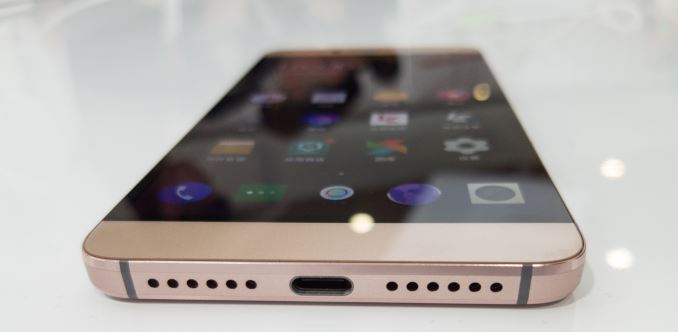
But perhaps the most notable aspect of this phone will be the I/O connectivity.  That LeEco is using the increasingly common USB Type-C port is, if anything, to be expected. However what’s unexpected is that this is the only port; a 3.5mm audio jack is not present. Instead the company is piping out audio over the USB port and including a USB Type-C to 3.5mm audio adapter to maintain compatibility with standard headsets. Underlying the USB audio connection in turn is a brand-new technology LeEco is calling CDLA (Continual Digital Lossless Audio).

At this point it’s not entirely clear why LeEco went this route; the phone seems to be thick enough to accommodate the 3.5mm jack, so whether this was done for the purposes of giving the space to another feature (e.g. larger speakers) remains to be seen. What the company does claim though is that the audio quality through the CDLA headphones is vastly superior to the 3.5mm analog counterpart, and admittedly at first glance this claim is hard to buy into. I wasn’t able to verify this and also unfortunately the devices come with no bundled stock headphones, making this a quite niche accessory.

LeEco will be offering two configurations of the LeMax 2. The 32GB NAND + 4GB RAM configuration will sell for ¥2099, or roughly $325. Otherwise the more spacious 64GB NAND + 6GB RAM configuration will sell for ¥2499 (~$385).


Le 2 (left) vs Le 2 Pro (right)

Below the LeMax 2 are the duo of Le 2 series phone, the Le 2 Pro and the simply named Le 2. Both of these phones share the same basic chassis and screen, incorporating a 1080p LCD in a 5.5” phablet form factor. The design is also the same as the LeMax 2 so except for the smaller camera bump on the basic Le 2 you wouldn’t be able to tell the difference between the Le 2 Pro and the LeMax 2. The difference, as you might expect from the name, comes from the feature set and price.

Starting with the Le 2 Pro, this phone is based around MediaTek’s Helio X25 SoC, which offers 3 clusters of ARM Cortex CPUs – 2 A53 quad core clusters at different performance/power levels, and a dual core A72 cluster. The X25 in turn is paired with 4GB of LPDDR3 and 32GB of eMMC 5.1 NAND. Also setting it apart from its more basic counterpart is the rear camera module, which like the LeMax 2 is a 21MP camera utilizing Sony’s IMX230 sensor. However OIS doesn’t seem to be available in this somewhat smaller phone.
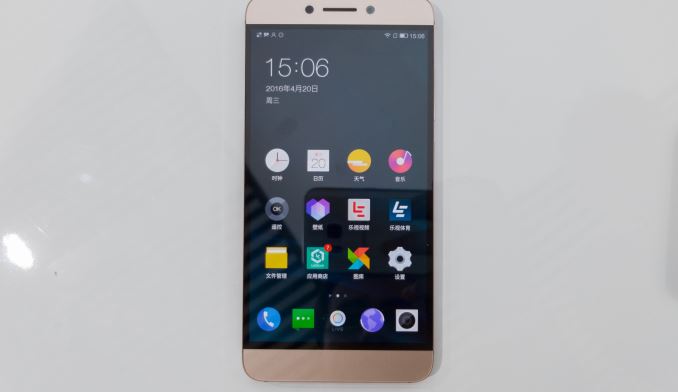
As for the basic Le 2, this sees LeEco dropping down to the lower performance Helio X20 SoC, which cuts down on both the A72 cluster and GPU clockspeeds. The Le 2 gets a smaller 3GB of LPDDR3 RAM and the same 32GB of eMMC 5.1 NAND, however the camera module is a simpler 16MP camera utilizing a hereto-unknown sensor.

Otherwise both phones share identical specifications as far as all other features are concerned. The Helio SoC offers its own integrated Category 6 LTE modem, and both phones incorporate a 8MP front facing camera. And since both phones share the same chassis, both phones also come equipped with a 3000mAh battery. Finally, for I/O and connectivity both phones share the larger LeMax 2’s configuration: dual-band WiFi + Bluetooth 4.2 for wireless data, and the sole USB Type-C port for data and audio.
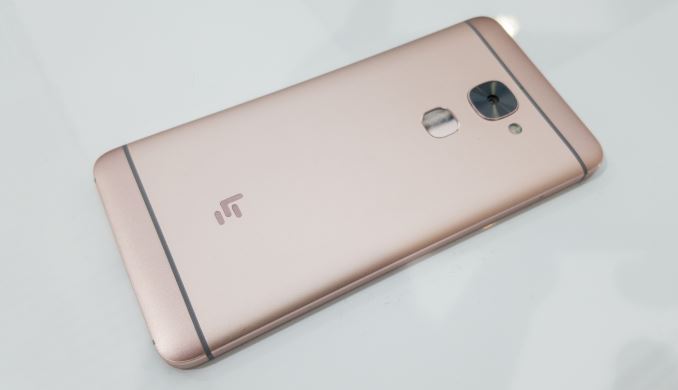
The Le 2 will be hitting the market at ¥1099 (~$170), while the more powerful Le 2 Pro adds another ¥400 to the price tag, bringing it to ¥1499 (~$230). Today’s launch is a China-only launch, however LeEco is pointing out that in the future we’ll be seeing focus on the US as its next target market outside of their established market in China and India with the possible introduction of derivative models with modifications to the specifications such as different SoC choices.

Intel Announces Q1 Fiscal Year 2016 Results: Lower Margins Prompt Workforce Adjustments

Intel Announces Q1 Fiscal Year 2016 Results: Lower Margins Prompt Workforce Adjustments

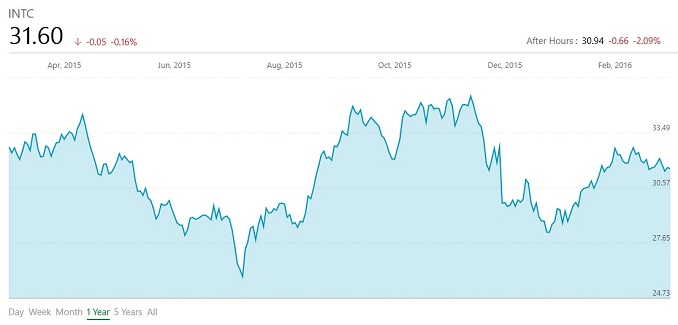
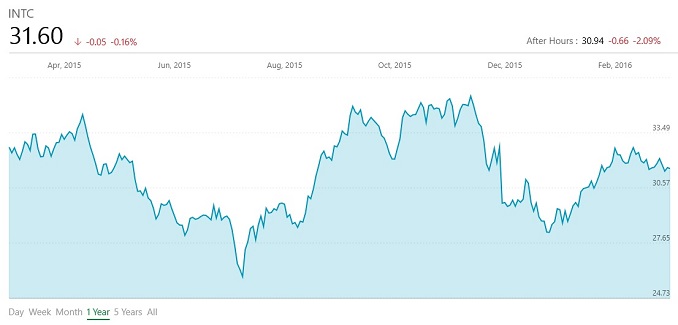
It was only last quarter that Intel reported record revenues for a Q4 in the company’s history, and only three months later the company is making dramatic cuts to their workforce. With the job cuts only just announced, the company then released their first quarter results of fiscal year 2016.

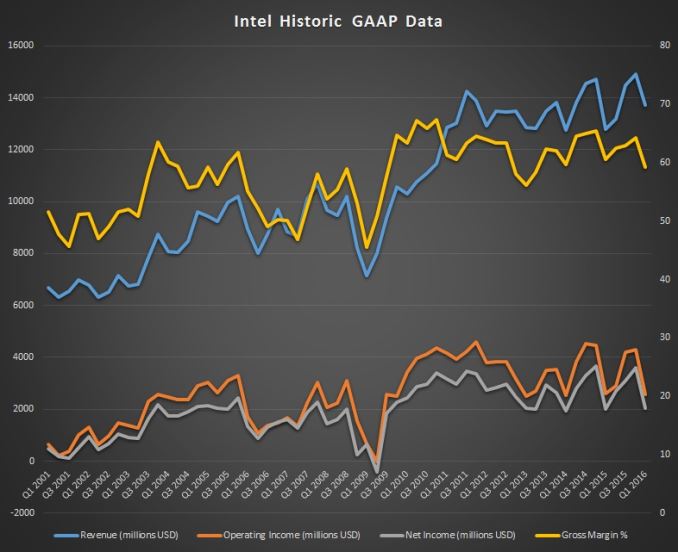
On a GAAP basis, the news is not quite what you would expect for a company that is slashing its operating costs through employee reductions. Revenue for the quarter came in at $13.7 billion, which is up 7% year-over-year. Some of the gain though can be attributed to changes in Intel’s reporting methods, as it has aligned its fiscal year with the calendar year, resulting in an extra week of time for this quarter compared to a typical quarter. Perhaps a more telling result is Intel’s gross margin, which fell to 59.3% for Q1, down 1.2% from last year. Operating income was flat despite the gain in revenue, coming in at $2.6 billion. Net income was up 3% to $2.046 billion, and earnings per share were up 2% to $0.42.

Intel Q1 2016 Financial Results (GAAP)
  Q1’2016 Q4’2015 Q1’2015
Revenue $13.7B $14.9B $12.8B
Operating Income $2.6B $4.3B $2.6B
Net Income $2.0B $3.6B $2.0B
Gross Margin 59.3% 64.3% 60.5%
Client Computing Group Revenue $7.5B -13.8% +1.74%
Data Center Group Revenue $4.0B -7.17% +8.64%
Internet of Things Revenue $651M +4.16% +22.14%
Non-Volatile Memory Solutions Group $557M -14.83% -5.91%
Intel Security Group $537M +4.88% +12.11%
Programmable Solutions Group $359M
All Other Revenue $50M -15.25 -34.21%

Intel also reports Non-GAAP results which exclude certain factors such as acquisition costs, deferred revenue write-downs, inventory valuation adjustments, restructuring charges, and a few other factors. On a Non-GAAP basis, revenue was up 8% to $13.8 billion, gross margin was up 1.3% to 62,7%, operating income was up 13% to $3.3 billion, net income was up 19% to $2.6 billion, and earnings per share came in at $0.54, which is up 20% year-over-year. One of the big factors in the non-GAAP numbers are due to the acquisition of Altera, which was completed early in fiscal year 2016.

The Client Computing group is the largest part of Intel on a revenue basis, and is the one that is feeling the pressure of the declining PC market the most. This segment had $7.5 billion in revenue for the quarter, which is up 2% from the same time last year, but breaking down the numbers we see that there was a decrease in volume of sales of 15%, but the average selling price increase of 19% means there was a small gain year-over-year. Operating income for this segment was $1.9 billion, which is up from the $1.4 billion a year ago. Notebook chips had a flat average selling price, and saw a 2% decrease in volume, while desktop chips sales fell 4% but had a 6% increase in average selling price. Tablet sales saw the biggest hit, down 44% to 4 million units. The tablet market has not matured at the rate initially expected, and Intel has gotten rid of the contra-revenue plan to boost tablet sales, so this is not unexpected. With strong competition from ARM based designs in this segment, Intel is hoping design wins in 2-in-1 devices will help.

The Data Center Group was almost the opposite, with a strong growth in unit sales, up 13% from a year ago, but average selling price fell 3%. Revenue for this group was $4 billion, up from $3.7 billion a year ago, but with the decline in ASP the operating income was only up $65 million to $1.764 billion for the quarter.

Internet of Things posted revenue of $661 million, up from $533 million a year ago. The growth continues in operating income for this new segment of Intel, which saw a 41% gain over last year, and was at $123 million for the quarter.

Intel also has some new reporting segments this quarter. They have added Non-Volatile Memory Solutions, Intel Security Group, and Programmable Solutions Group. The latter is a new segment based on their acquisition of Altera and will be for their expanded FPGA business. The others are branching off from Software and Services and All Other.

Non-Volatile Memory had a drop in revenue of about 6%, to $557 million, and took a $95 million operating loss for the quarter, down from $72 million in operating income last year. The Intel Security Group had revenues up 12% to $537 million, and operating income up to $85 million for the quarter, which is an increase of 286% over the $22 million last year. The Programmable Solutions Group, being a new addition to Intel, only has results from this quarter, which were $359 million in revenue and $200 million in operating loss with the acquisition costs.

Finally, the All Other group had revenue of $50 million, and had an operating loss of $994 million for the quarter. Intel used to have quite a bit of technology under All Other, but with the new reporting groups much of that has been shifted out. It now features operations from the “New Technology Group” as well as restructuring charges, employee benefits, and other expenses.

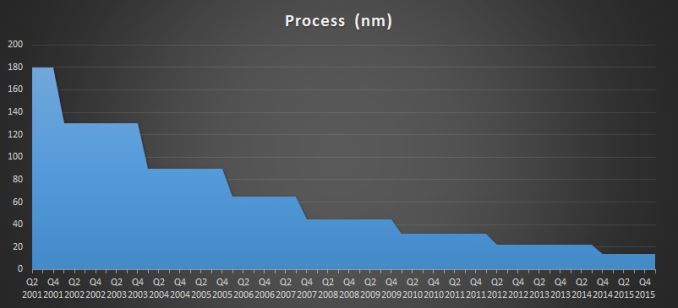
Clearly with the large layoffs announced today, Intel is trying to refocus its efforts on markets where it can continue to grow. Their success in the PC market has been quite pronounced, but with that major market shifting to slower upgrades and fewer unit sales, Intel is going to try again to go after markets where it sees opportunities. One such market was mobile, but Intel was very slow out of the gate to latch on to that, and we are only now seeing Atom parts on a regular update cadence with Goldmont announced for later in the year. Airmont cores never even found their way into a smartphone SoC, meaning that any Intel powered phones were still the older 22nm cores.

It’s unlikely anyone but investors like to see companies shed so much of their workforce, and this could be a big impact on Intel in the future with fewer resources to throw at problems, but it could also mean a leaner, more agile company. Time will tell on that story.

Looking at the immediate future, Intel has forecasted revenue of $13.5 billion, plus or minus $500 million for next quarter, which will return to a 13-week quarter as well. Non-GAAP margin is expected to be 61%, plus or minus a couple of percentage points (and yes that’s pretty vague), and with the job cuts they are expecting to take a one time charge of $1.2 billion.

I think Intel has weathered the slowdown in the PC market better than most companies, but they are not immune to the effects, and today we see them trying to offset those losses and move into new markets to win back some of their margin. We’ll keep an eye on their results over the next several quarters and see how they do. They are already getting 40% of their revenue and 60% of their margin from non-PC segments, so they see a good opportunity here to expand that.

Source: Intel Investor Relations

Intel Announces Q1 Fiscal Year 2016 Results: Lower Margins Prompt Workforce Adjustments

Intel Announces Q1 Fiscal Year 2016 Results: Lower Margins Prompt Workforce Adjustments

It was only last quarter that Intel reported record revenues for a Q4 in the company’s history, and only three months later the company is making dramatic cuts to their workforce. With the job cuts only just announced, the company then released their first quarter results of fiscal year 2016.

On a GAAP basis, the news is not quite what you would expect for a company that is slashing its operating costs through employee reductions. Revenue for the quarter came in at $13.7 billion, which is up 7% year-over-year. Some of the gain though can be attributed to changes in Intel’s reporting methods, as it has aligned its fiscal year with the calendar year, resulting in an extra week of time for this quarter compared to a typical quarter. Perhaps a more telling result is Intel’s gross margin, which fell to 59.3% for Q1, down 1.2% from last year. Operating income was flat despite the gain in revenue, coming in at $2.6 billion. Net income was up 3% to $2.046 billion, and earnings per share were up 2% to $0.42.

Intel Q1 2016 Financial Results (GAAP)
  Q1’2016 Q4’2015 Q1’2015
Revenue $13.7B $14.9B $12.8B
Operating Income $2.6B $4.3B $2.6B
Net Income $2.0B $3.6B $2.0B
Gross Margin 59.3% 64.3% 60.5%
Client Computing Group Revenue $7.5B -13.8% +1.74%
Data Center Group Revenue $4.0B -7.17% +8.64%
Internet of Things Revenue $651M +4.16% +22.14%
Non-Volatile Memory Solutions Group $557M -14.83% -5.91%
Intel Security Group $537M +4.88% +12.11%
Programmable Solutions Group $359M
All Other Revenue $50M -15.25 -34.21%

Intel also reports Non-GAAP results which exclude certain factors such as acquisition costs, deferred revenue write-downs, inventory valuation adjustments, restructuring charges, and a few other factors. On a Non-GAAP basis, revenue was up 8% to $13.8 billion, gross margin was up 1.3% to 62,7%, operating income was up 13% to $3.3 billion, net income was up 19% to $2.6 billion, and earnings per share came in at $0.54, which is up 20% year-over-year. One of the big factors in the non-GAAP numbers are due to the acquisition of Altera, which was completed early in fiscal year 2016.

The Client Computing group is the largest part of Intel on a revenue basis, and is the one that is feeling the pressure of the declining PC market the most. This segment had $7.5 billion in revenue for the quarter, which is up 2% from the same time last year, but breaking down the numbers we see that there was a decrease in volume of sales of 15%, but the average selling price increase of 19% means there was a small gain year-over-year. Operating income for this segment was $1.9 billion, which is up from the $1.4 billion a year ago. Notebook chips had a flat average selling price, and saw a 2% decrease in volume, while desktop chips sales fell 4% but had a 6% increase in average selling price. Tablet sales saw the biggest hit, down 44% to 4 million units. The tablet market has not matured at the rate initially expected, and Intel has gotten rid of the contra-revenue plan to boost tablet sales, so this is not unexpected. With strong competition from ARM based designs in this segment, Intel is hoping design wins in 2-in-1 devices will help.

The Data Center Group was almost the opposite, with a strong growth in unit sales, up 13% from a year ago, but average selling price fell 3%. Revenue for this group was $4 billion, up from $3.7 billion a year ago, but with the decline in ASP the operating income was only up $65 million to $1.764 billion for the quarter.

Internet of Things posted revenue of $661 million, up from $533 million a year ago. The growth continues in operating income for this new segment of Intel, which saw a 41% gain over last year, and was at $123 million for the quarter.

Intel also has some new reporting segments this quarter. They have added Non-Volatile Memory Solutions, Intel Security Group, and Programmable Solutions Group. The latter is a new segment based on their acquisition of Altera and will be for their expanded FPGA business. The others are branching off from Software and Services and All Other.

Non-Volatile Memory had a drop in revenue of about 6%, to $557 million, and took a $95 million operating loss for the quarter, down from $72 million in operating income last year. The Intel Security Group had revenues up 12% to $537 million, and operating income up to $85 million for the quarter, which is an increase of 286% over the $22 million last year. The Programmable Solutions Group, being a new addition to Intel, only has results from this quarter, which were $359 million in revenue and $200 million in operating loss with the acquisition costs.

Finally, the All Other group had revenue of $50 million, and had an operating loss of $994 million for the quarter. Intel used to have quite a bit of technology under All Other, but with the new reporting groups much of that has been shifted out. It now features operations from the “New Technology Group” as well as restructuring charges, employee benefits, and other expenses.

Clearly with the large layoffs announced today, Intel is trying to refocus its efforts on markets where it can continue to grow. Their success in the PC market has been quite pronounced, but with that major market shifting to slower upgrades and fewer unit sales, Intel is going to try again to go after markets where it sees opportunities. One such market was mobile, but Intel was very slow out of the gate to latch on to that, and we are only now seeing Atom parts on a regular update cadence with Goldmont announced for later in the year. Airmont cores never even found their way into a smartphone SoC, meaning that any Intel powered phones were still the older 22nm cores.

It’s unlikely anyone but investors like to see companies shed so much of their workforce, and this could be a big impact on Intel in the future with fewer resources to throw at problems, but it could also mean a leaner, more agile company. Time will tell on that story.

Looking at the immediate future, Intel has forecasted revenue of $13.5 billion, plus or minus $500 million for next quarter, which will return to a 13-week quarter as well. Non-GAAP margin is expected to be 61%, plus or minus a couple of percentage points (and yes that’s pretty vague), and with the job cuts they are expecting to take a one time charge of $1.2 billion.

I think Intel has weathered the slowdown in the PC market better than most companies, but they are not immune to the effects, and today we see them trying to offset those losses and move into new markets to win back some of their margin. We’ll keep an eye on their results over the next several quarters and see how they do. They are already getting 40% of their revenue and 60% of their margin from non-PC segments, so they see a good opportunity here to expand that.

Source: Intel Investor Relations

Intel Announces Major Workforce Restructuring: 11% of Workforce to Be Cut Over Next Year

Intel Announces Major Workforce Restructuring: 11% of Workforce to Be Cut Over Next Year

Ahead of today’s Q1 2016 earnings release and call, Intel has announced that they are going to be cutting a significant number of jobs over the next year. The job cuts come as part of Intel’s larger and ongoing restructuring efforts, as the company grapples with an overall soft PC market and continued struggle to carve out a larger piece of the mobile market. Ultimately Intel’s looking to invest in what they consider to be high-growth areas, which means laying off employees in stagnant business units while making other investments in those areas that are seeing continued growth.

The job cuts themselves are expected to involve up to 12,000 employees, or about 11% of the company’s workforce. Intel will be eliminating positions through a combination of both voluntary and involuntary layoffs, and in the process will be consolidating the remaining workforce and their respective sites. Intel expects the bulk of the layoffs to occur within the next 60 days, with the entire process stretching into mid-2017.

The company’s pre-earnings announcement does not state where these layoffs will come from, and we’re expecting at least some additional detail to come out of the company’s earnings call which is still on-going. However the company is reiterating what markets and businesses they see as growth opportunities and will be investing into for the future, which offers some basic guidance on what the company sees as their most important businesses. Intel’s Data Center and Internet of Things businesses are specifically being cited as their stand-out businesses, which combined with memory and FPGAs provided 40% of the company’s revenue and a majority of their operating profit. Meanwhile in the consumer/client market Intel has seen good returns on 2-in-1s, gaming and home gateways. Conversely, the overall (client) PC market is still in decline, and I expect that a number of the cuts will be centered on that.

Finally, Intel has also detailed the costs of their restructuring. The company will incur a one-time charge of $1.2 billion in Q2, with this presumably being a significant number of severance payments. In turn, the company expects to save $750 million this year, with an annual run rate savings of $1.4 billion per year after the last of the layoffs are completed in mid-2017.

We’ll update this article later today with more information once it comes out of Intel’s earnings call. Ultimately the soft PC market has been a continuing trend for Intel over the past few years, so that we’re seeing Intel react to it now is not unexpected. However it will be important to see just how the layoffs are organized – for example, if Intel makes much in the way of cuts in the fab business – as Intel is a large company. What this means for future client PC investments, mobile, could prove to be significant.

Update: Intel’s earnings call has shed a bit more light on the restructuring, but Intel is not spelling out exactly where the bulk of the cuts are coming from at this time.

Overall Intel did reiterate that although the client business has been weak, the company’s restructuring plans will be touching more than the client business. The impact to the client business then is that it is being refocused via the restructuring, hence the earlier comments on what Intel sees as the client growth markets. Undoubtedly aspects of the client business are in the crosshairs given the continued slowness in the market, but Intel isn’t saying too much more than that.

The company has also made it clear that they’re not backing off on fab/manufacturing investments in the near future. Capital expenditures on 10nm and 3D NAND continue untouched even with the restructuring, and overall Intel’s technology cadence plans have not changed. Farther ahead, the company has indicated that they are being mindful of their capable competition, and that they need to stay ahead of them, including getting back to a two-year cycle if at all possible.

Finally, Intel has offered a bit more information on the timeline for the restructuring itself. While the majority of the notices to employees will go out in 60 days, the projection is that only about half of the layoffs will be completed by the end of this year, which implies the rest will happen in H1 2017. Part of this comes down to the fact that while Intel has a target number for employment, they have not decided whether they will end any product lines entirely. Intel is in the process of undergoing a complete review of the business to identify any products the company may want to cease, and Brian Krzanich has said that when the review is done there’s likely to be a few products that get flagged.

Intel Announces Major Workforce Restructuring: 11% of Workforce to Be Cut Over Next Year

Intel Announces Major Workforce Restructuring: 11% of Workforce to Be Cut Over Next Year

Ahead of today’s Q1 2016 earnings release and call, Intel has announced that they are going to be cutting a significant number of jobs over the next year. The job cuts come as part of Intel’s larger and ongoing restructuring efforts, as the company grapples with an overall soft PC market and continued struggle to carve out a larger piece of the mobile market. Ultimately Intel’s looking to invest in what they consider to be high-growth areas, which means laying off employees in stagnant business units while making other investments in those areas that are seeing continued growth.

The job cuts themselves are expected to involve up to 12,000 employees, or about 11% of the company’s workforce. Intel will be eliminating positions through a combination of both voluntary and involuntary layoffs, and in the process will be consolidating the remaining workforce and their respective sites. Intel expects the bulk of the layoffs to occur within the next 60 days, with the entire process stretching into mid-2017.

The company’s pre-earnings announcement does not state where these layoffs will come from, and we’re expecting at least some additional detail to come out of the company’s earnings call which is still on-going. However the company is reiterating what markets and businesses they see as growth opportunities and will be investing into for the future, which offers some basic guidance on what the company sees as their most important businesses. Intel’s Data Center and Internet of Things businesses are specifically being cited as their stand-out businesses, which combined with memory and FPGAs provided 40% of the company’s revenue and a majority of their operating profit. Meanwhile in the consumer/client market Intel has seen good returns on 2-in-1s, gaming and home gateways. Conversely, the overall (client) PC market is still in decline, and I expect that a number of the cuts will be centered on that.

Finally, Intel has also detailed the costs of their restructuring. The company will incur a one-time charge of $1.2 billion in Q2, with this presumably being a significant number of severance payments. In turn, the company expects to save $750 million this year, with an annual run rate savings of $1.4 billion per year after the last of the layoffs are completed in mid-2017.

We’ll update this article later today with more information once it comes out of Intel’s earnings call. Ultimately the soft PC market has been a continuing trend for Intel over the past few years, so that we’re seeing Intel react to it now is not unexpected. However it will be important to see just how the layoffs are organized – for example, if Intel makes much in the way of cuts in the fab business – as Intel is a large company. What this means for future client PC investments, mobile, could prove to be significant.

Update: Intel’s earnings call has shed a bit more light on the restructuring, but Intel is not spelling out exactly where the bulk of the cuts are coming from at this time.

Overall Intel did reiterate that although the client business has been weak, the company’s restructuring plans will be touching more than the client business. The impact to the client business then is that it is being refocused via the restructuring, hence the earlier comments on what Intel sees as the client growth markets. Undoubtedly aspects of the client business are in the crosshairs given the continued slowness in the market, but Intel isn’t saying too much more than that.

The company has also made it clear that they’re not backing off on fab/manufacturing investments in the near future. Capital expenditures on 10nm and 3D NAND continue untouched even with the restructuring, and overall Intel’s technology cadence plans have not changed. Farther ahead, the company has indicated that they are being mindful of their capable competition, and that they need to stay ahead of them, including getting back to a two-year cycle if at all possible.

Finally, Intel has offered a bit more information on the timeline for the restructuring itself. While the majority of the notices to employees will go out in 60 days, the projection is that only about half of the layoffs will be completed by the end of this year, which implies the rest will happen in H1 2017. Part of this comes down to the fact that while Intel has a target number for employment, they have not decided whether they will end any product lines entirely. Intel is in the process of undergoing a complete review of the business to identify any products the company may want to cease, and Brian Krzanich has said that when the review is done there’s likely to be a few products that get flagged.