News


Apple Releases iOS 9.3

Apple Releases iOS 9.3

Along with the iPhone SE and 9.7″ iPad Pro, today’s Apple event came with an official release of iOS 9.3. iOS 9.3 has been in beta for quite some time now, with there being both a developer and a consumer beta stream. While 9.3 isn’t a major point release, it is significantly larger than most of the minor iOS updates that are released, with there being both new features and bug fixes included.

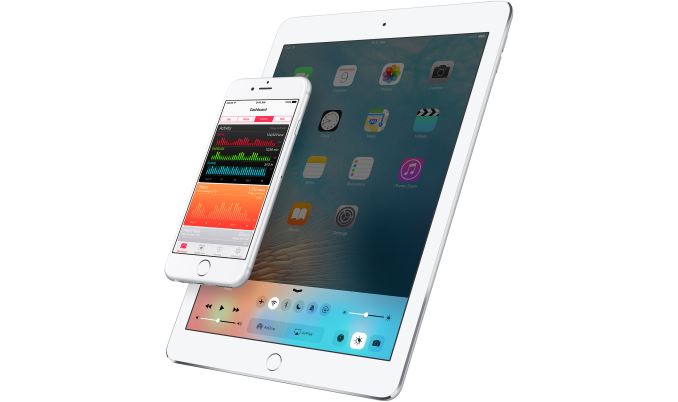
For many users the most significant feature in iOS 9.3 is Night Shift. For anyone who uses or has has heard of f.lux, Night Shift is basically Apple’s version of the same thing for iOS. It alters the white balance of your display to reduce the blue component of luminance. There have been various studies on the negative effects of exposure to blue shifted lighting on a person’s ability to sleep, and with iOS devices generally having slightly blue shifted white points this can pose a genuine issue for users reading on their iPhone or iPad before going to bed.

Night Shift has a few options. You can forcibly enable or disable it from the settings app or from Control Center, and you can also set it to enable on a schedule. There’s also a slider that controls how far the white point is shifted toward red, with the warmest setting being about as far as you can go without disrupting usability.

Another notable iOS 9.3 feature is support for Touch ID in the Notes application. With the Notes app seeing more use and potentially storing more sensitive data after the release of the iPad Pro, being able to protect the content inside using Touch ID is a useful feature to have.

The Health app sees some changes as well. It now integrates deeper with the Activity application that gathers data from the Apple Watch, and includes a new dashboard pane that summarizes your exercise info from the Activity app. Previously the Health app would simply pull information from the Activity app and populate its own data sections, and better integration of the two apps is probably overdue. Apple has also added sliders in certain sections that can reveal featured apps that integrate and aggregate data in the Health app.

For iPhone 6s and 6s Plus users, iOS 9.3 adds 3D Touch support from the home screen for a few additional applications, including Weather, App Store, Health, Compass, Settings, and Stocks. 3D Touch support for Weather is a nice addition, and I was surprised by the omission when the 6s first launched.

iOS 9.3 will be coming to compatible iOS devices today. It will be supported on all devices that support iOS 9, which includes all iPads from the iPad 2 onward, and all iPhones from the iPhone 4s onward.

Apple Announces The iPhone SE

Apple Announces The iPhone SE

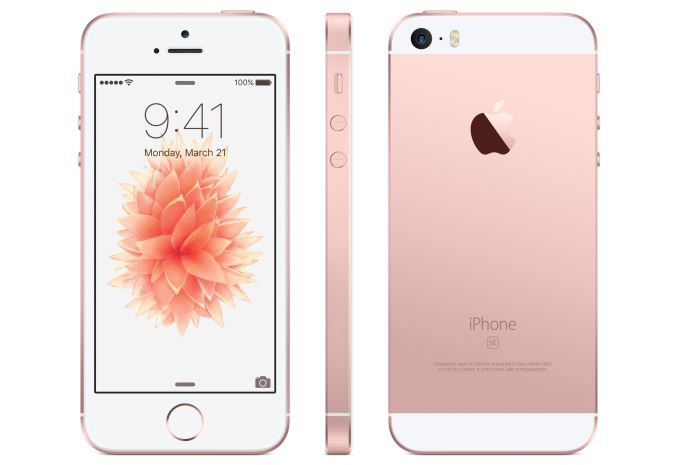
Today’s Apple launch event came with three major announcements. The first was the public release date of iOS 9.3, the second was the 9.7″ iPad Pro, and the third was a successor to the 2013 iPhone 5s in the iPhone SE. Interestingly, this phone eschews the number from the name of its predecessor, presumably because we’ve moved two generations beyond the 5s already and will likely be seeing a 7 appear in the next iPhone’s name. Instead, Apple has called it the iPhone SE.

The iPhone SE comes in at a time when the high-end market has transitioned (almost) entirely to larger 5.2-inch and up smartphones. Apple was most resistant to that trend but eventually made their own larger screen devices, leaving the group of users who wanted a smaller device to opt for the aging iPhone 5s. With iOS becoming more resource intensive over time, and the iPhone 5s getting older, Apple needed to create a new 4″ device if they wanted to continue offering one. Being able to offer it at a lower price than the larger models also helps with selling to new and emerging markets, especially when Apple quotes that new iPhone users tend to move towards a 4-inch device.

While the iPhone SE is a small phone, it is no slouch when it comes to the hardware, and the only aspect that is reminiscent of the iPhone 5s is the design of the chassis and the display. Almost everything else borrows from Apple’s newest flagship smartphone, the iPhone 6s. You can check out the specs for the 5s, SE, and 6s in the chart below to see the similarities and differences between the three.

Apple iPhone Line
  Apple iPhone 5s Apple iPhone SE Apple iPhone 6s
SoC Apple A7
2 x 1.3GHz Apple Cyclone
Apple A9
2 x Apple Twister
GPU PowerVR GX6450 PowerVR GT7600
RAM 1GB LPDDR3 2GB LPDDR4
Display 4.0-inch 1136 x 640
IPS LCD
4.7-inch 1334 x 750
IPS LCD
Size / Mass 123.8 x 58.6 x 7.6 mm
112 grams
123.8 x 58.6 x 7.6 mm
113 grams
138.3 x 67.1 x 7.1 mm
143 grams
Camera Rear Facing
8MP iSight with 1.5µm pixels + True Tone Flash

Front Facing
1.2MP F/2.2

Rear Facing 12MP iSight with 1.22µm pixels
+ True Tone Flash
Front Facing
1.2MP f/2.4
Front Facing 5MP F/2.2 + Retina Flash
Storage 16GB
32GB
64GB
16GB
64GB
16GB
64GB
128GB
I/O Apple Lightning connector, 3.5mm headset
WiFi 2.4/5GHz Dual Band
1T1R 802.11n 
BT 4.2
2.4/5GHz Dual Band
1T1R 802.11ac
BT 4.2, NFC
2.4/5GHz Dual Band
2T2R 802.11ac
BT 4.2, NFC
Price 16GB: $449 16GB: $399
64GB: $499
16GB: $649
64GB: $749
128GB: $849

The iPhone SE is a substantial upgrade to the iPhone 5s. Starting with the internal hardware, we see that the SoC moves from the Apple A7 SoC to Apple’s A9. Going by Apple’s numbers, the iPhone SE’s CPU performance is reported to be 2x higher than the iPhone 5s, and the GPU performance is roughly 2.85x higher.

On paper, the display is the same as the one used with the iPhone 5s. It’s a 4″ IPS display with a resolution of 1136 x 640. It looks like the panel is the same as well, as it doesn’t benefit from the improved contrast enabled by the use of photo alignment tech on the iPhone 6s.

The camera also carries over from the 6s. Advances in sensor technology and image processing over the past two and a half years have allowed modern smartphones to greatly surpass what was possible with the camera on the iPhone 5s, and so the iPhone SE adopts the same 12MP sensor used in the iPhone 6s. This provides an increase in resolution, and the advancements that come with the A9 SoC’s ISP will further upgrade image quality over the 5s through improved noise reduction, HDR, and tone mapping.

The new ISP and higher resolution sensor also allow for higher bitrate video recording with better image stabilization, as well as 30fps UHD video and 1080p120 slow motion video, which is an improvement over the relatively low bitrate 720p120 clips from the 5s. Like the iPhone 6s and 6s Plus, the iPhone SE supports taking Apple’s Live Photos which pairs a video stream (MPEG) and a higher resolution still image. Since the SE doesn’t have 3D Touch a user will have to interact with them using a long press in the same way that the iPad does

Connectivity on the iPhone SE improves as well. When it was launched, the 5s was only on 802.11n while some Android vendors were making an early move to 802.11ac. The SE brings 802.11ac support along for 433Mbps WiFi speeds, along with Category 4 LTE which enables downstream speeds of up to 150Mbps. This isn’t on par with the Category 6 LTE in the iPhone 6s, but it’s a significant improvement over the iPhone 5s. At this point we can’t confirm the modem inside, which could be a number of things.

The iPhone SE starts at $399 for a 16GB model, with the upgrade to 64GB bringing the price to $499. For users still on a contract carrier in the US, it will be free on a new two-year term. Orders will begin on March 24.

Apple Announces The iPhone SE

Apple Announces The iPhone SE

Today’s Apple launch event came with three major announcements. The first was the public release date of iOS 9.3, the second was the 9.7″ iPad Pro, and the third was a successor to the 2013 iPhone 5s in the iPhone SE. Interestingly, this phone eschews the number from the name of its predecessor, presumably because we’ve moved two generations beyond the 5s already and will likely be seeing a 7 appear in the next iPhone’s name. Instead, Apple has called it the iPhone SE.

The iPhone SE comes in at a time when the high-end market has transitioned (almost) entirely to larger 5.2-inch and up smartphones. Apple was most resistant to that trend but eventually made their own larger screen devices, leaving the group of users who wanted a smaller device to opt for the aging iPhone 5s. With iOS becoming more resource intensive over time, and the iPhone 5s getting older, Apple needed to create a new 4″ device if they wanted to continue offering one. Being able to offer it at a lower price than the larger models also helps with selling to new and emerging markets, especially when Apple quotes that new iPhone users tend to move towards a 4-inch device.

While the iPhone SE is a small phone, it is no slouch when it comes to the hardware, and the only aspect that is reminiscent of the iPhone 5s is the design of the chassis and the display. Almost everything else borrows from Apple’s newest flagship smartphone, the iPhone 6s. You can check out the specs for the 5s, SE, and 6s in the chart below to see the similarities and differences between the three.

Apple iPhone Line
  Apple iPhone 5s Apple iPhone SE Apple iPhone 6s
SoC Apple A7
2 x 1.3GHz Apple Cyclone
Apple A9
2 x Apple Twister
GPU PowerVR GX6450 PowerVR GT7600
RAM 1GB LPDDR3 2GB LPDDR4
Display 4.0-inch 1136 x 640
IPS LCD
4.7-inch 1334 x 750
IPS LCD
Size / Mass 123.8 x 58.6 x 7.6 mm
112 grams
123.8 x 58.6 x 7.6 mm
113 grams
138.3 x 67.1 x 7.1 mm
143 grams
Camera Rear Facing
8MP iSight with 1.5µm pixels + True Tone Flash

Front Facing
1.2MP F/2.2

Rear Facing 12MP iSight with 1.22µm pixels
+ True Tone Flash
Front Facing
1.2MP f/2.4
Front Facing 5MP F/2.2 + Retina Flash
Storage 16GB
32GB
64GB
16GB
64GB
16GB
64GB
128GB
I/O Apple Lightning connector, 3.5mm headset
WiFi 2.4/5GHz Dual Band
1T1R 802.11n 
BT 4.2
2.4/5GHz Dual Band
1T1R 802.11ac
BT 4.2, NFC
2.4/5GHz Dual Band
2T2R 802.11ac
BT 4.2, NFC
Price 16GB: $449 16GB: $399
64GB: $499
16GB: $649
64GB: $749
128GB: $849

The iPhone SE is a substantial upgrade to the iPhone 5s. Starting with the internal hardware, we see that the SoC moves from the Apple A7 SoC to Apple’s A9. Going by Apple’s numbers, the iPhone SE’s CPU performance is reported to be 2x higher than the iPhone 5s, and the GPU performance is roughly 2.85x higher.

On paper, the display is the same as the one used with the iPhone 5s. It’s a 4″ IPS display with a resolution of 1136 x 640. It looks like the panel is the same as well, as it doesn’t benefit from the improved contrast enabled by the use of photo alignment tech on the iPhone 6s.

The camera also carries over from the 6s. Advances in sensor technology and image processing over the past two and a half years have allowed modern smartphones to greatly surpass what was possible with the camera on the iPhone 5s, and so the iPhone SE adopts the same 12MP sensor used in the iPhone 6s. This provides an increase in resolution, and the advancements that come with the A9 SoC’s ISP will further upgrade image quality over the 5s through improved noise reduction, HDR, and tone mapping.

The new ISP and higher resolution sensor also allow for higher bitrate video recording with better image stabilization, as well as 30fps UHD video and 1080p120 slow motion video, which is an improvement over the relatively low bitrate 720p120 clips from the 5s. Like the iPhone 6s and 6s Plus, the iPhone SE supports taking Apple’s Live Photos which pairs a video stream (MPEG) and a higher resolution still image. Since the SE doesn’t have 3D Touch a user will have to interact with them using a long press in the same way that the iPad does

Connectivity on the iPhone SE improves as well. When it was launched, the 5s was only on 802.11n while some Android vendors were making an early move to 802.11ac. The SE brings 802.11ac support along for 433Mbps WiFi speeds, along with Category 4 LTE which enables downstream speeds of up to 150Mbps. This isn’t on par with the Category 6 LTE in the iPhone 6s, but it’s a significant improvement over the iPhone 5s. At this point we can’t confirm the modem inside, which could be a number of things.

The iPhone SE starts at $399 for a 16GB model, with the upgrade to 64GB bringing the price to $499. For users still on a contract carrier in the US, it will be free on a new two-year term. Orders will begin on March 24.

Apple Unveils The 9.7" iPad Pro

Apple Unveils The 9.7″ iPad Pro

Today at their March launch event Apple unveiled the iPhone SE, confirmed the official public release of iOS 9.3, and announced their newest standard sized tablet. For a while it was expected that this new tablet would be the iPad Air 3, which would make it a natural successor to the iPad Air 2. However, Apple has taken a different path with this launch and has instead opted to position this new tablet between the iPad Air 2 and the 12.9″ iPad Pro. The newest iPad is, somewhat confusingly, also called the iPad Pro, and I’ll be referring it to the iPad Pro 9.7″ in the same way that Apple differentiates their other products by the display size.

This new iPad Pro is a successor to the iPad Air 2 in some ways, but a new segment of the iPad line in others. For one, it doesn’t replace the iPad Air 2 in Apple’s product line – as is tradition, that has been demoted to second-tier and the $399 price point – and when it comes to pricing the new iPad Pro slots in above the old iPad price point. With a starting price of $599, the 9.7″ iPad Pro is a de facto price hike, as Apple is looking to create an even higher-end segment for the 9.7″ iPad that offers better features for a higher price.

From a technical perspective the 9.7″ iPad Pro is really a shrunken down iPad Pro, and it even pulls ahead of the larger model in some respects. The chart below summarizes the specs of the iPad Air 2, iPad Pro 12.9″ and the new iPad Pro 9.7″.

  Apple iPad Air 2 Apple iPad Pro 9.7″ Apple iPad Pro 12.9″
SoC Apple A8X
3 x Apple Typhoon @ 1.5GHz
Apple A9X
2 x Apple Twister
Apple A9X
2 x Apple Twister @ 2.26GHz
GPU PowerVR 8 Cluster Series6XT PowerVR 12 Cluster Series7XT
RAM 2GB LPDDR3 2GB LPDDR4 4GB LPDDR4
NAND 16/64/128 GB WiFi: 32 / 128 / 256 GB
WiFi + Cellular:
32 / 128 / 256 GB
WiFi + Cellular:
128 / 256 GB
Display 9.7″ 2048×1536 IPS LCD 12.9″ 2732×2048 IPS LCD
Gamut sRGB DCI-P3 sRGB
Size and Mass 240 x 169.5 x 6.1mm
437g WiFi, 444g LTE
305.7 x 220.6 x 6.9 mm
713g WiFi, 723g LTE
Camera 8MP Rear-Facing,
f/2.4, 1.1 micron
1.2MP Front-Facing, f/2.2
12MP Rear-Facing
5MP Front-Facing, f/2.2
8MP Rear-Facing,
f/2.4, 1.1 micron
1.2MP Front-Facing, f/2.2
Battery 27.3 Wh 27.5 Wh 38.5 Wh
Launch OS iOS 8 iOS 9
Cellular Connectivity Category 4 LTE + GPS/GNSS in Cellular SKU
  LTE-A Band 1-8, 12, 13,
17-20, 25-30, 38-41
LTE Band 1-8, 13,
17-20, 25-29, 38-41
Other Connectivity 2×2 802.11a/b/g/n/ac + BT 4.2, Apple Lightning, Smart Connector on iPad Pro
SIM Optional NanoSIM
Price

16GB: $399

32 GB: $599
128 GB: $749
256 GB: $899
32 GB: $799
128 GB: $949
256 GB: $1079 (LTE)

Looking at the specs of the 9.7″ iPad Pro makes it clear that it really is a smaller version of the 12.9″ model, and a true upgrade over the iPad Air 2. Starting with the SoC, we see a move from the A8X SoC in the iPad Air 2 to the A9X SoC that debuted with the 12.9″ iPad Pro. As of right now it’s not clear what max CPU clock speed of the A9X in the iPad Pro 9.7″ is, but Apple has historically shifted clock speeds down when moving chips into smaller devices, and it’s likely that clocks have been moved down from the 2.26GHz speed of the 12.9″ iPad Pro to maintain battery life and control the device’s thermal profile. With the GPU we’re looking at the same 12 cluster PowerVR Series7XT implementation, but it’s again not clear whether Apple has targeted the same peak clock speeds.

Currently the amount of RAM in the iPad Pro 9.7″ is unknown. The rumor mill has been claiming that it’s the same 4GB of LPDDR4 RAM that you get in the larger model, but this can’t be confirmed until the device is in the hands of users and developers. I’ve already covered in the past how split screen multitasking on the iPad Air 2 could potentially bring you up against the limit imposed by having 2GB of RAM, and with the iPad Pro being a device that markets itself as being capable of actual productivity tasks it would make sense that Apple brought the 4GB of RAM to the smaller model. On the other hand, the 9.7″ iPads don’t have the strain of running two essentially full sized applications side by side, so I wouldn’t want to make any predictions on what Apple has done here.

The display of the iPad Pro 9.7″ has the same 2048×1536 resolution of the iPad Air 2. Due to the way iOS handles rendering I really don’t expect we’ll see any improvements in resolution on the iPad until it’s viable to use 3072×2304 panels which would have a pixel density of 396ppi. Even though the resolution remains the same, the display itself is a newer generation panel that inherits the improved contrast and anti-reflective coating from the larger iPad Pro. The improved contrast is the result of Apple using photo alignment to create a more consistent orientation among the liquid crystals. The display’s digitizer maintains the 120Hz scan rate from the iPad Air 2, and gains the improved 240Hz scan rate from the 12.9″ iPad Pro when using Apple Pencil.

In addition to inheriting the advancements made with the 12.9″ model’s display, the 9.7″ iPad Pro comes with some tricks of its own. The first is an improved color gamut. Like the new iMac 4K and 5K, the iPad Pro 9.7″ adopts the DCI-P3 color gamut. I’m hoping that Apple has been secretly building color management into iOS in preparation for this, as there are going to be problems with oversaturation if they haven’t. The 9.7″ iPad Pro also improves luminance dramatically, with a peak brightness of 500 nits. Finally, there’s a new feature which Apple is calling the True Tone display, which measures the ambient brightness and color temperature and adjusts the display to match.
Something unique to the 9.7″ iPad Pro is its camera. The 12.9″ iPad Pro uses the same camera and lens stack from the iPad Air 2, which consists of an 8MP sensor with 1.1 micron pixels and a f/2.4 aperture. The 9.7″ iPad Pro comes with a 12MP PDAF sensor, which may be the same as the one used on the iPhone 6s. Whether it is or isn’t, it will provide a substantial upgrade over the camera shipping in the iPad Air 2 and iPad Pro, as those sensors are already a step behind the larger 8MP sensor used in the iPhone 6. The 12MP sensor enables 4K recording as well.

In all other respects, the 9.7″ iPad Pro is the same as its larger sibling. It comes in 32GB, 128GB, and 256GB storage configurations, and unlike the 12.9″ iPad Pro, Apple has LTE versions of all three configurations. It has the same 4 speaker configuration, and I’m interested to see how much space is taken internally by the speaking housing, as Apple is more constrained on space in the smaller chassis when balancing the battery capacity against speaker size. On the connectivity side we see that the WiFi is a 2×2 802.11ac implementation, along with Bluetooth 4.2 and Apple’s smart connector for connecting accessories like the new smaller Smart Keyboard along with other keyboards that will be made by vendors like Logitech.

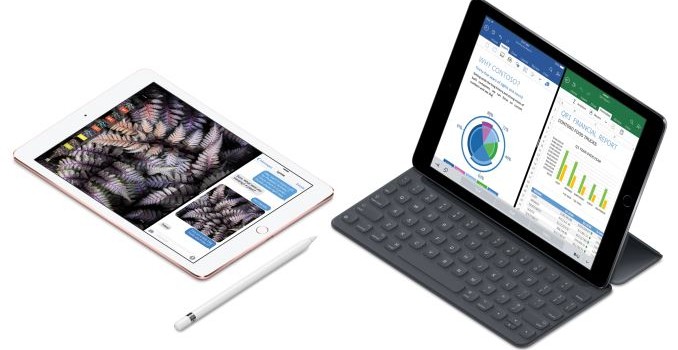
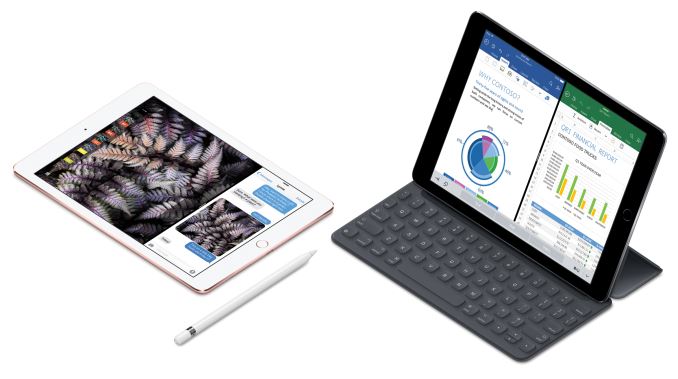
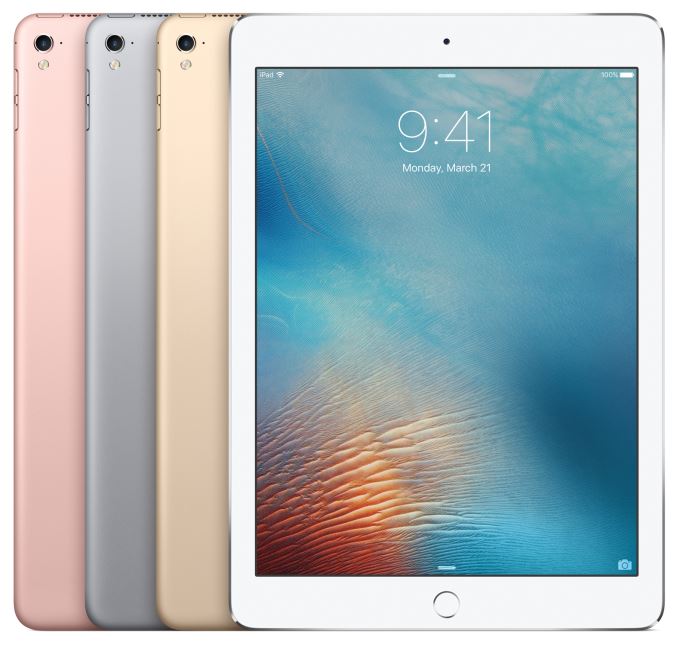
The 9.7″ iPad Pro will be shipping on March 31. It comes in Rose Gold, which is unique to it among the iPads. It starts at $599 for the 32GB WiFi model, topping out at $899 for 256GB WiFi and $1029 for 256GB LTE. The Smart Keyboard is priced at $149, $20 less than the version for the larger iPad Pro. Meanwhile the Apple Pencil hasn’t changed at all, so it’s still an additional $99. With the iPad Air 2 starting at $399 for 16GB, the increased storage, accessory compatibility, improved display, and greatly improved performance of the iPad Pro 9.7″ is definitely tempting, although if you aren’t going to be using Apple Pencil you definitely have to consider if the $200 is worth it for you.

Apple Unveils The 9.7" iPad Pro

Apple Unveils The 9.7″ iPad Pro

Today at their March launch event Apple unveiled the iPhone SE, confirmed the official public release of iOS 9.3, and announced their newest standard sized tablet. For a while it was expected that this new tablet would be the iPad Air 3, which would make it a natural successor to the iPad Air 2. However, Apple has taken a different path with this launch and has instead opted to position this new tablet between the iPad Air 2 and the 12.9″ iPad Pro. The newest iPad is, somewhat confusingly, also called the iPad Pro, and I’ll be referring it to the iPad Pro 9.7″ in the same way that Apple differentiates their other products by the display size.

This new iPad Pro is a successor to the iPad Air 2 in some ways, but a new segment of the iPad line in others. For one, it doesn’t replace the iPad Air 2 in Apple’s product line – as is tradition, that has been demoted to second-tier and the $399 price point – and when it comes to pricing the new iPad Pro slots in above the old iPad price point. With a starting price of $599, the 9.7″ iPad Pro is a de facto price hike, as Apple is looking to create an even higher-end segment for the 9.7″ iPad that offers better features for a higher price.

From a technical perspective the 9.7″ iPad Pro is really a shrunken down iPad Pro, and it even pulls ahead of the larger model in some respects. The chart below summarizes the specs of the iPad Air 2, iPad Pro 12.9″ and the new iPad Pro 9.7″.

  Apple iPad Air 2 Apple iPad Pro 9.7″ Apple iPad Pro 12.9″
SoC Apple A8X
3 x Apple Typhoon @ 1.5GHz
Apple A9X
2 x Apple Twister
Apple A9X
2 x Apple Twister @ 2.26GHz
GPU PowerVR 8 Cluster Series6XT PowerVR 12 Cluster Series7XT
RAM 2GB LPDDR3 2GB LPDDR4 4GB LPDDR4
NAND 16/64/128 GB WiFi: 32 / 128 / 256 GB
WiFi + Cellular:
32 / 128 / 256 GB
WiFi + Cellular:
128 / 256 GB
Display 9.7″ 2048×1536 IPS LCD 12.9″ 2732×2048 IPS LCD
Gamut sRGB DCI-P3 sRGB
Size and Mass 240 x 169.5 x 6.1mm
437g WiFi, 444g LTE
305.7 x 220.6 x 6.9 mm
713g WiFi, 723g LTE
Camera 8MP Rear-Facing,
f/2.4, 1.1 micron
1.2MP Front-Facing, f/2.2
12MP Rear-Facing
5MP Front-Facing, f/2.2
8MP Rear-Facing,
f/2.4, 1.1 micron
1.2MP Front-Facing, f/2.2
Battery 27.3 Wh 27.5 Wh 38.5 Wh
Launch OS iOS 8 iOS 9
Cellular Connectivity Category 4 LTE + GPS/GNSS in Cellular SKU
  LTE-A Band 1-8, 12, 13,
17-20, 25-30, 38-41
LTE Band 1-8, 13,
17-20, 25-29, 38-41
Other Connectivity 2×2 802.11a/b/g/n/ac + BT 4.2, Apple Lightning, Smart Connector on iPad Pro
SIM Optional NanoSIM
Price

16GB: $399

32 GB: $599
128 GB: $749
256 GB: $899
32 GB: $799
128 GB: $949
256 GB: $1079 (LTE)

Looking at the specs of the 9.7″ iPad Pro makes it clear that it really is a smaller version of the 12.9″ model, and a true upgrade over the iPad Air 2. Starting with the SoC, we see a move from the A8X SoC in the iPad Air 2 to the A9X SoC that debuted with the 12.9″ iPad Pro. As of right now it’s not clear what max CPU clock speed of the A9X in the iPad Pro 9.7″ is, but Apple has historically shifted clock speeds down when moving chips into smaller devices, and it’s likely that clocks have been moved down from the 2.26GHz speed of the 12.9″ iPad Pro to maintain battery life and control the device’s thermal profile. With the GPU we’re looking at the same 12 cluster PowerVR Series7XT implementation, but it’s again not clear whether Apple has targeted the same peak clock speeds.

Currently the amount of RAM in the iPad Pro 9.7″ is unknown. The rumor mill has been claiming that it’s the same 4GB of LPDDR4 RAM that you get in the larger model, but this can’t be confirmed until the device is in the hands of users and developers. I’ve already covered in the past how split screen multitasking on the iPad Air 2 could potentially bring you up against the limit imposed by having 2GB of RAM, and with the iPad Pro being a device that markets itself as being capable of actual productivity tasks it would make sense that Apple brought the 4GB of RAM to the smaller model. On the other hand, the 9.7″ iPads don’t have the strain of running two essentially full sized applications side by side, so I wouldn’t want to make any predictions on what Apple has done here.

The display of the iPad Pro 9.7″ has the same 2048×1536 resolution of the iPad Air 2. Due to the way iOS handles rendering I really don’t expect we’ll see any improvements in resolution on the iPad until it’s viable to use 3072×2304 panels which would have a pixel density of 396ppi. Even though the resolution remains the same, the display itself is a newer generation panel that inherits the improved contrast and anti-reflective coating from the larger iPad Pro. The improved contrast is the result of Apple using photo alignment to create a more consistent orientation among the liquid crystals. The display’s digitizer maintains the 120Hz scan rate from the iPad Air 2, and gains the improved 240Hz scan rate from the 12.9″ iPad Pro when using Apple Pencil.

In addition to inheriting the advancements made with the 12.9″ model’s display, the 9.7″ iPad Pro comes with some tricks of its own. The first is an improved color gamut. Like the new iMac 4K and 5K, the iPad Pro 9.7″ adopts the DCI-P3 color gamut. I’m hoping that Apple has been secretly building color management into iOS in preparation for this, as there are going to be problems with oversaturation if they haven’t. The 9.7″ iPad Pro also improves luminance dramatically, with a peak brightness of 500 nits. Finally, there’s a new feature which Apple is calling the True Tone display, which measures the ambient brightness and color temperature and adjusts the display to match.

Something unique to the 9.7″ iPad Pro is its camera. The 12.9″ iPad Pro uses the same camera and lens stack from the iPad Air 2, which consists of an 8MP sensor with 1.1 micron pixels and a f/2.4 aperture. The 9.7″ iPad Pro comes with a 12MP PDAF sensor, which may be the same as the one used on the iPhone 6s. Whether it is or isn’t, it will provide a substantial upgrade over the camera shipping in the iPad Air 2 and iPad Pro, as those sensors are already a step behind the larger 8MP sensor used in the iPhone 6. The 12MP sensor enables 4K recording as well.

In all other respects, the 9.7″ iPad Pro is the same as its larger sibling. It comes in 32GB, 128GB, and 256GB storage configurations, and unlike the 12.9″ iPad Pro, Apple has LTE versions of all three configurations. It has the same 4 speaker configuration, and I’m interested to see how much space is taken internally by the speaking housing, as Apple is more constrained on space in the smaller chassis when balancing the battery capacity against speaker size. On the connectivity side we see that the WiFi is a 2×2 802.11ac implementation, along with Bluetooth 4.2 and Apple’s smart connector for connecting accessories like the new smaller Smart Keyboard along with other keyboards that will be made by vendors like Logitech.

The 9.7″ iPad Pro will be shipping on March 31. It comes in Rose Gold, which is unique to it among the iPads. It starts at $599 for the 32GB WiFi model, topping out at $899 for 256GB WiFi and $1029 for 256GB LTE. The Smart Keyboard is priced at $149, $20 less than the version for the larger iPad Pro. Meanwhile the Apple Pencil hasn’t changed at all, so it’s still an additional $99. With the iPad Air 2 starting at $399 for 16GB, the increased storage, accessory compatibility, improved display, and greatly improved performance of the iPad Pro 9.7″ is definitely tempting, although if you aren’t going to be using Apple Pencil you definitely have to consider if the $200 is worth it for you.