News


Sony to Start Selling PlayStation VR in October for $399
Sony to Start Selling PlayStation VR in October for $399

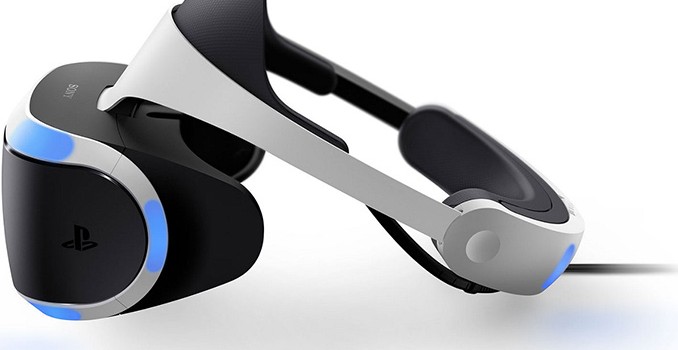
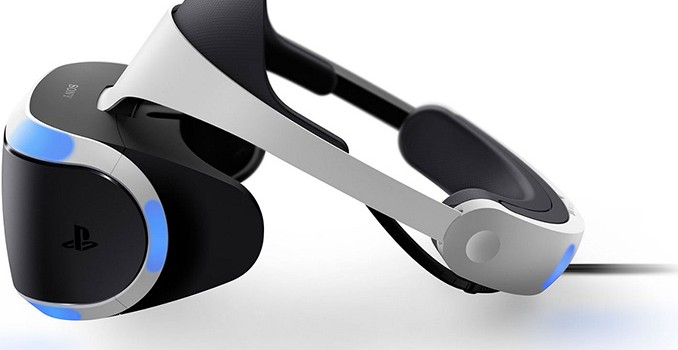
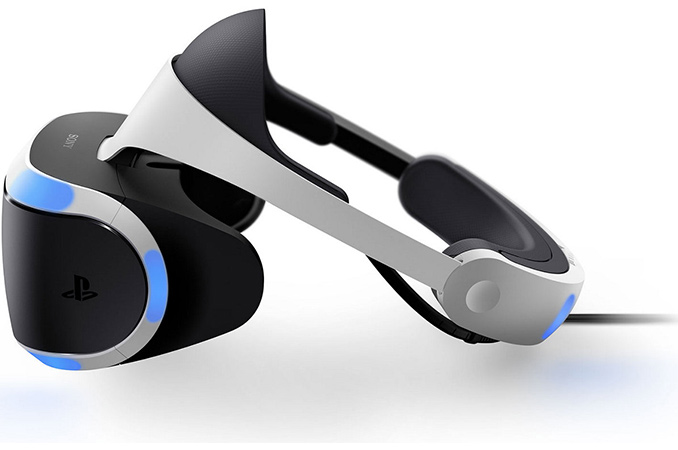
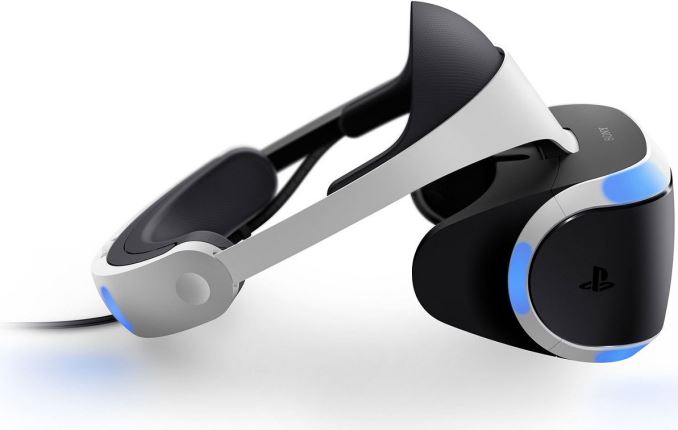
Sony has published the price of its PlayStation VR virtual reality headset and confirmed its final specifications and launch timeframe on Tuesday. The company intends to start selling the unit in October for $399, which is slightly later than expected. While the product will be considerably more affordable than competing headsets from Oculus VR and HTC – though the sticker price does not include the required camera – its technical specs are somewhat behind its rivals.

Specifications of VR Headsets
  Sony PlayStation VR HTC Vive Oculus Rift
Display 5.7″ OLED 2x OLED 2x OLED
Resolution 1920×1080
960×1080 per eye
2160×1200
1080×1200 per eye
2160×1200
1080×1200 per eye
Refresh Rate 90 Hz, 120 Hz 90 Hz 90 Hz
Sensors three-axis gyroscope, three-axis accelerometer over 70 sensors
MEMS gyroscope, accelerometer
6 degrees of freedom tracking
3-axis rotational tracking
3-axis positional tracking
Position Tracking PlayStation Camera Laser Vive Base Stations Constellation system based on infrared sensors

The Sony PlayStation VR head-mounted display (HMD) (CUH-ZVR1-series) features a 5.7” OLED display with 1920×1080 (960×1080 per eye) resolution, 90 Hz – 120 Hz refresh rate and approximately 100° field of view. The PS VR HMD is equipped with six-axis motion sensing system (three-axis gyroscope, three-axis accelerometer) as well as stereo headphones. Right now, Sony does not reveal many details about its VR headset, so, we do not know a lot of peculiarities of the HMD, such as display or motion to photon latencies. Nonetheless, based on what we do know about Sony’s VR headset, we can say that it uses a lot of custom-made components, which are optimized for virtual reality. Every PlayStation VR will come with a special processor unit, which will plug to the PlayStation 4 game console. Sony’s VR headset will connect to the processor unit using an HDMI cable, a PS4’AUX cable, as well as a stereo mini-jack.

Sony does not disclose what is inside the processor unit, but it claims that it does 3D audio processing as well as enables multi-display capabilities. In particular, the processor unit can enable cinematic mode, which lets users watch content or play games (including currently available PS4 titles) on a large virtual 225” screen. In addition, the processor unit can show what happens in virtual worlds on TV screens (in mirroring mode) as well as show different content on TV and VR screens (in separate mode). The processor comes in at a relatively light 365 grams, so while Sony isn’t disclosing much about the internals, it’s unlikely to contain much in the way of high-powered hardware; perhaps a semi-custom processor of some kind. The processor unit will use three HDMI ports, a USB port and an AUX cable to connect to a TV, a PS4 and a PS VR.
Each PlayStation VR headset will be bundled with the PlayRoom VR set of games by Sony Computer Entertainment Worldwide Studios. The PlayRoom VR suit will include six online virtual reality games.

Sony claims that 230 game developers and publishers are working on 160 various PS VR software titles and 50 of them will be available already this year. Sony claims that such games as Eagle Flight, EVE: Valkyrie, Headmaster, Rez Infinite, Wayward Sky, RIGS: Mechanized Combat League, Tumble VR and Until Dawn: Rush of Blood may hit the market already in 2016.

While the price of Sony’s PlayStation VR is not low and its bundle does not include the PlayStation Camera (around $50) needed to track the headset’s position as well as the PlayStation Move hand-tracking controllers (approximately $50 per unit), which are expected to be required for many games, it looks like Sony’s PlayStation 4 virtual reality platform will cost gamers less than competing PC-based VR platforms (albeit, at the cost of lower resolution). In order to try VR games on PS4, gamers will need to invest $399 in the PlayStation VR, $110 in the camera and controllers and $349 in the PlayStation 4 (around $859 in total, assuming they don’t have a PS4 and the aforementioned hardware). By contrast, Oculus Rift and HTC Vive headsets will cost $599 and $799, respectively, and will require a relatively powerful PC that typically starts at $949. It remains to be seen how the lower MSRP of Sony’s virtual reality platform will affect its popularity among gamers, and whether Sony can wring any further economies of scale out of production. Nonetheless, lower price will be Sony’s trump in its competition against Oculus VR and HTC.

Sony will begin to roll-out its PlayStation VR from October 2016 in Japan, North America, Europe and Asia, where it will cost ¥44,980, $399, €399 and £349. The company said that it decided to delay the release of its PS VR from the first half of the year to October in order to ensure that it can make enough hardware units. Another reason to delay the product could be readiness of VR games. Sony needs to ensure that their quality is high and performance is solid, which is why it needed to buy some additional time for developers.

Sony to Start Selling PlayStation VR in October for $399

Sony to Start Selling PlayStation VR in October for $399

Sony has published the price of its PlayStation VR virtual reality headset and confirmed its final specifications and launch timeframe on Tuesday. The company intends to start selling the unit in October for $399, which is slightly later than expected. While the product will be considerably more affordable than competing headsets from Oculus VR and HTC – though the sticker price does not include the required camera – its technical specs are somewhat behind its rivals.

Specifications of VR Headsets
  Sony PlayStation VR HTC Vive Oculus Rift
Display 5.7″ OLED 2x OLED 2x OLED
Resolution 1920×1080
960×1080 per eye
2160×1200
1080×1200 per eye
2160×1200
1080×1200 per eye
Refresh Rate 90 Hz, 120 Hz 90 Hz 90 Hz
Sensors three-axis gyroscope, three-axis accelerometer over 70 sensors
MEMS gyroscope, accelerometer
6 degrees of freedom tracking
3-axis rotational tracking
3-axis positional tracking
Position Tracking PlayStation Camera Laser Vive Base Stations Constellation system based on infrared sensors

The Sony PlayStation VR head-mounted display (HMD) (CUH-ZVR1-series) features a 5.7” OLED display with 1920×1080 (960×1080 per eye) resolution, 90 Hz – 120 Hz refresh rate and approximately 100° field of view. The PS VR HMD is equipped with six-axis motion sensing system (three-axis gyroscope, three-axis accelerometer) as well as stereo headphones. Right now, Sony does not reveal many details about its VR headset, so, we do not know a lot of peculiarities of the HMD, such as display or motion to photon latencies. Nonetheless, based on what we do know about Sony’s VR headset, we can say that it uses a lot of custom-made components, which are optimized for virtual reality. Every PlayStation VR will come with a special processor unit, which will plug to the PlayStation 4 game console. Sony’s VR headset will connect to the processor unit using an HDMI cable, a PS4’AUX cable, as well as a stereo mini-jack.

Sony does not disclose what is inside the processor unit, but it claims that it does 3D audio processing as well as enables multi-display capabilities. In particular, the processor unit can enable cinematic mode, which lets users watch content or play games (including currently available PS4 titles) on a large virtual 225” screen. In addition, the processor unit can show what happens in virtual worlds on TV screens (in mirroring mode) as well as show different content on TV and VR screens (in separate mode). The processor comes in at a relatively light 365 grams, so while Sony isn’t disclosing much about the internals, it’s unlikely to contain much in the way of high-powered hardware; perhaps a semi-custom processor of some kind. The processor unit will use three HDMI ports, a USB port and an AUX cable to connect to a TV, a PS4 and a PS VR.

Each PlayStation VR headset will be bundled with the PlayRoom VR set of games by Sony Computer Entertainment Worldwide Studios. The PlayRoom VR suit will include six online virtual reality games.

Sony claims that 230 game developers and publishers are working on 160 various PS VR software titles and 50 of them will be available already this year. Sony claims that such games as Eagle Flight, EVE: Valkyrie, Headmaster, Rez Infinite, Wayward Sky, RIGS: Mechanized Combat League, Tumble VR and Until Dawn: Rush of Blood may hit the market already in 2016.

While the price of Sony’s PlayStation VR is not low and its bundle does not include the PlayStation Camera (around $50) needed to track the headset’s position as well as the PlayStation Move hand-tracking controllers (approximately $50 per unit), which are expected to be required for many games, it looks like Sony’s PlayStation 4 virtual reality platform will cost gamers less than competing PC-based VR platforms (albeit, at the cost of lower resolution). In order to try VR games on PS4, gamers will need to invest $399 in the PlayStation VR, $110 in the camera and controllers and $349 in the PlayStation 4 (around $859 in total, assuming they don’t have a PS4 and the aforementioned hardware). By contrast, Oculus Rift and HTC Vive headsets will cost $599 and $799, respectively, and will require a relatively powerful PC that typically starts at $949. It remains to be seen how the lower MSRP of Sony’s virtual reality platform will affect its popularity among gamers, and whether Sony can wring any further economies of scale out of production. Nonetheless, lower price will be Sony’s trump in its competition against Oculus VR and HTC.

Sony will begin to roll-out its PlayStation VR from October 2016 in Japan, North America, Europe and Asia, where it will cost ¥44,980, $399, €399 and £349. The company said that it decided to delay the release of its PS VR from the first half of the year to October in order to ensure that it can make enough hardware units. Another reason to delay the product could be readiness of VR games. Sony needs to ensure that their quality is high and performance is solid, which is why it needed to buy some additional time for developers.

Qualcomm’s New SDK Enables Development of VR Apps on Snapdragon 820

Qualcomm’s New SDK Enables Development of VR Apps on Snapdragon 820

Qualcomm on Monday introduced its first virtual reality software development kit, designed for its Snapdragon 820 mobile SoC. The new tools will enable software makers to create programs that take advantage of Snapdragon 820’s graphics processing capabilities (i.e. Adreno) as well as built-in sensors. Qualcomm confirmed that in addition to smartphones and other mobile devices, the Snapdragon 820 will also be used inside VR headsets.

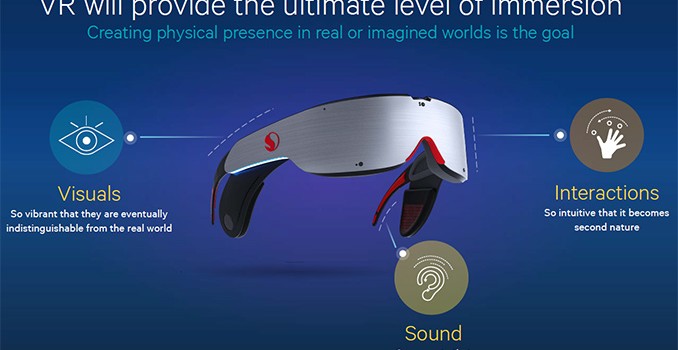
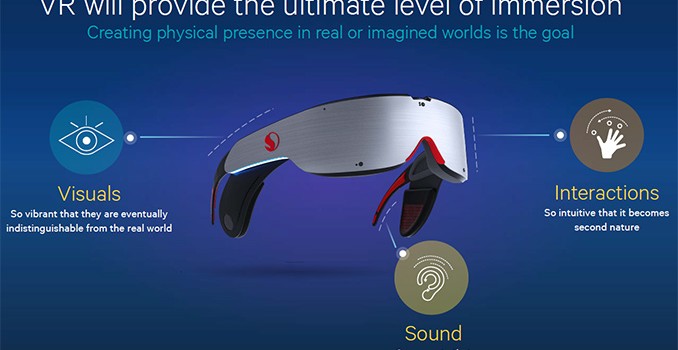
The Samsung Gear VR platform, as well as Google’s Cardboard, have demonstrated that smartphones based on contemporary high-end mobile SoCs can be used to enable virtual reality headsets. While graphics processing performance of mobile SoCs lags behind modern desktop graphics by AMD or NVIDIA, they integrate numerous sensors and technologies which can crucial for virtual reality equipment. In fact, positive virtual reality experience requires not only high-quality visuals and surround sound but also the complete immersion of the user and a sense of physical presence. As a result, precise sensors to track user’s movements and minimal latency are very important. But to fully utilize capabilities of modern mobile SoCs, software developers need a right set of tools tailored for VR software. Also, given the secrecy around the internal GPU Adreno graphics solution and its microarchitecture, any set of tools that can assist with graphics/DSP manipulation are a good thing to have.

Qualcomm’s Snapdragon VR SDK, which will be available in the second quarter, supports a number of technologies that simplify development of virtual reality applications, such as games, 360° VR videos and a variety of interactive education and entertainment apps.

The Snapdragon VR SDK supports DSP sensor fusion, which allows developers to access high-frequency inertial data from gyroscopes and accelerometers via the Snapdragon Sensor Core. The software development kit also allows developers to use the Qualcomm Hexagon DSP for predictive head position processing.

Usage of the Snapdragon VR SDK reduces latency by up to 50% by using asynchronous time warp with single buffer rendering for a rapid transformation of rendered images in 3D space. Qualcomm says that its Snapdragon 820 SoC features 18 ms motion to photon latency thanks to various enhancements.

The Snapdragon VR SDK also brings support for stereoscopic rendering with lens correction, color correction and barrel distortion, something that should improve the visual quality of graphics and videos. According to Qualcomm, the Snapdragon 820 can render stereoscopic images in 3200×1800 resolution at 90 fps. In addition, the software development kit can help to generate menus that are readable in VR worlds thanks to UI layering.

Finally, the Snapdragon VR SDK gives developers access to CPU, GPU, and DSP power and performance management in a bid to help them guarantee high and stable frame rates (90 fps) in low-power devices. Precise power management is also required to build sleek and lightweight VR headsets.

While the launch of a special Snapdragon VR SDK is a significant step for Qualcomm in the field of virtual reality, what is really important is Qualcomm’s commitment to VR in general. The company claims that it developed the Snapdragon 820 with virtual reality in mind and it will continue to implement VR-specific technologies into its upcoming Adreno graphics cores, CPU cores as well as Hexagon DSPs. Keeping in mind that VR headsets will only get more complex in the coming years, all the technologies that Qualcomm manages to incorporate into its SoCs will be instrumental in improving the quality of VR content.

For ecosystem enablement, Qualcomm will initially bring developers this VR SDK, and then also app development tools, device optimization tools, development platforms, and so on. In particular, Qualcomm claims that VR headsets based on the Snapdragon 820 are incoming, which will allow end-users to experience VR apps and content, whereas developers will be able to test their programs on commercial hardware.

Qualcomm’s New SDK Enables Development of VR Apps on Snapdragon 820

Qualcomm’s New SDK Enables Development of VR Apps on Snapdragon 820

Qualcomm on Monday introduced its first virtual reality software development kit, designed for its Snapdragon 820 mobile SoC. The new tools will enable software makers to create programs that take advantage of Snapdragon 820’s graphics processing capabilities (i.e. Adreno) as well as built-in sensors. Qualcomm confirmed that in addition to smartphones and other mobile devices, the Snapdragon 820 will also be used inside VR headsets.

The Samsung Gear VR platform, as well as Google’s Cardboard, have demonstrated that smartphones based on contemporary high-end mobile SoCs can be used to enable virtual reality headsets. While graphics processing performance of mobile SoCs lags behind modern desktop graphics by AMD or NVIDIA, they integrate numerous sensors and technologies which can crucial for virtual reality equipment. In fact, positive virtual reality experience requires not only high-quality visuals and surround sound but also the complete immersion of the user and a sense of physical presence. As a result, precise sensors to track user’s movements and minimal latency are very important. But to fully utilize capabilities of modern mobile SoCs, software developers need a right set of tools tailored for VR software. Also, given the secrecy around the internal GPU Adreno graphics solution and its microarchitecture, any set of tools that can assist with graphics/DSP manipulation are a good thing to have.

Qualcomm’s Snapdragon VR SDK, which will be available in the second quarter, supports a number of technologies that simplify development of virtual reality applications, such as games, 360° VR videos and a variety of interactive education and entertainment apps.

The Snapdragon VR SDK supports DSP sensor fusion, which allows developers to access high-frequency inertial data from gyroscopes and accelerometers via the Snapdragon Sensor Core. The software development kit also allows developers to use the Qualcomm Hexagon DSP for predictive head position processing.

Usage of the Snapdragon VR SDK reduces latency by up to 50% by using asynchronous time warp with single buffer rendering for a rapid transformation of rendered images in 3D space. Qualcomm says that its Snapdragon 820 SoC features 18 ms motion to photon latency thanks to various enhancements.

The Snapdragon VR SDK also brings support for stereoscopic rendering with lens correction, color correction and barrel distortion, something that should improve the visual quality of graphics and videos. According to Qualcomm, the Snapdragon 820 can render stereoscopic images in 3200×1800 resolution at 90 fps. In addition, the software development kit can help to generate menus that are readable in VR worlds thanks to UI layering.

Finally, the Snapdragon VR SDK gives developers access to CPU, GPU, and DSP power and performance management in a bid to help them guarantee high and stable frame rates (90 fps) in low-power devices. Precise power management is also required to build sleek and lightweight VR headsets.

While the launch of a special Snapdragon VR SDK is a significant step for Qualcomm in the field of virtual reality, what is really important is Qualcomm’s commitment to VR in general. The company claims that it developed the Snapdragon 820 with virtual reality in mind and it will continue to implement VR-specific technologies into its upcoming Adreno graphics cores, CPU cores as well as Hexagon DSPs. Keeping in mind that VR headsets will only get more complex in the coming years, all the technologies that Qualcomm manages to incorporate into its SoCs will be instrumental in improving the quality of VR content.

For ecosystem enablement, Qualcomm will initially bring developers this VR SDK, and then also app development tools, device optimization tools, development platforms, and so on. In particular, Qualcomm claims that VR headsets based on the Snapdragon 820 are incoming, which will allow end-users to experience VR apps and content, whereas developers will be able to test their programs on commercial hardware.

Lattice and MediaTek to Collaborate On Reference Smartphones For SuperMHL over USB-C

Lattice and MediaTek to Collaborate On Reference Smartphones For SuperMHL over USB-C

Lattice Semiconductor and MediaTek have joined forces to create reference smartphones with 4K video outputs using USB Type-C connectors and cables. The outputs will use the superMHL technology and will thus be compatible with various other superMHL devices such as TVs. The companies have already built a reference phone that supports a superMHL output over USB-C using previously announced chips from Lattice and hope that makers of smartphones will embrace the solution.

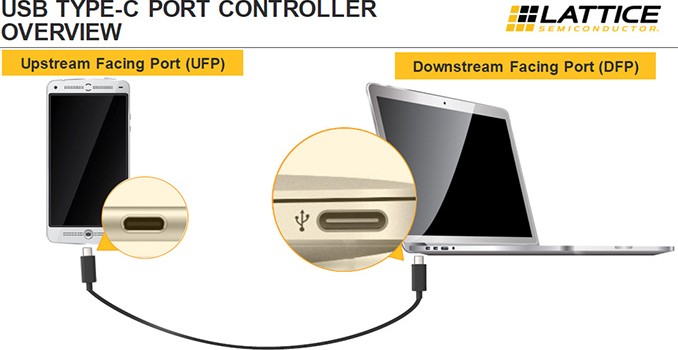
The USB Type-C technology and connectors are rapidly gaining traction across many industries. A number of modern notebooks, mobile devices and even desktops come with USB type-C ports. A good thing about USB-C is that it can be used to transfer alt mode data using a variety of protocols, including DisplayPort, Thunderbolt 3 and superMHL. Lattice (which acquired Silicon Image, a major developer of the MHL technology, about a year ago) clearly wants to capitalize on its expertise in the field of MHL and USB technologies by offering a reference implementation of single-lane superMHL over USB-C cables and connectors.

The simplified single-lane implementation of the superMHL used here for phones supports transmission of video in 4K (3840×2160) resolution with 30 fps over USB-C or even traditional MHL cables.

USB Type-C Alt Mode Display Standard Comparison
  superMHL DisplayPort 1.3
Resoluion 4Kp30, 4:4:4 @ 24bit 4Kp60, 4:4:4 @ 24bit
Type-C Lanes Required 1 2
Image Compression “Visually Lossless” (Lossy) No Compression
TV Interface superMHL-over-HDMI (Passive)
HDMI (Active Conversion)
Power Charging USB-PD or MHL (legacy) USB-PD

The superMHL over USB-C reference implementation by Lattice and MediaTek involves the Helio X20 system-on-chip (two ARM Cortex-A72, four Cortex-A53 at 2 GHz, four Cortex-A53 at 1.4 GHz, ARM Mali T880 MP4 graphics core, dual-channel LPDDR3 memory controller), the Sil8348 MHL transmitter as well as the Sil7033 port controller (which sets up MHL alt mode on USB-C and supports power data objects, which are needed to charge the phone). The superMHL implementation by Lattice and MediaTek supports best of both technologies’ worlds: 10 Gbps USB 3.1 transfer rate, 4Kp60 video, power delivery (for up to 100W of power), ability to connect to TVs with MHL using appropriate adapters. What is notable is that thanks the to the Sil7033 chip, simultaneous MHL and USB 3.1 connectivity is also supported. Lattice also offers Sil7013 and the Sil9396 port controllers for docks and accessories to establish MHL alt mode and convert MHL to HDMI transmission respectively.

The creation of these reference devices is the latest salvo in the ongoing war Lattice is striking over the future of video out for mobile devices. MHL was decently common in previous generation devices, however with the switch to USB Type-C ports and the creation of alt modes, there is opportunity to start anew. Practically speaking, this is a war between superMHL and DisplayPort, which are the two major video out alt modes.

One thing that will be crucial for enablement of 4K outputs using USB-C interconnection are quality USB Type-C cables. It is not a secret that there are cheap USB 3.1 Type-C cables that do not work as advertised and simply lack conductors, which can be repurposed. Such cables will not be able to support 4K output using USB-C. Cheap USB type-C cables that do not comply with standards are an industry-wide problem. If today many people may simply not notice issues with them because they are only used for data transmission with USB 2.0 hosts, in the coming years the problem will get much worse.

Finally, Lattice and MediaTek did not reveal whether their UHD output over USB-C reference platform has so far been adopted by any makers of smartphones.