News


ASUS Unveils 75W GeForce GTX 950 Graphics Card; Powered Entirely By PCIe Slot
ASUS Unveils 75W GeForce GTX 950 Graphics Card; Powered Entirely By PCIe Slot

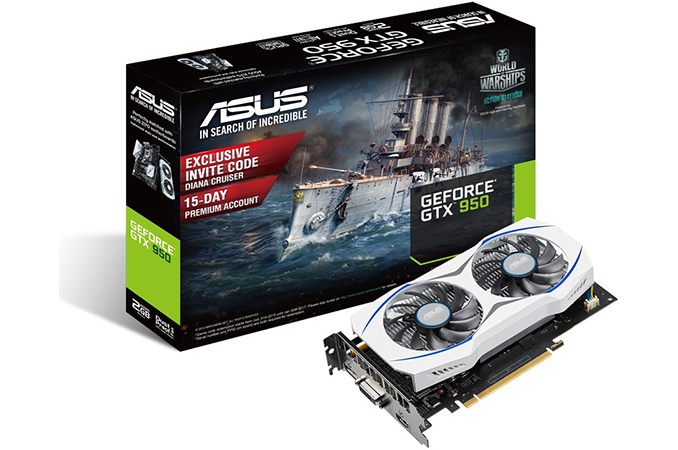
ASUS has quietly introduced its new video card based on the NVIDIA GeForce GTX 950 GPU with a 75W power limit. By virtue of a lower power limit, this newer design does not require a 6pin PCIe auxiliary power connection and can be used to upgrade even basic PCs. Surprisingly, despite the lowered TDP, the ASUS GTX950-2G card features typical clock-rates and other specificaitons one would expect from a GeForce GTX 950.

The sub-75W video card market is an important one, as many desktop PCs supplied by well-known brands lack even basic upgrade capabilities. To cut-down their costs and improve cable management inside their systems, PC makers sometimes reduce the number of power connectors to a minimum they need to build their systems. As a consequence, it gets impossible to add a new hard drive to such computers, or install a higher-performance graphics card due to lack of necessary additional power connectors inside the box.

When NVIDIA designed its Maxwell architecture years ago, the company put a lot of effort into improving relative energy efficiency of its then forthcoming GPUs and into cutting their absolute power consumption as well. As a result, the first Maxwell-based GPU, GM107, consumed only up to 60W even in its most powerful desktop configurations (i.e., GeForce GTX 750 Ti) and was widely used inside notebooks. The majority of GeForce GTX 750 Ti video cards did not require any additional power connectors and could be used to upgrade any PC because any PCIe x16 slot can provide up to 75W of power.

The more advanced GM206 GPU, based on the second-generation Maxwell architecture, has a TDP of up to 120W, which means that video cards based around it have required additional power. As a result, the GeForce GTX 950 and the GeForce GTX 960 video cards are not as OEM PC-friendly because they require one 6-pin PCIe auxiliary power connector. Nonetheless, ASUS has been able develop a GeForce GTX 950 video card that can be installed into almost any PC with sufficient space inside because its power consumption is just 75W.

The ASUS GTX950-2G comes with 2 GB of GDDR5 memory clocked at 6.6 Gbps, a dual-slot dual-fan cooling system with an aluminum heatsink, one DVI connector, one HDMI 2.0 port and one DisplayPort output. ASUS did not lower frequency of the GPU and did not alter its configuration, though as we’ve seen with past attempts to produce lower power SKUs, it’s likely that this card has a reduced hard power limit to stay under 75W and may be more likely to power-throttle as a result. The GPU features 768 stream processors, 48 texture units, 32 ROPs as well as a 128-bit GDDR5 memory interface. It can work at 1051 MHz base clock and at up to 1128 MHz in boost mode (when OC mode is enabled).

Perhaps the most interesting aspect of this video card is that thanks to the underlying GM206 GPU, it’s the first sub-75W card to gain full hardware-accelerated decoding and encoding of H.265 (HEVC) video, and it fully supports HDCP 2.2 content protection over HDMI 2.0. This will likely make the ASUS GTX950-2G a popular choice for HTPCs as a result. Conversely, due to low-power nature of the graphics adapter, the ASUS GTX950-2G may not be the best overclocker. For those, who would like to push a GeForce GTX 950 to the limits, ASUS offers its ECHELON-GTX95-O2G and the GTX950-2GD5 video cards that have power and cooling headroom as well as components with enhanced durability (the ECHELON model).

NVIDIA Video Card Specification Comparison
  ASUS GTX950-2G Ref GTX 950 Ref GTX 960 Ref GTX 750 Ti
CUDA Cores 768 1024 640
Texture Units 48 64 40
ROPs 32 16
Core Clock 1026MHz
1051MHz (OC)
1024MHz 1126MHz 1020MHz
Boost Clock 1190MHz
1228MHz (OC)
1188MHz 1178MHz 1085MHz
Memory Clock 6.6Gbps GDDR5 7Gbps GDDR5 5.4Gbps GDDR5
Memory Bus Width 128-bit
VRAM 2GB 2GB/4GB /2GB
TDP 75W 90W 120W 60W
Architecture Maxwell 2 Maxwell 1
GPU GM206 GM107
Transistor Count 2.94B 1.87B
Manufacturing Process TSMC 28nm TSMC 28nm
Launch Date 03/16/16 08/20/15 01/22/15 02/18/14
Launch Price unknown $159 $199 $149

The ASUS GTX950-2G graphics card is listed at ASUSTeK’s web-site, but is not yet available for sale anywhere. The price of the product will remain a mystery for now, but I do not expect it to be significantly higher than NVIDIA’s MSRP for the GeForce GTX 950 — $159. Meanwhile the card also qualifies for ASUS’s ongoing World of Warships promo program, and as a result comes with a code for the game’s Diana Cruiser along with 15 days premium credit for a new account.

UPDATE: ASUS has also added the Mini-GTX 950 2G into its linep. The card comes in mini-ITX form-factor, consumes up to 75W and does not require external PCIe power.

Source: ASUS via PC Perspective.

ASUS Unveils 75W GeForce GTX 950 Graphics Card; Powered Entirely By PCIe Slot

ASUS Unveils 75W GeForce GTX 950 Graphics Card; Powered Entirely By PCIe Slot

ASUS has quietly introduced its new video card based on the NVIDIA GeForce GTX 950 GPU with a 75W power limit. By virtue of a lower power limit, this newer design does not require a 6pin PCIe auxiliary power connection and can be used to upgrade even basic PCs. Surprisingly, despite the lowered TDP, the ASUS GTX950-2G card features typical clock-rates and other specificaitons one would expect from a GeForce GTX 950.

The sub-75W video card market is an important one, as many desktop PCs supplied by well-known brands lack even basic upgrade capabilities. To cut-down their costs and improve cable management inside their systems, PC makers sometimes reduce the number of power connectors to a minimum they need to build their systems. As a consequence, it gets impossible to add a new hard drive to such computers, or install a higher-performance graphics card due to lack of necessary additional power connectors inside the box.

When NVIDIA designed its Maxwell architecture years ago, the company put a lot of effort into improving relative energy efficiency of its then forthcoming GPUs and into cutting their absolute power consumption as well. As a result, the first Maxwell-based GPU, GM107, consumed only up to 60W even in its most powerful desktop configurations (i.e., GeForce GTX 750 Ti) and was widely used inside notebooks. The majority of GeForce GTX 750 Ti video cards did not require any additional power connectors and could be used to upgrade any PC because any PCIe x16 slot can provide up to 75W of power.

The more advanced GM206 GPU, based on the second-generation Maxwell architecture, has a TDP of up to 120W, which means that video cards based around it have required additional power. As a result, the GeForce GTX 950 and the GeForce GTX 960 video cards are not as OEM PC-friendly because they require one 6-pin PCIe auxiliary power connector. Nonetheless, ASUS has been able develop a GeForce GTX 950 video card that can be installed into almost any PC with sufficient space inside because its power consumption is just 75W.

The ASUS GTX950-2G comes with 2 GB of GDDR5 memory clocked at 6.6 Gbps, a dual-slot dual-fan cooling system with an aluminum heatsink, one DVI connector, one HDMI 2.0 port and one DisplayPort output. ASUS did not lower frequency of the GPU and did not alter its configuration, though as we’ve seen with past attempts to produce lower power SKUs, it’s likely that this card has a reduced hard power limit to stay under 75W and may be more likely to power-throttle as a result. The GPU features 768 stream processors, 48 texture units, 32 ROPs as well as a 128-bit GDDR5 memory interface. It can work at 1051 MHz base clock and at up to 1128 MHz in boost mode (when OC mode is enabled).

Perhaps the most interesting aspect of this video card is that thanks to the underlying GM206 GPU, it’s the first sub-75W card to gain full hardware-accelerated decoding and encoding of H.265 (HEVC) video, and it fully supports HDCP 2.2 content protection over HDMI 2.0. This will likely make the ASUS GTX950-2G a popular choice for HTPCs as a result. Conversely, due to low-power nature of the graphics adapter, the ASUS GTX950-2G may not be the best overclocker. For those, who would like to push a GeForce GTX 950 to the limits, ASUS offers its ECHELON-GTX95-O2G and the GTX950-2GD5 video cards that have power and cooling headroom as well as components with enhanced durability (the ECHELON model).

NVIDIA Video Card Specification Comparison
  ASUS GTX950-2G Ref GTX 950 Ref GTX 960 Ref GTX 750 Ti
CUDA Cores 768 1024 640
Texture Units 48 64 40
ROPs 32 16
Core Clock 1026MHz
1051MHz (OC)
1024MHz 1126MHz 1020MHz
Boost Clock 1190MHz
1228MHz (OC)
1188MHz 1178MHz 1085MHz
Memory Clock 6.6Gbps GDDR5 7Gbps GDDR5 5.4Gbps GDDR5
Memory Bus Width 128-bit
VRAM 2GB 2GB/4GB /2GB
TDP 75W 90W 120W 60W
Architecture Maxwell 2 Maxwell 1
GPU GM206 GM107
Transistor Count 2.94B 1.87B
Manufacturing Process TSMC 28nm TSMC 28nm
Launch Date 03/16/16 08/20/15 01/22/15 02/18/14
Launch Price unknown $159 $199 $149

The ASUS GTX950-2G graphics card is listed at ASUSTeK’s web-site, but is not yet available for sale anywhere. The price of the product will remain a mystery for now, but I do not expect it to be significantly higher than NVIDIA’s MSRP for the GeForce GTX 950 — $159. Meanwhile the card also qualifies for ASUS’s ongoing World of Warships promo program, and as a result comes with a code for the game’s Diana Cruiser along with 15 days premium credit for a new account.

UPDATE: ASUS has also added the Mini-GTX 950 2G into its linep. The card comes in mini-ITX form-factor, consumes up to 75W and does not require external PCIe power.

Source: ASUS via PC Perspective.
Thecus Announces Two New Rackmount NAS Servers

Thecus Announces Two New Rackmount NAS Servers

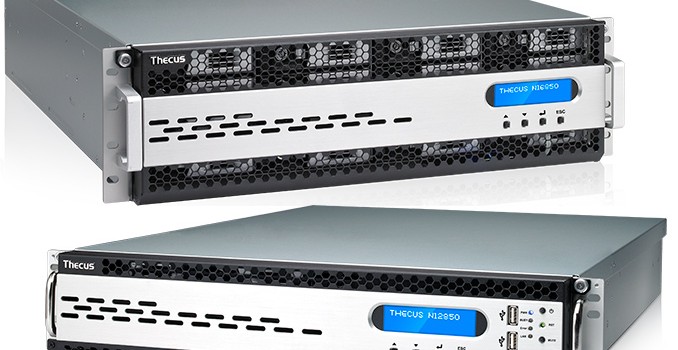
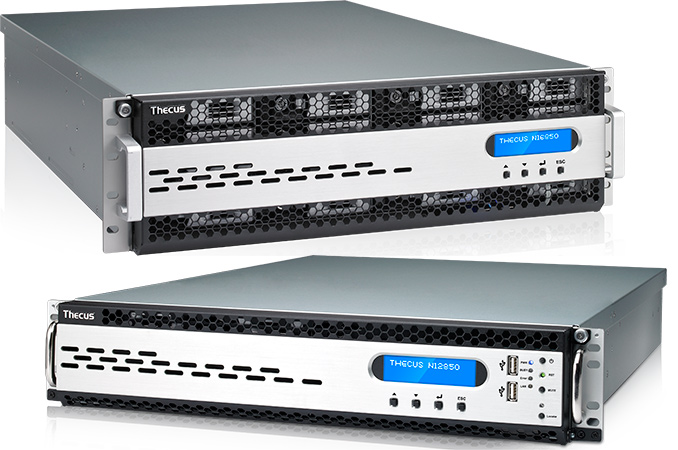
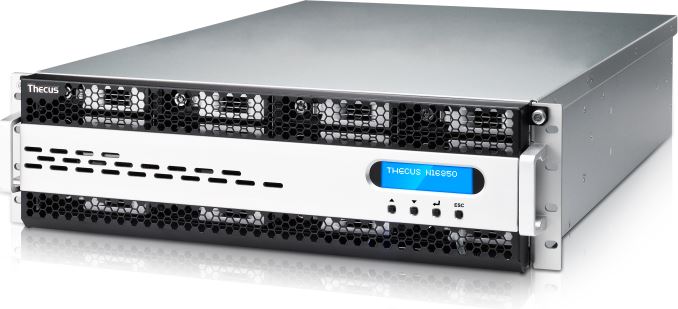
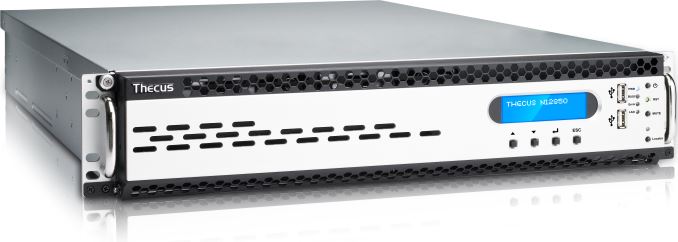
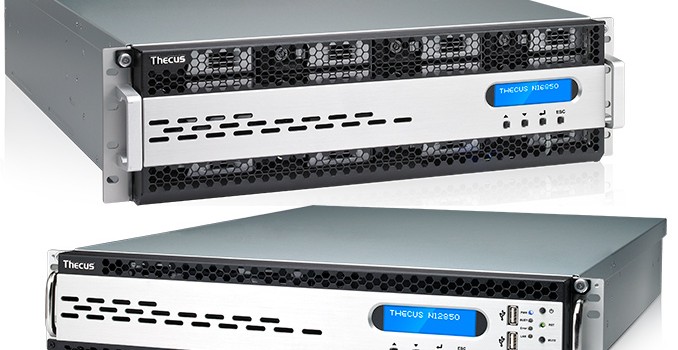
Thecus has introduced two new commercial off-the-shelf (COTS) rackmount enterprise-class NAS servers with 12 and 16 bays. They both run the latest version of Thecus’s Linux-based OS. The systems are based on the Intel Xeon processors, feature SAS 12 Gbps ports and are 10 Gb Ethernet-ready. The units come with usual virtualization certifications, volume encryption and Intel security technologies.

The N12850 and the N16850 NAS rackmount servers from Thecus are powered by the Intel Xeon E3-1231 v3 (Haswell, four cores with Hyper-Threading, 3.40/3.80 GHz, 8 MB cache, 80 W TDP) processor with the Intel C224 PCH and a LSI SAS 12 Gbps HBA card. The OS implements software RAID (support for RAID 0, 1, 5, 6, 10, 50, 60 and JBOD). The systems come with four DIMM slots for up to 32 GB of DDR3 ECC memory, three spare PCIe 3.0 slots (x8, x4 and x1) for additional controllers and can fit in 12 (N12850) or 16 (N16850) 3.5-inch hot-swappable HDDs with SAS-12G or SATA-6G interface. The N12850 comes in 2U form-factor, whereas the N16850 uses 3U form-factor. Both servers feature 650W redundant power supply units. The servers also have D-Sub outputs for displays we well as USB 2.0/3.0 ports for peripherals.

Both models can be equipped with 10 GbE adapters to connect to enterprise networks and other machines. Like previous-generation NAS systems from Thecus, the N12850 and the N16850 support the company’s HA (high availability) and Daisy Chaining technologies. The HA keeps data on two identical NAS machines and if one fails or needs maintenance, the other will still be available to users. According to Thecus, ‘Daisy Chaining’ allows connecting up to four D16000 DAS systems using SAS wide port 8088 cables as slaves to one NAS server. This can significantly expand storage capacities (up to 640 TB).

Thanks to the usage of Intel Xeon E3 processors featuring AES-NI, the new NAS systems from Thecus support volume AES encryption technology with up to 256-bit keys. Additionally, the servers fully support virtualization and multiple file systems (users can simultaneously use Ext3, EXT4, Btrfs and XFS file systems across multiple RAID volumes).

The N12850 and the N16850 servers support real-time remote replication and system disaster recovery and come bundled with Acronis Server Backup and Intel Security software.

Thecus will start to ship its new NAS servers in April. Prices are unknown.

Thecus Announces Two New Rackmount NAS Servers

Thecus Announces Two New Rackmount NAS Servers

Thecus has introduced two new commercial off-the-shelf (COTS) rackmount enterprise-class NAS servers with 12 and 16 bays. They both run the latest version of Thecus’s Linux-based OS. The systems are based on the Intel Xeon processors, feature SAS 12 Gbps ports and are 10 Gb Ethernet-ready. The units come with usual virtualization certifications, volume encryption and Intel security technologies.

The N12850 and the N16850 NAS rackmount servers from Thecus are powered by the Intel Xeon E3-1231 v3 (Haswell, four cores with Hyper-Threading, 3.40/3.80 GHz, 8 MB cache, 80 W TDP) processor with the Intel C224 PCH and a LSI SAS 12 Gbps HBA card. The OS implements software RAID (support for RAID 0, 1, 5, 6, 10, 50, 60 and JBOD). The systems come with four DIMM slots for up to 32 GB of DDR3 ECC memory, three spare PCIe 3.0 slots (x8, x4 and x1) for additional controllers and can fit in 12 (N12850) or 16 (N16850) 3.5-inch hot-swappable HDDs with SAS-12G or SATA-6G interface. The N12850 comes in 2U form-factor, whereas the N16850 uses 3U form-factor. Both servers feature 650W redundant power supply units. The servers also have D-Sub outputs for displays we well as USB 2.0/3.0 ports for peripherals.

Both models can be equipped with 10 GbE adapters to connect to enterprise networks and other machines. Like previous-generation NAS systems from Thecus, the N12850 and the N16850 support the company’s HA (high availability) and Daisy Chaining technologies. The HA keeps data on two identical NAS machines and if one fails or needs maintenance, the other will still be available to users. According to Thecus, ‘Daisy Chaining’ allows connecting up to four D16000 DAS systems using SAS wide port 8088 cables as slaves to one NAS server. This can significantly expand storage capacities (up to 640 TB).

Thanks to the usage of Intel Xeon E3 processors featuring AES-NI, the new NAS systems from Thecus support volume AES encryption technology with up to 256-bit keys. Additionally, the servers fully support virtualization and multiple file systems (users can simultaneously use Ext3, EXT4, Btrfs and XFS file systems across multiple RAID volumes).

The N12850 and the N16850 servers support real-time remote replication and system disaster recovery and come bundled with Acronis Server Backup and Intel Security software.

Thecus will start to ship its new NAS servers in April. Prices are unknown.

The Dell XPS 15 9550 Review: Infinity Edge Lineup Expands

It was roughly a year ago that we had a chance to review Dell’s XPS 13, which was the first laptop from Dell to feature the Infinity Edge display. In addition to making the laptop look as much like a bezel-less display as possible, it also let D…