Vik


Netgear Launches ARM Cortex-A15-based ReadyNAS 200 Series
Netgear Launches ARM Cortex-A15-based ReadyNAS 200 Series

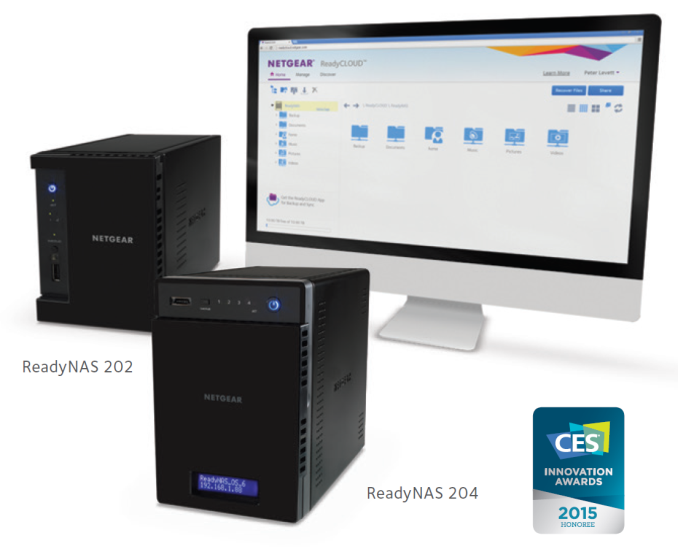
Netgear’s major announcement at CES 2015 was the ReadyNAS 200 series of NAS units targeting the SOHO market and power users. This lineup has two members, a 2-bay RN202 and a 4-bay RN204. The ReadyNAS 200 series is based on a dual-core Cortex-A15 SoC from Annapurna Labs. The system has 2 GB of RAM and two GbE ports. 802.3ad dynamic link aggregation is supported, and transfer rates of around 200 MBps are possible (similar to what QNAP claims for their TS-x31+ series). The units run ReadyNAS OS 6.2 and have a MSRP of $360 and $500 for the 2-bay and 4-bay variants.

As I mentioned in our COTS NAS buyer’s guide last month, Netgear’s ReadyNAS OS 6.x is quite interesting because of the choice of a btrfs file system. We also get snapshots with minimal overhead (due to the COW – Copy on Write – nature of the file system) and protection against bit-rot. The ReadyNAS 200 series provides a powerful, yet affordable alternative to the ReadyNAS 300 and ReadyNAS 500 series of NAS units.

At the show, Netgear also launched the AirCard, a battery-powered 4G hotspot device connecting to the Sprint network. The $200 price also includes 1 GB of data, with the option to purchase more further down the road. In the ProSAFE lineup, we also got Click Switches – 8- and 16- port GbE unmanaged switches with USB charging ports. The focus of the product is on ease of use and versatility. On the powerline networking front, Netgear had their HomePlug AV2 PL1200 and PLP1200 devices on display.

Netgear decided to hold off on any major router announcements at CES. Most of the other networking vendors announcing flagship products were planning to ship in Q2 or later. This obviously points to the hardware platforms not being ready. It does make plenty of sense for Netgear to announce products closer to their release dates. In addition, they got in first on the Broadcom XStream platform with the Nighthawk X6 R8000 and second on the 4×4 MU-MIMO Quantenna solution (after Asus) with the Nighthawk X4 R7500. They have both flagships currently in the market. The focus at CES was more on the software updates (such as ReadyCLOUD integration, configurable power output for the Wi-Fi radios etc.) that Negear had in the pipeline for the R7000 platform.
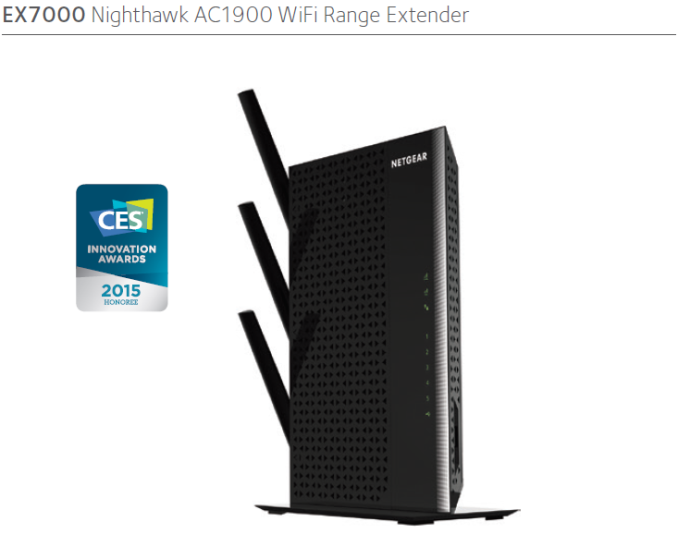
That said, they did show off a Nighthawk AC1900 range extender – basically, the same internal hardware as the R7000, but, without routing support, and priced a good $30 cheaper.


More DDR4-3400: G.Skill’s 4x4GB CL 16 Kit Released

More DDR4-3400: G.Skill’s 4x4GB CL 16 Kit Released

When we look at the history of DDR3, a number of key advertising points were consistent across most of the memory manufacturers. First was high speed in terms of out of the box, and the other was high speed from overclocking. The big names all went for these records, and after we posted about Corsair’s DDR4-3400 kit a couple of days ago, G.Skill is also jumping onto the bandwagon. However, the kit is very slightly different – G.Skill is supporting 16-16-16-36 timings, compared to Corsair’s 16-18-18-40. Whether that means much in real-world usage is hard to say, but I would imagine G.Skill, given the history between the two, will also compete on price. So perhaps under $1000, which would be a big hit in anyone’s build.

This 4×4 GB kit will also be flanked by a new DDR4-3200 4×4 GB kit, available at 15-15-15-35 timings, which also undercuts the competition. Both of the new kits from G.Skill are validated on the GIGABYTE X99-SOC Champion and the ASUS Rampage V Extreme.

The kits will also come with G.Skill’s Turbulence III fans to provide extra cooling. There is no date currently mentioned by G.Skill, but ‘released’ often means ‘heading to distributors’. Given the high specifications of the kit, I would imagine only a handful are actually going on sale.

We still have a round-up of DDR4 memory kits planned in the works, from 2133 to 3200 (perhaps 3400 if we can get them), so stay tuned for that.

Source: G.Skill

More DDR4-3400: G.Skill’s 4x4GB CL 16 Kit Released

More DDR4-3400: G.Skill’s 4x4GB CL 16 Kit Released

When we look at the history of DDR3, a number of key advertising points were consistent across most of the memory manufacturers. First was high speed in terms of out of the box, and the other was high speed from overclocking. The big names all went for these records, and after we posted about Corsair’s DDR4-3400 kit a couple of days ago, G.Skill is also jumping onto the bandwagon. However, the kit is very slightly different – G.Skill is supporting 16-16-16-36 timings, compared to Corsair’s 16-18-18-40. Whether that means much in real-world usage is hard to say, but I would imagine G.Skill, given the history between the two, will also compete on price. So perhaps under $1000, which would be a big hit in anyone’s build.

This 4×4 GB kit will also be flanked by a new DDR4-3200 4×4 GB kit, available at 15-15-15-35 timings, which also undercuts the competition. Both of the new kits from G.Skill are validated on the GIGABYTE X99-SOC Champion and the ASUS Rampage V Extreme.

The kits will also come with G.Skill’s Turbulence III fans to provide extra cooling. There is no date currently mentioned by G.Skill, but ‘released’ often means ‘heading to distributors’. Given the high specifications of the kit, I would imagine only a handful are actually going on sale.

We still have a round-up of DDR4 memory kits planned in the works, from 2133 to 3200 (perhaps 3400 if we can get them), so stay tuned for that.

Source: G.Skill

Samsung Displays New 3D V-NAND Based Enterprise SSDs at CES 2015

Samsung Displays New 3D V-NAND Based Enterprise SSDs at CES 2015

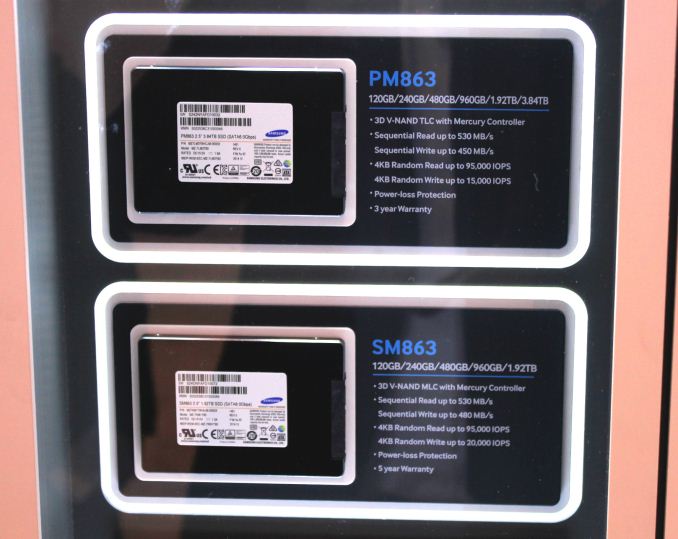
Along with the release of the SM951 PCIe SSD, Samsung had several new enterprise SSDs on display at the show. The PM863 and SM863 are SATA 6Gbps drives and pack a new Mercury controller (unfortunately I don’t have any specifics at this point), but what’s intriguing is the available capacities. The PM863 with 32-layer 128Gbit TLC NAND comes in up to 3.84TB capacity in 2.5″ form factor, whereas the SM863 with 32-layer 86Gbit MLC NAND offers a half of that (i.e. 1.92TB). Sustained 4KB random write performance is a decent 15K IOPS for the PM863 and 20K for the SM863, but there is no word about endurance at this point.

In addition to SATA drives, Samsung showed off three new SAS drives with new REX controller and 3D V-NAND. Capacities are once again impressive with the PM1633 packing up to 3.84TB in 2.5″ and thanks to the SAS 12Gbps interface sequential performance is doubled compared to the SATA 6Gbps drives. 

And lastly, Samsung also displayed the enterprise version of the SM951 i.e. the SM953. The change compared to the SM951 is M.2 22110 form factor to fit the capacitor on the PCB for power-loss protection, but otherwise the SM953 shares the same core hardware. The firmware is obviously enterprise-oriented with focus on sustained figures, hence the slightly lower performance specs. 

Samsung Displays New 3D V-NAND Based Enterprise SSDs at CES 2015

Samsung Displays New 3D V-NAND Based Enterprise SSDs at CES 2015

Along with the release of the SM951 PCIe SSD, Samsung had several new enterprise SSDs on display at the show. The PM863 and SM863 are SATA 6Gbps drives and pack a new Mercury controller (unfortunately I don’t have any specifics at this point), but what’s intriguing is the available capacities. The PM863 with 32-layer 128Gbit TLC NAND comes in up to 3.84TB capacity in 2.5″ form factor, whereas the SM863 with 32-layer 86Gbit MLC NAND offers a half of that (i.e. 1.92TB). Sustained 4KB random write performance is a decent 15K IOPS for the PM863 and 20K for the SM863, but there is no word about endurance at this point.

In addition to SATA drives, Samsung showed off three new SAS drives with new REX controller and 3D V-NAND. Capacities are once again impressive with the PM1633 packing up to 3.84TB in 2.5″ and thanks to the SAS 12Gbps interface sequential performance is doubled compared to the SATA 6Gbps drives. 

And lastly, Samsung also displayed the enterprise version of the SM951 i.e. the SM953. The change compared to the SM951 is M.2 22110 form factor to fit the capacitor on the PCB for power-loss protection, but otherwise the SM953 shares the same core hardware. The firmware is obviously enterprise-oriented with focus on sustained figures, hence the slightly lower performance specs.