Vik


ADATA CES Suite Tour: PCIe & TLC SSDs, Power-Loss Protection Demo, 256GB SD Cards, USB 3.1 And More
ADATA CES Suite Tour: PCIe & TLC SSDs, Power-Loss Protection Demo, 256GB SD Cards, USB 3.1 And More

I stopped by ADATA’s suite last week to see what the company has been up to in the past six months. While ADATA didn’t release or announce anything new at the show, there were plenty of upcoming products on display in the suite.

The SP320 will be ADATA’s first TLC NAND based SSD and will be available sometime in the first half of 2015. It’s based on Silicon Motion’s new SM2256 controller, which supports LDPC error correction that increases the endurance (basically, LDPC can deal with a lot higher error rate compared to traditional BCH error correction). Capacities will range from 120GB to all the way to up to 960GB, but the exact specifications are unknown at this point.

Moving on to PCIe, ADATA was showcasing industrial SSDs based on JMicron’s JMF811 and JMF810 controllers. The JMF811 is the full-fledged version with four PCIe 2.0 lanes, whereas the JMF810 is capped to two lanes. Capacities go up to 1TB in M.2 2280 form factor and I was told that the drive is already shipping to ADATA’s industrial partners. Obviously, the drive is not a retail version (hence the awkward name), but I wouldn’t be surprised to see a client version with the same controller showing up later.

Similar to Computex, ADATA was also demoing the SandForce SF3700 based SR1020. To be honest, I don’t really have anything new to share on the SF3700. The live demo ADATA was showing in the suite was just sequential writes, which we have already seen before for a few times. Timing wise Seagate/SandForce is now aiming for Computex 2015, so expect to see a ton of new SSD announcements and releases around June time.

In addition to products, ADATA was showing a neat power-loss protection test platform. The platform consists of a custom PCB that plugs into a USB port along with a special software that interrupts power delivery. The purpose of the demo was to show off ADATA’s enterprise SR1010 SSD with full power-loss protection, but ADATA also promised to send us the test platform for use in future reviews.

ADATA was also showcasing a couple of USB 3.0 drives with unique security features. The first one was the UE720, which is otherwise a typical USB 3.0 drive but features a fingerprint scanner to provide an extra layer of security.

The other one was the UC520, which uses Bluetooth 4.0 for security. I’m not sure how exactly the encryption works with Bluetooth, but I assume the drive needs to create a Bluetooth connection with a known computer/tablet/smartphone before the contents can be accessed.

For SD cards ADATA has a new UHS-II type XPG SDXC card with capacity of up to 256GB. The card offers read speeds of up to 150MB/s and is capable of 4K2K recording. 

ADATA was also displaying a USB 3.1 compatible SE700 external drive with dual SSDs inside. Sequential performance goes above 800MB/s and the drive will be ready to ship once USB 3.1 platforms are available later this year.

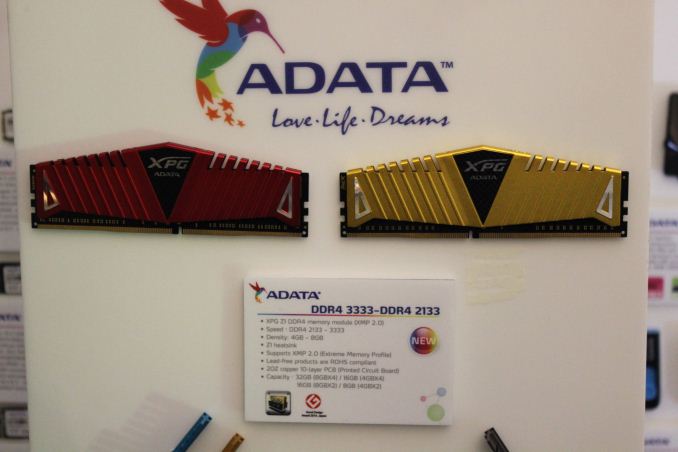
ADATA was one of Intel’s original DDR4 launch partners and since the launch ADATA has been able to up the speeds to DDR4-3333.

Intel Updates the NUC at CES 2015 with Broadwell-U

Intel Updates the NUC at CES 2015 with Broadwell-U

The big topic going in to CES was the launch of Broadwell-U, Intel’s 14 nanometer 5th generation Core products for laptops, mini-PCs and all-in-ones, with rated TDPs of 15W and 28W and the new Generation 8 graphics onboard. Into the mini-PC…

Samsung Announces the Galaxy A7

Samsung Announces the Galaxy A7

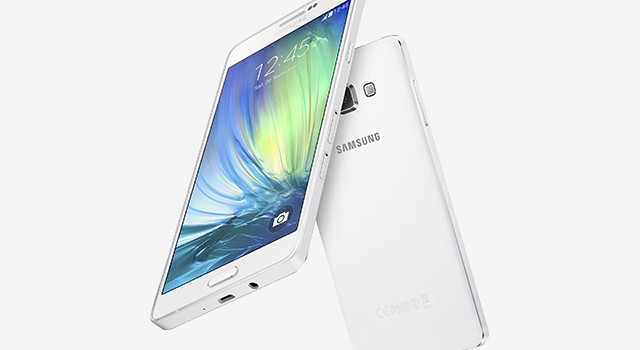
The smartphone space is not as it was a few years ago. There’s increasing competition from vendors based in countries like China and India who can put out high quality products at a very low price. In a world where vendors are squeezing them on both the high end and the low end, Samsung has been put under significant pressure to improve their mid-range devices moving into the future. We saw the beginning of this with the Galaxt A3 and A5, which had aluminum unibody designs that seemed to defy their low price point. The latest device to continue this strategy is the Galaxy A7, which is the largest and fastest device of the Galaxy A line. I’ve laid out its specs in the table below.

Samsung Galaxy A7
SoC Exynos 5430 or Qualcomm Snapdragon 615
Memory and Storage 16GB NAND + MicroSDXC, 2GB LPDDR3
Display 5.5” HD SAMOLED
Cellular Connectivity 2G / 3G / 4G LTE (Ericsson M7450 or MDM9x25)
Dimensions 151 x 76.2 x 6.3 mm, 141g
Camera 13 MP Rear Facing, 5MP Front Facing
Battery 2600 mAh (9.88 Whr)
Other Connectivity 802.11 a/b/g/n + BT 4.0, USB2.0, GPS/GNSS, NFC
SIM Size Nano SIM (Dual SIM SKU available)
Operating System Android 4.4 KitKat

As you can see, the Galaxy A7 is still a mid-range smartphone like the A3 and A5. However, we get some impressive specifications for a mid-range device. The Galaxy A7 comes with one of two similar processors depending on which SKU you buy. The single-SIM LTE model comes with Samsung’s Exynos 5430 which has a 1.8GHz 4 x Cortex-A15 cluster and a 1.3GHz 4 x Cortex-A7 cluster. This model uses Ericsson’s M7450 Cat4 LTE modem. The dual-SIM LTE/3G model uses Qualcomm’s Snapdragon 615 MSM9839 which has a 1.5GHz 4 x Cortex-A53 cluster and a 1.0GHz 4 x Cortex-A53 cluster. 

Beyond the SoC, we see what looks to be standard specs for a 2015 mid-range phone. The Galaxy A7 is actually very similar to the Desire 826. It has a 2600mAh (9.88Wh) battery, a 13MP rear-facing camera, 2GB of LPDDR3 RAM, 16GB of NAND, and a MicroSD slot. The Galaxy A7 bests the Desire 826 with its size though. It’s smaller, lighter, and much thinner. In fact, with a thickness of only 6.3mm, it’s thinner than Apple’s flagship iPhone 6 and 6 Plus.

The one listed specification that concerns me is the display. It is described as a 5.5″ HD SAMOLED panel, and based on Samsung distinguishing between HD and FHD in previous spec sheets, it’s like that the Galaxy A7 uses a 1280×720 display. At 5.5″, this would put it at 267ppi which will have visible aliasing and PenTile artifacting. However, if it turns out to be a 1920×1080 display then this will be less of an issue, and we will have to wait until further info is released or the device is in the hands of users before we can make a definite conclusion here.

On the software side, Samsung is advertising many of its camera features such as voice or gesture activated selfie capture, and multi-window app support. Something to note is that the Galaxy A7 will ship with Android 4.4 KitKat despite 5.0 Lollipop being available. This means that the Snapdragon 615 model will have to operate in 32bit mode, at least until Samsung provides an update to Lollipop. Like the Galaxy A3 and A5, the A7 will come in white, black, and gold colors at launch. There’s currently no word on price or when the device will ship to specific markets.