Vik


ASUS Launches GeForce GTX 1080 & GTX 1060 Models With Faster RAM
ASUS Launches GeForce GTX 1080 & GTX 1060 Models With Faster RAM

ASUS has released graphics cards based on NVIDIA’s GeForce GTX 1060 and 1080 GPUs that are equipped with faster memory. The new add-in-boards (AIBs) are designed to offer greater performance in high resolutions than reference designs and enable ASUS to charge a premium for the higher FPS.

Back in February when NVIDIA cut the price on the GTX 1080, the company also announced that they would be working with partners to sell factory overclocked cards with higher speed grades of memory. At launch the fastest grades available for the GTX 1080 and GTX 1060 were 10Gbps GDDR5X and 8Gbps GDDR5 respectively; however in the last year, 11Gbps GDDR5X and 9Gbps GDDR5 have become available. Now those faster memory grades are being made available to their partners for use in factory overclocked cards, giving partners more configuration options for their factory overclocked SKUs.

For partners, this marks their first real opportunity to sell cards with memory overclocks. While NVIDIA’s GPUs have been able to support these higher speeds, the stock configurations for the GTX 1080 and GTX 1060 were already pushing their respective RAM types to their limit, leaving partners no real headroom for the kind of stable and consistent overclocks required for factory overclocking.

At a hardware level, things are pretty straightforward for GTX 1080 cards; vendors can now grab Micron’s 11Gbps GDDR5X chips and use them in the place of 10Gbps chips. Things are a bit less clear on the source of the GDDR5 however. The only manufacturer with an official 9Gbps part listed is Samsung, whose K4G41325FE is still at the “Customer Sample” phase. More importantly however, that chip is only offered in a 4Gb density, whereas NVIDIA has used 8Gb chips for both the GTX 1080 and GTX 1060 6GB. So it will be interesting to see just how 9Gbps GTX 1060s are equipped.

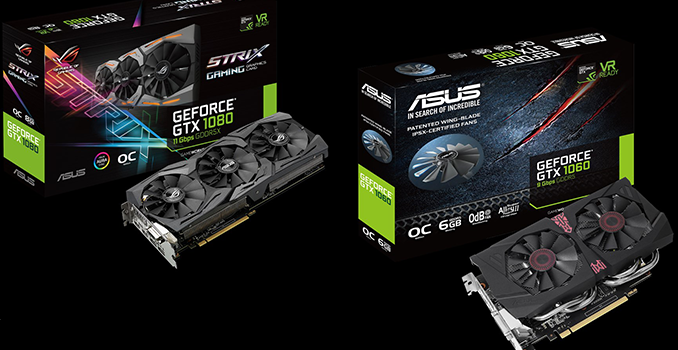
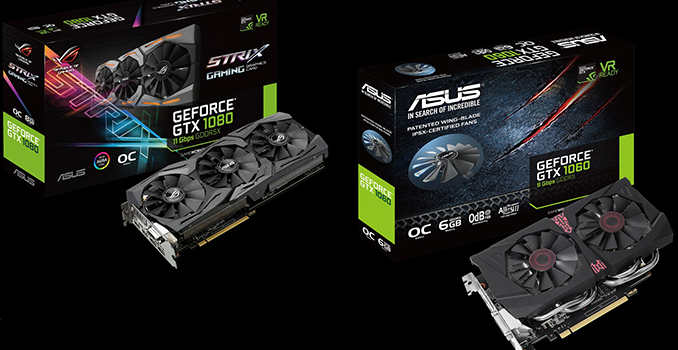
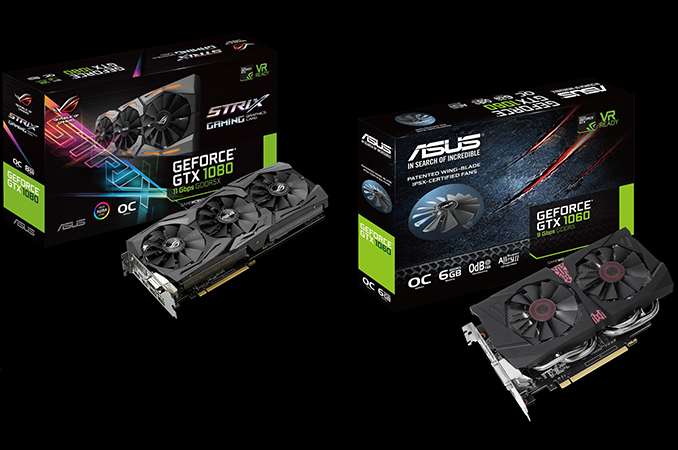
Now, back to ASUS’ GeForce GTX 10 cards with faster memory. At present, the company offers two of such boards: the ROG Strix GeForce GTX 1080 OC Edition 8 GB 11 Gbps as well as the ASUS GeForce GTX 1060 OC Edition 6 GB 9 Gbps. The two AIBs belong to different classes of products, but in both cases ASUS did something more than just soldered faster memory chips to PCBs.
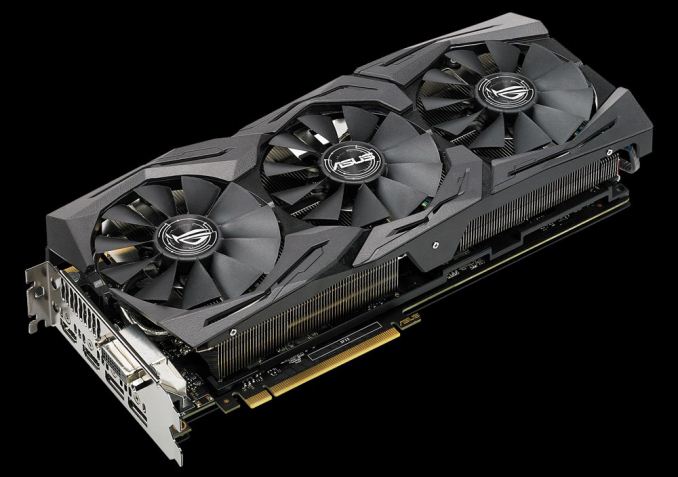
The ASUS ROG Strix GeForce GTX 1080 OC Edition 11 Gbps GDDR5X is based on the company’s proprietary PCB design with an 8+2 phase VRM, one 6-pin and one 8-pin PCIe power connectors. The enhanced power supply circuitry and an additional power connector enable ASUS to increase GPU and memory frequencies from those recommended by NVIDIA and ensure some additional headroom for end-user overclocking. Meanwhile, ASUS does not disclose exact GPU clock rates of its flagship GeForce GTX 1080, which means that the company is still finalizing them.
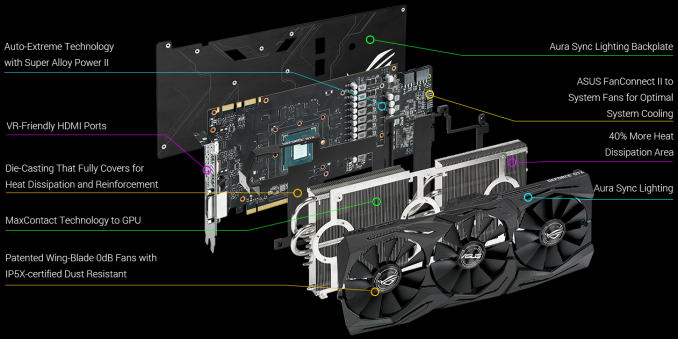
To ensure proper cooling of the GPU, VRM and memory, ASUS equips its ROG Strix GeForce GTX 1080 OC Edition 11 Gbps with a 2.5-wide cooling system featuring six heat pipes and three fans (which stop rotating at low GPU temperatures). As an added bonus, the cooler features ASUS’ user-controllable Aura Sync RGB lighting.

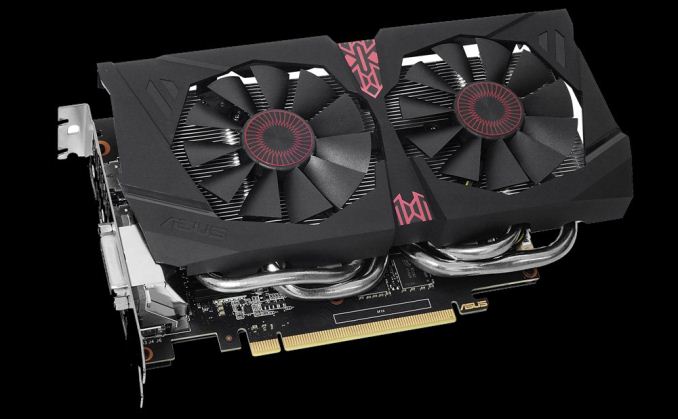
The ASUS GeForce GTX 1060 OC Edition 6 GB 9 Gbps also uses ASUS’ own PCB as well as the company’s DirectCU II cooling system with four heatpipes and two fans. Obviously, since this is an OC Edition AIB, its GPU frequency is higher than that on reference cards, but ASUS does not publish it. The card does not belong to the ROG or the Strix families, it is not the top-of-the-range GeForce GTX 1060 from ASUS, so expect company to offer something faster based on the GP106 GPU over time.

Specifications of ASUS GeForce GTX 1080 11 Gbps and GTX 1060 9 Gbps
  ASUS
ROG Strix GeForce GTX 1080
OC Edition
11 Gbps
NVIDIA
GeForce GTX 1080
Founders Edition
ASUS
GeForce GTX 1060
OC Edition
9 Gbps
NVIDIA
GeForce GTX 1060
Founders Edition
Stream Processors 2560 1280
Texture Units 160 80
ROPs 64 48
Core Clock (MHz) 1670 – 1695 (?) 1607 1506 – 1531 (?) 1506
Boost Clock (MHz) 1809 – 1835 (?) 1733 1708 – 1746 (?) 1708
Memory Capacity 8 GB 6 GB
Type GDDR5X GDDR5
Clock 11 Gbps 10 Gbps 9 Gbps 8 Gbps
Power 1×8-pin PCIe
1×6-pin PCIe
>180 W
1×8-pin PCIe

180 W

1×6-pin PCIe
~150 W
150 W
VRM 8+2 phases 5+1 phases ? 3+1 phases
PN, Additional Details ROG-STRIX-GTX1080-O8G-11GBPS GTX1060-O6G-9GBPS
Launch Date Q2-2017 5/2016 Q2-2017 8/2016
Launch Price ? $699 ? $449

ASUS has not announced MSRPs for its GeForce GTX 1080 11 Gbps and GeForce GTX 1060 6 GB 9 Gbps products, but since they are listed on its website, they are going to show up on shelves soon and thus prices will be revealed. As usual, bear in mind that prices will vary depending on the region.

Related Reading:

ASUS Launches GeForce GTX 1080 & GTX 1060 Models With Faster RAM

ASUS Launches GeForce GTX 1080 & GTX 1060 Models With Faster RAM

ASUS has released graphics cards based on NVIDIA’s GeForce GTX 1060 and 1080 GPUs that are equipped with faster memory. The new add-in-boards (AIBs) are designed to offer greater performance in high resolutions than reference designs and enable ASUS to charge a premium for the higher FPS.

Back in February when NVIDIA cut the price on the GTX 1080, the company also announced that they would be working with partners to sell factory overclocked cards with higher speed grades of memory. At launch the fastest grades available for the GTX 1080 and GTX 1060 were 10Gbps GDDR5X and 8Gbps GDDR5 respectively; however in the last year, 11Gbps GDDR5X and 9Gbps GDDR5 have become available. Now those faster memory grades are being made available to their partners for use in factory overclocked cards, giving partners more configuration options for their factory overclocked SKUs.

For partners, this marks their first real opportunity to sell cards with memory overclocks. While NVIDIA’s GPUs have been able to support these higher speeds, the stock configurations for the GTX 1080 and GTX 1060 were already pushing their respective RAM types to their limit, leaving partners no real headroom for the kind of stable and consistent overclocks required for factory overclocking.

At a hardware level, things are pretty straightforward for GTX 1080 cards; vendors can now grab Micron’s 11Gbps GDDR5X chips and use them in the place of 10Gbps chips. Things are a bit less clear on the source of the GDDR5 however. The only manufacturer with an official 9Gbps part listed is Samsung, whose K4G41325FE is still at the “Customer Sample” phase. More importantly however, that chip is only offered in a 4Gb density, whereas NVIDIA has used 8Gb chips for both the GTX 1080 and GTX 1060 6GB. So it will be interesting to see just how 9Gbps GTX 1060s are equipped.

Now, back to ASUS’ GeForce GTX 10 cards with faster memory. At present, the company offers two of such boards: the ROG Strix GeForce GTX 1080 OC Edition 8 GB 11 Gbps as well as the ASUS GeForce GTX 1060 OC Edition 6 GB 9 Gbps. The two AIBs belong to different classes of products, but in both cases ASUS did something more than just soldered faster memory chips to PCBs.

The ASUS ROG Strix GeForce GTX 1080 OC Edition 11 Gbps GDDR5X is based on the company’s proprietary PCB design with an 8+2 phase VRM, one 6-pin and one 8-pin PCIe power connectors. The enhanced power supply circuitry and an additional power connector enable ASUS to increase GPU and memory frequencies from those recommended by NVIDIA and ensure some additional headroom for end-user overclocking. Meanwhile, ASUS does not disclose exact GPU clock rates of its flagship GeForce GTX 1080, which means that the company is still finalizing them.

To ensure proper cooling of the GPU, VRM and memory, ASUS equips its ROG Strix GeForce GTX 1080 OC Edition 11 Gbps with a 2.5-wide cooling system featuring six heat pipes and three fans (which stop rotating at low GPU temperatures). As an added bonus, the cooler features ASUS’ user-controllable Aura Sync RGB lighting.

The ASUS GeForce GTX 1060 OC Edition 6 GB 9 Gbps also uses ASUS’ own PCB as well as the company’s DirectCU II cooling system with four heatpipes and two fans. Obviously, since this is an OC Edition AIB, its GPU frequency is higher than that on reference cards, but ASUS does not publish it. The card does not belong to the ROG or the Strix families, it is not the top-of-the-range GeForce GTX 1060 from ASUS, so expect company to offer something faster based on the GP106 GPU over time.

Specifications of ASUS GeForce GTX 1080 11 Gbps and GTX 1060 9 Gbps
  ASUS
ROG Strix GeForce GTX 1080
OC Edition
11 Gbps
NVIDIA
GeForce GTX 1080
Founders Edition
ASUS
GeForce GTX 1060
OC Edition
9 Gbps
NVIDIA
GeForce GTX 1060
Founders Edition
Stream Processors 2560 1280
Texture Units 160 80
ROPs 64 48
Core Clock (MHz) 1670 – 1695 (?) 1607 1506 – 1531 (?) 1506
Boost Clock (MHz) 1809 – 1835 (?) 1733 1708 – 1746 (?) 1708
Memory Capacity 8 GB 6 GB
Type GDDR5X GDDR5
Clock 11 Gbps 10 Gbps 9 Gbps 8 Gbps
Power 1×8-pin PCIe
1×6-pin PCIe
>180 W
1×8-pin PCIe

180 W

1×6-pin PCIe
~150 W
150 W
VRM 8+2 phases 5+1 phases ? 3+1 phases
PN, Additional Details ROG-STRIX-GTX1080-O8G-11GBPS GTX1060-O6G-9GBPS
Launch Date Q2-2017 5/2016 Q2-2017 8/2016
Launch Price ? $699 ? $449

ASUS has not announced MSRPs for its GeForce GTX 1080 11 Gbps and GeForce GTX 1060 6 GB 9 Gbps products, but since they are listed on its website, they are going to show up on shelves soon and thus prices will be revealed. As usual, bear in mind that prices will vary depending on the region.

Related Reading:

CyberLink Launches PowerDVD 17 with UHD Blu-ray and VR HMD Support

CyberLink Launches PowerDVD 17 with UHD Blu-ray and VR HMD Support

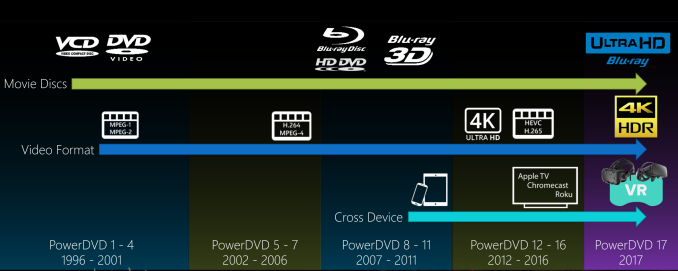
CyberLink has been regularly updating their multimedia playback software / PC DVD & Blu-ray players. While ArcSoft dropped out of the software Blu-ray player market a few years back, the only other legal (i.e, one that includes licenses for all required codecs) player – Corel’s WinDVD Pro, receives fairly spaced out upgrades. As the HTPC market shifts from a local media-heavy scenario to one where OTT (over-the-top) content like YouTube and Netflix form the main part of the experience, it has become important for commercial software media players to evolve. CyberLink realized this early, with a mobile-centric experience getting introduced in PowerDVD 12. With PowerDVD 14, the technology updates (such as inclusion of HEVC support) were accompanied by a shift in the marketing message from a ‘software Blu-ray and DVD player’ to a ‘media player for power users’.

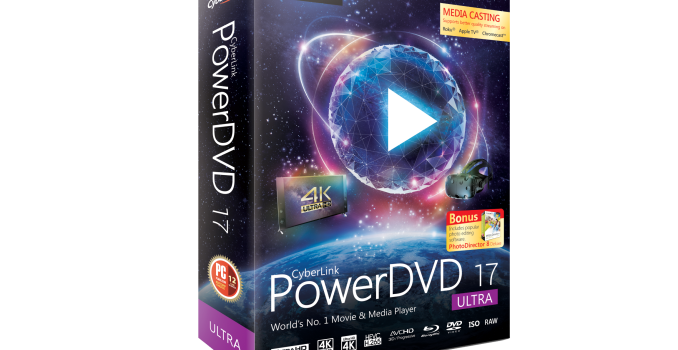
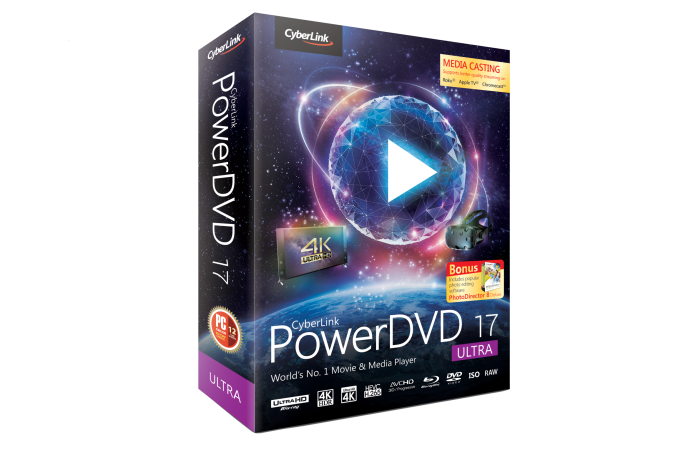
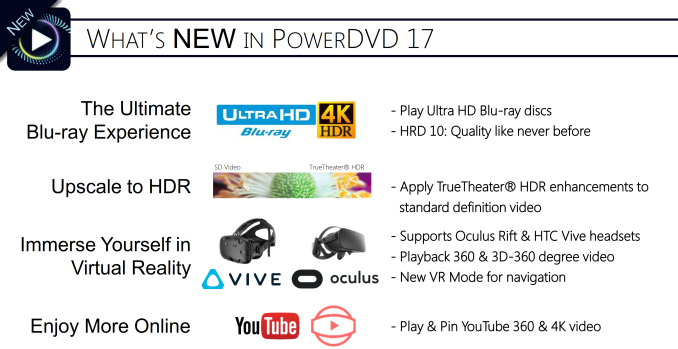
CyberLink is launching PowerDVD 17 today. Similar to the focus on mobile devices in PowerDVD 12, the time is ripe for them to focus on the next big content consumption device – the virtual reality head-mounted displays (HMDs). PowerDVD 17 Ultra has a special VR mode that works with the HTC Vive as well as the Oculus Rift for an immersive media experience.

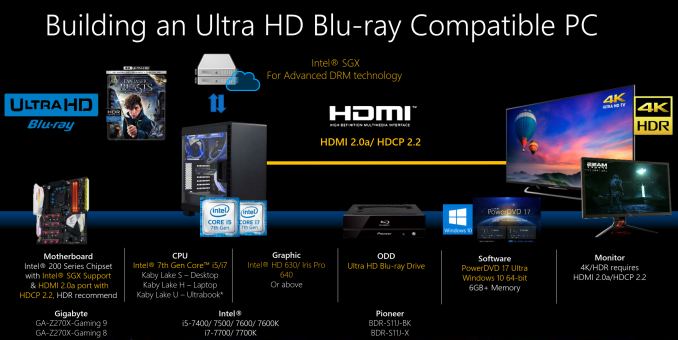
PowerDVD 17 is also the fist certified software Blu-ray player capable of playing back Ultra HD (4K) Blu-rays on a PC. The hardware requirements are quite stringent, though. In addition to the two GIGABYTE boards mentioned below, the ASRock Fatal1ty Z270 Gaming-ITX/ac is also an option for a UHD Blu-ray playback-capable HTPC. Pioneer is currently the only choice for PC-compatible UHD Blu-ray optical drives.

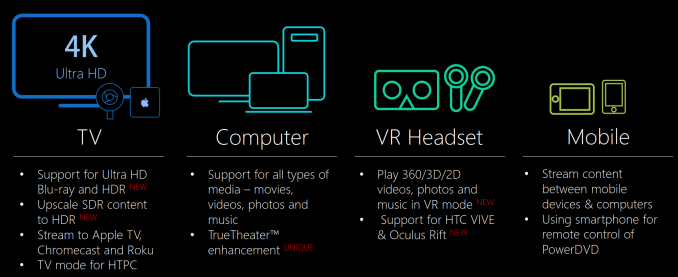
Coming back to the new features in PowerDVD 17, UHD Blu-ray playback support includes HDR10 capabilities also. The player can also upconvert SDR content to HDR using some proprietary algorithms as part of the TrueTheater feature set. As mentioned earlier, HMD support is available for playback of 360 videos. The UI and navigation is also optimized for HMDs in the VR mode. There is also some additional support for YouTube playback, particularly with respect to 360 and 4K videos.

The introduction of VR HMD support enables CyberLink to be an end-to-end media player irrespective of the device used for consuming the content.

It is no secret that the onerous DRM requirements have made Blu-rays a pain for HTPC enthusiasts. PowerDVD 17 requires an active Internet connection for the first time playback of an Ultra HD Blu-ray movie. Consumers who appreciate the extra video and audio quality from local discs have to put up with these annoyances. In addition to UHD Blu-ray playback, some of the other features such as the TrueTheater effects are not yet matched in a user-friendly manner by excellent open source media players like Kodi. That said, many users appreciate Kodi’s open source background, its flexibility, and, obviously the fact that it is free.

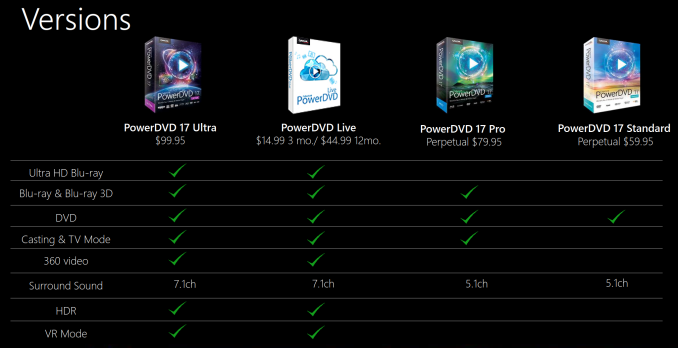
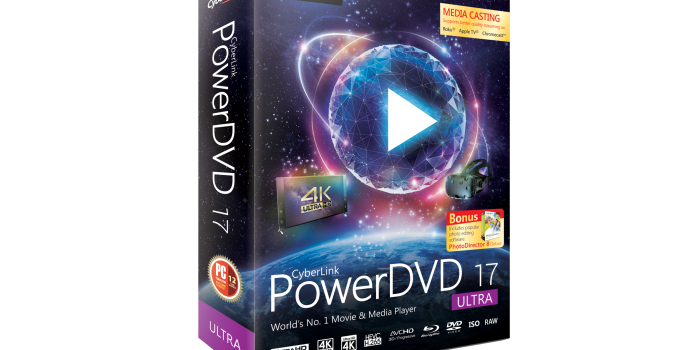
That brings us to the final aspect – pricing. PowerDVD 17 is available in four flavors ranging in price from $60 to $100.

CyberLink also has a subscription-based offering – PowerDVD Live. It has the same feature set as that of PowerDVD Ultra, but, is priced at $15 / $45 on a quarterly / annual basis. The gallery below also includes a detailed comparison of the features available in each version.

CyberLink Launches PowerDVD 17 with UHD Blu-ray and VR HMD Support

CyberLink Launches PowerDVD 17 with UHD Blu-ray and VR HMD Support

CyberLink has been regularly updating their multimedia playback software / PC DVD & Blu-ray players. While ArcSoft dropped out of the software Blu-ray player market a few years back, the only other legal (i.e, one that includes licenses for all required codecs) player – Corel’s WinDVD Pro, receives fairly spaced out upgrades. As the HTPC market shifts from a local media-heavy scenario to one where OTT (over-the-top) content like YouTube and Netflix form the main part of the experience, it has become important for commercial software media players to evolve. CyberLink realized this early, with a mobile-centric experience getting introduced in PowerDVD 12. With PowerDVD 14, the technology updates (such as inclusion of HEVC support) were accompanied by a shift in the marketing message from a ‘software Blu-ray and DVD player’ to a ‘media player for power users’.

CyberLink is launching PowerDVD 17 today. Similar to the focus on mobile devices in PowerDVD 12, the time is ripe for them to focus on the next big content consumption device – the virtual reality head-mounted displays (HMDs). PowerDVD 17 Ultra has a special VR mode that works with the HTC Vive as well as the Oculus Rift for an immersive media experience.

PowerDVD 17 is also the fist certified software Blu-ray player capable of playing back Ultra HD (4K) Blu-rays on a PC. The hardware requirements are quite stringent, though. In addition to the two GIGABYTE boards mentioned below, the ASRock Fatal1ty Z270 Gaming-ITX/ac is also an option for a UHD Blu-ray playback-capable HTPC. Pioneer is currently the only choice for PC-compatible UHD Blu-ray optical drives.

Coming back to the new features in PowerDVD 17, UHD Blu-ray playback support includes HDR10 capabilities also. The player can also upconvert SDR content to HDR using some proprietary algorithms as part of the TrueTheater feature set. As mentioned earlier, HMD support is available for playback of 360 videos. The UI and navigation is also optimized for HMDs in the VR mode. There is also some additional support for YouTube playback, particularly with respect to 360 and 4K videos.

The introduction of VR HMD support enables CyberLink to be an end-to-end media player irrespective of the device used for consuming the content.

It is no secret that the onerous DRM requirements have made Blu-rays a pain for HTPC enthusiasts. PowerDVD 17 requires an active Internet connection for the first time playback of an Ultra HD Blu-ray movie. Consumers who appreciate the extra video and audio quality from local discs have to put up with these annoyances. In addition to UHD Blu-ray playback, some of the other features such as the TrueTheater effects are not yet matched in a user-friendly manner by excellent open source media players like Kodi. That said, many users appreciate Kodi’s open source background, its flexibility, and, obviously the fact that it is free.

That brings us to the final aspect – pricing. PowerDVD 17 is available in four flavors ranging in price from $60 to $100.

CyberLink also has a subscription-based offering – PowerDVD Live. It has the same feature set as that of PowerDVD Ultra, but, is priced at $15 / $45 on a quarterly / annual basis. The gallery below also includes a detailed comparison of the features available in each version.