Vik


Honor Announces The Honor 8 Pro: Kirin 960, 5.7-inch QHD
Honor Announces The Honor 8 Pro: Kirin 960, 5.7-inch QHD

Huawei added another phone to its Honor lineup today. The Honor 8 Pro is the international version of the Honor V9 that was launched in China earlier this year. The Honor 8, which was released last summer, and the new Honor 8 Pro are similar in name only, with the new Pro model sporting a larger screen, a new SoC, different materials, and an updated design.

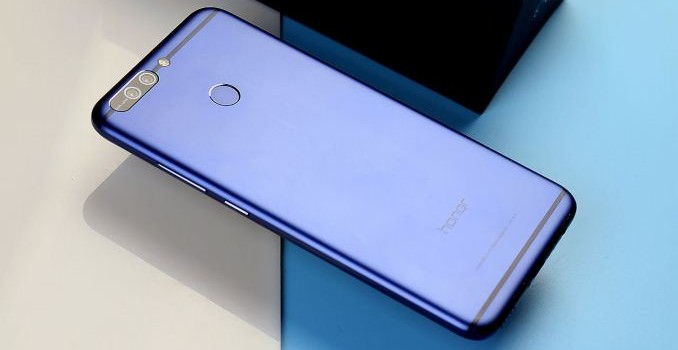
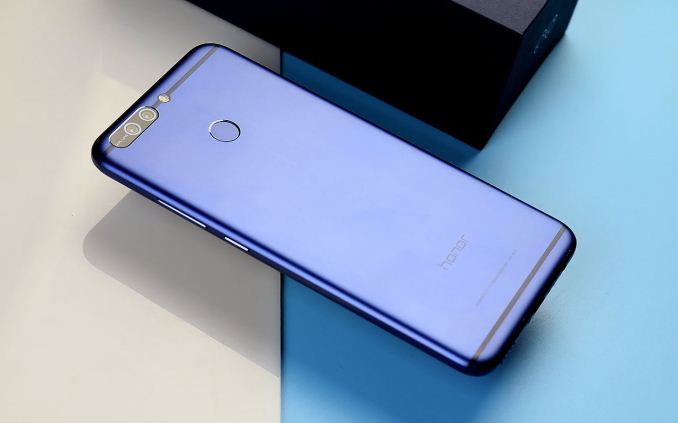
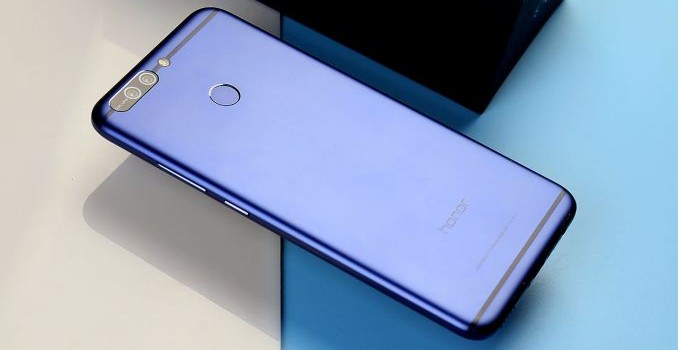
The Honor 8 Pro’s all-aluminum chassis has traditional color-matched, plastic antenna lines running across the back, giving it a premium albeit familiar look. Its dual rear camera module and dual-color LED flash are flush mounted inline with the upper antenna line, which makes it look more like a racing stripe accent than a necessary RF concession. There’s also a circular, recessed fingerprint sensor mounted on the back.
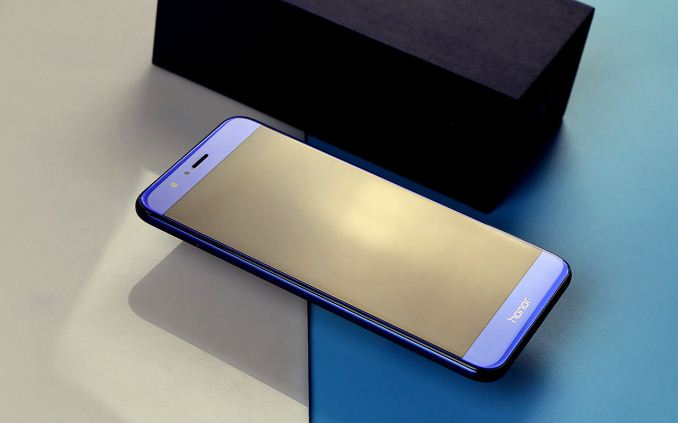
The new device will have the newest Kirin 960 chipset, featuring 4x ARM Cortex-A73 and 4x ARM Cortex-A53 as well as the latest Mali-G71MP8 graphics, as we’ve seen on Huawei devices over the last six months. This will be paired with 6GB of LPDDR4 and 64GB of UFS 2.1 storage. The display moves up from the 5.2-inch Full-HD on the Honor 8 to a 5.7-inch QHD (2560×1440), and a combination of all these features means that Honor is promoting the Honor 8 Pro as a gaming and VR device, although there’s no word on DayDream VR support, but the device will have some bundled VR software and support Google Cardboard. The display will target some form of DCI-P3, although the level of which has not been publicized as of yet.

Honor 8 Series
  Honor 8 Pro
(April 2017)
Honor 8
(August 2016)
SoC HiSilicon Kirin 960

4x Cortex-A73 @ 2.36GHz
4x Cortex-A53 @ 1.84GHz
ARM Mali-G71MP8

HiSilicon Kirin 950

4x Cortex-A72 @ 2.30GHz
4x Cortex-A53 @ 1.81GHz
ARM Mali-T880MP4 @ 900MHz

Display 5.7-inch 2560×1440 IPS LCD 5.2-inch 1920×1080 IPS LCD
Dimensions 157.0 x 77.5 x 6.97 mm
184 grams
145.5 x 71.0 x 7.45 mm
153 grams
RAM 6GB LPDDR4 3GB / 4GB LPDDR4-2666
NAND 64GB (UFS 2.1)
+ microSD
32GB / 64GB (eMMC)
+ microSD
Battery 4000 mAh
non-replaceable
3000 mAh (11.46 Wh)
non-replaceable
Front Camera 8MP, f/2.0 8MP, 1.4μm, f/2.4
Rear Camera 2x 12MP (color + monochrome), 1/2.9” Sony IMX286 Exmor RS, 1.25µm pixels, f/2.2, Laser AF + depth, HDR, dual-tone LED flash 2x 12MP (color + monochrome), 1/2.9” Sony IMX286 Exmor RS, 1.25µm pixels, f/2.2, Laser AF + depth, HDR, dual-tone LED flash
Modem HiSilicon LTE (Integrated)
2G / 3G / 4G LTE (Category 12/13)

FDD-LTE / TD-LTE / TD-SCDMA / WCDMA / GSM

HiSilicon Balong (Integrated)
2G / 3G / 4G LTE (Category 6)

FDD-LTE / TD-LTE / TD-SCDMA / WCDMA / CDMA (China only) / GSM

SIM Size 2x NanoSIM (w/o microSD)
(dual standby)
2x NanoSIM (w/o microSD)
(dual standby)
Wireless 802.11a/b/g/n/ac, BT 4.2 LE, NFC, GPS/GNSS 802.11a/b/g/n/ac, BT 4.2 LE, NFC, IrLED, GPS/GNSS
Connectivity USB 2.0 Type-C, 3.5mm headset USB 2.0 Type-C, 3.5mm headset
Launch OS Android 7.0 with Emotion UI 5.1 Android 6.0 with Emotion UI 4.1

On the battery side, the larger device allows for a 4000 mAh battery. Similar to the Mate 9, this will support Huawei Supercharge with appropriate power adapters for faster charging via the Type-C port on the bottom of the phone. This is still a USB 2.0 port, as per the regular Honor 8.
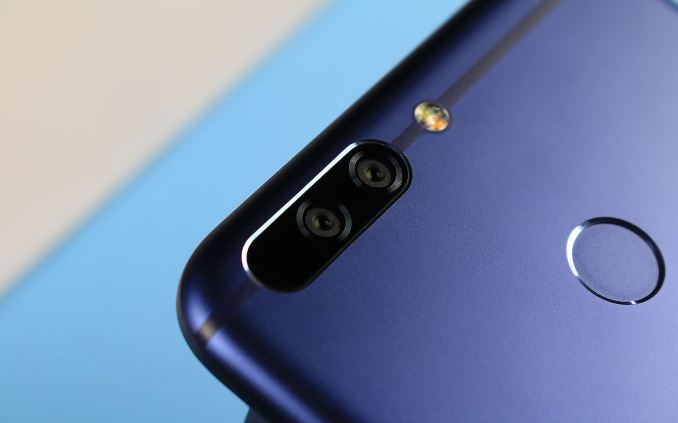
The Honor 8 Pro uses the same dual-camera setup seen in the Honor 8, using a 12MP RGB and a 12MP monochrome sensor for additional contrast focus capabilities, depth sensing, and bokeh. Given the relationship between Huawei and the Honor brand internally, it might not be a surprise that the Honor 8 Pro doesn’t have the second generation of dual camera design as seen in the Huawei P10 that was launched back in February – it is likely that the Honor 9 will use that when released later in the year (as follows typical Honor cadence). The move to EMUI 5.1 will afford some additional software adjustments with the camera, and one of the features Honor was keen to promote is 4K recording in H.265, as well as an embedded feature called Highlights (co-created with GoPro) to help merge relevant photos and clips taken with the device when the user has a specific journey.
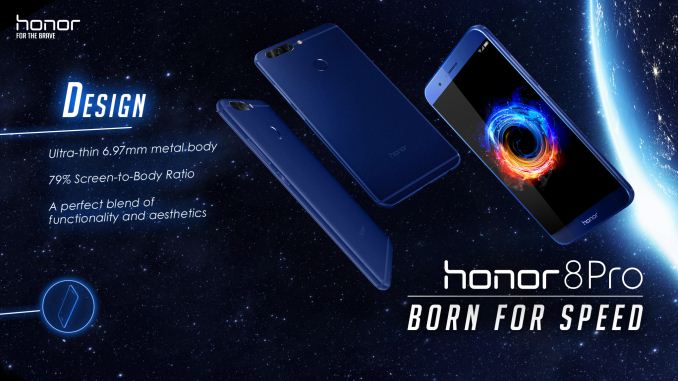
Current plans have the Honor 8 Pro launching in Western Europe (so we assume that means UK, France, Germany, Italy, Spain) to begin with, at a recommended price of 549 Euro or £475 (including tax). The navy blue color from the original Honor 8 will carry forward, along with two other designs in gold or black, although color availability may be region dependent. Pre-orders are currently available at vmall.eu (Honor’s EU storefront), or a full Amazon launch will occur on April 20th.
 

Honor Announces The Honor 8 Pro: Kirin 960, 5.7-inch QHD

Honor Announces The Honor 8 Pro: Kirin 960, 5.7-inch QHD

Huawei added another phone to its Honor lineup today. The Honor 8 Pro is the international version of the Honor V9 that was launched in China earlier this year. The Honor 8, which was released last summer, and the new Honor 8 Pro are similar in name only, with the new Pro model sporting a larger screen, a new SoC, different materials, and an updated design.

The Honor 8 Pro’s all-aluminum chassis has traditional color-matched, plastic antenna lines running across the back, giving it a premium albeit familiar look. Its dual rear camera module and dual-color LED flash are flush mounted inline with the upper antenna line, which makes it look more like a racing stripe accent than a necessary RF concession. There’s also a circular, recessed fingerprint sensor mounted on the back.

The new device will have the newest Kirin 960 chipset, featuring 4x ARM Cortex-A73 and 4x ARM Cortex-A53 as well as the latest Mali-G71MP8 graphics, as we’ve seen on Huawei devices over the last six months. This will be paired with 6GB of LPDDR4 and 64GB of UFS 2.1 storage. The display moves up from the 5.2-inch Full-HD on the Honor 8 to a 5.7-inch QHD (2560×1440), and a combination of all these features means that Honor is promoting the Honor 8 Pro as a gaming and VR device, although there’s no word on DayDream VR support, but the device will have some bundled VR software and support Google Cardboard. The display will target some form of DCI-P3, although the level of which has not been publicized as of yet.

Honor 8 Series
  Honor 8 Pro
(April 2017)
Honor 8
(August 2016)
SoC HiSilicon Kirin 960

4x Cortex-A73 @ 2.36GHz
4x Cortex-A53 @ 1.84GHz
ARM Mali-G71MP8

HiSilicon Kirin 950

4x Cortex-A72 @ 2.30GHz
4x Cortex-A53 @ 1.81GHz
ARM Mali-T880MP4 @ 900MHz

Display 5.7-inch 2560×1440 IPS LCD 5.2-inch 1920×1080 IPS LCD
Dimensions 157.0 x 77.5 x 6.97 mm
184 grams
145.5 x 71.0 x 7.45 mm
153 grams
RAM 6GB LPDDR4 3GB / 4GB LPDDR4-2666
NAND 64GB (UFS 2.1)
+ microSD
32GB / 64GB (eMMC)
+ microSD
Battery 4000 mAh
non-replaceable
3000 mAh (11.46 Wh)
non-replaceable
Front Camera 8MP, f/2.0 8MP, 1.4μm, f/2.4
Rear Camera 2x 12MP (color + monochrome), 1/2.9” Sony IMX286 Exmor RS, 1.25µm pixels, f/2.2, Laser AF + depth, HDR, dual-tone LED flash 2x 12MP (color + monochrome), 1/2.9” Sony IMX286 Exmor RS, 1.25µm pixels, f/2.2, Laser AF + depth, HDR, dual-tone LED flash
Modem HiSilicon LTE (Integrated)
2G / 3G / 4G LTE (Category 12/13)

FDD-LTE / TD-LTE / TD-SCDMA / WCDMA / GSM

HiSilicon Balong (Integrated)
2G / 3G / 4G LTE (Category 6)

FDD-LTE / TD-LTE / TD-SCDMA / WCDMA / CDMA (China only) / GSM

SIM Size 2x NanoSIM (w/o microSD)
(dual standby)
2x NanoSIM (w/o microSD)
(dual standby)
Wireless 802.11a/b/g/n/ac, BT 4.2 LE, NFC, GPS/GNSS 802.11a/b/g/n/ac, BT 4.2 LE, NFC, IrLED, GPS/GNSS
Connectivity USB 2.0 Type-C, 3.5mm headset USB 2.0 Type-C, 3.5mm headset
Launch OS Android 7.0 with Emotion UI 5.1 Android 6.0 with Emotion UI 4.1

On the battery side, the larger device allows for a 4000 mAh battery. Similar to the Mate 9, this will support Huawei Supercharge with appropriate power adapters for faster charging via the Type-C port on the bottom of the phone. This is still a USB 2.0 port, as per the regular Honor 8.

The Honor 8 Pro uses the same dual-camera setup seen in the Honor 8, using a 12MP RGB and a 12MP monochrome sensor for additional contrast focus capabilities, depth sensing, and bokeh. Given the relationship between Huawei and the Honor brand internally, it might not be a surprise that the Honor 8 Pro doesn’t have the second generation of dual camera design as seen in the Huawei P10 that was launched back in February – it is likely that the Honor 9 will use that when released later in the year (as follows typical Honor cadence). The move to EMUI 5.1 will afford some additional software adjustments with the camera, and one of the features Honor was keen to promote is 4K recording in H.265, as well as an embedded feature called Highlights (co-created with GoPro) to help merge relevant photos and clips taken with the device when the user has a specific journey.

Current plans have the Honor 8 Pro launching in Western Europe (so we assume that means UK, France, Germany, Italy, Spain) to begin with, at a recommended price of 549 Euro or £475 (including tax). The navy blue color from the original Honor 8 will carry forward, along with two other designs in gold or black, although color availability may be region dependent. Pre-orders are currently available at vmall.eu (Honor’s EU storefront), or a full Amazon launch will occur on April 20th.
 

ASUS Launches VG245Q 'Console' Gaming Monitor: 1080p with FreeSync, $200

ASUS Launches VG245Q ‘Console’ Gaming Monitor: 1080p with FreeSync, $200

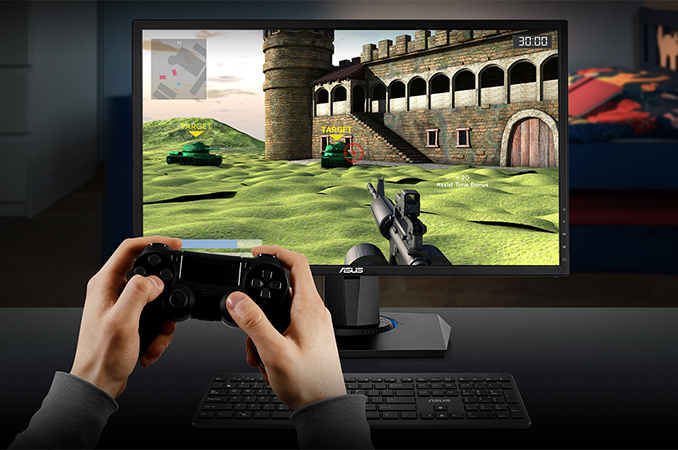
ASUS has introduced another monitor positioned specifically for console gaming that allows console owners to take their games out of the living room. The new display offers Full-HD resolution and uses an inexpensive TN panel with a fast response time, supporting a refresh rate of 40Hz to 75Hz. It features AMD’s FreeSync technology as well as a DisplayPort port, so while this is aimed at more console type gaming, in order to use Freesync it essentially has to be a ‘console’ PC rather than an actual console.

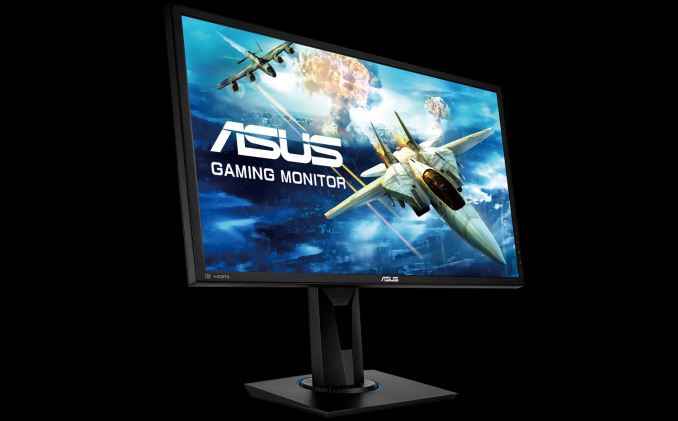
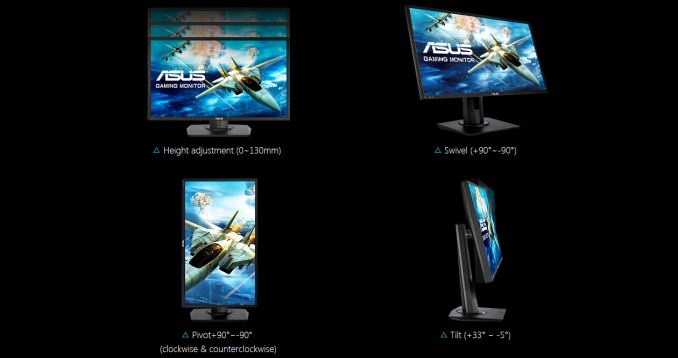
The ASUS VG245Q display uses a 24” TN panel with 1920×1080 resolution, and the general specifications are typical for budget devices: 250 nits brightness, 170°/160° viewing angles, a 1 ms response time (grey-to-grey) and so on. The monitor comes with two 2 W speakers and has two HDMI (so to connect to two consoles), one DisplayPort and one D-Sub connector. The VG245Q can adjust its height, swivel, and pivot. One of the important selling points of the ASUS VG245-series monitors is support for AMD’s FreeSync dynamic framerate technology that works at refresh rates ranging from 40 to 75 Hz.

In fact, ASUS’ VG245 family of displays, aimed at ‘console’ gaming, now includes three models: the VG245Q (introduced this month), the VG245H, and the VG245HE, with the latter two launched last fall. All the monitors use the same panel and have slightly different feature sets. The VG245H uses the same chassis as the VG245Q, but lacks DisplayPort. Meanwhile, the VG245HE is the most simplistic in the lineup, as it does not have swivel, pivot or height adjustments.

ASUS VG245-Series Console Gaming Monitors
  ASUS
VG245H
(Added Adjust)
ASUS
VG245HE
(Base Model)
ASUS
VG245Q
(FreeSync)
Panel 24″ TN
Native Resolution 1920 × 1080
Refresh Rate Range 75 Hz 75 Hz 40-75 Hz
Response Time 1 ms (gray-to-gray)
Brightness 250 cd/m²
Contrast ‘100000000:1’
ASUS stupid smart contrast ratio
Viewing Angles 170°/160° horizontal/vertical
Color Saturation 72% NTSC
sRGB mode available
Inputs 2 × HDMI
1 × D-Sub
2 × HDMI
1 × D-Sub
2 × DP
Audio 2 × 2 W speakers
Audio in/out ports
Proprietary Enhancements Trace Free Technology
GamePlus Modes:  Crosshair/Timer/Display Alignment
Low Blue Light: Yes
GameVisual Modes: Scenery/Racing/Cinema/RTS/RPG/FPS/sRGB
Mechanical Chassis Color Black
Tilt +33°~-5°
Swivel -90°~+90° -90°~+90°
Pivot +90°~-90° +90°~-90°
Height Adjustment 0~130 mm 0~130 mm
VESA Wall Mounting 100 × 100 mm
Power Consumption
 
Idle ~0.5 W
Active 40 W
Detailed Information Link Link Link

While ASUS formally positions its VG245-series displays as reasonably priced solutions for consoles, these devices are cheaper gaming monitors carrying the ASUS brand. They enable the company to address the entry-level segment of the PC market (keep in mind that the sRGB is supported as a feature of the ASUS GameVisual menu) without distracting attention of the masses from the higher-end models with advanced specs and features.

ASUS has not announced precise MSRP for its VG245Q monitor, but at present, the VG245H can be acquired for $179.99. It is unlikely that the addition of a DisplayPort connector significantly affected the cost of the VG245Q vs. the VG245H and it is logical to expect the two products to cost about the same.

Related Reading:

ASUS Launches VG245Q 'Console' Gaming Monitor: 1080p with FreeSync, $200

ASUS Launches VG245Q ‘Console’ Gaming Monitor: 1080p with FreeSync, $200

ASUS has introduced another monitor positioned specifically for console gaming that allows console owners to take their games out of the living room. The new display offers Full-HD resolution and uses an inexpensive TN panel with a fast response time, supporting a refresh rate of 40Hz to 75Hz. It features AMD’s FreeSync technology as well as a DisplayPort port, so while this is aimed at more console type gaming, in order to use Freesync it essentially has to be a ‘console’ PC rather than an actual console.

The ASUS VG245Q display uses a 24” TN panel with 1920×1080 resolution, and the general specifications are typical for budget devices: 250 nits brightness, 170°/160° viewing angles, a 1 ms response time (grey-to-grey) and so on. The monitor comes with two 2 W speakers and has two HDMI (so to connect to two consoles), one DisplayPort and one D-Sub connector. The VG245Q can adjust its height, swivel, and pivot. One of the important selling points of the ASUS VG245-series monitors is support for AMD’s FreeSync dynamic framerate technology that works at refresh rates ranging from 40 to 75 Hz.

In fact, ASUS’ VG245 family of displays, aimed at ‘console’ gaming, now includes three models: the VG245Q (introduced this month), the VG245H, and the VG245HE, with the latter two launched last fall. All the monitors use the same panel and have slightly different feature sets. The VG245H uses the same chassis as the VG245Q, but lacks DisplayPort. Meanwhile, the VG245HE is the most simplistic in the lineup, as it does not have swivel, pivot or height adjustments.

ASUS VG245-Series Console Gaming Monitors
  ASUS
VG245H
(Added Adjust)
ASUS
VG245HE
(Base Model)
ASUS
VG245Q
(FreeSync)
Panel 24″ TN
Native Resolution 1920 × 1080
Refresh Rate Range 75 Hz 75 Hz 40-75 Hz
Response Time 1 ms (gray-to-gray)
Brightness 250 cd/m²
Contrast ‘100000000:1’
ASUS stupid smart contrast ratio
Viewing Angles 170°/160° horizontal/vertical
Color Saturation 72% NTSC
sRGB mode available
Inputs 2 × HDMI
1 × D-Sub
2 × HDMI
1 × D-Sub
2 × DP
Audio 2 × 2 W speakers
Audio in/out ports
Proprietary Enhancements Trace Free Technology
GamePlus Modes:  Crosshair/Timer/Display Alignment
Low Blue Light: Yes
GameVisual Modes: Scenery/Racing/Cinema/RTS/RPG/FPS/sRGB
Mechanical Chassis Color Black
Tilt +33°~-5°
Swivel -90°~+90° -90°~+90°
Pivot +90°~-90° +90°~-90°
Height Adjustment 0~130 mm 0~130 mm
VESA Wall Mounting 100 × 100 mm
Power Consumption
 
Idle ~0.5 W
Active 40 W
Detailed Information Link Link Link

While ASUS formally positions its VG245-series displays as reasonably priced solutions for consoles, these devices are cheaper gaming monitors carrying the ASUS brand. They enable the company to address the entry-level segment of the PC market (keep in mind that the sRGB is supported as a feature of the ASUS GameVisual menu) without distracting attention of the masses from the higher-end models with advanced specs and features.

ASUS has not announced precise MSRP for its VG245Q monitor, but at present, the VG245H can be acquired for $179.99. It is unlikely that the addition of a DisplayPort connector significantly affected the cost of the VG245Q vs. the VG245H and it is logical to expect the two products to cost about the same.

Related Reading:

Transcend Launches New PCIe M.2 SSDs: The MTE850 Series

Transcend Launches New PCIe M.2 SSDs: The MTE850 Series

Transcend has announced its first SSDs based on 3D MLC NAND flash memory. The MTE850-series drives are aimed at the higher-end of the market and promise up to 2.5 GB/s sequential read speed along with endurance-related advantages of 3D NAND.

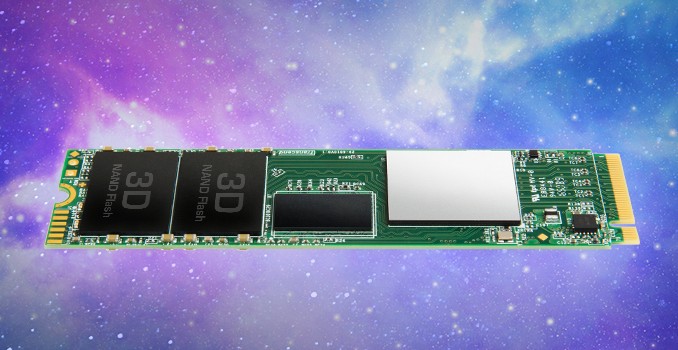
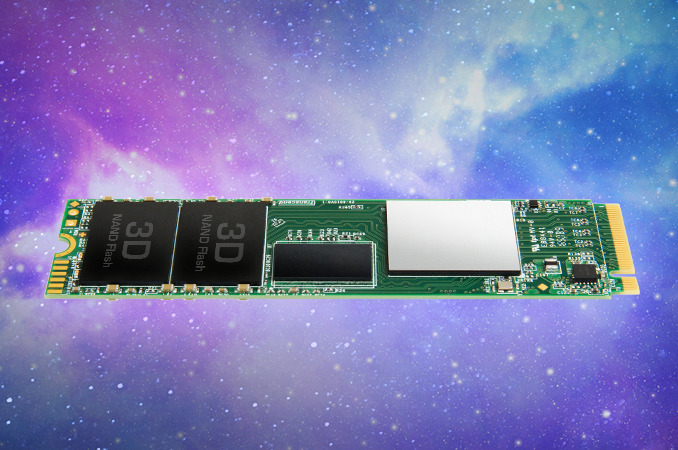
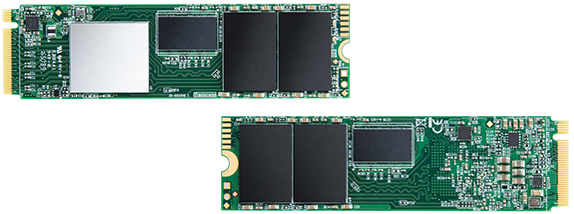
Transcend does not disclose exact specifications of all its new MTE850 series SSDs, but only shows their pictures as well as performance numbers for the flagship 512 GB model. The images reveal a controller covered with an aluminum heat spreader, and the only contemporary controller that supports 3D NAND and comes with such a heat spreader is Silicon Motion’s SM2260 (which uses two ARM Cortex cores and has eight NAND flash channels) Technically the SM2260 can support LDPC ECC technology and 256-bit AES although this has to be enabled in firmware. At present, only Micron sells SSD-graded 3D MLC NAND to some of its partners, so it is logical to assume that the MTE850 drives use Micron. Transcend is the third company to offer an SSD family featuring 3D MLC and SM2260 after ADATA and Mushkin, so the drives are going to have rivals that offer similar performance and functionality.

Transcend’s MTE850 family consists of three models with 128 GB, 256 GB and 512 GB capacities that come in M.2-2280 form-factor and use a PCIe 3.0 x4 interface. The manufacturer rates MTE850’s sequential read performance at up to 2.5 GB/s and its write performance at up to 1.1 GB/s when pseudo-SLC caching is used. When it comes to random performance, Transcend does not publish any numbers at all, but we know that the SM2260 controller is officially capable of up to 120K/140K 4KB read/write IOPS, although the final value for these drives will be firmware dependent.

Transcend MTE850 Specifications
Capacity 128 GB 256 GB 512 GB
Model Number TS128GMTE850 TS256GMTE850 TS512GMTE850
Controller Silicon Motion SM2260
NAND Flash 3D MLC NAND
Form-Factor, Interface M.2-2280, PCIe 3.0 x4, NVMe 1.2
Sequential Read ? ? 2.5 GB/s
Sequential Write ? ? 1.1 GB/s
Random Read IOPS ? ? ?
Random Write IOPS ? ? ?
Pseudo-SLC Caching Supported
DRAM Buffer Yes, capacity unknown
TCG Opal Encryption No
Power Management DevSleep, Slumber
Warranty 3 years

The MTE850 SSDs are expected to follow performance trends (the drives are somewhat comparable to Samsung’s 950 Pro released in 2H2015), and it is noteworthy that Transcend became the fourth independent SSD supplier after ADATA, Mushkin and Palit to introduce 3D NAND-based SSDs. We are still a few months away from a wide availability of 3D NAND-powered drives from independent vendors, but such products are getting announced today – we expect to hear more at Computex in June.

Transcend did not disclose MSRPs for its MTE850 drives, but since the SSDs have direct competitors based on the same memory and controller (ADATA’s XPG SX8000-series at $90-$242), it is highly likely that Transcend’s SSDs will be offered at similar price points. The MTE850 drives will be covered by the manufacturer’s three-year warranty.

Related Reading: