Vik


Lexar Launches 'JumpDrive Tough' USB Drives up to 128GB: Focusing on Physical Endurance

Lexar Launches ‘JumpDrive Tough’ USB Drives up to 128GB: Focusing on Physical Endurance

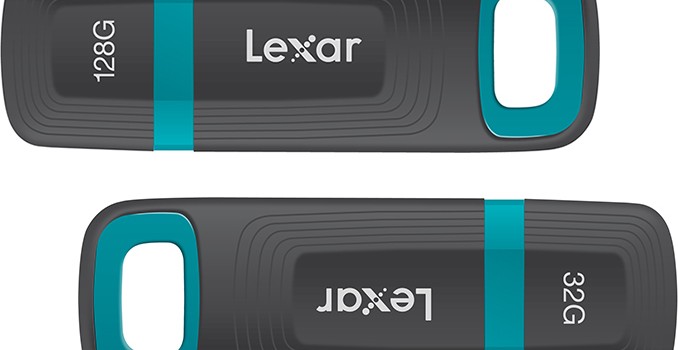
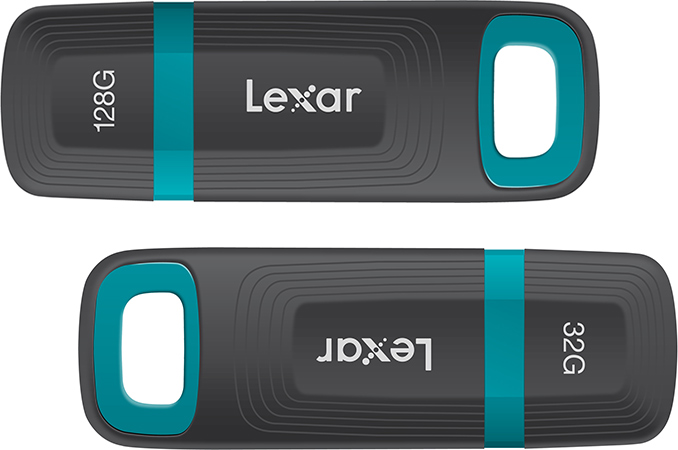
Over the last week, Lexar has introduced a new series of USB flash drives with enhanced endurance. The new drives are built to survive in tough conditions, such as very cold or very hot temperatures or water. As for performance and capacities, we are talking about fairly mainstream products with USB Type-A interface with low price points.

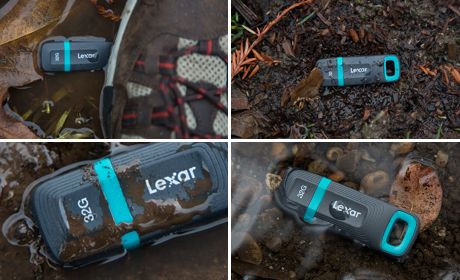
The Lexar JumpDrive Tough are designed to withstand physical impact (up to 750 PSI or 50 atm), extreme temperatures (from -25°C to +148.9°C) and water (it is claimed to be water resistant up to 98 feet, or 30 meters). This is compared to typical flash drives that can be stored at -20°C and operate at 0°C, or some that are also water resistant from use of resins. There are ranges of products on the market aimed at the physical endurance crowd, and the combination of extended temperature ranges, water resistance, and physical durability is the main selling point of Lexar’s new drives.

Lexar JumpDrive Tough Family of Flash Drives
  LJDTD32GABNL LJDTD64GABNL LJDTD128GABNL
Capacity 32 GB 64 GB 128 GB
Type of NAND Unknown
Maximum Transfer Rate Read: 130 MB/s
Write: 25 MB/s
Read: 150 MB/s
Write: 60 MB/s
Physical Impact 750 PSI
Water Resistance Up to 30 Meters
Storage Temperature -25°C to +148.9°C
-13°F to 300°F
Warranty Three Years
MSRP $19.99 $34.99 $59.99

The JumpDrive Tough family of USB drives consists of three models with 32 GB, 64 GB and 128 GB capacities. As for performance, the manufacturer declares up to 150 MB/s read speed as well as up to 60 MB/s write speed (for the 128 GB and 64 GB versions, the 32 GB version is slower). To enable advanced security, Lexar bundles the EncryptStick Lite software with 256-bit AES encryption.

Lexar has already started to ship its JumpDrive Tough family of USB drives at MSRPs of $19.99 (32 GB), $34.99 (64 GB), and $59.99 (128 GB). All the USB sticks are covered with a three-year limited warranty.

Related Reading:

Lenovo Updates ThinkStation P320 with Intel Xeon E3 v6 and NVIDIA Quadro Pascal

Lenovo Updates ThinkStation P320 with Intel Xeon E3 v6 and NVIDIA Quadro Pascal

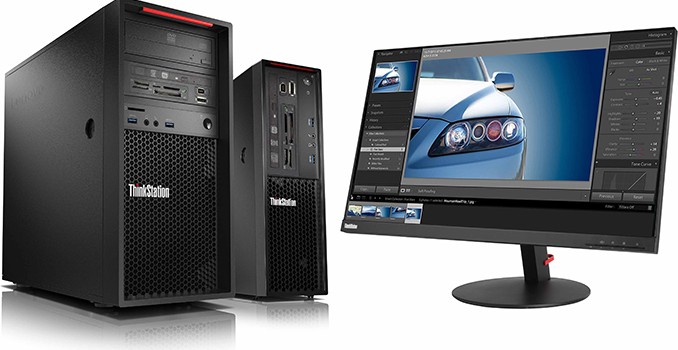
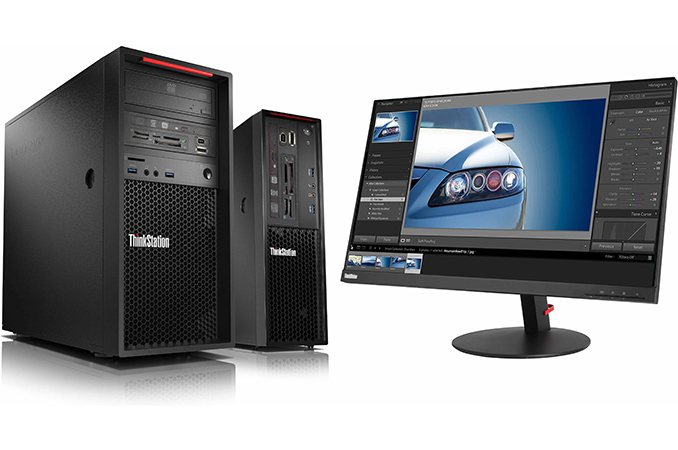
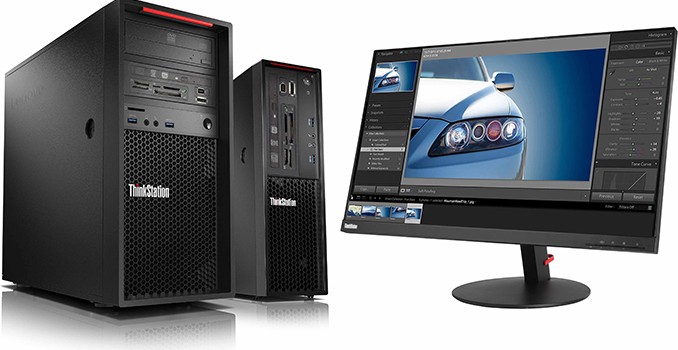
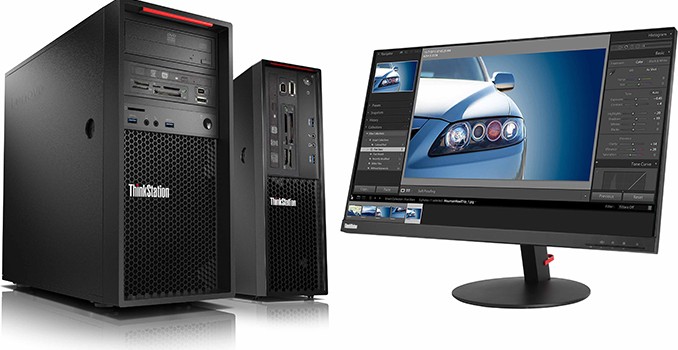
Today Lenovo is announcing an upgrade to its entry-level ThinkStation P300-series workstations. The update revolves around two new updates: firstly Intel’s Xeon E3 v6 (or 7th generation Core) processors featuring the Kaby Lake microarchitecture, but also secondly NVIDIA’s Quadro professional graphics cards powered by the Pascal architecture. The new ThinkStation P320 systems inherit form-factors and price-points from the previous-generation ThinkStation P310, but offer higher performance due to newer CPUs and GPUs as well as faster M.2 SSDs. The machines will be available starting from late April.

The Lenovo ThinkStation P320-series tower and SFF workstations are based on Intel’s C236 PCH, which relates back to the new Xeon E3 v6 announced today. Variants of the P320 using Intel’s 7th generation Core i3/i5/i7 processors without ECC memory and other advantages that Xeon CPUs provide will also be available. The workstations support up to 64 GB of DDR4-2400 memory, two M.2 PCIe NVMe SSD (up to 1 TB each) as well as up to 2/4 (SFF/tower) 3.5” storage drives or up to 3/4 (SFF/tower) 2.5” SSDs/HDDs.

When it comes to I/O capabilities, both tower and SFF machines are equipped with a 2×2 802.11ac Wi-Fi + Bluetooth 4.0 module (Intel’s AC8265), gigabit ethernet, USB 2.0/3.0 ports, DisplayPort and D-Sub outputs and so on. Just like other ThinkStation computers from Lenovo, the P320 workstations support the company’s Flex Modules (up to four per machine) that can add a Thunderbolt 3/USB 3.1 Type-C connector, a 29-in-1 card reader, a FireWire port, a slim ODD or an eSATA header to the front panel of the PC.

Traditionally, graphics is what divides Lenovo’s big and small workstations. The tower version of the ThinkStation P320 can support up to two NVIDIA’s Quadro P4000 professional graphics adapters featuring the GP104GL GPU (1792 stream processors, up to 105 W TDP) with 8 GB of GDDR5 memory each. Meanwhile, the SFF flavor of the ThinkStation P320 supports up to two low-profile Quadro P1000 cards based on the GP107GL GPU (640 stream processors, 47 W TDP) with 4 GB of memory. The new Quadro video cards featuring the Pascal architecture represent a significant upgrade for Lenovo’s entry-level workstations as current-gen ThinkStation P310 machines are shipped with Kepler-based Quadro K1200 introduced over two years ago (and based on an architecture from 2014).

Lenovo ThinkStation P320: General Specifications
  SFF Tower
CPU Xeon E3-1220 v6 (4C/4T, 3.0/3.5 GHz)
Xeon E3-1225 v6 (4C/4T, 3.3/3.7 GHz)
Xeon E3-1230 v6 (4C/8T, 3.5/3.9 GHz)
Xeon E3-1240 v6 (4C/8T, 3.7/4.1 GHz)
Xeon E3-1245 v6 (4C/8T, 3.7/4.1 GHz)
Xeon E3-1270 v6 (4C/8T, 3.8/4.2 GHz)
Xeon E3-1275 v6 (4C/8T, 3.8/4.2 GHz)
Xeon E3-1280 v6 (4C/8T, 3.9/4.2 GHz)

Intel Core i-series 7000-family CPUs
Intel Skylake-based CPUs, Xeon E3 v5 for Win7

Chipset Intel C236
SKL, KBL support,
up to 20 PCIe 3.0 PCIe lanes
x1, x2, x4 bifurcation
RAID, vPro, TXT etc.
RAM Up to 64 GB DDR4-2400 with ECC
GPU Up to 2 × NVIDIA Quadro P1000 Up to 2 × NVIDIA Quadro P4000
Storage 3.5″ SATA: up to 2 × 4 TB
2.5″ SATA: up to 3 × 3 TB
M.2 PCIe: up to 2 × 1 TB

Up to three drive form-factor storage devices.

3.5″ SATA: up to 4 × 4 TB
2.5″ SATA: up to 4 × 3 TB
M.2 PCIe: up to 2 × 1 TB

Up to four drive form-factor storage devices

Expansion PCIe x16
PCIe x4 (x16 mechanical)
2 × PCIe x1
Flex Modules (up to four)
Networking Gigabit Ethernet
Intel Wireless AC8265
(802.11ac, 2 × 2, 2.4 GHz/5GHz + Bluetooth 4.0)
I/O 2 × USB 2.0
7 × USB 3.0
Thunderbolt 3 – optional
USB 3.1 – optional
9-in-1 card reader – optional
29-in-1 card reader – optional
FireWire – optional
slim ODD – optional
eSATA – optional
Dimensions 101.6 × 394.5 × 337.8 mm
4.0″ × 15.5″ × 13.3″
175.3 × 426 × 376 mm
6.9″ × 16.8″ × 14.8″
Volume 12 L 25 L
Operating System Windows 10 Pro x64,
Windows 7 Pro x64 (Skylake),
Ubuntu and RHEL Linux
Various Windows 10 Preloads:

CyberLink PowerDVD
CyberLink Create
Lenovo Companion
Lenovo Solution Center
Microsoft Office 2016 (trial)

Windows 7 Preloads:

Adobe Acrobat Reader
CyberLink PowerDVD
CyberLink Create
Lenovo Companion
Lenovo Solution Center
Microsoft Office 2016 (trial)
McAfee LiveSafe 30-day trial
ThinkVantage System Update
Rescue and Recovery
Lenovo Solution Centre
Lenovo PowerEngage

The added graphics horsepower enabled Lenovo to position the ThinkStation P320-series workstations not only for entry-level 3D CAD/CAM applications but also for VR workloads for mechanical and design engineers. Meanwhile, if the systems are ordered primarily for 2D and business applications, Lenovo can also equip them with appropriate NVIDIA NVS multi-monitor graphics cards.

Since there are still customers who use Microsoft’s Windows 7 operating system and who intend to do so for a while, Lenovo offers Windows 7 x64 on its ThinkStation P320-series workstation by downgrading the Windows 10 Pro x64. Since the official support for Windows 7 does not exist for the new Kaby Lake CPUs, Lenovo allows customers to install appropriate Skylake processors – either the Xeon E3 v5 or the 6th generation Core i3/i5/i7.

Lenovo plans to start selling the ThinkStation P320 Tower and the ThinkStation P320 SFF in late April. Pricing of the products is still being finalized, but it should be consistent with the previous generation P300-series workstations, the company told us. At present, the ThinkStation P310 Tower and the ThinkStation P310 SFF start at $719, and we expect the P320 to be similar.

Related Reading:

Lenovo Updates ThinkStation P320 with Intel Xeon E3 v6 and NVIDIA Quadro Pascal

Lenovo Updates ThinkStation P320 with Intel Xeon E3 v6 and NVIDIA Quadro Pascal

Today Lenovo is announcing an upgrade to its entry-level ThinkStation P300-series workstations. The update revolves around two new updates: firstly Intel’s Xeon E3 v6 (or 7th generation Core) processors featuring the Kaby Lake microarchitecture, but also secondly NVIDIA’s Quadro professional graphics cards powered by the Pascal architecture. The new ThinkStation P320 systems inherit form-factors and price-points from the previous-generation ThinkStation P310, but offer higher performance due to newer CPUs and GPUs as well as faster M.2 SSDs. The machines will be available starting from late April.

The Lenovo ThinkStation P320-series tower and SFF workstations are based on Intel’s C236 PCH, which relates back to the new Xeon E3 v6 announced today. Variants of the P320 using Intel’s 7th generation Core i3/i5/i7 processors without ECC memory and other advantages that Xeon CPUs provide will also be available. The workstations support up to 64 GB of DDR4-2400 memory, two M.2 PCIe NVMe SSD (up to 1 TB each) as well as up to 2/4 (SFF/tower) 3.5” storage drives or up to 3/4 (SFF/tower) 2.5” SSDs/HDDs.

When it comes to I/O capabilities, both tower and SFF machines are equipped with a 2×2 802.11ac Wi-Fi + Bluetooth 4.0 module (Intel’s AC8265), gigabit ethernet, USB 2.0/3.0 ports, DisplayPort and D-Sub outputs and so on. Just like other ThinkStation computers from Lenovo, the P320 workstations support the company’s Flex Modules (up to four per machine) that can add a Thunderbolt 3/USB 3.1 Type-C connector, a 29-in-1 card reader, a FireWire port, a slim ODD or an eSATA header to the front panel of the PC.

Traditionally, graphics is what divides Lenovo’s big and small workstations. The tower version of the ThinkStation P320 can support up to two NVIDIA’s Quadro P4000 professional graphics adapters featuring the GP104GL GPU (1792 stream processors, up to 105 W TDP) with 8 GB of GDDR5 memory each. Meanwhile, the SFF flavor of the ThinkStation P320 supports up to two low-profile Quadro P1000 cards based on the GP107GL GPU (640 stream processors, 47 W TDP) with 4 GB of memory. The new Quadro video cards featuring the Pascal architecture represent a significant upgrade for Lenovo’s entry-level workstations as current-gen ThinkStation P310 machines are shipped with Kepler-based Quadro K1200 introduced over two years ago (and based on an architecture from 2014).

Lenovo ThinkStation P320: General Specifications
  SFF Tower
CPU Xeon E3-1220 v6 (4C/4T, 3.0/3.5 GHz)
Xeon E3-1225 v6 (4C/4T, 3.3/3.7 GHz)
Xeon E3-1230 v6 (4C/8T, 3.5/3.9 GHz)
Xeon E3-1240 v6 (4C/8T, 3.7/4.1 GHz)
Xeon E3-1245 v6 (4C/8T, 3.7/4.1 GHz)
Xeon E3-1270 v6 (4C/8T, 3.8/4.2 GHz)
Xeon E3-1275 v6 (4C/8T, 3.8/4.2 GHz)
Xeon E3-1280 v6 (4C/8T, 3.9/4.2 GHz)

Intel Core i-series 7000-family CPUs
Intel Skylake-based CPUs, Xeon E3 v5 for Win7

Chipset Intel C236
SKL, KBL support,
up to 20 PCIe 3.0 PCIe lanes
x1, x2, x4 bifurcation
RAID, vPro, TXT etc.
RAM Up to 64 GB DDR4-2400 with ECC
GPU Up to 2 × NVIDIA Quadro P1000 Up to 2 × NVIDIA Quadro P4000
Storage 3.5″ SATA: up to 2 × 4 TB
2.5″ SATA: up to 3 × 3 TB
M.2 PCIe: up to 2 × 1 TB

Up to three drive form-factor storage devices.

3.5″ SATA: up to 4 × 4 TB
2.5″ SATA: up to 4 × 3 TB
M.2 PCIe: up to 2 × 1 TB

Up to four drive form-factor storage devices

Expansion PCIe x16
PCIe x4 (x16 mechanical)
2 × PCIe x1
Flex Modules (up to four)
Networking Gigabit Ethernet
Intel Wireless AC8265
(802.11ac, 2 × 2, 2.4 GHz/5GHz + Bluetooth 4.0)
I/O 2 × USB 2.0
7 × USB 3.0
Thunderbolt 3 – optional
USB 3.1 – optional
9-in-1 card reader – optional
29-in-1 card reader – optional
FireWire – optional
slim ODD – optional
eSATA – optional
Dimensions 101.6 × 394.5 × 337.8 mm
4.0″ × 15.5″ × 13.3″
175.3 × 426 × 376 mm
6.9″ × 16.8″ × 14.8″
Volume 12 L 25 L
Operating System Windows 10 Pro x64,
Windows 7 Pro x64 (Skylake),
Ubuntu and RHEL Linux
Various Windows 10 Preloads:

CyberLink PowerDVD
CyberLink Create
Lenovo Companion
Lenovo Solution Center
Microsoft Office 2016 (trial)

Windows 7 Preloads:

Adobe Acrobat Reader
CyberLink PowerDVD
CyberLink Create
Lenovo Companion
Lenovo Solution Center
Microsoft Office 2016 (trial)
McAfee LiveSafe 30-day trial
ThinkVantage System Update
Rescue and Recovery
Lenovo Solution Centre
Lenovo PowerEngage

The added graphics horsepower enabled Lenovo to position the ThinkStation P320-series workstations not only for entry-level 3D CAD/CAM applications but also for VR workloads for mechanical and design engineers. Meanwhile, if the systems are ordered primarily for 2D and business applications, Lenovo can also equip them with appropriate NVIDIA NVS multi-monitor graphics cards.

Since there are still customers who use Microsoft’s Windows 7 operating system and who intend to do so for a while, Lenovo offers Windows 7 x64 on its ThinkStation P320-series workstation by downgrading the Windows 10 Pro x64. Since the official support for Windows 7 does not exist for the new Kaby Lake CPUs, Lenovo allows customers to install appropriate Skylake processors – either the Xeon E3 v5 or the 6th generation Core i3/i5/i7.

Lenovo plans to start selling the ThinkStation P320 Tower and the ThinkStation P320 SFF in late April. Pricing of the products is still being finalized, but it should be consistent with the previous generation P300-series workstations, the company told us. At present, the ThinkStation P310 Tower and the ThinkStation P310 SFF start at $719, and we expect the P320 to be similar.

Related Reading:

Lenovo Updates ThinkStation P320 with Intel Xeon E3 v6 and NVIDIA Quadro Pascal

Lenovo Updates ThinkStation P320 with Intel Xeon E3 v6 and NVIDIA Quadro Pascal

Today Lenovo is announcing an upgrade to its entry-level ThinkStation P300-series workstations. The update revolves around two new updates: firstly Intel’s Xeon E3 v6 (or 7th generation Core) processors featuring the Kaby Lake microarchitecture, but also secondly NVIDIA’s Quadro professional graphics cards powered by the Pascal architecture. The new ThinkStation P320 systems inherit form-factors and price-points from the previous-generation ThinkStation P310, but offer higher performance due to newer CPUs and GPUs as well as faster M.2 SSDs. The machines will be available starting from late April.

The Lenovo ThinkStation P320-series tower and SFF workstations are based on Intel’s C236 PCH, which relates back to the new Xeon E3 v6 announced today. Variants of the P320 using Intel’s 7th generation Core i3/i5/i7 processors without ECC memory and other advantages that Xeon CPUs provide will also be available. The workstations support up to 64 GB of DDR4-2400 memory, two M.2 PCIe NVMe SSD (up to 1 TB each) as well as up to 2/4 (SFF/tower) 3.5” storage drives or up to 3/4 (SFF/tower) 2.5” SSDs/HDDs.

When it comes to I/O capabilities, both tower and SFF machines are equipped with a 2×2 802.11ac Wi-Fi + Bluetooth 4.0 module (Intel’s AC8265), gigabit ethernet, USB 2.0/3.0 ports, DisplayPort and D-Sub outputs and so on. Just like other ThinkStation computers from Lenovo, the P320 workstations support the company’s Flex Modules (up to four per machine) that can add a Thunderbolt 3/USB 3.1 Type-C connector, a 29-in-1 card reader, a FireWire port, a slim ODD or an eSATA header to the front panel of the PC.

Traditionally, graphics is what divides Lenovo’s big and small workstations. The tower version of the ThinkStation P320 can support up to two NVIDIA’s Quadro P4000 professional graphics adapters featuring the GP104GL GPU (1792 stream processors, up to 105 W TDP) with 8 GB of GDDR5 memory each. Meanwhile, the SFF flavor of the ThinkStation P320 supports up to two low-profile Quadro P1000 cards based on the GP107GL GPU (640 stream processors, 47 W TDP) with 4 GB of memory. The new Quadro video cards featuring the Pascal architecture represent a significant upgrade for Lenovo’s entry-level workstations as current-gen ThinkStation P310 machines are shipped with Kepler-based Quadro K1200 introduced over two years ago (and based on an architecture from 2014).

Lenovo ThinkStation P320: General Specifications
  SFF Tower
CPU Xeon E3-1220 v6 (4C/4T, 3.0/3.5 GHz)
Xeon E3-1225 v6 (4C/4T, 3.3/3.7 GHz)
Xeon E3-1230 v6 (4C/8T, 3.5/3.9 GHz)
Xeon E3-1240 v6 (4C/8T, 3.7/4.1 GHz)
Xeon E3-1245 v6 (4C/8T, 3.7/4.1 GHz)
Xeon E3-1270 v6 (4C/8T, 3.8/4.2 GHz)
Xeon E3-1275 v6 (4C/8T, 3.8/4.2 GHz)
Xeon E3-1280 v6 (4C/8T, 3.9/4.2 GHz)

Intel Core i-series 7000-family CPUs
Intel Skylake-based CPUs, Xeon E3 v5 for Win7

Chipset Intel C236
SKL, KBL support,
up to 20 PCIe 3.0 PCIe lanes
x1, x2, x4 bifurcation
RAID, vPro, TXT etc.
RAM Up to 64 GB DDR4-2400 with ECC
GPU Up to 2 × NVIDIA Quadro P1000 Up to 2 × NVIDIA Quadro P4000
Storage 3.5″ SATA: up to 2 × 4 TB
2.5″ SATA: up to 3 × 3 TB
M.2 PCIe: up to 2 × 1 TB

Up to three drive form-factor storage devices.

3.5″ SATA: up to 4 × 4 TB
2.5″ SATA: up to 4 × 3 TB
M.2 PCIe: up to 2 × 1 TB

Up to four drive form-factor storage devices

Expansion PCIe x16
PCIe x4 (x16 mechanical)
2 × PCIe x1
Flex Modules (up to four)
Networking Gigabit Ethernet
Intel Wireless AC8265
(802.11ac, 2 × 2, 2.4 GHz/5GHz + Bluetooth 4.0)
I/O 2 × USB 2.0
7 × USB 3.0
Thunderbolt 3 – optional
USB 3.1 – optional
9-in-1 card reader – optional
29-in-1 card reader – optional
FireWire – optional
slim ODD – optional
eSATA – optional
Dimensions 101.6 × 394.5 × 337.8 mm
4.0″ × 15.5″ × 13.3″
175.3 × 426 × 376 mm
6.9″ × 16.8″ × 14.8″
Volume 12 L 25 L
Operating System Windows 10 Pro x64,
Windows 7 Pro x64 (Skylake),
Ubuntu and RHEL Linux
Various Windows 10 Preloads:

CyberLink PowerDVD
CyberLink Create
Lenovo Companion
Lenovo Solution Center
Microsoft Office 2016 (trial)

Windows 7 Preloads:

Adobe Acrobat Reader
CyberLink PowerDVD
CyberLink Create
Lenovo Companion
Lenovo Solution Center
Microsoft Office 2016 (trial)
McAfee LiveSafe 30-day trial
ThinkVantage System Update
Rescue and Recovery
Lenovo Solution Centre
Lenovo PowerEngage

The added graphics horsepower enabled Lenovo to position the ThinkStation P320-series workstations not only for entry-level 3D CAD/CAM applications but also for VR workloads for mechanical and design engineers. Meanwhile, if the systems are ordered primarily for 2D and business applications, Lenovo can also equip them with appropriate NVIDIA NVS multi-monitor graphics cards.

Since there are still customers who use Microsoft’s Windows 7 operating system and who intend to do so for a while, Lenovo offers Windows 7 x64 on its ThinkStation P320-series workstation by downgrading the Windows 10 Pro x64. Since the official support for Windows 7 does not exist for the new Kaby Lake CPUs, Lenovo allows customers to install appropriate Skylake processors – either the Xeon E3 v5 or the 6th generation Core i3/i5/i7.

Lenovo plans to start selling the ThinkStation P320 Tower and the ThinkStation P320 SFF in late April. Pricing of the products is still being finalized, but it should be consistent with the previous generation P300-series workstations, the company told us. At present, the ThinkStation P310 Tower and the ThinkStation P310 SFF start at $719, and we expect the P320 to be similar.

Related Reading:

Intel Launches Kaby-Lake based Xeons: The E3-1200 v6 Family

Intel Launches Kaby-Lake based Xeons: The E3-1200 v6 Family

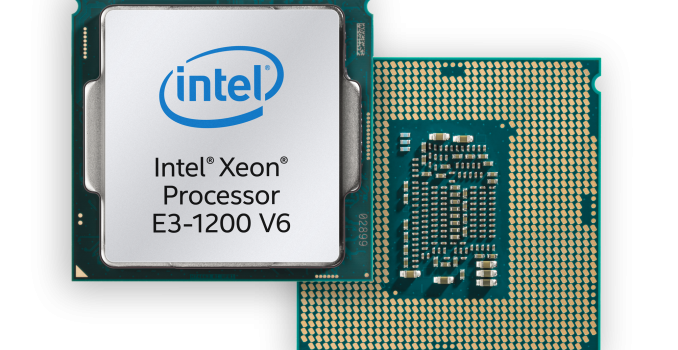
For the several generations previous, it has become customary for the Xeon equivalents of consumer processors to hit the market several months later. We saw the launch of Kaby Lake on the consumer desktop in January, with quad-core parts up to 4.0 GHz coming to retail. The Xeon E3 launch will be in the similar vein to previous years, designed for entry-level workstations, small business servers and storage servers, and Intel’s main comparisons for these Xeons will be to replace similar builds that are more than three years old.
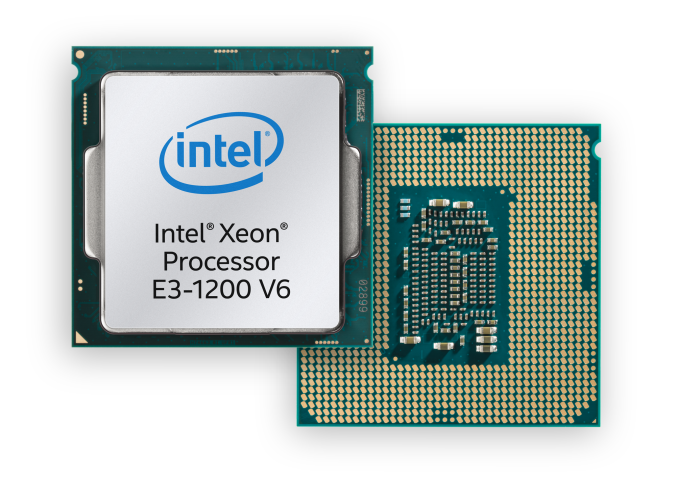
A total of eight processors will be launched today under the E3 v6 name, with some models receiving a corresponding low-power version later down the line. All desktop replaceable CPUs will be using the LGA1151 socket, the same as the previous generation E3 v5 Xeons.

Intel E3-1200 v6 CPUs (Kaby Lake)
  C/T Base Freq Turbo L3 Cache IGP IGP Freq TDP $
E3-1280 v6 4/8 3.9 GHz 4.2 GHz 8 MB 72 W $612
E3-1275 v6 4/8 3.8 GHz 4.2 GHz 8 MB P630 1150 MHz 73 W $339
E3-1270 v6 4/8 3.8 GHz 4.2 GHz 8 MB 72 W $328
E3-1245 v6 4/8 3.7 GHz 4.1 GHz 8 MB P630 1150 MHz 73 W $284
E3-1240 v6 4/8 3.7 GHz 4.1 GHz 8 MB 72 W $272
E3-1230 v6 4/8 3.5 GHz 3.9 GHz 8 MB 72 W $250
E3-1225 v6 4/4 3.3 GHz 3.7 GHz 8 MB P630 1150 MHz 73 W $213
E3-1220 v6 4/4 3.0 GHz 3.5 GHz 8 MB 72 W $193

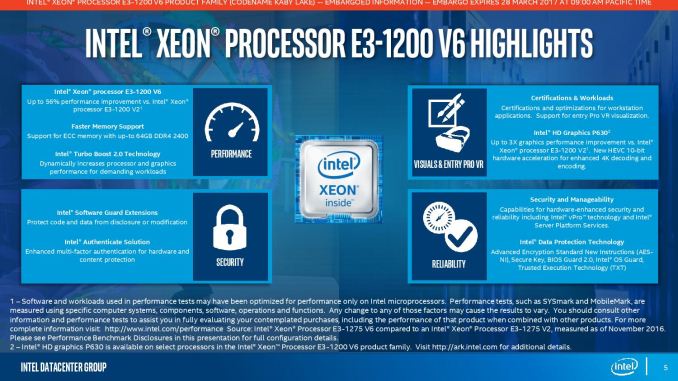
On the integrated graphics models, i.e. those ending in ‘5’, are all running Intel HD P630 graphics and run up to 1150 MHz. This is the ‘professional’ version of the HD630 we see on the consumer parts, using Intel’s latest Gen9 graphics architecture and supporting H.265 encode/decode. Our Kaby Lake review piece goes into more detail.

The high-end E3 v6 parts will have a maximum base frequency of 3.9 GHz base and a 4.2 GHz turbo. All the parts listed have a full 8MB of L3 cache, and either be 72W for non-IGP models or 73W for IGP parts. As with other previous Xeons, these come with ECC memory support, vPro and other technologies Intel files under the professional level. In Intel’s presentations, Intel SGX (Software Guard Extensions) are included, however TSX (Transactional Extensions) were not listed.

Intel E3-1200 v6 and v5 CPUs
IGP v6 Model v5 IGP
3.9/4.2, 72W E3-1280 3.7/4.0, 80W
+ 3.8/4.2, 73W E3-1275 3.6/4.0, 80W +
3.8/4.2, 72W E3-1270 3.6/4.0, 80W
E3-1260L 2.9/3.9, 45W
+ 3.7/4.1, 73W E3-1245 3.5/3.9, 80W +
3.7/4.1, 72W E3-1240 3.5/3.9, 80W
E3-1240L 2.1/3.2, 25W
E3-1235L 2.0/3.0, 25W +
3.5/3.9, 72W E3-1230 3.4/3.8, 80W
+ 3.3/3.7, 73W E3-1225 3.3/3.7, 80W +
3.0/3.3, 72W E3-1220 3.0/3.5, 80W

It is worth noting that for LGA1151 based E3 v5 Xeons, Intel adjusted the requirements such that Xeon processors require a server grade chipset on the motherboard. For Skylake E3 v5 parts, this was either a C232 or C236 chipset – we reviewed a few motherboards with these on (ASRock E3V5 Gaming, GIGABYTE Z170X-Extreme ECC). With a BIOS update, these C232/C236 motherboards should support the new v6 processors.

For the E3 v6 line, Intel is not releasing new chipsets, deciding to stick with the C232 and C236 models. This means that users wishing to upgrade their E3 v5 system will have to wait for a BIOS update in order for the new CPUs to work. We have yet to receive word if the standard motherboard manufacturers are launching a new series of motherboards for this generation, however we suspect that several will do so.

With the no new motherboard chipsets being launched, it is, therefore, odd that Intel is announcing Optane Memory support with the E3-1200 v6 Xeons. This essentially means that Optane Memory support is already baked into the chipset, and it is merely a firmware approval of a CPU and chipset combination in order for it to be enabled. Intel states that only select E3-1500M v6 (mobile) and E3-1200 v6 (desktop) configurations will be available for use with Optane, and may only be provided on an OEM basis.

Intel Xeon E-Series Families (February 2017)
  E3-1200 v5 E3-1500 v5
E3-1500M v6
E5-1600 v4
E5-2600 v4
E5-4600 v4
E7-4800 v4 E7-8800 v4
Core Family Skylake Skylake Broadwell Broadwell Broadwell
Core Count 2 to 4 2 to 4 4 to 22 8 to 16 4 to 24
Integrated Graphics Few, HD 520 Yes, Iris Pro No No No
DRAM Channels 2 2 4 4 4
Max DRAM Support (per CPU) 64 GB 64 GB 1536 GB 3072 GB 3072GB
DMI/QPI DMI 3.0 DMI 3.0 2600: 1xQPI
4600: 1xQPI
3 QPI 3 QPI
Multi-Socket Support No No 2600: 1S/2S
4600: 1S/2S
1S, 2S or 4S Up to 8S
PCIe Lanes 16 16 40 32 32
Cost $213 to
$612
$396 to
$1207
$294 to
$7007
$1223 to
$3003
$4061 to
$8898
Suited For Entry Workstations QuickSync,
Memory Compute
High-End Workstation Many-Core Server World Domination

Along with Intel’s announcement, we are seeing systems being launched with E3 v6 processors installed. Prices of the new parts are equivalent to the last generation.

To call out a big elephant in the room: Intel has more competition in this space than in previous years. Intel gives value to Xeon processors above consumer products, but Ryzen could potentially be an alternative to Intel. Aside from AMD, some of the positioning that Intel puts forward with the E3 could be taken up by Intel’s Atom offerings, Xeon-D, or even musings from ARM partners on new silicon designs. All being said, Intel is still expected to have the peak single thread performance for general purpose compute, and has the larger install base of customers and ready-to-go platforms. Performance per watt will be a key metric to monitor as well.

We have the E3 v5 processors in for testing on our new CPU test suite, and we hope that the E3 v6 units will arrive in due course. Stay tuned for those. 

Related Reading: