
Vik


Playing With Power: A Look At Nintendo Switch Power Consumption
Playing With Power: A Look At Nintendo Switch Power Consumption

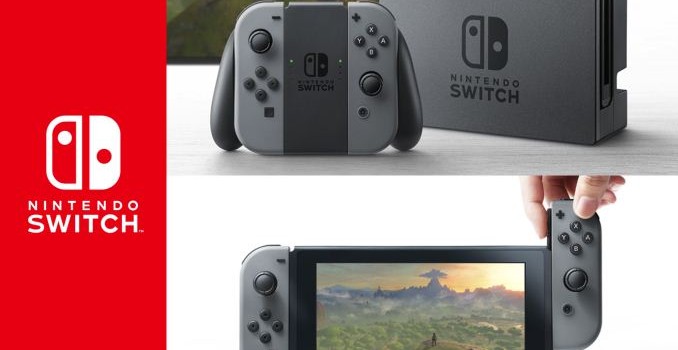
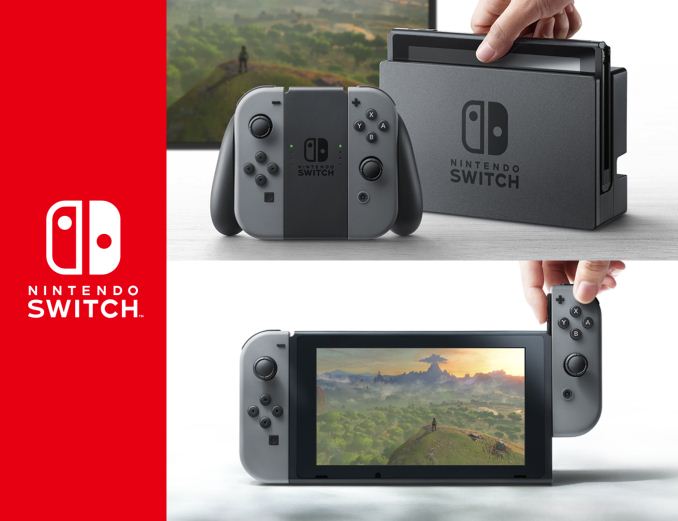
Last week was of course the launch of Nintendo’s eagerly anticipated Switch console. The company’s latest handheld console, the Switch is a bit of an odd duck in pretty much every way. It departs from Nintendo’s traditional and well-established clamshell design in favor of a larger tablet, and under the hood Nintendo has stepped away from their typical highly-custom low-power SoC in favor of a rather powerful Tegra design from NVIDIA. Given that the 3DS was essentially an ARMv6 + OpenGL ES 1.x device, I can’t overstate just how significant of a jump this is under the hood in going to the ARMv8 + OpenGL ES 3.2/Vulkan class Tegra SoC. Nintendo has essentially jumped forward 10 years in mobile technology in a single generation.

Playing with a launch-day Switch a bit, there’s not much testing we can do since the console is so locked down. But one area where I’ve had some success is on power consumption testing. This is also an area where the Switch is a bit of an odd duck, leading to some confusion around the Web judging from some of the comment posts I’ve seen elsewhere. USB Type-C has been shipping in devices for a couple of years now, so it’s hardly a new standard, but given the slow upgrade cycle of PCs and smartphones it still isn’t an interface that the majority of consumers out there have dealt with. Furthermore due to its use case as a game console, the Switch is unlike any other USB Type-C device out there (more on this in a second). So I opted to spend some time profiling the device’s power consumption, in order to shed some light on what to expect.

Playing With Power: A Look At Nintendo Switch Power Consumption

Playing With Power: A Look At Nintendo Switch Power Consumption

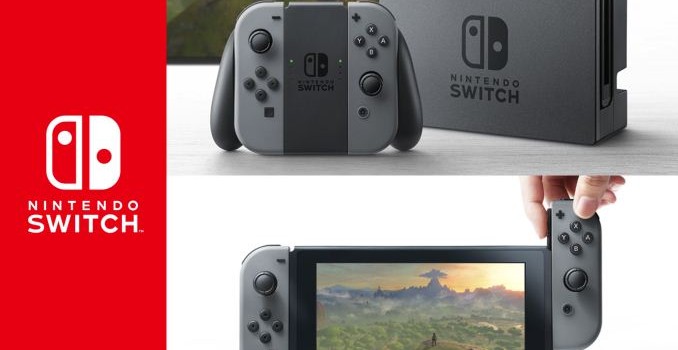
Last week was of course the launch of Nintendo’s eagerly anticipated Switch console. The company’s latest handheld console, the Switch is a bit of an odd duck in pretty much every way. It departs from Nintendo’s traditional and well-established clamshell design in favor of a larger tablet, and under the hood Nintendo has stepped away from their typical highly-custom low-power SoC in favor of a rather powerful Tegra design from NVIDIA. Given that the 3DS was essentially an ARMv6 + OpenGL ES 1.x device, I can’t overstate just how significant of a jump this is under the hood in going to the ARMv8 + OpenGL ES 3.2/Vulkan class Tegra SoC. Nintendo has essentially jumped forward 10 years in mobile technology in a single generation.

Playing with a launch-day Switch a bit, there’s not much testing we can do since the console is so locked down. But one area where I’ve had some success is on power consumption testing. This is also an area where the Switch is a bit of an odd duck, leading to some confusion around the Web judging from some of the comment posts I’ve seen elsewhere. USB Type-C has been shipping in devices for a couple of years now, so it’s hardly a new standard, but given the slow upgrade cycle of PCs and smartphones it still isn’t an interface that the majority of consumers out there have dealt with. Furthermore due to its use case as a game console, the Switch is unlike any other USB Type-C device out there (more on this in a second). So I opted to spend some time profiling the device’s power consumption, in order to shed some light on what to expect.

The 2016 Razer Blade Pro Review

When I first heard about Razer, they were a company that strictly made gaming peripherals. I mostly associate them with their DeathAdder mouse, with the version from 2010 still being one of the best mice I’ve ever used. Razer has also made audio equipment like gaming headsets for quite some time, as well as a line of gaming keyboards. As time went on, some of these products gained features that were unique to Razer, such as the use of Razer-designed mechanical switches in their gaming keyboards, and RGB backlighting in various products with the Chroma branding.

Razer has made a number of attempts to move beyond the world of gaming peripherals. Some have been more successful than others. For example, some gamers may remember the Razer Edge Pro, the gaming tablet that never seemed to catch on with consumers. Razer also made a fitness band called the Nabu, but it also appears to have missed the mark and has seen some pretty heavy discounts in recent times. With Razer’s recent purchase of NextBit, many have begun to speculate on whether Razer plans to move into the mobile industry.

While it would be fun to speculate on Razer’s plans for the future, they do have one area beyond peripherals that has been an undisputed success. Their line of laptops, which started with the unveiling of the original Razer Blade in 2011, have shown that it’s possible to build gaming laptops without the bulky plastic bodies and poor quality displays that traditionally characterized high-performance laptops from other vendors. As time has gone on, Razer has iterated on the original Razer Blade, and introduced both a smaller model in the form of the Razer Blade Stealth, and a larger model known as the Razer Blade Pro. That latter model is the laptop I’ll be looking at today. Read on for the full AnandTech review of the Razer Blade Pro.

The 2016 Razer Blade Pro Review

When I first heard about Razer, they were a company that strictly made gaming peripherals. I mostly associate them with their DeathAdder mouse, with the version from 2010 still being one of the best mice I’ve ever used. Razer has also made audio equipment like gaming headsets for quite some time, as well as a line of gaming keyboards. As time went on, some of these products gained features that were unique to Razer, such as the use of Razer-designed mechanical switches in their gaming keyboards, and RGB backlighting in various products with the Chroma branding.

Razer has made a number of attempts to move beyond the world of gaming peripherals. Some have been more successful than others. For example, some gamers may remember the Razer Edge Pro, the gaming tablet that never seemed to catch on with consumers. Razer also made a fitness band called the Nabu, but it also appears to have missed the mark and has seen some pretty heavy discounts in recent times. With Razer’s recent purchase of NextBit, many have begun to speculate on whether Razer plans to move into the mobile industry.

While it would be fun to speculate on Razer’s plans for the future, they do have one area beyond peripherals that has been an undisputed success. Their line of laptops, which started with the unveiling of the original Razer Blade in 2011, have shown that it’s possible to build gaming laptops without the bulky plastic bodies and poor quality displays that traditionally characterized high-performance laptops from other vendors. As time has gone on, Razer has iterated on the original Razer Blade, and introduced both a smaller model in the form of the Razer Blade Stealth, and a larger model known as the Razer Blade Pro. That latter model is the laptop I’ll be looking at today. Read on for the full AnandTech review of the Razer Blade Pro.

Meizu Unveils Super mCharge: Fast Charging At 55W

Meizu Unveils Super mCharge: Fast Charging At 55W

Meizu unveiled a new fast-charging technology—called Super mCharge—at MWC 2017 that’s capable of fully charging a 3000 mAh battery in just 20 minutes. Rapid charging has grown from novelty to highly desirable feature in a short perio…