Vik


ASUS VivoPC X: Core i5, GeForce GTX 1060, 512 GB SSD, 5-Liter Chassis, $799

ASUS VivoPC X: Core i5, GeForce GTX 1060, 512 GB SSD, 5-Liter Chassis, $799

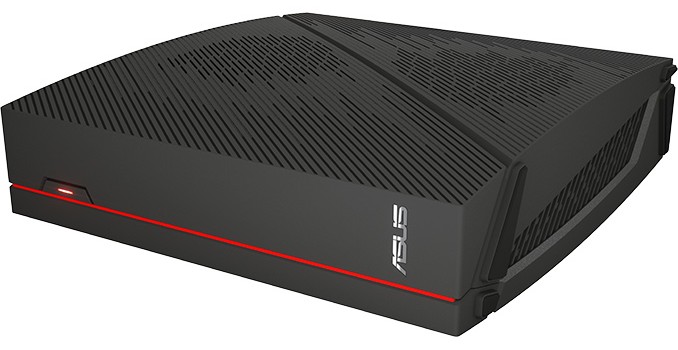
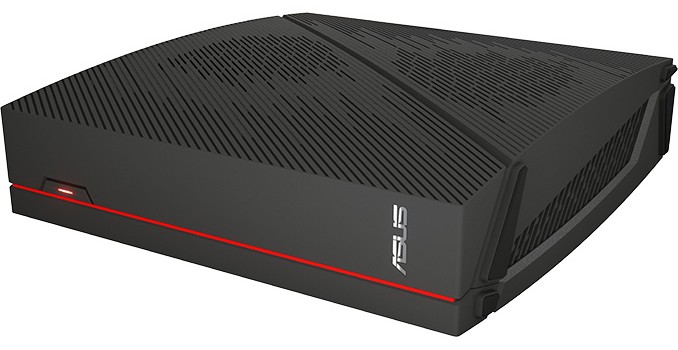
ASUS at CES has introduced its new game console-like PC that weds relatively high performance, compact dimensions and a moderate price tag. The new VivoPC X packs Intel Core i5 CPU and NVIDIA GeForce GTX GPU into a 5-liter chassis.

Traditionally, ASUS has positioned its Vivo-series computers as miniature PCs for mainstream tasks, whereas ROG systems were designed for gamers and multimedia enthusiasts. With the release of the VivoPC X, the computer maker changes that positioning and offers an SFF gaming-grade system under the Vivo brand. The reasons for the decision are simple: sales of small form-factor PCs are growing and so are sales of machines for gamers. ASUS wanted to address both markets with computers at more or less mainstream prices and the VivoPC X is a result of this decision. The mini PC is positioned below the ROG GR8 II and its performance is lower, however, ASUS thinks that the combination of price and performance will satisfy many people looking for a console-like gaming PC.

The ASUS VivoPC X M80 is based on the Intel Core i5-7300HQ (4C/4T, 2.5 GHz/3.5 GHz, 6 MB cache, HD Graphics 630, 45 W) mobile processor, the Intel HM175 PCH as well as NVIDIA’s GeForce GTX 1060 graphics processor with G-Sync support. Since many gamers demand to have the performance of an SSD and capacity of a hard drive, the system will be equipped with a 512 GB M.2 SATA SSD as well as a 2 TB HDD with 7200 RPM spindle speed. The PC also comes with 8 GB of DDR4-2133 memory. To cool down the system components, ASUS uses a custom cooling system consisting of a blower for the GPU and a large aluminum heatsink for the CPU.

ASUS VivoPC X Specifications
  M80
CPU Intel Core i5-7300HQ
Quad Core
2.5 GHz/3.5 GHz
6 MB cache
HD Graphics 630
PCH Intel HM175
Graphics NVIDIA GeForce GTX 1060 with GDDR5 memory
Memory  8 GB of DDR4-2133
Storage 512 GB SSD (SATA)
2 TB 2.5″ HDD (7200 RPM)
Wi-Fi IEEE 802.11ac Wi-Fi + BT 4.1
Ethernet GbE
Display Outputs 2 × HDMI 2.0b
1 × DisplayPort
Audio 5.1-channel audio
USB 4 × USB 3.0 Type-A (5 Gbps)
2 × USB 2.0 Type-A
Other I/O
Dimensions 75.94 mm × 259.8 mm × 279.9 mm
2.99 × 10.23 × 11.02 inches
PSU 230 W
OS Windows 10

When it comes to connectivity, the ASUS VivoPC X has four USB 3.0 Type-A ports, two USB 2.0 headers, Gigabit Ethernet, an IEEE 802.11ac Wi-Fi with BT 4.1 module, three display outputs (two HDMI and one DisplayPort), 5.1-channel audio with Sonic Suite software enhancements and so on.

The computer uses mobile PC components in a bid to keep its physical size small and power consumption low: its volume is about five liters and its power consumption is less than 230 W (it uses an external power brick to feed itself). Meanwhile, usage of such components also means that its future upgrades will be rather complicated if possible at all (for example, the GPU is soldered to the motherboard and is thus not upgradeable).

The ASUS VivoPC X will be available in March, 2017, for $799.

Related Reading:

ASUS VivoPC X: Core i5, GeForce GTX 1060, 512 GB SSD, 5-Liter Chassis, $799

ASUS VivoPC X: Core i5, GeForce GTX 1060, 512 GB SSD, 5-Liter Chassis, $799

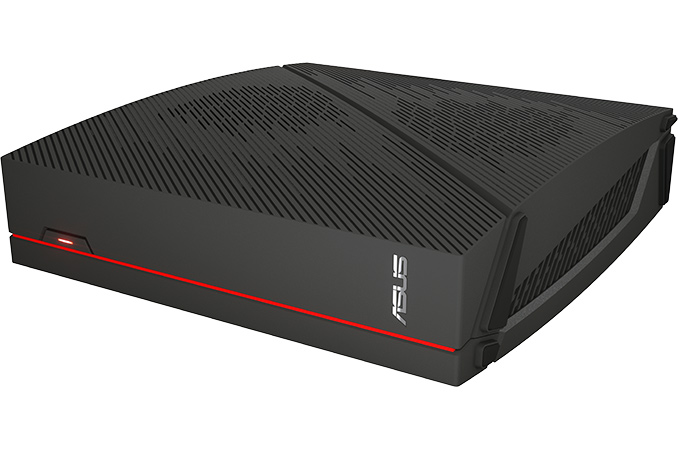
ASUS at CES has introduced its new game console-like PC that weds relatively high performance, compact dimensions and a moderate price tag. The new VivoPC X packs Intel Core i5 CPU and NVIDIA GeForce GTX GPU into a 5-liter chassis.

Traditionally, ASUS has positioned its Vivo-series computers as miniature PCs for mainstream tasks, whereas ROG systems were designed for gamers and multimedia enthusiasts. With the release of the VivoPC X, the computer maker changes that positioning and offers an SFF gaming-grade system under the Vivo brand. The reasons for the decision are simple: sales of small form-factor PCs are growing and so are sales of machines for gamers. ASUS wanted to address both markets with computers at more or less mainstream prices and the VivoPC X is a result of this decision. The mini PC is positioned below the ROG GR8 II and its performance is lower, however, ASUS thinks that the combination of price and performance will satisfy many people looking for a console-like gaming PC.

The ASUS VivoPC X M80 is based on the Intel Core i5-7300HQ (4C/4T, 2.5 GHz/3.5 GHz, 6 MB cache, HD Graphics 630, 45 W) mobile processor, the Intel HM175 PCH as well as NVIDIA’s GeForce GTX 1060 graphics processor with G-Sync support. Since many gamers demand to have the performance of an SSD and capacity of a hard drive, the system will be equipped with a 512 GB M.2 SATA SSD as well as a 2 TB HDD with 7200 RPM spindle speed. The PC also comes with 8 GB of DDR4-2133 memory. To cool down the system components, ASUS uses a custom cooling system consisting of a blower for the GPU and a large aluminum heatsink for the CPU.

ASUS VivoPC X Specifications
  M80
CPU Intel Core i5-7300HQ
Quad Core
2.5 GHz/3.5 GHz
6 MB cache
HD Graphics 630
PCH Intel HM175
Graphics NVIDIA GeForce GTX 1060 with GDDR5 memory
Memory  8 GB of DDR4-2133
Storage 512 GB SSD (SATA)
2 TB 2.5″ HDD (7200 RPM)
Wi-Fi IEEE 802.11ac Wi-Fi + BT 4.1
Ethernet GbE
Display Outputs 2 × HDMI 2.0b
1 × DisplayPort
Audio 5.1-channel audio
USB 4 × USB 3.0 Type-A (5 Gbps)
2 × USB 2.0 Type-A
Other I/O
Dimensions 75.94 mm × 259.8 mm × 279.9 mm
2.99 × 10.23 × 11.02 inches
PSU 230 W
OS Windows 10

When it comes to connectivity, the ASUS VivoPC X has four USB 3.0 Type-A ports, two USB 2.0 headers, Gigabit Ethernet, an IEEE 802.11ac Wi-Fi with BT 4.1 module, three display outputs (two HDMI and one DisplayPort), 5.1-channel audio with Sonic Suite software enhancements and so on.

The computer uses mobile PC components in a bid to keep its physical size small and power consumption low: its volume is about five liters and its power consumption is less than 230 W (it uses an external power brick to feed itself). Meanwhile, usage of such components also means that its future upgrades will be rather complicated if possible at all (for example, the GPU is soldered to the motherboard and is thus not upgradeable).

The ASUS VivoPC X will be available in March, 2017, for $799.

Related Reading:

ASUS Announces ZenFone AR and ZenFone 3 Zoom

ASUS Announces ZenFone AR and ZenFone 3 Zoom

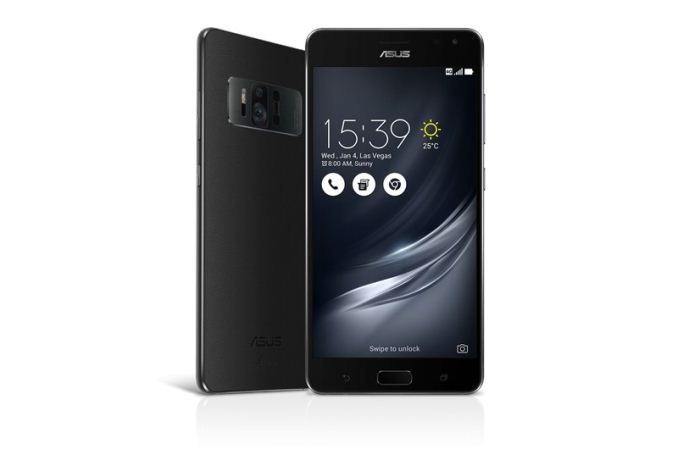
ASUS recently announced two new smartphones: the ZenFone AR and ZenFone 3 Zoom. Each phone has an array of cameras that provide advanced imaging features such as simulated depth of field and augmented reality (AR).

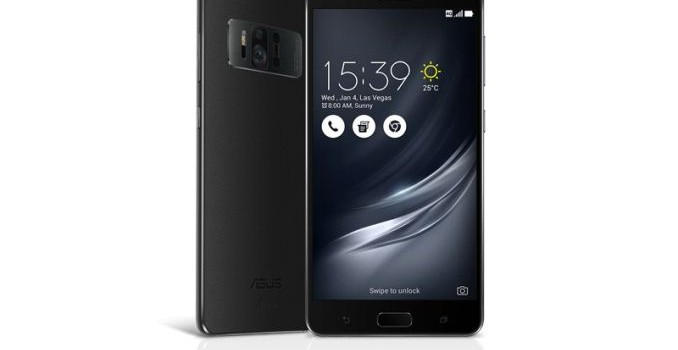
The ZenFone AR is the first smartphone that supports both Google’s Tango AR technology and Daydream VR. Tango, which has been in development for some time and recently debuted in Lenovo’s Phab 2 Pro, gives the ZenFone AR motion tracking, depth perception, and environment mapping capabilities, allowing you to do things like measure physical objects, play new interactive games, or view maps and other relevant data overlaid on the environment shown on the phone’s 5.7-inch QHD SAMOLED screen.
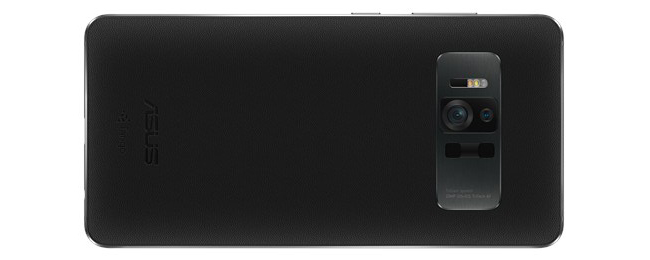
The phone’s AR and imaging experiences are enabled by ASUS’ TriCam system that combines a motion tracking camera, a depth camera that’s paired with an infrared illuminator, and a 23MP Sony IMX318 Exmor RS primary camera paired with an f/2.0 lens. It also has 4-axis OIS to help steady the camera during long exposures, a color spectrum sensor to improve white balance accuracy, and a hybrid autofocus system that combines dual-pixel phase detection (2PDAF), laser, and contrast based AF that should provide good performance in a range of lighting conditions. ASUS claims the camera can focus in as little as 0.03 seconds in ideal conditions. The front camera uses an 8MP sensor and includes its own LED selfie flash.

  ASUS ZenFone 3 Zoom ASUS ZenFone AR
SoC Qualcomm Snapdragon 625
(MSM8953)

4x Cortex-A53 @ 2.0GHz
Adreno 506

Qualcomm Snapdragon 821
(MSM8996 Pro AB)

2x Kryo @ 2.35GHz
2x Kryo @ 2.19GHz
Adreno 530

RAM 3GB / 4GB LPDDR3-1866 6GB / 8GB LPDDR4
NAND 32GB / 64GB / 128GB (eMMC 5.1)
+ microSD
32GB / 64GB / 128GB / 256GB (UFS 2.0)
+ microSD (SDXC)
Display 5.5-inch 1920×1080 SAMOLED 5.7-inch 2560×1440 SAMOLED
Dimensions 154.3 x 77.0 x 7.99 mm
170 grams
158.7 x 77.7 x 8.95 mm
170 grams
Modem Qualcomm X9 LTE (Integrated)
2G / 3G / 4G LTE (Category 7/13)
Qualcomm X12 LTE (Integrated)
2G / 3G / 4G LTE (Category 12)
SIM Size 2x NanoSIM (dual standby) 2x NanoSIM (dual standby)
Front Camera 13MP, 1/3.06″ Sony IMX214 Exmor RS, 1.12µm pixels, f/2.0, screen flash 8MP, f/2.0, AF, dual-tone LED flash
Rear Camera Wide Angle:
12MP, 1/2.5” Sony IMX362 Exmor RS, 1.4µm pixels, f/1.7, 25mm focal length, 2PDAF + Laser AF, OIS, color spectrum sensor, HDR, dual-tone LED flash

Zoom:
12MP, 59mm focal length

Primary:
23MP, 1/2.6” Sony IMX318 Exmor RS, 1.10µm pixels, f/2.0, 2PDAF + Laser AF, 4-axis OIS, color spectrum sensor, HDR, dual-tone LED flash

Motion Tracking Camera
Depth Camera

Battery 5000 mAh
non-replaceable
3300 mAh
non-replaceable
Connectivity 802.11a/b/g/n/ac, BT 4.1, GPS/GNSS, USB 2.0 Type-C, 3.5mm headset 802.11a/b/g/n/ac (2×2 MIMO), BT 4.2, NFC, GPS/GNSS, USB Type-C, 3.5mm headset
Launch OS Android 6.0 with ASUS ZenUI 3.0 Android 7.0 with ASUS ZenUI 3.0

Inside the ZenFone AR is a Snapdragon 821 SoC that includes two of Qualcomm’s custom Kryo CPU cores running at up to 2.35GHz and another two Kryo cores that can reach 2.19GHz. The Hexagon DSP provides the six degree of freedom position tracking used by Tango. Because of the high demands placed on all the processors inside the SoC (CPU, GPU, DSP, ISP) when running AR and VR applications, the ZenFone AR includes a heat pipe to help keep things cool. It will be interesting to see how this cooling solution works and if it proves sufficient to keep the SoC from throttling during heavy use.

The SoC is paired with either 6GB or 8GB of RAM. There’s also several internal storage tiers starting at 32GB and ranging all the way up to 256GB, with the option to expand storage further with a microSD card. It only comes with a 3300mAh battery, however, which seems a bit small for a 5.7-inch phone that’s intended to run power-hungry VR/AR applications.
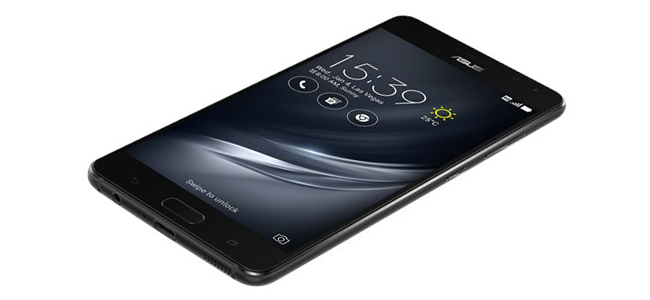
The aluminum frame has chamfered edges around the front and back. A power button and volume rocker are on the right edge, while the USB Type-C port, 3.5mm headphone jack, and single downward-firing speaker are all located on the bottom edge. The back is covered in charcoal-colored leather, with the serious-looking camera module with a stainless steel surround being the dominant feature. The front is covered edge-to-edge with Gorilla Glass 4. The pill-shaped home button doubles as a capacitive fingerprint sensor and is flanked by capacitive back and recent apps buttons.

The ZenFone 3 Zoom does not support Tango or Daydream. Instead it focuses exclusively on photography. It uses two rear cameras with different focal lengths to provide what ASUS calls 2.3x optical zoom. This does not work like a true zoom lens, however, which can smoothly adjust focal length between its extreme settings. The ZenFone 3 Zoom simply switches between the two cameras in addition to performing digital zoom.
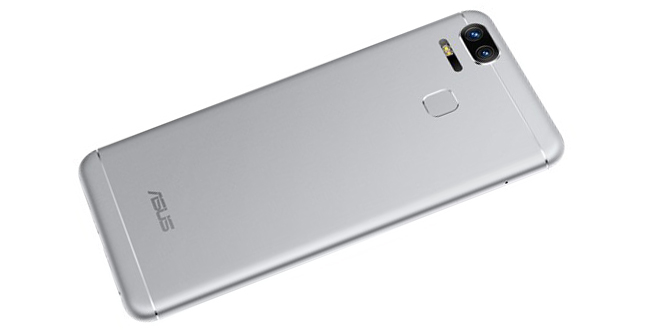
The wide angle camera has a 25mm equivalent focal length that captures a wider field of view but makes objects appear smaller and farther away than they appear to the naked eye. The zoom camera has a 59mm equivalent focal length that makes objects appear slightly larger and closer relative to what your eye sees but has a more restricted field of view. Having a second camera without a wide angle lens is actually very useful in many situations. This approach is similar to what Apple used for the iPhone 7 Plus’ dual camera system.

The wide angle camera uses a 12MP Sony IMX362 Exmor RS sensor with large 1.4µm pixels. It has a six element lens with a large f/1.7 aperture that lets more light reach the sensor, boosting low-light image quality. It also includes OIS and a color spectrum sensor like the ZenFone AR, along with the same hybrid autofocus system that combines dual-pixel phase detection (2PDAF), laser, and contrast based AF. The zoom camera, which has a five element lens array, also uses a 12MP sensor; however, ASUS didn’t provide any further details, so it’s not clear if it also has OIS and the same hybrid AF system. There’s also a 13MP selfie camera that uses the screen for a flash.
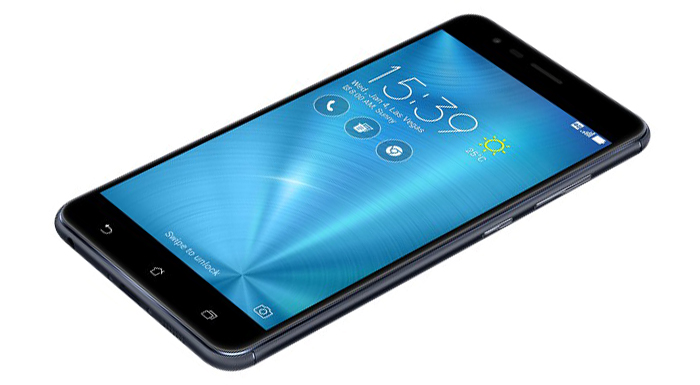
The ZenFone 3 Zoom makes due with a Qualcomm Snapdragon 625 SoC that has an octa-core Cortex-A53 CPU running at up to 2.0GHz. It also has half the amount of RAM as the ZenFone AR, with 3GB or 4GB options available. You can also choose between 32GB, 64GB, or 128GB of internal storage that’s expandable via microSD.

Besides the dual rear camera, the ZenFone 3 Zoom’s other standout feature is its large 5000mAh battery, which, when combined with the Snapdragon 625 and its A53 CPU cores on the 14nm LPP FinFET node, should deliver excellent battery life.
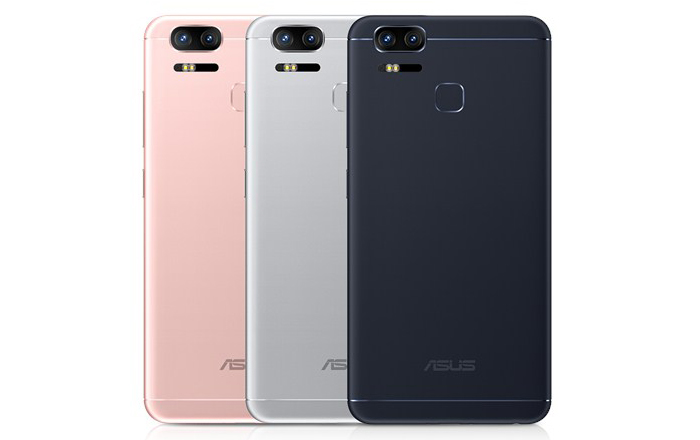
The aluminum uni-body chassis is available in three different colors: Glacier Silver, Navy Black, and Rose Gold. The sides and corners are nicely rounded, similar to the iPhone 7. There’s a color-matching capacitive fingerprint scanner on the back and capacitive navigation buttons on the front below the screen. Gorilla Glass 5 covers the 5.5-inch 1080p SAMOLED display, which ASUS claims reaches a peak brightness of 500 nits.

The ZenFone 3 Zoom will be available in February, while the ZenFone AR will be available in Q2 2017.

ASUS Announces ZenFone AR and ZenFone 3 Zoom

ASUS Announces ZenFone AR and ZenFone 3 Zoom

ASUS recently announced two new smartphones: the ZenFone AR and ZenFone 3 Zoom. Each phone has an array of cameras that provide advanced imaging features such as simulated depth of field and augmented reality (AR).

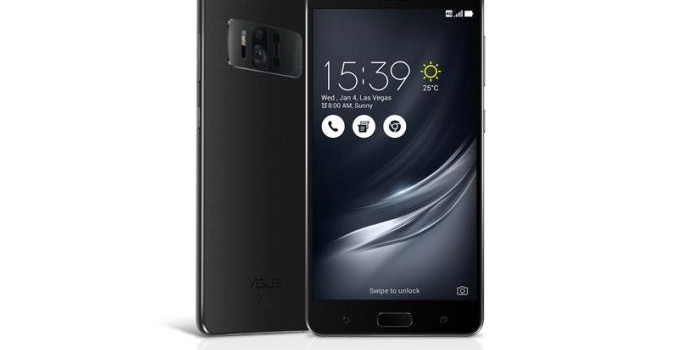
The ZenFone AR is the first smartphone that supports both Google’s Tango AR technology and Daydream VR. Tango, which has been in development for some time and recently debuted in Lenovo’s Phab 2 Pro, gives the ZenFone AR motion tracking, depth perception, and environment mapping capabilities, allowing you to do things like measure physical objects, play new interactive games, or view maps and other relevant data overlaid on the environment shown on the phone’s 5.7-inch QHD SAMOLED screen.

The phone’s AR and imaging experiences are enabled by ASUS’ TriCam system that combines a motion tracking camera, a depth camera that’s paired with an infrared illuminator, and a 23MP Sony IMX318 Exmor RS primary camera paired with an f/2.0 lens. It also has 4-axis OIS to help steady the camera during long exposures, a color spectrum sensor to improve white balance accuracy, and a hybrid autofocus system that combines dual-pixel phase detection (2PDAF), laser, and contrast based AF that should provide good performance in a range of lighting conditions. ASUS claims the camera can focus in as little as 0.03 seconds in ideal conditions. The front camera uses an 8MP sensor and includes its own LED selfie flash.

  ASUS ZenFone 3 Zoom ASUS ZenFone AR
SoC Qualcomm Snapdragon 625
(MSM8953)

4x Cortex-A53 @ 2.0GHz
Adreno 506

Qualcomm Snapdragon 821
(MSM8996 Pro AB)

2x Kryo @ 2.35GHz
2x Kryo @ 2.19GHz
Adreno 530

RAM 3GB / 4GB LPDDR3-1866 6GB / 8GB LPDDR4
NAND 32GB / 64GB / 128GB (eMMC 5.1)
+ microSD
32GB / 64GB / 128GB / 256GB (UFS 2.0)
+ microSD (SDXC)
Display 5.5-inch 1920×1080 SAMOLED 5.7-inch 2560×1440 SAMOLED
Dimensions 154.3 x 77.0 x 7.99 mm
170 grams
158.7 x 77.7 x 8.95 mm
170 grams
Modem Qualcomm X9 LTE (Integrated)
2G / 3G / 4G LTE (Category 7/13)
Qualcomm X12 LTE (Integrated)
2G / 3G / 4G LTE (Category 12)
SIM Size 2x NanoSIM (dual standby) 2x NanoSIM (dual standby)
Front Camera 13MP, 1/3.06″ Sony IMX214 Exmor RS, 1.12µm pixels, f/2.0, screen flash 8MP, f/2.0, AF, dual-tone LED flash
Rear Camera Wide Angle:
12MP, 1/2.5” Sony IMX362 Exmor RS, 1.4µm pixels, f/1.7, 25mm focal length, 2PDAF + Laser AF, OIS, color spectrum sensor, HDR, dual-tone LED flash

Zoom:
12MP, 59mm focal length

Primary:
23MP, 1/2.6” Sony IMX318 Exmor RS, 1.10µm pixels, f/2.0, 2PDAF + Laser AF, 4-axis OIS, color spectrum sensor, HDR, dual-tone LED flash

Motion Tracking Camera
Depth Camera

Battery 5000 mAh
non-replaceable
3300 mAh
non-replaceable
Connectivity 802.11a/b/g/n/ac, BT 4.1, GPS/GNSS, USB 2.0 Type-C, 3.5mm headset 802.11a/b/g/n/ac (2×2 MIMO), BT 4.2, NFC, GPS/GNSS, USB Type-C, 3.5mm headset
Launch OS Android 6.0 with ASUS ZenUI 3.0 Android 7.0 with ASUS ZenUI 3.0

Inside the ZenFone AR is a Snapdragon 821 SoC that includes two of Qualcomm’s custom Kryo CPU cores running at up to 2.35GHz and another two Kryo cores that can reach 2.19GHz. The Hexagon DSP provides the six degree of freedom position tracking used by Tango. Because of the high demands placed on all the processors inside the SoC (CPU, GPU, DSP, ISP) when running AR and VR applications, the ZenFone AR includes a heat pipe to help keep things cool. It will be interesting to see how this cooling solution works and if it proves sufficient to keep the SoC from throttling during heavy use.

The SoC is paired with either 6GB or 8GB of RAM. There’s also several internal storage tiers starting at 32GB and ranging all the way up to 256GB, with the option to expand storage further with a microSD card. It only comes with a 3300mAh battery, however, which seems a bit small for a 5.7-inch phone that’s intended to run power-hungry VR/AR applications.

The aluminum frame has chamfered edges around the front and back. A power button and volume rocker are on the right edge, while the USB Type-C port, 3.5mm headphone jack, and single downward-firing speaker are all located on the bottom edge. The back is covered in charcoal-colored leather, with the serious-looking camera module with a stainless steel surround being the dominant feature. The front is covered edge-to-edge with Gorilla Glass 4. The pill-shaped home button doubles as a capacitive fingerprint sensor and is flanked by capacitive back and recent apps buttons.

The ZenFone 3 Zoom does not support Tango or Daydream. Instead it focuses exclusively on photography. It uses two rear cameras with different focal lengths to provide what ASUS calls 2.3x optical zoom. This does not work like a true zoom lens, however, which can smoothly adjust focal length between its extreme settings. The ZenFone 3 Zoom simply switches between the two cameras in addition to performing digital zoom.

The wide angle camera has a 25mm equivalent focal length that captures a wider field of view but makes objects appear smaller and farther away than they appear to the naked eye. The zoom camera has a 59mm equivalent focal length that makes objects appear slightly larger and closer relative to what your eye sees but has a more restricted field of view. Having a second camera without a wide angle lens is actually very useful in many situations. This approach is similar to what Apple used for the iPhone 7 Plus’ dual camera system.

The wide angle camera uses a 12MP Sony IMX362 Exmor RS sensor with large 1.4µm pixels. It has a six element lens with a large f/1.7 aperture that lets more light reach the sensor, boosting low-light image quality. It also includes OIS and a color spectrum sensor like the ZenFone AR, along with the same hybrid autofocus system that combines dual-pixel phase detection (2PDAF), laser, and contrast based AF. The zoom camera, which has a five element lens array, also uses a 12MP sensor; however, ASUS didn’t provide any further details, so it’s not clear if it also has OIS and the same hybrid AF system. There’s also a 13MP selfie camera that uses the screen for a flash.

The ZenFone 3 Zoom makes due with a Qualcomm Snapdragon 625 SoC that has an octa-core Cortex-A53 CPU running at up to 2.0GHz. It also has half the amount of RAM as the ZenFone AR, with 3GB or 4GB options available. You can also choose between 32GB, 64GB, or 128GB of internal storage that’s expandable via microSD.

Besides the dual rear camera, the ZenFone 3 Zoom’s other standout feature is its large 5000mAh battery, which, when combined with the Snapdragon 625 and its A53 CPU cores on the 14nm LPP FinFET node, should deliver excellent battery life.

The aluminum uni-body chassis is available in three different colors: Glacier Silver, Navy Black, and Rose Gold. The sides and corners are nicely rounded, similar to the iPhone 7. There’s a color-matching capacitive fingerprint scanner on the back and capacitive navigation buttons on the front below the screen. Gorilla Glass 5 covers the 5.5-inch 1080p SAMOLED display, which ASUS claims reaches a peak brightness of 500 nits.

The ZenFone 3 Zoom will be available in February, while the ZenFone AR will be available in Q2 2017.
ASUS Announces ZenFone AR and ZenFone 3 Zoom

ASUS Announces ZenFone AR and ZenFone 3 Zoom

ASUS recently announced two new smartphones: the ZenFone AR and ZenFone 3 Zoom. Each phone has an array of cameras that provide advanced imaging features such as simulated depth of field and augmented reality (AR).

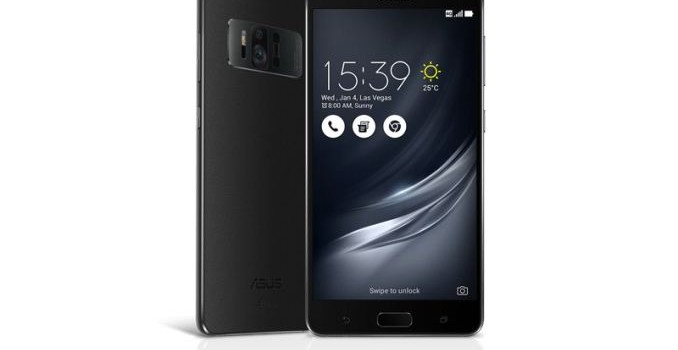
The ZenFone AR is the first smartphone that supports both Google’s Tango AR technology and Daydream VR. Tango, which has been in development for some time and recently debuted in Lenovo’s Phab 2 Pro, gives the ZenFone AR motion tracking, depth perception, and environment mapping capabilities, allowing you to do things like measure physical objects, play new interactive games, or view maps and other relevant data overlaid on the environment shown on the phone’s 5.7-inch QHD SAMOLED screen.

The phone’s AR and imaging experiences are enabled by ASUS’ TriCam system that combines a motion tracking camera, a depth camera that’s paired with an infrared illuminator, and a 23MP Sony IMX318 Exmor RS primary camera paired with an f/2.0 lens. It also has 4-axis OIS to help steady the camera during long exposures, a color spectrum sensor to improve white balance accuracy, and a hybrid autofocus system that combines dual-pixel phase detection (2PDAF), laser, and contrast based AF that should provide good performance in a range of lighting conditions. ASUS claims the camera can focus in as little as 0.03 seconds in ideal conditions. The front camera uses an 8MP sensor and includes its own LED selfie flash.

  ASUS ZenFone 3 Zoom ASUS ZenFone AR
SoC Qualcomm Snapdragon 625
(MSM8953)

4x Cortex-A53 @ 2.0GHz
Adreno 506

Qualcomm Snapdragon 821
(MSM8996 Pro AB)

2x Kryo @ 2.35GHz
2x Kryo @ 2.19GHz
Adreno 530

RAM 3GB / 4GB LPDDR3-1866 6GB / 8GB LPDDR4
NAND 32GB / 64GB / 128GB (eMMC 5.1)
+ microSD
32GB / 64GB / 128GB / 256GB (UFS 2.0)
+ microSD (SDXC)
Display 5.5-inch 1920×1080 SAMOLED 5.7-inch 2560×1440 SAMOLED
Dimensions 154.3 x 77.0 x 7.99 mm
170 grams
158.7 x 77.7 x 8.95 mm
170 grams
Modem Qualcomm X9 LTE (Integrated)
2G / 3G / 4G LTE (Category 7/13)
Qualcomm X12 LTE (Integrated)
2G / 3G / 4G LTE (Category 12)
SIM Size 2x NanoSIM (dual standby) 2x NanoSIM (dual standby)
Front Camera 13MP, 1/3.06″ Sony IMX214 Exmor RS, 1.12µm pixels, f/2.0, screen flash 8MP, f/2.0, AF, dual-tone LED flash
Rear Camera Wide Angle:
12MP, 1/2.5” Sony IMX362 Exmor RS, 1.4µm pixels, f/1.7, 25mm focal length, 2PDAF + Laser AF, OIS, color spectrum sensor, HDR, dual-tone LED flash

Zoom:
12MP, 59mm focal length

Primary:
23MP, 1/2.6” Sony IMX318 Exmor RS, 1.10µm pixels, f/2.0, 2PDAF + Laser AF, 4-axis OIS, color spectrum sensor, HDR, dual-tone LED flash

Motion Tracking Camera
Depth Camera

Battery 5000 mAh
non-replaceable
3300 mAh
non-replaceable
Connectivity 802.11a/b/g/n/ac, BT 4.1, GPS/GNSS, USB 2.0 Type-C, 3.5mm headset 802.11a/b/g/n/ac (2×2 MIMO), BT 4.2, NFC, GPS/GNSS, USB Type-C, 3.5mm headset
Launch OS Android 6.0 with ASUS ZenUI 3.0 Android 7.0 with ASUS ZenUI 3.0

Inside the ZenFone AR is a Snapdragon 821 SoC that includes two of Qualcomm’s custom Kryo CPU cores running at up to 2.35GHz and another two Kryo cores that can reach 2.19GHz. The Hexagon DSP provides the six degree of freedom position tracking used by Tango. Because of the high demands placed on all the processors inside the SoC (CPU, GPU, DSP, ISP) when running AR and VR applications, the ZenFone AR includes a heat pipe to help keep things cool. It will be interesting to see how this cooling solution works and if it proves sufficient to keep the SoC from throttling during heavy use.

The SoC is paired with either 6GB or 8GB of RAM. There’s also several internal storage tiers starting at 32GB and ranging all the way up to 256GB, with the option to expand storage further with a microSD card. It only comes with a 3300mAh battery, however, which seems a bit small for a 5.7-inch phone that’s intended to run power-hungry VR/AR applications.

The aluminum frame has chamfered edges around the front and back. A power button and volume rocker are on the right edge, while the USB Type-C port, 3.5mm headphone jack, and single downward-firing speaker are all located on the bottom edge. The back is covered in charcoal-colored leather, with the serious-looking camera module with a stainless steel surround being the dominant feature. The front is covered edge-to-edge with Gorilla Glass 4. The pill-shaped home button doubles as a capacitive fingerprint sensor and is flanked by capacitive back and recent apps buttons.

The ZenFone 3 Zoom does not support Tango or Daydream. Instead it focuses exclusively on photography. It uses two rear cameras with different focal lengths to provide what ASUS calls 2.3x optical zoom. This does not work like a true zoom lens, however, which can smoothly adjust focal length between its extreme settings. The ZenFone 3 Zoom simply switches between the two cameras in addition to performing digital zoom.

The wide angle camera has a 25mm equivalent focal length that captures a wider field of view but makes objects appear smaller and farther away than they appear to the naked eye. The zoom camera has a 59mm equivalent focal length that makes objects appear slightly larger and closer relative to what your eye sees but has a more restricted field of view. Having a second camera without a wide angle lens is actually very useful in many situations. This approach is similar to what Apple used for the iPhone 7 Plus’ dual camera system.

The wide angle camera uses a 12MP Sony IMX362 Exmor RS sensor with large 1.4µm pixels. It has a six element lens with a large f/1.7 aperture that lets more light reach the sensor, boosting low-light image quality. It also includes OIS and a color spectrum sensor like the ZenFone AR, along with the same hybrid autofocus system that combines dual-pixel phase detection (2PDAF), laser, and contrast based AF. The zoom camera, which has a five element lens array, also uses a 12MP sensor; however, ASUS didn’t provide any further details, so it’s not clear if it also has OIS and the same hybrid AF system. There’s also a 13MP selfie camera that uses the screen for a flash.

The ZenFone 3 Zoom makes due with a Qualcomm Snapdragon 625 SoC that has an octa-core Cortex-A53 CPU running at up to 2.0GHz. It also has half the amount of RAM as the ZenFone AR, with 3GB or 4GB options available. You can also choose between 32GB, 64GB, or 128GB of internal storage that’s expandable via microSD.

Besides the dual rear camera, the ZenFone 3 Zoom’s other standout feature is its large 5000mAh battery, which, when combined with the Snapdragon 625 and its A53 CPU cores on the 14nm LPP FinFET node, should deliver excellent battery life.

The aluminum uni-body chassis is available in three different colors: Glacier Silver, Navy Black, and Rose Gold. The sides and corners are nicely rounded, similar to the iPhone 7. There’s a color-matching capacitive fingerprint scanner on the back and capacitive navigation buttons on the front below the screen. Gorilla Glass 5 covers the 5.5-inch 1080p SAMOLED display, which ASUS claims reaches a peak brightness of 500 nits.

The ZenFone 3 Zoom will be available in February, while the ZenFone AR will be available in Q2 2017.