
Vik


Netgear Launches CM1000 DOCSIS 3.1 Cable Modem, New Switches at CES 2017
Netgear Launches CM1000 DOCSIS 3.1 Cable Modem, New Switches at CES 2017

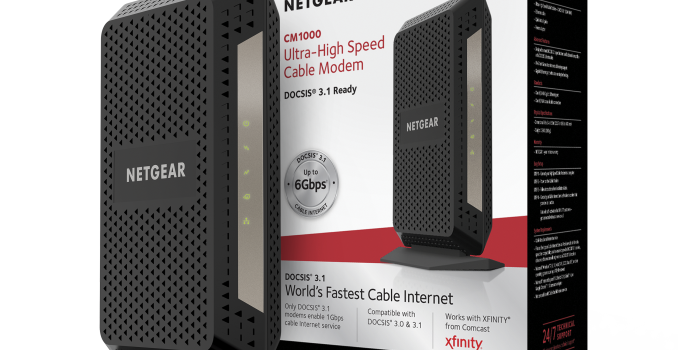
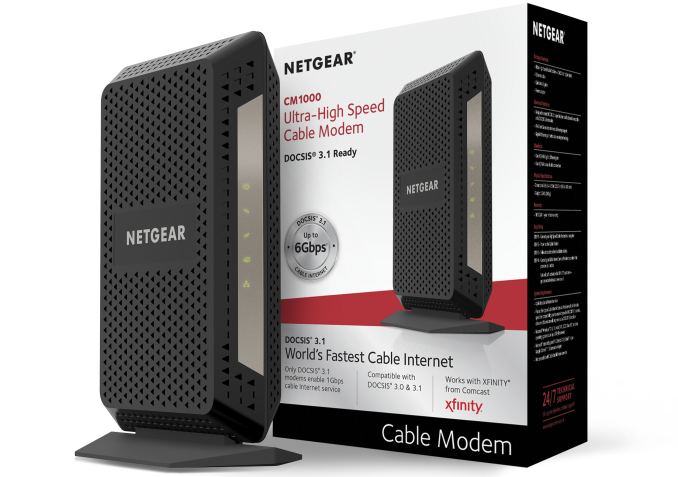
Netgear became one of the first vendors to bring a DOCSIS 3.1 cable modem to the market last month with the availability of the CM1000. It is based on the Broadcom BCM3390 cable modem SoC announced at CES 2015.

DOCSIS 3.1 is one of the most awaited developments in the cable modem industry, allowing ISPs to provide consumers with gigabit and higher speeds without altering existing infrastructure. The specifications support speeds up to 10 Gbps, but, the first generation chipsets like the BCM3390 support only speeds up to 6 Gbps. Compared to the 6- and 8 MHz-wide channels in DOCSIS 3.0, DOCSIS 3.1 uses 20-50 kHz-wide OFDM subcarriers. These can be bonded together in 200 MHz-wide blocks. Note that DOCSIS 3.1 is still not symmetric – while download speeds can go as high as 10 Gbps, upstream rates have a 1 Gbps ceiling.

The CM1000 supports 32 downstream and 8 upstream SC-QAM channels for theoretical downlink speeds of 6 Gbps. Its Ethernet port is still 1 Gbps, and doesn’t take full advantage of the capabilities of the BCM3390.

This CableLabs-certified modem is supported by Xfinity, Cox and Time Warner in the US market. It is also backwards-compatible with existing DOCSIS 3.0 networks. Customer experience with the modem is heavily reliant on the equipment being used by the ISP in the area, with many early adopters reporting activation issues. The firmware on the latest units supposedly fixes these problems. If one wants the latest and greatest in cable modem technology, or, is interested in the gigabit-tier services from the cable ISPs, the Netgear CM1000 ($180) looks like the only choice in the retail market right now.

In related news, Netgear is also launching the C7100v – the Nighthawk AC1900 Wi-Fi Cable Modem Router with voice capabilities. It is based on a Broadcom platform, and has a 24×8 modem (up to 960 Mbps downstream speeds) along with a 3×3 802.11ac router (similar to the Nighthawk R7000, but, with a 1.6 GHz SoC). There are two integrated voice lines that get automatic priority over data. The device is meant for the retail market, and will have a MSRP of $300 at launch later this year.

On the switch front, we have the Nighthawk S8000 8-port gaming and media switch (GS808E) meant for prosumers in the home environment with Layer 2 switching and web management (Plus) capabilities. The industrial design shows the Nighthawk branding clearly. It handles appropriate QoS settings for traffic from games and media streaming services such as Netflix. There is a web-based GUI appropriate for the target market, with pre-configured settings available for each port. The switch also allows teaming of up to four ports with dynamic link aggregation. This 8-port switch is expected to become available towards the end of this quarter for $100.

Netgear is also expanding its PoE switch offerings. The ‘mount-anywhere’ web-managed (Plus) switches became hugely popular after their introduction last year. As part of the CES product launches, Netgear is adding the GSS108EPP and GS408EPP with 8 Gigabit ports each. The GSS108EPP comes in the Click format and has four PoE+ ports (total 47W), while the GS408EPP comes in a easy-mount form factor (such that two switches can be placed back to back in a 1U rack slot) and has 8 PoE+ ports (seven active at a time, with one used for uplink) with a 124W power budget. Both are web-managed Plus switches with L2 management capabilities. One of the innovative features is the ability to configure the power budget for each port. The GSS108EPP is passively cooled. It will have a MSRP of $150, while the GS408EPP will have a MSRP of $270.
ZTE Announces Blade V8 Pro with Snapdragon 625, Hawkeye Phone

ZTE Announces Blade V8 Pro with Snapdragon 625, Hawkeye Phone

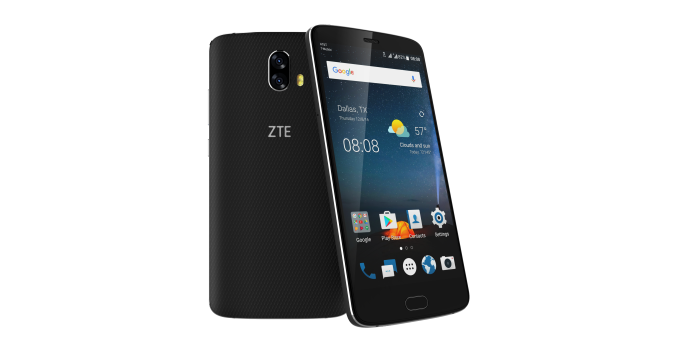
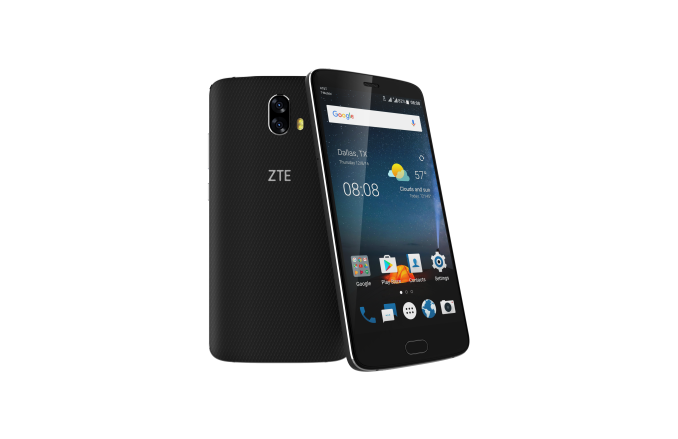
The competition for the mid-range smartphone market is fairly intense here at CES 2017. Right after the launch of Huawei’s Honor 6X yesterday, ZTE is launching their direct competitor, the Blade V8 Pro, today. As you might guess, this device also has a dual camera system, a 5.5-inch FHD display, and dual SIM capabilities. In order to avoid stretching this out the usual spec table can be found below.

  Huawei Honor 6X ZTE Blade V8 Pro
SoC HiSilicon Kirin 655

4x Cortex-A53 @ 2.1GHz
4x Cortex-A53 @ 1.7GHz
Mali-T830MP2

Qualcomm Snapdragon 625

4x Cortex-A53 @ 2.0GHz
Adreno 506 @ 650 MHz

RAM 3GB / 4GB LPDDR3-1866 3GB
NAND 32GB / 64GB (eMMC 5.1)
+ microSD
32GB + microSD
Display 5.5-inch 1920×1080 IPS LCD 5.5-inch 1920×1080 IPS LCD
Dimensions 150.9 x 76.2 x 8.2 mm
162 grams
156 x 77 x 9.1 mm
185 grams
Modem HiSilicon Balong (Integrated)
2G / 3G / 4G LTE
Qualcomm X9 (Integrated)
2G / 3G / 4G LTE (Category 7/13)
SIM Size 2x NanoSIM 2x NanoSIM
Front Camera 8MP, 1/4″ Sony IMX219 Exmor R, f/2.0 8MP
Rear Camera Primary:
12MP, 1/2.9” Sony IMX386 Exmor RS, 1.25µm pixels, f/2.2, PDAF, HDR, LED flash

Depth:
2MP, 1/5” OmniVision OV2680, 1.75µm pixels

2x 13MP, PDAF, Auto HDR, dual LED flash
Battery 3340 mAh
non-replaceable
3140 mAh (12.09 WHr)
non-replaceable
Connectivity 802.11b/g/n (2.4GHz), BT 4.1, GPS/GNSS, microUSB 2.0 802.11a/b/g/n/ac, BT 4.2
NFC, GPS/GNSS, USB-C 2.0
Launch OS Android 6.0 with EMUI 4.1 Android 6.0.1

As seen in the spec table above, the Blade V8 Pro is basically a direct competitor to the Honor 6X. Rather than a Kirin SoC, ZTE is shipping Qualcomm’s Snapdragon 625 which goes head to head with the Kirin 655. I wouldn’t say that these SoCs are guaranteed to be similar, though, because even if they are both on FinFET nodes and have eight A53 CPUs, there are a lot of engineering details that can cause significant differences in perf/W, modem performance, and a whole host of other features such as video encode performance, ISP performance, and things like low-power islands and DSP extensions.

When directly comparing the Blade V8 Pro to the Honor 6X, the things that stand out here are the use of USB Type-C for reversible cables, much better Wi-Fi with 802.11ac and 5GHz support, and dual 13MP rear cameras to improve the quality of depth sensing. The price is also slightly lower at 230 USD instead of 250 USD as seen on the Honor 6X. However, the Blade V8 Pro has a 6% smaller battery which could be a noticeable difference if power efficiency is identical between the two and the Blade V8 Pro is 23 grams heavier which is also a noticeable difference. The Blade V8 Pro’s design is also a more traditional plastic back with a metal midframe rather than the mostly aluminum unibody used in the Honor 6X.

Overall though the Blade V8 Pro is a fairly compelling competitor to the Honor 6X and it’ll be interesting to see how they compare as the obvious contenders for the midrange smartphone segment. The Blade V8 Pro will be available for pre-order today for 229.98 USD on Amazon, B&H, Newegg, and zteusa.com. The integrated Qualcomm X9 LTE modem supports the following frequency bands: FDD-LTE B2 / B4 / B5 / B7 / B12, WCDMA B1 / B2 / B5, and GSM 850 / 900 / 1800 / 1900 MHz.

Along with this announcement, ZTE also announced the name for the Project CSX phone which attempts to crowdsource a design for a phone, namely Hawkeye. The Hawkeye phone goes on preorder today for 199 USD at kickstarter.zteusa.com and will have eye-tracking and self-adhesive properties.