Vik


Meizu Launches the PRO 6 Plus: 5.7-inch SAMOLED and Exynos 8890 SoC
Meizu Launches the PRO 6 Plus: 5.7-inch SAMOLED and Exynos 8890 SoC

Meizu added a new flagship phablet to its smartphone lineup today. The new 5.7-inch PRO 6 Plus is the direct successor to the PRO 5, but it incorporates the updated styling from the smaller 5.2-inch PRO 6. On paper at least, the PRO 6 Plus appears to be a definitive upgrade relative to Meizu’s previously released phones, unlike the PRO 6 which trailed the older PRO 5 in performance, battery life, and audio quality and failed to separate itself from the similar but less-expensive MX6.

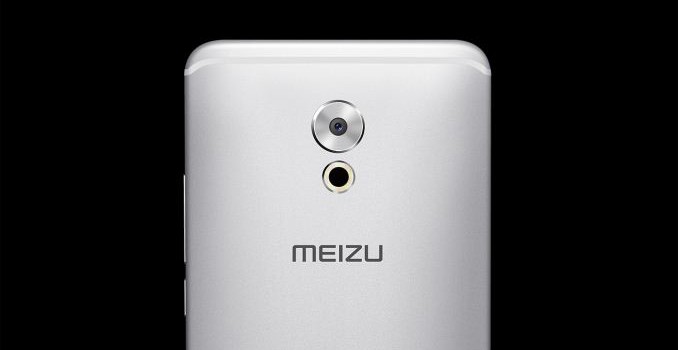
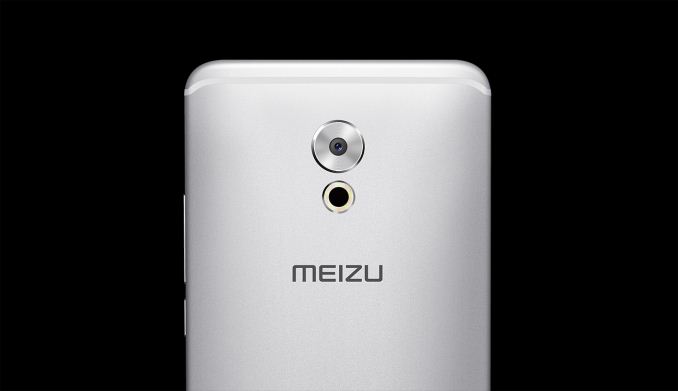
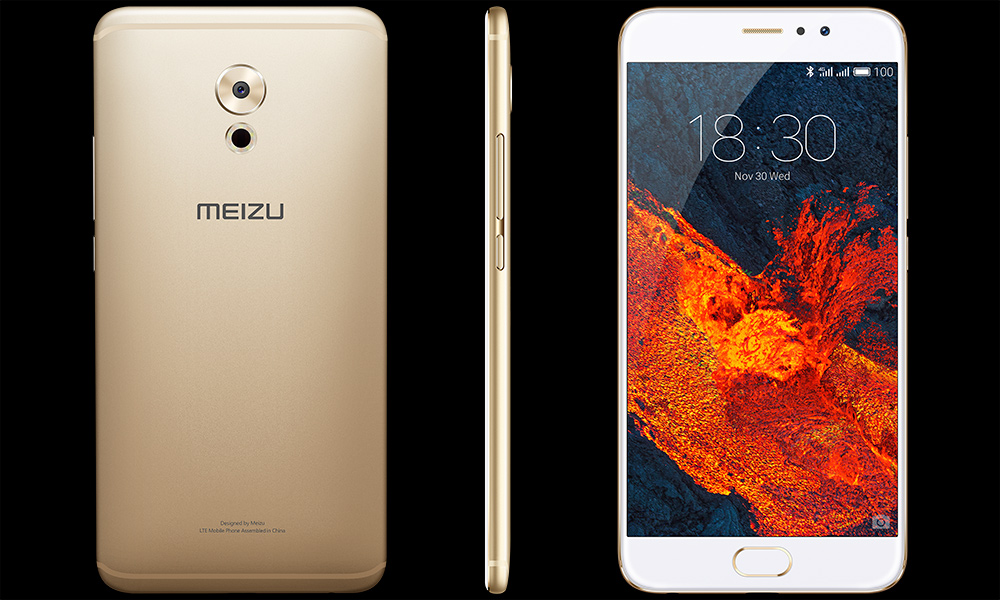
The PRO 6 Plus incorporates the same aluminum unibody construction and elegant styling as the PRO 6. The slightly raised, circular camera surround with Meizu’s circular, dual-tone LED flash ring below give the back of the PRO 6 Plus a distinct look. The plastic antenna strips are colored to better match the sandblasted aluminum chassis and stick close to the upper and lower edges to further minimize their appearance. Its rounded edges and radiused corners make it comfortable to hold, although its smooth finish makes it feel a bit slippery. The 2.5D edge-to-edge glass covering the front eliminates sharp edges, enhancing the smooth feel of the phone.
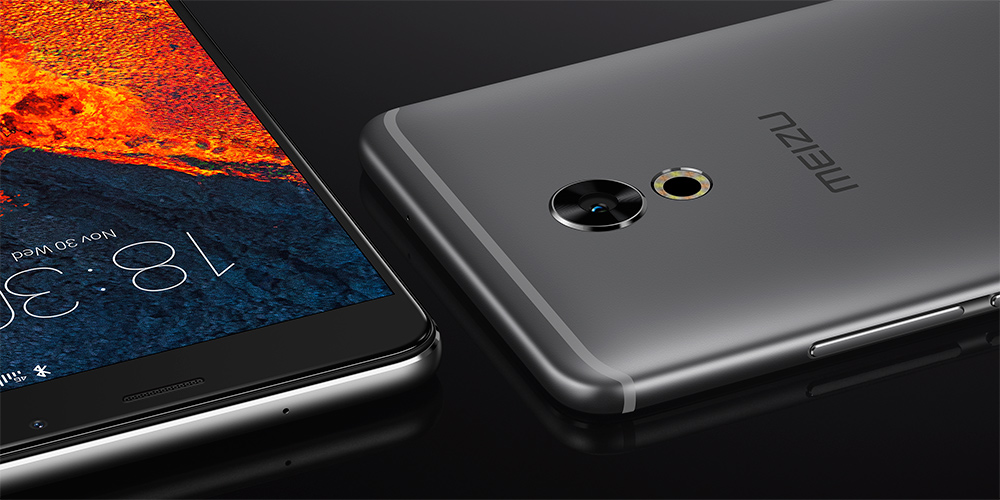
What separates the design of the PRO 6 and PRO 6 Plus from so many other metal unibody phones, however, is Meizu’s attention to detail. Every edge and hole—the camera surround, ring flash, speaker holes—has a polished chamfer, and the single piece volume rocker and power button near the top of the right edge are inset into a polished groove. All of these extra machining features give the PRO 6 phones a premium look and feel.

Meizu PRO 6 Series
  Meizu PRO 6 Meizu PRO 6 Plus
SoC MediaTek Helio X25
(MT6797T)

2x Cortex-A72 @ 2.5GHz
4x Cortex-A53 @ 2.0GHz
4x Cortex-A53 @ 1.5GHz
Mali-T880MP4 @ 850MHz

Samsung Exynos 8890

64GB:
4x Exynos M1 @ 2.0GHz
4x Cortex-A53 @ 1.5GHz
Mali-T880MP10

128GB:
4x Exynos M1 @ 2.6GHz / 2.3GHz
(1-2 core / 3-4 core load)
4x Cortex-A53 @ 1.6GHz
Mali-T880MP12

RAM 4GB LPDDR3-1866 4GB LPDDR4-3666
NAND 32GB / 64GB (eMMC 5.1) 64GB / 128GB (UFS 2.0)
Display 5.2-inch 1920×1080 SAMOLED 5.7-inch 2560×1440 SAMOLED
Dimensions 147.7 x 70.8 x 7.25 mm
160 grams
155.6 x 77.3 x 7.3 mm
158 grams
Modem MediaTek (Integrated)
2G / 3G / 4G LTE (Category 6)

FDD-LTE / TD-LTE / TD-SCDMA / WCDMA / CDMA (China only) / GSM

Samsung Shannon
2G / 3G / 4G LTE (Category 12)

FDD-LTE / TD-LTE / TD-SCDMA / WCDMA / GSM

SIM Size 2x NanoSIM (dual standby) 2x NanoSIM (dual standby)
Front Camera 5MP, 1/4″ OmniVision OV5695, 1.4μm, f/2.0 5MP, f/2.0
Rear Camera 21.16MP, 1/2.4” Sony IMX230 Exmor RS, 1.12µm pixels, f/2.2, PDAF + Laser AF, HDR, dual-tone LED flash 12MP, 1/2.9” Sony IMX386 Exmor RS, 1.25µm pixels, f/2.0, PDAF + Laser AF, 4-axis OIS, HDR, dual-tone LED flash
Battery 2560 mAh (9.73 Wh)
non-replaceable
3400 mAh
non-replaceable
Connectivity 802.11b/g/n/ac, BT 4.1 LE, NFC, GPS/GNSS, USB 3.1 Type-C 802.11a/b/g/n/ac, BT 4.1 LE, NFC, GPS/GNSS, USB 3.1 Type-C
Launch OS Android 6.0 with Meizu FlymeOS 5.2 Android 6.1 with Meizu FlymeOS 6

The Meizu PRO 6 Plus, like the PRO 5 before it, uses a 5.7-inch SAMOLED display from Samsung; however, resolution increases to 2560×1440, which is a vast improvement over the PRO 5’s 1080p panel whose pixel density was insufficient to overcome the limitations of its PenTile subpixel arrangement. The display’s brightness ranges from 3 nits to 430 nits in direct sunlight when using the auto-brightness boost feature, according to Meizu. Although an APL value was not specified, I assume these are for 100% APL based on our measurements of the PRO 6, which achieves 436 nits at 100% APL and 512 nits at 50% APL.

Meizu also claims 103% coverage of the NTSC color gamut, which is good news for people who prefer highly saturated, vivid colors. Meizu introduced several different screen modes, including a proper sRGB mode, in FlymeOS 5.2, along with a color temperature slider, to allow for some adjustment of the display’s output, although it’s unclear if these features carry over to FlymeOS 6.

Most phones are now incorporating special night modes that filter out blue light for nighttime reading or low-light situations, and the PRO 6 Plus is no exception. It’s also the first Meizu phone to come with an always-on display (AOD) that shows the time, date, battery level, and notifications when the phone is locked. If enabled, Meizu claims it only consumes 1% of the battery’s charge per hour.
Inside the PRO 6 Plus is an Exynos 8890 SoC. Meizu has used Samsung’s Exynos chips in previous phones, most recently the Exynos 7420 in the PRO 5, and with Snapdragon 820/821 off the table because of its ongoing licensing disagreement with Qualcomm, the Exynos 8890 is a logical choice. The octa-core CPU uses a big.LITTLE pairing of four low-power ARM Cortex-A53 cores and four higher-performance, custom Exynos M1 cores from Samsung. Core frequencies vary depending on which storage option is selected. The version with 64GB of UFS 2.0 NAND uses a lower-binned SoC that limits the peak frequency of the Exynos M1 cores to 2.0GHz and the A53 cores to 1.5GHz, while the version with 128GB of internal storage allows the A53 cores to run at 1.6GHz and the M1 cores to run at up to 2.3GHz when three to four cores are active or 2.6GHz for better single-threaded performance when only one or two cores are active. Both versions use an ARM Mali-T880 GPU and come with 4GB of LPDDR4 RAM, but the lower-binned SoC only includes ten cores instead of the Exynos 8890’s usual twelve like in the 128GB version. While the amount of internal storage is reasonable, there’s no microSD support for storage expansion.

The PRO 6 Plus’ 3400mAh battery is a little on the small side given its size. Huawei’s 5.9-inch Mate 9 comes with a 4000mAh battery, for example. Even several smaller 5.5-inch phones such as Samsung’s Galaxy S7 edge (3600mAh), Xiaomi’s Redmi Note 3 Pro (4050mAh), and Meizu’s own M3 note (4100mAh) come with larger batteries. Meizu clearly prioritized thickness and weight over battery capacity, but we’ll have to wait and see how it performs in our battery tests before we can assess the impact of this decision. Regardless of how long the battery lasts, it should charge quickly thanks to Meizu’s mCharge fast charging technology that pulls up to 24W (8V/3A) at the wall.

Around back is a 12MP camera based on Sony’s IMX386 Exmor RS sensor with 1.25µm pixels. It employs a hybrid autofocus system that combines the benefits of phase detection (PDAF), laser, and contrast methods. The PRO 6 Plus also includes 4-axis optical image stabilization (OIS), a first for Meizu, which should help improve low-light photography by allowing sharp exposures up to 0.25 seconds. Covering the camera sensor is a 6-element lens array with f/2.0 aperture. Meizu also says its improved image-enhancing algorithms and noise processing take full advantage of Samsung’s integrated ISP.
One of the PRO 5’s best features was its excellent sounding audio subsystem. The PRO 6 took a more traditional approach and its results were disappointing by comparison. Fortunately, the PRO 6 Plus uses the same ESS Technology es9018k2m SABRE32 DAC as the PRO 5, which supports 16/24-bit audio from 44.1kHz to 192kHz with a dynamic range of 127dB and low noise. It also includes a dual-channel AD45275 power amplifier from Analog Devices.

The PRO 6 Plus comes with a touch-based, capacitive fingerprint scanner integrated into the front-mounted home button along with Meizu’s pressure sensitive screen technology it calls 3D Press, which the PRO 6 and PRO 6s also include. Because the software API’s are proprietary, the ability to press an icon on the home screen and open a shortcut menu or press on a hyperlink, email, or text message to open a preview are generally limited to Meizu’s apps.

In addition to 3D Press support, Meizu’s new FlymeOS 6 includes more than 400 new features, including the “One Mind” artificial intelligence engine that optimizes system performance by monitoring how the phone is used and prioritizes resources to the most used apps.
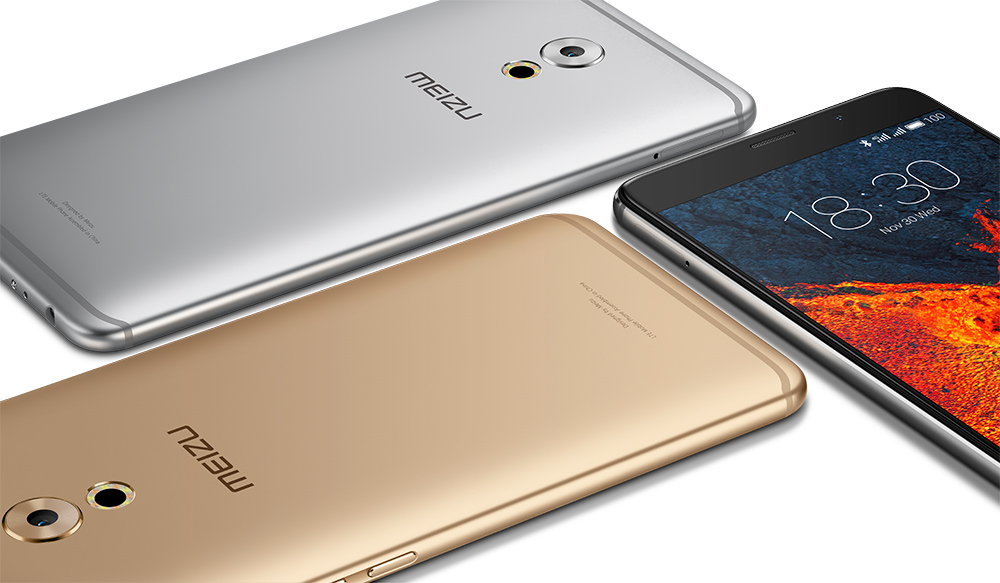
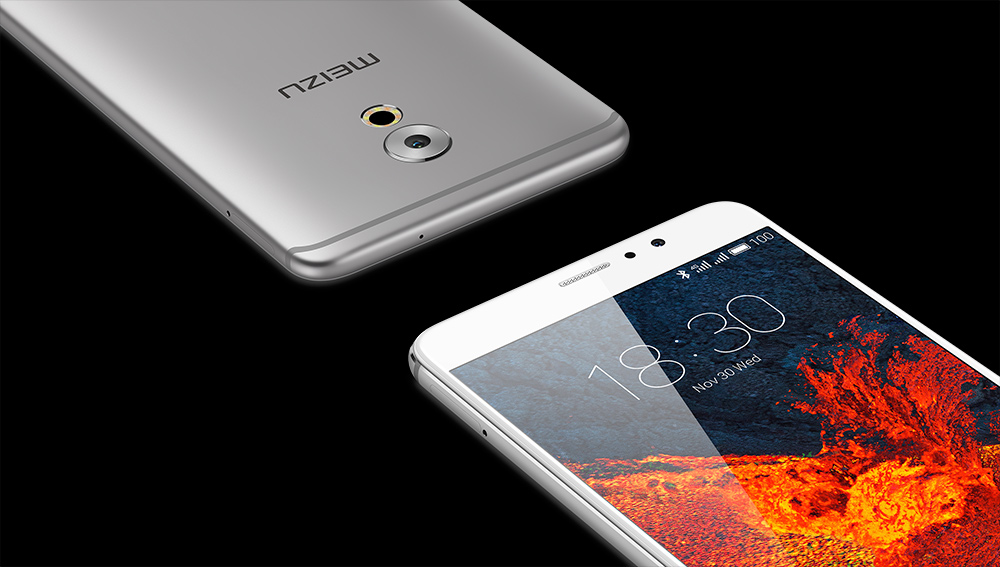
The PRO 6 Plus is available in three different colors: gold, gray, and silver. The gold and silver colors come with a white front, while the darker gray color comes with a black front. You can also choose between 64GB (¥2,999) or 128GB (¥3,299) of internal storage. The integrated Samsung Category 12 LTE modem supports 5-mode operation (no CDMA) and the following frequency bands (no LTE support in the US): FDD-LTE B1 / B3 / B7, TDD-LTE B38 / B39 / B40 / B41, WCDMA B1 / B2 / B5 / B8, TD-CDMA B34 / B39, GSM 850 / 900 / 1800 / 1900 MHz. It will be available in many Asian and European countries in December.
ZOTAC VR GO Backpack PC Gets Priced: Core i7-6700T, GeForce GTX 1070, $1999

ZOTAC VR GO Backpack PC Gets Priced: Core i7-6700T, GeForce GTX 1070, $1999

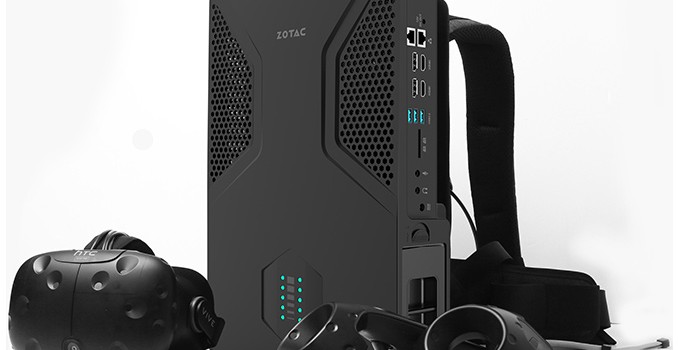
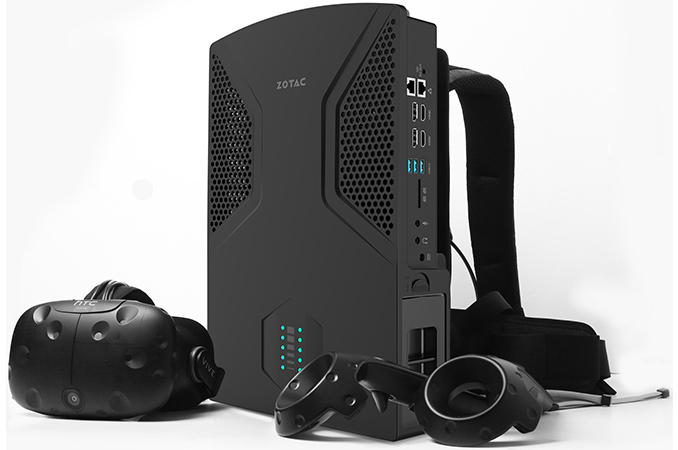
ZOTAC this week plans to start sales of its VR GO backpack PC designed for virtual reality enthusiasts. The system uses a quad-core processor from Intel, and is equipped with NVIDIA’s GeForce GTX 1070 graphics processor and comes with I/O capabilities, just like any normal desktop. The manufacturer plans to sell only fully configured VR GO backpacks for $1999, but the PCs can be upgraded by end-users themselves in a bid to meet their requirements.

ZOTAC formally introduced its VR GO backpack PC earlier this month, but kept the final specifications under wraps. This week, the company revealed that the system will feature Intel’s Core i7-6700T CPU, NVIDIA’s GeForce GTX 1070 GPU with 8 GB of GDDR5 memory (MXM module), 16 GB of DDR4-2133 RAM as well as a 240 GB M.2 SSD with PCIe 3.0 x4 interface from an undisclosed supplier. End-users can then upgrade the VR GO machines with a 2.5” SATA SSD (obviously, nobody wants a hard drive in a backpack PC due to extreme failure risks) as well as install up to 32 GB of DRAM. In theory, the CPU and the GPU could be swapped for higher-performance parts, but since the proprietary low-profile air cooling system was designed with the particular components (the i7-6700T and the GTX 1070) and TDP (150W) in mind, such upgrade would be considerably trickier.

Meanwhile, I/O capabilities of the ZOTAC VR GO are clearly worth a mention as the system has an HDMI 2.0 output as well as two USB Type-A ports on top to connect a VR headset as well as four additional USB 3.0/3.1 Type-A ports, four display outputs (two HDMI 2.0, two DP 1.3), an 802.11ac Wi-Fi + BT 4.2 module, two GbE ports, an SD card reader as well as two 3.5-mm audio jacks.

ZOTAC VR GO Specifications
    ZBOX-VR7N70-W2B/W4B-BE/J/U/K
CPU Intel Core i7-6700T
4 cores/8 threads
PCH unknown 100-series
Graphics NVIDIA GeForce GTX 1070
2048 stream processors
128 texture units
64 ROPs
256-bit memory interface
8 GB of GDDR5 8 GT/s memory
Memory Two SO-DIMM slots
16 GB DDR4-2133 installed
compatible with 
up to 32 GB of DDR4-2133
Storage 240 GB M.2/PCIe SSD
+ one extra 2.5″/SATA bay
Wi-Fi 802.11ac + BT 4.2
Ethernet 2 × GbE ports (Realtek)
Display Outputs 3 × HDMI 2.0
2 × DP 1.3
Audio 3.5 mm audio in and 3.5 mm audio out
USB 6 × USB 3.0 Type-A (5 Gbps)
Other I/O DC12V-out for HTC Vive
Dimensions 410 mm × 270 mm × 76 mm
16.14 × 10.63 × 2.99 inches
Weight update: 4.95 kilograms
PSU External
Batteries 2 batteries, rated at 95Wh, 6600mAh
OS Windows 10 Home
Price $1999.99

The ZOTAC VR GO can work autonomously for two hours (obviously, the figure depends on applications used) on two Li-ion batteries rated at 95Wh (6600mAh). The batteries can be hot-swapped and charged separately. When not in use as a backpack to play virtual reality games, the VR GO can be used like a normal desktop computer: its form-factor allows it to be placed on a desk either vertically or horizontally and all the ports will remain accessible.

ZOTAC will sell its VR GO backpack PC with Windows 10 Home for $1999 in the U.S. The MSRP of the system is similar to the price of MSI’s VR One backpack computer that became available earlier this month. Each system has its own set of peculiarities, which is good as we see a competition in an emerging segment. For example, ZOTAC’s VR GO for $1999 has the GeForce GTX 1070 GPU, whereas a comparable MSI’s VR One 6RD comes with the GeForce GTX 1060. On the other hand, MSI’s machine has a Thunderbolt 3 port and comes with Windows 10 Pro, whereas ZOTAC’s backpack has a desktop-friendly form-factor and more I/O ports, but uses Windows 10 Home. To sum up, VR enthusiasts now have at least two models of backpack PCs to choose from. Meanwhile, both are quite expensive for niche PCs.

ZOTAC VR GO Backpack PC Gets Priced: Core i7-6700T, GeForce GTX 1070, $1999

ZOTAC VR GO Backpack PC Gets Priced: Core i7-6700T, GeForce GTX 1070, $1999

ZOTAC this week plans to start sales of its VR GO backpack PC designed for virtual reality enthusiasts. The system uses a quad-core processor from Intel, and is equipped with NVIDIA’s GeForce GTX 1070 graphics processor and comes with I/O capabilities, just like any normal desktop. The manufacturer plans to sell only fully configured VR GO backpacks for $1999, but the PCs can be upgraded by end-users themselves in a bid to meet their requirements.

ZOTAC formally introduced its VR GO backpack PC earlier this month, but kept the final specifications under wraps. This week, the company revealed that the system will feature Intel’s Core i7-6700T CPU, NVIDIA’s GeForce GTX 1070 GPU with 8 GB of GDDR5 memory (MXM module), 16 GB of DDR4-2133 RAM as well as a 240 GB M.2 SSD with PCIe 3.0 x4 interface from an undisclosed supplier. End-users can then upgrade the VR GO machines with a 2.5” SATA SSD (obviously, nobody wants a hard drive in a backpack PC due to extreme failure risks) as well as install up to 32 GB of DRAM. In theory, the CPU and the GPU could be swapped for higher-performance parts, but since the proprietary low-profile air cooling system was designed with the particular components (the i7-6700T and the GTX 1070) and TDP (150W) in mind, such upgrade would be considerably trickier.

Meanwhile, I/O capabilities of the ZOTAC VR GO are clearly worth a mention as the system has an HDMI 2.0 output as well as two USB Type-A ports on top to connect a VR headset as well as four additional USB 3.0/3.1 Type-A ports, four display outputs (two HDMI 2.0, two DP 1.3), an 802.11ac Wi-Fi + BT 4.2 module, two GbE ports, an SD card reader as well as two 3.5-mm audio jacks.

ZOTAC VR GO Specifications
    ZBOX-VR7N70-W2B/W4B-BE/J/U/K
CPU Intel Core i7-6700T
4 cores/8 threads
PCH unknown 100-series
Graphics NVIDIA GeForce GTX 1070
2048 stream processors
128 texture units
64 ROPs
256-bit memory interface
8 GB of GDDR5 8 GT/s memory
Memory Two SO-DIMM slots
16 GB DDR4-2133 installed
compatible with 
up to 32 GB of DDR4-2133
Storage 240 GB M.2/PCIe SSD
+ one extra 2.5″/SATA bay
Wi-Fi 802.11ac + BT 4.2
Ethernet 2 × GbE ports (Realtek)
Display Outputs 3 × HDMI 2.0
2 × DP 1.3
Audio 3.5 mm audio in and 3.5 mm audio out
USB 6 × USB 3.0 Type-A (5 Gbps)
Other I/O DC12V-out for HTC Vive
Dimensions 410 mm × 270 mm × 76 mm
16.14 × 10.63 × 2.99 inches
Weight update: 4.95 kilograms
PSU External
Batteries 2 batteries, rated at 95Wh, 6600mAh
OS Windows 10 Home
Price $1999.99

The ZOTAC VR GO can work autonomously for two hours (obviously, the figure depends on applications used) on two Li-ion batteries rated at 95Wh (6600mAh). The batteries can be hot-swapped and charged separately. When not in use as a backpack to play virtual reality games, the VR GO can be used like a normal desktop computer: its form-factor allows it to be placed on a desk either vertically or horizontally and all the ports will remain accessible.

ZOTAC will sell its VR GO backpack PC with Windows 10 Home for $1999 in the U.S. The MSRP of the system is similar to the price of MSI’s VR One backpack computer that became available earlier this month. Each system has its own set of peculiarities, which is good as we see a competition in an emerging segment. For example, ZOTAC’s VR GO for $1999 has the GeForce GTX 1070 GPU, whereas a comparable MSI’s VR One 6RD comes with the GeForce GTX 1060. On the other hand, MSI’s machine has a Thunderbolt 3 port and comes with Windows 10 Pro, whereas ZOTAC’s backpack has a desktop-friendly form-factor and more I/O ports, but uses Windows 10 Home. To sum up, VR enthusiasts now have at least two models of backpack PCs to choose from. Meanwhile, both are quite expensive for niche PCs.

Giveaway: Corsair RM1000i Special Edition White PSU

Giveaway: Corsair RM1000i Special Edition White PSU

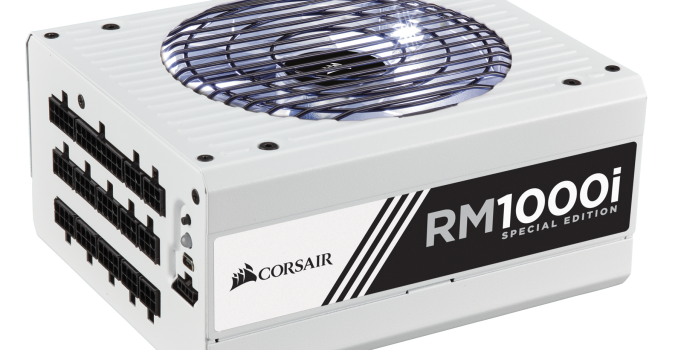
As the year starts to wind to a close, Corsair is marking their 10th year in the PSU business. All told, they have now sold over 10 million PSUs, and for that reason, they have decided to do a little celebrating.

In honor of their 10th year, Corsai…

Giveaway: Corsair RM1000i Special Edition White PSU

Giveaway: Corsair RM1000i Special Edition White PSU

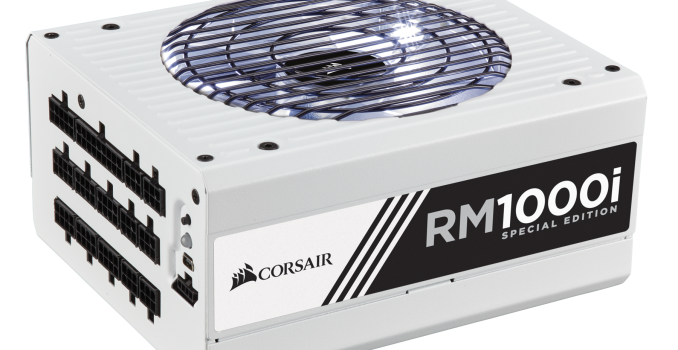
As the year starts to wind to a close, Corsair is marking their 10th year in the PSU business. All told, they have now sold over 10 million PSUs, and for that reason, they have decided to do a little celebrating.

In honor of their 10th year, Corsai…