Vik


Microsoft Announces the Surface Studio: 28-inch AIO with Touch, Pen, 4500x3000, Skylake, GTX 980M

Microsoft Announces the Surface Studio: 28-inch AIO with Touch, Pen, 4500×3000, Skylake, GTX 980M

As part of the now annual Microsoft Surface event, Panos Panay announced the next member of the Surface family, the Surface Studio. The Studio is ultimately a prosumer all-in-one device promising more functionality and versatility than any other desktop all-in-one PC by allowing the device to also turn a desk into a studio.

Front and center in what makes the Studio impressive is the size of the display: a 28-inch thin-bezel LCD display with a 3:2 aspect ratio, coming in at a 4500×3000 resolution and 192 pixels per inch. By contrast to 4K, this is 13.5 million pixels compared to 8.3 million in UHD, and Microsoft is promoting True Scale with the studio such that two A4 pieces of paper can be rendered side by side at full resolution and at a higher DPI than most standard office printers. The display is 12.5mm thin, with Microsoft redesigning the LCD stack to ensure a slim profile.

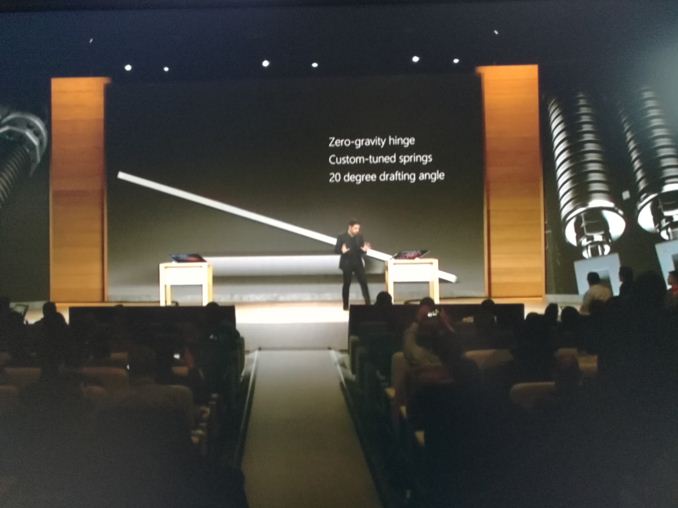
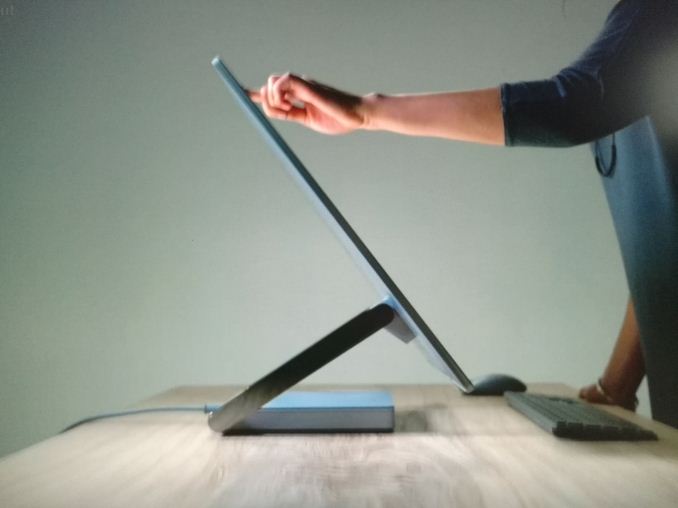
The display connects to the base via a specialist hinge, featuring 80 machined parts on each side for what Microsoft calls a ‘Zero Gravity Hinge’. This allows the display to be moved seamlessly and for any plausible angle, as well as taking on extra weight in studio mode. The display has two buttons on the right-hand side for power and volume. On the top of the display is the Windows Hello-enabled camera, with a 5.0 MP element capable of 1080p video (we assume 30 FPS). The Studio supports the Surface Pen, which can attach to the side of the display.
For color reproduction, Microsoft is advertising the display as supporting both DCI-P3 and sRGB with a simple toggle on the Windows sidebar to switch between the two. While Microsoft says that the displays are calibrated for both, this has fundamental issues with color reproduction.

In the base is a set of arguably last-generation specifications: 6th generation (Skylake) Intel Core i5 and Core i7 processor options (probably 65W desktop parts?) paired with up to 32GB of DDR4 memory (probably DDR4-2133). This comes with a NVIDIA GTX 965M 2GB for two of the three options, and a GTX 980M 4GB on the high-end model. Connectivity comes via USB 3.0, rather than USB 3.1/Thunderbolt. Storage is labeled as ‘1TB or 2TB Rapid Hybrid Drive’ options, which in the presentation looked like an M.2 drive but as yet it has been unstated if this is SATA or PCIe (or if a Rapid Hybrid Drive actually means an SSHD).

Microsoft Surface Studio
CPU Intel Core i5
Skylake
Intel Core i7
Skylake
Intel Core i7
Skylake
GPU NVIDIA
GTX 965M 2GB
NVIDIA
GTX 980M 4GB
DRAM 8GB DDR4 16 GB DDR4 32GB DDR4
Storage 1TB 1TB 2TB
‘Rapid Storage Drive’ (SATA? PCIe? SSHD?)
Display 28-inch 4500×3000 LCD Display
12.5mm thin
10-point MultiTouch
Magnetic Pen Support
Connectivity 802.11ac WiFi (Intel AC 8260?)
Gigabit Ethernet
Xbox Wireless
IO 4 x USB 3.0
Full-Size SD card reader (SDXC)
Mini DisplayPort
3.5mm Headset
Camera 5MP Front Facing
Windows Hello
1080p Recording
OS Windows 10 Pro
30-day Office Trial
Dimensions Display: 637.35 x 438.90 x 12.50 mm
Base: 250.00 x 200.00 x 32.2 mm
Weight: 9.56 kg / 21 lbs
Price $2999 $3499 $4199

Connectivity comes via four USB 3.0 ports, a full-size SD card reader, a mini DisplayPort output and a 3.5mm headset jack. WiFi is provided by an 802.11ac unit, although Microsoft does not say which one (I’d hazard a guess and say Intel’s AC8260 2×2 solution). The unit also supports Xbox Wireless, allowing for Xbox controllers to also be connected for gaming.

The whole unit weighs in at 21 lbs (9.5 kg), and Microsoft has stated that it will be available only in limited quantities during Q4, with the official release date as 15th December. Current configurations available will be:

$2999 : Intel Core i5 (Skylake), 8 GB DDR4, 1TB, GTX 965M 2GB
$3499 : Intel Core i7 (Skylake), 16 GB DDR4, 1TB, GTX 965M 2GB
$4199 : Intel Core i7 (Skylake), 32 GB DDR4, 2TB, GTX 980M 4GB

Windows 10 Pro is included with a 30-day Office trial.

Edit: Originally this piece was posted with the incorrect Intel Generation code name in the title. It should read ‘Skylake’, not ‘Haswell’. The piece has been edited to clarify.
Microsoft Windows 10 Event Live Blog (starts 10am ET)

We’re readying up for a Live Blog of the Microsoft event in NYC. Panos Panay is expected to take to the stage, with Major Nelson from the Xbox team in tow (we believe) for some new announcements. The presentation is set to start at 10am ET, and we’ll fire up the Live Blog as it starts!

Microsoft Windows 10 Event Live Blog (starts 10am ET)

We’re readying up for a Live Blog of the Microsoft event in NYC. Panos Panay is expected to take to the stage, with Major Nelson from the Xbox team in tow (we believe) for some new announcements. The presentation is set to start at 10am ET, and we’ll fire up the Live Blog as it starts!

Xiaomi Announces the Mi Note 2 (Snapdragon 821, 6GB RAM) and Mi MIX Concept Phones

Xiaomi Announces the Mi Note 2 (Snapdragon 821, 6GB RAM) and Mi MIX Concept Phones

Xiaomi has added two new phones to its lineup: the Mi Note 2 and the Mi MIX. Both are flagship phones with large screens that emphasize performance and design; however, despite some overlap in criteria and internal hardware, these are two very distinct devices.

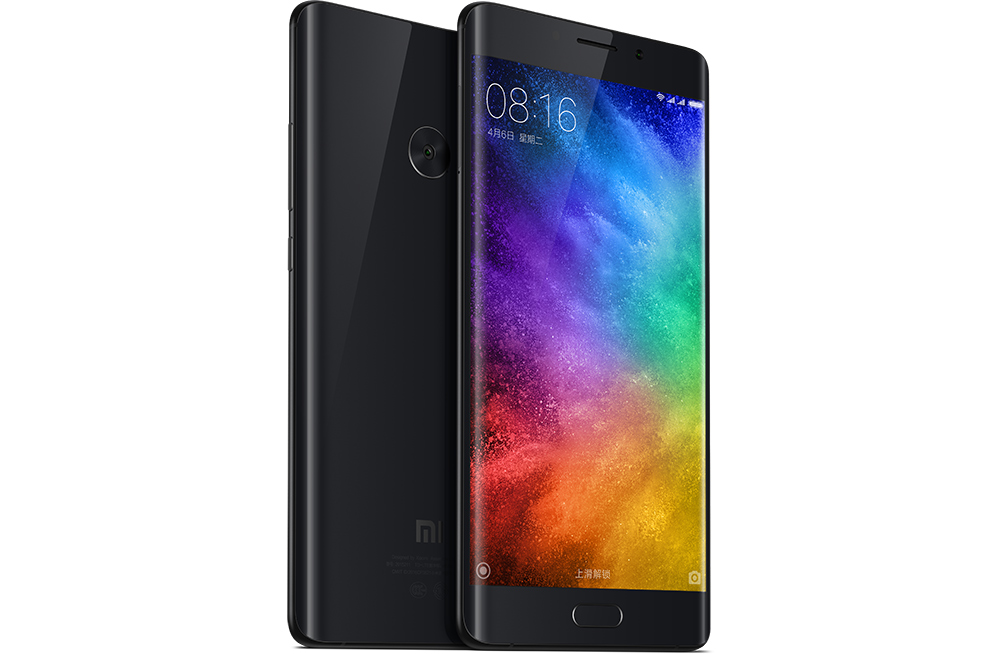
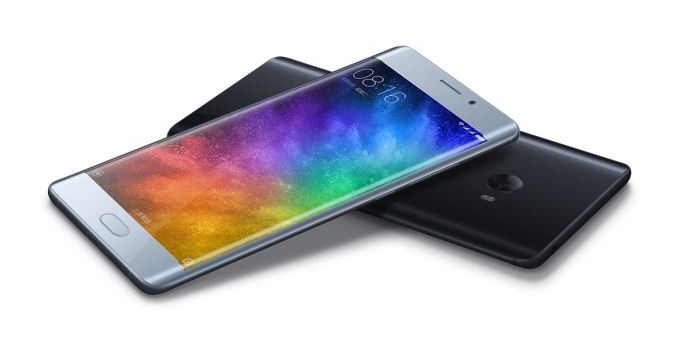
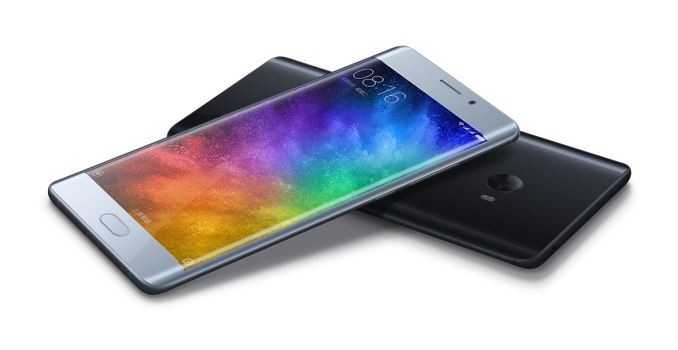
Like its predecessor, the Mi Note, the Mi Note 2 has an aluminum frame and a glass back with curved edges, but instead of the previous design’s flat front, the Mi Note 2 uses a flexible OLED display to allow curved edges to the front too, design features Samsung’s recent Galaxy phones also employ. Another obvious change from the previous model is the addition of a capacitive fingerprint sensor. The pill-shaped sensor, which sits below the screen and is flanked by capacitive navigation buttons, keeps the lower bezel relatively slim, giving the Mi Note 2 a screen-to-body ratio of 77.2%. The rear-facing camera sits flush with the shiny and smooth glass on the back and includes a slightly raised and polished ring to protect the lens.

The design is generally symmetric and balanced: The centered earpiece has the sensors and front-facing camera to either side, and the centered USB Type-C port on the bottom has matching arrays of holes for the downward-firing speaker and microphone. The offset 3.5mm headphone jack on the top edge and the dual-color LED flash on the back are the only features to break symmetry.

The Mi Note 2’s 5.7-inch OLED display delivers excellent black levels and covers 110% of the NTSC color gamut, according to Xiaomi, which basically means it should deliver highly saturated colors. For people who prefer more accurate colors, the phone provides an sRGB mode and a control for adjusting the display’s color temperature. Unfortunately, its 1920×1080 resolution is less than ideal for such a large display.

Inside the Mi Note 2 is Qualcomm’s latest Snapdragon 821 SoC, which includes four of its custom Kryo CPU cores and an Adreno 530 GPU, and a sufficiently large 4070mAh non-accessible battery that supports Qualcomm’s Quick Charge 3.0 fast charging technology. It also comes with either 4GB of RAM and 64GB of internal UFS 2.0 storage or 6GB of RAM and 128GB of storage, but there’s no support for microSD cards.

The 8MP front-facing camera includes autofocus and Xiaomi’s third-generation beauty mode processing. Around back is a 22.5MP Sony IMX318 Exmor RS sensor, which is among a new generation of sensors that use smaller 1.0µm pixels. Despite the reduction in full-well capacity, Sony claims its new sensor matches the image quality of its previous IMX230 Exmor RS sensor that uses larger 1.12µm pixels. Stacked above the sensor is a lens array with six elements and an f/2.0 aperture.

The Mi Note 2’s rear camera supports phase detect autofocus (PDAF) to improve focus speed. There’s no optical image stabilization (OIS), which could negatively impact low-light still image performance, but the camera does employ 3-axis electronic image stabilization (EIS) when shooting videos, even in 4K.

The Mi Note 2 comes in two different colors—Piano Black and Glacier Silver—and three different versions—two which will only be available in China and a global version that supports 6 modes and 37 frequency bands. The Mi Note 2 will be available in China starting November 1st for ¥2799 (4GB RAM / 64GB NAND) or ¥3299 (6GB RAM / 128GB NAND). The global version will cost ¥3499 (6GB RAM / 128GB NAND).

  Xiaomi Mi Note 2 Xiaomi MIX
SoC Qualcomm Snapdragon 821
(MSM8996 Pro)

2x Kryo @ 2.35GHz
2x Kryo @ 2.19GHz
Adreno 530 @ 653MHz

Display 5.7-inch 1920×1080 AMOLED 6.4-inch 2040×1080 IPS LCD
Dimensions 156.2 x 77.3 x 7.6 mm
166 grams
158.8 x 81.9 x 7.9 mm
209 grams
RAM 4GB / 6GB LPDDR4
NAND 64GB / 128GB
(UFS 2.0)
128GB / 256GB
(UFS 2.0)
Battery 4070 mAh
non-replaceable
Qualcomm Quick Charge 3.0
4400 mAh
non-replaceable
Qualcomm Quick Charge 3.0
Front Camera 8MP, f/2.0, AF 5MP
Rear Camera 22.5MP, 1/2.6″ Sony IMX318 Exmor RS, 1.0µm pixels, f/2.0, PDAF, HDR, dual-tone LED flash 16MP, f/2.0, PDAF, Auto HDR, dual-tone LED flash
Modem Qualcomm X12 LTE (Integrated)
2G / 3G / 4G LTE (Category 13/12)
SIM Size 2x NanoSIM (dual standby)
Network China Global China
FDD-LTE B1 / B3 / B5 / B7
B1 / B2 / B3 / B4 / B5 / B7 / B8 / B12 / B13 / B17 / B18 / B19 / B20 / B25 / B26 / B28 / B29 / B30
B1 / B2 / B3 / B4 / B5 / B7 / B8
TDD-LTE B38 / B39 / B40 / B41 B38 / B39 / B40 / B41
GSM 850 / 900 / 1800 / 1900 850 / 900 / 1800 / 1900
WCDMA B1 / B2 / B5 / B8 B1 / B2 / B4 / B5 / B8 B1 / B2 / B5 / B8
CDMA BC0 BC0 / B1 / B10 / B15 BC0
TD-CDMA B34 / B39 B34 / B39
Wireless 802.11a/b/g/n/ac, BT 4.2, NFC, IrLED, GPS/GNSS/Beidou 802.11a/b/g/n/ac 2×2 MU-MIMO, BT 4.2, NFC, GPS/GNSS/Beidou
Connectivity USB Type-C, 3.5mm headset
Launch OS Android 6.0 with MIUI 8
Launch Price 4GB/64GB: ¥2799
6GB/128GB: ¥3299
6GB/128GB (global): ¥3499
4GB/128GB: ¥3499
6GB/256GB: ¥3999

The larger Mi MIX was jointly developed with prolific designer Philippe Starck and features an all-ceramic body with ceramic buttons. The front is dominated by a 6.4-inch display with virtually no bezels along the top or sides, giving the phone a 91.3% screen-to-body ratio. The 5MP front-facing camera is located in the lower-right corner of the slim lower bezel, while the ultrasonic (instead of infrared) proximity sensor is located behind the screen. There are no physical or capacitive buttons in the lower bezel either, because it uses onscreen navigation controls.

Eliminating the upper bezel meant eliminating the traditional earpiece speaker too. In its place, the Mi MIX uses a piezoelectric-driven cantilevered beam that produces sound by vibrating the phone’s ceramic frame instead of a speaker driver. What’s not clear, though, is if people nearby will also be able to hear the conversation, or if the sound is directed only towards the user.

A circular camera sits flush with the ceramic back, stacked above a circular fingerprint sensor. A USB Type-C port sits centered on the bottom edge flanked by a symmetric array of small holes hiding a downward firing speaker and microphone. A 3.5mm headphone jack is on the top edge.

Its 6.4-inch IPS LCD display has an odd 17:9 aspect ratio that’s supposed to make room for the onscreen navigation controls while still providing a traditional 16:9 viewable area. Its 2040×1080 resolution seems low for such a large display, but it still provides a decent 362 PPI pixel density. Xiaomi claims a peak brightness of 500 nits and 94% coverage of the NTSC color gamut, making this a wide-gamut panel with more saturated colors. Like the Mi Note 2, the Mi MIX also provides a control for adjusting the display’s color temperature and a native sRGB mode.

Its internal hardware is also similar to the Mi Note 2’s, packing in an impressive list of hardware. The key differences are a larger 4400mAh battery and twice the internal UFS 2.0 NAND.

The Mi MIX will be available exclusively in China beginning November 4th and will come in two different versions. The standard version will cost ¥3499 with 4GB of RAM and 128GB of internal storage, while a special limited edition version, which comes with 6GB of RAM, 256GB of internal storage, and 18K gold-plated accents around the rear camera and fingerprint sensor will cost ¥3999.

Xiaomi Announces the Mi Note 2 (Snapdragon 821, 6GB RAM) and Mi MIX Concept Phones

Xiaomi Announces the Mi Note 2 (Snapdragon 821, 6GB RAM) and Mi MIX Concept Phones

Xiaomi has added two new phones to its lineup: the Mi Note 2 and the Mi MIX. Both are flagship phones with large screens that emphasize performance and design; however, despite some overlap in criteria and internal hardware, these are two very distinct devices.

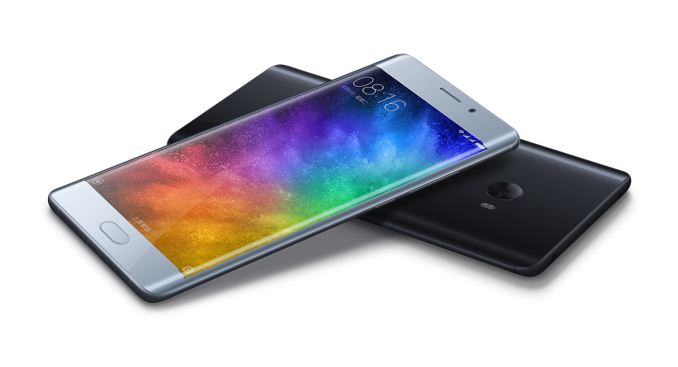
Like its predecessor, the Mi Note, the Mi Note 2 has an aluminum frame and a glass back with curved edges, but instead of the previous design’s flat front, the Mi Note 2 uses a flexible OLED display to allow curved edges to the front too, design features Samsung’s recent Galaxy phones also employ. Another obvious change from the previous model is the addition of a capacitive fingerprint sensor. The pill-shaped sensor, which sits below the screen and is flanked by capacitive navigation buttons, keeps the lower bezel relatively slim, giving the Mi Note 2 a screen-to-body ratio of 77.2%. The rear-facing camera sits flush with the shiny and smooth glass on the back and includes a slightly raised and polished ring to protect the lens.

The design is generally symmetric and balanced: The centered earpiece has the sensors and front-facing camera to either side, and the centered USB Type-C port on the bottom has matching arrays of holes for the downward-firing speaker and microphone. The offset 3.5mm headphone jack on the top edge and the dual-color LED flash on the back are the only features to break symmetry.

The Mi Note 2’s 5.7-inch OLED display delivers excellent black levels and covers 110% of the NTSC color gamut, according to Xiaomi, which basically means it should deliver highly saturated colors. For people who prefer more accurate colors, the phone provides an sRGB mode and a control for adjusting the display’s color temperature. Unfortunately, its 1920×1080 resolution is less than ideal for such a large display.

Inside the Mi Note 2 is Qualcomm’s latest Snapdragon 821 SoC, which includes four of its custom Kryo CPU cores and an Adreno 530 GPU, and a sufficiently large 4070mAh non-accessible battery that supports Qualcomm’s Quick Charge 3.0 fast charging technology. It also comes with either 4GB of RAM and 64GB of internal UFS 2.0 storage or 6GB of RAM and 128GB of storage, but there’s no support for microSD cards.

The 8MP front-facing camera includes autofocus and Xiaomi’s third-generation beauty mode processing. Around back is a 22.5MP Sony IMX318 Exmor RS sensor, which is among a new generation of sensors that use smaller 1.0µm pixels. Despite the reduction in full-well capacity, Sony claims its new sensor matches the image quality of its previous IMX230 Exmor RS sensor that uses larger 1.12µm pixels. Stacked above the sensor is a lens array with six elements and an f/2.0 aperture.

The Mi Note 2’s rear camera supports phase detect autofocus (PDAF) to improve focus speed. There’s no optical image stabilization (OIS), which could negatively impact low-light still image performance, but the camera does employ 3-axis electronic image stabilization (EIS) when shooting videos, even in 4K.

The Mi Note 2 comes in two different colors—Piano Black and Glacier Silver—and three different versions—two which will only be available in China and a global version that supports 6 modes and 37 frequency bands. The Mi Note 2 will be available in China starting November 1st for ¥2799 (4GB RAM / 64GB NAND) or ¥3299 (6GB RAM / 128GB NAND). The global version will cost ¥3499 (6GB RAM / 128GB NAND).

  Xiaomi Mi Note 2 Xiaomi MIX
SoC Qualcomm Snapdragon 821
(MSM8996 Pro)

2x Kryo @ 2.35GHz
2x Kryo @ 2.19GHz
Adreno 530 @ 653MHz

Display 5.7-inch 1920×1080 AMOLED 6.4-inch 2040×1080 IPS LCD
Dimensions 156.2 x 77.3 x 7.6 mm
166 grams
158.8 x 81.9 x 7.9 mm
209 grams
RAM 4GB / 6GB LPDDR4
NAND 64GB / 128GB
(UFS 2.0)
128GB / 256GB
(UFS 2.0)
Battery 4070 mAh
non-replaceable
Qualcomm Quick Charge 3.0
4400 mAh
non-replaceable
Qualcomm Quick Charge 3.0
Front Camera 8MP, f/2.0, AF 5MP
Rear Camera 22.5MP, 1/2.6″ Sony IMX318 Exmor RS, 1.0µm pixels, f/2.0, PDAF, HDR, dual-tone LED flash 16MP, f/2.0, PDAF, Auto HDR, dual-tone LED flash
Modem Qualcomm X12 LTE (Integrated)
2G / 3G / 4G LTE (Category 13/12)
SIM Size 2x NanoSIM (dual standby)
Network China Global China
FDD-LTE B1 / B3 / B5 / B7
B1 / B2 / B3 / B4 / B5 / B7 / B8 / B12 / B13 / B17 / B18 / B19 / B20 / B25 / B26 / B28 / B29 / B30
B1 / B2 / B3 / B4 / B5 / B7 / B8
TDD-LTE B38 / B39 / B40 / B41 B38 / B39 / B40 / B41
GSM 850 / 900 / 1800 / 1900 850 / 900 / 1800 / 1900
WCDMA B1 / B2 / B5 / B8 B1 / B2 / B4 / B5 / B8 B1 / B2 / B5 / B8
CDMA BC0 BC0 / B1 / B10 / B15 BC0
TD-CDMA B34 / B39 B34 / B39
Wireless 802.11a/b/g/n/ac, BT 4.2, NFC, IrLED, GPS/GNSS/Beidou 802.11a/b/g/n/ac 2×2 MU-MIMO, BT 4.2, NFC, GPS/GNSS/Beidou
Connectivity USB Type-C, 3.5mm headset
Launch OS Android 6.0 with MIUI 8
Launch Price 4GB/64GB: ¥2799
6GB/128GB: ¥3299
6GB/128GB (global): ¥3499
4GB/128GB: ¥3499
6GB/256GB: ¥3999

The larger Mi MIX was jointly developed with prolific designer Philippe Starck and features an all-ceramic body with ceramic buttons. The front is dominated by a 6.4-inch display with virtually no bezels along the top or sides, giving the phone a 91.3% screen-to-body ratio. The 5MP front-facing camera is located in the lower-right corner of the slim lower bezel, while the ultrasonic (instead of infrared) proximity sensor is located behind the screen. There are no physical or capacitive buttons in the lower bezel either, because it uses onscreen navigation controls.

Eliminating the upper bezel meant eliminating the traditional earpiece speaker too. In its place, the Mi MIX uses a piezoelectric-driven cantilevered beam that produces sound by vibrating the phone’s ceramic frame instead of a speaker driver. What’s not clear, though, is if people nearby will also be able to hear the conversation, or if the sound is directed only towards the user.

A circular camera sits flush with the ceramic back, stacked above a circular fingerprint sensor. A USB Type-C port sits centered on the bottom edge flanked by a symmetric array of small holes hiding a downward firing speaker and microphone. A 3.5mm headphone jack is on the top edge.

Its 6.4-inch IPS LCD display has an odd 17:9 aspect ratio that’s supposed to make room for the onscreen navigation controls while still providing a traditional 16:9 viewable area. Its 2040×1080 resolution seems low for such a large display, but it still provides a decent 362 PPI pixel density. Xiaomi claims a peak brightness of 500 nits and 94% coverage of the NTSC color gamut, making this a wide-gamut panel with more saturated colors. Like the Mi Note 2, the Mi MIX also provides a control for adjusting the display’s color temperature and a native sRGB mode.

Its internal hardware is also similar to the Mi Note 2’s, packing in an impressive list of hardware. The key differences are a larger 4400mAh battery and twice the internal UFS 2.0 NAND.

The Mi MIX will be available exclusively in China beginning November 4th and will come in two different versions. The standard version will cost ¥3499 with 4GB of RAM and 128GB of internal storage, while a special limited edition version, which comes with 6GB of RAM, 256GB of internal storage, and 18K gold-plated accents around the rear camera and fingerprint sensor will cost ¥3999.