Vik


AMD Announces Q3 2016 Financial Results
AMD Announces Q3 2016 Financial Results

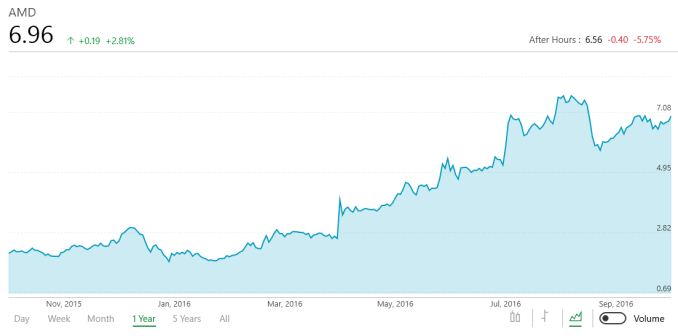
Today AMD announced their third quarter earnings for the fiscal year 2016. Revenue was up to $1.307 billion, up 23% from a year ago.  However their operating income and net income were not quite so lucky, with AMD showing an operating loss of $293 million for the quarter, compared to a $158 million operating loss a year ago, and net AMD showed a loss of $406 million, or $0.50 per share, compared to a net loss of $197 million, or $0.25 per share, a year ago.

AMD Q3 2016 Financial Results (GAAP)
  Q3’2016 Q2’2016 Q3’2015
Revenue $1307M $1027M $1061M
Gross Margin 5% 31% 23%
Operating Income -$293M -$8M -$158M
Net Income -$406M +$69M -$197M
Earnings Per Share -$0.50 $0.08 -$0.25

AMD took a charge of $340 million this quarter for their sixth amendment to the wafer supply agreement with GlobalFoundries. This has been excluded in their Non-GAAP measures to show the core business, where they had the same $1.307 billion revenue, but showed an operating income of $70 million for the quarter, compared to an operating loss of $97 million a year ago. Non-GAAP net income for the quarter was $27 million, compared to a $136 million loss in Q3 2015.

AMD Q3 2016 Financial Results (Non-GAAP)
  Q3’2016 Q2’2016 Q3’2015
Revenue $1307M $1027M $1061M
Gross Margin 31% 31% 23%
Operating Income $70M $3M -$97M
Net Income $27M -$40M -$136M
Earnings Per Share $0.03 -$0.05 -$0.17

Thanks to the charge, gross margin in GAAP terms was an abysmal 5% for the quarter, but Non-GAAP was 31%.

AMD’s Computing and Graphics segment had revenue of $472 million this quarter, which is up 11% from Q3 2015. Increased sales of GPUs are attributed to the gain, but the gain was offset by a drop in desktop processor sales, though they have seen an increase in sales of notebook processors. This segment continues to be unprofitable, having an operating loss of $66 million this quarter, but that is much better than the $181 million operating loss a year ago. Once again, GPU revenue has helped here tremendously. GPU average selling price (ASP) increased with higher channel and professional graphics ASPs. CPU ASP was flat year-over-year.

AMD Q3 2016 Computing and Graphics
  Q3’2016 Q2’2016 Q3’2015
Revenue $472M $435M $424M
Operating Income -$66M -$81M -$181M

Enterprise, Embedded, and Semi-Custom continues to grow, and has easily surpassed the Computing and Graphics division, with revenues of $835 million, which is up 31% year-over-year. Semi-custom SoC sales continue to be the bright spot for AMD, with AMD have locked up both current generation consoles in the Xbox One, and PlayStation 4, and their refreshes in the Xbox One S and PlayStation 4 Pro, as well as the upcoming Xbox Project Scorpio. Best of all for AMD, this segment continues to be profitable, with an operating income of $136 million this quarter, up from $84 million a year ago.

AMD Q3 2016 Enterprise, Embedded, and Semi-Custom
  Q3’2016 Q2’2016 Q3’2015
Revenue $835M $592M $637M
Operating Income $136M $84M $84M

AMD plunked the wafer agreement charge right into their All Other category, which had an operating loss of $363 million this quarter, compared to an $11 million loss last quarter, and a $61 million loss in Q3 2015.

AMD has seen success with its Polaris architecture in the GPU space, and they hope to see some success with their upcoming Zen CPU architecture, with their Summit Ridge desktop processor and a 32-core, 64-thread server product code named Naples.

Looking forward to next quarter, AMD expects revenues to decrease 18%, plus or minus 3%.
AMD Announces Q3 2016 Financial Results

AMD Announces Q3 2016 Financial Results

Today AMD announced their third quarter earnings for the fiscal year 2016. Revenue was up to $1.307 billion, up 23% from a year ago.  However their operating income and net income were not quite so lucky, with AMD showing an operating loss of $293 million for the quarter, compared to a $158 million operating loss a year ago, and net AMD showed a loss of $406 million, or $0.50 per share, compared to a net loss of $197 million, or $0.25 per share, a year ago.

AMD Q3 2016 Financial Results (GAAP)
  Q3’2016 Q2’2016 Q3’2015
Revenue $1307M $1027M $1061M
Gross Margin 5% 31% 23%
Operating Income -$293M -$8M -$158M
Net Income -$406M +$69M -$197M
Earnings Per Share -$0.50 $0.08 -$0.25

AMD took a charge of $340 million this quarter for their sixth amendment to the wafer supply agreement with GlobalFoundries. This has been excluded in their Non-GAAP measures to show the core business, where they had the same $1.307 billion revenue, but showed an operating income of $70 million for the quarter, compared to an operating loss of $97 million a year ago. Non-GAAP net income for the quarter was $27 million, compared to a $136 million loss in Q3 2015.

AMD Q3 2016 Financial Results (Non-GAAP)
  Q3’2016 Q2’2016 Q3’2015
Revenue $1307M $1027M $1061M
Gross Margin 31% 31% 23%
Operating Income $70M $3M -$97M
Net Income $27M -$40M -$136M
Earnings Per Share $0.03 -$0.05 -$0.17

Thanks to the charge, gross margin in GAAP terms was an abysmal 5% for the quarter, but Non-GAAP was 31%.

AMD’s Computing and Graphics segment had revenue of $472 million this quarter, which is up 11% from Q3 2015. Increased sales of GPUs are attributed to the gain, but the gain was offset by a drop in desktop processor sales, though they have seen an increase in sales of notebook processors. This segment continues to be unprofitable, having an operating loss of $66 million this quarter, but that is much better than the $181 million operating loss a year ago. Once again, GPU revenue has helped here tremendously. GPU average selling price (ASP) increased with higher channel and professional graphics ASPs. CPU ASP was flat year-over-year.

AMD Q3 2016 Computing and Graphics
  Q3’2016 Q2’2016 Q3’2015
Revenue $472M $435M $424M
Operating Income -$66M -$81M -$181M

Enterprise, Embedded, and Semi-Custom continues to grow, and has easily surpassed the Computing and Graphics division, with revenues of $835 million, which is up 31% year-over-year. Semi-custom SoC sales continue to be the bright spot for AMD, with AMD have locked up both current generation consoles in the Xbox One, and PlayStation 4, and their refreshes in the Xbox One S and PlayStation 4 Pro, as well as the upcoming Xbox Project Scorpio. Best of all for AMD, this segment continues to be profitable, with an operating income of $136 million this quarter, up from $84 million a year ago.

AMD Q3 2016 Enterprise, Embedded, and Semi-Custom
  Q3’2016 Q2’2016 Q3’2015
Revenue $835M $592M $637M
Operating Income $136M $84M $84M

AMD plunked the wafer agreement charge right into their All Other category, which had an operating loss of $363 million this quarter, compared to an $11 million loss last quarter, and a $61 million loss in Q3 2015.

AMD has seen success with its Polaris architecture in the GPU space, and they hope to see some success with their upcoming Zen CPU architecture, with their Summit Ridge desktop processor and a 32-core, 64-thread server product code named Naples.

Looking forward to next quarter, AMD expects revenues to decrease 18%, plus or minus 3%.
Intel Announces Q3 FY 2016 Earnings: Record Quarterly Revenue

Intel Announces Q3 FY 2016 Earnings: Record Quarterly Revenue

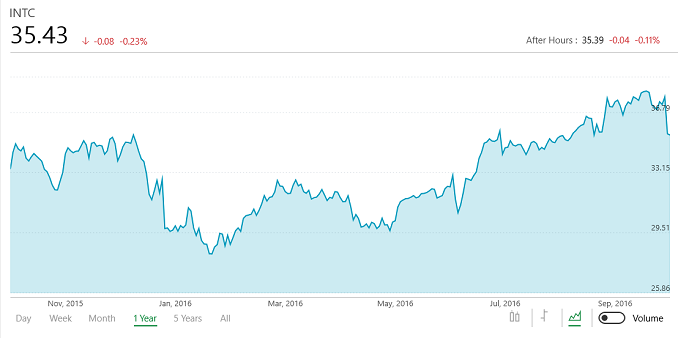
Earlier this week, Intel announced their earnings for the third quarter of their 2016 fiscal year, and the company achieved new records across their business lines, resulting in a record quarterly revenue of $15.8 billion USD, up 9% compared to Q3 2015. Intel achieved margins of 63.3%, up 0.3% year-over-year, and their operating income increased 6% to $4.5 billion. Net income for the quarter was $3.4 billion, up 9%, and earnings per share came in at $0.69.

Intel Q3 2016 Financial Results (GAAP)
  Q3’2016 Q2’2016 Q3’2015
Revenue $15.8B $13.5B $14.5B
Operating Income $4.5B $1.3B $4.2B
Net Income $3.4B $1.3B $3.1B
Gross Margin 63.3% 58.9% 63.0%
Client Computing Group Revenue $8.9B +18.7% +5.7%
Data Center Group Revenue $4.5B +12.5% +9.9%
Internet of Things Revenue $689M +20.4% +18.6%
Non-Volatile Memory Solutions Group $649M +17.1% -0.9%
Intel Security Group $537M flat +6.1%
Programmable Solutions Group $465M -8.6%
All Other Revenue $44M +10% -42.8%

Intel also announced Non-GAAP results, which exclude certain things like acquisition-related adjustments, deferred revenue write-down, restructuring, and more. For a full list, please check out their lengthy explanation on their earnings report. On a Non-GAAP basis, revenue was the same $15.8 billion, margins were up 1.3% to 64.8%, and operating income was up 18% to $5.1 billion. Net income was up 21% to $3.9 billion, and earnings per share were up 21% to $0.80.

Intel’s internal divisions are broken down into six groups. The Client Computing Group, which is PCs, tablets, phones, and wired and wireless communication. The Data Center Group focuses on enterprise and the cloud. Internet of Things is retail, transportation, industrial, building, and home use electronics. Non-Volatile Memory Solutions is mostly Intel’s SSD efforts. Intel Security Group is security software (McAfee) and new for fiscal 2016 is the Programmable Solutions Group, formed after the acquisition of Altera, and features field-programmable gate arrays and related products.

For Q3, the Client Computing Group had revenues of $8.892 billion, which is up from $8.506 billion a year ago. Unit volumes were actually down 4% compared to the same point a year ago, and volumes are down 11% for the year compared to the first three quarters of 2015, but average selling prices (ASP) continue to increase. For this quarter ASP was up 6% compared to a year ago, and is up 12% for the year so far. Breaking it down a bit further, Intel has had 4% growth in notebook platform sales for this quarter (year-over-year) with ASP up 3% in the notebook segment. Desktops dropped 6% in volume, but have kept the same average selling price, and “tablet platform volumes decreased” which is a non-numerical way to say that Intel is getting out of the dedicated tablet market altogether.

The Data Center Group had revenues of $4.542 billion this quarter, up from $4.140 billion a year ago. Unit volumes increased 12% this quarter compared to Q3 2015, and for the year unit volumes are up 9%. Average selling price has decreased though, down 3% this quarter, and down 2% for the year so far.

Intel doesn’t break out the numbers as specifically for the remaining groups, but Non-Volatile Memory Solutions had revenue that was more or less flat at $649 million for the quarter, compared to $655 million a year ago. Internet of Things continues to grow, up to $689 million in revenue, compared to $581 million in Q3 2015. The Intel Security Group increased revenue from $506 million to $537 million, and the Programmable Solutions Group had revenue of $425 million, with no comparison to last year since it is a newly acquired product group, but up 6% compared to Altera’s numbers from last year.

Intel has made some announcements in this quarter as well. Intel started sampling Stratix 10 in this quarter, which is the only 14 nm FPGA. They also announced they will sell 51% of the Intel Security Group, and establish an independent McAfee security company with the private equity firm TPG. Intel is also shipping “thousands of samples” of their new 3D XPoint to customers, and should have it qualified by the end of this quarter. Speaking of qualified, the Intel 7480 modem was qualified for AT&T this quarter, which is about a year after the 7360 modem got qualified.

Looking forward, Intel is forecasting revenues for Q4 at $15.7 billion, plus or minus $500 million, and margins of 61%.

Intel has continued to diversify its portfolio, and has been building out other divisions to assist with growth while the PC market continues to decline, and while the Client Computing Group continues to be their largest division, they have had strong growth in other areas like the Data Center Group which had record revenue this quarter, and IoT which continues to grow quickly.

Source: Intel Investor Relations


Intel Announces Q3 FY 2016 Earnings: Record Quarterly Revenue

Intel Announces Q3 FY 2016 Earnings: Record Quarterly Revenue

Earlier this week, Intel announced their earnings for the third quarter of their 2016 fiscal year, and the company achieved new records across their business lines, resulting in a record quarterly revenue of $15.8 billion USD, up 9% compared to Q3 2015. Intel achieved margins of 63.3%, up 0.3% year-over-year, and their operating income increased 6% to $4.5 billion. Net income for the quarter was $3.4 billion, up 9%, and earnings per share came in at $0.69.

Intel Q3 2016 Financial Results (GAAP)
  Q3’2016 Q2’2016 Q3’2015
Revenue $15.8B $13.5B $14.5B
Operating Income $4.5B $1.3B $4.2B
Net Income $3.4B $1.3B $3.1B
Gross Margin 63.3% 58.9% 63.0%
Client Computing Group Revenue $8.9B +18.7% +5.7%
Data Center Group Revenue $4.5B +12.5% +9.9%
Internet of Things Revenue $689M +20.4% +18.6%
Non-Volatile Memory Solutions Group $649M +17.1% -0.9%
Intel Security Group $537M flat +6.1%
Programmable Solutions Group $465M -8.6%
All Other Revenue $44M +10% -42.8%

Intel also announced Non-GAAP results, which exclude certain things like acquisition-related adjustments, deferred revenue write-down, restructuring, and more. For a full list, please check out their lengthy explanation on their earnings report. On a Non-GAAP basis, revenue was the same $15.8 billion, margins were up 1.3% to 64.8%, and operating income was up 18% to $5.1 billion. Net income was up 21% to $3.9 billion, and earnings per share were up 21% to $0.80.

Intel’s internal divisions are broken down into six groups. The Client Computing Group, which is PCs, tablets, phones, and wired and wireless communication. The Data Center Group focuses on enterprise and the cloud. Internet of Things is retail, transportation, industrial, building, and home use electronics. Non-Volatile Memory Solutions is mostly Intel’s SSD efforts. Intel Security Group is security software (McAfee) and new for fiscal 2016 is the Programmable Solutions Group, formed after the acquisition of Altera, and features field-programmable gate arrays and related products.

For Q3, the Client Computing Group had revenues of $8.892 billion, which is up from $8.506 billion a year ago. Unit volumes were actually down 4% compared to the same point a year ago, and volumes are down 11% for the year compared to the first three quarters of 2015, but average selling prices (ASP) continue to increase. For this quarter ASP was up 6% compared to a year ago, and is up 12% for the year so far. Breaking it down a bit further, Intel has had 4% growth in notebook platform sales for this quarter (year-over-year) with ASP up 3% in the notebook segment. Desktops dropped 6% in volume, but have kept the same average selling price, and “tablet platform volumes decreased” which is a non-numerical way to say that Intel is getting out of the dedicated tablet market altogether.

The Data Center Group had revenues of $4.542 billion this quarter, up from $4.140 billion a year ago. Unit volumes increased 12% this quarter compared to Q3 2015, and for the year unit volumes are up 9%. Average selling price has decreased though, down 3% this quarter, and down 2% for the year so far.

Intel doesn’t break out the numbers as specifically for the remaining groups, but Non-Volatile Memory Solutions had revenue that was more or less flat at $649 million for the quarter, compared to $655 million a year ago. Internet of Things continues to grow, up to $689 million in revenue, compared to $581 million in Q3 2015. The Intel Security Group increased revenue from $506 million to $537 million, and the Programmable Solutions Group had revenue of $425 million, with no comparison to last year since it is a newly acquired product group, but up 6% compared to Altera’s numbers from last year.

Intel has made some announcements in this quarter as well. Intel started sampling Stratix 10 in this quarter, which is the only 14 nm FPGA. They also announced they will sell 51% of the Intel Security Group, and establish an independent McAfee security company with the private equity firm TPG. Intel is also shipping “thousands of samples” of their new 3D XPoint to customers, and should have it qualified by the end of this quarter. Speaking of qualified, the Intel 7480 modem was qualified for AT&T this quarter, which is about a year after the 7360 modem got qualified.

Looking forward, Intel is forecasting revenues for Q4 at $15.7 billion, plus or minus $500 million, and margins of 61%.

Intel has continued to diversify its portfolio, and has been building out other divisions to assist with growth while the PC market continues to decline, and while the Client Computing Group continues to be their largest division, they have had strong growth in other areas like the Data Center Group which had record revenue this quarter, and IoT which continues to grow quickly.

Source: Intel Investor Relations


Kodak Ektra Smartphone Announced: MediaTek Helio X20, 21 MP Camera, USB-C

Kodak Ektra Smartphone Announced: MediaTek Helio X20, 21 MP Camera, USB-C

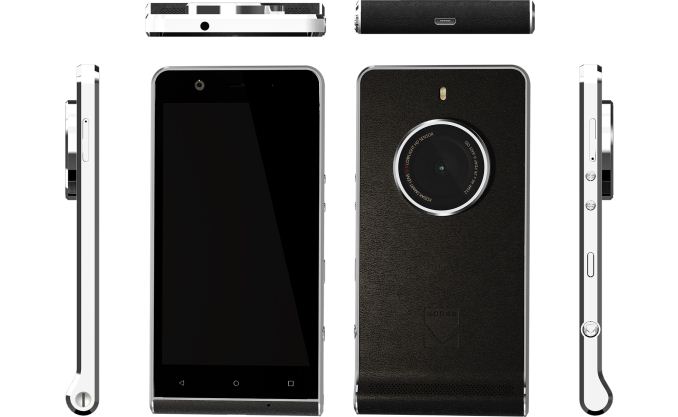
Eastman Kodak and the Bullitt Group on Thursday introduced the Ektra smartphone, which will be the first mainstream handset carrying the Kodak brand. The phone inherits its Ektra name from Kodak’s consumer cameras from the 1940s, and is designed to cater to digital photography enthusiasts, which is emphasized by overall design (which somewhat resembles the original), a large assembly of lenses as well as a dedicated shutter button. Initially, the Kodak Ektra device will be exclusively in Europe for €499.

Kodak developed the world’s first digital camera in the mid-1970s and has patented a huge number of digital imaging-related technologies since then. Although the company was fairly successful with its digital cameras in the 1990s and early 2000s, it lost a significant chunk of its market share later on as new companies entered the scene. Consequently, Kodak filed for Chapter 11 bankruptcy protection in early 2012 and then had to exit the digital camera business, sell off its image sensor solution unit and some other businesses, and then sell many of its patents to a group of high-tech rivals in 2013. After re-emerging from bankruptcy, Kodak decided to focus on commercial products and services, but did not forget its heritage of serving consumers. In 2013, it demonstrated its first micro four thirds camera to be made by a third party and in late 2014 announced plans for smartphones.

Nowadays the market for standalone cameras is on the decline as many people use smartphones to make pictures, and this is when Kodak decided to team up with Bullitt (which also has rights to produce phones under CAT and Land Rover brands) to create a Kodak-branded handset. Under the terms of the agreement, Kodak licensed two of its trademarks to Bullitt and then developed the photography software as well as the optical lenses assembly. In the meantime, Bullitt designed the Kodak Ektra smartphone itself.

From hardware point of view, the Kodak Ektra is a typical mainstream smartphone, featuring a 5” FHD display and is based on MediaTek’s Helio X20 SoC. The handset comes equipped with 3 GB of LPDDR3 RAM, 32 GB of NAND flash storage, a 802.11ac Wi-Fi + BT 4.1 wireless module, a 4G/LTE Cat4 modem and a 3000 mAh battery. A good thing is that the phone sports a USB Type-C port used both for data and charging.

Specifications of Kodak Ektra
  Kodak Ektra
SoC MediaTek Helio X20 (MT6797)
2 × Cortex-A72 at 2.3 GHz
4 × Cortex-A53 at 2.0 GHz
4 × Cortex-A53 at 1.4 GHz
ARM Mali T880 MP4 GPU at 780 MHz
RAM  3 GB LPDDR3
Storage 32 GB + up to 128 GB microSD
Display 5″ 1920 × 1080 with Corning Gorilla Glass
Network GSM/GPRS/EDGE: 850/900/1800/1900;
WCDMA: 850/900/1900/2100;
HSPA;
LTE: 1/3/7/20 (Cat 4);
Dimensions 147.8 × 73.35 × 9.69 mm
14.02 at camera lens
Weight 163.8 grams
Rear Camera Sony Exmor RS 21 MP sensor with F2.0, PDAF, OIS and dual-LED flash. The lense is covered with Corning Gorilla Glass.
Front Camera 13 MP with F2.2 PDAF
Battery 3000 mAh (5V, 2A charger)
Sensors Ambient Light, Accelerometer, Gyroscope, Proximity sensor
OS Google Android 6.0 Marsmallow
Software Kodak Camera software
Snapseed app for photo editing
Super 8 app for video
Prints app
MobiSystems OfficeSuite
AVG AntiVirus
FileCommander
Connectivity 802.11 ac Wi-Fi, Bluetooth 4.1, USB-C, 3.5mm for audio, FM Radio
Navigation GPS + GLONASS
SIM Size Nano SIM
Colors Black
Launch Countries E.U.
Price €499, £449

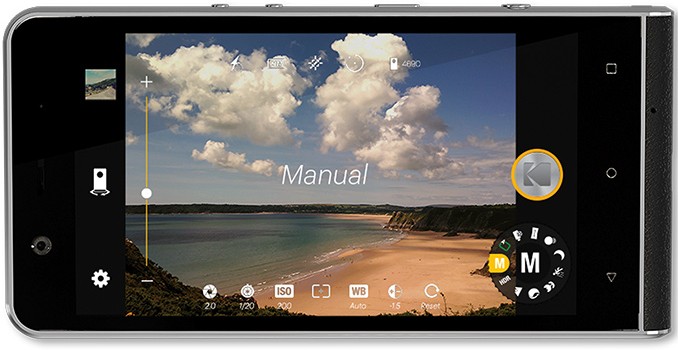
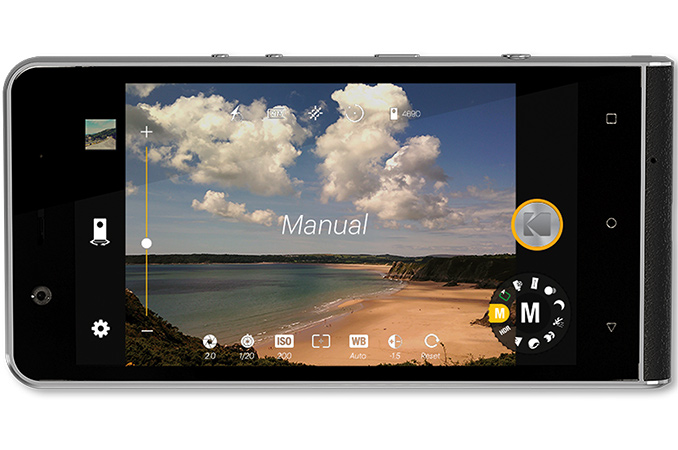
Meanwhile, the imaging capabilities of the Kodak Ektra deserve a closer look: after all, the smartphone is all about photography. The main (rear) camera of the phone uses Sony’s 21 MP Exmor RS IMX230/IMX338 sensor (Kodak does not reveal the exact model), which is found on some other smartphones nowadays, as well as a dual-LED flash. As noted above, Kodak designed the imaging software with SLR-like UI to select the scene type (e.g., HDR, landscape, portrait, macro, sport, night-time, panorama, bokeh as well as a smart auto mode). In addition, the phone supports the manual mode that allows adjusting exposure, ISO, focus, white balance and shutter speed — just like on cameras. Finally, Kodak applied a special coating to the lenses to maximize their luminous transmission.

While Sony’s 21 MP sensors are used relatively widely and behave predictably, Kodak’s lens assembly and custom software are supposed to be the main factors that will differentiate the Ektra from competing Android 6-based devices. Obviously, we will need to test the hardware and software before drawing any conclusions about imaging capabilities of the Kodak smartphone. As for the front-facing camera, Bullitt/Kodak installed a fairly good 13 MP sensor with an f/2.2 lens.

Kodak and Bullitt intend to sell the Ektra in Europe later this year for €499 or £449, depending on the country, through Bullitt’s typical sales channels. The design as well as the price point clearly indicate that the Kodak Ektra is a niche phone that is positioned below flagship models from Apple and Samsung, but still relatively high in the market for what’s largely mainstream hardware. That said, it looks like the Ektra is banking on people familiar with the Kodak brand, who value imaging capabilities, stylish design and original accessories (Kodak will offer a case and a pouch). However, it is unlikely that the smartphone will capture a significant chunk of the market. After all, many smartphone makers claim that their products have the industry’s best photography capabilities and Kodak/Bullitt are definitely not the first to advertise such features.