Vik


Kodak Ektra Smartphone Announced: MediaTek Helio X20, 21 MP Camera, USB-C
Kodak Ektra Smartphone Announced: MediaTek Helio X20, 21 MP Camera, USB-C

Eastman Kodak and the Bullitt Group on Thursday introduced the Ektra smartphone, which will be the first mainstream handset carrying the Kodak brand. The phone inherits its Ektra name from Kodak’s consumer cameras from the 1940s, and is designed to cater to digital photography enthusiasts, which is emphasized by overall design (which somewhat resembles the original), a large assembly of lenses as well as a dedicated shutter button. Initially, the Kodak Ektra device will be exclusively in Europe for €499.

Kodak developed the world’s first digital camera in the mid-1970s and has patented a huge number of digital imaging-related technologies since then. Although the company was fairly successful with its digital cameras in the 1990s and early 2000s, it lost a significant chunk of its market share later on as new companies entered the scene. Consequently, Kodak filed for Chapter 11 bankruptcy protection in early 2012 and then had to exit the digital camera business, sell off its image sensor solution unit and some other businesses, and then sell many of its patents to a group of high-tech rivals in 2013. After re-emerging from bankruptcy, Kodak decided to focus on commercial products and services, but did not forget its heritage of serving consumers. In 2013, it demonstrated its first micro four thirds camera to be made by a third party and in late 2014 announced plans for smartphones.
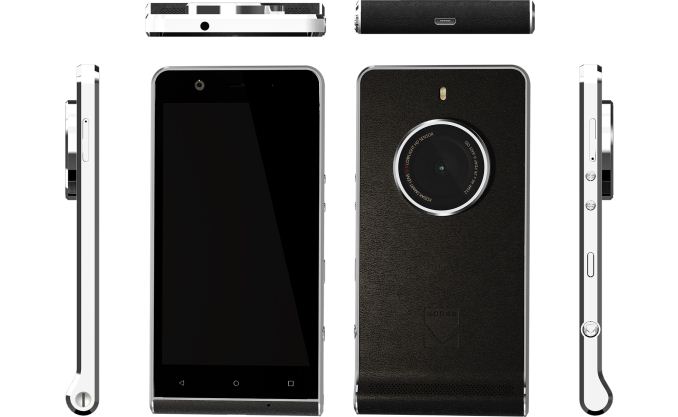
Nowadays the market for standalone cameras is on the decline as many people use smartphones to make pictures, and this is when Kodak decided to team up with Bullitt (which also has rights to produce phones under CAT and Land Rover brands) to create a Kodak-branded handset. Under the terms of the agreement, Kodak licensed two of its trademarks to Bullitt and then developed the photography software as well as the optical lenses assembly. In the meantime, Bullitt designed the Kodak Ektra smartphone itself.

From hardware point of view, the Kodak Ektra is a typical mainstream smartphone, featuring a 5” FHD display and is based on MediaTek’s Helio X20 SoC. The handset comes equipped with 3 GB of LPDDR3 RAM, 32 GB of NAND flash storage, a 802.11ac Wi-Fi + BT 4.1 wireless module, a 4G/LTE Cat4 modem and a 3000 mAh battery. A good thing is that the phone sports a USB Type-C port used both for data and charging.

Specifications of Kodak Ektra
  Kodak Ektra
SoC MediaTek Helio X20 (MT6797)
2 × Cortex-A72 at 2.3 GHz
4 × Cortex-A53 at 2.0 GHz
4 × Cortex-A53 at 1.4 GHz
ARM Mali T880 MP4 GPU at 780 MHz
RAM  3 GB LPDDR3
Storage 32 GB + up to 128 GB microSD
Display 5″ 1920 × 1080 with Corning Gorilla Glass
Network GSM/GPRS/EDGE: 850/900/1800/1900;
WCDMA: 850/900/1900/2100;
HSPA;
LTE: 1/3/7/20 (Cat 4);
Dimensions 147.8 × 73.35 × 9.69 mm
14.02 at camera lens
Weight 163.8 grams
Rear Camera Sony Exmor RS 21 MP sensor with F2.0, PDAF, OIS and dual-LED flash. The lense is covered with Corning Gorilla Glass.
Front Camera 13 MP with F2.2 PDAF
Battery 3000 mAh (5V, 2A charger)
Sensors Ambient Light, Accelerometer, Gyroscope, Proximity sensor
OS Google Android 6.0 Marsmallow
Software Kodak Camera software
Snapseed app for photo editing
Super 8 app for video
Prints app
MobiSystems OfficeSuite
AVG AntiVirus
FileCommander
Connectivity 802.11 ac Wi-Fi, Bluetooth 4.1, USB-C, 3.5mm for audio, FM Radio
Navigation GPS + GLONASS
SIM Size Nano SIM
Colors Black
Launch Countries E.U.
Price €499, £449

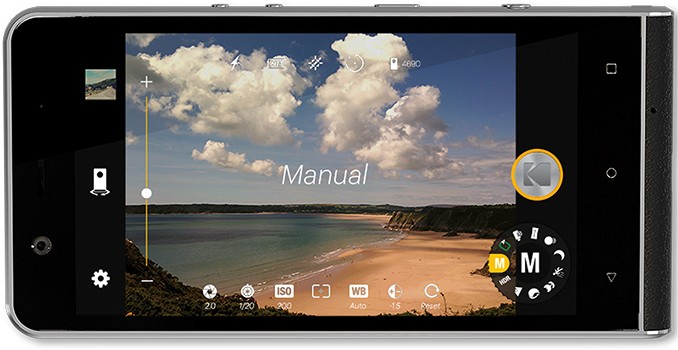
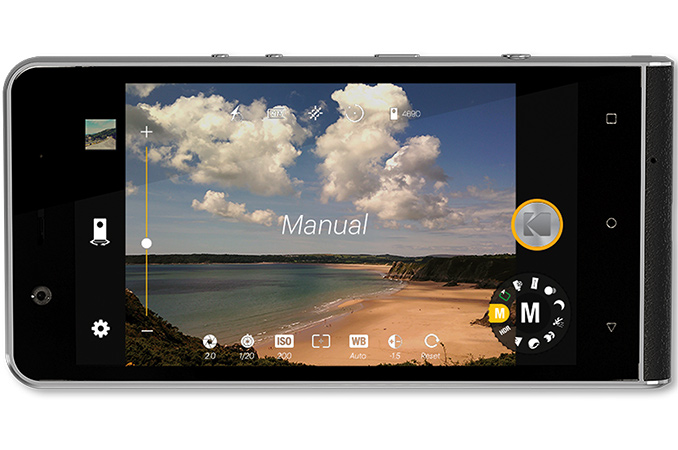
Meanwhile, the imaging capabilities of the Kodak Ektra deserve a closer look: after all, the smartphone is all about photography. The main (rear) camera of the phone uses Sony’s 21 MP Exmor RS IMX230/IMX338 sensor (Kodak does not reveal the exact model), which is found on some other smartphones nowadays, as well as a dual-LED flash. As noted above, Kodak designed the imaging software with SLR-like UI to select the scene type (e.g., HDR, landscape, portrait, macro, sport, night-time, panorama, bokeh as well as a smart auto mode). In addition, the phone supports the manual mode that allows adjusting exposure, ISO, focus, white balance and shutter speed — just like on cameras. Finally, Kodak applied a special coating to the lenses to maximize their luminous transmission.

While Sony’s 21 MP sensors are used relatively widely and behave predictably, Kodak’s lens assembly and custom software are supposed to be the main factors that will differentiate the Ektra from competing Android 6-based devices. Obviously, we will need to test the hardware and software before drawing any conclusions about imaging capabilities of the Kodak smartphone. As for the front-facing camera, Bullitt/Kodak installed a fairly good 13 MP sensor with an f/2.2 lens.

Kodak and Bullitt intend to sell the Ektra in Europe later this year for €499 or £449, depending on the country, through Bullitt’s typical sales channels. The design as well as the price point clearly indicate that the Kodak Ektra is a niche phone that is positioned below flagship models from Apple and Samsung, but still relatively high in the market for what’s largely mainstream hardware. That said, it looks like the Ektra is banking on people familiar with the Kodak brand, who value imaging capabilities, stylish design and original accessories (Kodak will offer a case and a pouch). However, it is unlikely that the smartphone will capture a significant chunk of the market. After all, many smartphone makers claim that their products have the industry’s best photography capabilities and Kodak/Bullitt are definitely not the first to advertise such features.

Razer Re-Launches The Razer Blade Pro: GTX 1080 And 4K G-SYNC

Razer Re-Launches The Razer Blade Pro: GTX 1080 And 4K G-SYNC

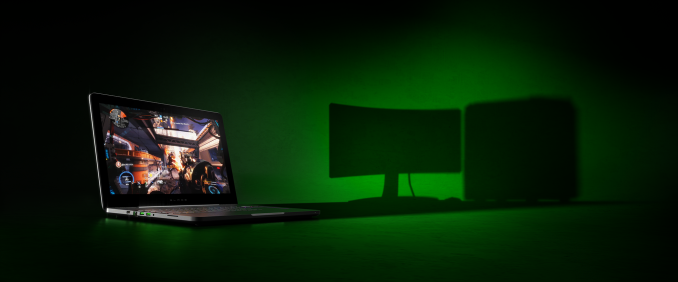
It’s been a while since Razer has refreshed the Razer Blade Pro, which is their 17.3-inch desktop replacement laptop. The outgoing model still has a Haswell processor with GTX 960M. It’s always been a bit strange that the 14-inch Razer Blade was equipped with a stronger GPU than the larger laptop, and when the Razer Blade Pro was last updated, the Razer Blade had a GTX 970M in a smaller form factor.

This is no longer the case. The 14-inch Razer Blade was just updated with Skylake and GTX 1060 in September, which should significantly increase its performance, and today Razer is announcing the new Razer Blade Pro, which finally surpasses its smaller sibling in performance with a NVIDIA GeForce GTX 1080 squeezed into the same 0.88-inch thick CNC aluminum chassis. The Core i7-6700HQ 45-Watt CPU replaces the outgoing Haswell processor, and 32 GB of DDR4 RAM is now available. In order to keep the system cool, Razer has designed what they are calling the world’s thinnest maufactured vapor chamber cooling solution in a laptop. Combined with a custom fan design and a dynamic heat exchanger, Razer is engineering as much cooling as they can into the thin notebook.

Razer has been a big proponent of IGZO displays, and they have outfitted the Blade Pro with a 17.3-inch 3840×2160 IGZO IPS display, and this high-resolution panel also supports NVIDIA’s G-SYNC technology, which should help quite a bit with gaming, even with the big GPU under the hood. This display covers 100% of the Adobe RGB color gamut as well, just like the Razer Blade Stealth UHD model. That has implications though due to the lack of proper color management in Windows, and if it is like the Stealth, it won’t have any included color management software. It’s not Razer’s fault, and hopefully more devices with wide color gamut support will force Microsoft’s hand here.

Razer has also outfitted the new Pro with their new ultra-low profile mechanical switches, which feature actuation points which register at 65 grams, as well as reset points. There have been other laptops with mechanical switches, but they are generally the full-size switches which require much more travel. On a 0.88-inch thick laptop, there would be no way for this to work. Razer has also added the same per-key RGB Chroma branded lighting they have already added to both the Stealth and Blade models.

The TrackPad sits to the right of the keyboard, much like on the older model, but if you are gaming, a mouse is likely the best bet.

Razer Blade Pro
  Shipping in November 2016
CPU Intel Core i7-6700HQ
Quad-Core with Hyperthreading
2.6-3.5 GHz, 6MB Cache, 45W TDP
GPU NVIDIA GTX 1080
2560 CUDA Cores 1566-1733 (Boost) MHz
8GB 256-bit GDDR5X
Memory 32 GB DDR4 2133MHz
Display 17.3″ 3840 IGZO IPS
100% Adobe RGB
G-SYNC Enabled with multi-touch
Storage 512GB / 1TB / 2TB SSD
PCIe M.2 RAID 0 (2 drives)
I/O USB 3.1 Type-C with Thunderbolt 3
USB 3.0 Type-A x 3
RJ-45 Gigabit Ethernet Killer E2400
Headset jack
2.0MP Webcam
SDXC
HDMI 2.0
Dimensions 424 x 281 x 22.5 mm
16.7 x 11 x 0.88 inches
Weight 3.54 kg / 7.8 lbs
Battery 99 Wh, 250 W AC Adapter
Wireless Killer Wireless-AC 1535
802.11ac 2×2:2 with Bluetooth 4.1
Killer DoubleShot Pro
Price $3699+

At under eight pounds, the new Blade Pro is actually pretty light for a system of this size and performance. The new Razer Blade Pro exceeds the requirements for any of the current VR headsets, so it should be able to run VR pretty well.

All of these features do add to the cost though. Where as the new 14-inch Razer Blade starts at $1800, the new Razer Blade Pro starts at over double that price: $3700. Shipments start in November.

Gallery: Razer Blade Pro

Razer Re-Launches The Razer Blade Pro: GTX 1080 And 4K G-SYNC

Razer Re-Launches The Razer Blade Pro: GTX 1080 And 4K G-SYNC

It’s been a while since Razer has refreshed the Razer Blade Pro, which is their 17.3-inch desktop replacement laptop. The outgoing model still has a Haswell processor with GTX 960M. It’s always been a bit strange that the 14-inch Razer Blade was equipped with a stronger GPU than the larger laptop, and when the Razer Blade Pro was last updated, the Razer Blade had a GTX 970M in a smaller form factor.

This is no longer the case. The 14-inch Razer Blade was just updated with Skylake and GTX 1060 in September, which should significantly increase its performance, and today Razer is announcing the new Razer Blade Pro, which finally surpasses its smaller sibling in performance with a NVIDIA GeForce GTX 1080 squeezed into the same 0.88-inch thick CNC aluminum chassis. The Core i7-6700HQ 45-Watt CPU replaces the outgoing Haswell processor, and 32 GB of DDR4 RAM is now available. In order to keep the system cool, Razer has designed what they are calling the world’s thinnest maufactured vapor chamber cooling solution in a laptop. Combined with a custom fan design and a dynamic heat exchanger, Razer is engineering as much cooling as they can into the thin notebook.

Razer has been a big proponent of IGZO displays, and they have outfitted the Blade Pro with a 17.3-inch 3840×2160 IGZO IPS display, and this high-resolution panel also supports NVIDIA’s G-SYNC technology, which should help quite a bit with gaming, even with the big GPU under the hood. This display covers 100% of the Adobe RGB color gamut as well, just like the Razer Blade Stealth UHD model. That has implications though due to the lack of proper color management in Windows, and if it is like the Stealth, it won’t have any included color management software. It’s not Razer’s fault, and hopefully more devices with wide color gamut support will force Microsoft’s hand here.

Razer has also outfitted the new Pro with their new ultra-low profile mechanical switches, which feature actuation points which register at 65 grams, as well as reset points. There have been other laptops with mechanical switches, but they are generally the full-size switches which require much more travel. On a 0.88-inch thick laptop, there would be no way for this to work. Razer has also added the same per-key RGB Chroma branded lighting they have already added to both the Stealth and Blade models.

The TrackPad sits to the right of the keyboard, much like on the older model, but if you are gaming, a mouse is likely the best bet.

Razer Blade Pro
  Shipping in November 2016
CPU Intel Core i7-6700HQ
Quad-Core with Hyperthreading
2.6-3.5 GHz, 6MB Cache, 45W TDP
GPU NVIDIA GTX 1080
2560 CUDA Cores 1566-1733 (Boost) MHz
8GB 256-bit GDDR5X
Memory 32 GB DDR4 2133MHz
Display 17.3″ 3840 IGZO IPS
100% Adobe RGB
G-SYNC Enabled with multi-touch
Storage 512GB / 1TB / 2TB SSD
PCIe M.2 RAID 0 (2 drives)
I/O USB 3.1 Type-C with Thunderbolt 3
USB 3.0 Type-A x 3
RJ-45 Gigabit Ethernet Killer E2400
Headset jack
2.0MP Webcam
SDXC
HDMI 2.0
Dimensions 424 x 281 x 22.5 mm
16.7 x 11 x 0.88 inches
Weight 3.54 kg / 7.8 lbs
Battery 99 Wh, 250 W AC Adapter
Wireless Killer Wireless-AC 1535
802.11ac 2×2:2 with Bluetooth 4.1
Killer DoubleShot Pro
Price $3699+

At under eight pounds, the new Blade Pro is actually pretty light for a system of this size and performance. The new Razer Blade Pro exceeds the requirements for any of the current VR headsets, so it should be able to run VR pretty well.

All of these features do add to the cost though. Where as the new 14-inch Razer Blade starts at $1800, the new Razer Blade Pro starts at over double that price: $3700. Shipments start in November.

Gallery: Razer Blade Pro