Vik


Update: Samsung Officially Halts All Note7 Sales & Exchanges, Now Recalling All Devices
Update: Samsung Officially Halts All Note7 Sales & Exchanges, Now Recalling All Devices

Update 10/13: After earlier asking customers to stop using the Note7, today the company has expanded the matter to a full recall in the United States. All Note7s, originals and replacements, are now being recalled by the company. As most users are expected to want to swap to another phone, the actual processing of the recall is being handled by both Samsung (for direct sales customers), and retailers/carriers for remaining customers.

Meanwhile, along with the refunds/partial rebates being offered by retailers to either cover the cost of the phone or the price difference between it and its replacement, Samsung has also announced that they are expanding their US bill credit program. In short, customers who stay with Samsung will receive a $100 bill credit, while customers who replace their Note7 with another manufacturer’s phone or opt for a full refund will receive a $25 bill credit.

U.S. Note7 Refund and Exchange Program

Under the terms of the U.S. Note7 Refund and Exchange Program, you have the following choices and can take these next steps beginning October 13, 2016 at 3pm ET:

  1. Exchange your current Galaxy Note7 for any Samsung smartphone and replacement of any Galaxy Note7 specific accessories with a refund of the price difference between devices
  2. Obtain a refund at your point of purchase

In addition, you may be eligible for additional incentives described below:

What if I want to exchange my Galaxy Note7 for another Samsung smartphone?

As a sign of our appreciation for your patience and loyalty, we are offering up to a $100 bill credit from select carrier or retail outlets if you exchange your Galaxy Note7 for another Samsung smartphone, less any incentive credits already received.

What if I already exchanged my Galaxy Note7 for another Samsung smartphone?

If you already exchanged your Galaxy Note7 device for another Samsung smartphone, you will receive up to a $75 bill credit from select carrier or retail outlets in addition to the $25 you previously received.

What if I want a refund for my Galaxy Note7?

If you choose to obtain a refund, you will receive up to a $25 bill credit from select carrier or retail outlets as a token of our appreciation and acknowledgement of your inconvenience, less any incentive credits already received.

What if I want to exchange my Galaxy Note7 for another brand of smartphone?

If you choose to exchange your Galaxy Note7 for another brand of smartphone, you will receive up to a $25 bill credit from select carrier or retail outlets as a token of our appreciation and acknowledgement of your inconvenience, less any incentive credits already received.


Update 10/12: Seemingly set to put an end to this saga, the Wall Street Journal is reporting that Samsung has informed South Korean regulators that it intends to permanently cease production of the phone. Given the issues Samsung has experienced, it goes without saying that this is not surprising, and this will mean that the Note7 will not get a third shot in the market.


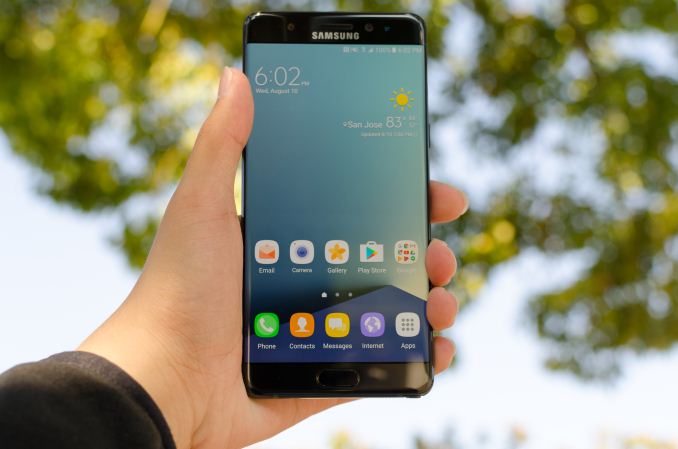
Samsung made it official today that it is suspending all sales and exchanges of its beleaguered Galaxy Note7 smartphone, and it is also asking all partners to do the same.

After reports of several phones catching on fire after it initially went on sale, Samsung initiated a global recall while it investigated the source of the problem, which traced the issue to defective batteries from a specific supplier (Samsung sources batteries from more than one supplier). With the problem seemingly solved, Samsung initiated an exchange program where customers could trade in their defective Note7s for new, supposedly safe, ones or a new Galaxy S7 or S7 edge instead.

Unfortunately, it did not take long for fresh reports of battery fires to surface. Several of the replacement Note7s have caught fire too, including one that forced a Southwest Airlines flight in Louisville, Kentucky to be evacuated on October 5th. Another replacement Note7 caught fire in a Farmington, Minnesota girl’s hand on October 7th.

Here’s Samsung’s official statement:

We are working with the US Consumer Product Safety Commission (CPSC) to investigate the recently reported cases involving the Galaxy Note7. Because consumers’ safety remains our top priority, Samsung will ask all carrier and retail partners globally to stop sales and exchanges of the Galaxy Note7 while the investigation is taking place.
 
We remain committed to working diligently with the CPSC, carriers and our retail partners to take all necessary steps to resolve the situation. Consumers with an original Galaxy Note7 or replacement Galaxy Note7 should power down and take advantage of the remedies available, including a refund at their place of purchase. For more information, consumers should visit samsung.com/us/note7recall or contact 1-844-365-6197.

These new incidents suggest that the Note7’s issue is not limited to a single battery supplier like Samsung first thought. The Note7 is clearly a safety risk at this point, and we recommend that anyone that currently owns a Note7 heed Samsung’s advice and immediately power down the device and store it in a fire-safe location until it can be returned or exchanged.
The Huawei Honor 8 Review

Huawei’s first foray into the US smartphone market was with the Honor 5X, a lower-cost device with a well-balanced design. Encouraged by its initial reception, Huawei is back with a new device for the US—the Honor 8. While the Honor 5X hit…

The Huawei Honor 8 Review

Huawei’s first foray into the US smartphone market was with the Honor 5X, a lower-cost device with a well-balanced design. Encouraged by its initial reception, Huawei is back with a new device for the US—the Honor 8. While the Honor 5X hit…

GIGABYTE Updates BRIX SFF PCs with Intel’s Kaby Lake CPUs

GIGABYTE Updates BRIX SFF PCs with Intel’s Kaby Lake CPUs

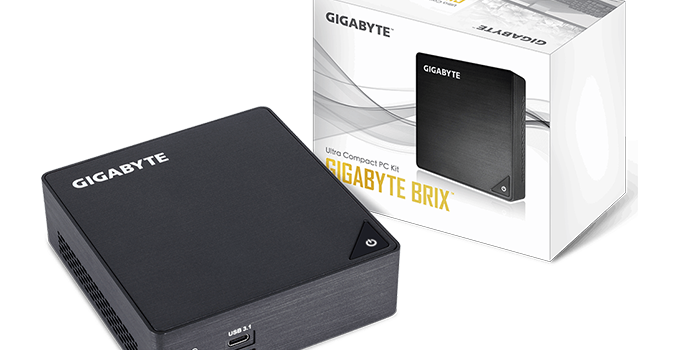
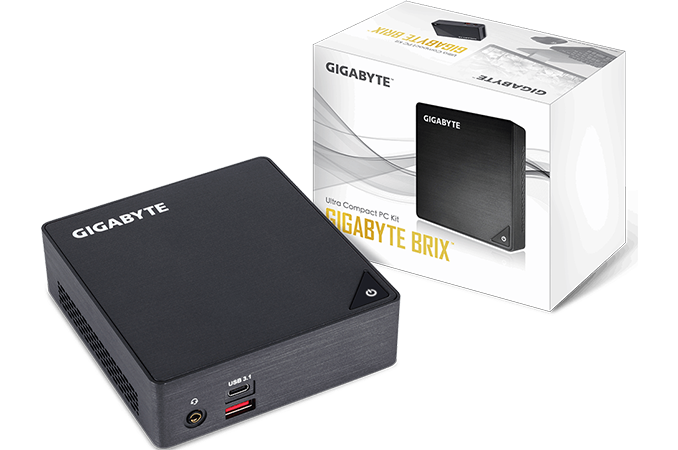
GIGABYTE has updated its BRIX family of small form-factor PCs with Intel’s latest Core processors featuring the optimized Kaby Lake microarchitecture. The new systems are promoted to offer better performance than their predecessors, but are otherwise identical to BRIX PC powered by Intel’s Skylake processors: they support DDR4-2133 memory, M.2-2280 NVMe SSDs, 802.11ac Wi-Fi, USB Type-C connectors and use Intel NICs. Apart from performance, the notable improvement the new BRIX systems have are HDMI 2.0 outputs which we suspect to be via provided via an onboard LSPCON.

As Intel’s 7th generation Kaby Lake-U CPUs are drop-in compatible with motherboards supporting the Skylake-U chips, GIGABYTE uses exactly the same chassis for the new BRIX PCs featuring previous-gen processors: one is 0.46 L in volume and another is a bit larger at 0.6 L. Meanwhile, the new PCs also have better CPU and GPU performance due to higher frequency and improved architecture. Besides, the latest BRIX PCs come with HDMI 2.0 outputs, thus supporting 4K (4096×2160 pixels at 60 Hz) resolution (the HDCP 2.2 tech compulsory for certain content is supported). By contrast, the predecessors of the new BRIX systems only had HDMI 1.4b connectors (they still had mDP 1.2 ports with 4Kp60 support).


GIGABYTE BRIX SFF PCs Based on Intel’s Kaby Lake CPUs
  0.6 L with 2.5-in
‘HA’
0.46 L without 2.5-in
‘A’
  GB-BKi7HA-7500 GB-BKi5HA-7200 GB-BKi3HA-7100 GB-BKi7A-7500 GB-BKi5A-7200 GB-BKi3A-7100
CPU i7-7500U
2C/4T
2.7 GHz
3.7 GHz
i5-7200U
2C/4T
2.5 GHz
3.1 GHz
i3-7100U
2C/4T
2.4 GHz
i7-7500U
2C/4T
2.7 GHz
3.7 GHz
i5-7200U
2C/4T
2.5 GHz
3.1 GHz
i3-7100U
2C/4T
2.4 GHz
GPU HD Graphics 620
24 EUs
up to 1050 MHz
RAM 2×DDR4-2133 SO-DIMMs (up to 32 GBs)
SSD Up to M.2-2280 SSDs
HDD 2.5″/9.5 mm
GbE Intel i219LM
Wi-Fi Intel 3168 1×1 802.11ac + BT 4.2
(via M.2 2230 card)
I/O USB 3.1 (10 Gbps) via ASMedia ASM1142
1×USB 3.1 Type-C
1×USB 3.1 Type-A
2×USB 3.0 Type-A
Video 1×HDMI 2.0 (HDCP2.2) via LSPCon
1×DisplayPort 1.2
Audio Realtek ALC255 (ALC3234, an ALC268 variant)
TRRS and HDMI connectors
Size H: 46.8 mm
W: 112.6 mm
L: 119.4 mm
H: 34.4 mm
W: 112.6 mm
L: 119.4mm
Full
Specs
GB-BKi7HA-7500 GB-BKi5A-7200 GB-BKi3A-7100 GB-BKi7A-7500 GB-BKi5HA-7200 GB-BKi3HA-7100

The audio codec is perhaps a downside, with a laptop-class ALC255 in use, however we see an Intel NIC on board which is typically a requirement for embedded management systems. I would suspect that GIGABYTE will offer these units with vPro enabled hardware/software to specific business customers if needed.

Since GIGABYTE BRIX SFF systems are barebones, end-users or systems integrators will have to equip them with their own DDR4-2133 SO-DIMM memory, an M.2 SSD and/or a 2.5” hard drive (0.6 L BRIX PCs only). Since the computers are based on Intel’s Core i-series mobile processors in BGA packaging, they cannot be upgraded with better CPUs and GPUs. As there’s no Thunderbolt 3, there’s no provision for external GPUs with Kaby Lake at this time.

GIGABYTE did not announce recommended prices or release dates of the new BRIX systems, but MSRPs should be similar compared to existing SFF PCs based on Intel’s Skylake processors. As for availability, typically we see devices like this on sale in 2-4 weeks after the manufacturer lists them on their website.

GIGABYTE Updates BRIX SFF PCs with Intel’s Kaby Lake CPUs

GIGABYTE Updates BRIX SFF PCs with Intel’s Kaby Lake CPUs

GIGABYTE has updated its BRIX family of small form-factor PCs with Intel’s latest Core processors featuring the optimized Kaby Lake microarchitecture. The new systems are promoted to offer better performance than their predecessors, but are otherwise identical to BRIX PC powered by Intel’s Skylake processors: they support DDR4-2133 memory, M.2-2280 NVMe SSDs, 802.11ac Wi-Fi, USB Type-C connectors and use Intel NICs. Apart from performance, the notable improvement the new BRIX systems have are HDMI 2.0 outputs which we suspect to be via provided via an onboard LSPCON.

As Intel’s 7th generation Kaby Lake-U CPUs are drop-in compatible with motherboards supporting the Skylake-U chips, GIGABYTE uses exactly the same chassis for the new BRIX PCs featuring previous-gen processors: one is 0.46 L in volume and another is a bit larger at 0.6 L. Meanwhile, the new PCs also have better CPU and GPU performance due to higher frequency and improved architecture. Besides, the latest BRIX PCs come with HDMI 2.0 outputs, thus supporting 4K (4096×2160 pixels at 60 Hz) resolution (the HDCP 2.2 tech compulsory for certain content is supported). By contrast, the predecessors of the new BRIX systems only had HDMI 1.4b connectors (they still had mDP 1.2 ports with 4Kp60 support).


GIGABYTE BRIX SFF PCs Based on Intel’s Kaby Lake CPUs
  0.6 L with 2.5-in
‘HA’
0.46 L without 2.5-in
‘A’
  GB-BKi7HA-7500 GB-BKi5HA-7200 GB-BKi3HA-7100 GB-BKi7A-7500 GB-BKi5A-7200 GB-BKi3A-7100
CPU i7-7500U
2C/4T
2.7 GHz
3.7 GHz
i5-7200U
2C/4T
2.5 GHz
3.1 GHz
i3-7100U
2C/4T
2.4 GHz
i7-7500U
2C/4T
2.7 GHz
3.7 GHz
i5-7200U
2C/4T
2.5 GHz
3.1 GHz
i3-7100U
2C/4T
2.4 GHz
GPU HD Graphics 620
24 EUs
up to 1050 MHz
RAM 2×DDR4-2133 SO-DIMMs (up to 32 GBs)
SSD Up to M.2-2280 SSDs
HDD 2.5″/9.5 mm
GbE Intel i219LM
Wi-Fi Intel 3168 1×1 802.11ac + BT 4.2
(via M.2 2230 card)
I/O USB 3.1 (10 Gbps) via ASMedia ASM1142
1×USB 3.1 Type-C
1×USB 3.1 Type-A
2×USB 3.0 Type-A
Video 1×HDMI 2.0 (HDCP2.2) via LSPCon
1×DisplayPort 1.2
Audio Realtek ALC255 (ALC3234, an ALC268 variant)
TRRS and HDMI connectors
Size H: 46.8 mm
W: 112.6 mm
L: 119.4 mm
H: 34.4 mm
W: 112.6 mm
L: 119.4mm
Full
Specs
GB-BKi7HA-7500 GB-BKi5A-7200 GB-BKi3A-7100 GB-BKi7A-7500 GB-BKi5HA-7200 GB-BKi3HA-7100

The audio codec is perhaps a downside, with a laptop-class ALC255 in use, however we see an Intel NIC on board which is typically a requirement for embedded management systems. I would suspect that GIGABYTE will offer these units with vPro enabled hardware/software to specific business customers if needed.

Since GIGABYTE BRIX SFF systems are barebones, end-users or systems integrators will have to equip them with their own DDR4-2133 SO-DIMM memory, an M.2 SSD and/or a 2.5” hard drive (0.6 L BRIX PCs only). Since the computers are based on Intel’s Core i-series mobile processors in BGA packaging, they cannot be upgraded with better CPUs and GPUs. As there’s no Thunderbolt 3, there’s no provision for external GPUs with Kaby Lake at this time.

GIGABYTE did not announce recommended prices or release dates of the new BRIX systems, but MSRPs should be similar compared to existing SFF PCs based on Intel’s Skylake processors. As for availability, typically we see devices like this on sale in 2-4 weeks after the manufacturer lists them on their website.