Vik


Roku Unveils 2016 Streaming Media Players with 4Kp60 and HDR Support

Roku Unveils 2016 Streaming Media Players with 4Kp60 and HDR Support

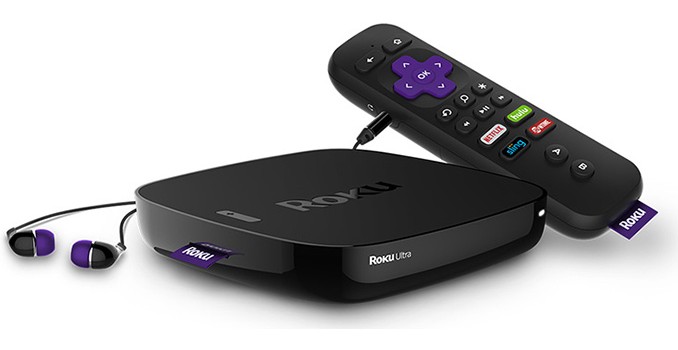
Roku this week introduced a new family of five streaming media players for various needs and customers. The new affordable players support 1080p HD video streaming and some of them are even compatible with older TVs with composite inputs. The more advanced players support streaming of 4Kp60 content (3840×2160 resolution at 60 fps) and the high-end models even supports HDR10 metadata, which will be useful for those who would like to watch 4Kp60 HDR video and have appropriate TVs.

The fifth generation Roku streaming media players run the proprietary Roku OS and support dozens of video streaming services, including those from Amazon, BBC, Google, HBO, Hulu, Netflix, Vudu and so on. The set-top-boxes are self-contained devices that are connected using an HDMI input to TVs and can be operated using bundled remote controls. Depending on video output capabilities and feature set, pricing of the new players ranges from $30 to $130.

The 2016 Roku Streaming Player Lineup
  Express Express+ Streaming
Stick
Premiere Premiere+ Ultra
SoC Unknown Broadcom BCM2836 (quad-core, 900 MHz) Unknown SoC with four cores and UHD video capabilities.
Storage 256 MB NOR flash Unknown Flash
microSD
USB
Flash
microSD
USB
Wi-Fi 802.11n Dual-band 802.11ac with MIMO
Ethernet None 100 Mbps
Video Output Connector HDMI 1.4 HDMI 1.4
A/V Out
HDMI 1.4 HDMI 2.0 HDMI 2.0a
Video Output Resolution 720p
1080p
480p
720p
1080p
720p
1080p
1080p
4Kp60
Video Up-Conversion 720p to 1080p on HDTVs Unknown 720p to 1080p on HDTVs

720p/1080p to 4Kp60 on UHDTVs

HDR None HDR10
Audio Output HDMI HDMI
A/V Out
HDMI HDMI
Optical
Audio Features Dolby Audio pass through via HDMI DA pass through via HDMI/optical
Remote IR Wi-Fi Direct IR Wi-Fi Direct with headphone jack.

Player includes IR receiver.

Wi-Fi Direct with headphone jack, voice search.

Player includes IR receiver.

USB Media Formats None HEVC/H.265
VP9
H.264

AAC
MP3

JPG
PNG

HEVC/H.265
VP9
H.264

AAC
MP3
ALAC
FLAC
PCM
AC3
EAC3

JPG
PNG
GIF

Power Consumption < 2.4 W 3 W < 4.5 W
Price $30 $40 $50 $80 $100 $130

The most affordable STBs from the new lineup are the Roku Express and Roku Express+ players, which connect to 802.11n Wi-Fi, support up to 1080p video and retail for $30 and $40, respectively. The Roku Express+ version is especially notable here as it’s the only new player from the company in the last two years to support RCA composite video for older, pre-HDMI televisions. Meanwhile the Roku Premier series complements the company’s Streaming Stick product released earlier this year, which has similar capabilities, but is more portable and expensive ($50).

The considerably more advanced Roku Premiere, Roku Premiere+ and Roku Ultra are based on more powerful SoCs with four CPU cores to enable 4Kp60 video decoding as well as additional functionality. Furthermore, the premium players also feature Wi-Fi 802.11ac MIMO dual-band connectivity. Among the higher-end players, the Roku Premiere+ and the Roku Ultra also support displaying HDR video via the HDR10 standard (but note that Dolby Vision is not supported). In addition, both players are also equipped with microSD card readers for additional channel storage and USB ports for local playback. The baseline 4Kp60 Premiere STB goes for $80, while the HDR-capable Premier+ player costs $100. Meanwhile, the top-of-the-range Roku Ultra is available for $130. For additional $30, owners will get a more advanced remote with a speaker (for the lost remote finder feature), a digital optical audio port as well as improved support for lossless audio formats like ALAC or FLAC (but no Dolby Atmos).

The new Roku Express, Roku Premiere, Roku Premiere+ and Roku Ultra STBs will be available in stores on October 9 and can be pre-ordered immediately. The Roku Express+ will be sold exclusively at Walmart.

The SilverStone SX700-LPT SFX 700W PSU Review

In the interest of minimizing space and noise, living room gaming PCs often require compact, high performance PSUs. Today we are taking a look at the SX700-LPT from SilverStone, an 80Plus Platinum certified SFX PSU with a power output of 700 Watts. As…

The SilverStone SX700-LPT SFX 700W PSU Review

In the interest of minimizing space and noise, living room gaming PCs often require compact, high performance PSUs. Today we are taking a look at the SX700-LPT from SilverStone, an 80Plus Platinum certified SFX PSU with a power output of 700 Watts. As…

ADATA Launches XPG SX8000: High-End M.2 NVMe SSD Featuring 3D MLC NAND

ADATA Launches XPG SX8000: High-End M.2 NVMe SSD Featuring 3D MLC NAND

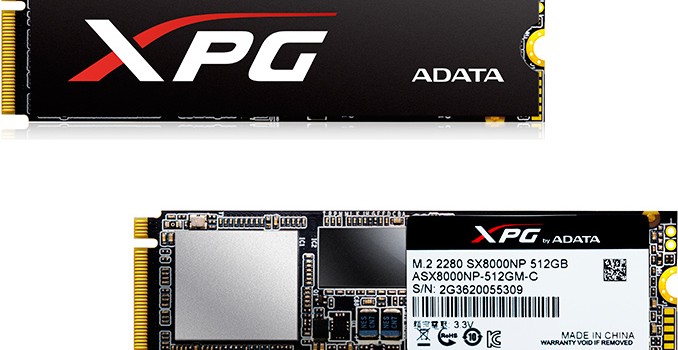
ADATA on Thursday introduced its first lineup of SSDs powered by 3D MLC NAND flash memory. The XPG SX8000 drives promise up to 2.4 GB/s read speed as well as the enhanced reliability of 3D NAND.

ADATA’s XPG SX8000 lineup of SSDs will include 128 GB, 256 GB, 512 GB and 1 TB configurations, offering different levels of performance at different price points. The drives are based on Silicon Motion’s SM2260 controller (which sports two ARM Cortex cores, has eight NAND flash channels, LDPC ECC technology, 256-bit AES support and so on) and 3D MLC NAND flash from an unknown manufacturer (IMFT is the most likely supplier, but SK Hynix is a possible supplier as well). The drives come in M.2-2280 form-factor and use PCIe 3.0 x4 interface.

The manufacturer rates XPG SX8000’s sequential read performance at up to 2400 MB/s and its write performance at up to 1000 MB/s when pseudo-SLC caching is used. As for random performance, the new drives can deliver up to 100K/140K 4KB read/write IOPS.  It is important to note that the 128 GB model is considerably slower than other SKUs in the family and the drive needs 512 GB configuration to demonstrate all the capabilities of the SM2260 controller.

ADATA XPG SX8000 Specifications
Capacity 128 GB 256 GB 512 GB 1 TB
Model Number ASX8000NP-128GM-C ASX8000NP-256GM-C ASX8000NP-512GM-C ASX8000NP-
1TM-C
Controller Silicon Motion SM2260
NAND Flash 3D MLC NAND
Form-Factor, Interface M.2-2280, PCIe 3.0 x4, NVMe 1.2
Sequential Read 1000 MB/s 2000 MB/s 2400 MB/s
Sequential Write 300 MB/s 600 MB/s 1000 MB/s
Random Read IOPS 45K IOPS 80K IOPS 100K IOPS
Random Write IOPS 75K IOPS 130K IOPS 140K IOPS
Pseudo-SLC Caching Supported
DRAM Buffer Yes, capacity unknown
TCG Opal Encryption No
Power Management DevSleep, Slumber
Warranty 5 years
MTBF 2,000,000 hours
MSRP Unknown Unknown Unknown Unknown

Since the SX8000 SSDs belong to ADATA’s flagship XPG lineup, the company ships such drives with a five-year warranty. Moreover, thanks to improved reliability of 3D NAND compared to traditional planar NAND made using ultra-small process technology, the manufacturer also rates the XPG SX8000 for two million hours MTBF, 0.5 million (or 33%) higher compared to previous-gen XPG SSDs.

For several years, Samsung has been the only supplier of high-end SSDs based on 3D MLC NAND flash memory, offering high performance and improved reliability. Recently companies like IMFT started mass production of their 3D NAND for SSDs and independent makers of drives can now release their own SSDs featuring 3D MLC flash. Being one of the largest suppliers of NAND-based storage devices, ADATA is naturally among the first to offer advanced SSDs powered by 3D MLC with its XPG SX8000 family. But what is noteworthy is that last month Micron (which co-owns IMFT with Intel) decided to cancel its 3D MLC/SM2260-based Crucial Ballistix TX3 M.2 SSDs for an undisclosed reason. As a result, ADATA gets to join a rather exclusive club of non-Samsung M.2 NVMe drive vendors. Unfortuantely however, prices have yet to be announced, so we’ll have to see if (and by how much) ADATA pushes prices below what Toshiba and Samsung have been charging for their own M.2 NVMe SSDs.

Finally, along with today’s release, ADATA is also prepping an upgraded version of the XPG SX8000 due in late October, which will feature increased performance. The upcoming SSDs are primarily geared towards desktop users and will require a heatsink, making them incompatible with the vast majority of notebooks.

ADATA Launches XPG SX8000: High-End M.2 NVMe SSD Featuring 3D MLC NAND

ADATA Launches XPG SX8000: High-End M.2 NVMe SSD Featuring 3D MLC NAND

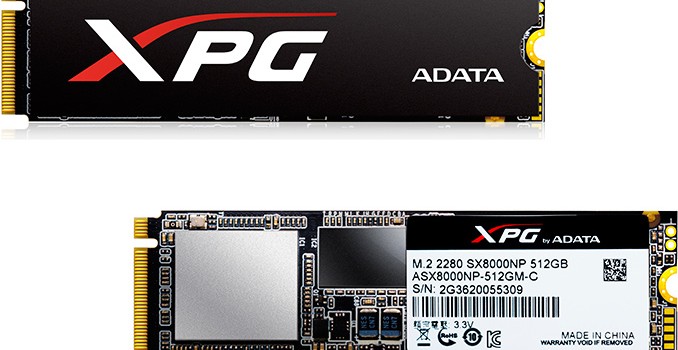
ADATA on Thursday introduced its first lineup of SSDs powered by 3D MLC NAND flash memory. The XPG SX8000 drives promise up to 2.4 GB/s read speed as well as the enhanced reliability of 3D NAND.

ADATA’s XPG SX8000 lineup of SSDs will include 128 GB, 256 GB, 512 GB and 1 TB configurations, offering different levels of performance at different price points. The drives are based on Silicon Motion’s SM2260 controller (which sports two ARM Cortex cores, has eight NAND flash channels, LDPC ECC technology, 256-bit AES support and so on) and 3D MLC NAND flash from an unknown manufacturer (IMFT is the most likely supplier, but SK Hynix is a possible supplier as well). The drives come in M.2-2280 form-factor and use PCIe 3.0 x4 interface.

The manufacturer rates XPG SX8000’s sequential read performance at up to 2400 MB/s and its write performance at up to 1000 MB/s when pseudo-SLC caching is used. As for random performance, the new drives can deliver up to 100K/140K 4KB read/write IOPS.  It is important to note that the 128 GB model is considerably slower than other SKUs in the family and the drive needs 512 GB configuration to demonstrate all the capabilities of the SM2260 controller.

ADATA XPG SX8000 Specifications
Capacity 128 GB 256 GB 512 GB 1 TB
Model Number ASX8000NP-128GM-C ASX8000NP-256GM-C ASX8000NP-512GM-C ASX8000NP-
1TM-C
Controller Silicon Motion SM2260
NAND Flash 3D MLC NAND
Form-Factor, Interface M.2-2280, PCIe 3.0 x4, NVMe 1.2
Sequential Read 1000 MB/s 2000 MB/s 2400 MB/s
Sequential Write 300 MB/s 600 MB/s 1000 MB/s
Random Read IOPS 45K IOPS 80K IOPS 100K IOPS
Random Write IOPS 75K IOPS 130K IOPS 140K IOPS
Pseudo-SLC Caching Supported
DRAM Buffer Yes, capacity unknown
TCG Opal Encryption No
Power Management DevSleep, Slumber
Warranty 5 years
MTBF 2,000,000 hours
MSRP Unknown Unknown Unknown Unknown

Since the SX8000 SSDs belong to ADATA’s flagship XPG lineup, the company ships such drives with a five-year warranty. Moreover, thanks to improved reliability of 3D NAND compared to traditional planar NAND made using ultra-small process technology, the manufacturer also rates the XPG SX8000 for two million hours MTBF, 0.5 million (or 33%) higher compared to previous-gen XPG SSDs.

For several years, Samsung has been the only supplier of high-end SSDs based on 3D MLC NAND flash memory, offering high performance and improved reliability. Recently companies like IMFT started mass production of their 3D NAND for SSDs and independent makers of drives can now release their own SSDs featuring 3D MLC flash. Being one of the largest suppliers of NAND-based storage devices, ADATA is naturally among the first to offer advanced SSDs powered by 3D MLC with its XPG SX8000 family. But what is noteworthy is that last month Micron (which co-owns IMFT with Intel) decided to cancel its 3D MLC/SM2260-based Crucial Ballistix TX3 M.2 SSDs for an undisclosed reason. As a result, ADATA gets to join a rather exclusive club of non-Samsung M.2 NVMe drive vendors. Unfortuantely however, prices have yet to be announced, so we’ll have to see if (and by how much) ADATA pushes prices below what Toshiba and Samsung have been charging for their own M.2 NVMe SSDs.

Finally, along with today’s release, ADATA is also prepping an upgraded version of the XPG SX8000 due in late October, which will feature increased performance. The upcoming SSDs are primarily geared towards desktop users and will require a heatsink, making them incompatible with the vast majority of notebooks.