Vik


NBASE-T Alliance Receives Boost with IEEE P802.3bz Approval for 2.5G/5G Ethernet
NBASE-T Alliance Receives Boost with IEEE P802.3bz Approval for 2.5G/5G Ethernet

Wired networks relying on traditional Cat 5e and Cat 6 cables (at their maximum channel length of 100m) have been limited to 1 Gbps so far. At the other end of the spectrum, 10 Gbps required augmented cables (Cat 6A or better) for transmission lengths typical in enterprise and business scenarios. Despite 10 Gbps Ethernet having been around for more than 10 years now, cost and power consumption aspects have limited its adoption on a wider basis. The NBASE-T Alliance was created to bring in support for speeds between 1 and 10 Gbps, while retaining the use of existing cabling infrastructure.

NBASE-T has become popular because it can act as an effective wired backhaul for 802.11ac wireless access points. With theoretical speeds exceeding 1 Gbps, the time and environment are right for technology that can replace the existing 1 Gbps network ports. 10GBASE-T is not really an effective solution because of the cost as well as power requirements aspect. Almost all enterprise access points are powered using Power over Ethernet (PoE). The IEEE 802.3af-2003 standard allows for up to 15.4 W (12.95 W assured), while PoE+ (IEEE 802.3at-2009) can provide up to 25.5 W. However, the 10GBASE-T standard doesn’t currently support Power over Ethernet, even though it is being considered. Therefore, 10GBASE-T has not turned out to be an effective and universal solution to this challenge despite the bandwidth availability. This is where the 2.5 Gbps and 5 Gbps options provided by NBASE-T equipment become attractive. Some NBASE-T switches already implement PoE / PoE+, and are effective solutions for driving compatible 802.11ac wireless access points.
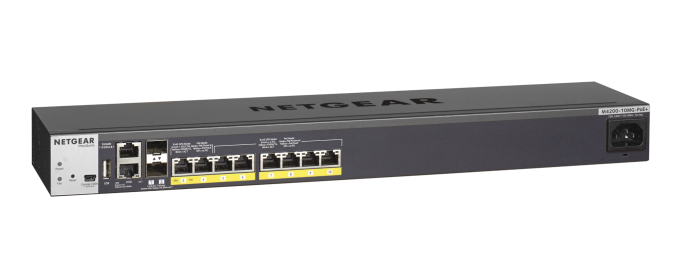
Netgear’s M4200-10MG-PoE+ Managed Intelligent Edge Series Switch with 5G/2.5G Switching for High-Speed Wave 2 802.11ac Deployments

On September 23, 2016, the IEEE P 802.3bz 2.4G/5GBASE-T Task Force (which started work in March 2015) ratified the IEEE P802.3bz Standard for Ethernet Amendment: Media Access Control Parameters, Physical Layers and Management Parameters for 2.5 Gb/s and 5 Gb/s Operation. It allows 2.5 Gbps operation over standard Cat 5e cables, 5 Gbps over Cat 6, and 5 Gbps over Cat 5e under select conditions. All of these are up to at least 100m channel lengths.
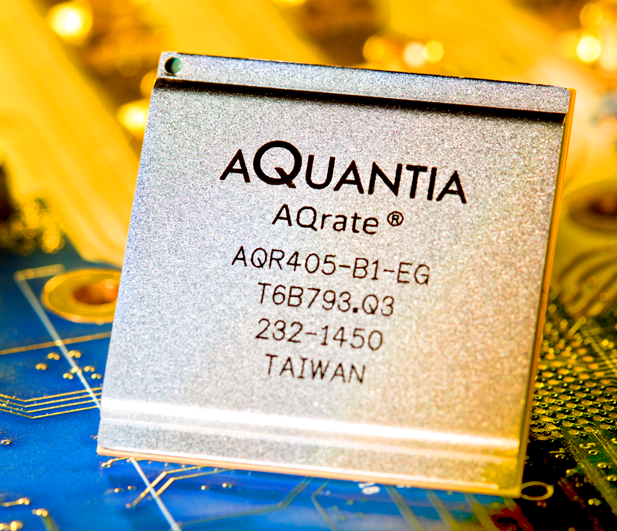
The AQrate Family of NBASE-T PHYs from AQUANTIA – One of the Leading Market Players

The ratification is a big boost for the NBASE-T Alliance. The standardization also lends more credence to the NBASE-T plugfests scheduled to be conducted in October 2016. It will also bring more 2.5G/5GBASE-T products into the market, bring prices down and drive up adoption. The most important aspect is that the existing cabling infrastructure doesn’t need a overhaul. This makes it very attractive for business and enterprise users.

From a power user / enthusiast viewpoint, NBASE-T equipment will be a good upgrade. However, readers planning on wiring up their homes would do well to go with Cat 6a cables for future-proofing purposes. 10GBASE-T products (both switches and motherboards / PCIe cards) for enthusiasts are already in the market, thanks to vendors like Asus. NBASE-T adoption will mainly be dictated by business and enterprise users in the near future. As local bandwidth requirements increase in the premises of the average consumer, 2.5G/5GBASE-T will surely find its way into networking gear for traditional consumers also.
NBASE-T Alliance Receives Boost with IEEE P802.3bz Approval for 2.5G/5G Ethernet

NBASE-T Alliance Receives Boost with IEEE P802.3bz Approval for 2.5G/5G Ethernet

Wired networks relying on traditional Cat 5e and Cat 6 cables (at their maximum channel length of 100m) have been limited to 1 Gbps so far. At the other end of the spectrum, 10 Gbps required augmented cables (Cat 6A or better) for transmission lengths typical in enterprise and business scenarios. Despite 10 Gbps Ethernet having been around for more than 10 years now, cost and power consumption aspects have limited its adoption on a wider basis. The NBASE-T Alliance was created to bring in support for speeds between 1 and 10 Gbps, while retaining the use of existing cabling infrastructure.

NBASE-T has become popular because it can act as an effective wired backhaul for 802.11ac wireless access points. With theoretical speeds exceeding 1 Gbps, the time and environment are right for technology that can replace the existing 1 Gbps network ports. 10GBASE-T is not really an effective solution because of the cost as well as power requirements aspect. Almost all enterprise access points are powered using Power over Ethernet (PoE). The IEEE 802.3af-2003 standard allows for up to 15.4 W (12.95 W assured), while PoE+ (IEEE 802.3at-2009) can provide up to 25.5 W. However, the 10GBASE-T standard doesn’t currently support Power over Ethernet, even though it is being considered. Therefore, 10GBASE-T has not turned out to be an effective and universal solution to this challenge despite the bandwidth availability. This is where the 2.5 Gbps and 5 Gbps options provided by NBASE-T equipment become attractive. Some NBASE-T switches already implement PoE / PoE+, and are effective solutions for driving compatible 802.11ac wireless access points.

Netgear’s M4200-10MG-PoE+ Managed Intelligent Edge Series Switch with 5G/2.5G Switching for High-Speed Wave 2 802.11ac Deployments

On September 23, 2016, the IEEE P 802.3bz 2.4G/5GBASE-T Task Force (which started work in March 2015) ratified the IEEE P802.3bz Standard for Ethernet Amendment: Media Access Control Parameters, Physical Layers and Management Parameters for 2.5 Gb/s and 5 Gb/s Operation. It allows 2.5 Gbps operation over standard Cat 5e cables, 5 Gbps over Cat 6, and 5 Gbps over Cat 5e under select conditions. All of these are up to at least 100m channel lengths.

The AQrate Family of NBASE-T PHYs from AQUANTIA – One of the Leading Market Players

The ratification is a big boost for the NBASE-T Alliance. The standardization also lends more credence to the NBASE-T plugfests scheduled to be conducted in October 2016. It will also bring more 2.5G/5GBASE-T products into the market, bring prices down and drive up adoption. The most important aspect is that the existing cabling infrastructure doesn’t need a overhaul. This makes it very attractive for business and enterprise users.

From a power user / enthusiast viewpoint, NBASE-T equipment will be a good upgrade. However, readers planning on wiring up their homes would do well to go with Cat 6a cables for future-proofing purposes. 10GBASE-T products (both switches and motherboards / PCIe cards) for enthusiasts are already in the market, thanks to vendors like Asus. NBASE-T adoption will mainly be dictated by business and enterprise users in the near future. As local bandwidth requirements increase in the premises of the average consumer, 2.5G/5GBASE-T will surely find its way into networking gear for traditional consumers also.
USB-IF Publishes Audio over USB Type-C Specifications

USB-IF Publishes Audio over USB Type-C Specifications

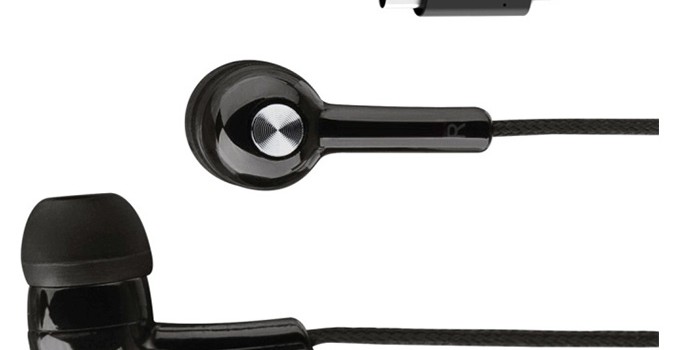
The USB Implementers Forum this week published the USB Audio Device Class 3.0 specification, which standardizes audio over USB Type-C interface. The new spec enables hardware makers to eliminate traditional 3.5mm mini-jacks from their devices and use …

USB-IF Publishes Audio over USB Type-C Specifications

USB-IF Publishes Audio over USB Type-C Specifications

The USB Implementers Forum this week published the USB Audio Device Class 3.0 specification, which standardizes audio over USB Type-C interface. The new spec enables hardware makers to eliminate traditional 3.5mm mini-jacks from their devices and use …

Roku Unveils 2016 Streaming Media Players with 4Kp60 and HDR Support

Roku Unveils 2016 Streaming Media Players with 4Kp60 and HDR Support

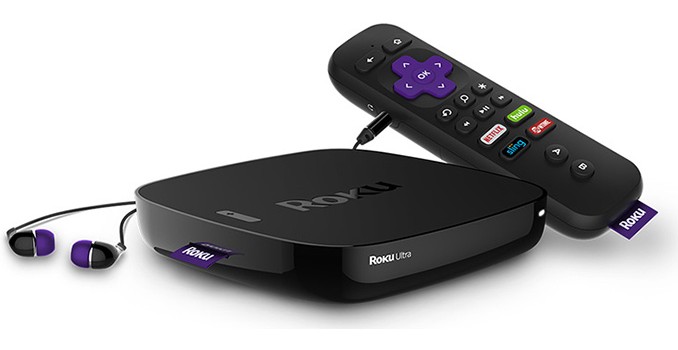
Roku this week introduced a new family of five streaming media players for various needs and customers. The new affordable players support 1080p HD video streaming and some of them are even compatible with older TVs with composite inputs. The more advanced players support streaming of 4Kp60 content (3840×2160 resolution at 60 fps) and the high-end models even supports HDR10 metadata, which will be useful for those who would like to watch 4Kp60 HDR video and have appropriate TVs.

The fifth generation Roku streaming media players run the proprietary Roku OS and support dozens of video streaming services, including those from Amazon, BBC, Google, HBO, Hulu, Netflix, Vudu and so on. The set-top-boxes are self-contained devices that are connected using an HDMI input to TVs and can be operated using bundled remote controls. Depending on video output capabilities and feature set, pricing of the new players ranges from $30 to $130.

The 2016 Roku Streaming Player Lineup
  Express Express+ Streaming
Stick
Premiere Premiere+ Ultra
SoC Unknown Broadcom BCM2836 (quad-core, 900 MHz) Unknown SoC with four cores and UHD video capabilities.
Storage 256 MB NOR flash Unknown Flash
microSD
USB
Flash
microSD
USB
Wi-Fi 802.11n Dual-band 802.11ac with MIMO
Ethernet None 100 Mbps
Video Output Connector HDMI 1.4 HDMI 1.4
A/V Out
HDMI 1.4 HDMI 2.0 HDMI 2.0a
Video Output Resolution 720p
1080p
480p
720p
1080p
720p
1080p
1080p
4Kp60
Video Up-Conversion 720p to 1080p on HDTVs Unknown 720p to 1080p on HDTVs

720p/1080p to 4Kp60 on UHDTVs

HDR None HDR10
Audio Output HDMI HDMI
A/V Out
HDMI HDMI
Optical
Audio Features Dolby Audio pass through via HDMI DA pass through via HDMI/optical
Remote IR Wi-Fi Direct IR Wi-Fi Direct with headphone jack.

Player includes IR receiver.

Wi-Fi Direct with headphone jack, voice search.

Player includes IR receiver.

USB Media Formats None HEVC/H.265
VP9
H.264

AAC
MP3

JPG
PNG

HEVC/H.265
VP9
H.264

AAC
MP3
ALAC
FLAC
PCM
AC3
EAC3

JPG
PNG
GIF

Power Consumption < 2.4 W 3 W < 4.5 W
Price $30 $40 $50 $80 $100 $130

The most affordable STBs from the new lineup are the Roku Express and Roku Express+ players, which connect to 802.11n Wi-Fi, support up to 1080p video and retail for $30 and $40, respectively. The Roku Express+ version is especially notable here as it’s the only new player from the company in the last two years to support RCA composite video for older, pre-HDMI televisions. Meanwhile the Roku Premier series complements the company’s Streaming Stick product released earlier this year, which has similar capabilities, but is more portable and expensive ($50).

The considerably more advanced Roku Premiere, Roku Premiere+ and Roku Ultra are based on more powerful SoCs with four CPU cores to enable 4Kp60 video decoding as well as additional functionality. Furthermore, the premium players also feature Wi-Fi 802.11ac MIMO dual-band connectivity. Among the higher-end players, the Roku Premiere+ and the Roku Ultra also support displaying HDR video via the HDR10 standard (but note that Dolby Vision is not supported). In addition, both players are also equipped with microSD card readers for additional channel storage and USB ports for local playback. The baseline 4Kp60 Premiere STB goes for $80, while the HDR-capable Premier+ player costs $100. Meanwhile, the top-of-the-range Roku Ultra is available for $130. For additional $30, owners will get a more advanced remote with a speaker (for the lost remote finder feature), a digital optical audio port as well as improved support for lossless audio formats like ALAC or FLAC (but no Dolby Atmos).

The new Roku Express, Roku Premiere, Roku Premiere+ and Roku Ultra STBs will be available in stores on October 9 and can be pre-ordered immediately. The Roku Express+ will be sold exclusively at Walmart.