Vik


HTC Announces Desire 10 Pro and Desire 10 Lifestyle
HTC Announces Desire 10 Pro and Desire 10 Lifestyle

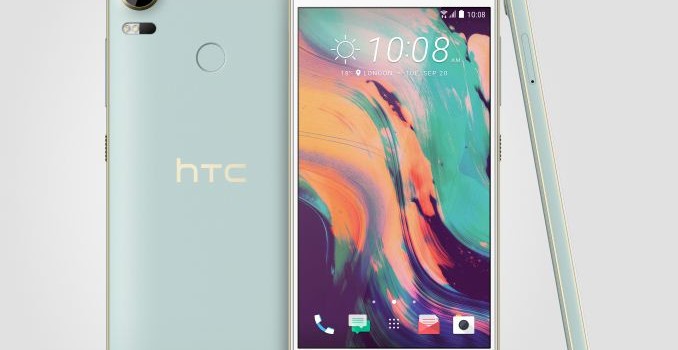
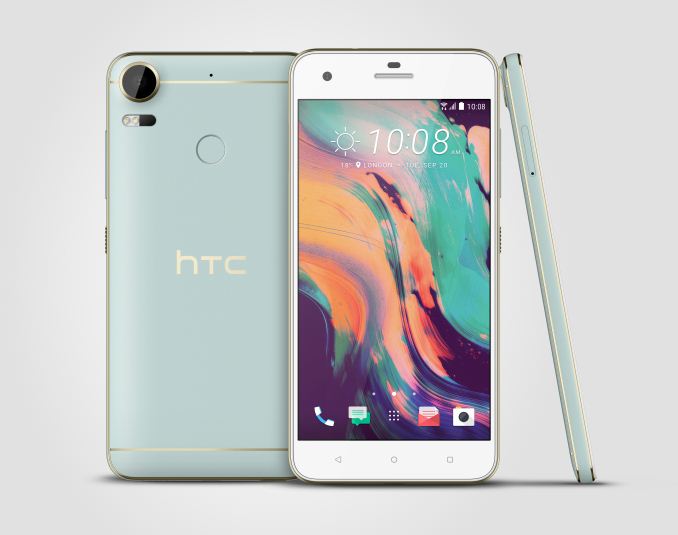
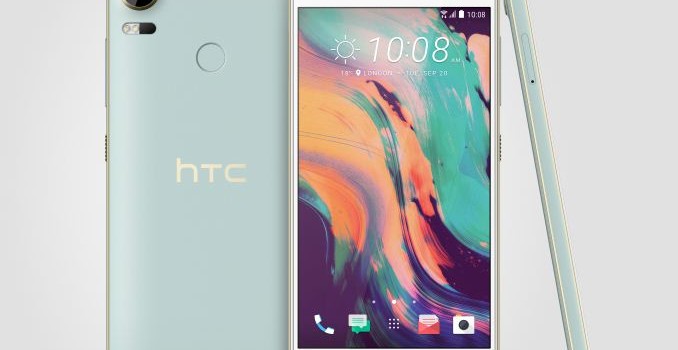
As the holidays approach, OEMs often refresh their device portfolio to make sure that they put their best foot forward as a significant proportion of sales occur towards the end of the year. Today HTC is refreshing their mid-range with the Desire 10. The Desire 10 Pro is the higher-end variant and fits somewhere around the Desire 830, while the Desire 10 Lifestyle is closer to something like the Desire 826. To see what I mean we can take a look at the specs below.

  HTC Desire 10 Lifestyle HTC Desire 10 Pro
SoC Qualcomm Snapdragon 400
4x A7 1.6 GHz
MediaTek Helio P10
8x A53
RAM 2/3GB 3/4GB
NAND 16/32GB NAND + microSD 32/64GB NAND + microSD
Display 5.5” 720p
Super LCD
5.5” 1080p
IPS
Network 2G / 3G / 4G LTE (Category 4 LTE) 2G / 3G / 4G LTE (Category 6 LTE)
Dimensions 156.9 x 76.9 x 7.7mm, 155g 156.5 x 76 x 7.86mm, 165g
Camera 13MP Rear Facing f/2.2 20MP Rear Facing f/2.2, 1.12µm, 1/2.4″ (Toshiba T4KA7)
5MP Front Facing, f/2.2 13MP Front Facing, f/2.2
Battery 2700 mAh (10.4 Whr) 3000 mAh (11.55 Whr)
OS Android 6 w/ HTC Sense
(At Launch)
Android 6 w/ HTC Sense
(At Launch)
Connectivity 802.11b/g/n
BT 4.1
USB2.0, GPS/GLONASS
802.11a/b/g/n,
BT 4.2,
USB2.0, GPS/GLONASS
Fingerprint Sensor N/A Capacitive

For the most part the Desire 10s are both mainly interesting due to the use of stereo external speakers similar to the HTC 10. HTC is also claiming similar levels of sound quality on the 3.5mm output which is likely to differentiate it from competitors on the market.  The Desire 10 Pro uses a MediaTek Helio P10 SoC which should be ok if it’s below 300 USD, but the Desire 10 Lifestyle is targeted to be somewhere around 250 GBP with a Snapdragon 400 which doesn’t really seem to be enough SoC for the target price. The Desire 10 Pro is going to be more expensive than that, which suggests that the value proposition is not necessarily there.

Putting aside value for SoC, HTC is attempting to differentiate with the use of better audio, better design, and things like laser autofocus for the camera. With the audio experience, design, and AF system of the HTC 10 put in this mid-range device HTC is hoping to remain competitive against stiff competition from OEMs like Huawei and Xiaomi. The Desire 10 Lifestyle will be available by the end of September, and the Desire 10 Pro will be available in October. They will be available in Stone Black, Polar White, Royal Blue, and Valentine Lux.

HTC Announces Desire 10 Pro and Desire 10 Lifestyle

HTC Announces Desire 10 Pro and Desire 10 Lifestyle

As the holidays approach, OEMs often refresh their device portfolio to make sure that they put their best foot forward as a significant proportion of sales occur towards the end of the year. Today HTC is refreshing their mid-range with the Desire 10. The Desire 10 Pro is the higher-end variant and fits somewhere around the Desire 830, while the Desire 10 Lifestyle is closer to something like the Desire 826. To see what I mean we can take a look at the specs below.

  HTC Desire 10 Lifestyle HTC Desire 10 Pro
SoC Qualcomm Snapdragon 400
4x A7 1.6 GHz
MediaTek Helio P10
8x A53
RAM 2/3GB 3/4GB
NAND 16/32GB NAND + microSD 32/64GB NAND + microSD
Display 5.5” 720p
Super LCD
5.5” 1080p
IPS
Network 2G / 3G / 4G LTE (Category 4 LTE) 2G / 3G / 4G LTE (Category 6 LTE)
Dimensions 156.9 x 76.9 x 7.7mm, 155g 156.5 x 76 x 7.86mm, 165g
Camera 13MP Rear Facing f/2.2 20MP Rear Facing f/2.2, 1.12µm, 1/2.4″ (Toshiba T4KA7)
5MP Front Facing, f/2.2 13MP Front Facing, f/2.2
Battery 2700 mAh (10.4 Whr) 3000 mAh (11.55 Whr)
OS Android 6 w/ HTC Sense
(At Launch)
Android 6 w/ HTC Sense
(At Launch)
Connectivity 802.11b/g/n
BT 4.1
USB2.0, GPS/GLONASS
802.11a/b/g/n,
BT 4.2,
USB2.0, GPS/GLONASS
Fingerprint Sensor N/A Capacitive

For the most part the Desire 10s are both mainly interesting due to the use of stereo external speakers similar to the HTC 10. HTC is also claiming similar levels of sound quality on the 3.5mm output which is likely to differentiate it from competitors on the market.  The Desire 10 Pro uses a MediaTek Helio P10 SoC which should be ok if it’s below 300 USD, but the Desire 10 Lifestyle is targeted to be somewhere around 250 GBP with a Snapdragon 400 which doesn’t really seem to be enough SoC for the target price. The Desire 10 Pro is going to be more expensive than that, which suggests that the value proposition is not necessarily there.

Putting aside value for SoC, HTC is attempting to differentiate with the use of better audio, better design, and things like laser autofocus for the camera. With the audio experience, design, and AF system of the HTC 10 put in this mid-range device HTC is hoping to remain competitive against stiff competition from OEMs like Huawei and Xiaomi. The Desire 10 Lifestyle will be available by the end of September, and the Desire 10 Pro will be available in October. They will be available in Stone Black, Polar White, Royal Blue, and Valentine Lux.

Enermax D.F. Vegas: Self-Cleaning Fans with LEDs

Enermax D.F. Vegas: Self-Cleaning Fans with LEDs

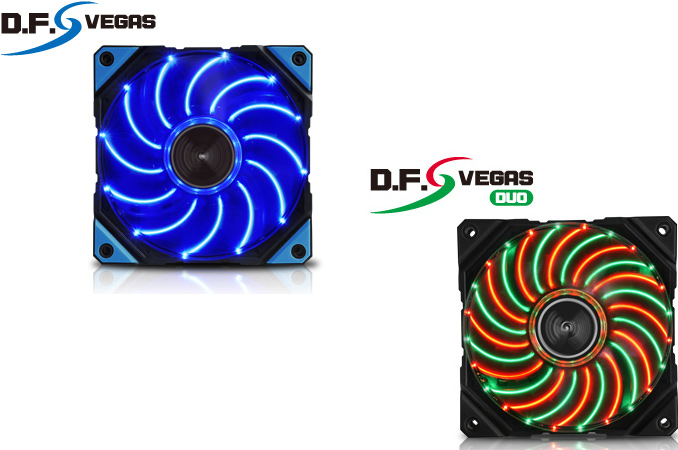
Enermax has announced that they have expanded their lineup of fans with its DFR (dust free rotation) technology, which can clean themselves up from dust, with two new models featuring LEDs. The Enermax D.F. Vegas 120-mm fans with different lighting effects are aimed at modders, who will I suspect will appreciate the self-cleaning mechanism.

Perhaps one of the most annoying things when servicing PCs is removing dust from fans. Dust is definitely not a hygienic compound, but back in the day it was not visually noticeable since PC cases did not have windows and lacked any kind of lighting inside. Today, many enthusiasts run systems with transparent side panels with plenty of lighting effects and dust becomes clearly visible even after a few months of use. Earlier this year Enermax introduced its DFR technology, which they advertise as being able to keep fans relatively clean from dust for longer periods of time. Upon every startup, Enermax’s fans with DFR spin in reverse action at the highest RPM for 10 seconds before resuming their normal operation. While DFR will keep fans and heatsinks a little cleaner, fans that blow air outside of PCs cases will suck the dust into those chassis at every startup, which may not be always optimal.

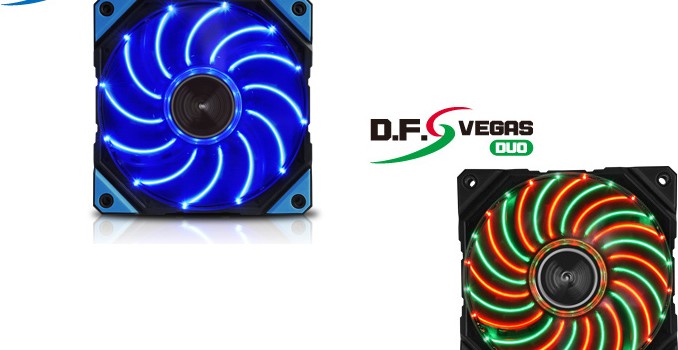
The Enermax D.F.Vegas (UCDFV12P-BL) and D.F.Vegas Duo (UCDFVD12P) support the company’s DFR technology and come with 12 blue or 24 red + green LEDs. The latter can work in different modes (all on, sparkle, flash and Vegas), another feature to be appreciated by modders. The D.F. Vegas series fans feature twister bearing, adjustable peak speed (1100, 1300 or 1500 RPM) to ensure optimal performance (minimum speed is always at 800 RPM) and rubber pads to minimize noise and vibration. Like other premium fans, the D.F.Vegas feature detachable blades for easy cleaning.

Specifications of Enermax D.F.Vegas and D.F.Vegas Duo Fans
(UCDFV12P-BL and UCDFVD12P)
  Ultra Silent Silent Performance
Speed 800 ~ 1100 800 ~ 1300 800 ~ 1500
Airflow (CFM) 33.21 ~ 45.33 33.21 ~ 53.66 33.21 ~ 61.92
Airflow (m3/h) 56.43 ~ 77.02 56.43 ~ 91.17 56.43 ~ 105.20
Static Pressure (mm-H2O) 0.979 ~ 1.297 0.979 ~ 1.425 0.979 ~ 1.898
Noise (dBA) 16 ~ 18 16 ~ 20 16 ~ 22
Input Power 2.5 2.8 3.0
MTBF (hrs) ≧160,000 @ 25oC
Connector 4-pin PWM connector
Dimensions (mm) 120 (W) x 120 (H) x 25 (D)

Enermax did not announce recommended prices for its D.F.Vegas and D.F.Vegas Duo fans, but indicated that they should hit the market in late September. Right now, the company sells its Enermax D.F.Pressure (UCDFP12P) case fans with DFR technology for $16.99 in the U.S. The D.F.Pressure fans are more powerful than the D.F.Vegas fans, but are also considerably noisier at peak speeds.