Vik


Sony Announces Xperia XZ and Xperia X Compact
Sony Announces Xperia XZ and Xperia X Compact

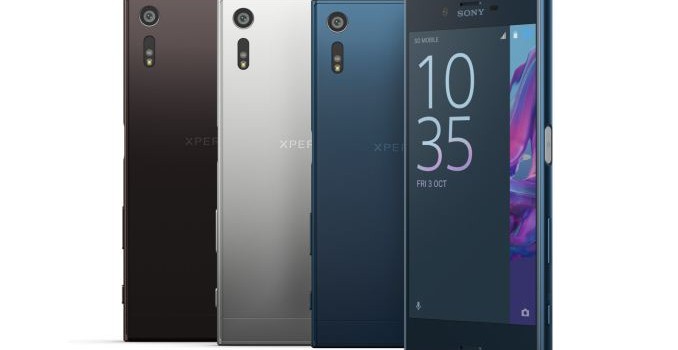
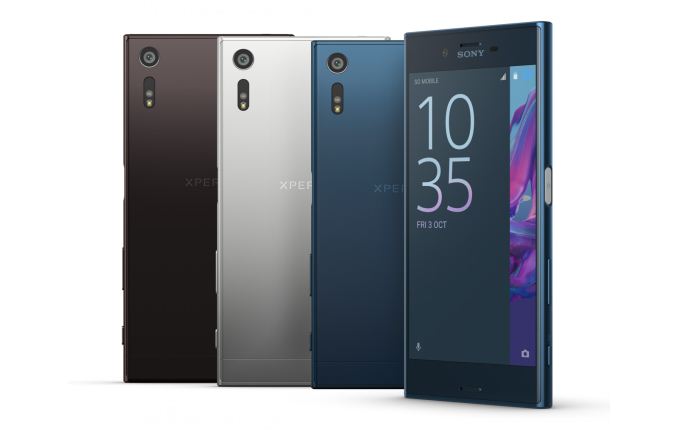
Today at IFA 2016 Sony announced two new phones to flesh out the Xperia X lineup, namely the Xperia XZ and Xperia X Compact.

Starting with the Xperia XZ, it looks like Sony is still sticking with their 6-month refresh cycle for flagship devices as this looks to succeed the Xperia X Performance with a 5.2 inch display, 5-axis video stabilization, improved stereo microphones, and a USB-C port for improved usability. However the SoC remains the Snapdragon 820 similar to the Note7.

Sony Xperia X Family
  Xperia XZ Xperia X Compact Xperia X Performance
SoC Qualcomm Snapdragon 820

2x Kryo @ 2.15GHz
2x Kryo @ 1.59GHz
Adreno 530 @ 624MHz

Qualcomm Snapdragon 650

2x Cortex-A72 @ 1.8Ghz
4x Cortex-A53 @ 1.4GHz
Adreno 510

Qualcomm Snapdragon 820

2x Kryo @ 2.15GHz
2x Kryo @ 1.59GHz
Adreno 530 @ 624MHz

RAM 3GB 3GB 3GB LPDDR4
NAND 32GB/64GB eMMC
+ microSD
32GB eMMC
+ microSD
32GB/64GB eMMC
+ microSD
Display 5.2” 1080p
Triluminos LCD
4.6″ 720p
Triluminos LCD
5” 1080p
Triluminos LCD
Dimensions 146 x 72 x 8.1 mm
161 grams
129 x 65 x 9.5 mm
135 grams
143.7 x 70.4 x 8.7mm
164 grams
Modem Qualcomm X12 (Integrated)
2G / 3G / 4G LTE
Qualcomm X8 (Integrated)
2G / 3G / 4G LTE
Qualcomm X12 (Integrated)
2G / 3G / 4G LTE
SIM Size NanoSIM / Dual NanoSIM NanoSIM NanoSIM
Front Camera 13 MP, 1/3.06” Exmor RS 5 MP, 1/3.06” Exmor RS, f/2.0 13MP f/2.0, 1.12µm
Rear Camera 23 MP, 1/2.3” Exmor RS, Laser AF, PDAF 23 MP, 1/2.3” Exmor RS, Laser AF, PDAF 23MP w/ EIS, f/2.0, 1.12µm, 1/2.3″
Battery 2900 mAh 2700 mAh 2700 mAh (10.4 Whr)
Connectivity 802.11a/b/g/n/ac 2×2 MIMO, BT 4.1 LE, GPS/GNSS, NFC, USB Type-C 802.11a/b/g/n/ac, BT 4.2, GPS/GLONASS, NFC, USB Type-C 802.11a/b/g/n/ac, BT 4.2,
GPS/GLONASS, NFC, micro-USB
Launch OS Android M w/ Xperia UI Android M w/ Xperia UI Android M w/ Xperia UI

In addition to these changes, the Xperia XZ gains laser auto-focus to improve the speed with which it acquires focus in low light as well as an RGBC IR sensor which is used to set white balance. Laser AF is nothing new at this point but it is new to high-end Xperia phones, and similar systems to the RGBC IR sensor have been seen in the Galaxy S7 and LG G5 to enable more accurate white balance settings. Sony is marketing the combination of PDAF on their Exmor RS 23MP sensor, laser AF, and the RGBC IR sensor as their “triple image sensing technology”.

The Xperia XZ also has a 13MP front-facing camera with 22mm equivalent focal length and a max sensitivity of 6400 ISO which is said to improve the quality but I’m a bit skeptical here. The press release also mentions the addition of manual focus and shutter speed which is nice to have as Sony has been relatively late to the party when it comes to implementing these kinds of features. For reference, HTC has done this since the One M8, Samsung since the Galaxy Note5, Apple since the iPhone 6 with third party apps, and LG since the G4.

As far as design goes, the Xperia XZ has an ALKALEIDO metal back cover, though Sony’s photos don’t do a great job highlighting this. The phone is still water resistant – rated IP65/68 – but resistance is emphasized so I can only assume that this will only work reliably against light water exposure such as spilling a cup of water on the phone.

For the Xperia X, it appears to share almost everything with the Xperia XZ, but with a different “loop design” and a 4.6” 720p Triluminos display. Instead of a Snapdragon 820 SoC we’re looking at a Snapdragon 650 SoC which makes sense when considering that it’s the Xperia X Compact rather than the Xperia XZ Compact or something similar. Both devices also support Qnovo’s adaptive charge system which helps to reduce the impact on battery lifespan that fast charging mechanisms often have.

The Xperia XZ will be available in the US starting October 23, 2016 in Forest Blue, Mineral Black, and Platinum. The Xperia X Compact will be available in the US starting September 25, 2016 in Mist Blue, Universal Black, and White. The Xperia XZ will include a USB-C fast charger in the box as well. Operators and retail partners aren’t announced but it’s likely that GSM operators will be supported at the very least.
Netgear Brings Broadwell-DE to COTS NAS Units with New 10G ReadyNAS Lineup

Netgear Brings Broadwell-DE to COTS NAS Units with New 10G ReadyNAS Lineup

Netgear’s ReadyNAS lineup was updated towards the end of last year with some units based on the Annapurna Labs ARM-based SoCs. This year, Netgear is targeting SMBs, creative professionals and SMEs with a new set of desktop and rackmount units based on high-end Intel SoCs and CPUs. All of the new units run ReadyNAS OS 6 – the first COTS (commercial off-the-shelf) NAS operating system to come with support for the btrfs file system.

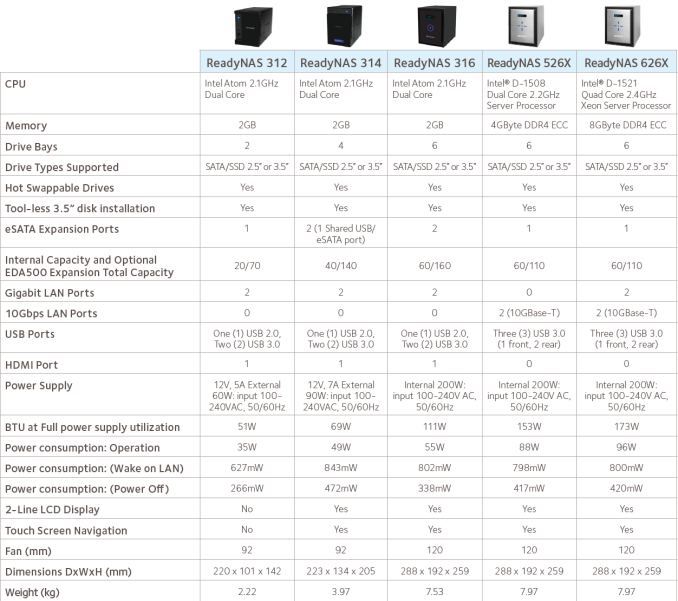
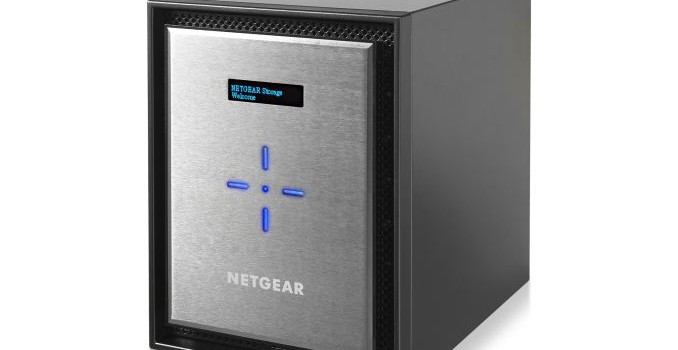
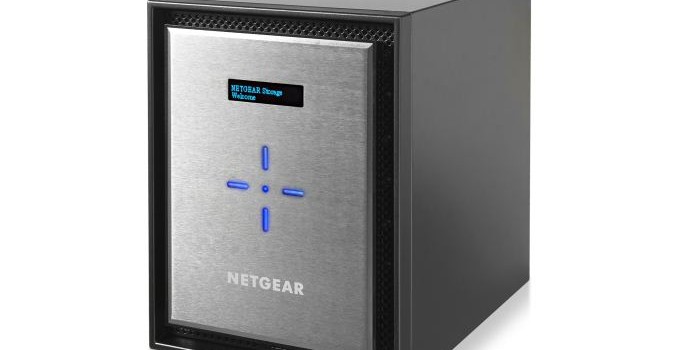
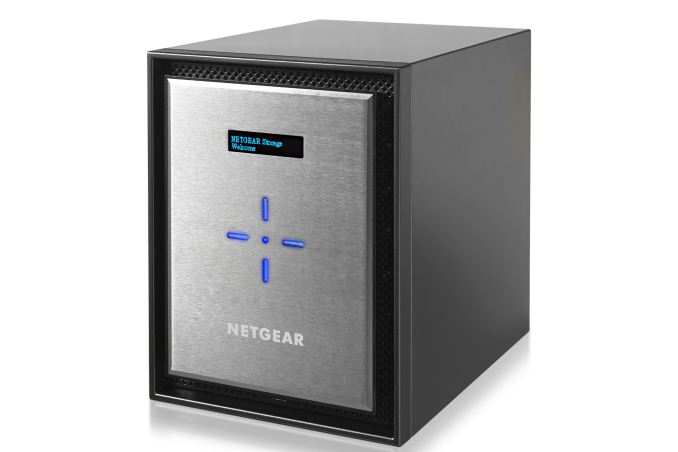
At IFA 2016, Netgear is launching two new desktop models and two new rackmounts. All of the models, except for one of the rackmounts, come with native 10G capabilities. This goes well with the host of affordable 10G switches that Netgear has launched over the last couple of years. The desktop models are the most interesting from a platform viewpoint – the ReadyNAS 526X uses the Intel Pentium D-1508 2C/4T processor that comes under the Xeon-D 1500 lineup, and the ReadyNAS 626X uses the Intel Xeon D-1521 4C/8T processor. To our knowledge, these are the first COTS NAS units to use these Broadwell-DE (Xeon-D 1500) SoCs. The two units join the ReadyNAS 300 series units as part of Netgear’s x86 ReadyNAS lineup. The important specifications of the two new units and how they compare with the other x86 units are provided below.

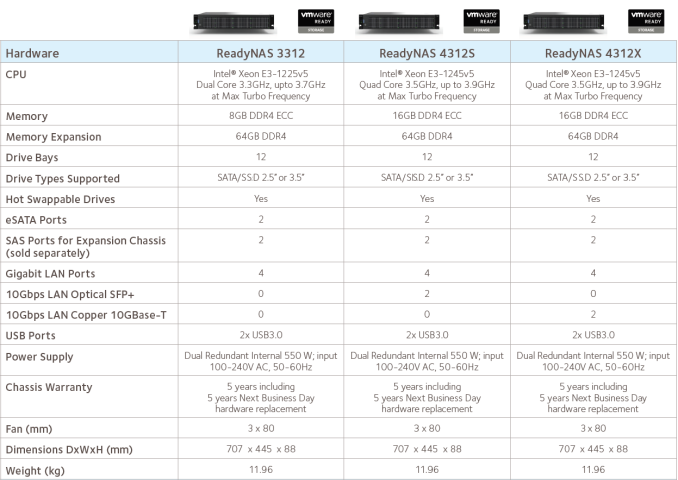
On the rackmount side, Netgear has opted for the Skylake Xeons. The new units have 12 bays and come with quad 1G LAN ports. All of them have two mini-SAS ports for storage expansion. The ReadyNAS 3312 doesn’t have any 10G ports, while the ReadyNAS 4312 has two. The 4312S has two optical SFP+ 10G interfaces, while the 4312X has two 10GBase-T ports.

The only disappointing aspect is that the rackmount units don’t come with support for SAS drives.

In terms of software features, the btrfs implementation allows Netgear to enable seamless snapshotting capabilities and also offer bitrot protection. There are some value additions in the form of ReadyDR (disaster recovery) that allows block-level backup to / restore from another ReadyNAS unit in the LAN. Netgear also has the ReadyCLOUD service for seamless VPN access and private cloud capabilities.

All the NAS models are available today. The diskless desktop versions come in at $1400 and $1800 for the RN526X and RN626X respectively. The diskless rackmounts are priced at $3000 (RN3312), $4200 (RN4312S) and $4400 (RN4312X).

Netgear’s decision to go with the Xeon-D SoC lineup has enabled them to create more efficient units (in terms of hardware) compared to the competition. The ReadyNAS OS 6 features are also in the process of getting tuned with customer feedback. Most important business requirements are already implemented, but competitors have a huge advantage, thanks to third-party apps. Features such as native virtualization (host OS capabilities) and containers (Docker) support enable the competitors’ units to fully utilize all the available CPU cycles (once the core requirements related to file serving are met). The same can’t be said of Netgear’s current version of the ReadyNAS OS. However, for SMBs / SMEs with well-defined requirements / workloads, the new 10G-enabled ReadyNAS units definitely merit consideration, thanks to a combination of attractive pricing and possible reseller-dependent deals involving bundled 10G switches.

Netgear Brings Broadwell-DE to COTS NAS Units with New 10G ReadyNAS Lineup

Netgear Brings Broadwell-DE to COTS NAS Units with New 10G ReadyNAS Lineup

Netgear’s ReadyNAS lineup was updated towards the end of last year with some units based on the Annapurna Labs ARM-based SoCs. This year, Netgear is targeting SMBs, creative professionals and SMEs with a new set of desktop and rackmount units based on high-end Intel SoCs and CPUs. All of the new units run ReadyNAS OS 6 – the first COTS (commercial off-the-shelf) NAS operating system to come with support for the btrfs file system.

At IFA 2016, Netgear is launching two new desktop models and two new rackmounts. All of the models, except for one of the rackmounts, come with native 10G capabilities. This goes well with the host of affordable 10G switches that Netgear has launched over the last couple of years. The desktop models are the most interesting from a platform viewpoint – the ReadyNAS 526X uses the Intel Pentium D-1508 2C/4T processor that comes under the Xeon-D 1500 lineup, and the ReadyNAS 626X uses the Intel Xeon D-1521 4C/8T processor. To our knowledge, these are the first COTS NAS units to use these Broadwell-DE (Xeon-D 1500) SoCs. The two units join the ReadyNAS 300 series units as part of Netgear’s x86 ReadyNAS lineup. The important specifications of the two new units and how they compare with the other x86 units are provided below.

On the rackmount side, Netgear has opted for the Skylake Xeons. The new units have 12 bays and come with quad 1G LAN ports. All of them have two mini-SAS ports for storage expansion. The ReadyNAS 3312 doesn’t have any 10G ports, while the ReadyNAS 4312 has two. The 4312S has two optical SFP+ 10G interfaces, while the 4312X has two 10GBase-T ports.

The only disappointing aspect is that the rackmount units don’t come with support for SAS drives.

In terms of software features, the btrfs implementation allows Netgear to enable seamless snapshotting capabilities and also offer bitrot protection. There are some value additions in the form of ReadyDR (disaster recovery) that allows block-level backup to / restore from another ReadyNAS unit in the LAN. Netgear also has the ReadyCLOUD service for seamless VPN access and private cloud capabilities.

All the NAS models are available today. The diskless desktop versions come in at $1400 and $1800 for the RN526X and RN626X respectively. The diskless rackmounts are priced at $3000 (RN3312), $4200 (RN4312S) and $4400 (RN4312X).

Netgear’s decision to go with the Xeon-D SoC lineup has enabled them to create more efficient units (in terms of hardware) compared to the competition. The ReadyNAS OS 6 features are also in the process of getting tuned with customer feedback. Most important business requirements are already implemented, but competitors have a huge advantage, thanks to third-party apps. Features such as native virtualization (host OS capabilities) and containers (Docker) support enable the competitors’ units to fully utilize all the available CPU cycles (once the core requirements related to file serving are met). The same can’t be said of Netgear’s current version of the ReadyNAS OS. However, for SMBs / SMEs with well-defined requirements / workloads, the new 10G-enabled ReadyNAS units definitely merit consideration, thanks to a combination of attractive pricing and possible reseller-dependent deals involving bundled 10G switches.

Evaluating Futuremark’s Servermark VDI on the Supermicro SYS-5028D-TN4T

Standardized benchmarks with industry-wide acceptance are a must for evaluating computing systems. These benchmarks may evaluate the system as a whole, or target specific aspects. Vendors such as Futuremark and BAPCo have various offerings for both consumer and business-use PCs. However, the market for such programs in the server space is largely untapped. Futuremark has been working on Servermark for more than two years now, and they finally felt it was stable enough to let us test drive one of their recent beta versions. Servermark will have a number of sub-categories, but, our focus was on VDI (virtual desktop infrastructure) – a way to determine how many virtual machines a server can support while providing an acceptable level of performance for all users. Servermark VDI also allowed us to evaluate the Supermicro SYS-5028D-TN4T (based on an Intel Xeon-D 1540 SoC) – a very popular home lab machine for virtualization enthusiasts. Today’s piece provides our thoughts on Servermark VDI based on our benchmarking of the Supermicro SYS-5028D-TN4T.

Evaluating Futuremark’s Servermark VDI on the Supermicro SYS-5028D-TN4T

Standardized benchmarks with industry-wide acceptance are a must for evaluating computing systems. These benchmarks may evaluate the system as a whole, or target specific aspects. Vendors such as Futuremark and BAPCo have various offerings for both consumer and business-use PCs. However, the market for such programs in the server space is largely untapped. Futuremark has been working on Servermark for more than two years now, and they finally felt it was stable enough to let us test drive one of their recent beta versions. Servermark will have a number of sub-categories, but, our focus was on VDI (virtual desktop infrastructure) – a way to determine how many virtual machines a server can support while providing an acceptable level of performance for all users. Servermark VDI also allowed us to evaluate the Supermicro SYS-5028D-TN4T (based on an Intel Xeon-D 1540 SoC) – a very popular home lab machine for virtualization enthusiasts. Today’s piece provides our thoughts on Servermark VDI based on our benchmarking of the Supermicro SYS-5028D-TN4T.