Vik


Huawei Launches the NOVA Brand: Two Midrange Snapdragon 625 Smartphones
Huawei Launches the NOVA Brand: Two Midrange Snapdragon 625 Smartphones

This week at IFA 2016, Huawei has announced another brand/line of smartphones. The NOVA brand, to counter the Mate line of devices and go up against its own H5onor brand, is aimed squarely at mid-range pricing and millennials. The Nova and Nova Plus will be the first two products in this line, differentiated by size, battery life and price, and using Qualcomm’s Snapdragon S625 SoC, a mid-range 14nm part with a pair of quad-core Cortex-A53 clusters, the faster of the two running at 2 GHz. This is joined by an integrated X9 modem, capable of Category 7 LTE and carrier aggregation but also has the right licencing for CDMA in the US.

Huawei Nova Series
  Nova Plus Nova
SoC Qualcomm Snapdragon 625

4x Cortex-A53 @ 2.0GHz
Adreno 506

Qualcomm Snapdragon 625

4x Cortex-A53 @ 2.0GHz
Adreno 506

RAM 3GB LPDDR3 3GB LPDDR3
NAND 32GB eMMC
+ microSD
32GB eMMC
+ microSD
Display 5.5” 1080p IPS LCD 5.0″ 1080p IPS LCD
Dimensions 151.8 x 75.7 x 7.3 mm
160 grams
141.2 x 69.1 x 7.1 mm
146 grams
Modem Qualcomm X9 (Integrated)
2G / 3G / 4G LTE
Qualcomm X9 (Integrated)
2G / 3G / 4G LTE
SIM Size Dual NanoSIM Dual NanoSIM
Front Camera 8 MP Sony, f/2.0 8 MP Sony, f/2.0
Rear Camera 16 MP, PDAF, OIS 12 MP Sony, f/2.2, 1.25µm pixels, PDAF
Battery 3340 mAh 3020 mAh
Connectivity 802.11a/b/g/n, BT 4.1, GPS/GLONASS, USB Type-C, Fingerprint 802.11a/b/g/n, BT 4.1, GPS/GLONASS, USB Type-C, Fingerprint
Launch OS Android 6 w/ EMUI 4.1 Android 6 w/ EMUI 4.1
Launch Price 429€ 399€

Gallery: Nova

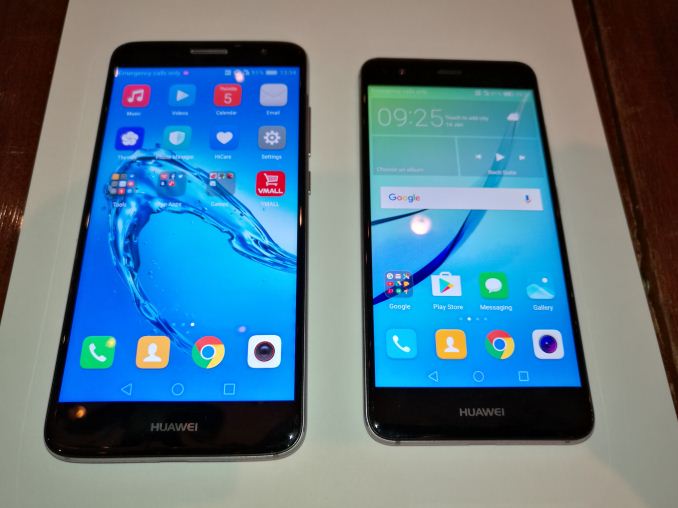
The Nova will launch as the main device, with a 5-inch Full HD (1920×1080) display. The devices will use USB Type-C, with Huawei’s characteristic brushed metal finishes. For several years Huawei has been pushing a high screen-to device ratio, typically comparing it against smartphones with physical buttons, and while it was mentioned in the launch they surprisingly left out exact numbers. The display is rated at a supposed 1500:1 contrast ratio, with 85% ‘high color gamut’, which is likely DCI-P3. Battery for the Nova is at 3020 mAh, or rated for 5-hours of Pokémon Go, and will have EMUI 4.1 (based on Android 6) out of the box.

Cameras are a Sony 12MP F/2.2 with 1.25-micron pixels on the rear, with a Sony 8MP F/2.0 on the front. Pro shooting modes are supported, as well as Huawei’s usual features of light painting, document readjustment and so on. PDAF focusing is rated at 0.3 seconds. One of the new features Huawei is promoting is the per-user beautify feature. This is the ability for the phone to recognize specific faces and use a separate pre-defined beautify profile for them. The concept being that in a group photo, with presets it can make you look better than your friends.

One of the newer features is the blue light reduction option. Similar to other devices with this feature, the software enables a separate look-up-table to reduce the effectiveness of the blue. We asked whether this was a per device/batch LUT to enable a better consistency with panel variability, or if the LUT was a fixed constant adjustment vs a gradient, but we weren’t able to get an answer.

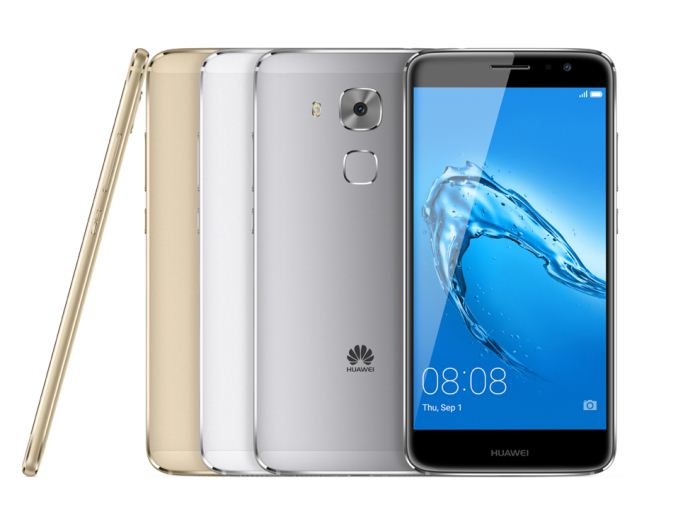
The Nova and Nova Plus will have three main colors: Mystic Silver, Titanium Grey and Prestige Gold. Rose Gold will be available in select regions only. Pricing is at 399 Euro (that’s including tax) for a 3GB DRAM and 32GB storage model. Both phones will support dual nano-sim, with one slot capable of a microSD card. Both devices also have a ‘level 4’ fingerprint sensor.
Gallery: Nova Plus

The Nova Plus is the larger device, coming it at 5.5-inch with a Full HD display, but offers a few upgrades over the Nova. The battery is another 10% larger (3340 mAh), and the camera supports OIS. There is an upgraded audio codec in there, with a collaboration with harmon/kardon and DTS Headphone:X certification. Pricing is at 429 Euro (again, including tax in that price) for a 3/32 configuration.

I’ll be disappointed if Huawei’s next model isn’t called the Supernova, or if the 4-inch model isn’t called a White Dwarf or something similar. There are lots of names to choose from…

Huawei Launches the NOVA Brand: Two Midrange Snapdragon 625 Smartphones

Huawei Launches the NOVA Brand: Two Midrange Snapdragon 625 Smartphones

This week at IFA 2016, Huawei has announced another brand/line of smartphones. The NOVA brand, to counter the Mate line of devices and go up against its own H5onor brand, is aimed squarely at mid-range pricing and millennials. The Nova and Nova Plus will be the first two products in this line, differentiated by size, battery life and price, and using Qualcomm’s Snapdragon S625 SoC, a mid-range 14nm part with a pair of quad-core Cortex-A53 clusters, the faster of the two running at 2 GHz. This is joined by an integrated X9 modem, capable of Category 7 LTE and carrier aggregation but also has the right licencing for CDMA in the US.

Huawei Nova Series
  Nova Plus Nova
SoC Qualcomm Snapdragon 625

4x Cortex-A53 @ 2.0GHz
Adreno 506

Qualcomm Snapdragon 625

4x Cortex-A53 @ 2.0GHz
Adreno 506

RAM 3GB LPDDR3 3GB LPDDR3
NAND 32GB eMMC
+ microSD
32GB eMMC
+ microSD
Display 5.5” 1080p IPS LCD 5.0″ 1080p IPS LCD
Dimensions 151.8 x 75.7 x 7.3 mm
160 grams
141.2 x 69.1 x 7.1 mm
146 grams
Modem Qualcomm X9 (Integrated)
2G / 3G / 4G LTE
Qualcomm X9 (Integrated)
2G / 3G / 4G LTE
SIM Size Dual NanoSIM Dual NanoSIM
Front Camera 8 MP Sony, f/2.0 8 MP Sony, f/2.0
Rear Camera 16 MP, PDAF, OIS 12 MP Sony, f/2.2, 1.25µm pixels, PDAF
Battery 3340 mAh 3020 mAh
Connectivity 802.11a/b/g/n, BT 4.1, GPS/GLONASS, USB Type-C, Fingerprint 802.11a/b/g/n, BT 4.1, GPS/GLONASS, USB Type-C, Fingerprint
Launch OS Android 6 w/ EMUI 4.1 Android 6 w/ EMUI 4.1
Launch Price 429€ 399€

Gallery: Nova

The Nova will launch as the main device, with a 5-inch Full HD (1920×1080) display. The devices will use USB Type-C, with Huawei’s characteristic brushed metal finishes. For several years Huawei has been pushing a high screen-to device ratio, typically comparing it against smartphones with physical buttons, and while it was mentioned in the launch they surprisingly left out exact numbers. The display is rated at a supposed 1500:1 contrast ratio, with 85% ‘high color gamut’, which is likely DCI-P3. Battery for the Nova is at 3020 mAh, or rated for 5-hours of Pokémon Go, and will have EMUI 4.1 (based on Android 6) out of the box.

Cameras are a Sony 12MP F/2.2 with 1.25-micron pixels on the rear, with a Sony 8MP F/2.0 on the front. Pro shooting modes are supported, as well as Huawei’s usual features of light painting, document readjustment and so on. PDAF focusing is rated at 0.3 seconds. One of the new features Huawei is promoting is the per-user beautify feature. This is the ability for the phone to recognize specific faces and use a separate pre-defined beautify profile for them. The concept being that in a group photo, with presets it can make you look better than your friends.

One of the newer features is the blue light reduction option. Similar to other devices with this feature, the software enables a separate look-up-table to reduce the effectiveness of the blue. We asked whether this was a per device/batch LUT to enable a better consistency with panel variability, or if the LUT was a fixed constant adjustment vs a gradient, but we weren’t able to get an answer.

The Nova and Nova Plus will have three main colors: Mystic Silver, Titanium Grey and Prestige Gold. Rose Gold will be available in select regions only. Pricing is at 399 Euro (that’s including tax) for a 3GB DRAM and 32GB storage model. Both phones will support dual nano-sim, with one slot capable of a microSD card. Both devices also have a ‘level 4’ fingerprint sensor.

Gallery: Nova Plus

The Nova Plus is the larger device, coming it at 5.5-inch with a Full HD display, but offers a few upgrades over the Nova. The battery is another 10% larger (3340 mAh), and the camera supports OIS. There is an upgraded audio codec in there, with a collaboration with harmon/kardon and DTS Headphone:X certification. Pricing is at 429 Euro (again, including tax in that price) for a 3/32 configuration.

I’ll be disappointed if Huawei’s next model isn’t called the Supernova, or if the 4-inch model isn’t called a White Dwarf or something similar. There are lots of names to choose from…

Acer’s Announces Predator Gaming Displays with Tobii Eye-Tracking Technology, Up to 240 Hz Refresh Rate

Acer’s Announces Predator Gaming Displays with Tobii Eye-Tracking Technology, Up to 240 Hz Refresh Rate

Acer has introduced three new Predator gaming monitors equipped with Tobii eye tracking technology at this week’s IFA trade show in Berlin, Germany. The new screens are the first gaming displays to incorporate sensors from Tobii, but apart from them, they also offer very high refresh rates as well as NVIDIA’s G-Sync dynamic refresh rate technology.

The Tobii EyeX technology was first demonstrated at CES 2013 (at the time it was called Tobii Gaze) as an alternative means of input from the traditional mouse or keyboard. The EyeX sensor is equipped with IR LEDs and an RGB camera to track eye positions and gaze points, where the EyeChip SoC as well as the EyeX software use the data from those sensors to control cursor in Windows or camera orientation in games. The polling rate of the EyeX sensor is 60 Hz and typical eye to application latency is specified to be around 15±5 ms. Tobii’s tech is compatible with Microsoft’s Windows Hello and typical Windows apps.

While the eye tracking technology can speed up interaction with certain programs and even make life easier for people with disabilities, developers of software compatible with EyeX are primarily focused on games. In fact, there are around 40 games that support Tobii’s EyeX eye-tracking already (including Deus Ex: Mankind Divided and Tom Clancy’s The Division). Given the current positioning of the technology, it is absolutely logical for Acer to integrate the EyeX sensor into its Predator displays.

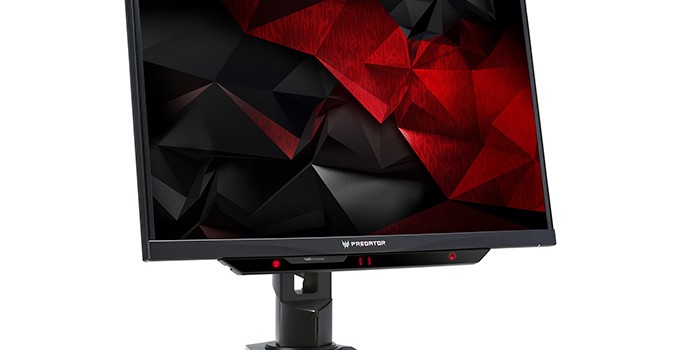
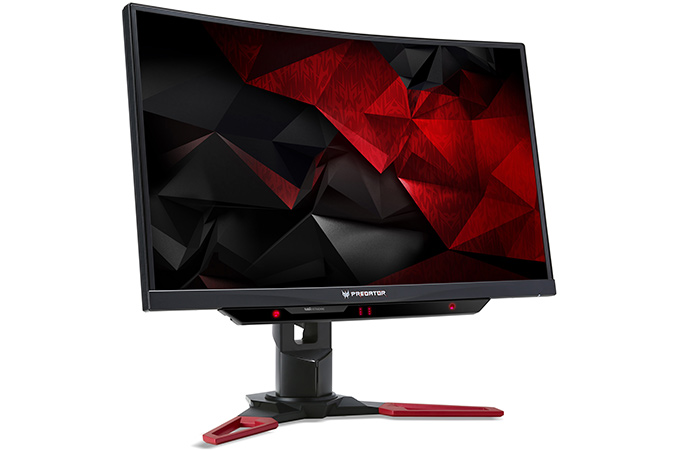
Initially, Acer will offer three gaming monitors with built-in eye tracking: the Predator Z271T, the Predator XB251HQT and the Predator XB271HUT. All three displays feature NVIDIA’s G-Sync technology, but the manufacturer does not reveal exact dynamic refresh rate ranges. As for other peculiarities, all three monitors feature at least one DisplayPort 1.2 input as well as distinctive design with red and black color scheme.

Acer Predator Displays with Tobii Eye Tracking Tech at Glance
  Predator Z271T Predator XB251HQT Predator XB271HUT
Panel 27″ VA 24.5″ TN 27″ TN
Resolution 1920 × 1080 1920 × 1080 2560 × 1440
Max Refresh Rate 144 Hz 240 Hz 165 Hz
Curvature 1800R
Inputs DisplayPort 1.2 Display Port 1.2
DVI
D-Sub
Display Port 1.2
DVI
D-Sub
Price €799 unknown €899

The Acer Predator Z271T is based on a curved 27” VA panel with FHD (1920×1080) resolution and a 144 Hz maximum refresh rate. The product will be available in EMEA in October with prices starting at €799.

Meanwhile the Acer Predator XB251HQT features a 24.5” TN panel with FHD (1920×1080) resolution, a 240 Hz refresh rate, and an ultra-thin bezel (which Acer calls ZeroFrame). The pricing and availability timeframe of this one remain unknown at this point.

Finally, the Acer Predator XB271HUT has similar design to the XB251HQT (so, it has similar controls as well as the ZeroFrame ultra-thin bezen), but uses a 27” TN panel with WQHD (2560×1440) resolution and a maximum refresh rate of 165 Hz. Expect this display to be available sometimes in December for €899 in Europe.

The monitors are not exactly affordable, but it’s worth keeping in mind that the EyeX eye tracker costs $140/€119 when sold separately, and the displays feature rather high refresh rates along with G-Sync. Otherwise the integration of eye tracking into gaming monitors is an interesting move in general and a way to differentiate Predator displays from competing products. So it will be interesting to see whether the new screens will become popular among gamers, and how much of that market is willing to pay the price premium for the functionality.