Vik


OnePlus Improves Video Quality On The OnePlus 3 In OxygenOS 3.2.2
OnePlus Improves Video Quality On The OnePlus 3 In OxygenOS 3.2.2

In my experience OxygenOS has provided a fairly stable and fast experience on the OnePlus 3, which is something I wasn’t really able to say about OxygenOS on the OnePlus 2. Every operating system has bugs though, and OnePlus recently announced that OxygenOS 3.2.2 would begin rolling out to the OnePlus 3 as an OTA update. OxygenOS 3.2.2 is mostly a bug fixing update, and I’ve listed the change log from OnePlus below:

  • Improved notification management in doze.
  • Addressed alert slider/silent mode issue.
  • Disabled fingerprint sensor while in pocket.
  • Added NFC toggle in quick settings.
  • Improved noise cancellation in video recording.
  • Updated 4K video recording codec.
  • Added latest security patches and various optimizations.

I’ve encountered issues with the alert slider not disabling vibration when setting to silent mode, so I’m happy that OnePlus has squashed that bug. Among the bug fixes here is a change that is quite interesting despite being described in such a vague manner. “Updated 4K video recording codec” could mean a number of things ranging from a change in the H.264 profile used, to a move to HEVC or some other form of video coding. Given that video recording was one of the areas I felt the OnePlus 3 performed poorly, I thought it would be worth investigating what changed with video recording in OxygenOS 3.2.2.

  OnePlus 3 At Launch OnePlus 3 With OxygenOS 3.2.2
Resolution 3840 x 2160 3840 x 2160
Coding H.264 H.264
Profile H.264 Baseline H.264 High
Encoding Scheme CAVLC CABAC
Average Bitrate 42Mbps 54Mbps

Although OnePlus states that they changed the recording codec, H.264 is still being used. What has been changed is the corresponding H.264 profile. When it launched the OnePlus 3 used the H.264 baseline profile. This is the case for many Android devices, and I find it a bit odd as the H.264 baseline profile is generally intended for applications like video conferencing where quality and efficiency is not as much of a concern. The big difference between H.264 baseline and the Main and High profiles is the compression scheme that can be used. The Baseline profile is limited to using CAVLC encoding, which requires less processing power to decode than CABAC encoding which can be used with the Main and High profiles, but also results in lower video quality for a given bitrate due to the lower efficiency.

With the move to the H.264 High profile on the OnePlus 3 comes a change from CAVLC encoding to CABAC. This allows OnePlus to increase the quality at the same bitrate without increasing the file size. What will further improve video quality is the fact that the average bitrate has actually gone from 42Mbps to 54Mbps, an increase of nearly thirty percent. Unfortunately, I updated my OnePlus 3 without initially noticing these changes, so I’m unable to do a direct comparison between the two versions. That being said, the visual quality issues I identified in my original review were mostly the result of the relatively low bitrate, and so the improvements made to video encoding in OxygenOS 3.2.2 should address those problems.

Like the addition of an sRGB mode for the display, OnePlus’s updates to the OnePlus 3 continue to improve the few things about the phone that kept it behind the best flagship phones on the market, and the result is a better experience for existing owners and an even better value proposition for prospective ones.
Xiaomi Unveils Mi Notebook Air, from $525

Xiaomi Unveils Mi Notebook Air, from $525

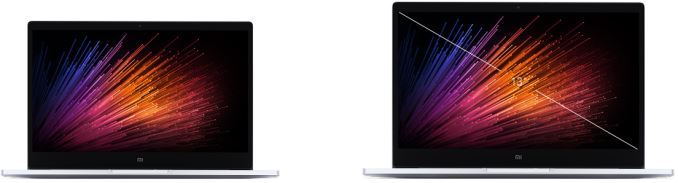
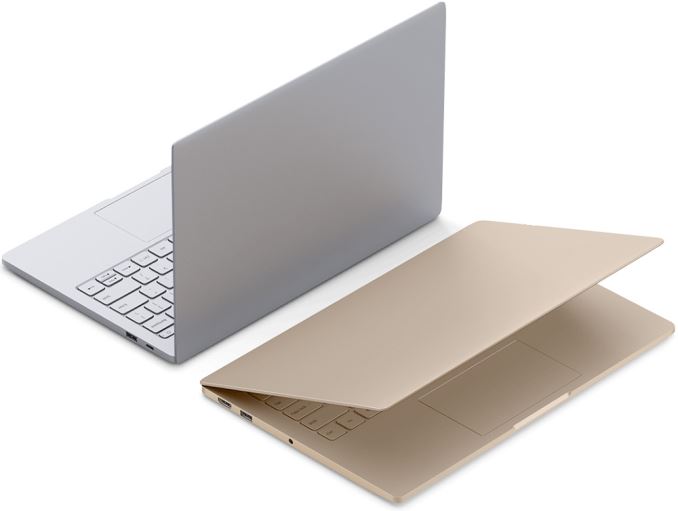
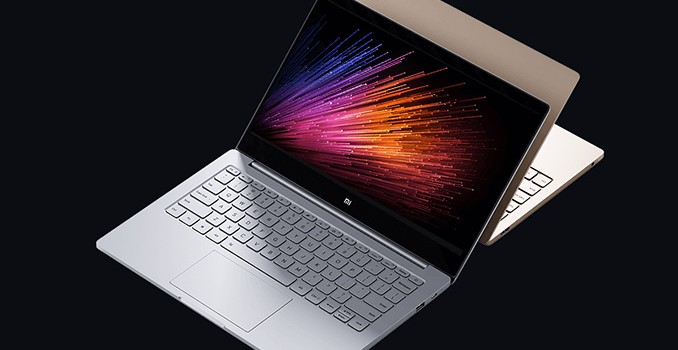
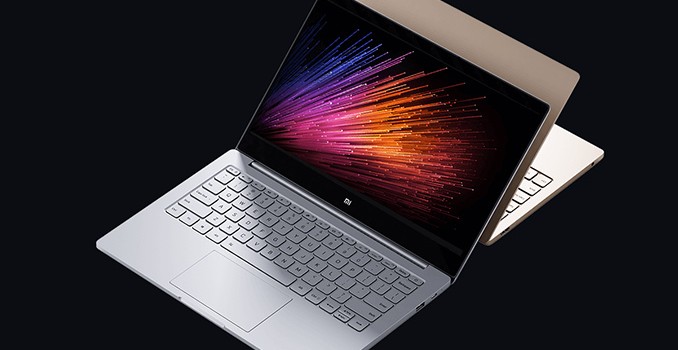
Today Xiaomi has introduced its first pair of notebooks and unvieled the Mi Notebook Air family. As the name suggests, these are aimed head first into Apple’s Air line of notebooks, albeit at a very different price point. The laptops feature 12.5” and 13.3” full HD displays and are based on Intel’s Core M as well as Core i5 microprocessors. The price of the ultra-thin all-metal notebooks starts from 3499 CNY ($525, although Xiaomi usually quotes prices including China tax, so $446 perhaps), which could make them very competitive in various markets. As with most Xiaomi products, they will be available in China first.

Xiaomi, which is known primarily for its smartphones business and superstar VP, Hugo Barra, positions its laptops as integrated parts of its Mi Ecosystem (which includes smartphones, an Android TV STB, tablets, power banks, headphones, a wrist band and even an air purifier). Their design resembles that of other devices from Xiaomi and uses all-metal silver and gold enclosures. Both notebooks are made by Tian Mi, a partner of Xiaomi, and will run Microsoft Windows 10 Home.

Xiaomi’s Mi Notebook Air Family
  Mi Notebook Air 12.5″ Mi Notebook Air 13.3″
CPU SKU Intel Core
m3-6Y30
Intel Core
i5-6200U
7W cTDP Up
Base 1.1 GHz 2.3 GHz
Turbo 2.2 GHz  2.8 GHz
iGPU SKU Intel HD Graphics 515 (GT2)
24 EUs, Gen 9
Intel HD Graphics 520 (GT2)
24 EUs, Gen 9
Base 300 MHz
Turbo 850 MHz 1050 MHz
dGPU NVIDIA GeForce 940MX
DRAM 4 GB LPDDR3-1866 8 GB DDR4-2133
SSD 128 GB SATA (500 MB/s) 256 GB PCIe 3.0 x4 (1500 MB/s)
Display 12.5″ Full HD display 13.3″ Full HD display
Ports 1 x USB 3.1 (Gen 1) Type-C
1 x USB 3.0 Type-A
HDMI
3.5mm TRRS jack
1 x USB 3.1 (Gen 1) Type-C
2 x USB 3.0 Type-A
HDMI
3.5mm TRRS jack
Network 2×2:2 802.11ac with BT 4.1
Battery 37 Wh 40 Wh
Dimensions H: 12.9 mm
W: 292 mm
D: 202 mm
H: 14.8 mm
W: 309.6 mm
D: 210.9 mm
Weight 2.35 lbs (1.07 kg) 2.82 lbs (1.28 kg)
Colors Gold, Silver
Price 3499 CNY
$525
4999 CNY
$750

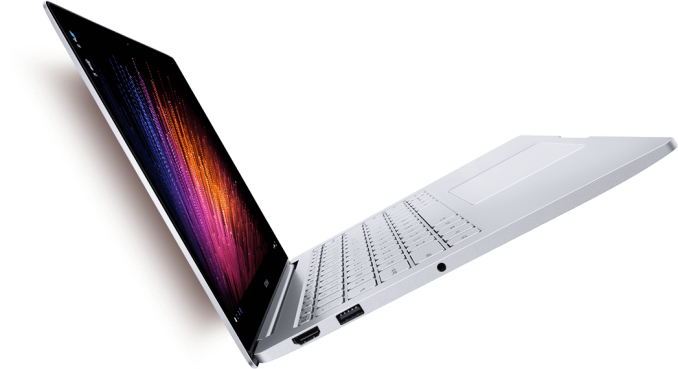
The entry-level laptop from Xiaomi is the Mi Notebook Air 12.5”, which is powered by the dual-core Intel Core m3-6Y30, featuring the Skylake microarchitecture as well as the ninth-generation of Intel’s integrated graphics (Gen 9, HD Graphics 515 with 24 EUs). The CPU is rated at a 1.1/2.2 GHz core frequency (base/turbo), 4 MB of last level cache, and a 7W thermal design power (normally this CPU is rated at 4.5W, but the 1.1 GHz in the spec sheet implies that it is running in its 7W cTDP Up mode – this isn’t a surprise given the size of the device. The laptop comes with 4 GB of LPDDR3-1866 RAM, 128 GB SATA SSD, 802.11ac 2×2 Wi-Fi, Bluetooth, 1 MP webcam, two microphones, custom AKG speakers and so on. It’s not stated if the design uses dual channel memory at this point, and it would be interesting to find out. The system sports one USB Type-C port for charging and display output, one USB 3.0 Type-A port as well as one HDMI connector.

The Mi Notebook Air 12.5” features a display panel with 1920×1080 resolution, 170° wide viewing angle, 300 nit brightness as well as 600:1 contrast ratio. Despite the low memory, the main advantage of the Mi Notebook Air 12.5” over its bigger brother is its 11.5 hours rated battery life and low weight of 1.07 . From many points of view, the 12.5” laptop from Xiaomi attempts to combine the key advantages of Apple’s MacBook and MacBook Air (at least, from hardware perspective). It comes with Intel Core M, a common resolution screen, long battery life as well as thin-and-light form factor (like the MacBook). However, the system costs starting from 3999 yuan ($525), which means that it is more affordable than Apple’s MacBook Air.

The next up is the more powerful Xiaomi Mi Notebook Air 13.3”, which is based on the dual-core Intel Core i5-6200U (2.3/2.8 GHz, 3MB LLC, 15 W TDP, Intel HD Graphics 520, etc.) and is equipped with NVIDIA’s GeForce 940 MX discrete GPU featuring a 1 GB GDDR5 memory buffer. Xiaomi says that by equipping its 13.3” laptop with a standalone graphics processor it enables higher performance in games when compared with iGPU. The notebook sports 8 GB of DDR4-2133 memory, a 256 GB NVMe SSD with PCIe 3.0 x4 interface (with up to 1500 MB/s read speed, which means that they are running the PCH in low-power mode and reduce PCIe clock-rates), dual band 802.11ac 2×2 Wi-Fi, Bluetooth, a 1 MP webcam, two microphones, custom AKG speakers and so on. The laptop uses USB-C for charging and display output, two USB-A 3.0 ports and one HDMI connector.

The larger laptop from Xiaomi features a better display panel than the smaller model. Despite the similar resolution, viewing angles and brightness, the 13.3” notebook has a rated 800:1 contrast ratio as well as 72% NTSC color gamut (vs 50% on the 12.5” model). However, the bigger and improved screen comes at a price: the Xiaomi Mi Notebook Air 13.3” is 14.8 mm thick and it weighs 1.28 kilograms. The laptop is equipped with a 40 Wh battery (compared to 37 Wh on the smaller model), which gives it up to 9.5 hours of rated battery life. The faster CPU, discrete GPU, faster RAM, speedier SSD and better display effect the pricing of Xiaomi’s 13.3” notebook: the model costs 4999 yuan, or $750 (or $640, if that original CNY price includes China tax).

Xiaomi will only sell its initial family of laptops in China at this time, similar to its smartphone strategy. 

Xiaomi Unveils Mi Notebook Air, from $525

Xiaomi Unveils Mi Notebook Air, from $525

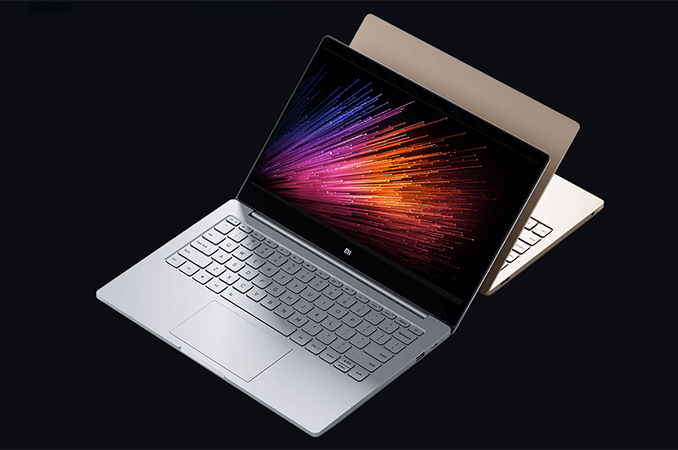
Today Xiaomi has introduced its first pair of notebooks and unvieled the Mi Notebook Air family. As the name suggests, these are aimed head first into Apple’s Air line of notebooks, albeit at a very different price point. The laptops feature 12.5” and 13.3” full HD displays and are based on Intel’s Core M as well as Core i5 microprocessors. The price of the ultra-thin all-metal notebooks starts from 3499 CNY ($525, although Xiaomi usually quotes prices including China tax, so $446 perhaps), which could make them very competitive in various markets. As with most Xiaomi products, they will be available in China first.

Xiaomi, which is known primarily for its smartphones business and superstar VP, Hugo Barra, positions its laptops as integrated parts of its Mi Ecosystem (which includes smartphones, an Android TV STB, tablets, power banks, headphones, a wrist band and even an air purifier). Their design resembles that of other devices from Xiaomi and uses all-metal silver and gold enclosures. Both notebooks are made by Tian Mi, a partner of Xiaomi, and will run Microsoft Windows 10 Home.

Xiaomi’s Mi Notebook Air Family
  Mi Notebook Air 12.5″ Mi Notebook Air 13.3″
CPU SKU Intel Core
m3-6Y30
Intel Core
i5-6200U
7W cTDP Up
Base 1.1 GHz 2.3 GHz
Turbo 2.2 GHz  2.8 GHz
iGPU SKU Intel HD Graphics 515 (GT2)
24 EUs, Gen 9
Intel HD Graphics 520 (GT2)
24 EUs, Gen 9
Base 300 MHz
Turbo 850 MHz 1050 MHz
dGPU NVIDIA GeForce 940MX
DRAM 4 GB LPDDR3-1866 8 GB DDR4-2133
SSD 128 GB SATA (500 MB/s) 256 GB PCIe 3.0 x4 (1500 MB/s)
Display 12.5″ Full HD display 13.3″ Full HD display
Ports 1 x USB 3.1 (Gen 1) Type-C
1 x USB 3.0 Type-A
HDMI
3.5mm TRRS jack
1 x USB 3.1 (Gen 1) Type-C
2 x USB 3.0 Type-A
HDMI
3.5mm TRRS jack
Network 2×2:2 802.11ac with BT 4.1
Battery 37 Wh 40 Wh
Dimensions H: 12.9 mm
W: 292 mm
D: 202 mm
H: 14.8 mm
W: 309.6 mm
D: 210.9 mm
Weight 2.35 lbs (1.07 kg) 2.82 lbs (1.28 kg)
Colors Gold, Silver
Price 3499 CNY
$525
4999 CNY
$750

The entry-level laptop from Xiaomi is the Mi Notebook Air 12.5”, which is powered by the dual-core Intel Core m3-6Y30, featuring the Skylake microarchitecture as well as the ninth-generation of Intel’s integrated graphics (Gen 9, HD Graphics 515 with 24 EUs). The CPU is rated at a 1.1/2.2 GHz core frequency (base/turbo), 4 MB of last level cache, and a 7W thermal design power (normally this CPU is rated at 4.5W, but the 1.1 GHz in the spec sheet implies that it is running in its 7W cTDP Up mode – this isn’t a surprise given the size of the device. The laptop comes with 4 GB of LPDDR3-1866 RAM, 128 GB SATA SSD, 802.11ac 2×2 Wi-Fi, Bluetooth, 1 MP webcam, two microphones, custom AKG speakers and so on. It’s not stated if the design uses dual channel memory at this point, and it would be interesting to find out. The system sports one USB Type-C port for charging and display output, one USB 3.0 Type-A port as well as one HDMI connector.

The Mi Notebook Air 12.5” features a display panel with 1920×1080 resolution, 170° wide viewing angle, 300 nit brightness as well as 600:1 contrast ratio. Despite the low memory, the main advantage of the Mi Notebook Air 12.5” over its bigger brother is its 11.5 hours rated battery life and low weight of 1.07 . From many points of view, the 12.5” laptop from Xiaomi attempts to combine the key advantages of Apple’s MacBook and MacBook Air (at least, from hardware perspective). It comes with Intel Core M, a common resolution screen, long battery life as well as thin-and-light form factor (like the MacBook). However, the system costs starting from 3999 yuan ($525), which means that it is more affordable than Apple’s MacBook Air.

The next up is the more powerful Xiaomi Mi Notebook Air 13.3”, which is based on the dual-core Intel Core i5-6200U (2.3/2.8 GHz, 3MB LLC, 15 W TDP, Intel HD Graphics 520, etc.) and is equipped with NVIDIA’s GeForce 940 MX discrete GPU featuring a 1 GB GDDR5 memory buffer. Xiaomi says that by equipping its 13.3” laptop with a standalone graphics processor it enables higher performance in games when compared with iGPU. The notebook sports 8 GB of DDR4-2133 memory, a 256 GB NVMe SSD with PCIe 3.0 x4 interface (with up to 1500 MB/s read speed, which means that they are running the PCH in low-power mode and reduce PCIe clock-rates), dual band 802.11ac 2×2 Wi-Fi, Bluetooth, a 1 MP webcam, two microphones, custom AKG speakers and so on. The laptop uses USB-C for charging and display output, two USB-A 3.0 ports and one HDMI connector.

The larger laptop from Xiaomi features a better display panel than the smaller model. Despite the similar resolution, viewing angles and brightness, the 13.3” notebook has a rated 800:1 contrast ratio as well as 72% NTSC color gamut (vs 50% on the 12.5” model). However, the bigger and improved screen comes at a price: the Xiaomi Mi Notebook Air 13.3” is 14.8 mm thick and it weighs 1.28 kilograms. The laptop is equipped with a 40 Wh battery (compared to 37 Wh on the smaller model), which gives it up to 9.5 hours of rated battery life. The faster CPU, discrete GPU, faster RAM, speedier SSD and better display effect the pricing of Xiaomi’s 13.3” notebook: the model costs 4999 yuan, or $750 (or $640, if that original CNY price includes China tax).

Xiaomi will only sell its initial family of laptops in China at this time, similar to its smartphone strategy.