Vik


Western Digital Expands My Passport External USB 3.0 Drives To 4 TB

Western Digital Expands My Passport External USB 3.0 Drives To 4 TB

Western Digital last week introduced several new members to its My Passport family of external hard drives. The new portable external HDDs can store up to 4 TB of data, an improvement over previous-gen portable storage solutions from the company. The new drives are based on the WD’s new 2.5”/12.5 mm HDD platform which uses high-capacity platters.

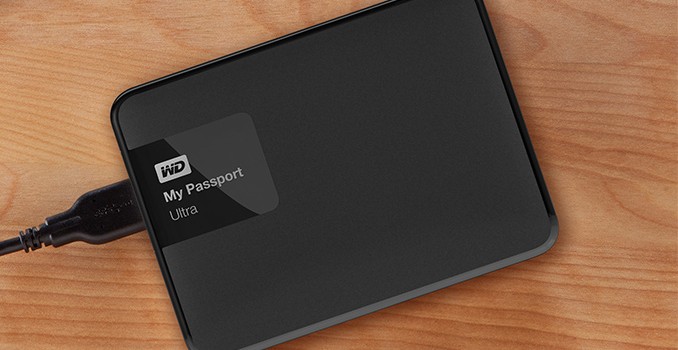
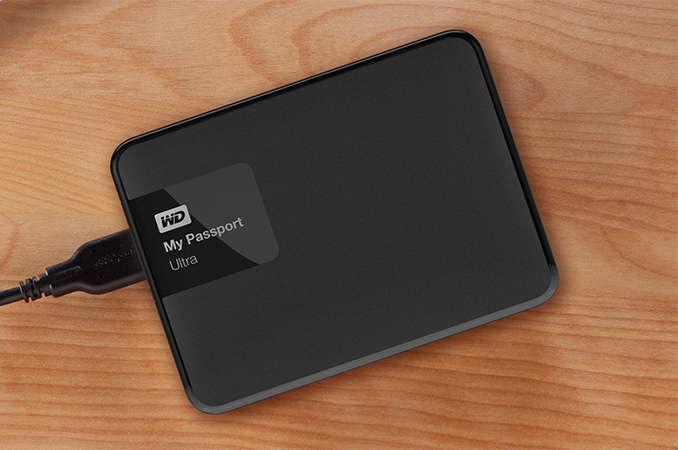
Like the other Western Digital’s My Passport HDDs, the new models feature a USB 3.0 interface and come with automatic WD Backup software. The drives also have hardware AES-256 encryption. As for visual aesthetics, the design of the new 4 TB My Passport drives remained the same as that of the latest generation.

While the update looks fairly regular, it is important what is inside these new 4 TB drives. Western Digital traditionally does not disclose a lot of technical specifications of its external HDDs, such as spindle speeds or cache sizes. However, what the company did confirm is that the new My Passport 4 TB HDDs are based on 2.5”/12.5 mm hard drives featuring four 1 TB platters. We believe these should be based on either PMR or SMR technology. 2.5” SMR platters of such capacities are not something brand new in general because Seagate has been using them for several months but it would be noteworthy if Western Digital has started to use them for commercial products. Besides, the company has a platform that can house four of such platters, thus enabling 4 TB 2.5”/12.5 mm HDDs.

List of WD’s My Passport Drives with 4 TB Capacity
Brand   Model Interface Compatibility Color
My Passport Ultra WDBBKD0040BBK USB
3.0/2.0
Windows/Mac Black
WDBBKD0040BBL Blue
WDBBKD0040BWT White
WDBBKD0040BBY Purple
My Passport Ultra Metal WDBEZW0040BSL Silver
WDBEZW0040BBA Blue
My Passport for Mac WDBCGL0040BSL Silver/Black

Western Digital stresses that it has not announced any internal 4 TB 2.5”/12.5 mm hard drives for consumer or other devices, which is perhaps not surprising given that mainstream notebooks use 7 mm and 9.5 mm drives. Nonetheless, formally Western Digital has the highest-capacity commercial 2.5”/12.5 mm HDD on the planet. Last year Seagate released its Samsung Spinpoint M10P HDD 4 TB HDD in 2.5″/15 mm form-factor, which has been exclusively used inside the Samsung M3 and P3 portable external hard drives.

Western Digital’s new My Passport Ultra 4 TB external HDD is already available from the company’s online store and from select retailers and distributors for $159.99. Next quarter the company plans to start selling its more expensive My Passport Ultra Metal and My Passport for Mac external HDDs with 4 TB capacity.

Western Digital Expands My Passport External USB 3.0 Drives To 4 TB

Western Digital Expands My Passport External USB 3.0 Drives To 4 TB

Western Digital last week introduced several new members to its My Passport family of external hard drives. The new portable external HDDs can store up to 4 TB of data, an improvement over previous-gen portable storage solutions from the company. The new drives are based on the WD’s new 2.5”/12.5 mm HDD platform which uses high-capacity platters.

Like the other Western Digital’s My Passport HDDs, the new models feature a USB 3.0 interface and come with automatic WD Backup software. The drives also have hardware AES-256 encryption. As for visual aesthetics, the design of the new 4 TB My Passport drives remained the same as that of the latest generation.

While the update looks fairly regular, it is important what is inside these new 4 TB drives. Western Digital traditionally does not disclose a lot of technical specifications of its external HDDs, such as spindle speeds or cache sizes. However, what the company did confirm is that the new My Passport 4 TB HDDs are based on 2.5”/12.5 mm hard drives featuring four 1 TB platters. We believe these should be based on either PMR or SMR technology. 2.5” SMR platters of such capacities are not something brand new in general because Seagate has been using them for several months but it would be noteworthy if Western Digital has started to use them for commercial products. Besides, the company has a platform that can house four of such platters, thus enabling 4 TB 2.5”/12.5 mm HDDs.

List of WD’s My Passport Drives with 4 TB Capacity
Brand   Model Interface Compatibility Color
My Passport Ultra WDBBKD0040BBK USB
3.0/2.0
Windows/Mac Black
WDBBKD0040BBL Blue
WDBBKD0040BWT White
WDBBKD0040BBY Purple
My Passport Ultra Metal WDBEZW0040BSL Silver
WDBEZW0040BBA Blue
My Passport for Mac WDBCGL0040BSL Silver/Black

Western Digital stresses that it has not announced any internal 4 TB 2.5”/12.5 mm hard drives for consumer or other devices, which is perhaps not surprising given that mainstream notebooks use 7 mm and 9.5 mm drives. Nonetheless, formally Western Digital has the highest-capacity commercial 2.5”/12.5 mm HDD on the planet. Last year Seagate released its Samsung Spinpoint M10P HDD 4 TB HDD in 2.5″/15 mm form-factor, which has been exclusively used inside the Samsung M3 and P3 portable external hard drives.

Western Digital’s new My Passport Ultra 4 TB external HDD is already available from the company’s online store and from select retailers and distributors for $159.99. Next quarter the company plans to start selling its more expensive My Passport Ultra Metal and My Passport for Mac external HDDs with 4 TB capacity.

AMD's Tuesday Radeon RX 480 Status Update: New Driver By Late Thursday

AMD’s Tuesday Radeon RX 480 Status Update: New Driver By Late Thursday

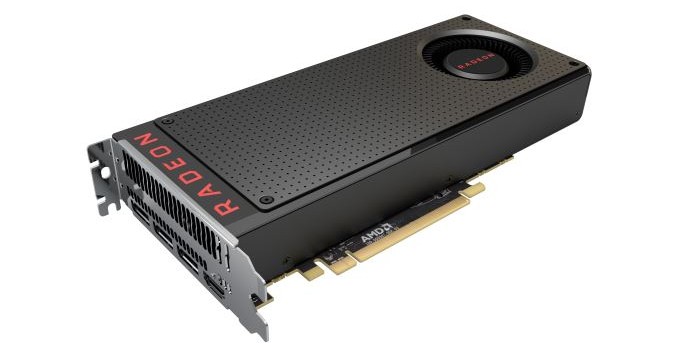
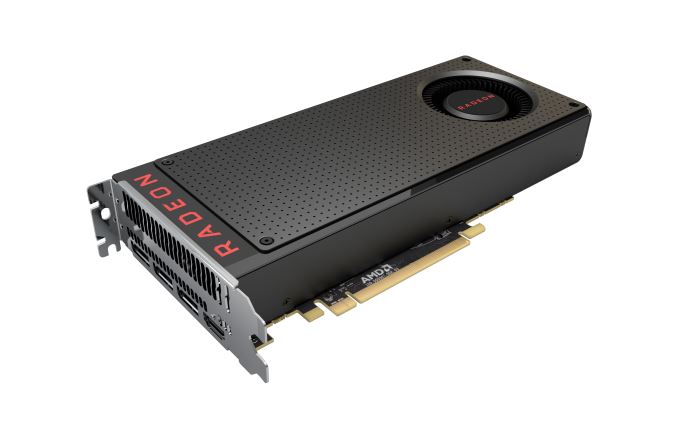
Following up on this weekend’s statement from AMD about a potential power issue with the reference Radeon RX 480, AMD has just sent over their previously promised update on their progress dealing with the issue.

In short, they are nearly finished preparing their updated driver, 16.7.1, which will be posted “within the next 48 hours” (which at this point is late Thursday). The new driver will offer two solutions to the power problem.

The default solution: shift some of the power load off of the PCIe Graphics (PEG) slot connector, presumably in order to bring power consumption within PCIe spec. Note that AMD doesn’t say anything about reducing the total power consumption, and given option #2, it’s reasonable to assume that this involves holding the power requirements as-is and shifting the load to the external 6-pin power connector. Based on earlier data this would potentially put the 6-in connector further over spec, but the vast majority of PSUs are very tolerant of this going out of spec.

The optional solution: a toggle that reduces the total power consumption of the card, presumably ensuring both the PEG slot and 6-pin power connector stay below their respective limits. Since the RX 480 is already throttling at times due to power limits, this would further hurt performance, but it’s also the most standards-compliant solution (and aptly named “compatibility” mode). AMD notes that this option will have “minimal performance impact”, and while we’ll have to see the results in the benchmarks, it’s worth noting that power consumption is cubic – that is, roughly to the 3rd power of frequency – so a small reduction in frequency can significantly reduce power consumption, as we’ve seen in the case of the Radeon R9 Nano.

Along with this, AMD is also touting some slight performance optimizations in this driver that they hope will offset any performance loss (though I’d note that these optimizations would have come anyhow). We’ll have more on this when AMD ships their driver.

In the meantime AMD’s full statement is as follows:

We promised an update today (July 5, 2016) following concerns around the Radeon™ RX 480 drawing excess current from the PCIe bus. Although we are confident that the levels of reported power draws by the Radeon RX 480 do not pose a risk of damage to motherboards or other PC components based on expected usage, we are serious about addressing this topic and allaying outstanding concerns. Towards that end, we assembled a worldwide team this past weekend to investigate and develop a driver update to improve the power draw. We’re pleased to report that this driver—Radeon Software 16.7.1—is now undergoing final testing and will be released to the public in the next 48 hours.

In this driver we’ve implemented a change to address power distribution on the Radeon RX 480 – this change will lower current drawn from the PCIe bus.

Separately, we’ve also included an option to reduce total power with minimal performance impact. Users will find this as the “compatibility” UI toggle in the Global Settings menu of Radeon Settings. This toggle is “off” by default.

Finally, we’ve implemented a collection of performance improvements for the Polaris architecture that yield performance uplifts in popular game titles of up to 3%1. These optimizations are designed to improve the performance of the Radeon RX 480, and should substantially offset the performance impact for users who choose to activate the “compatibility” toggle.

AMD is committed to delivering high quality and high performance products, and we’ll continue to provide users with more control over their product’s performance and efficiency. We appreciate all the feedback so far, and we’ll continue to bring further performance and performance/W optimizations to the Radeon RX 480.

1: Based on data running ’Total War: Warhammer’, ultra settings, 1080p resolution. Radeon Software 16.6.2 74.2FPS vs Radeon Software 16.7.1 78.3FPS; Metro Last Light, very high settings, 1080p resolution, 80.9FPS vs 82.7 FPS. Witcher 3, Ultra settings, 1440p, 31.5FPS vs 32.5, Far Cry 4, ultra settings, 1440p, 54.65FPS vs 56.38FPS, 3DMark11 Extreme, 22.8 vs 23.7  System config: Core i7-5960X, 16GB DDR4-2666MHz, Gigabyte X99-UD4, Windows 10 64-bit. Performance figures are not average, may vary from run-to-run.


AMD's Tuesday Radeon RX 480 Status Update: New Driver By Late Thursday

AMD’s Tuesday Radeon RX 480 Status Update: New Driver By Late Thursday

Following up on this weekend’s statement from AMD about a potential power issue with the reference Radeon RX 480, AMD has just sent over their previously promised update on their progress dealing with the issue.

In short, they are nearly finished preparing their updated driver, 16.7.1, which will be posted “within the next 48 hours” (which at this point is late Thursday). The new driver will offer two solutions to the power problem.

The default solution: shift some of the power load off of the PCIe Graphics (PEG) slot connector, presumably in order to bring power consumption within PCIe spec. Note that AMD doesn’t say anything about reducing the total power consumption, and given option #2, it’s reasonable to assume that this involves holding the power requirements as-is and shifting the load to the external 6-pin power connector. Based on earlier data this would potentially put the 6-in connector further over spec, but the vast majority of PSUs are very tolerant of this going out of spec.

The optional solution: a toggle that reduces the total power consumption of the card, presumably ensuring both the PEG slot and 6-pin power connector stay below their respective limits. Since the RX 480 is already throttling at times due to power limits, this would further hurt performance, but it’s also the most standards-compliant solution (and aptly named “compatibility” mode). AMD notes that this option will have “minimal performance impact”, and while we’ll have to see the results in the benchmarks, it’s worth noting that power consumption is cubic – that is, roughly to the 3rd power of frequency – so a small reduction in frequency can significantly reduce power consumption, as we’ve seen in the case of the Radeon R9 Nano.

Along with this, AMD is also touting some slight performance optimizations in this driver that they hope will offset any performance loss (though I’d note that these optimizations would have come anyhow). We’ll have more on this when AMD ships their driver.

In the meantime AMD’s full statement is as follows:

We promised an update today (July 5, 2016) following concerns around the Radeon™ RX 480 drawing excess current from the PCIe bus. Although we are confident that the levels of reported power draws by the Radeon RX 480 do not pose a risk of damage to motherboards or other PC components based on expected usage, we are serious about addressing this topic and allaying outstanding concerns. Towards that end, we assembled a worldwide team this past weekend to investigate and develop a driver update to improve the power draw. We’re pleased to report that this driver—Radeon Software 16.7.1—is now undergoing final testing and will be released to the public in the next 48 hours.

In this driver we’ve implemented a change to address power distribution on the Radeon RX 480 – this change will lower current drawn from the PCIe bus.

Separately, we’ve also included an option to reduce total power with minimal performance impact. Users will find this as the “compatibility” UI toggle in the Global Settings menu of Radeon Settings. This toggle is “off” by default.

Finally, we’ve implemented a collection of performance improvements for the Polaris architecture that yield performance uplifts in popular game titles of up to 3%1. These optimizations are designed to improve the performance of the Radeon RX 480, and should substantially offset the performance impact for users who choose to activate the “compatibility” toggle.

AMD is committed to delivering high quality and high performance products, and we’ll continue to provide users with more control over their product’s performance and efficiency. We appreciate all the feedback so far, and we’ll continue to bring further performance and performance/W optimizations to the Radeon RX 480.

1: Based on data running ’Total War: Warhammer’, ultra settings, 1080p resolution. Radeon Software 16.6.2 74.2FPS vs Radeon Software 16.7.1 78.3FPS; Metro Last Light, very high settings, 1080p resolution, 80.9FPS vs 82.7 FPS. Witcher 3, Ultra settings, 1440p, 31.5FPS vs 32.5, Far Cry 4, ultra settings, 1440p, 54.65FPS vs 56.38FPS, 3DMark11 Extreme, 22.8 vs 23.7  System config: Core i7-5960X, 16GB DDR4-2666MHz, Gigabyte X99-UD4, Windows 10 64-bit. Performance figures are not average, may vary from run-to-run.