Vik


Lenovo Launches Three New VIBE Smartphones
Lenovo Launches Three New VIBE Smartphones

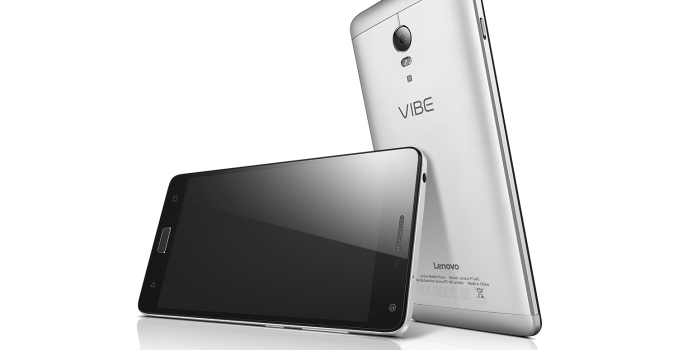
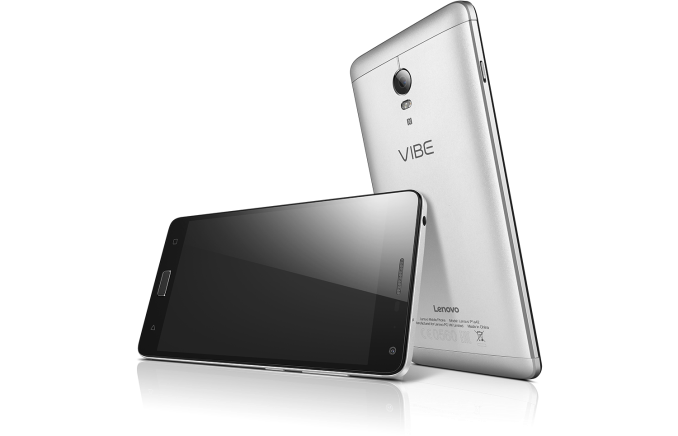
Lenovo has been making quite a number of announcements at IFA this year. We’ve seen a unique high end Android tablet, low end Android tablets, and really big phablets. Their last announcement relating to mobile is the launch of 3 new smartphones under the Lenovo VIBE brand. You can check out the specs for Lenovo’s new smartphones in the chart below.

Lenovo VIBE Smartphones  
Model Lenovo VIBE S1 Lenovo VIBE P1 Lenovo VIBE P1m
SoC MediaTek MT6752 1.7GHz 1.5GHz Snapdragon 615 MediaTek MT6735P 1GHz
RAM/NAND 3GB / 32GB NAND
MicroSD
2GB / 32GB NAND
MicroSD
2GB RAM, 16GB
NAND + MicroSD
Display 5.0″ 1920×1080 IPS LCD 5.5″ 1920×1080 IPS LCD 5.0″ 1280×720 IPS LCD
Dimensions 143.3 x 70.8 x 7.8 mm
132g
152.9 x 75.6 x 4.6-9.9mm
189g
141 x 71.8 x 9.3mm
148g
Camera 13MP Rear Facing 8MP Rear Facing
5MP Front Facing
8MP Front Facing
2MP Front Facing
5MP Front Facing
Battery 2500mAh 5000mAh 4000mAh
OS Android Lollipop
Connectivity 802.11b/g/n + BT 4.0, microUSB 2.0, GNSS 802.11a/b/g/n/ac + BT 4.1, microUSB 2.0, GNSS 802.11a/b/g/n + BT 4.1, microUSB 2.0, GNSS
SIM Dual NanoSIM Dual MicroSIM

It’s difficult to figure out where some of these smartphones fit in the grand scheme of things. The Vibe P1 looks like Lenovo’s phone for those interested in a large but not 6.8″ PHAB large smartphone, while the VIBE S1 is a mid/high device and the P1m is the more low end device of the three. Both the P1 and P1m are characterized by very large batteries, while  the Vibe S1 has a more typical 2500mAh battery.

The internal hardware of the three VIBE smartphones varies greatly. The VIBE S1 and P1m use MediaTek SoCs, while the P1 opts for Qualcomm’s Snapdragon 615. The P1 also sports 802.11ac WiFi, while the other two devices are limited to 802.11n. All of them have support for dual SIMs, which is something of a necessity for phones aimed at markets in Asia.

It’s not likely that these smartphones will make their way to North American markets, but it’s always interesting to see what kind of devices get sold in different markets. Like all of Lenovo’s launches today, the VIBE S1, P1, and P1m will be going on sale this holiday season.

Acer Announces A 200Hz Ultrawide Display

Acer Announces A 200Hz Ultrawide Display

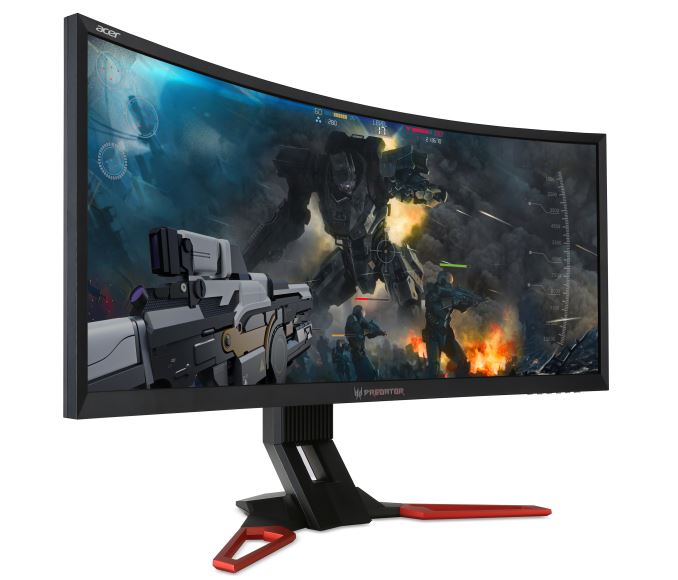
Today at IFA Acer has announced a number of new products relating to gaming. Among the product launches was a new display aimed firmly at gamers. It’s a very large curved 35″ panel with a native refresh rate of 144Hz. BenQ has actually already released a gaming monitor with these specs. What makes the Acer Predator Z35 stand out is Acer’s claim that it can be overclocked to 200Hz. You can check out all of the Predator Z35’s known specs in the chart below.

Acer Predator Z35
Resolution 2560×1080
Refresh Rate 144Hz native, 200Hz overclock
Panel Size 35″
Panel Type AMVA
Response Time 12ms, 4ms (G2G)
Viewing Angle (H/V) 178° / 178°
Color Depth 16.7 million colors (8bit)

As 35″ with a resolution of 2560×1080, the Predator Z35 isn’t as sharp as the 34″ 3440×1440 curved displays on the market. Its refresh rate makes it clear that it’s first and foremost a monitor for gaming. Like I noted above, the native refresh rate of the panel is 144Hz, with Acer claiming it can be overclocked up to 200Hz. It’s not clear whether Acer expects a large number of panels to reach this figure, or if the overclocking procedure voids your warranty, but like most other overclocking I would assume that it does. As a gaming display, the Predator Z35 comes with support for NVIDIA’s G-SYNC adaptive refresh rate as well as NVIDIA’s Ultra low Motion Blur backlight strobing feature.

Something else worth noting is that this is an AMVA panel from AU Optronics. While the viewing angle for AMVA panels is still advertised as 178 x 178 degrees like an IPS panel, they’re still known to have a greater shift in contrast than modern IPS displays. For gamers this isn’t likely to pose an issue, but it would for any sort of color critical work. On that note, Acer advertises the Predator Z35 as covering 100% of the sRGB gamut. While this is probably true, it’s worth noting that covering sRGB doesn’t guarantee any level of accuracy when rendering the colors inside the gamut. All that being said, the AMVA panel is still going to be miles ahead of the TN panels that used to be inside essentially every single display with a native refresh rate above 60Hz.

The Acer Predator Z35 gaming monitor will be coming to North America in December with a price of 1199.99 USD. It will be launching in the EMEA region at the same time with a price starting at €1,099.

Acer Announces A 200Hz Ultrawide Display

Acer Announces A 200Hz Ultrawide Display

Today at IFA Acer has announced a number of new products relating to gaming. Among the product launches was a new display aimed firmly at gamers. It’s a very large curved 35″ panel with a native refresh rate of 144Hz. BenQ has actually already released a gaming monitor with these specs. What makes the Acer Predator Z35 stand out is Acer’s claim that it can be overclocked to 200Hz. You can check out all of the Predator Z35’s known specs in the chart below.

Acer Predator Z35
Resolution 2560×1080
Refresh Rate 144Hz native, 200Hz overclock
Panel Size 35″
Panel Type AMVA
Response Time 12ms, 4ms (G2G)
Viewing Angle (H/V) 178° / 178°
Color Depth 16.7 million colors (8bit)

As 35″ with a resolution of 2560×1080, the Predator Z35 isn’t as sharp as the 34″ 3440×1440 curved displays on the market. Its refresh rate makes it clear that it’s first and foremost a monitor for gaming. Like I noted above, the native refresh rate of the panel is 144Hz, with Acer claiming it can be overclocked up to 200Hz. It’s not clear whether Acer expects a large number of panels to reach this figure, or if the overclocking procedure voids your warranty, but like most other overclocking I would assume that it does. As a gaming display, the Predator Z35 comes with support for NVIDIA’s G-SYNC adaptive refresh rate as well as NVIDIA’s Ultra low Motion Blur backlight strobing feature.

Something else worth noting is that this is an AMVA panel from AU Optronics. While the viewing angle for AMVA panels is still advertised as 178 x 178 degrees like an IPS panel, they’re still known to have a greater shift in contrast than modern IPS displays. For gamers this isn’t likely to pose an issue, but it would for any sort of color critical work. On that note, Acer advertises the Predator Z35 as covering 100% of the sRGB gamut. While this is probably true, it’s worth noting that covering sRGB doesn’t guarantee any level of accuracy when rendering the colors inside the gamut. All that being said, the AMVA panel is still going to be miles ahead of the TN panels that used to be inside essentially every single display with a native refresh rate above 60Hz.

The Acer Predator Z35 gaming monitor will be coming to North America in December with a price of 1199.99 USD. It will be launching in the EMEA region at the same time with a price starting at €1,099.

ASUS Details The ZenWatch 2: Coming In October

ASUS Details The ZenWatch 2: Coming In October

At this year’s Computex Taipei ASUS released some teaser information about the upcoming ZenWatch 2. At the time we knew what the ZenWatch 2 would look like, but there weren’t any details about the display size, case size, battery, display, or any other aspects of the hardware. Three months later, we’re much closer to ASUS’s planned launch of the ZenWatch 2, and they’ve decided to release essentially all the information one would need to know about the watch.

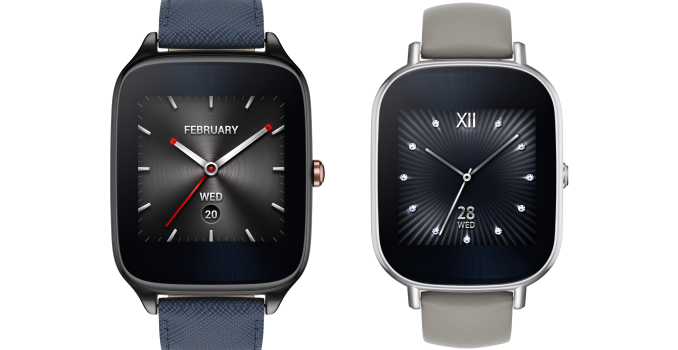
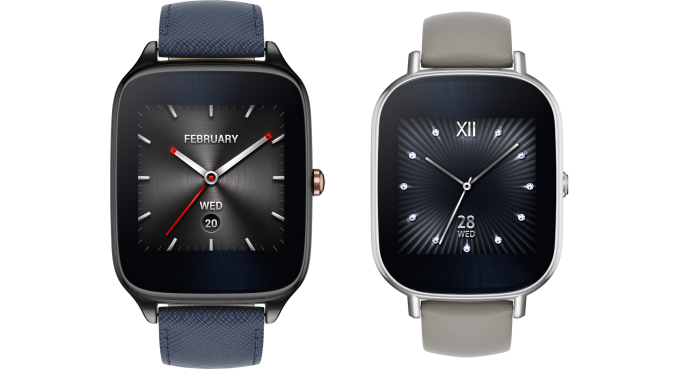
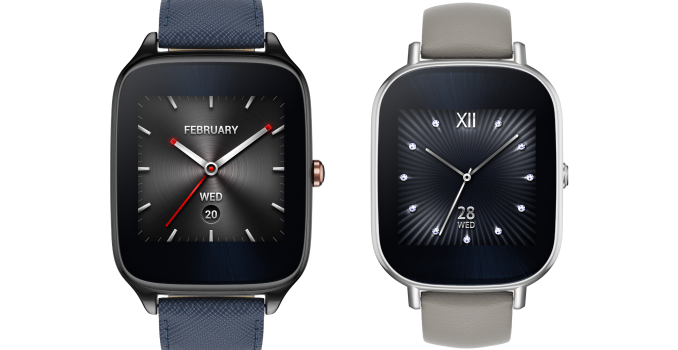
For starters, the ZenWatch 2 comes in two sizes. the first has a 1.45″ AMOLED display with a resolution of 280×280, while the second has 1.63″ AMOLED display with a resolution of 320×320. The case dimensions of the smaller and larger model are 45.2 x 37.2mm and 49.6 x 40.7mm respectively. While I appreciate that ASUS has put in the effort to try and accommodate users with smaller wrists, I think it’s still going to leave out a very large segment of the market in the same way that all previous Android Wear devices have done. Let me explain why.

Consider that the smaller ZenWatch W1502Q has a square display with a 1.45″ diagonal, which equates to a screen area of roughly 1.05 square inches. As a point of comparison, the 42mm Apple Watch, which is the larger of the two models, has a 5:4 display with a 1.5″ diagonal. This means that it has a slightly larger area of 1.1 square inches. Despite the 42mm Apple Watch having a larger display, the dimensions of the watch case are significantly smaller in both the vertical and horizontal dimensions. If a user finds the 42mm Apple Watch to be too big, they’ll certainly feel that more strongly about even the smaller model of the ZenWatch 2. I happen to fall into that group of users with smaller wrists, and when I originally heard that the ZenWatch 2 would come in two sizes I was hoping for something even smaller than this as I haven’t been able to find an Android Wear watch that I can wear comfortably yet.

If you are a user that finds one of the ZenWatch 2 models to be a comfortable fit then your watch will come with 4GB of internal NAND, 512MB of LPDDR2 memory, and Qualcomm’s APQ 8026 SoC which has four Cortex A7 cores with a max frequency of 1.2GHz, although no Android Wear devices ramp up the SoC like they would do so in a smartphone. The ZenWatch 2 also includes a 6-axis gyroscope, an accelerometer, and a sensor for tracking the user’s heart rate.

As for the battery life, the smaller W1502Q has a 300mAh battery, while the larger W1501Q increases that to 400mAh. ASUS rates the larger model for over 2.5 days of use in ambient mode, and the smaller one for more than 2 days of use in ambient mode. Battery life will obviously vary greatly depending on a user’s workload.

The ASUS ZenWatch 2 will be available sometime in October. The larger model will be priced at 149 euros, while the smaller will surprisingly cost more at 169 euros. It will launch with three different straps, with one being a fabric strap, one being leather, and one being metal. Each strap will have a choice of three different colors, and it’s a safe bet that the metal band will come with a price premium.

ASUS Details The ZenWatch 2: Coming In October

ASUS Details The ZenWatch 2: Coming In October

At this year’s Computex Taipei ASUS released some teaser information about the upcoming ZenWatch 2. At the time we knew what the ZenWatch 2 would look like, but there weren’t any details about the display size, case size, battery, display, or any other aspects of the hardware. Three months later, we’re much closer to ASUS’s planned launch of the ZenWatch 2, and they’ve decided to release essentially all the information one would need to know about the watch.

For starters, the ZenWatch 2 comes in two sizes. the first has a 1.45″ AMOLED display with a resolution of 280×280, while the second has 1.63″ AMOLED display with a resolution of 320×320. The case dimensions of the smaller and larger model are 45.2 x 37.2mm and 49.6 x 40.7mm respectively. While I appreciate that ASUS has put in the effort to try and accommodate users with smaller wrists, I think it’s still going to leave out a very large segment of the market in the same way that all previous Android Wear devices have done. Let me explain why.

Consider that the smaller ZenWatch W1502Q has a square display with a 1.45″ diagonal, which equates to a screen area of roughly 1.05 square inches. As a point of comparison, the 42mm Apple Watch, which is the larger of the two models, has a 5:4 display with a 1.5″ diagonal. This means that it has a slightly larger area of 1.1 square inches. Despite the 42mm Apple Watch having a larger display, the dimensions of the watch case are significantly smaller in both the vertical and horizontal dimensions. If a user finds the 42mm Apple Watch to be too big, they’ll certainly feel that more strongly about even the smaller model of the ZenWatch 2. I happen to fall into that group of users with smaller wrists, and when I originally heard that the ZenWatch 2 would come in two sizes I was hoping for something even smaller than this as I haven’t been able to find an Android Wear watch that I can wear comfortably yet.

If you are a user that finds one of the ZenWatch 2 models to be a comfortable fit then your watch will come with 4GB of internal NAND, 512MB of LPDDR2 memory, and Qualcomm’s APQ 8026 SoC which has four Cortex A7 cores with a max frequency of 1.2GHz, although no Android Wear devices ramp up the SoC like they would do so in a smartphone. The ZenWatch 2 also includes a 6-axis gyroscope, an accelerometer, and a sensor for tracking the user’s heart rate.

As for the battery life, the smaller W1502Q has a 300mAh battery, while the larger W1501Q increases that to 400mAh. ASUS rates the larger model for over 2.5 days of use in ambient mode, and the smaller one for more than 2 days of use in ambient mode. Battery life will obviously vary greatly depending on a user’s workload.

The ASUS ZenWatch 2 will be available sometime in October. The larger model will be priced at 149 euros, while the smaller will surprisingly cost more at 169 euros. It will launch with three different straps, with one being a fabric strap, one being leather, and one being metal. Each strap will have a choice of three different colors, and it’s a safe bet that the metal band will come with a price premium.